8. You and your friend get into an argument when she finds out that you earn more than she does.
She says it isn’t fair, but you argue that there are many reasons why you legitimately earn more.
Explain two possible reasons in detail.
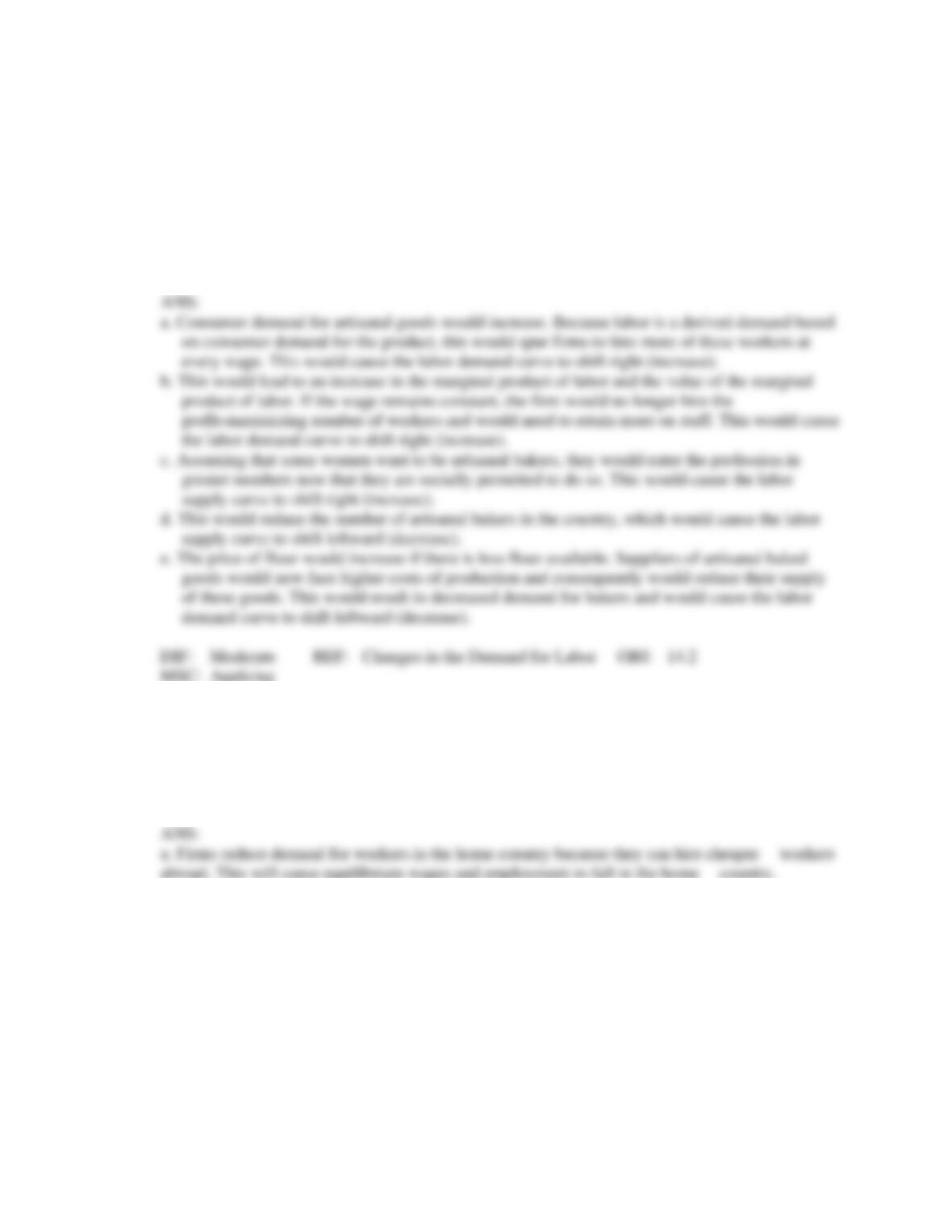
9. Consider the labor market for artisanal bakers in the United States. What would happen to labor
demand or labor supply if the following situations occurred?
a. Fast-food restaurants and restaurant chains start promoting artisanal foods in order to draw a
more sophisticated clientele, and the ad campaign works.
b. Happy that their talents are being recognized, artisanal bakers increase their rate of production.
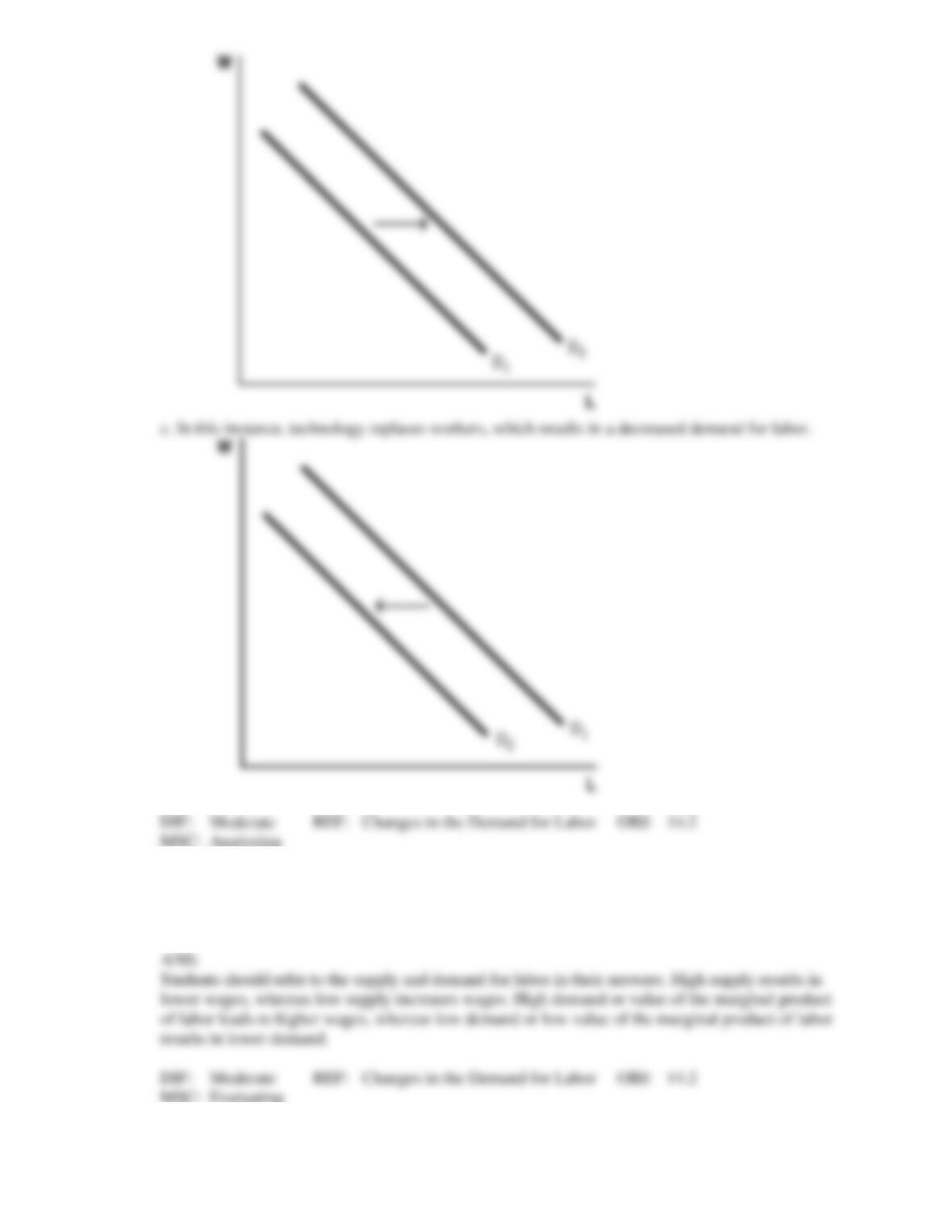
c. Social norms used to make it difficult for women to be artisanal bakers, but these norms have
decreased over time.
d. Tighter immigration laws prevent European bakers from entering the United States to take
advantage of higher wages and benefits.
e. Droughts have reduced the supply of wheat, which lowers the available amount of flour.
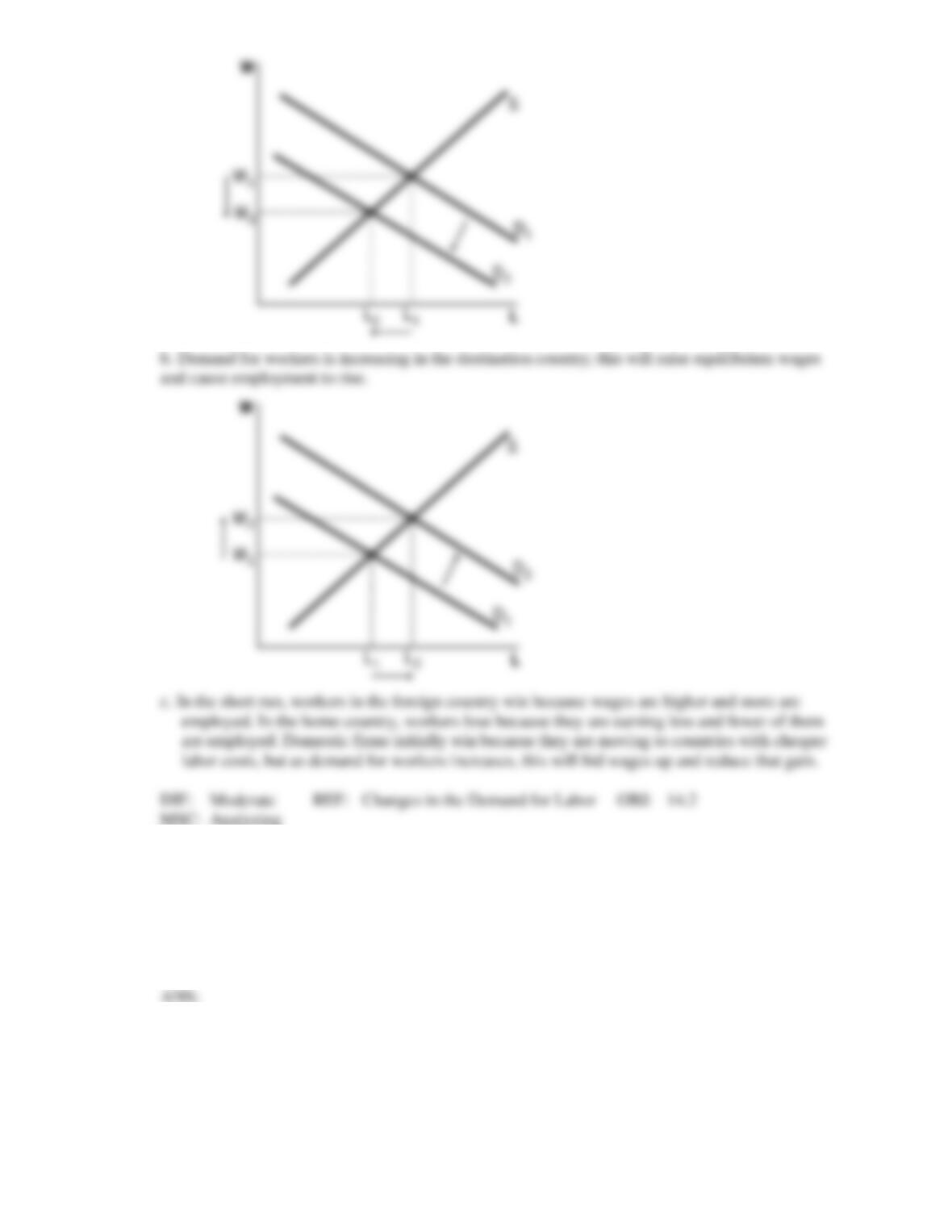
10. Customer service jobs are easily outsourced. Graph the following for the market for customer
service, and explain what happens to wages and the quantity of labor.
a. What are the short-run effects of this outsourcing on the home country?
b. What are the effects in the foreign country?
c. Who wins and loses in these moves?
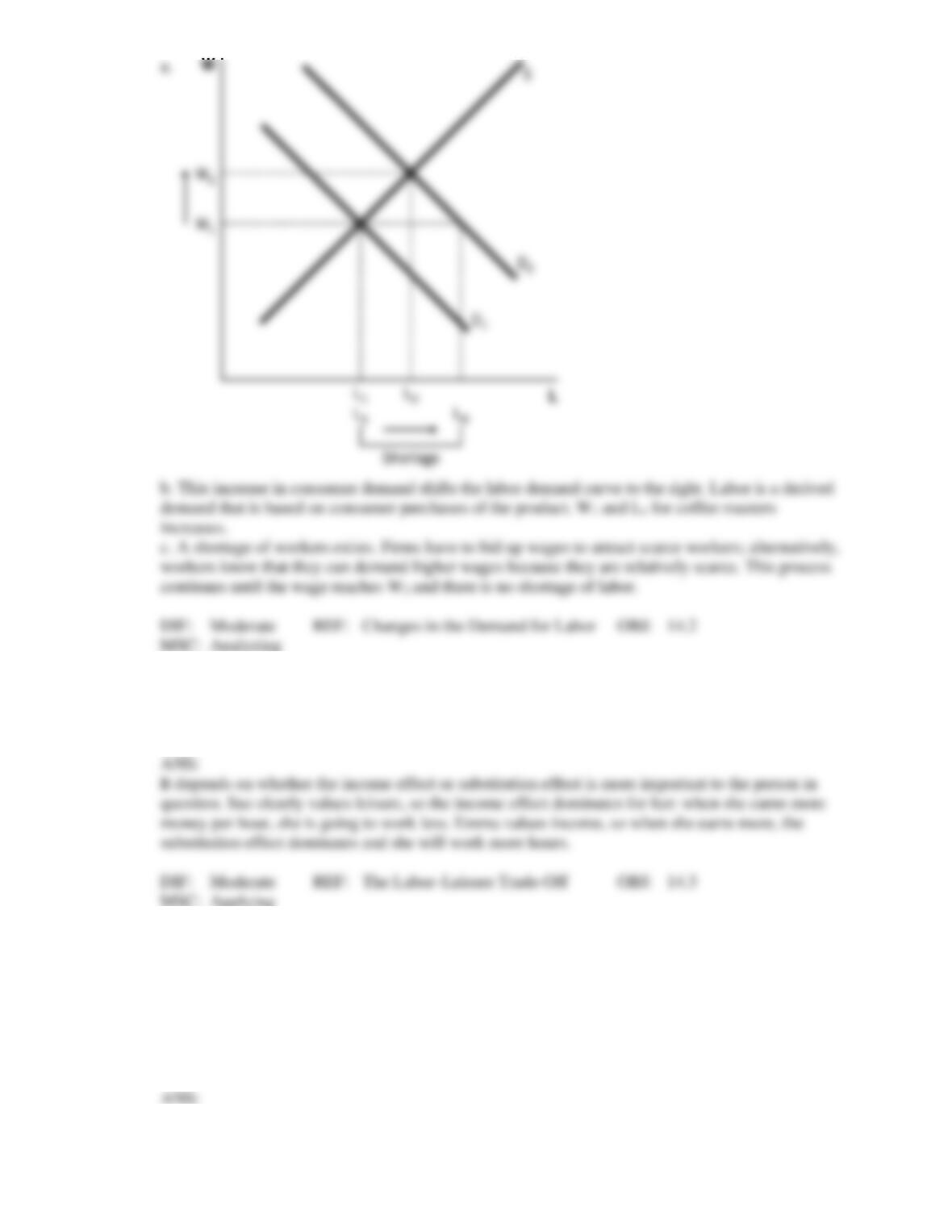
11. Assume that the labor market for coffee roasters is in equilibrium.
a. Graph this labor market.
b. A new ad campaign by the coffee industry, “A coffee a day keeps the sleepies away,” is
successful and consumers prefer more coffee. Graph the effect of this on equilibrium wages W1
and quantity of labor L1 of workers. Label the new equilibrium W2 and L2.
c. At the old W1, what situation exists? How does the labor market adjust to the new W2?
12. Your friend Sue tells you that if she gets a raise, she is going to start working less. Your other
friend Emma says that the plan is crazy and that Sue should work more so she can earn more
money. Which friend is right?
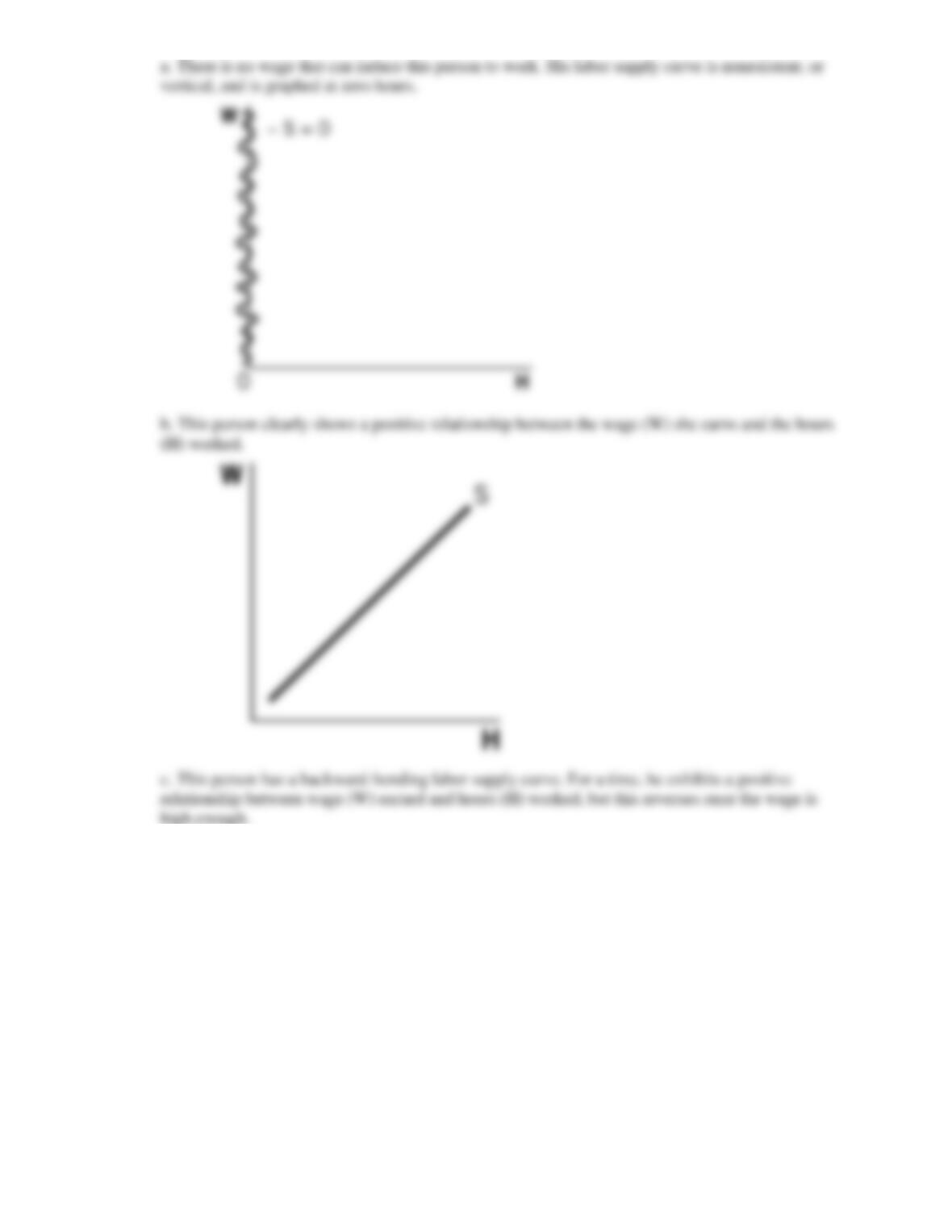
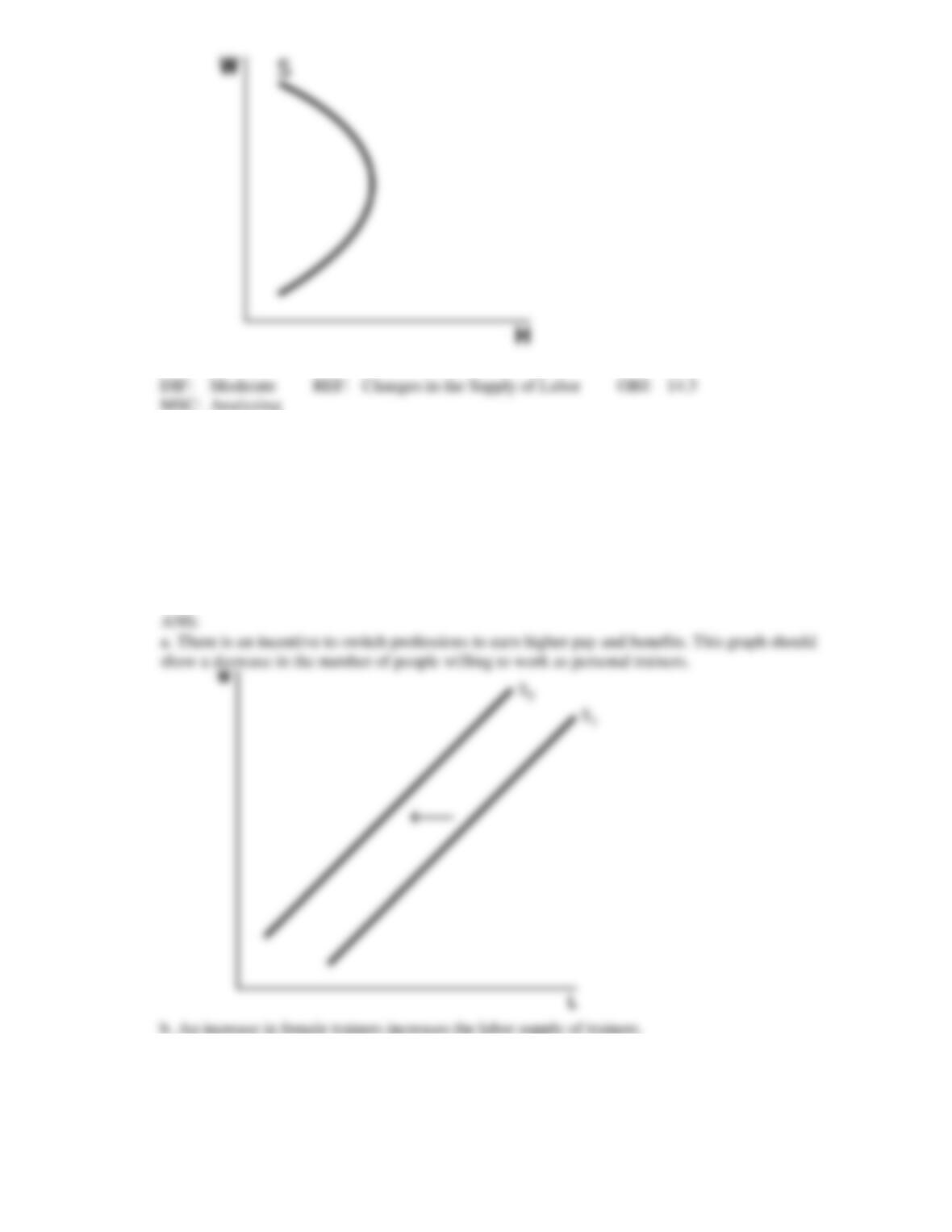
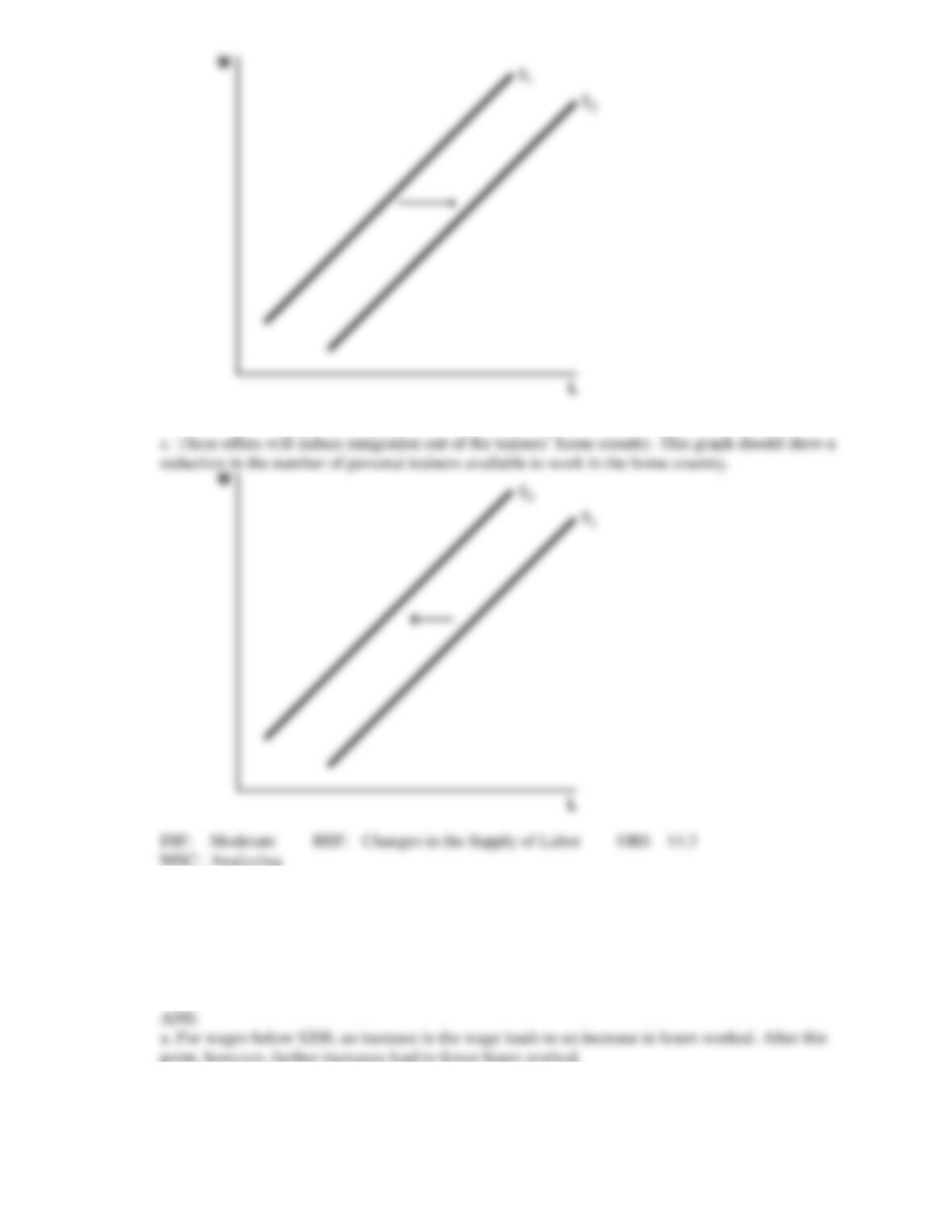
13. Graph the labor supply curves based on the statements below.
a. I hate working! I am never going to work!
b. I want to earn as much money as I possibly can so I can buy everything on my wish list. Every
time I get a raise it makes me want to work more because I can earn even more money. I don’t
think I would ever work less, not even if the wage were a million dollars.
c. Money is necessary, but it’s not the most important thing to me. If I received increased wages, I
would probably work more for a while, but once my pay was high enough, I would work less.
14. Consider the labor market for domestic market personal trainers. Graph and explain how the
following events would affect the labor supply curve for these workers.
a. Many personal trainers are qualified to coach various athletic teams. The pay for these coaching
positions is far superior to what they can earn as personal trainers.
b. Most personal trainers used to be men. Now, more women are hired as personal trainers.
c. A neighboring country is looking to build its Olympic program to make the national team more
competitive. As such, the government is providing very lucrative offers to personal trainers who
move to that country to train potential Olympic athletes.
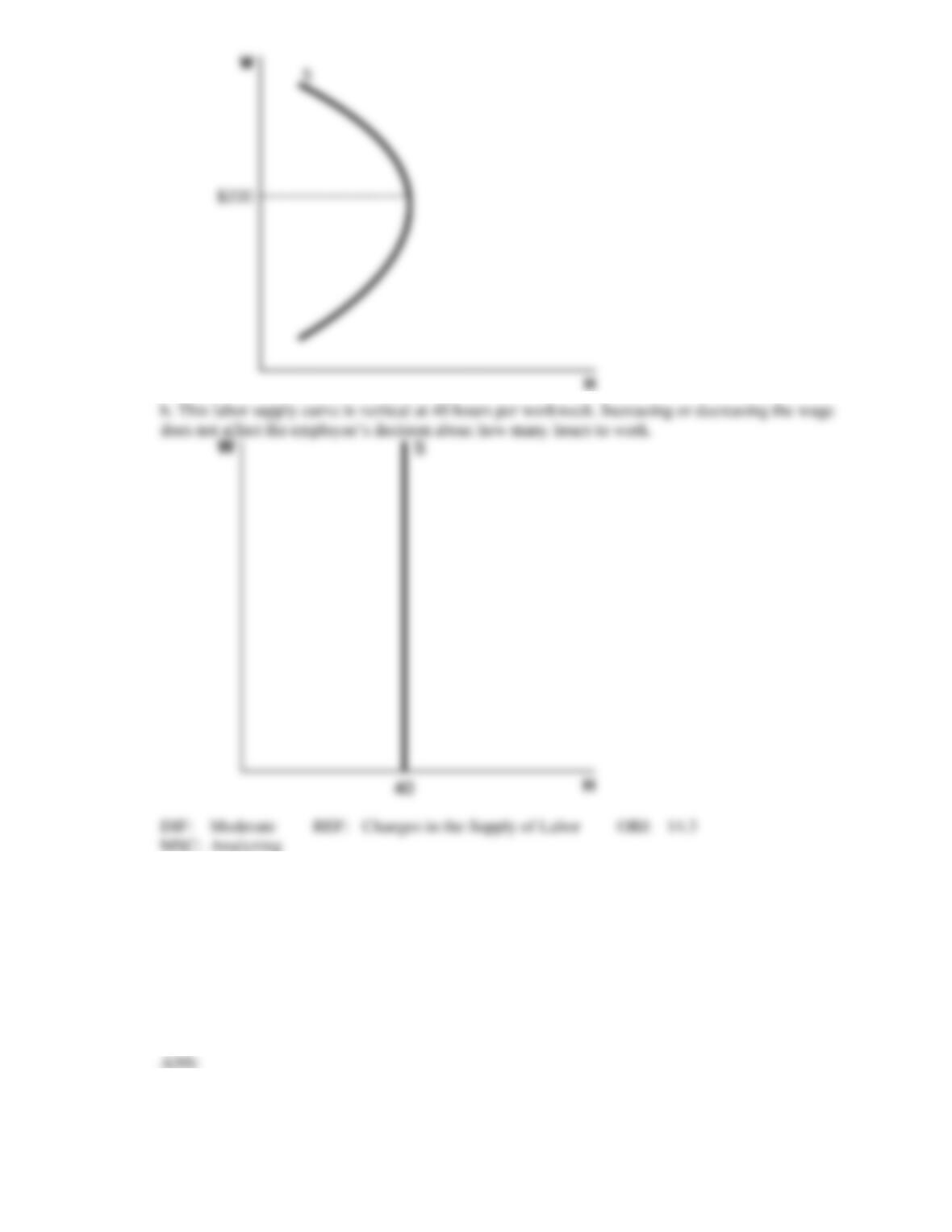
15. Graph the following labor supply curves:
a. The substitution effect dominates the income effect until the wage reaches $200, after which
the income effect dominates.
b. The income and substitution effects do not affect the worker’s decision. She wants to work
only 40 hours every week.
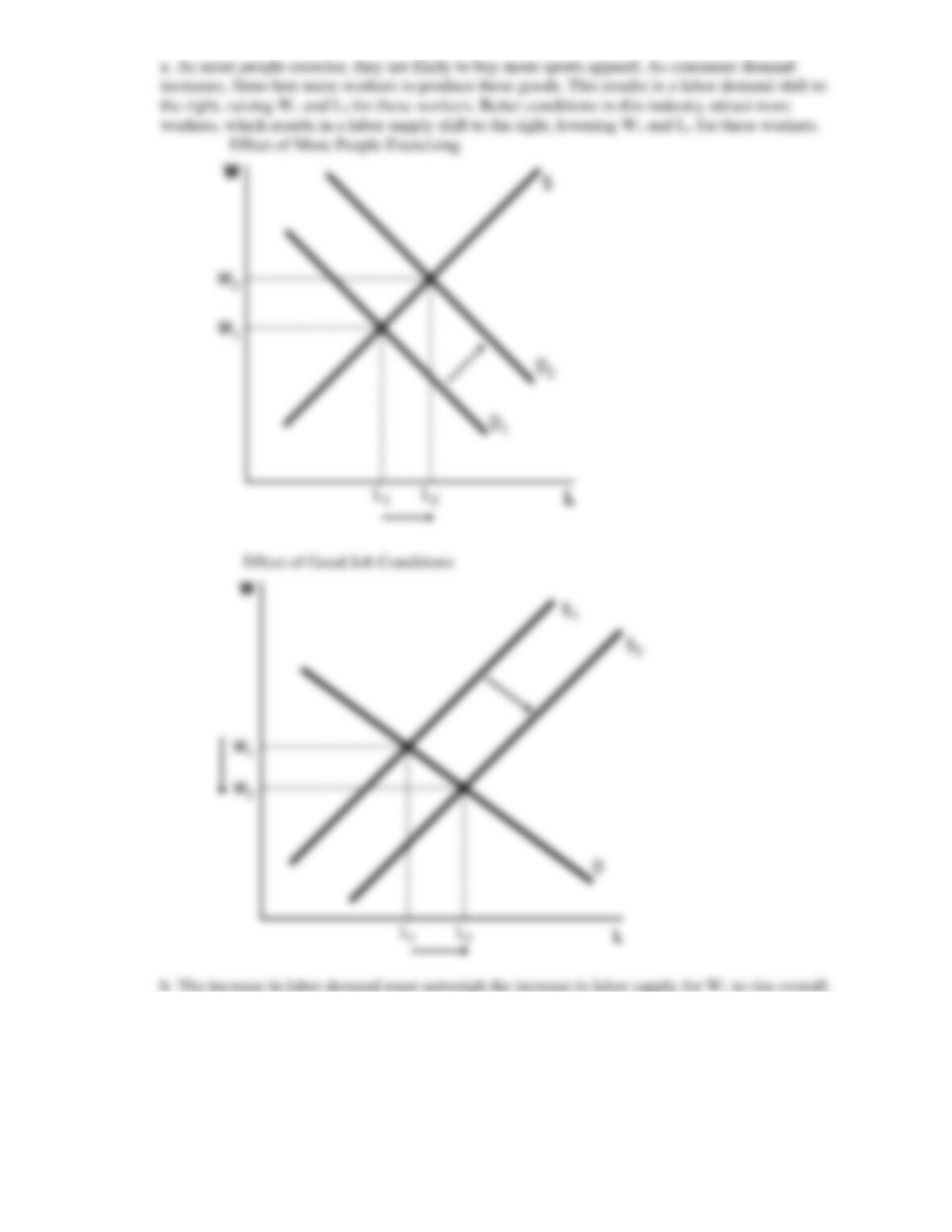
16. Two events are occurring simultaneously in the labor market for laborers who produce sports
apparel. First, the government’s campaign to increase the activity rate among its citizens is proving
successful, and more people are going to the gym on a regular basis. Second, the sports apparel
industry is known for its relatively high pay and good benefits, which are attractive to workers.
a. Graph the effect of each shift separately. Label the original equilibrium wage and quantity W1
and L1, respectively.
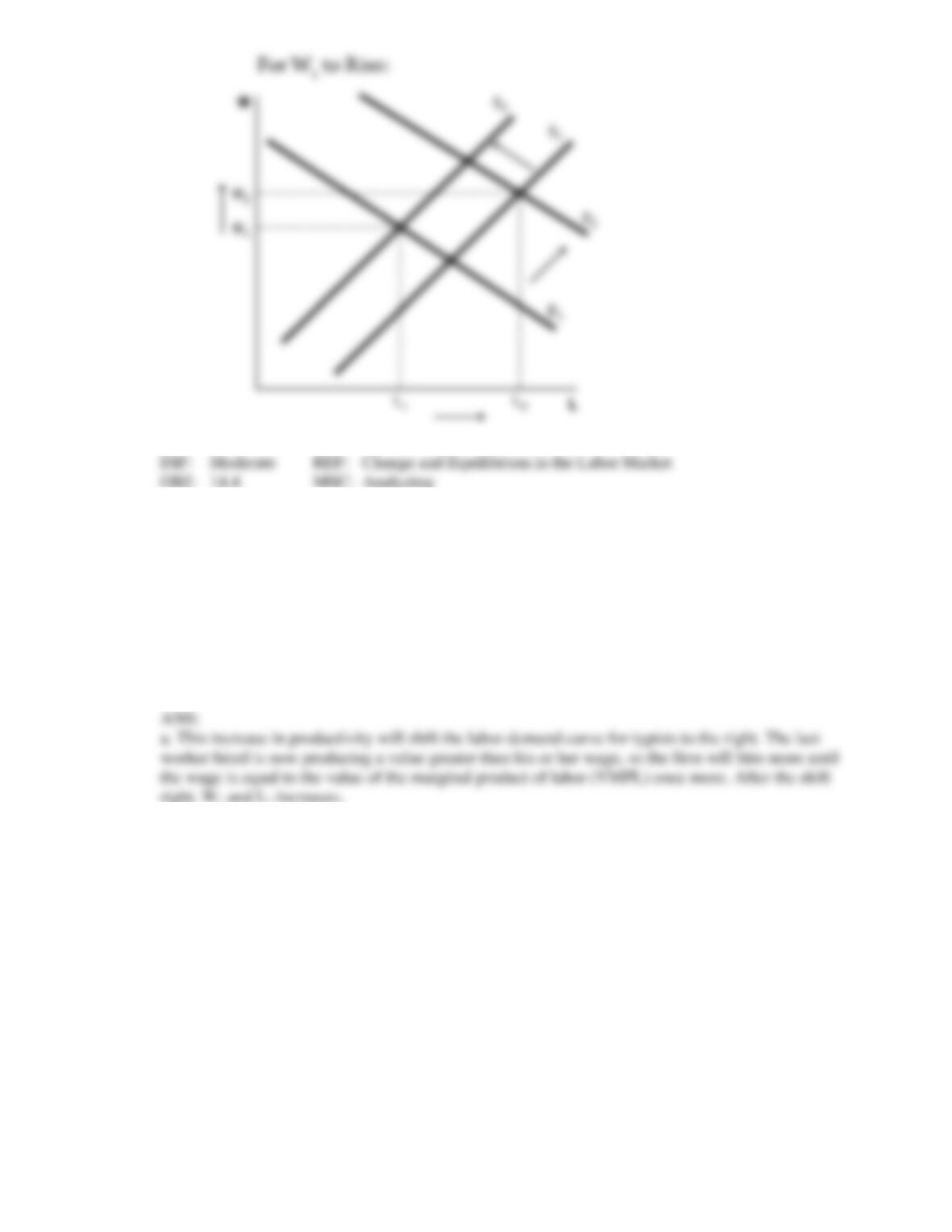
b. What needs to be true about the relative size of these shifts if workers in this labor market are to
earn higher wages?
17. Graph the impact of the following events in the market for typists. Your graph should include
shifting the appropriate curve and indicate the change to equilibrium wage W1 and quantity of
labor L1.
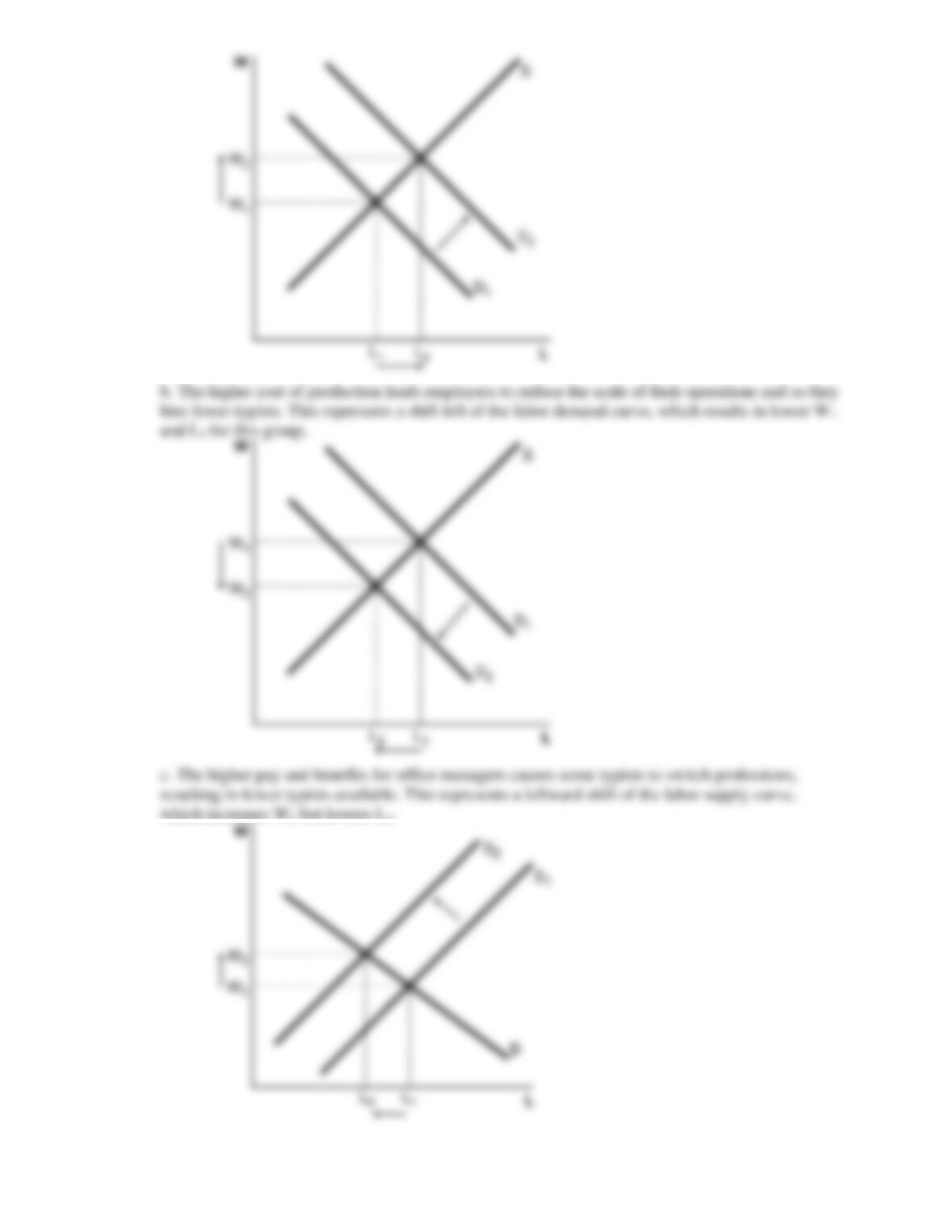
a. The introduction of new ergonomic keyboards increases the rate at which typists can complete
their tasks.
b. The main supplies typists use—computers, desks, and chairs—are all increasing in cost for their
bosses.
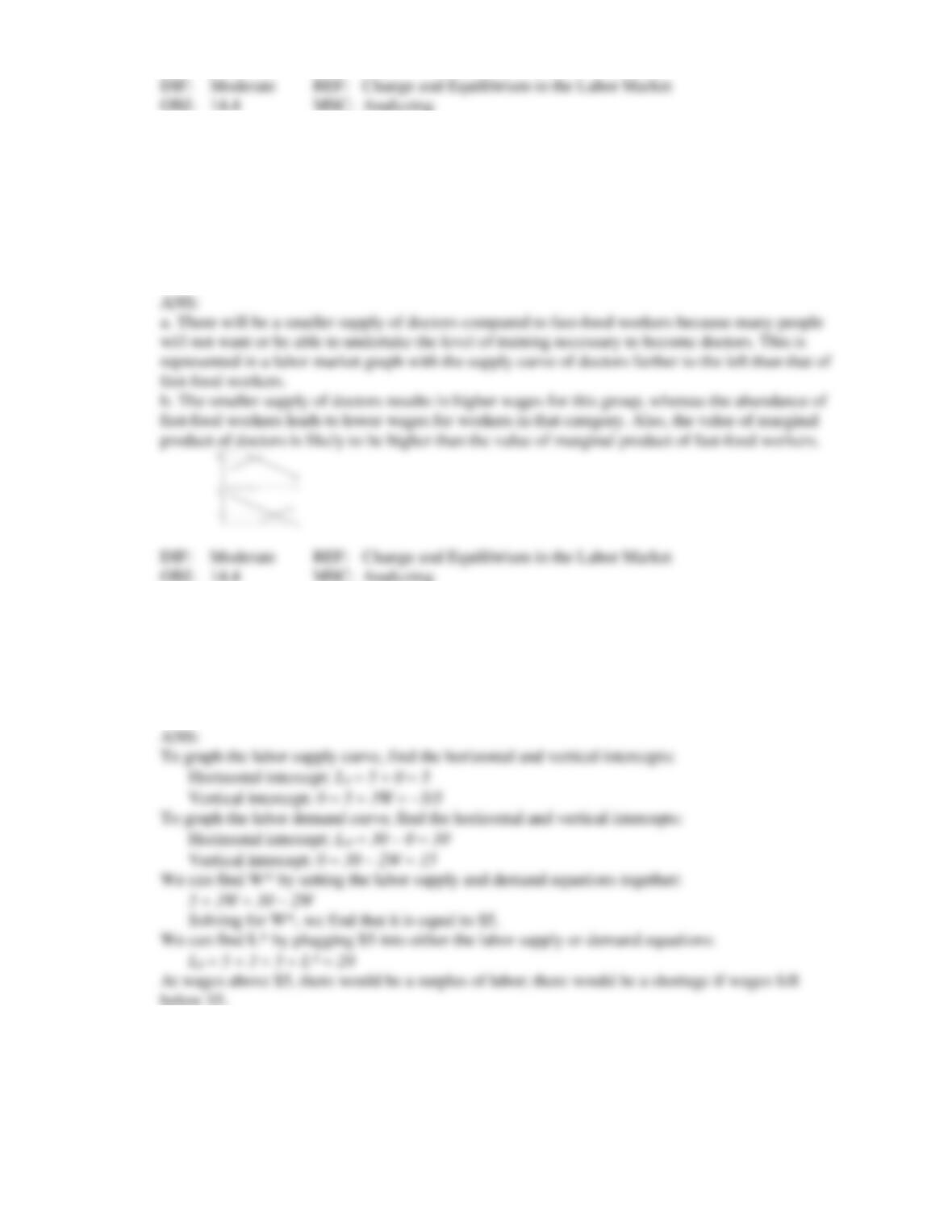
c. The conditions in a similar profession, such as office manager, are superior in terms of pay and
benefits.
18. Doctors must complete four years of undergraduate education and four years of medical school,
and work three to eight years in a hospital before they can fully practice on their own. In contrast, a
worker at a fast-food restaurant need not complete high school.
a. How does the difference in education and training affect the relative labor supply in these
professions?
b. Using a supply and demand graph and your answer to part a, show why doctors earn higher
wages than fast-food workers do.
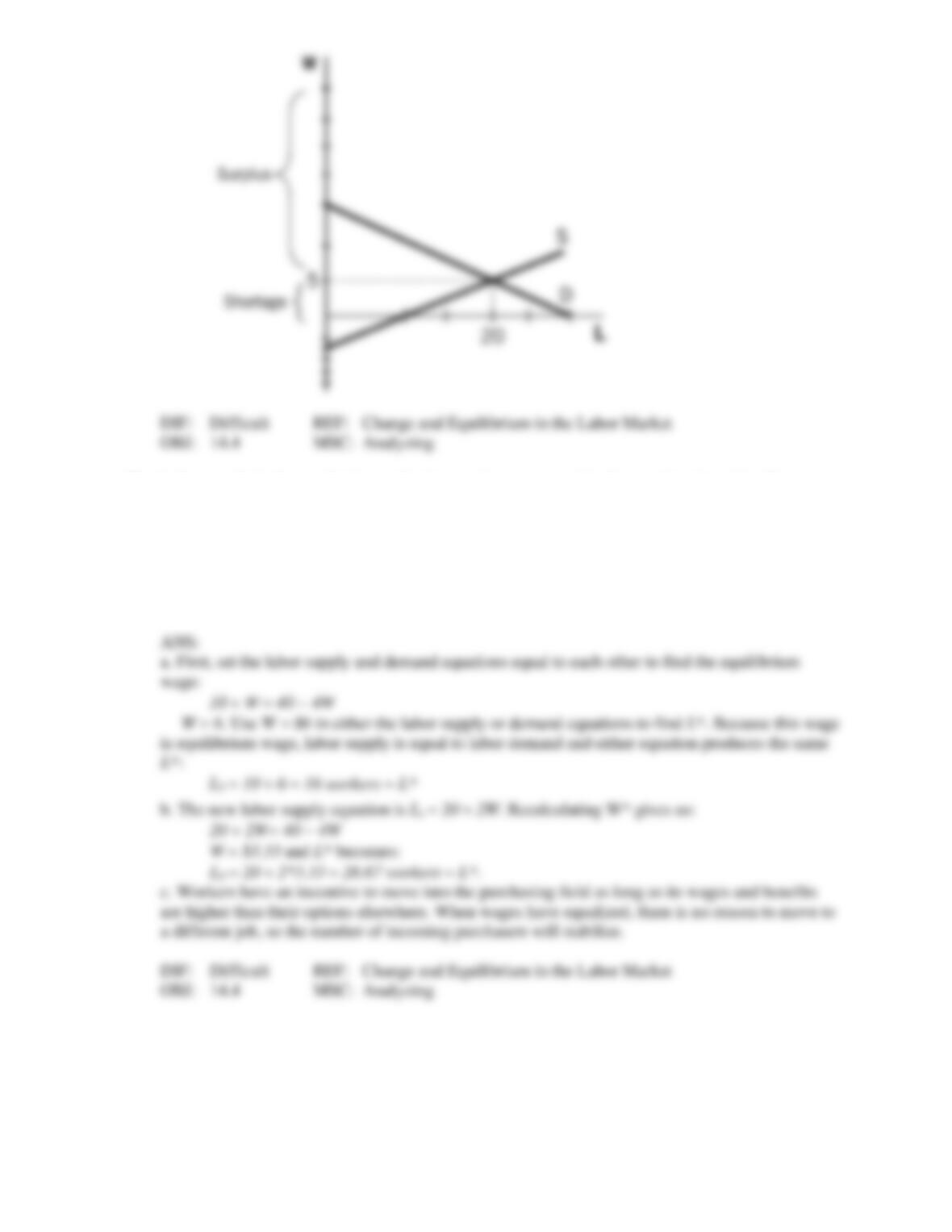
19. The labor market for doctors can be represented with the following two equations:
LS = 5 + 3W
LD = 30 − 2W
Graph this labor market, highlighting equilibrium wages W* and quantity of labor L*. Label the
wages where a shortage and a surplus would exist if the wage deviates from W*.
20. Labor supply in the purchasing profession can be represented by the equation LS = 10 + W,
whereas labor demand can be depicted as LD = 40 − 4W.
a. What is the equilibrium number of workers hired and their wage in this profession?
b. Workers see that the number of good positions in other professions is shrinking, so they shift
into the purchasing profession, causing labor supply to be two times what it used to be. What is the
equilibrium number of workers hired now? What wage do they earn?
c. When will workers stop changing professions? Or will this process continue indefinitely?
21. Joe has several different offers for his land, which is located in the city center. He currently rents
the land to a community-supported agriculture (CSA) farm for $5,000 per month. The city is
offering a yearly rent payment of $12,000, to be paid in monthly installments, to put in a city park.
Calculate the economic rent Joe is earning and use it to decide whether he should rent his land to
the city.
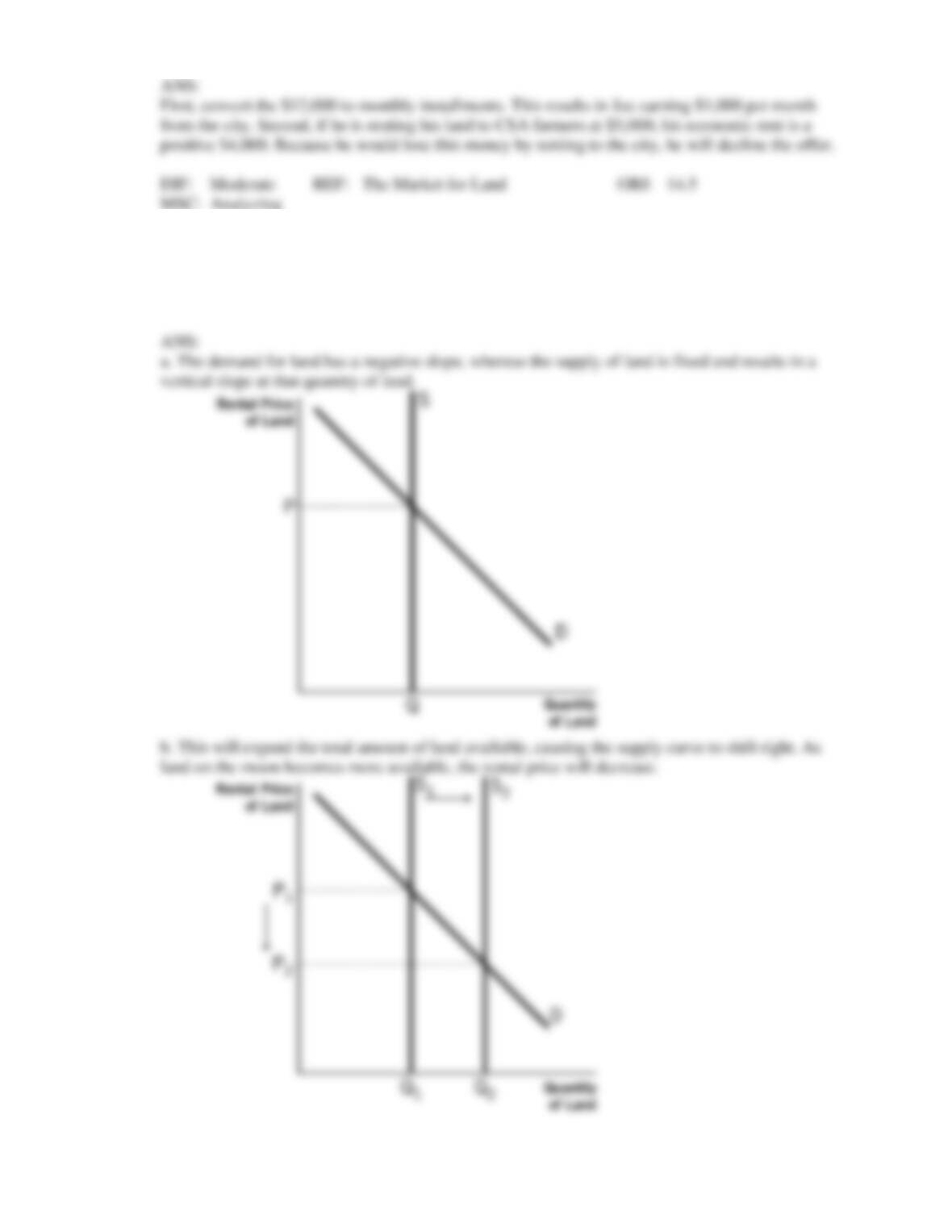
22. The Earth’s major governments have recently decided to combine their resources to launch an
effective plan to colonize the moon.
a. Graph the market for land on the moon before the colonization effort is successful.
b. What impact will the moon base have on the rental price of land on Earth? Graph and explain.

23. Mary recently opened her own styling salon. After the first month of operation, she looks at the
mix of inputs she is using to see whether she should make any changes. The value of marginal
product of her stylists is $125,000, and their wage is $20. Her equipment and salon space produces
a value of $250,000, and it costs $400 to rent it. The land, which she rents at $800, produces a
value of $300,000. Should she change her input mix or is she maximizing profit with her current
arrangement?
24. Outsourcing has been a controversial topic ever since labor and manufacturing have been able to
be transported. From a free-market perspective, what makes the issue so controversial?
25. Outsourcing from a strictly “lower cost of labor” viewpoint may not be successful. Explain how
this result could occur.