14–20
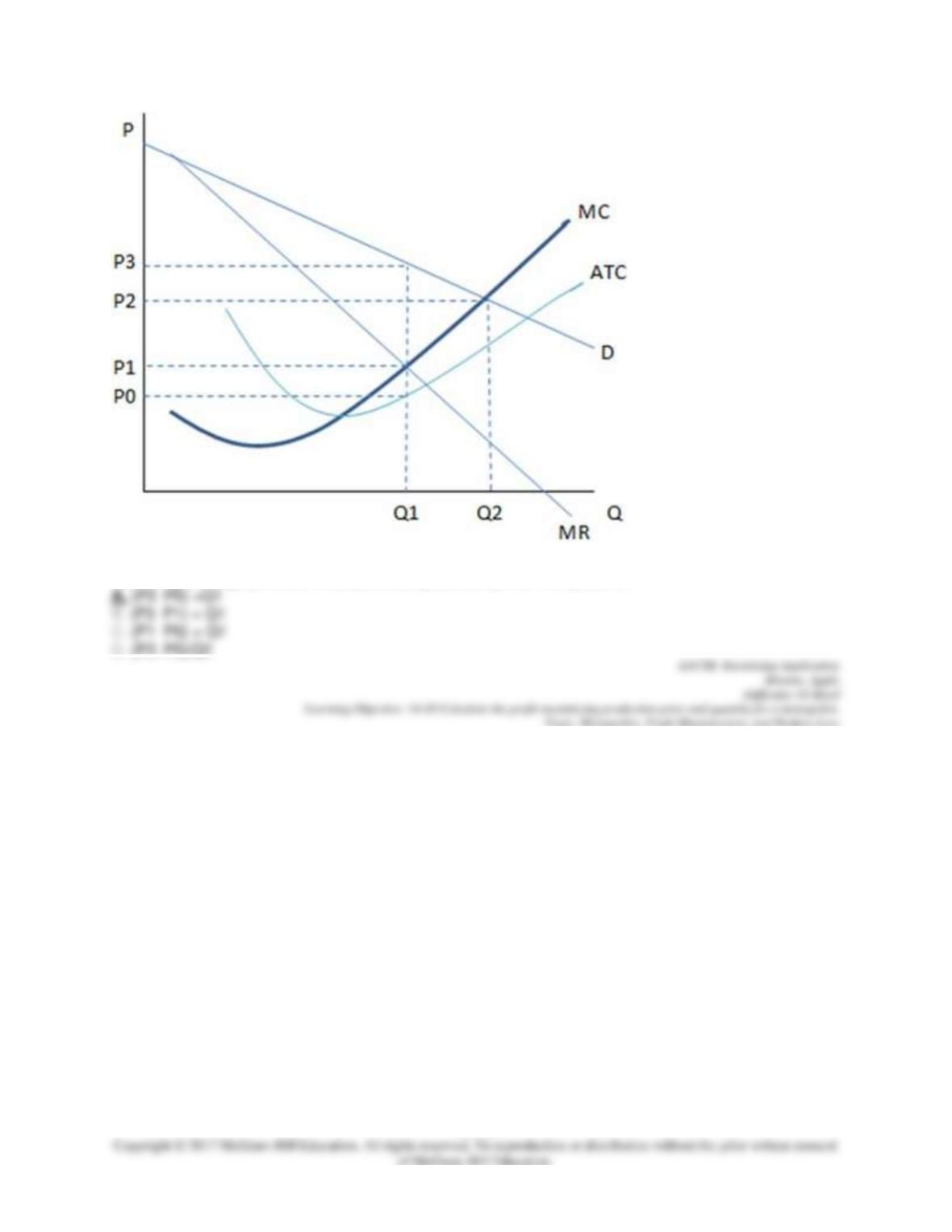
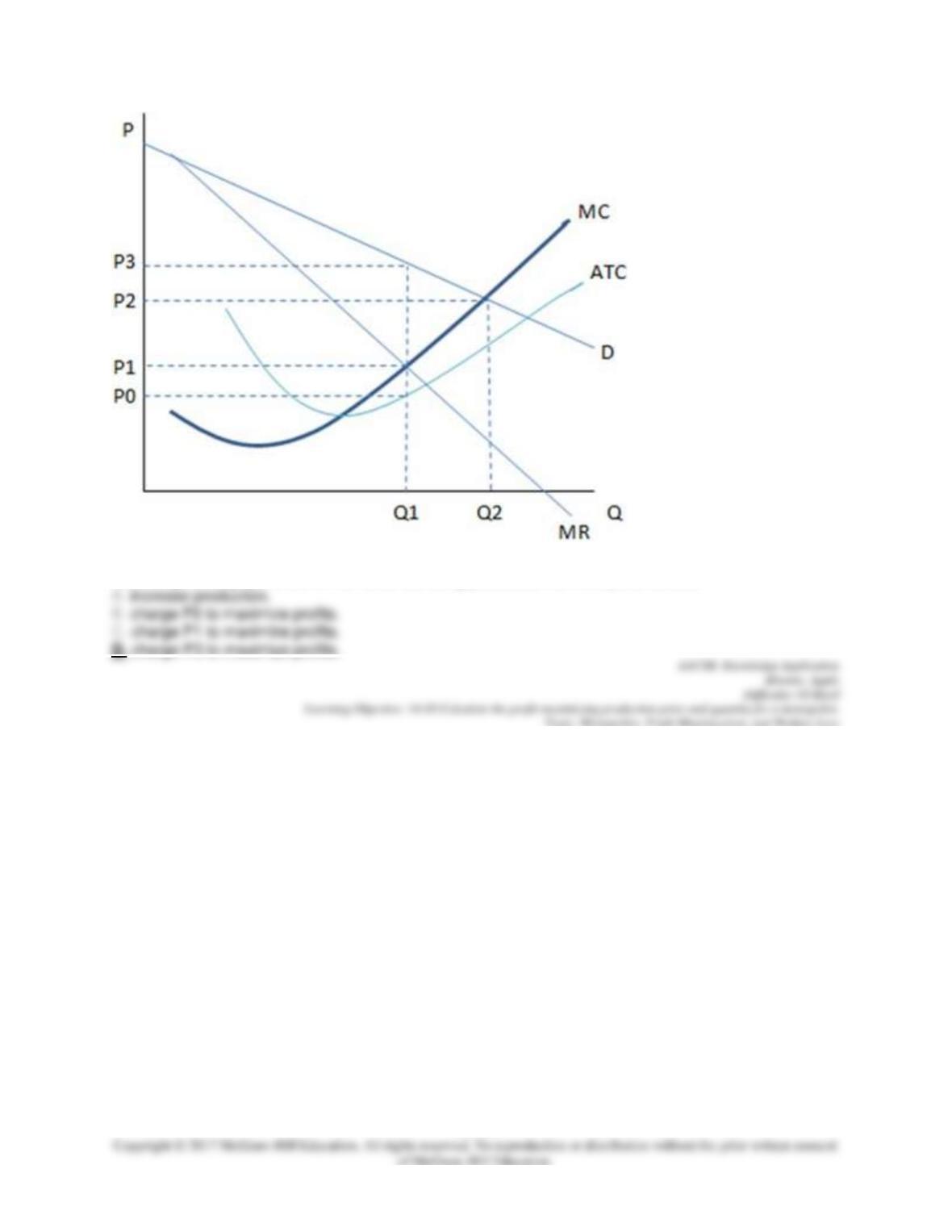
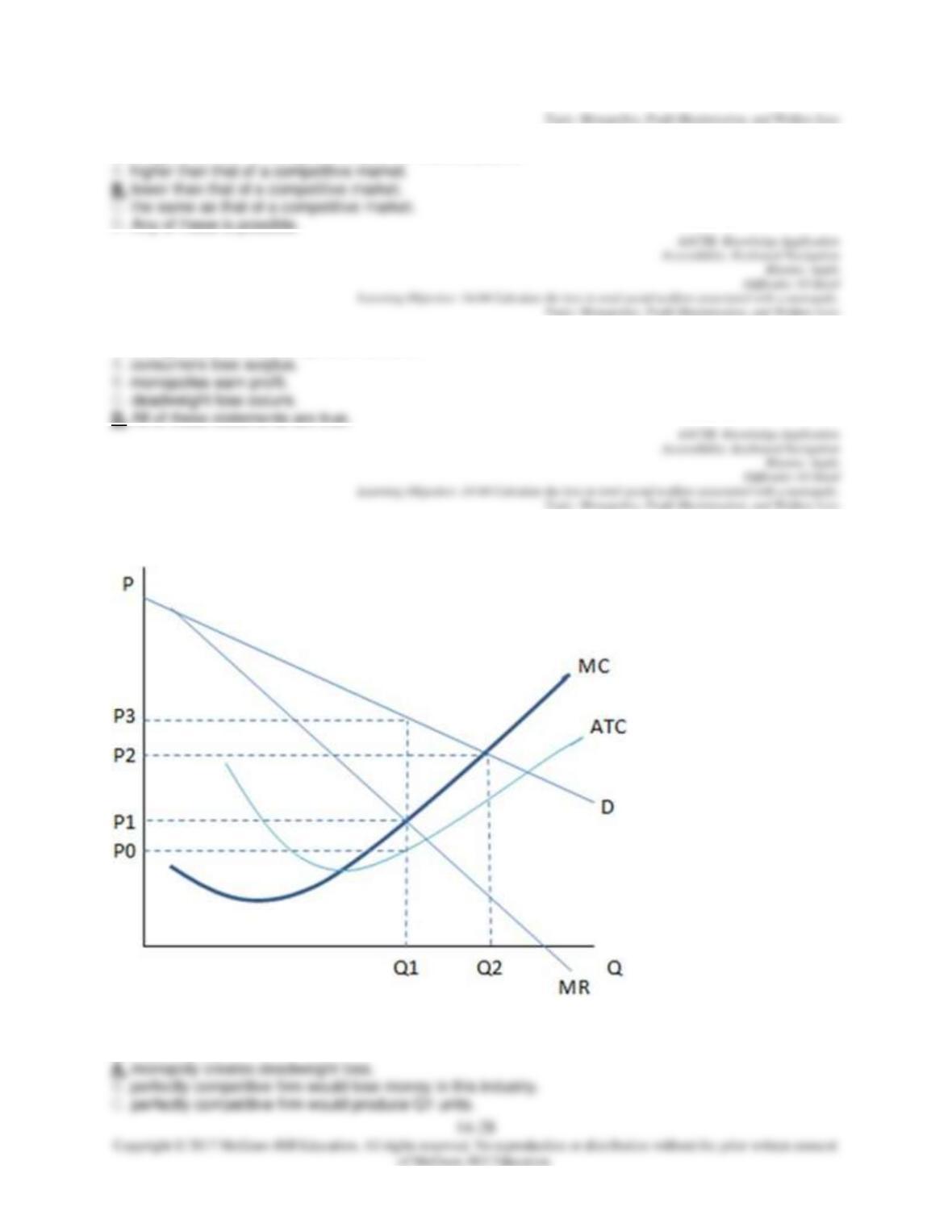
According to the graph shown, the profit being earned by this monopolist is:
82. This graph shows the cost and revenue curves faced by a monopoly.
14–21
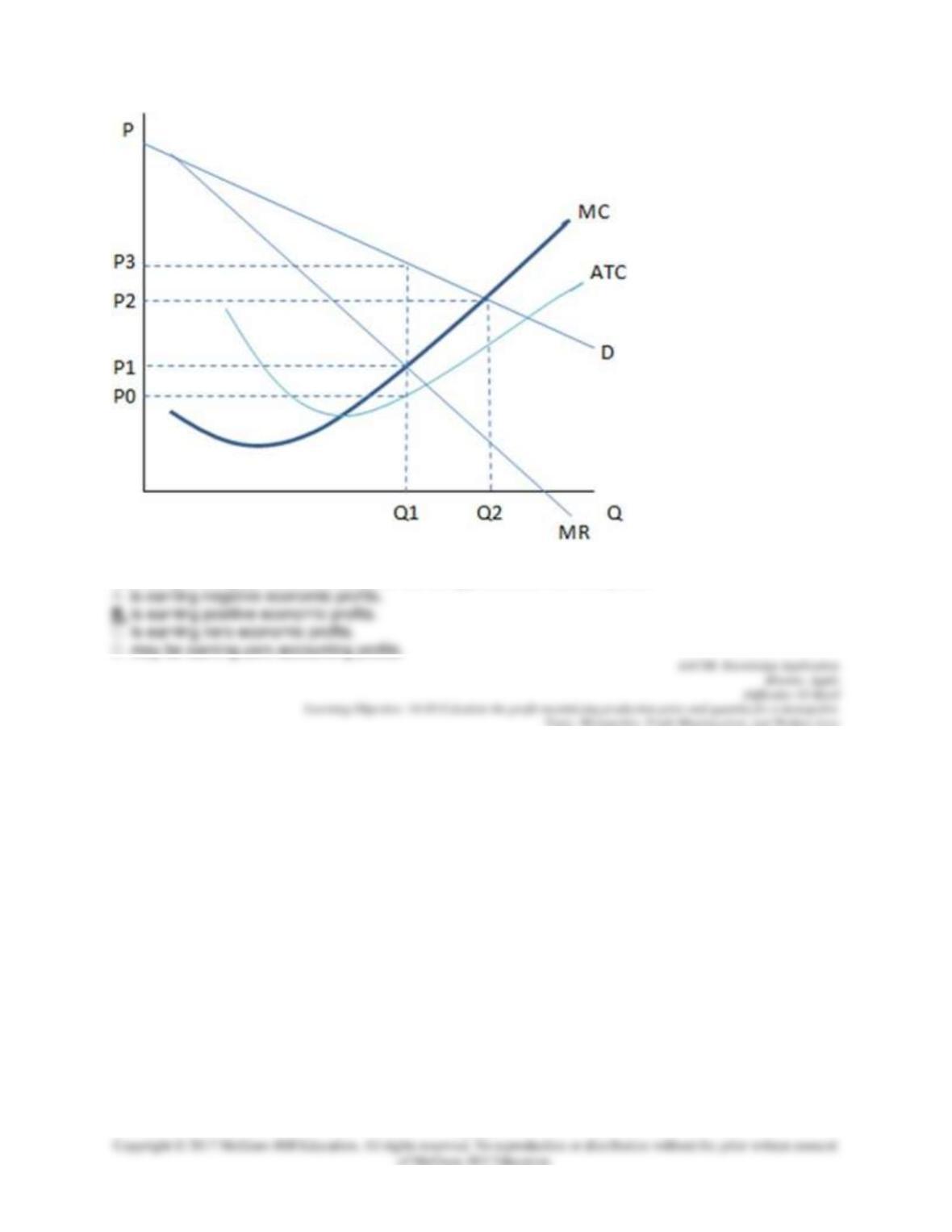
According to the graph shown, if Q2 units are being produced, this monopolist:
83. This graph shows the cost and revenue curves faced by a monopoly.
14–22
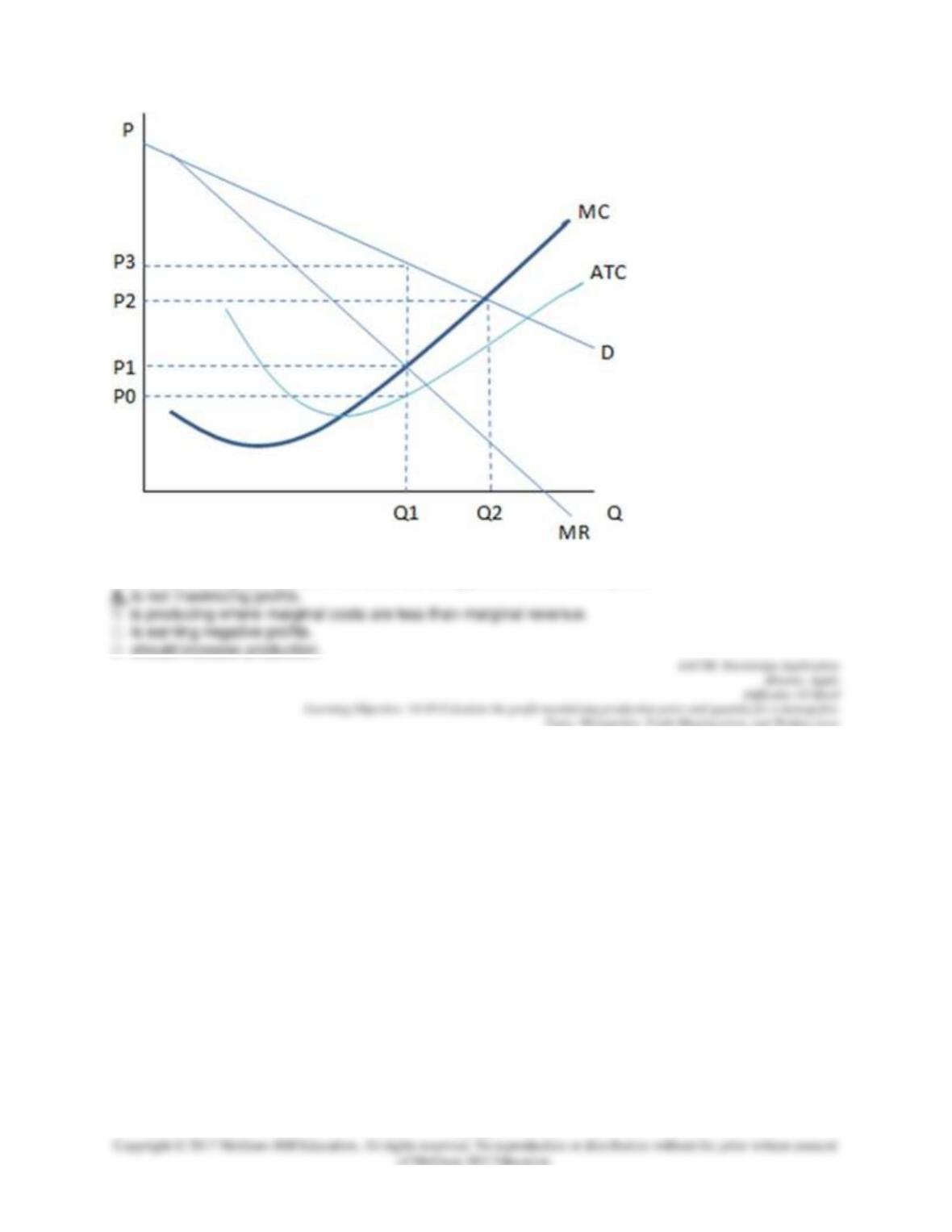
According to the graph shown, if Q2 units are being produced, this monopolist:
84. This graph shows the cost and revenue curves faced by a monopoly.
14–23
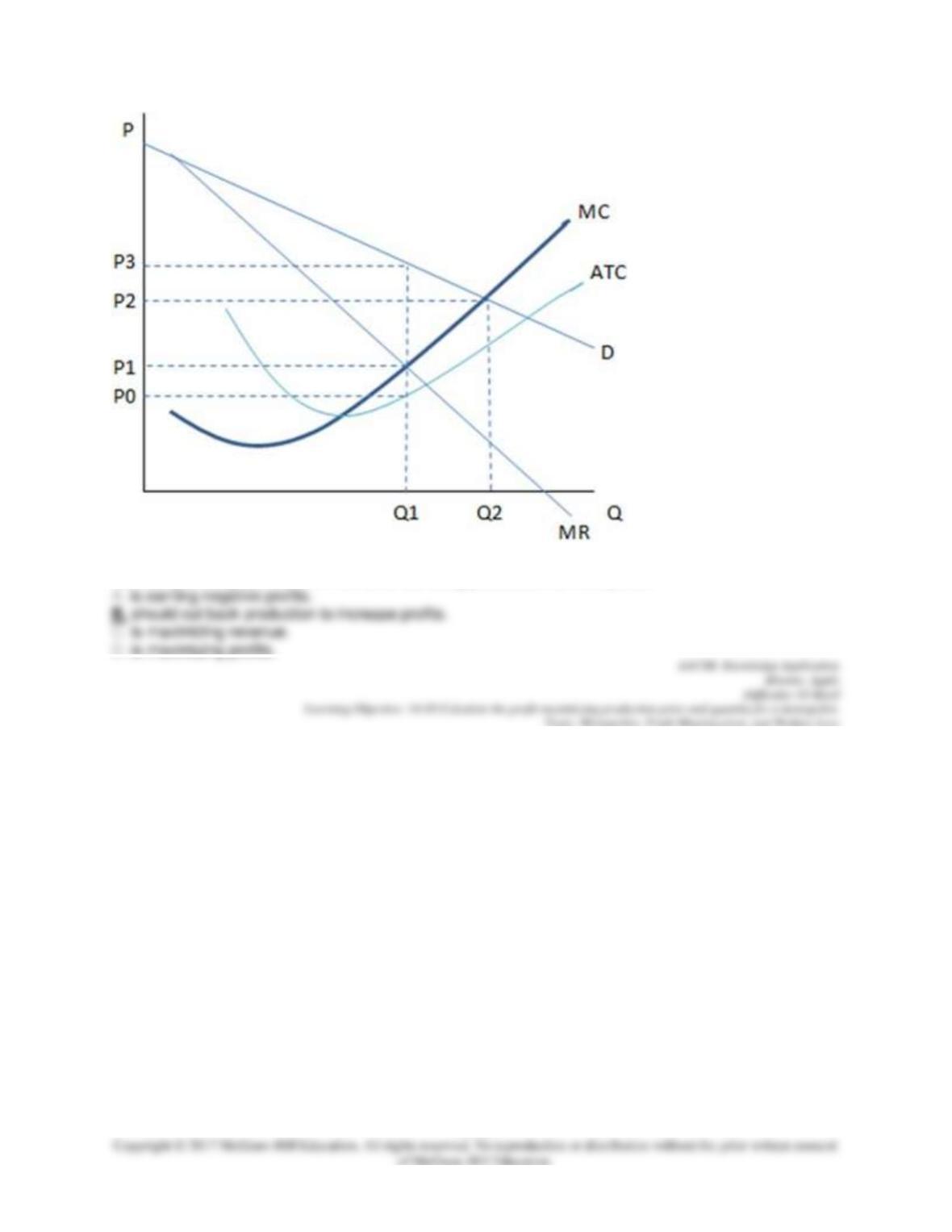
According to the graph shown, if Q2 units are being produced, this monopolist:
85. This graph shows the cost and revenue curves faced by a monopoly.
14–24
According to the graph shown, if Q1 units are being produced, this monopolist should:
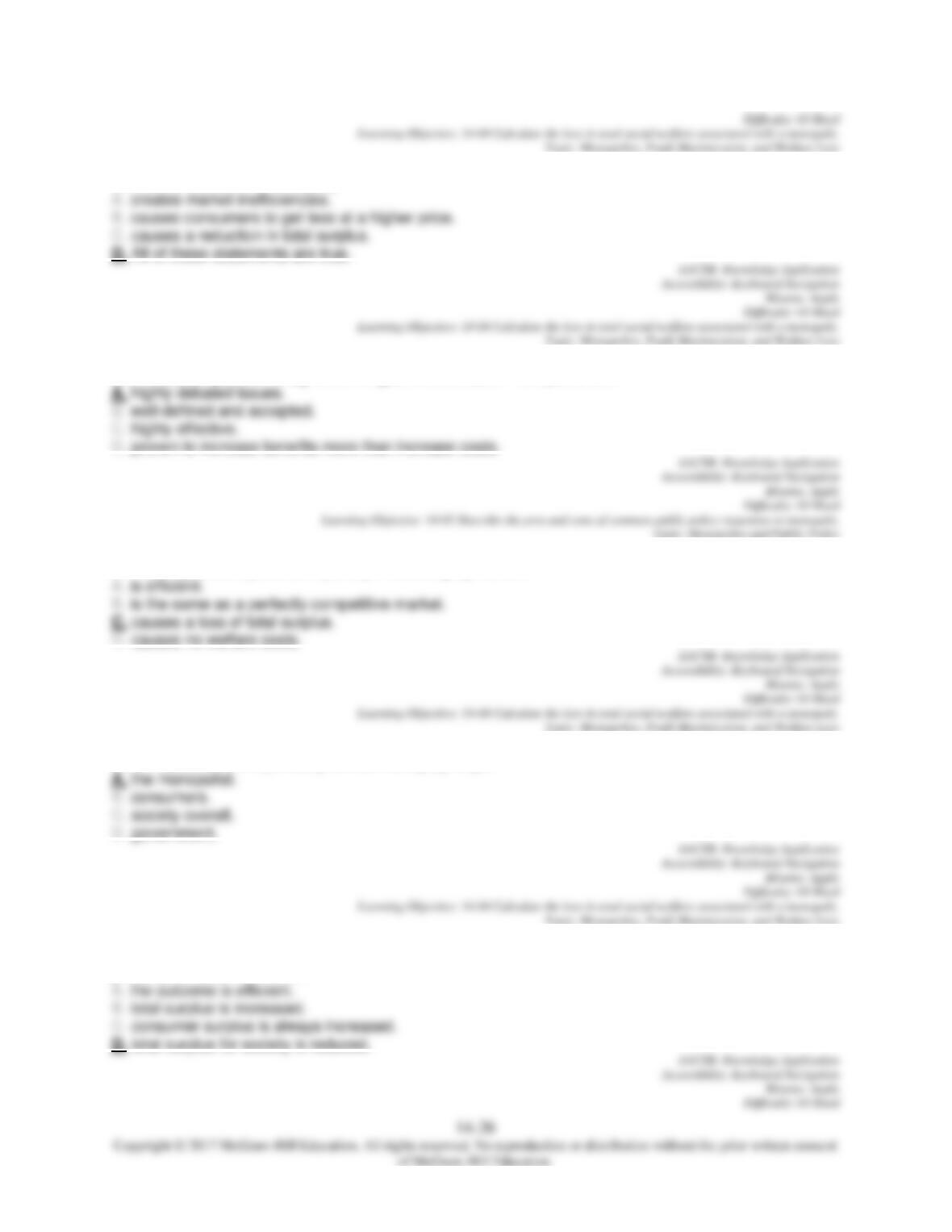
86. This graph shows the cost and revenue curves faced by a monopoly.
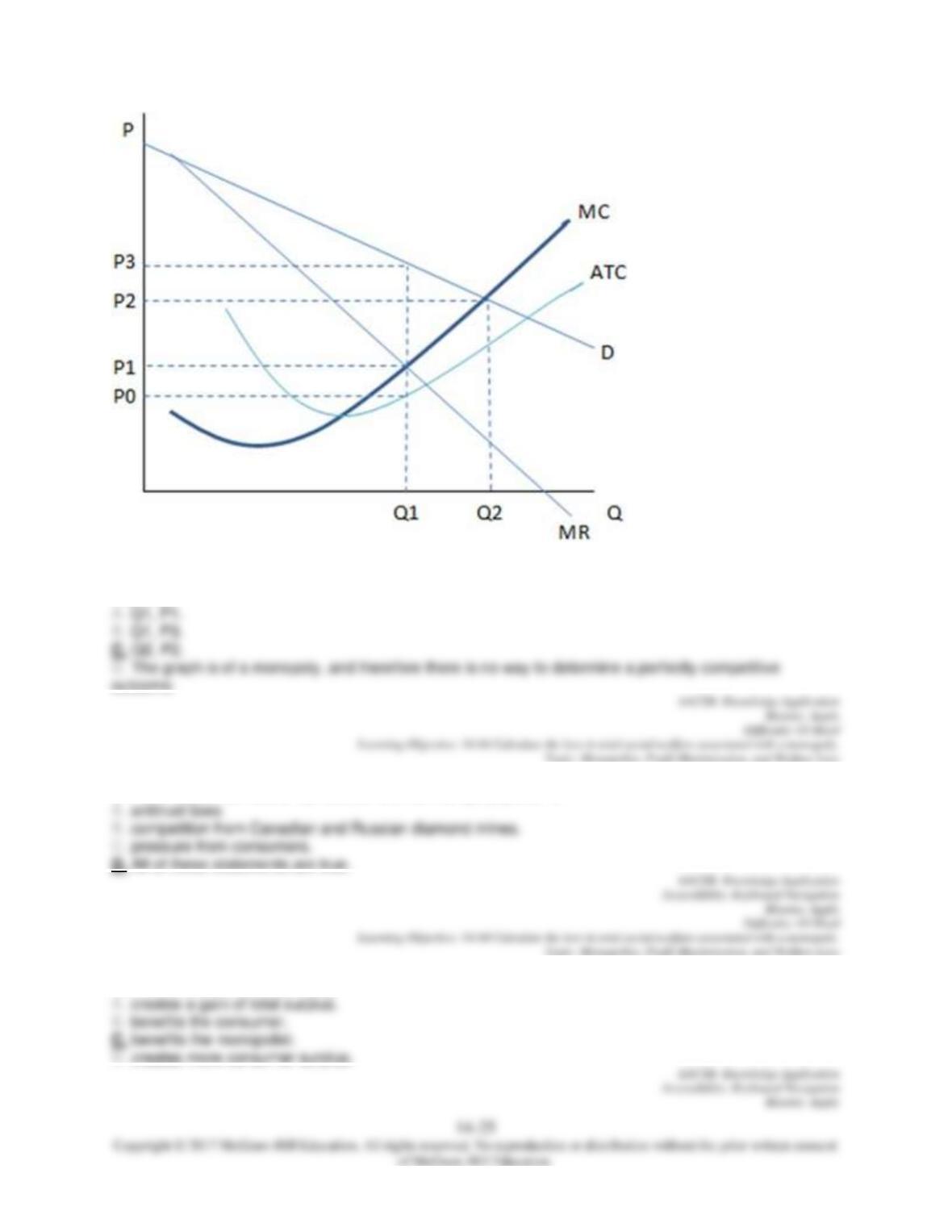
According to the graph shown, if this were a perfectly competitive market, the outcome in the short run
would be:
87. One reason De Beers has lost some of its monopoly power is:
88. The existence of a monopoly:
89. The existence of a monopoly:
90. The public policies designed to mitigate the effects of monopolies are:
91. The equilibrium price and quantity in a monopoly market:
92. The presence of a privately-owned monopoly helps:
93. For markets operating at quantities lower than the equilibrium quantity produced in an equivalent
perfectly competitive market:
94. The monopolist’s outcome happens at a:
95. The monopolist’s outcome happens at a:
96. The monopolist chooses to produce:
97. With a monopolist’s outcome, producer surplus is:
98. With a monopolist’s outcome, consumer surplus is:
99. In general, with a monopolist’s outcome, total surplus is:
100. In general, with a monopolist’s outcome:
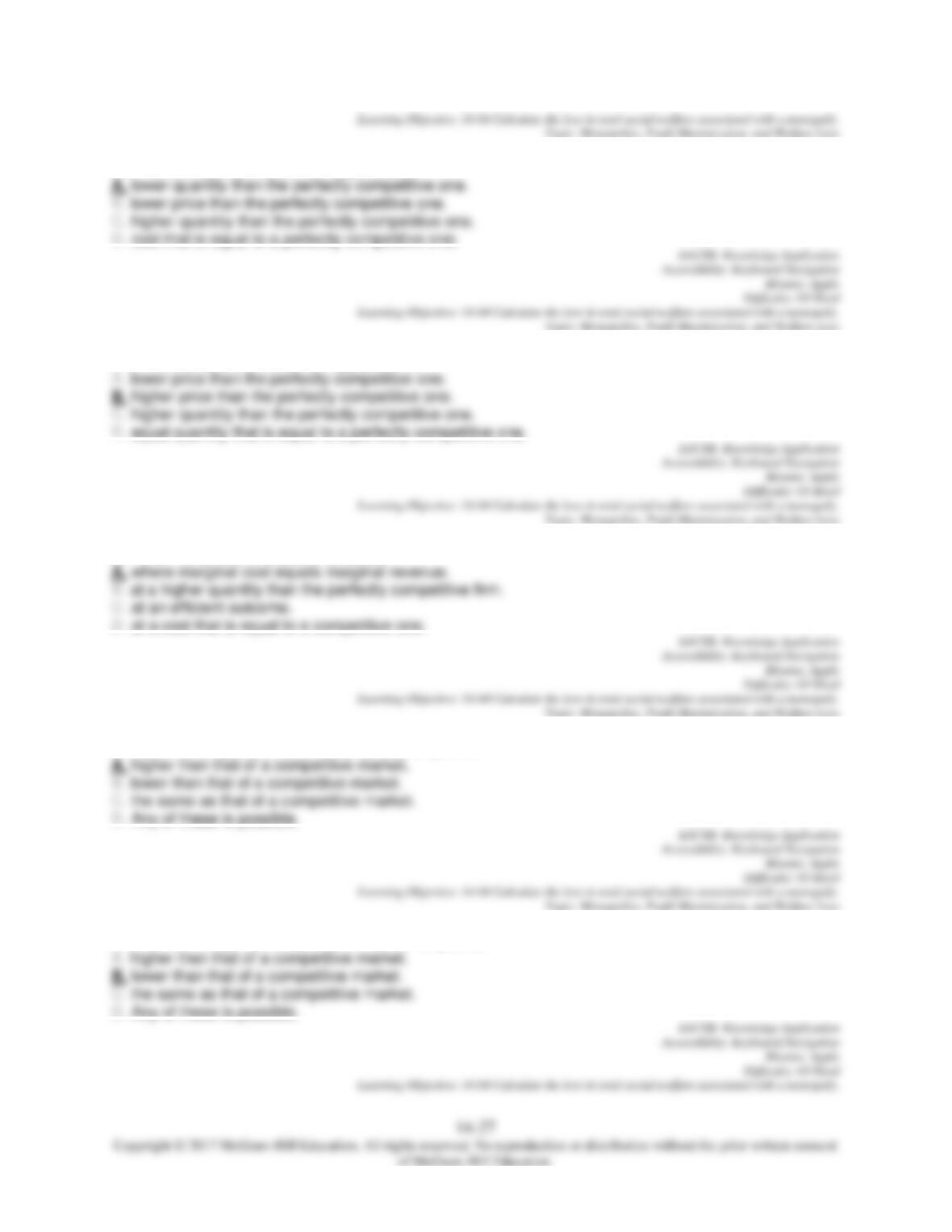
101. This graph shows the cost and revenue curves faced by a monopoly.
According to the graph, if the perfectly competitive outcome and monopoly outcome are compared, we
can see that the:
102. The advantages of maintaining monopolies:
103. Economists assume maximizing efficiency over other goals:
104. An example of a public policy response to a monopoly is:
105. An example of a public policy response to a monopoly is:
106. Public policy responses to monopolies:
107. Public policy responses to monopolies:
108. Some economists argue the best response to a monopoly is to:
109. Which of the following was not an industry the government has used the Sherman Act to break up
because it was a monopoly?
110. The government has used the Sherman Act to break up monopolies in which of the following
industries?
111. The Sherman Antitrust Act:
112. Two antitrust acts actively used by the U.S. government to prevent monopoly power in markets are
the ______________ and the ___________________.
113. The government uses the antitrust laws in place:
114. Antitrust activities by the government:
115. Antitrust activities can cause inefficiencies by:
116. Unregulated natural monopolies:
117. Natural monopolies:
118. A government-owned monopoly is more likely to:
119. A natural monopolist that sets prices equal to marginal cost will:
120. A natural monopolist that sets prices equal to marginal cost will:
121. When government owns a natural monopoly and avoids subsidies, it:
122. When government owns a natural monopoly, it can:
123. If an inefficient public monopoly cannot provide a service at a price that sufficient numbers of people
are willing to pay it:
124. The loss of the profit motive by a publicly owned natural monopoly could:
125. A consequence of a publicly owned natural monopoly is:
126. The loss of the profit motive by a publicly-owned natural monopoly causes which of the following to
happen?
127. When government agencies become privatized:
128. Privatization of government agencies:
129. The regulation of natural monopolies:
130. The regulation of natural monopolies is common in all of the industries except the:
131. The regulation of natural monopolies is common in which of the following industries?
132. To avoid subsidies, the government should cap the price for natural monopolies at their:
133. In theory, placing a price control on a natural monopoly should:
134. In practice, placing a price control on a natural monopoly:
135. One way the government can introduce competition into a monopoly industry is to:
136. When a government splits a natural monopoly vertically, it is breaking the company up:
137. Some argue that the best response to monopolies is no response at all, because:
138. Some argue the best response to monopolies is no response at all because:
139. The practice of charging customers different prices for the same good is called:
140. Price discrimination is:
141. Price discrimination exists:
142. Price discrimination:
143. Perfect price discrimination:
144. Perfect price discrimination:
145. In the real world, price discrimination is more difficult because:
146. In the real world:
14–38
Chapter 14 Test Bank Summary
Category
# of Questions
AACSB: Knowledge Application
61
AACSB: Reflective Thinking
85
Accessibility: Keyboard Navigation
131
Blooms: Apply
61
Blooms: Remember
32
Blooms: Understand
53
Difficulty: 01 Easy
32
Difficulty: 02 Medium
53
Difficulty: 03 Hard
61
Learning Objective: 14-01 List four barriers to entry into monopoly markets.
32
Learning Objective: 14-02 Explain why a monopolist is constrained by demand.
8
Learning Objective: 14-03 Calculate the profit-
maximizing production price and quantity for a monopolist.
45
Learning Objective: 14-
04 Calculate the loss in total social welfare associated with a monopoly.
15
Learning Objective: 14-
05 Describe the pros and cons of common public policy responses to monopoly.
38
Learning Objective: 14-
06 Explain why a firm has an incentive to use price discrimination when possible.
8
Topic: Monopolies
31
Topic: Monopolies and Demand
8
Topic: Monopolies and Public Policy
38
Topic: Monopolies and Revenue
39
Topic: Monopolies, Profit Maximization, and Welfare Loss
21
Topic: Price Discrimination
8