Chapter 13 – Wage Determination (+ Appendix)
93. Refer to the above graph. If a monopsonist bargains with an inclusive union, as shown, the
wage rate will be:
94. A bilateral monopoly is a situation where a firm is:
95. Under conditions of imperfect competition in the labor market, union efforts to increase
wages:
Chapter 13 – Wage Determination (+ Appendix)
96. Critics of the minimum wage argue that an increase in the minimum wage rate above the
equilibrium rate of a purely competitive labor market would:
97. Critics contend that imposing a minimum wage higher than the equilibrium wage in a
competitive industry would:
98. Minimum wage in the U.S. is:
Chapter 13 – Wage Determination (+ Appendix)
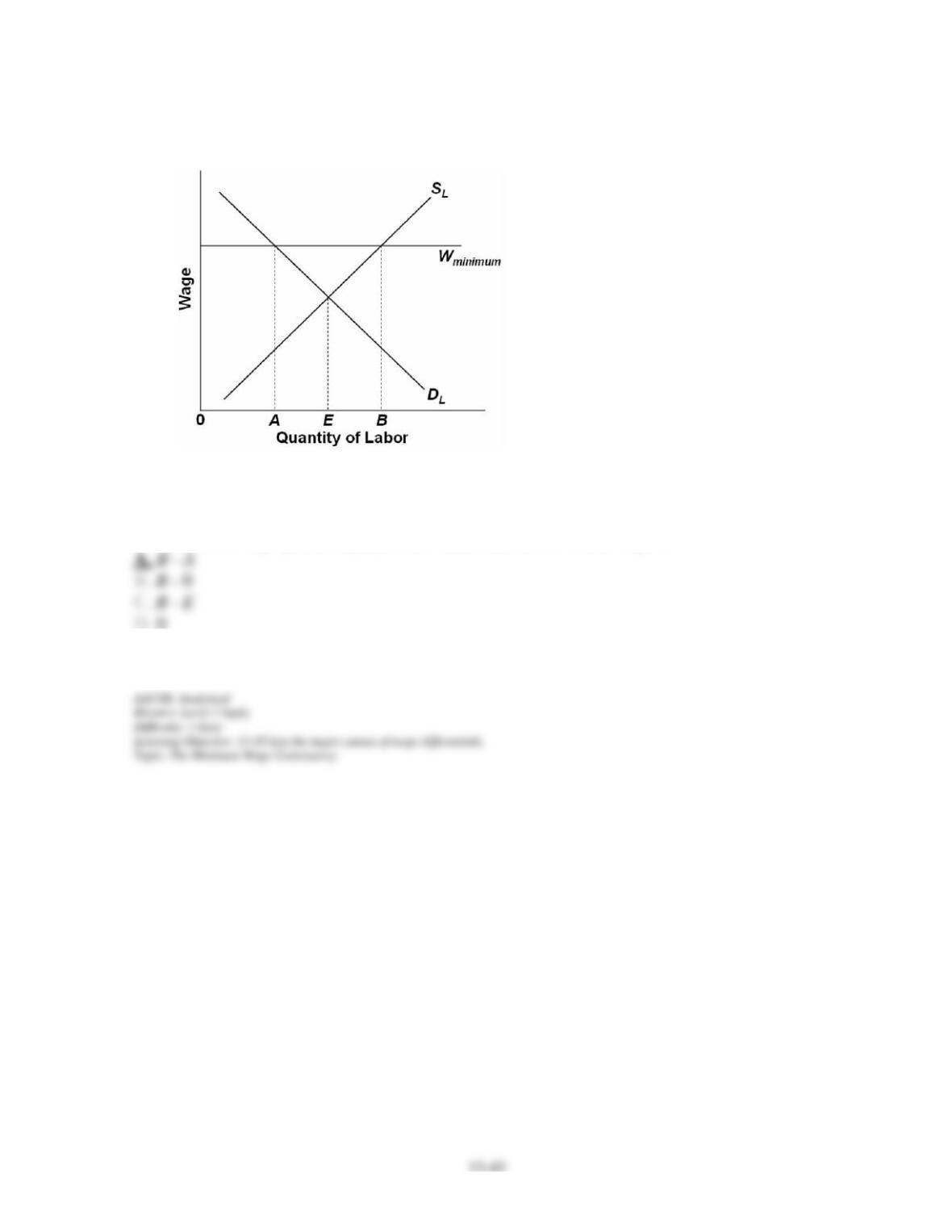
99. In the above graph, unemployment created by the minimum wage is:
Chapter 13 – Wage Determination (+ Appendix)
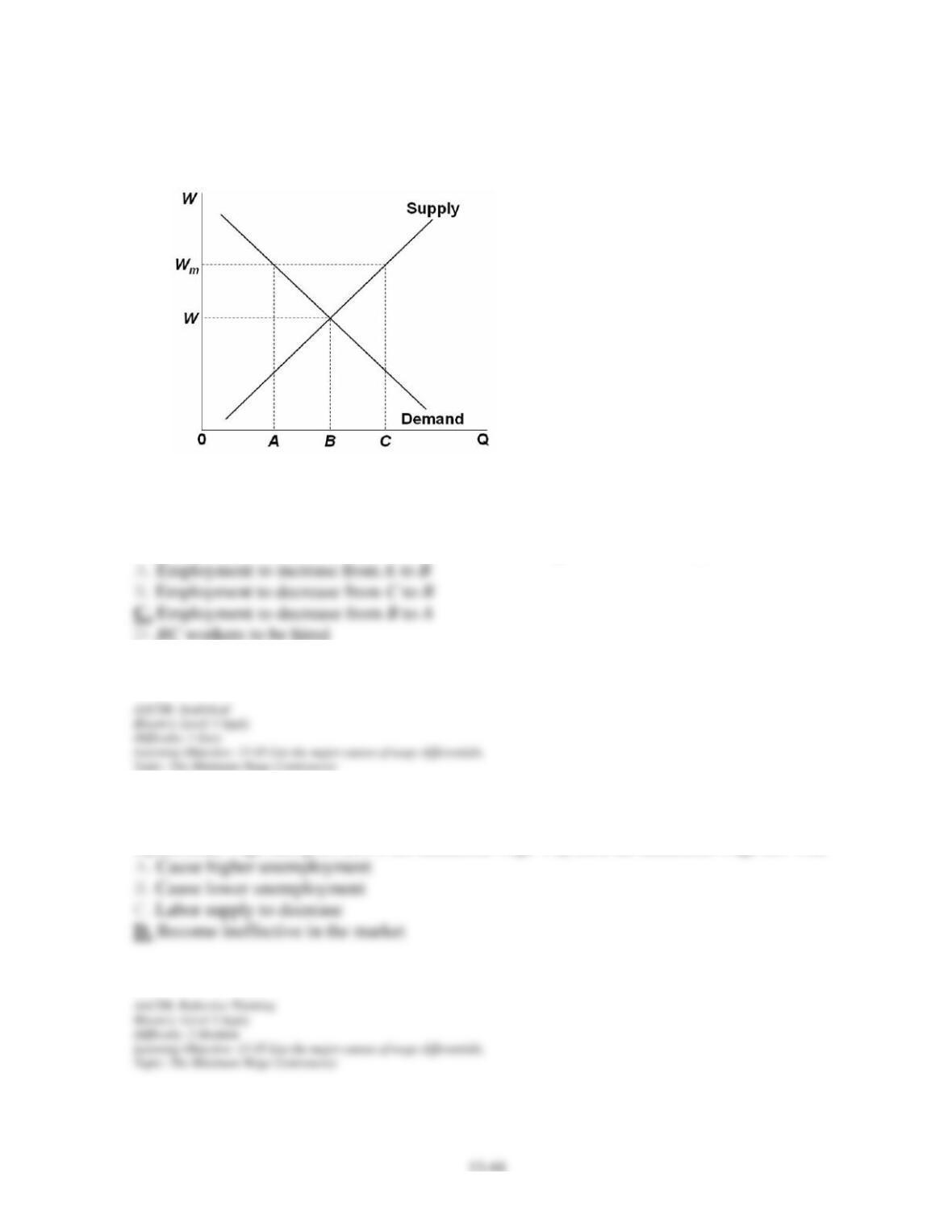
100. In the labor market shown above, if a minimum wage level is set at Wm, it will cause:
101. In the labor market shown above, if the demand for labor increases so that the
equilibrium wage rate goes above the minimum wage Wm, then the minimum-wage law will:
Chapter 13 – Wage Determination (+ Appendix)
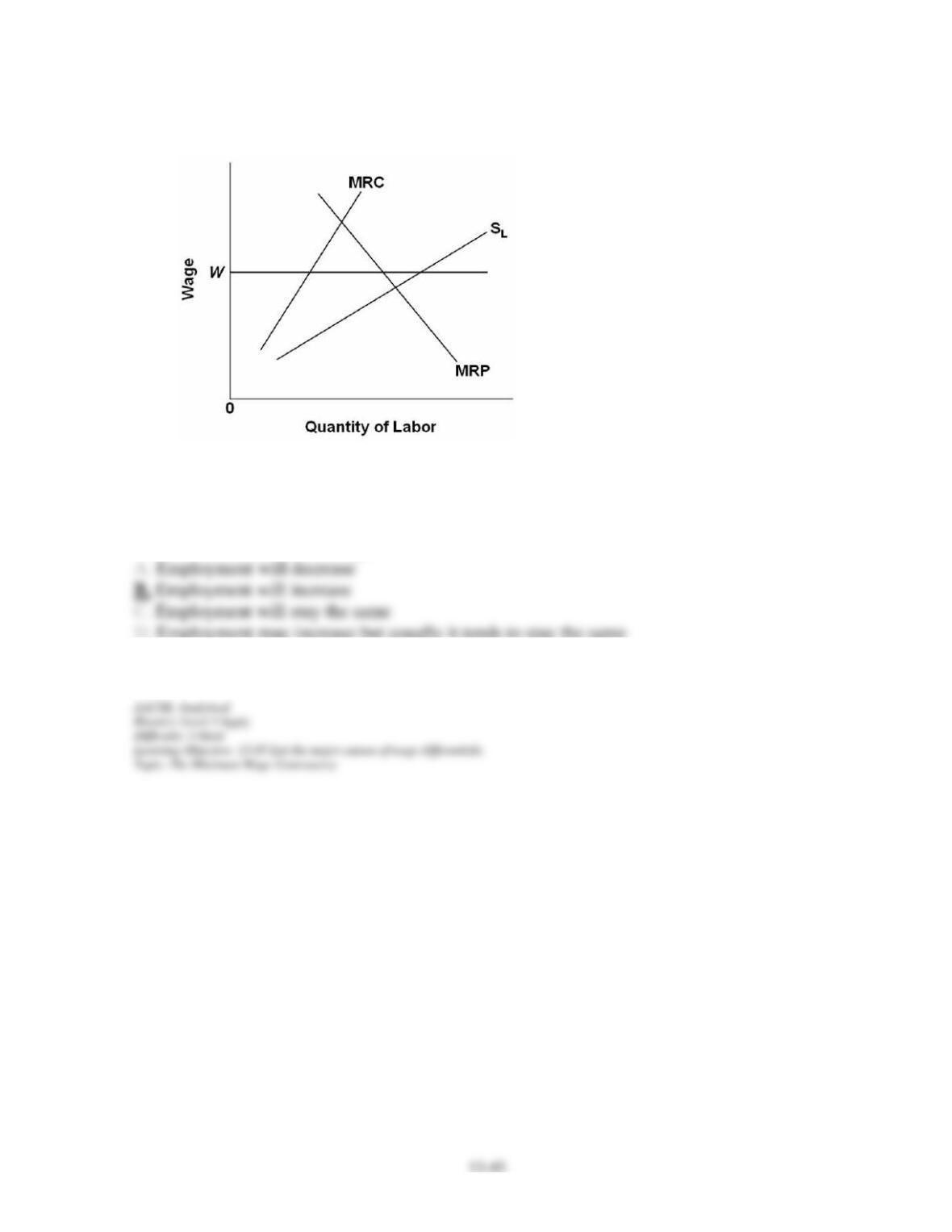
102. If a minimum wage is set at W, what will happen to employment in the monopsonistic
labor market shown in the diagram above?
Chapter 13 – Wage Determination (+ Appendix)
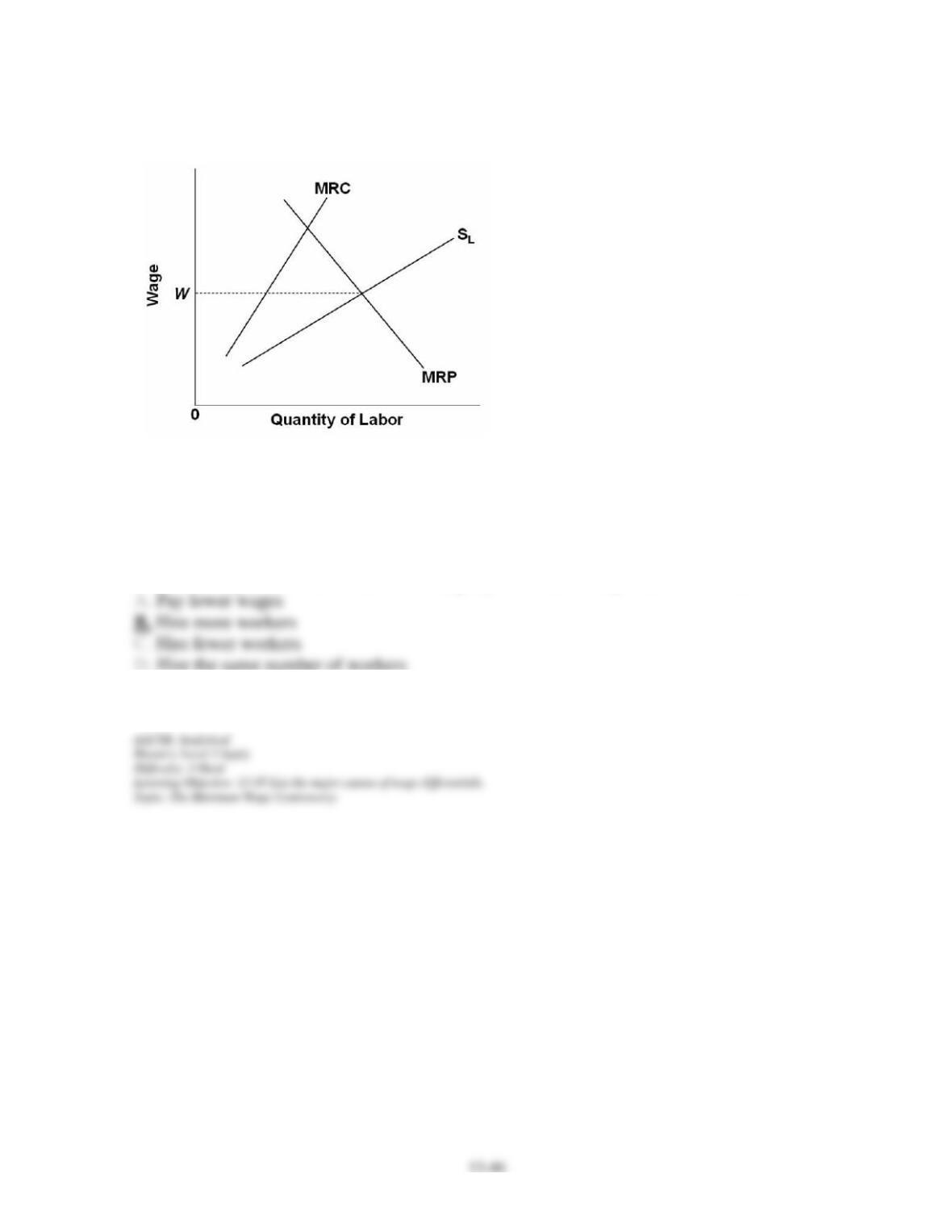
103. Relevant economic data for Company Town Mining, Inc., is shown above. The labor
force (including those not now working) of Company Town organizes and demands a
minimum wage, W, for all workers. If Company Town Inc. accepts the offer it will:
Chapter 13 – Wage Determination (+ Appendix)
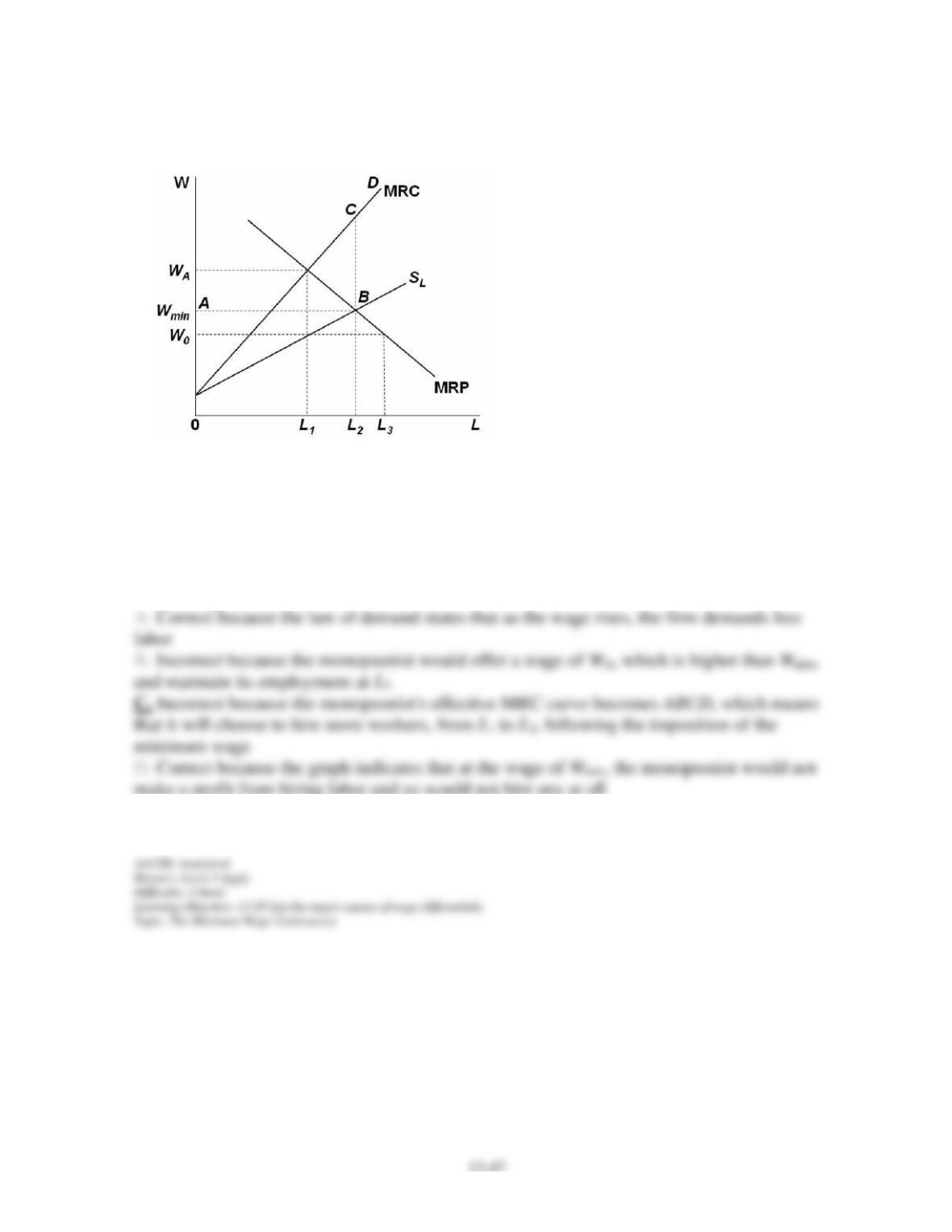
104. Senator Approxmire opposes a proposal requiring that the monopsonist pay a minimum
wage of at least Wmin, stating: “Even if the labor market is monopsonistic, economic theory
unambiguously demonstrates that imposing a minimum wage causes employment to fall.”
Senator Approxmire is:
Chapter 13 – Wage Determination (+ Appendix)
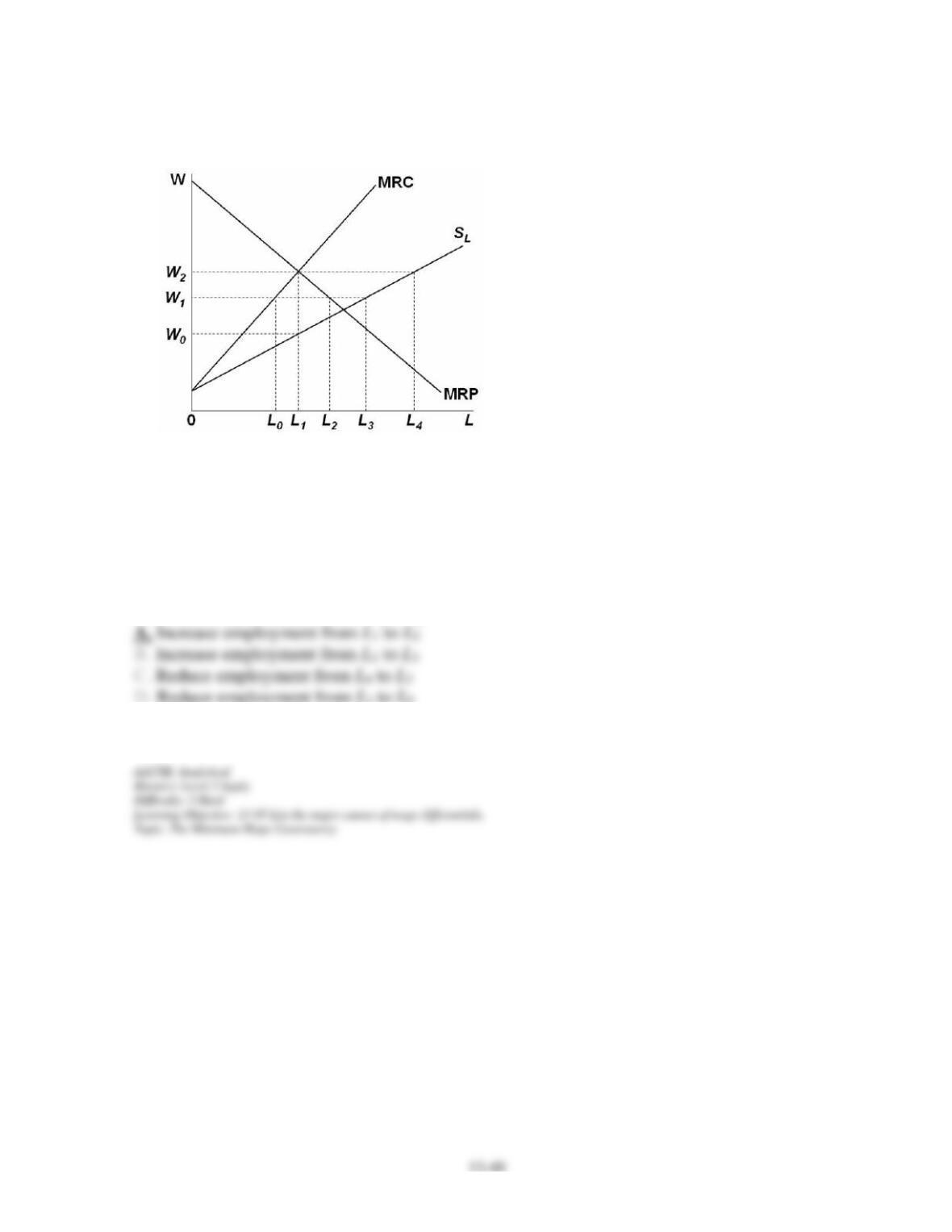
105. Consider a company town where the ABC Corporation is the only employer. Assume
ABC sells its output in a purely competitive market. The city council is considering a
proposal to lower the minimum wage from its current level of W2 to W1, as shown in the graph
above. Given the marginal revenue product of labor (MRP), labor supply (SL), and marginal
cost of labor (MRC) curves, this policy would:
Chapter 13 – Wage Determination (+ Appendix)
106. Wage differentials occur for all the following reasons except:
107. Equilibrium price differentials for productive resources:
108. Why do skilled workers generally earn more than unskilled workers?
Chapter 13 – Wage Determination (+ Appendix)
109. A college graduate who works at a firm is also working part-time on a master’s degree in
business and expects to be paid a higher wage after earning the degree. The basic reason for
this wage differential is:
110. The major reason that presidents of major corporations receive an average salary of over
$1 million a year and truck drivers receive an average salary of about $50,000 a year can best
be explained by:
111. The reason that unskilled construction workers typically receive higher wages than retail
sales clerks is best explained by:
Chapter 13 – Wage Determination (+ Appendix)
112. The lack of job information for workers would be an example of what explanation for
wage differentials among workers?
113. Discrimination that results in minorities being paid less than whites for identical work
would be an example of what explanation for wage differentials?
114. Nonmonetary considerations tend to be most important in the allocation of:
Chapter 13 – Wage Determination (+ Appendix)
115. Other things being equal, the wages of clerical workers would tend to decrease if there
was an increase in:
116. Geographic immobility in the labor force results in:
117. Which action taken by a worker would not be an investment in human capital?
Chapter 13 – Wage Determination (+ Appendix)
118. According to proponents of human capital theory, education:
119. The principal-agent problem as it applies to labor employment refers to:
120. A firm pays the market equilibrium wage of $15.00 an hour, and the workers produce 25
units of output an hour. If the firm adopts an efficiency-wage policy, then the wage rate for
these workers would be expected to: