Chapter 13 – Wage Determination (+ Appendix)
54. The economic term for a firm that is the sole buyer in a market is:
55. In a monopsonistic labor market the employer will maximize profits by employing
workers up to that point at which:
56. A firm can hire six workers at a wage rate of $8 per hour but must pay $9 per hour to all
of its employees to attract a seventh worker. The marginal wage cost of the seventh worker
is:
Chapter 13 – Wage Determination (+ Appendix)
57. Suppose the MRP of a firm’s twelfth worker is $22 and the worker’s marginal wage cost is
58. In monopsony:
59. Which of the following is most likely to be an example of monopsony?
Chapter 13 – Wage Determination (+ Appendix)
60. If a firm faces an upsloping labor supply curve (and there is no union or minimum wage),
its:
61. A monopsonist’s wage cost in hiring an additional worker is the:
62. A monopsonistic employer:
Chapter 13 – Wage Determination (+ Appendix)
63. Other things equal, the monopsonistic employer will pay a:
64. Assume the Ajax Mining Company hires 80 percent of the nonunion labor force of
Mother Lode, New Mexico. Also, suppose that this labor force is highly immobile.
Economists would describe this employer as a:
65. A monopsonistic employer in an unorganized (nonunion) labor market will:
Chapter 13 – Wage Determination (+ Appendix)
66. As compared to a purely competitive labor market, in a nonunionized monopsonistic labor
market wages:
67. “Player drafts” of professional athletes:
68. Which of the following is not correct?
Chapter 13 – Wage Determination (+ Appendix)
69. A monopsonistic employer’s marginal resource (labor) cost curve:
70. The critical feature of a monopsonistic labor market is that the employer:
71. If a firm is a monopsonist in the hiring of both labor and capital, it will obtain the profit-
maximizing quantities of labor and capital when:
Chapter 13 – Wage Determination (+ Appendix)
72. If a firm is hiring variable resources D and F in imperfectly competitive input markets, it
will maximize profits by employing D and F in such quantifies that:
Answer the question on the basis of the following supply information facing a single firm in a
particular labor market:
73. Refer to the above information. This labor supply curve demonstrates that:
Chapter 13 – Wage Determination (+ Appendix)
74. Refer to the above information. The marginal resource (labor) cost of the third worker is:
75. Empirical studies suggest that, other things equal, the smaller the number of hospitals in a
city, the lower are nurses’ wages. This is evidence that:
Chapter 13 – Wage Determination (+ Appendix)
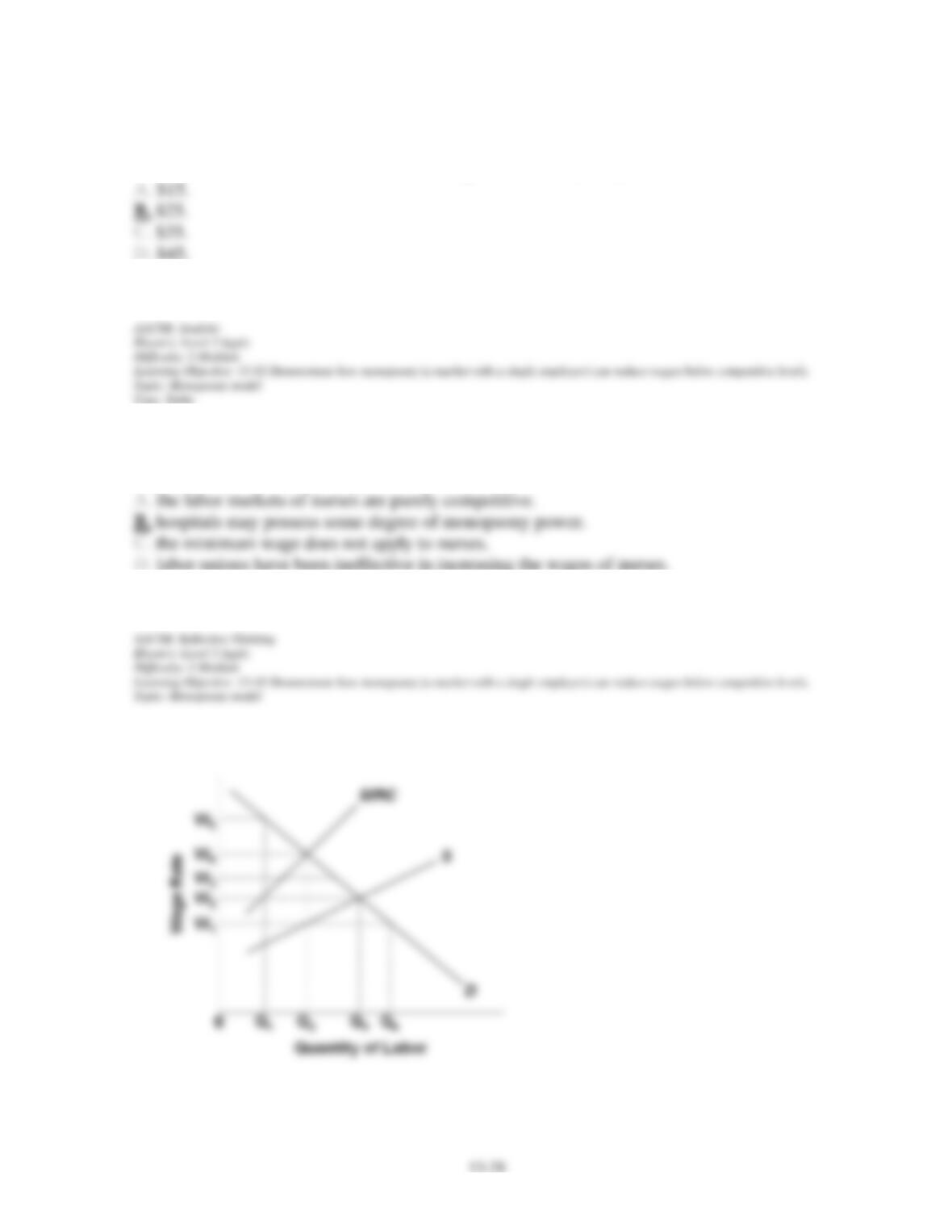
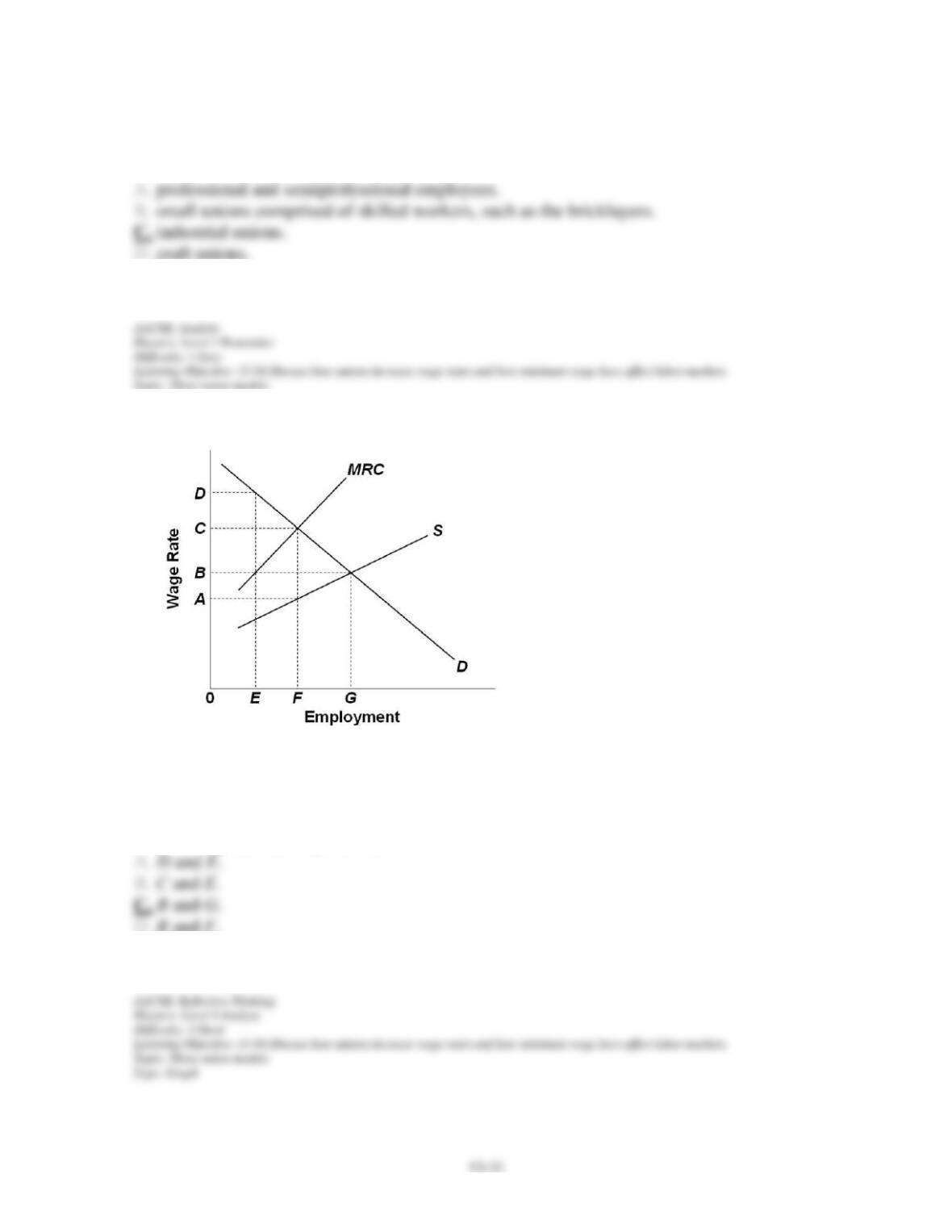
76. If the above diagram were relevant to an individual firm, we could conclude that the firm
is:
77. Refer to the above diagram. The MRC curve lies above the labor supply curve because:
78. Refer to the above diagram. Assuming no union or relevant minimum wage, the firm
represented will hire:
Chapter 13 – Wage Determination (+ Appendix)
79. Refer to the above diagram. An industrial (inclusive) union could increase employment in
this labor market:
80. Refer to the above diagram. An industrial union could maximize employment by
negotiating a wage rate of:
81. Which of the following tactics is most associated with the demand-enhancement union
model?
Chapter 13 – Wage Determination (+ Appendix)
82. Inclusive unionism is practiced mostly by:
83. Refer to the above diagram. If this labor market is purely competitive, the wage rate and
level of employment respectively will be:
Chapter 13 – Wage Determination (+ Appendix)
84. Refer to the above diagram. If this labor market is monopsonistic, the wage rate and level
of employment respectively will be:
85. Refer to the above diagram. Assume that an inclusive union is formed to bargain with the
monopsonistic employer of the previous question. To what level can this union increase the
wage rate without causing the number of jobs to decline below that which the monopsonist
would otherwise have provided?
86. Refer to the above diagram. If an inclusive union seeks to maximize the number of jobs
available for its members, what wage rate will it seek to impose on the monopsonist?
Chapter 13 – Wage Determination (+ Appendix)
87. A craft union attempts to increase wage rates by:
88. Occupational licensing has much the same effect as:
89. Occupational licensing:
Chapter 13 – Wage Determination (+ Appendix)
90. If an exclusive union is successful in restricting the supply of labor, the:
91. If an industrial union is formed to bargain with a monopsonistic employer, then in this
labor market:
92. The electricians’ union is a good example of:
Chapter 13 – Wage Determination (+ Appendix)
93. Labor unions may attempt to raise wage rates by:
94. Construction workers frequently sponsor political lobbying in support of greater public
spending on highways and public buildings. One reason for this is to:
95. Unions often oppose increases in the prices of complementary inputs (for example, truck
drivers may oppose increases in taxes on diesel fuel). They do this because increases in the
prices of complementary inputs might:
Chapter 13 – Wage Determination (+ Appendix)
96. Craft unions:
97. Labor unions are restrained in their wage demands because:
Chapter 13 – Wage Determination (+ Appendix)
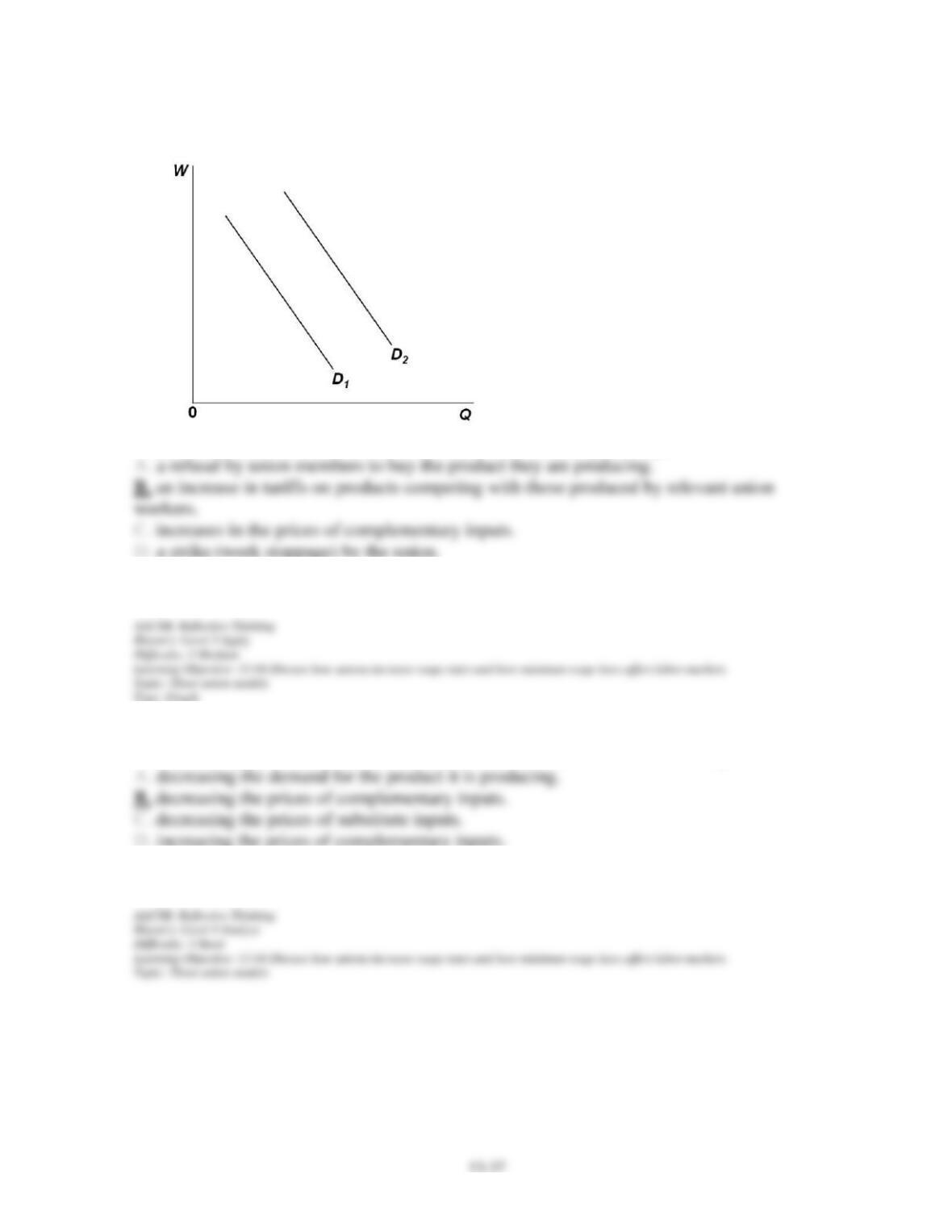
98.
A shift in union labor demand from D1 to D2 in the above diagram might be the result of:
99. A union might increase the demand for the labor services of its members by:
Chapter 13 – Wage Determination (+ Appendix)
100. Authoritative estimates suggest that currently union workers on the average:
101. In a labor market characterized by bilateral monopoly the wage rate will:
102. If a single large employer bargains with an inclusive union, the resulting labor market
model can best be described as:
Chapter 13 – Wage Determination (+ Appendix)
103. Bilateral monopoly occurs where:
Chapter 13 – Wage Determination (+ Appendix)
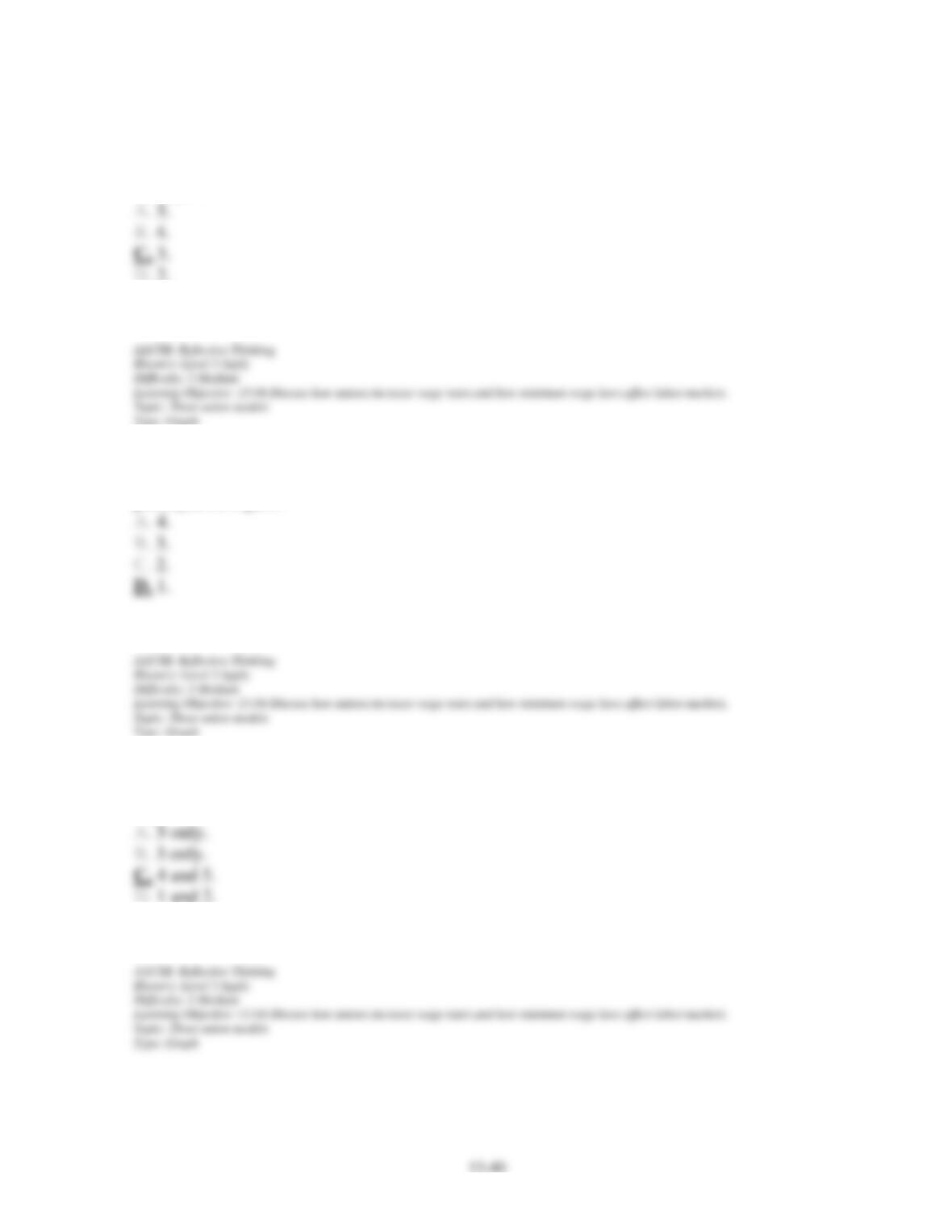
104. Refer to the above labor market diagrams. A monopsonistic labor market is represented
by Figure:
105. Refer to the above labor market diagrams. The tactics of exclusive unionism are
portrayed in Figure:
106. Refer to the above labor market diagrams. The tactics of inclusive unionism are shown in
Figure(s):