Chapter 13 – Wage Determination (+ Appendix)
45. For a monopsonist in the labor market, the marginal resource cost of labor is:
46. Professional sports leagues, like the NFL and the NBA, are good examples of monopsony
because:
Chapter 13 – Wage Determination (+ Appendix)
47. A firm faces the labor productivity and cost schedule in the table above. What is the
marginal resource cost of the seventh worker?
48. A firm faces the labor productivity and cost schedule in the table above. How many
workers will this profit-maximizing firm employ?
49. A firm faces the labor productivity and cost schedule in the table above. The wage rate
schedule suggests that the firm:
Chapter 13 – Wage Determination (+ Appendix)
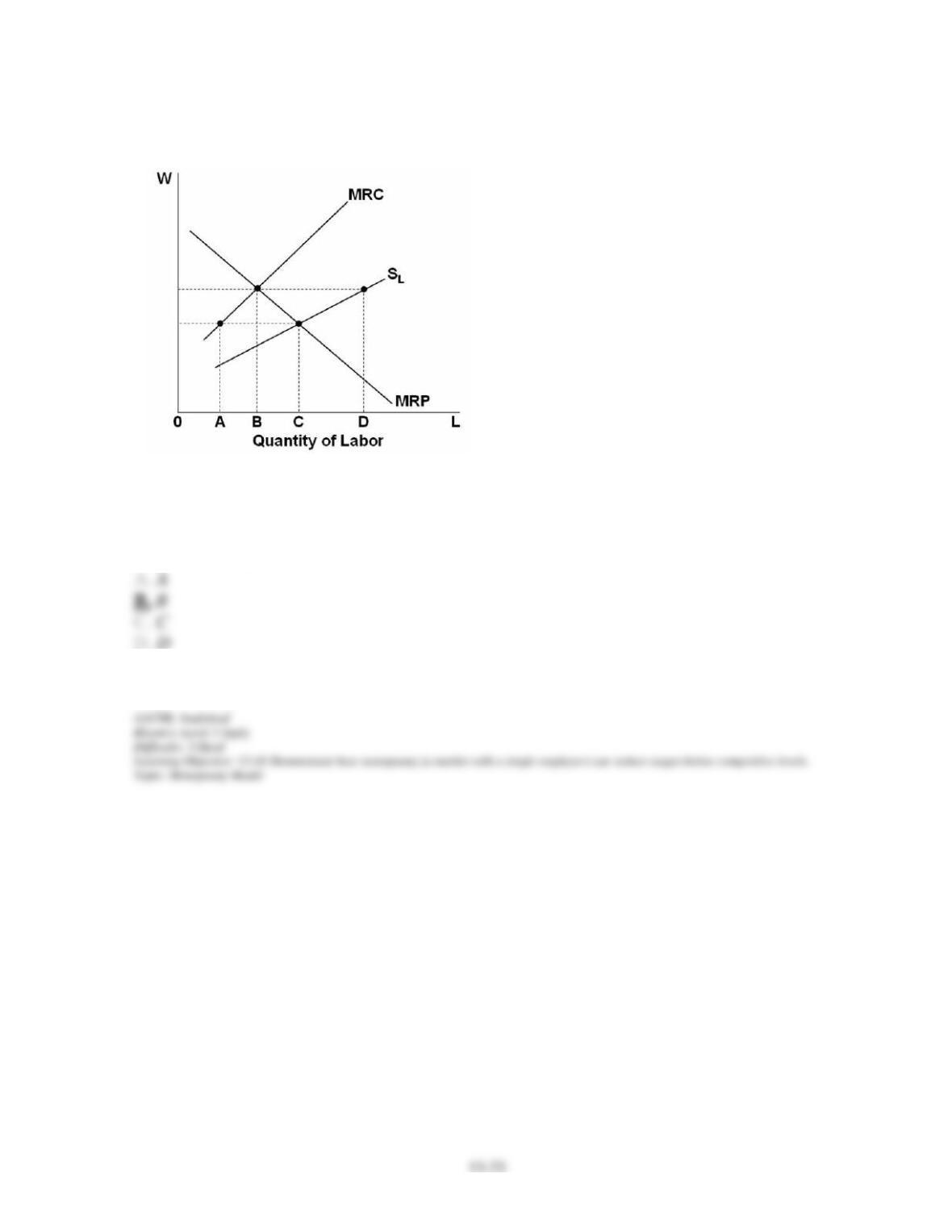
50. The profit-maximizing level of employment by the monopsonist in the labor market
shown above will be:
Chapter 13 – Wage Determination (+ Appendix)
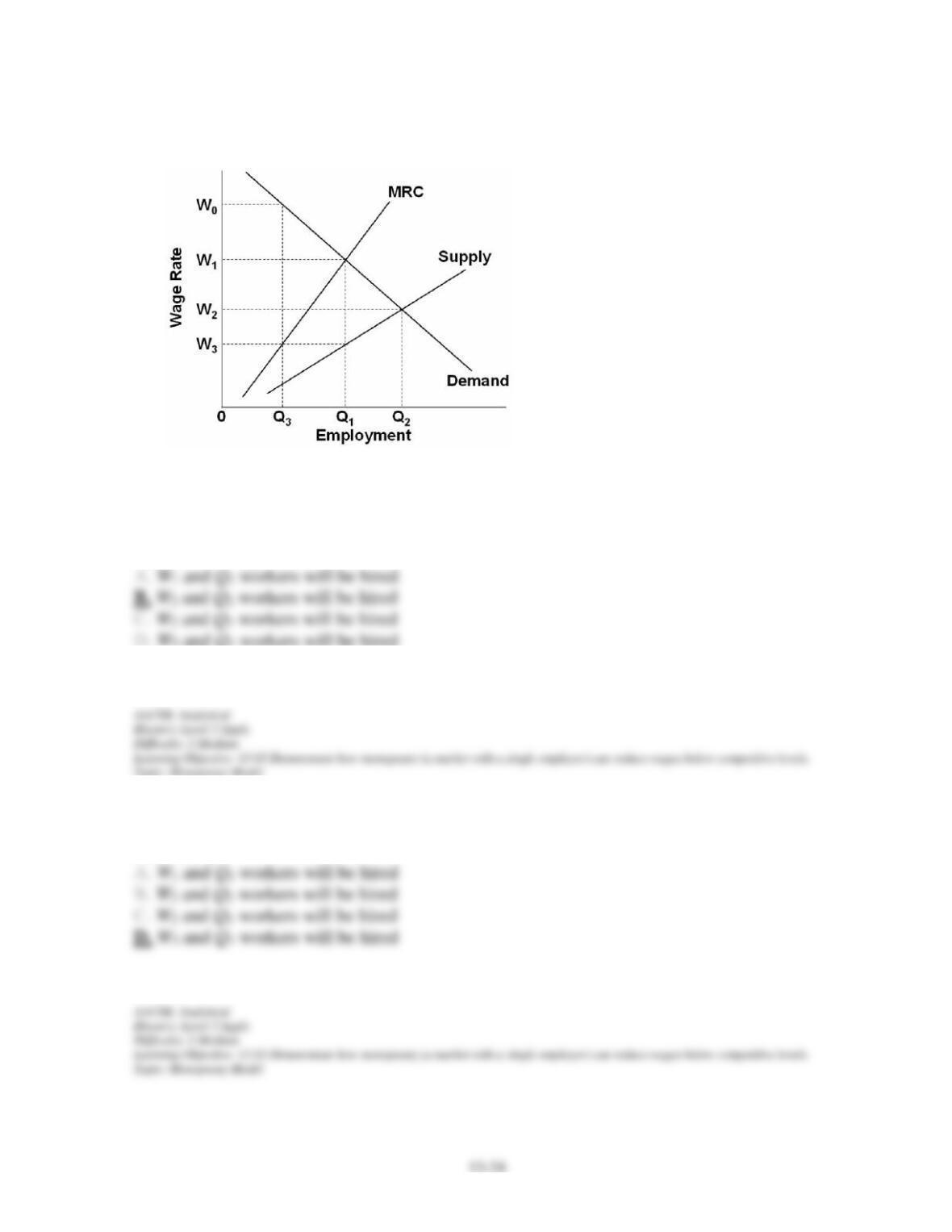
51. Refer to the above graph. Under purely competitive conditions in this labor market, the
equilibrium wage rate will be:
52. Refer to the above graph. Under a monopsony in this labor market, the equilibrium wage
rate will be:
Chapter 13 – Wage Determination (+ Appendix)
53. Refer to the above graph. Comparing a monopsony against a purely competitive labor
market, the difference in the equilibrium wage rate will be:
54. Compared to a purely competitive firm, a monopsonist will pay:
55. Suppose the wage rate is $5, and the marginal revenue product (MRP) of the seventh
worker at a yo-yo factory is also equal to $5. The labor market was originally purely
competitive, but is then monopsonized without changing the MRP of the seventh worker. That
means:
Chapter 13 – Wage Determination (+ Appendix)
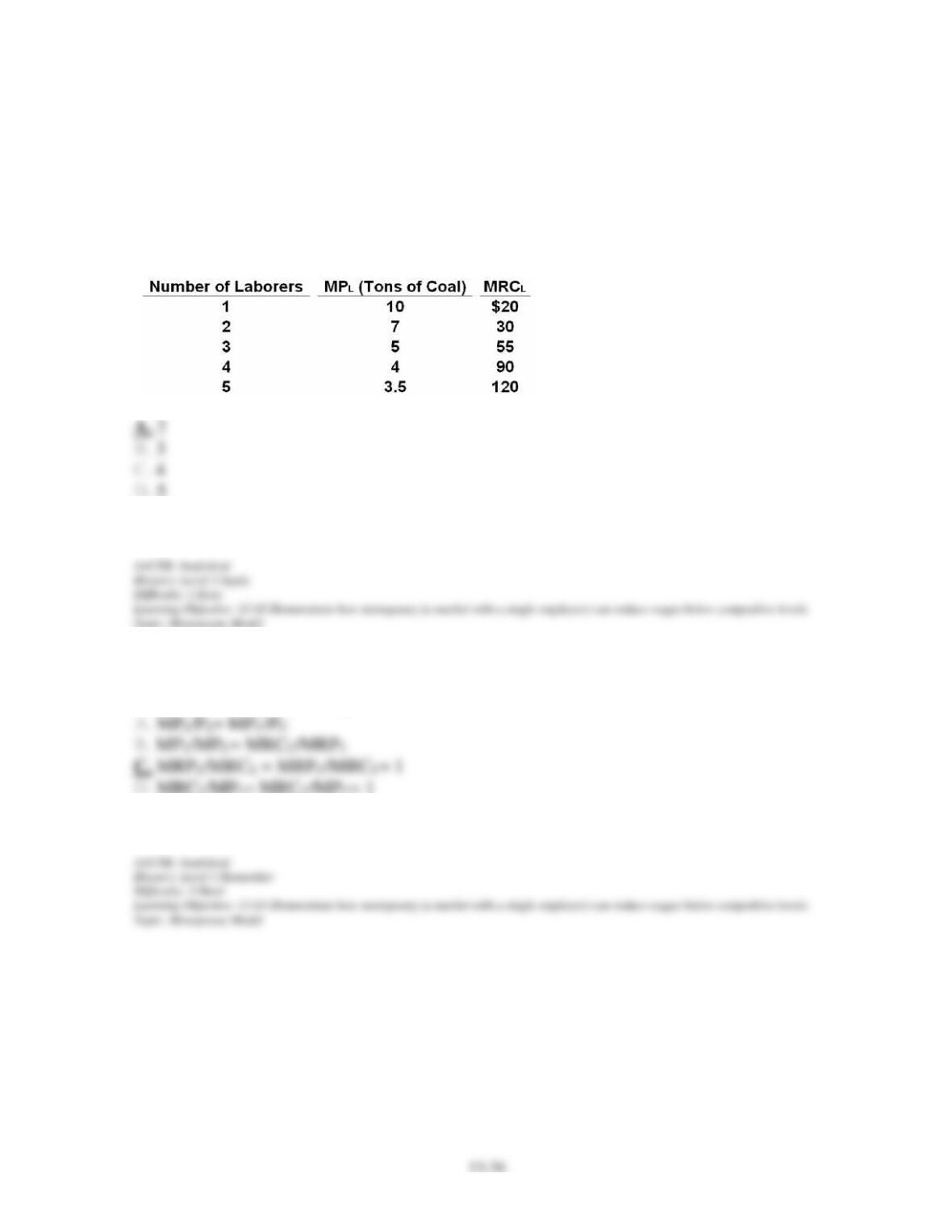
56. Consider the case of Eastover Coal Mining Company, operating its mine in the small,
isolated town of Eastover, Kentucky. The following data describe the firm where MPL=
marginal product of labor and MRCL= marginal resource cost of labor. If the firm sells its coal
in a purely competitive market for $10 per ton, how many laborers should it hire?
57. The profit-maximizing rule for a firm hiring both labor (L) and capital (C) under
conditions of imperfect competition is:
Chapter 13 – Wage Determination (+ Appendix)
13–27
58. Given: MRP = marginal revenue product; MRC = marginal resource cost; W = wage rate.
A firm that sells its product in a purely competitive market, but is a monopsonist in its labor
market, would hire the quantity of labor where:
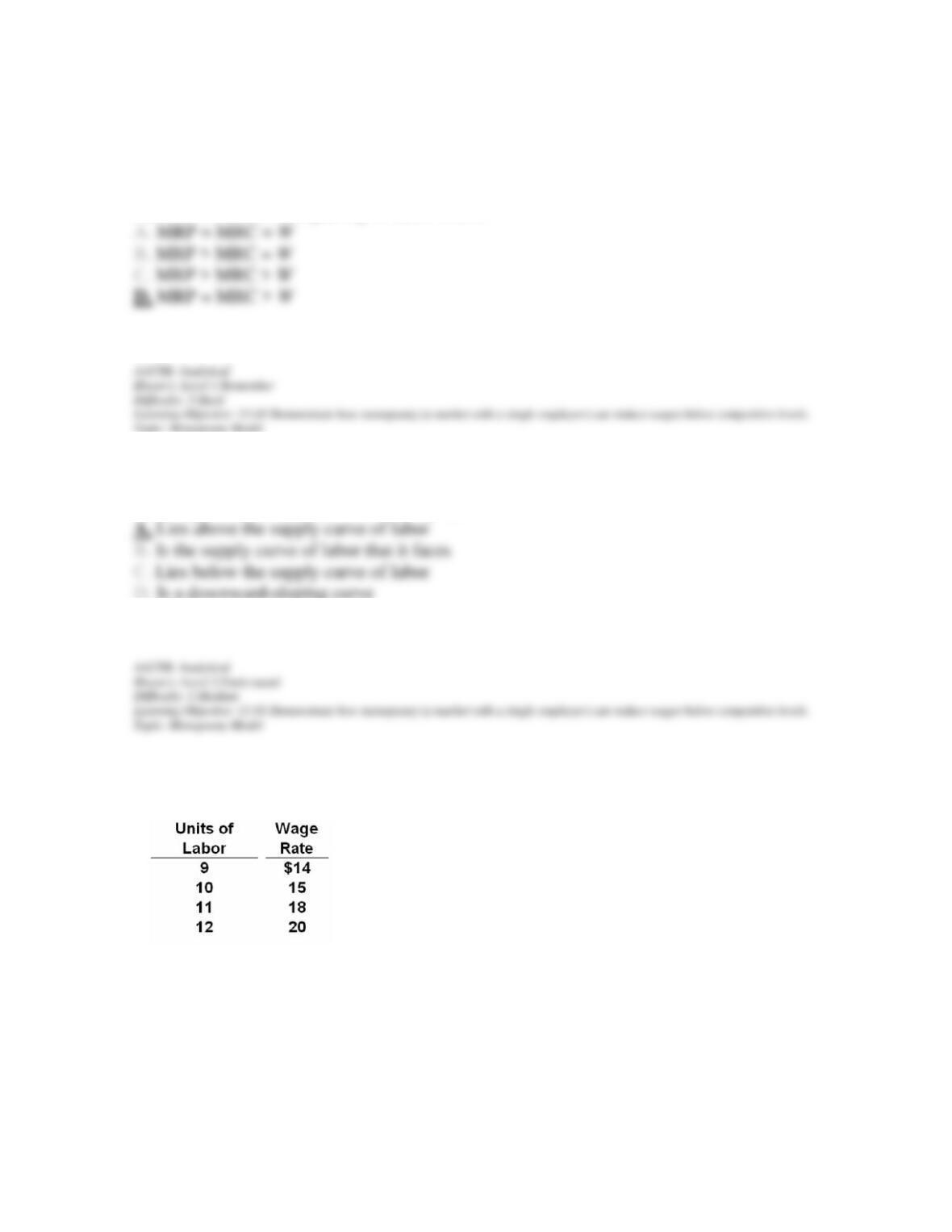
59. If an employer has to raise the wage rate of workers in order to employ more labor, then
the marginal labor cost curve of the employer:
Monopsonist’s employment schedule.
Chapter 13 – Wage Determination (+ Appendix)
13–28
60. Refer to the above table. What is the total resource cost for 11 workers?
61. Refer to the above table. What is the firm’s marginal resource cost when it hires the
eleventh worker?
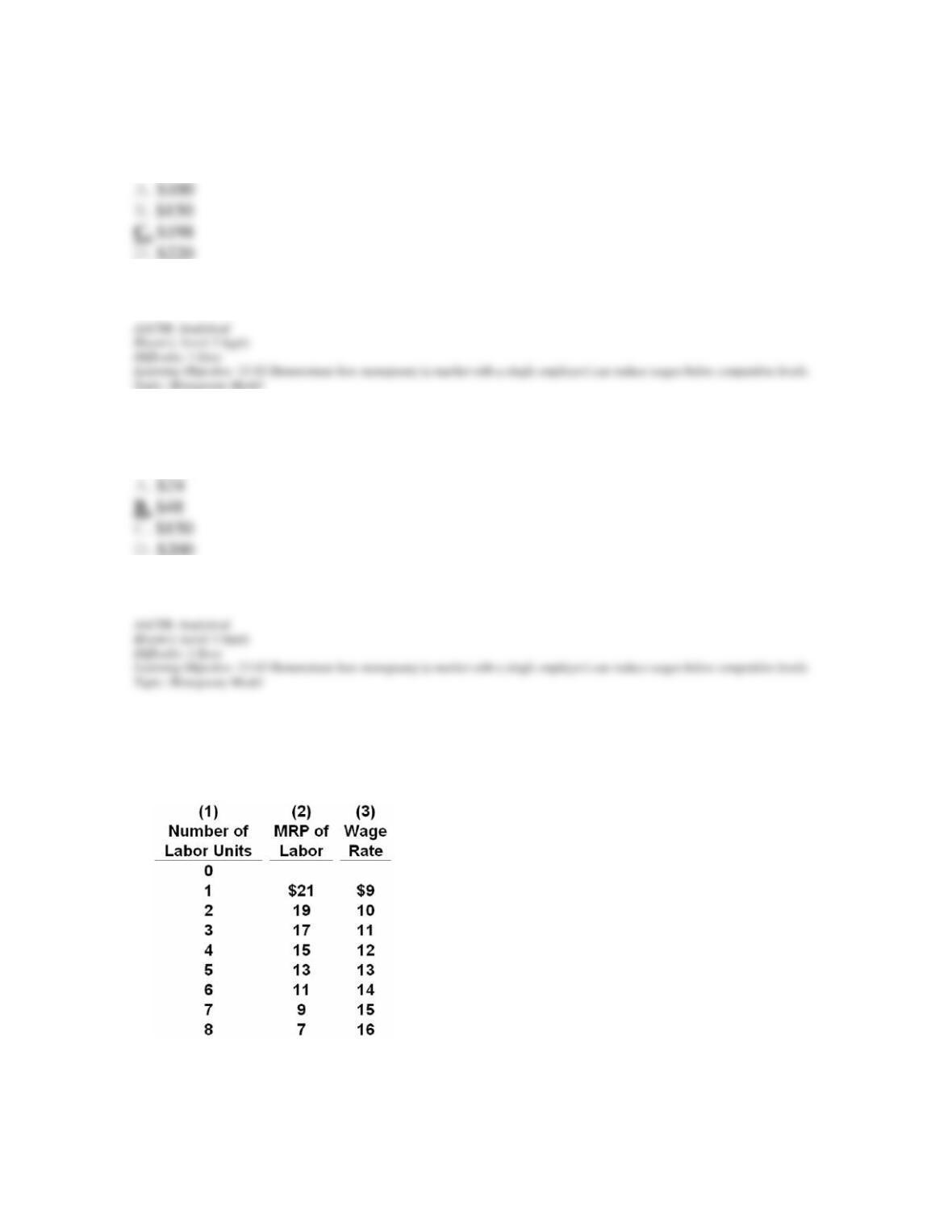
In the table below, a monopsonist has the marginal-revenue-product schedule for labor given
in columns 1 and 2, and the supply schedule for labor is given by columns 1 and 3.
Chapter 13 – Wage Determination (+ Appendix)
62. Refer to the above table and information. What is the firm’s total labor costs if it hires 6
workers?
63. Refer to the above table and information. What is the marginal labor cost of the fourth
worker?
64. Refer to the above table and information. For maximum profits, how many units will the
monopsonist hire and what will be the wage rate?
Chapter 13 – Wage Determination (+ Appendix)
65. Refer to the above table and information. If, instead of being a monopsony, the labor data
shown in the table were for a competitive labor market, how many units will be hired and
what will be the wage rate?
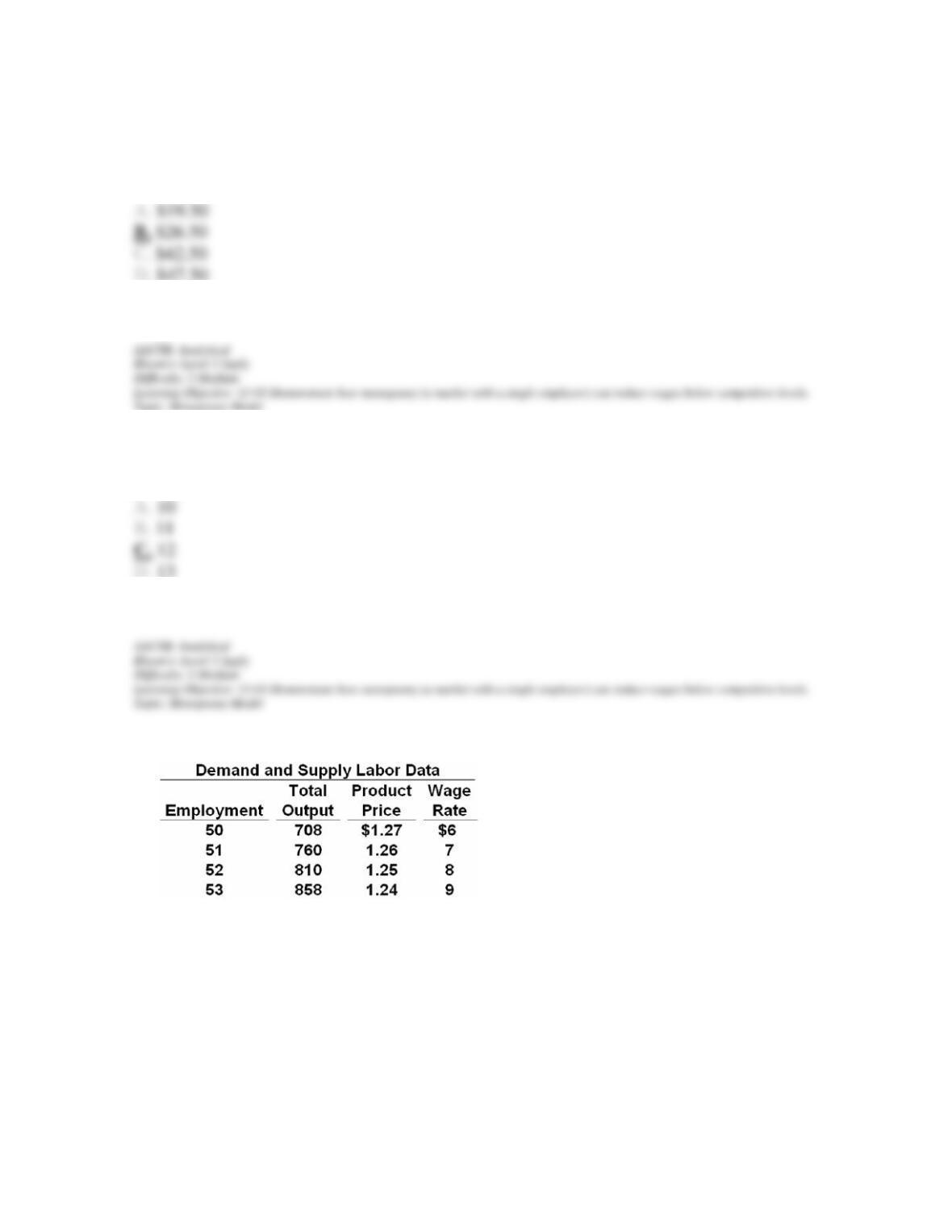
66. Refer to the above table. What is the marginal resource cost if the firm employs a 12th
worker?
Chapter 13 – Wage Determination (+ Appendix)
13–31
67. Refer to the above table. What is the marginal revenue product if the firm employs the
12th worker?
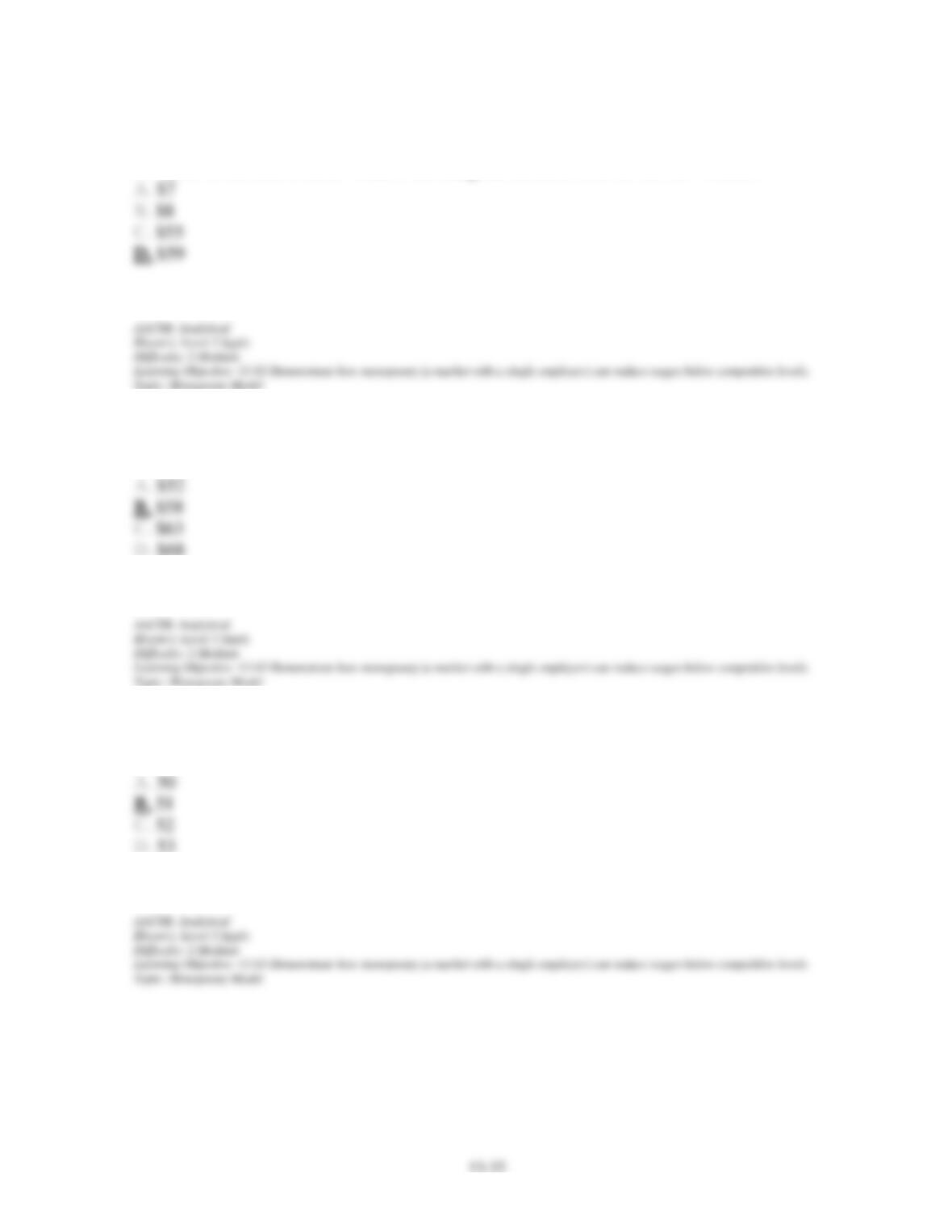
68. Refer to the above table. How many units of labor will this firm hire to maximize its
profits?
Chapter 13 – Wage Determination (+ Appendix)
69. Refer to the above table. What is the marginal resource cost for the 52nd worker?
70. Refer to the above table. Approximately, what is the marginal revenue product of the 51st
worker?
71. Refer to the above table. How many units of labor will this firm hire in maximizing its
profits?
Chapter 13 – Wage Determination (+ Appendix)
72. Refer to the above table. What is the market structure in the firm’s product and labor
markets?
73. Models that analyze how labor unions attempt to raise wage rates include the following,
except:
74. An industrial union:
Chapter 13 – Wage Determination (+ Appendix)
75. Craft unions have typically been most effective in raising wage rates by:
76. The best example of a craft union would be the:
77. The American Medical Association, a physicians’ union, is a good example of a(n):
Chapter 13 – Wage Determination (+ Appendix)
78. The best example of an industrial union is the:
79. Suppose a powerful labor union negotiates a wage for its members above the equilibrium
wage rate in a nonunionized market. A likely result of this is that:
80. A decrease in the supply curve for nurses could be accounted for by all of the following
except a(n):
Chapter 13 – Wage Determination (+ Appendix)
81. The wages of plumbers are likely to increase when:
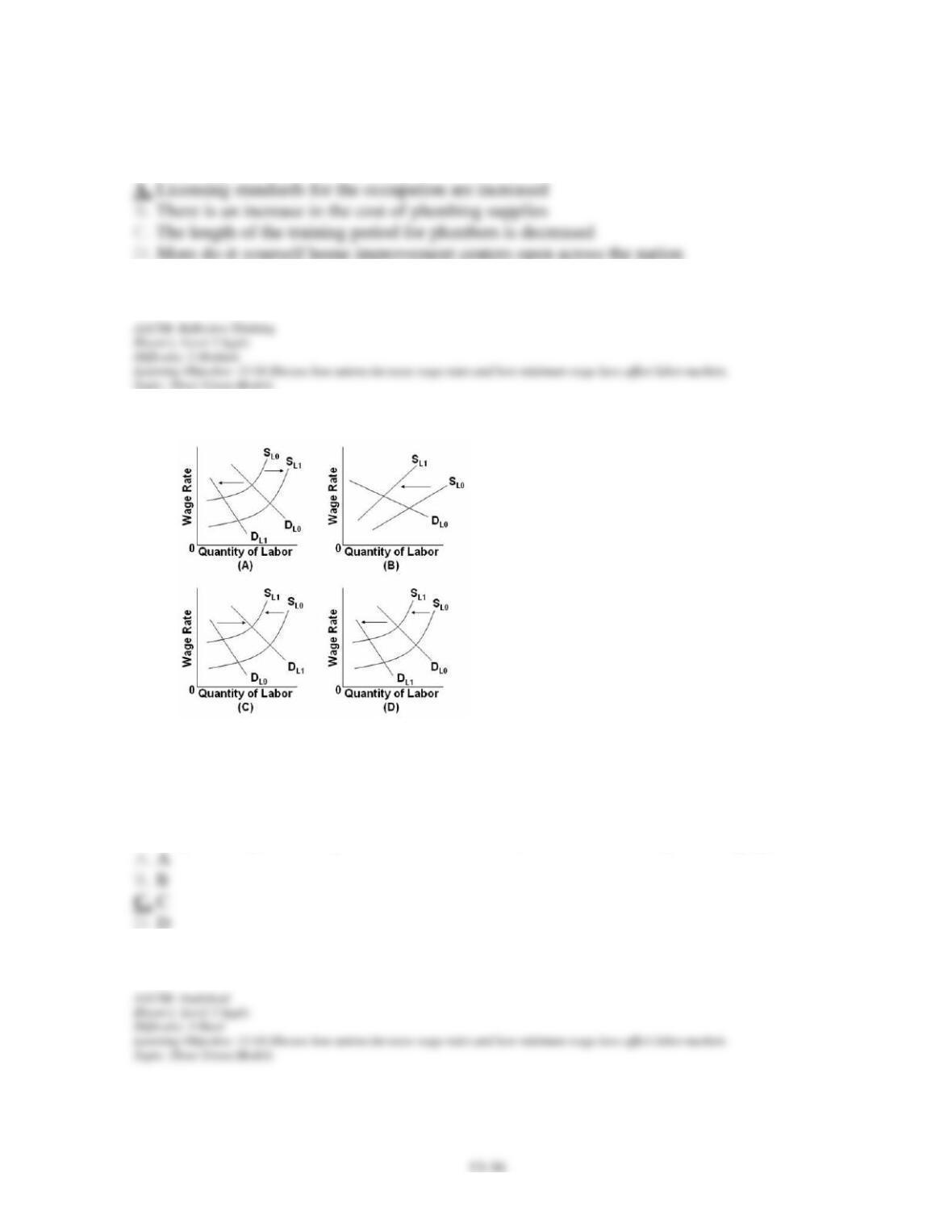
82. Refer to the above graphs. If union workers decide to take more leisure, while the prices
of the products produced by union workers increase, this situation is depicted in graph:
Chapter 13 – Wage Determination (+ Appendix)
83. Refer to the above graphs. The formation of an exclusive or craft union, with no change in
demand, is depicted by situation:
84. Refer to the above graphs. If union workers decide to take more leisure, while the prices
of the products produced by union workers decrease, this situation is depicted in graph:
85. An industry would be likely to lay off workers following:
Chapter 13 – Wage Determination (+ Appendix)
86. Exclusive unionism has the economic effect of:
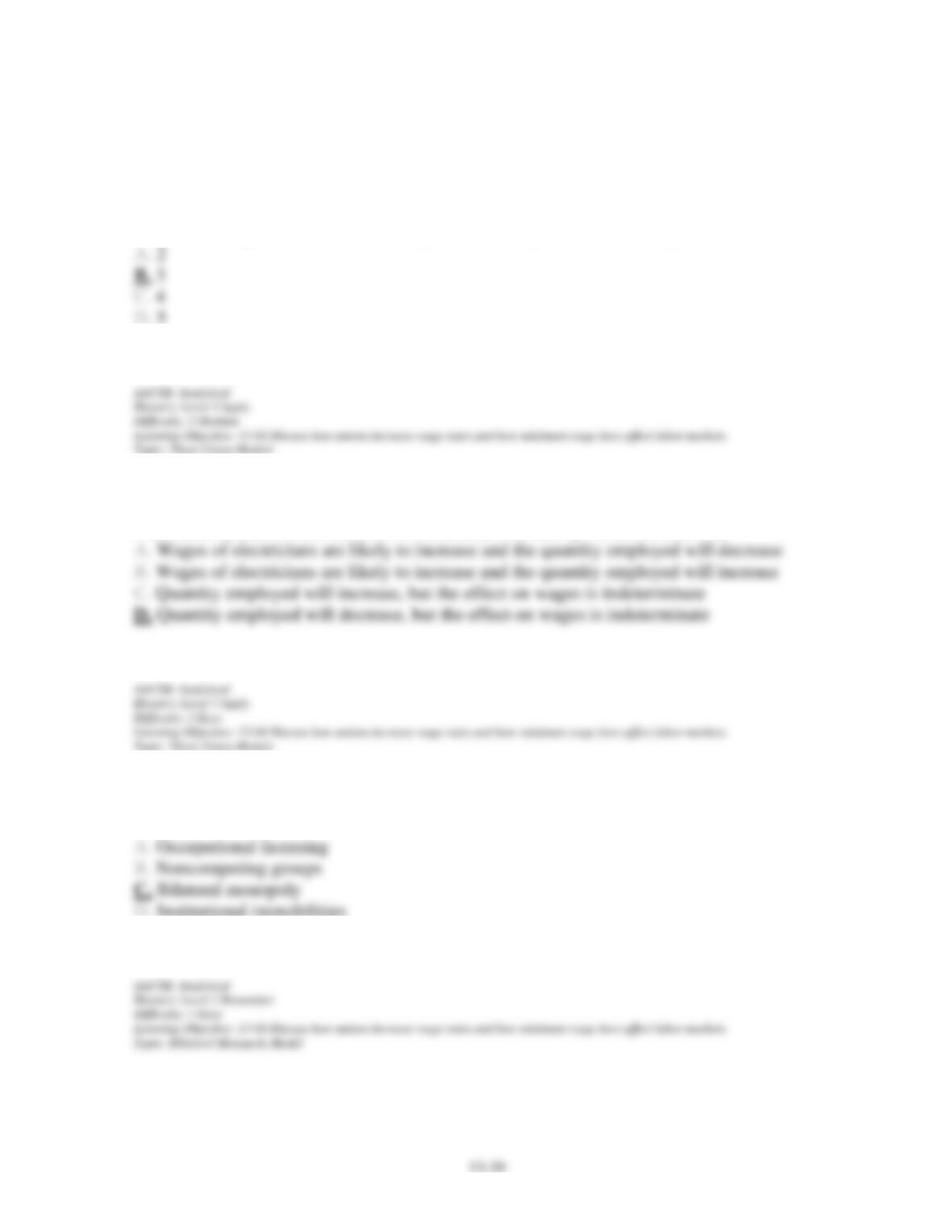
87. Refer to the above graph which shows the supply and demand for unionized
manufacturing workers. The initial equilibrium point is point 1. There is an increase in the
demand for manufactured goods while at the same time health benefits for unionized
manufacturing workers also increase. Which point would represent the new equilibrium?
Chapter 13 – Wage Determination (+ Appendix)
88. Refer to the above graph which shows the supply and demand for unionized
manufacturing workers. The initial equilibrium point is point 1. The wages paid in
comparable nonunion occupations increase significantly, while at the same time the price of
manufactured goods increases. Which point would represent the new equilibrium?
89. If there is a decrease in the demand for union electrical workers and at the same time there
is a drastic cutback in the numbers of electricians trained by the union, then the:
90. When the monopsony model is combined with the inclusive union model the result is a
case of:
Chapter 13 – Wage Determination (+ Appendix)
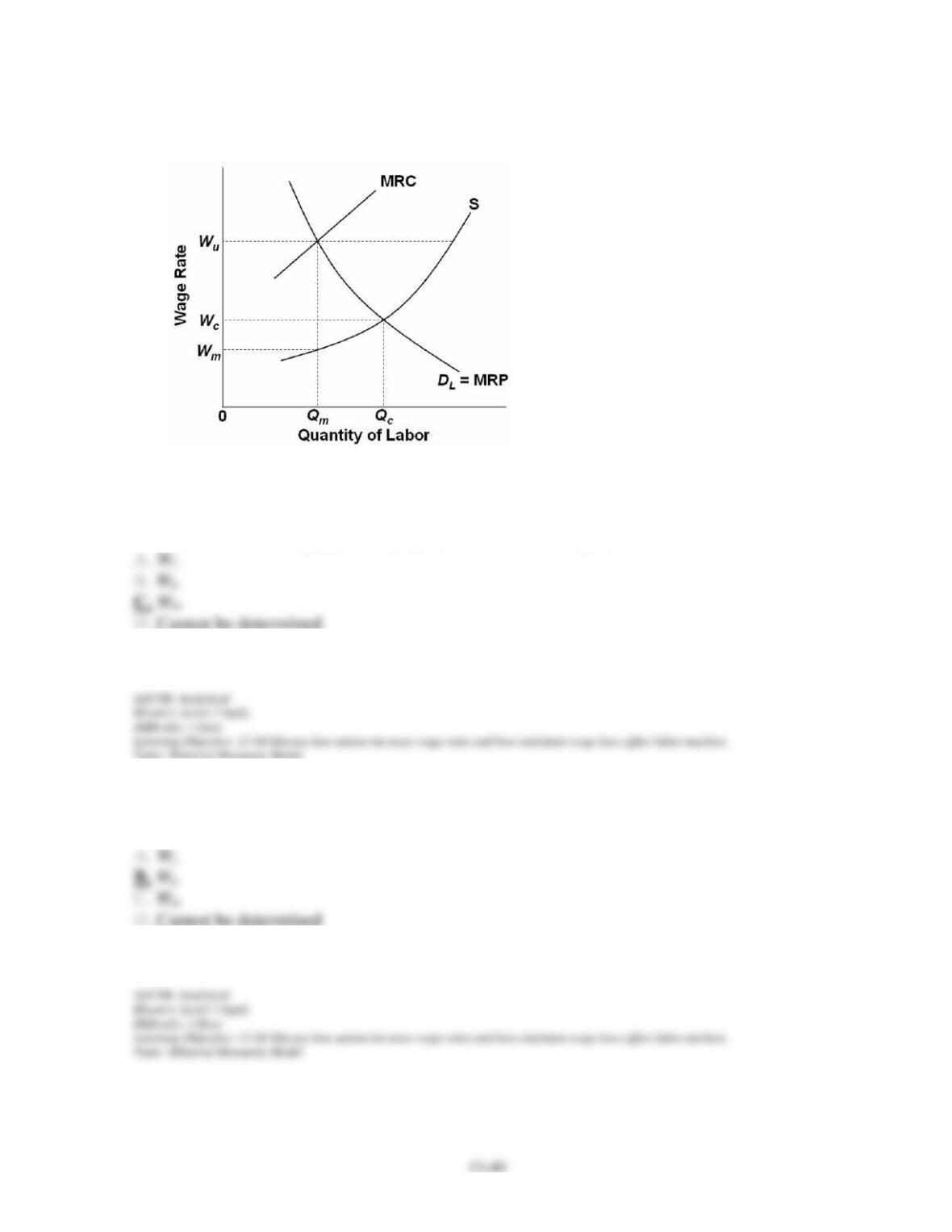
91. Refer to the above graph. A monopsonist will set the wage at:
92. Refer to the above graph. An inclusive union or an industrial union will set the wage rate
at: