Chapter 13 – Wage Determination (+ Appendix)
1. Real wages in the United States in the long run:
2. The long-run trend of real wages:
Chapter 13 – Wage Determination (+ Appendix)
3. If the nominal wages of carpenters rose by 5 percent in 2010 and the price level increased
by 3 percent, then the real wages of carpenters:
4. Over the long run, real earnings per worker can increase only at about the same rate as the
economy’s rate of growth of:
5. Increases in the productivity of labor result partly from:
Chapter 13 – Wage Determination (+ Appendix)
6. Real wages in the United States are:
7. According to international comparisons, which nation had the highest hourly wages in U.S.
dollar terms in 2007?
8. The real wage will rise if the nominal wage:
Chapter 13 – Wage Determination (+ Appendix)
9. Which of the following is correct?
10. The productivity and real wages of workers in industrially advanced economies have risen
historically partly because:
11. If the nominal wage rises by 4 percent, and the price level rises by 7 percent, the real wage
will:
Chapter 13 – Wage Determination (+ Appendix)
12. If the nominal wage rises by 6 percent, and the price level falls by 2 percent, the real wage
will:
13. Long-run real wages in the United States have:
14. Since 1960, real hourly compensation in the United States has approximately:
Chapter 13 – Wage Determination (+ Appendix)
15. Marginal revenue product (MRP) of labor refers to the:
16. Marginal resource cost refers to the:
17. If a firm is hiring a certain type of labor under purely competitive conditions:
Chapter 13 – Wage Determination (+ Appendix)
18. The market supply curve for labor is upsloping because:
19. A firm operating in a purely competitive resource market faces a resource supply curve
that is:
20. A firm that is hiring labor in a purely competitive labor market and selling its product in a
purely competitive product market will maximize its profit by hiring labor until:
Chapter 13 – Wage Determination (+ Appendix)
21. A profit-maximizing firm will:
22. A profit-maximizing firm will:
23. A firm hiring labor in a perfectly competitive labor market faces a:
Chapter 13 – Wage Determination (+ Appendix)
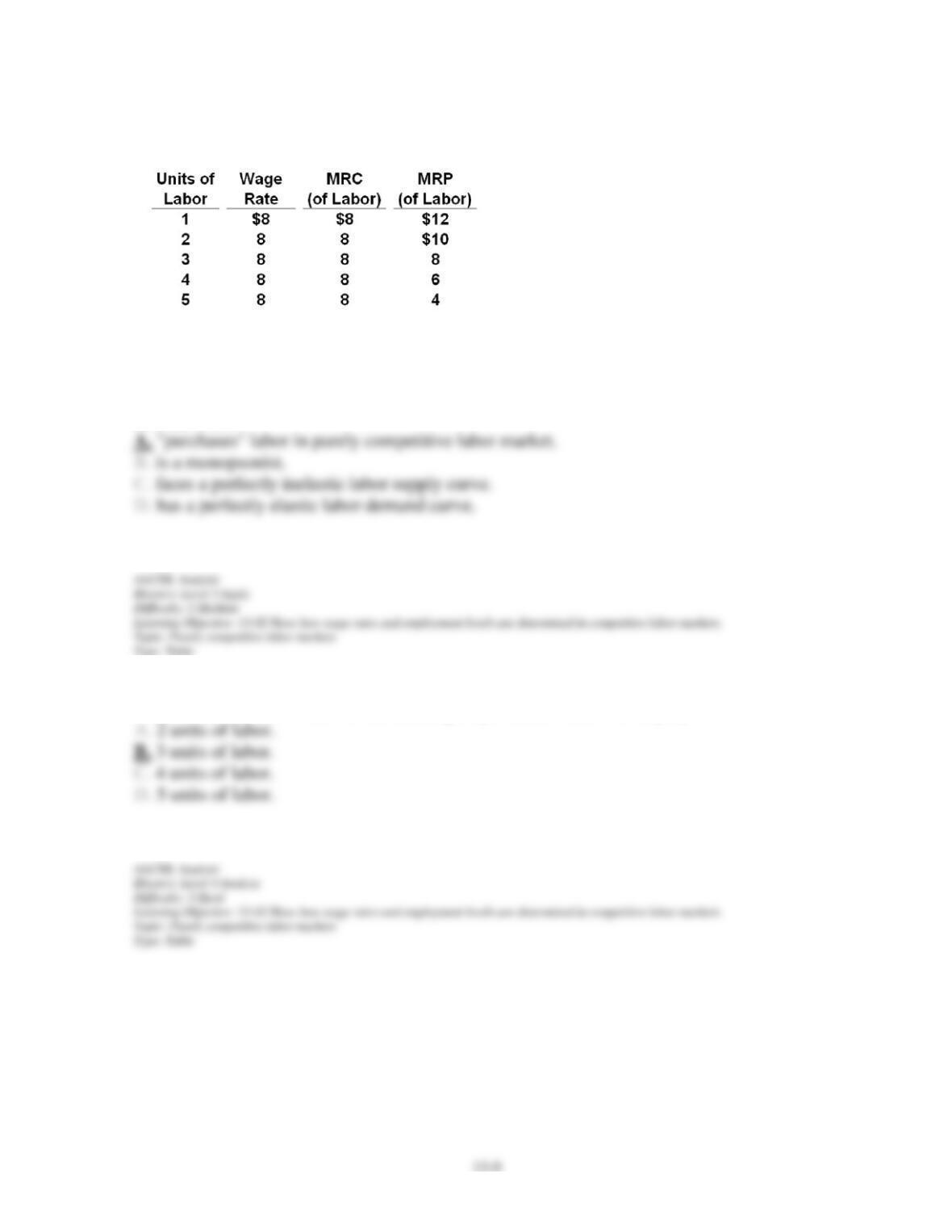
24. Refer to the above data. If there is neither a union nor a minimum wage, we can conclude
that this firm:
25. Refer to the above data. In maximizing its profit, this firm will employ:
Chapter 13 – Wage Determination (+ Appendix)
13–10
26. Refer to the above data. At the profit maximizing level of employment, this firm’s total
labor cost will be:
27. Refer to the above data. At the profit maximizing level of employment, this firm’s total
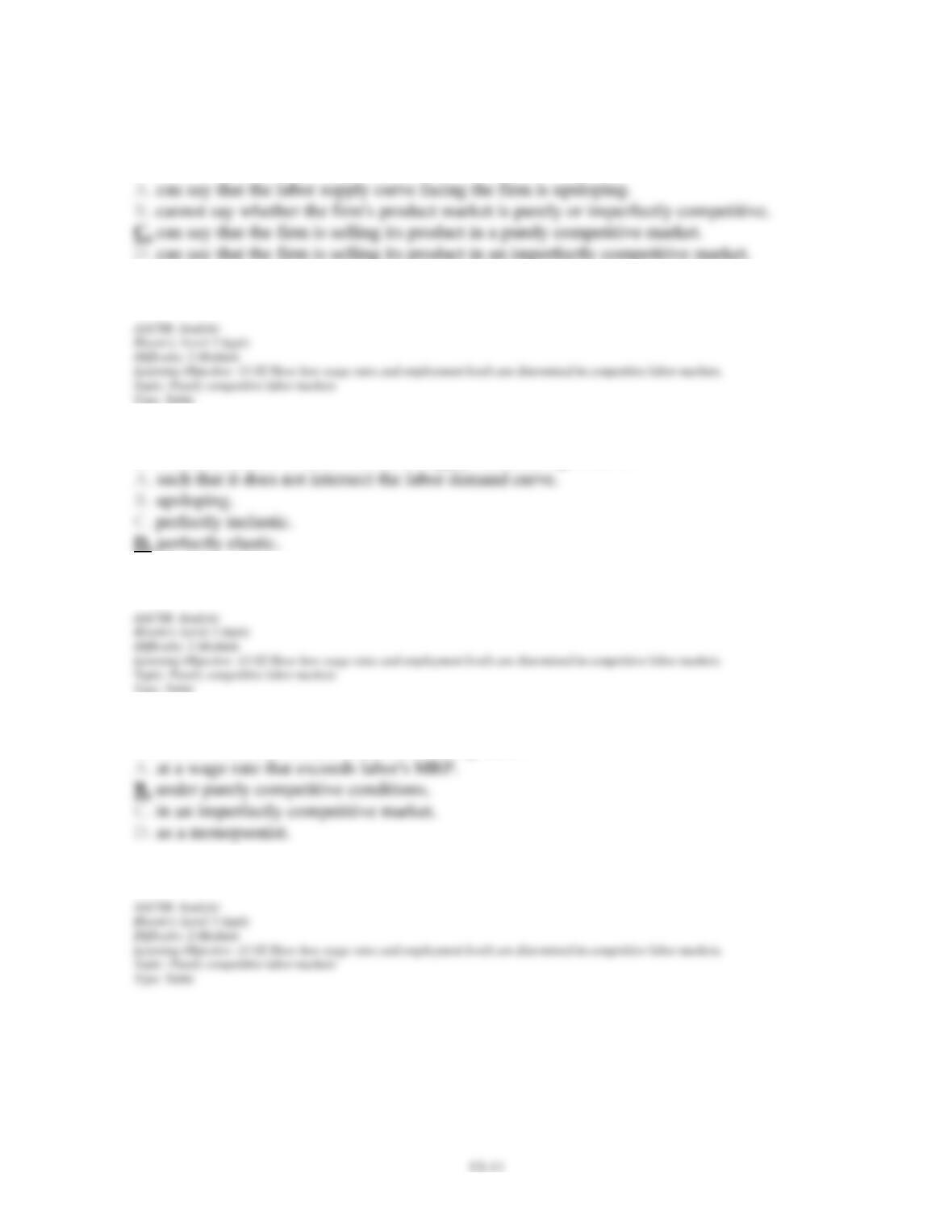
Use the labor demand data on the left and the labor supply data on the right in answering the
following question(s):
Chapter 13 – Wage Determination (+ Appendix)
28. On the basis of the above information we:
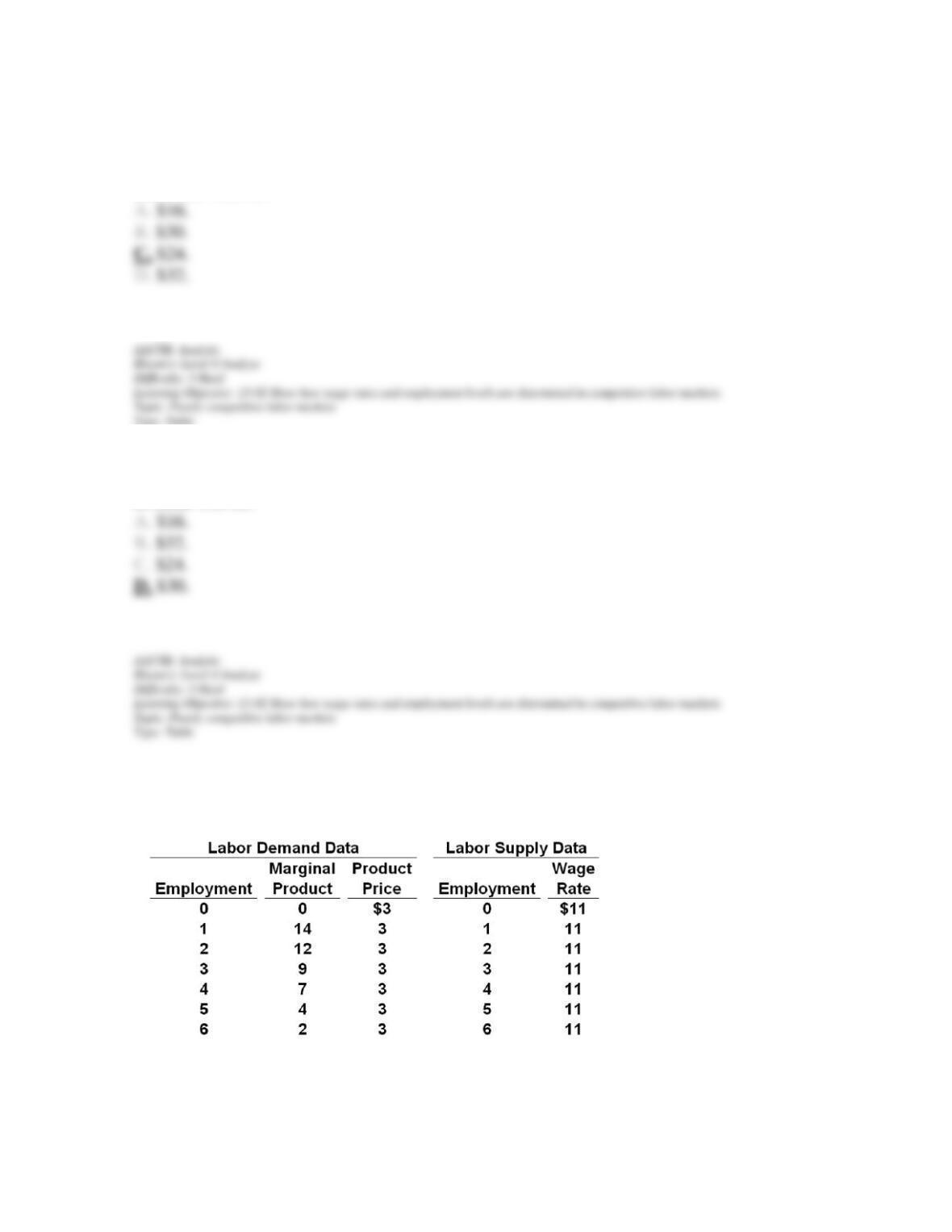
29. Refer to the above data. The labor supply curve facing firms is:
30. Refer to the above data. The firm is hiring labor:
Chapter 13 – Wage Determination (+ Appendix)
31. Refer to the above data. The firm will maximize profits (or minimize losses) by
employing:
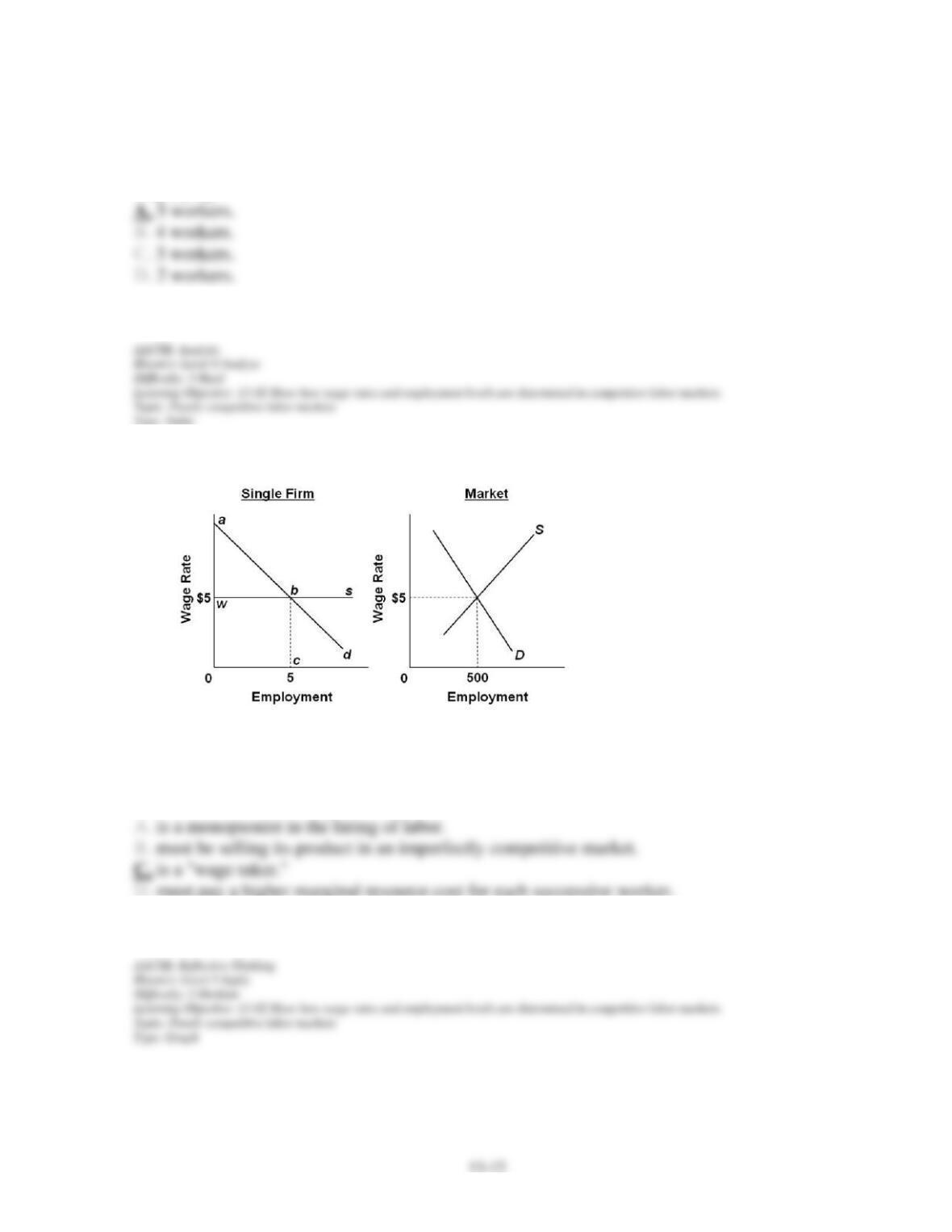
32. Refer to the above diagrams. The firm:
Chapter 13 – Wage Determination (+ Appendix)
33. Refer to the above diagrams. The firm:
34. Refer to the above diagrams. The profit-maximizing firm’s total wage cost:
35. Refer to the above diagrams. The profit-maximizing firm’s total revenue:
Chapter 13 – Wage Determination (+ Appendix)
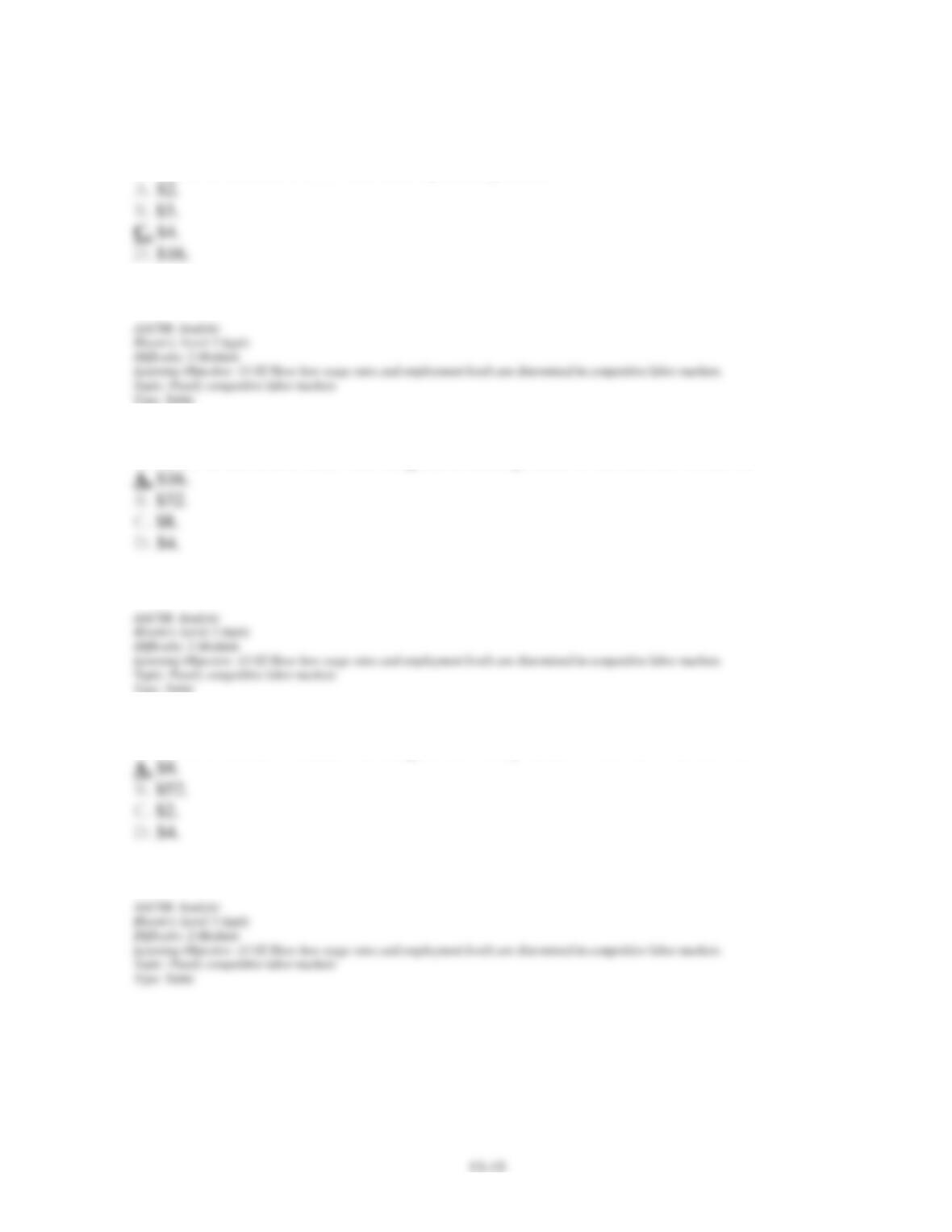
36. Refer to the above diagrams. At the profit-maximizing level of employment for this firm,
the amount available to pay to nonlabor resources:
37. The individual firm in a purely competitive labor market faces:
Chapter 13 – Wage Determination (+ Appendix)
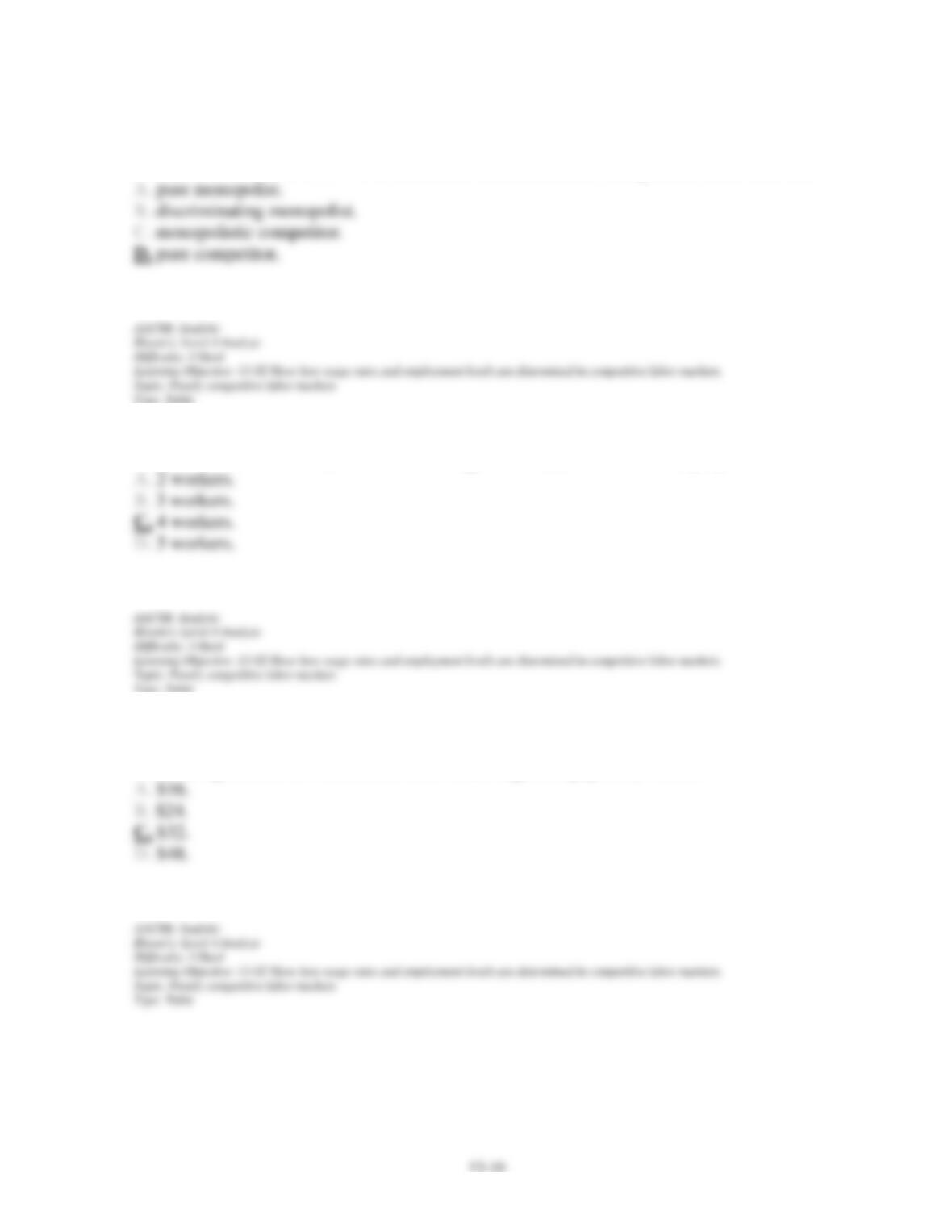
38. Refer to the above data. This firm’s product price is:
39. Refer to the above data. The marginal revenue product of the second worker is:
40. Refer to the above data. The marginal revenue product of the fourth worker is:
Chapter 13 – Wage Determination (+ Appendix)
41. Refer to the above data. We can conclude from the information given that this firm is a:
42. Refer to the above data. If the market wage rate is $8, this firm will employ:
43. Refer to the above data. If the market wage rate is $8 and the firm hires its profit–
maximizing number of workers, the firm’s total wage bill (payment) will be:
Chapter 13 – Wage Determination (+ Appendix)
13–17
44. Refer to the above data. If the market wage rate is $8 and the firm hires its profit–
maximizing number of workers, the firm’s total revenue will exceed its total wage payment
by:
45. Refer to the above data. If this firm can hire as few or many workers as it wants at $8, it
is:
Chapter 13 – Wage Determination (+ Appendix)
46. Refer to the above list. The outcome in a purely competitive labor market is shown by:
47. Refer to the above list. The outcome in a monopsony labor market is shown by:
48. The labor supply curve facing a purely competitive employer is __________ whereas the
labor supply curve facing a monopsonist is _________.
Chapter 13 – Wage Determination (+ Appendix)
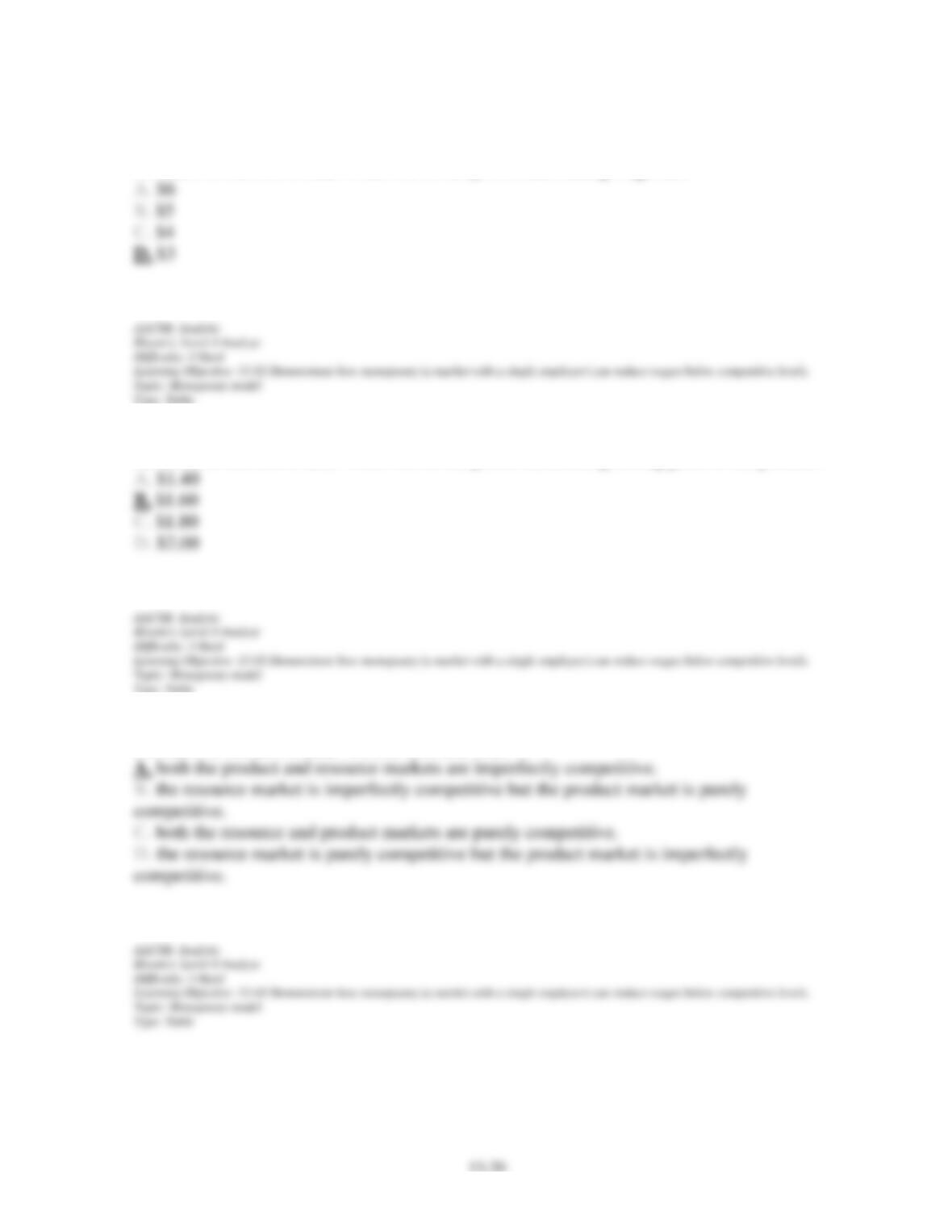
Use the resource demand data shown on the left and the resource supply data on the right in
answering the following question(s):
49. Refer to the above data. How many workers will this profit-maximizing firm choose to
employ?
50. Refer to the above data. How many units of output will this profit-maximizing firm
produce?
Chapter 13 – Wage Determination (+ Appendix)
51. Refer to the above data. What will be the profit-maximizing wage rate?
52. Refer to the above data. What will be the profit-maximizing selling price of the product?
53. Refer to the above data. We can conclude that: