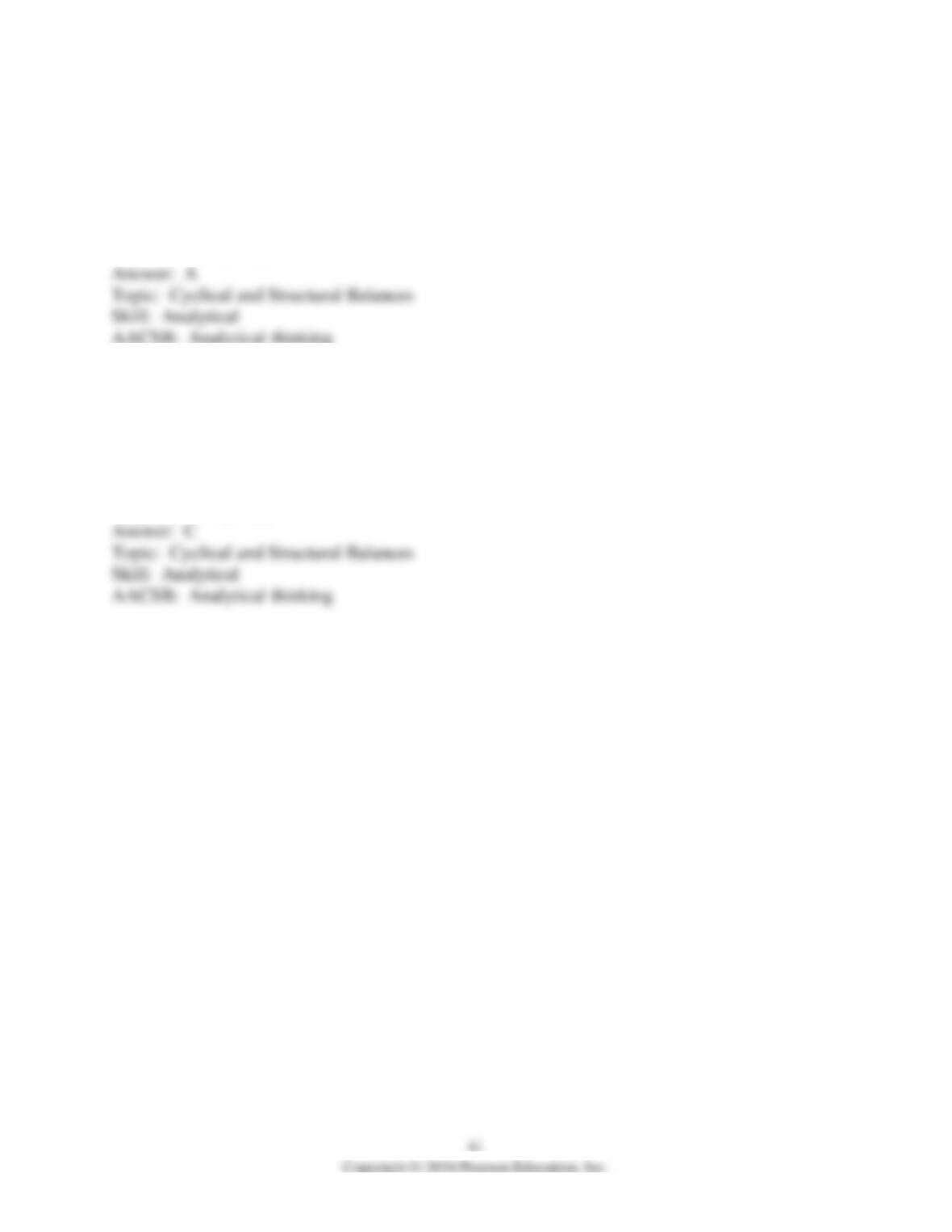
48) Economic data for a mythical economy in the years 2012-2016 are summarized in the figure
above. Assume that the spending formulas and tax schedules are identical for all years. When the
economy is above full employment, the government has a
A) budget surplus.
B) balanced budget.
C) budget deficit.
D) procyclical policy.
49) Economic data for a mythical economy in the years 2012-2016 are summarized in the figure
above. Assume that the spending formulas and tax schedules are identical for all years. When the
economy is at less than full employment, the government has a
A) budget surplus.
B) balanced budget.
C) budget deficit.
D) procyclical policy.
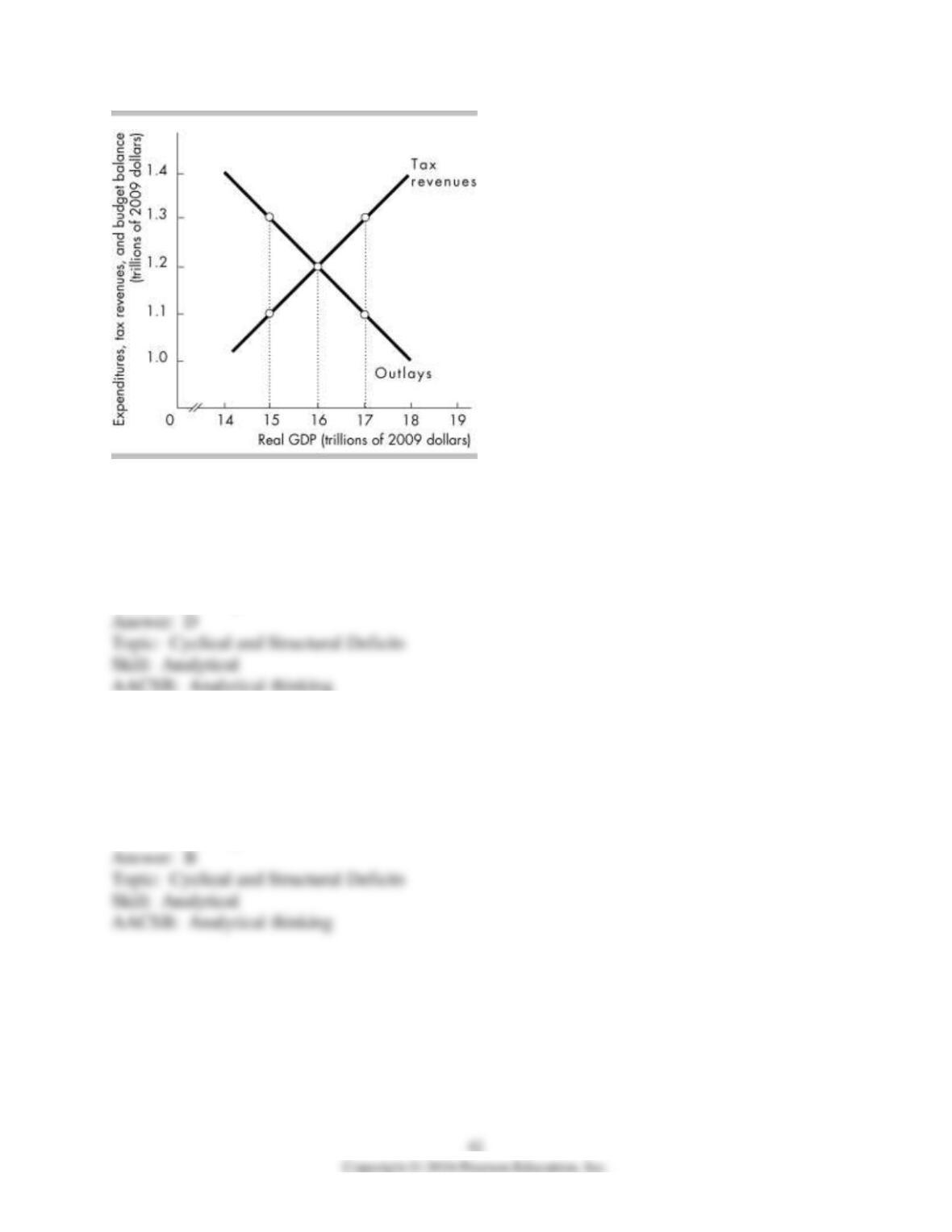
50) Using the above figure, if full employment occurs at $17 trillion and the economy is actually
producing $17 trillion, then there is a
A) cyclical deficit.
B) cyclical surplus.
C) structural deficit.
D) structural surplus.
51) Using the above figure, if full employment occurs at $16 trillion, but the economy is actually
producing $17 trillion, then there is a
A) cyclical deficit.
B) cyclical surplus.
C) structural deficit.
D) structural surplus.
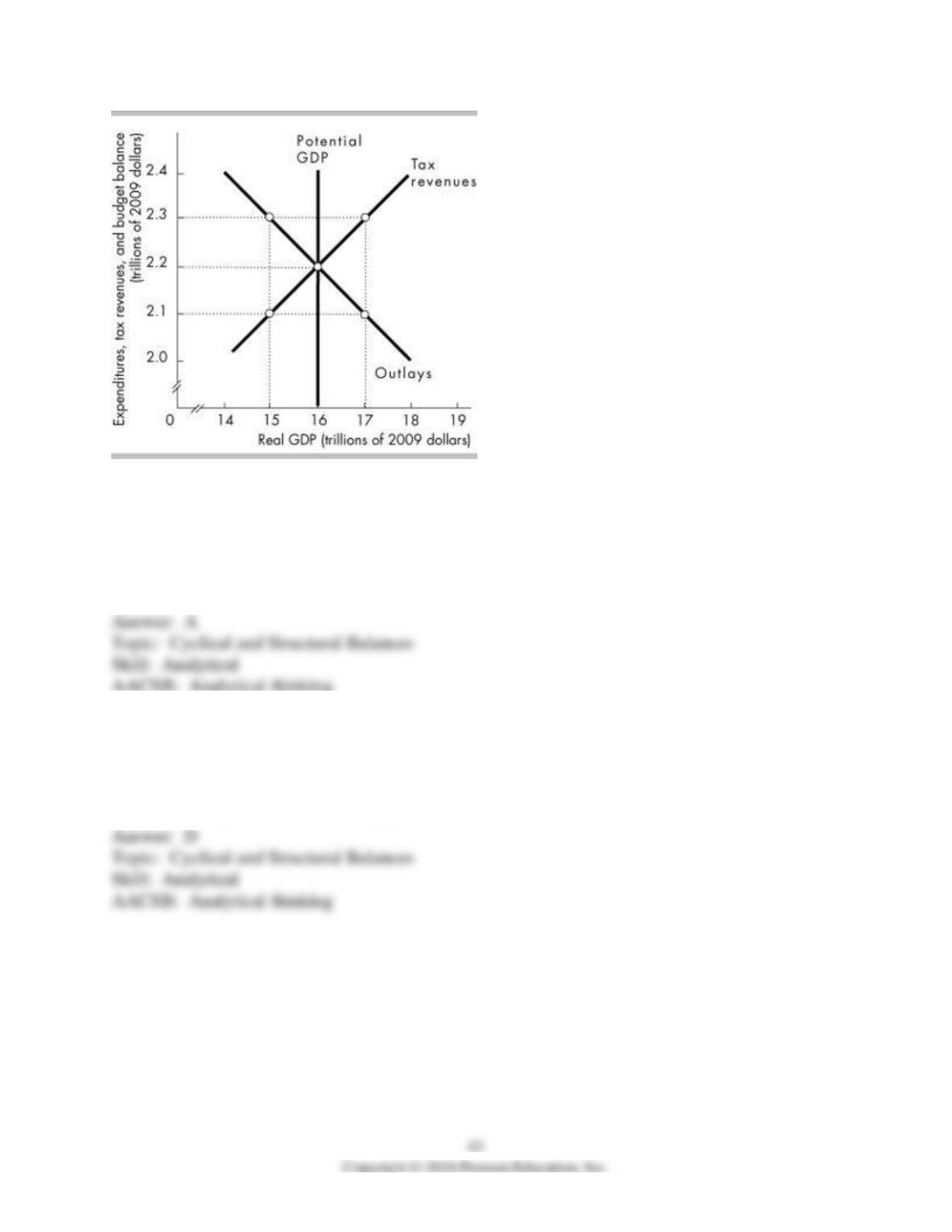
52) In the above figure, if actual GDP = $17 trillion, there is a budget ________ equal to
________.
A) surplus; $0.2 trillion
B) surplus; $1.3 trillion
C) deficit; $0.2 trillion
D) deficit; $1.1 trillion
53) In the above figure
A) the structural deficit equals zero.
B) any surpluses are cyclical surpluses.
C) any deficits are cyclical deficits.
D) All of the above answers are correct.
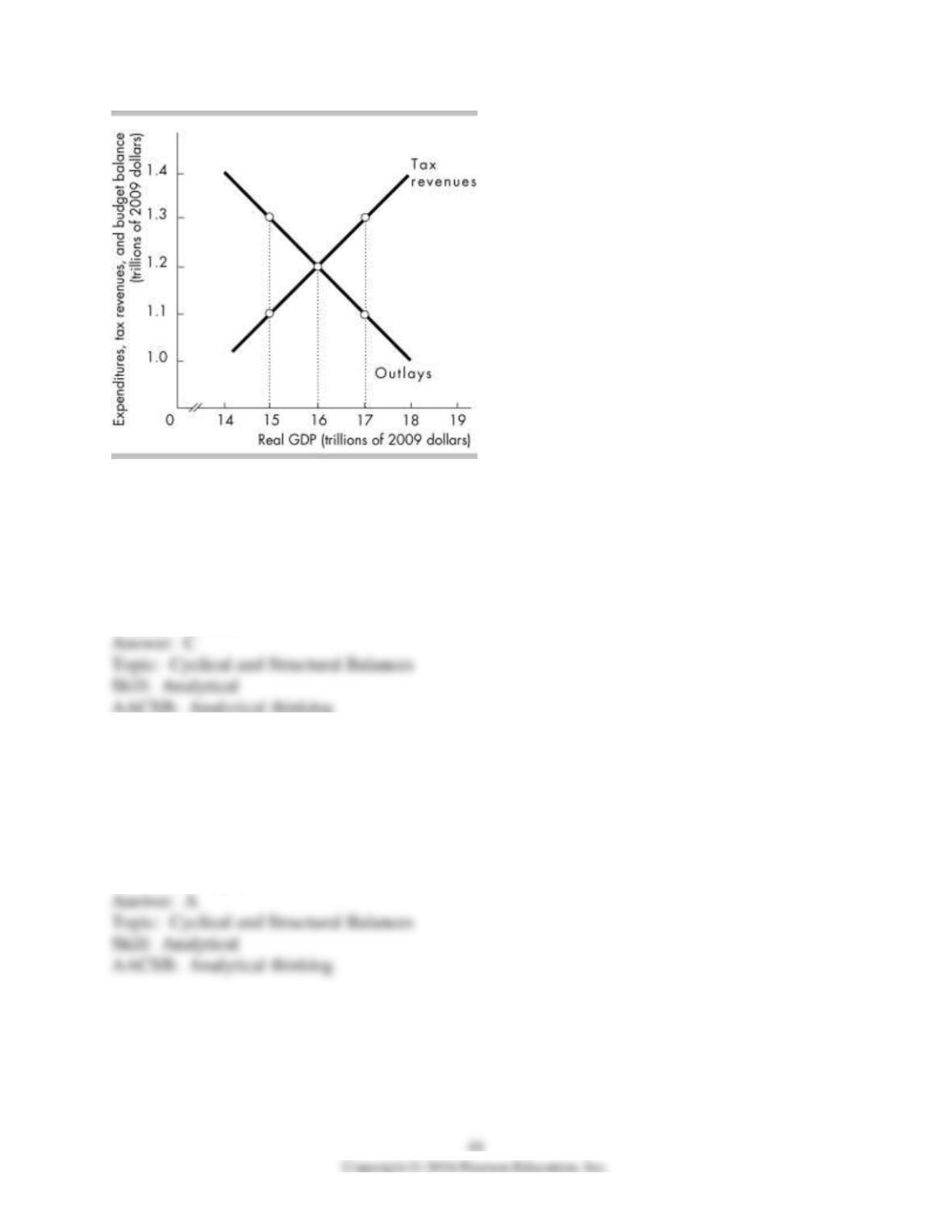
54) The figure above shows tax revenues and government expenditures in the economy of
Meadowlake. Potential GDP is $16 trillion. If real GDP is $16 trillion, then the government has a
________.
A) cyclical surplus
B) structural surplus
C) balanced budget
D) cyclical deficit
55) The figure above shows tax revenues and government expenditures in the economy of
Meadowlake. Potential GDP is $17 trillion. If real GDP is $15 trillion, then the government has a
________.
A) cyclical deficit
B) structural deficit
C) structural surplus
D) cyclical surplus
56) In the short run, an increase in government expenditure will
I. shift the aggregate demand curve rightward.
II. increase real GDP.
III. increase the government expenditure multiplier.
IV. increase the tax multiplier.
A) I and II
B) I and III
C) I, II and III
D) III and IV
57) A reason the government expenditure multiplier is larger than 1 is because
A) investment increases when government expenditure increases.
B) government expenditure always increases.
C) government expenditure changes generate changes in consumption expenditure.
D) taxes are left unchanged.
58) The magnitude of the tax multiplier ________ the magnitude of the government expenditure
multiplier.
A) is smaller than
B) is larger than
C) is equal to
D) is not comparable to
59) Suppose that the government increases taxes. One effect of this change is that it decreases
A) disposable income, which decreases consumption expenditure and aggregate demand.
B) government expenditure, which decreases aggregate demand.
C) the size of the government expenditure multiplier.
D) disposable income which then decreases aggregate supply.
60) The demand-side effect of a change in taxes is less than the same sized change in
government expenditure because
A) only part of the increase in disposable income from the tax cut is spent.
B) the amount by which taxes change is affected by the MPC.
C) changes in government expenditure do not directly affect consumption.
D) tax rates are the same regardless of income levels.
61) The aggregate demand curve shifts rightward if there is
A) an increase in tax rates.
B) a decrease in government expenditure.
C) an increase in the federal budget surplus.
D) an increase in government expenditure.
62) An increase in government expenditure shifts the AD curve ________ and an increase in
taxes shifts the AD curve ________.
A) rightward; rightward
B) rightward; leftward
C) leftward; rightward
D) leftward; leftward
63) Suppose the government of Japan increases its expenditure on goods and services. In the
short run, this increase will
A) shift the AD curve in Japan rightward.
B) shift the AD curve in Japan leftward.
C) cause the price level in Japan to fall.
D) None of the above answers is correct.
64) If the government wants to engage in fiscal policy to increase real GDP, it could
A) increase government expenditure in order to increase short-run aggregate supply.
B) decrease government expenditure in order to increase short-run aggregate supply.
C) increase government expenditure in order to increase aggregate demand.
D) decrease government expenditure in order to decrease aggregate demand.
65) If real GDP is less than potential GDP, which of the following fiscal policies would increase
real GDP?
A) only a decrease in government expenditure
B) only an increase in taxes
C) an increase in government expenditure and/or a decrease taxes
D) a decrease in government expenditure and/or an increase taxes
66) Using the AD–AS model, an increase in government expenditure
A) has no impact on real GDP.
B) has no impact on real GDP, but will increase potential GDP.
C) increases both real GDP and the price level.
D) has a full multiplier effect on real GDP, leaving the price level unchanged in the long run.
67) Using fiscal policy, to increase real GDP and employment the government could ________
government expenditure on goods and services or ________ taxes.
A) increase; increase
B) increase; decrease
C) decrease; increase
D) decrease; decrease
68) When real GDP is less than potential GDP, an increase in government expenditures will
________ real GDP and ________ the price level.
A) increase; raise
B) increase; lower
C) decrease; raise
D) decrease; lower
69) Suppose the economy is at a short-run equilibrium with real GDP greater than potential
GDP. Which of the following fiscal policies would decrease real GDP and the price level?
A) an increase in government expenditure
B) a decrease in taxes
C) an increase in taxes
D) None of the above answers is correct.
70) Suppose real GDP exceeds potential GDP. If the government decreases its expenditures on
goods and services, then real GDP ________ and the price level ________.
A) decreases; rises
B) increases; falls
C) decreases; falls
D) increases; rises
71) Suppose that the government decreases its expenditures on goods and services. Within the
AS–AD model, the result will be ________ in real GDP and ________ in the price level.
A) an increase; an increase
B) an increase; a decrease
C) a decrease; an increase
D) a decrease; a decrease
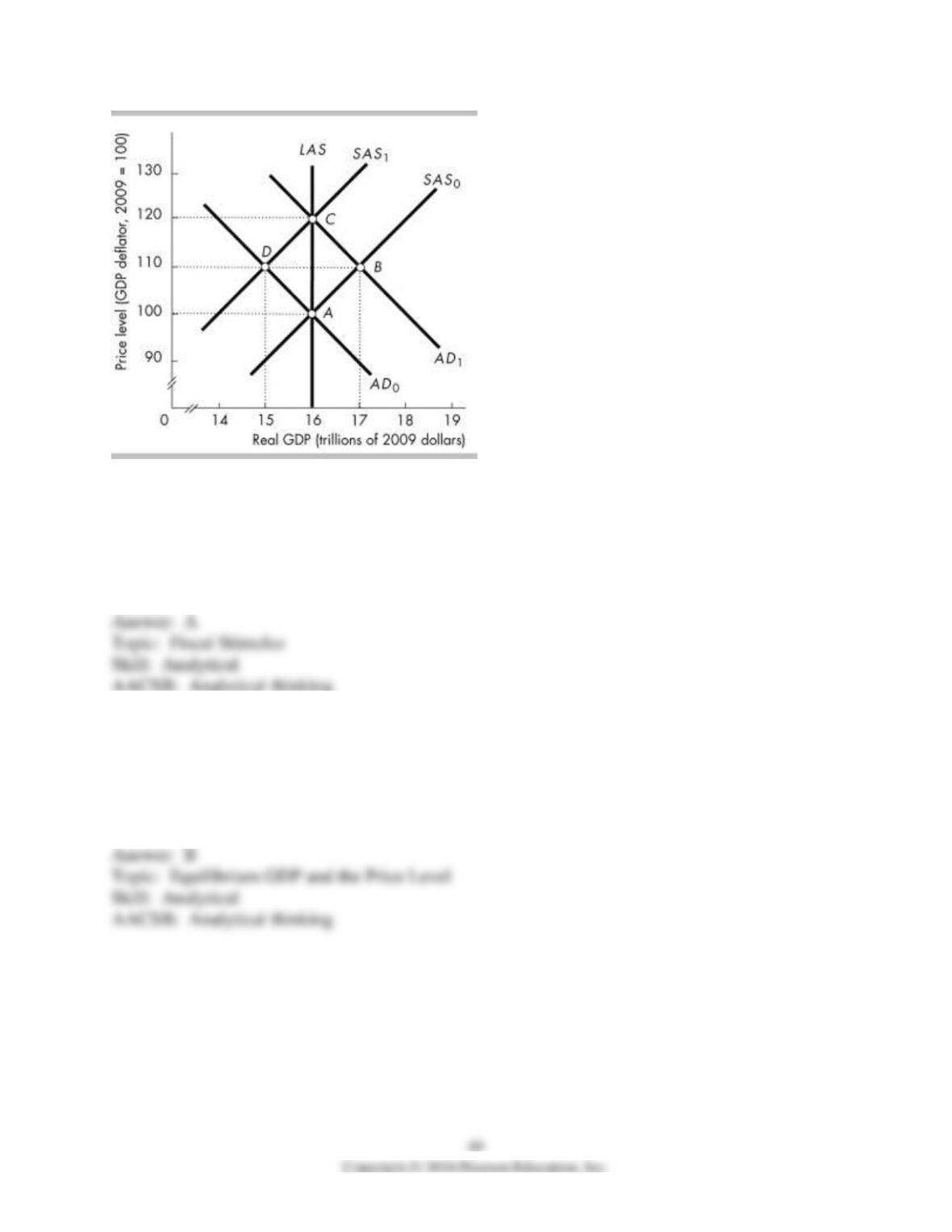
72) In the above figure, if the economy is initially at point D and government expenditure
increases, the economy will
A) move to point C.
B) move to point A.
C) move to point B.
D) stay at point D.
73) In the above figure, if the economy is initially at point B and government expenditure
decreases, the economy will
A) move to point C.
B) move to point A.
C) move to point D.
D) stay at point B.
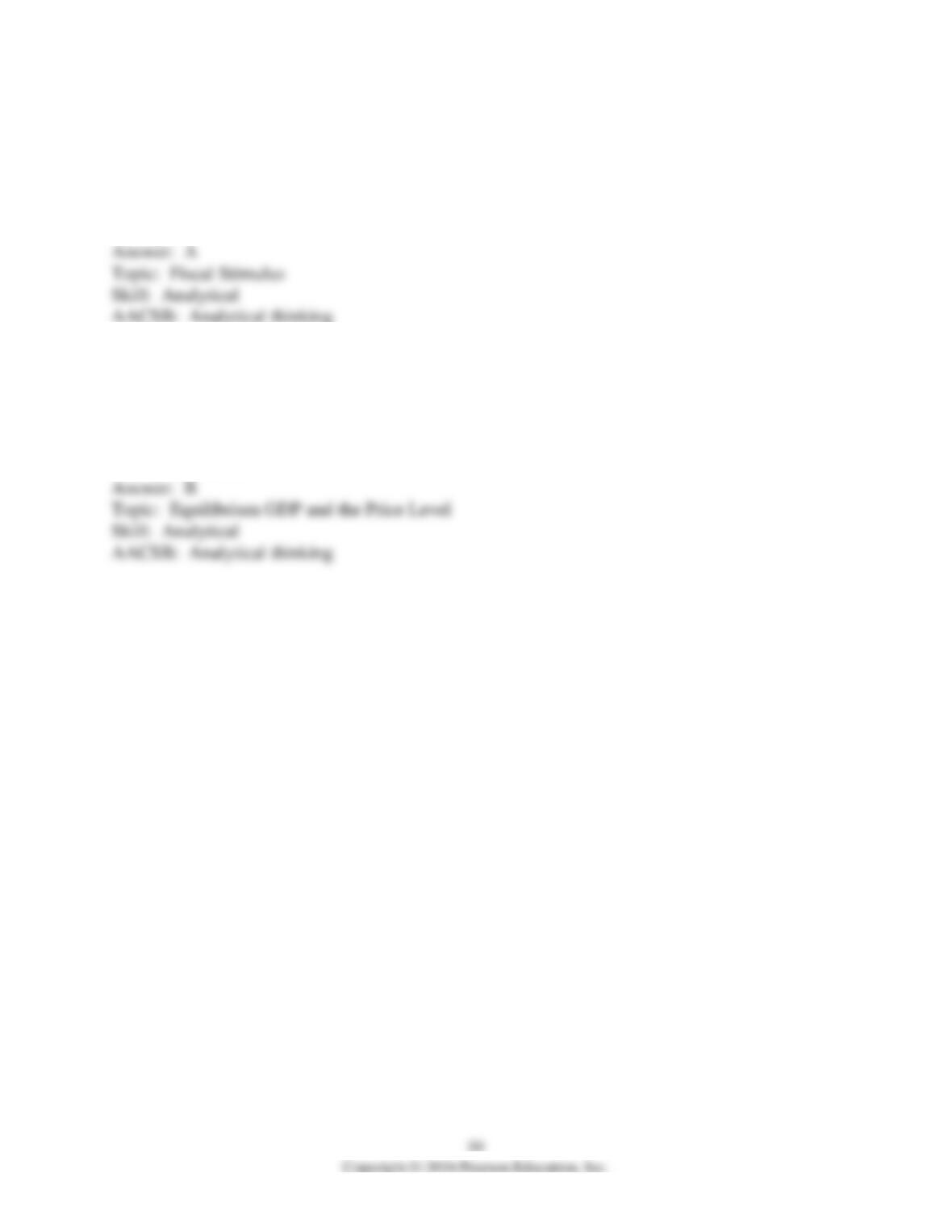
74) In the above figure, if the economy is initially at point D and taxes are cut while potential
GDP does not change, then the economy will
A) move to point C.
B) move to point A.
C) move to point B.
D) stay at point D.
75) In the above figure, if the economy is initially at point B and taxes are raised while potential
GDP does not change, then the economy will
A) move to point C.
B) move to point A.
C) move to point D.
D) stay at point B.
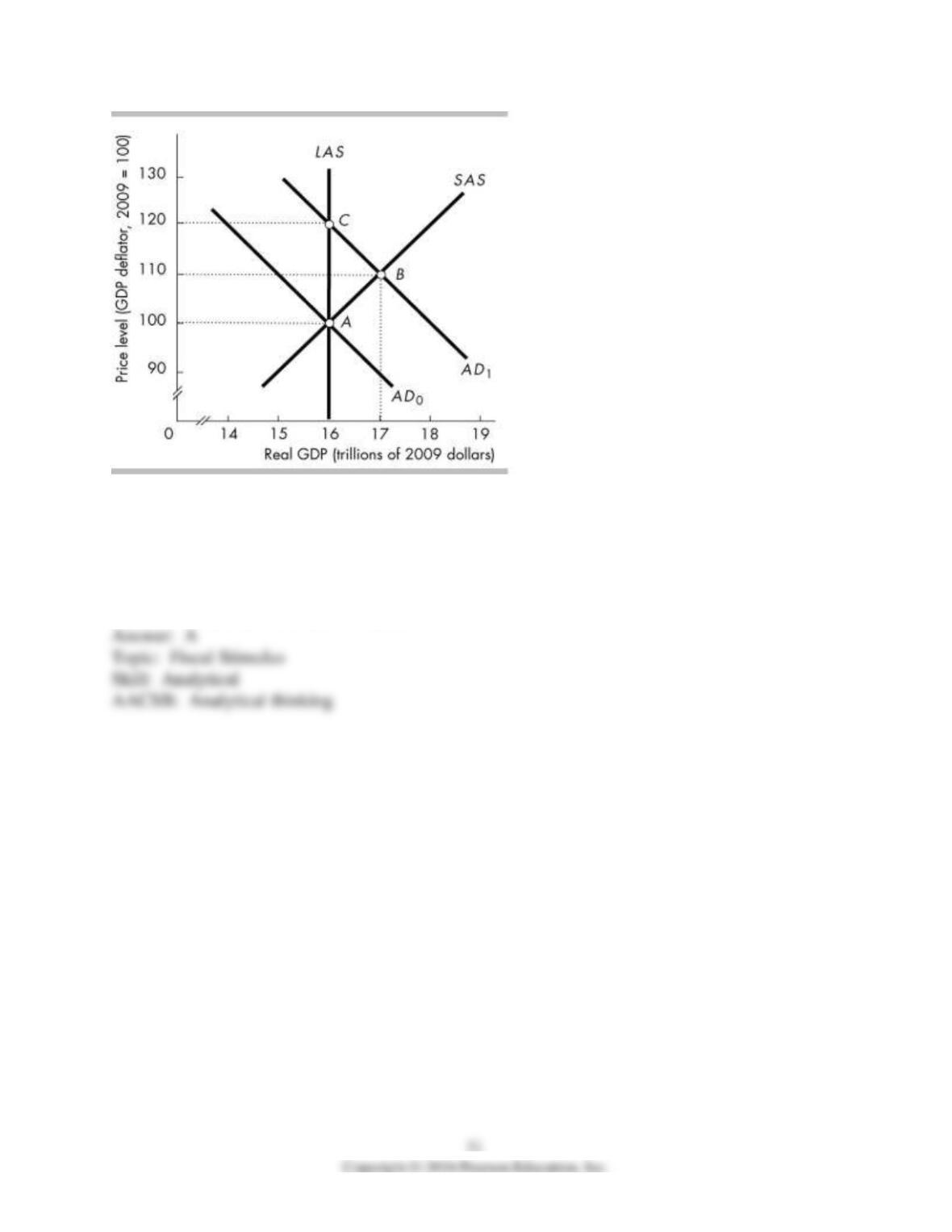
76) In the above figure, if the economy initially is at point A and government expenditure
increases, in the short run the economy will move to point
A) B.
B) C.
C) A, that is, the equilibrium will not change.
D) None of the above answers is correct.
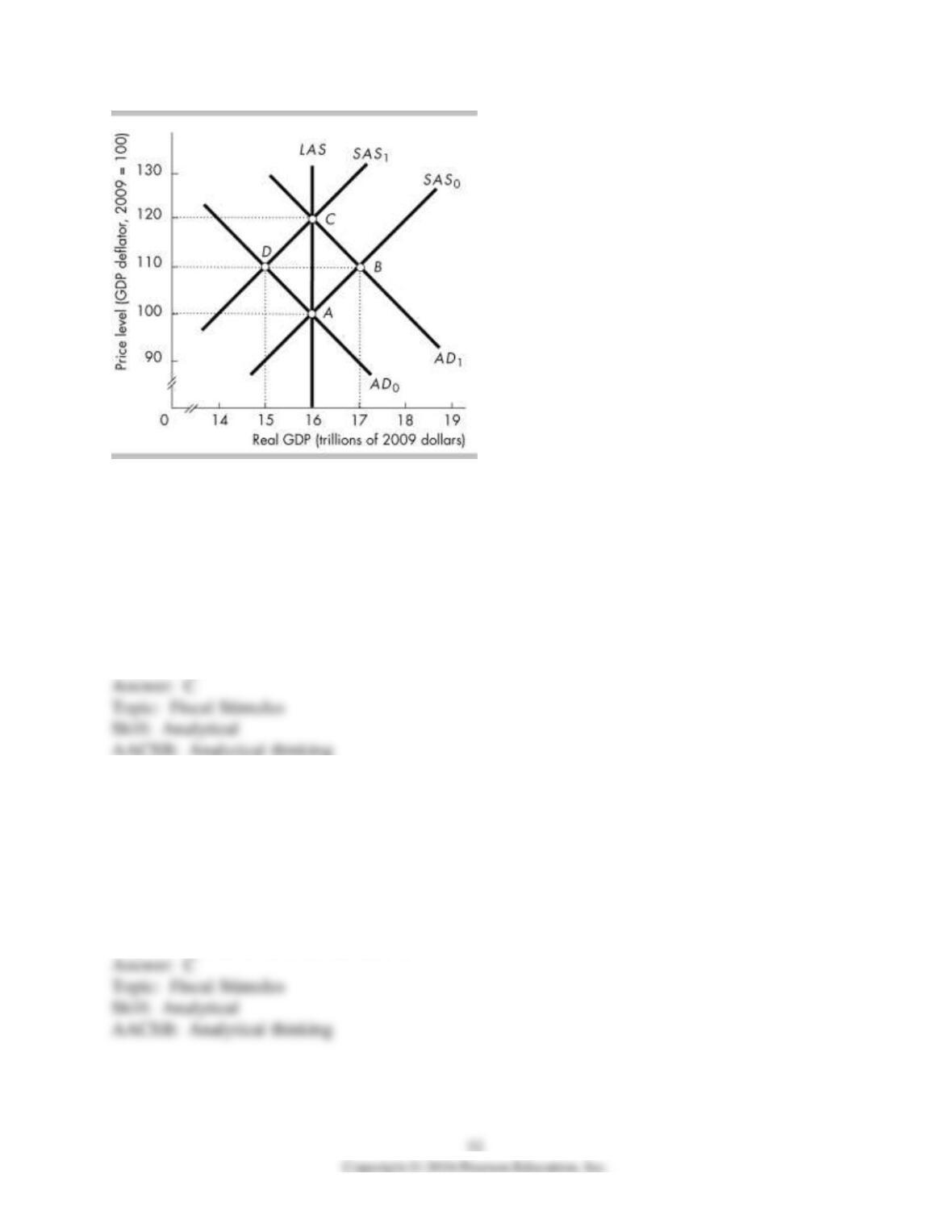
77) The figure above illustrates the aggregate demand, short-run aggregate supply, and long-run
aggregate supply in Lotus Land. The economy is currently at point D and the government
increases its expenditure on goods and services. The economy will move to ________. The price
level will ________, and the change in real GDP will be ________ the increase in aggregate
demand.
A) point A; fall; less than
B) point D; rise; less than
C) point C; rise; less than
D) point B; remain constant; the same as
78) The figure above illustrates the aggregate demand, short-run aggregate supply, and long-run
aggregate supply in Lotus Land. The economy is currently at point D and the government
decreases its taxes. The economy will move to ________. The price level will ________, and the
change in real GDP will be ________ the increase in aggregate demand.
A) point A; fall; less than
B) point D; rise; less than
C) point C; rise; less than
D) point B; remain constant; the same as
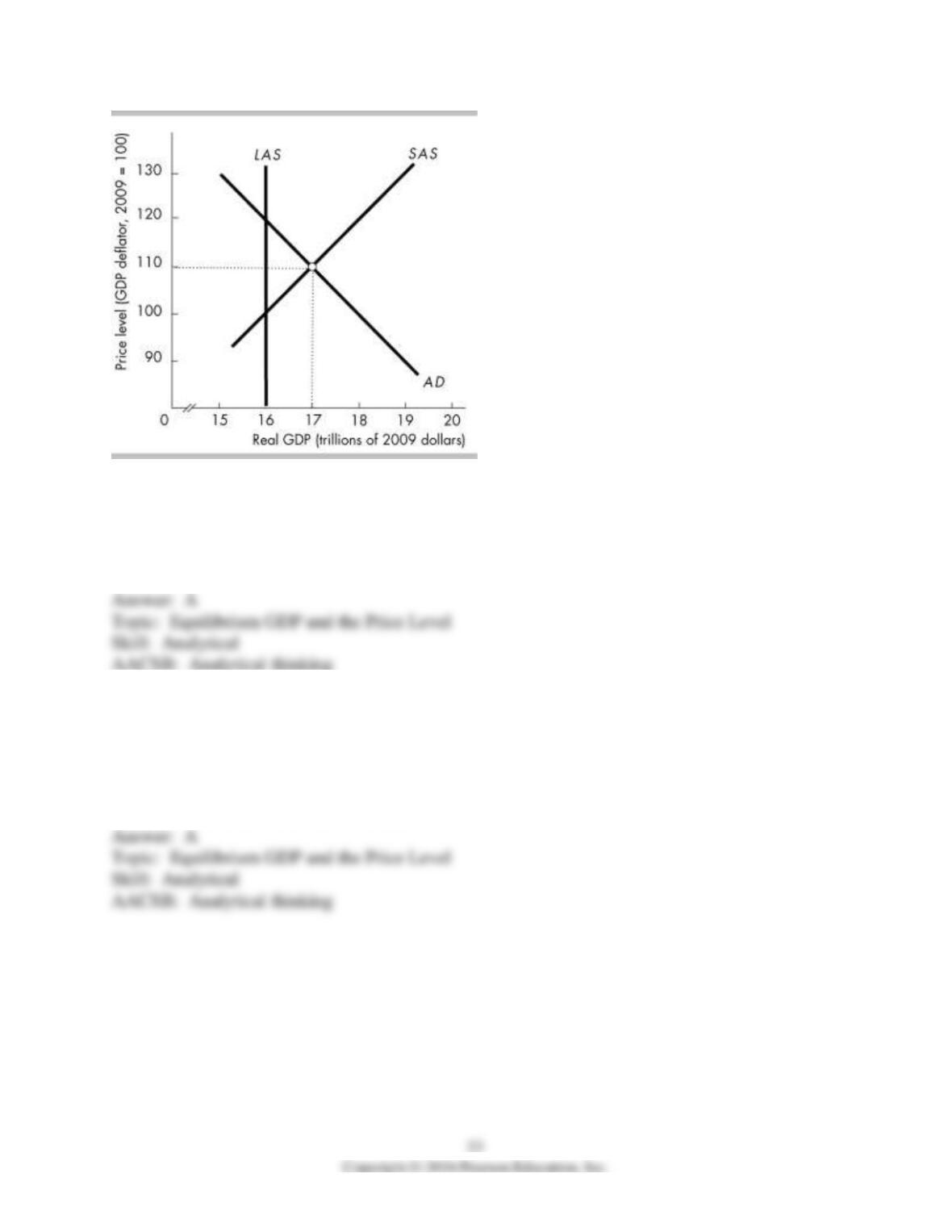
79) In the above figure, which fiscal policy could help move the economy to potential GDP?
A) decreasing government expenditure
B) decreasing autonomous taxes
C) increasing government expenditure
D) Both answers A and B are correct.
80) In the above figure, which of the following policies could move the economy to potential
GDP?
A) decreasing government expenditures and increasing taxes
B) decreasing taxes and not changing government expenditures
C) increasing government expenditures and decreasing taxes
D) None of the above answers is correct.
81) Suppose that real GDP equals potential GDP, but the government believes that the economy
is in a below full-employment equilibrium. As a result, the government increases its expenditure
on goods and services. In response to the government’s fiscal policy
A) aggregate demand will increase.
B) an equilibrium with real GDP less than potential GDP will occur.
C) potential GDP decreases.
D) None of the above answers is correct.
82) The use of fiscal policy is limited because
A) there is never a long enough time lag.
B) the economy is almost always at full employment.
C) the President may have different goals than Congress.
D) time lags associated with fiscal policy may cause the policy to take effect too late to solve the
problem it was supposed to address.
83) The use of discretionary fiscal policy to end a recession is limited because
A) the legislative process is slow.
B) potential GDP changes too rapidly.
C) the real-world multiplier is too small to have an impact on real GDP.
D) in the real world, taxes are not induced.
84) Which of the following are limitations of fiscal policy?
I. There is a lag between recognizing that fiscal policy might be needed and when it actually
takes effect.
II. Economic forecasts might be incorrect.
III. Monetary policy might counter fiscal policy.
A) I only
B) I and II
C) I and III
D) I, II and III
85) Which of the following policies shifts the AD curve the farthest leftward?
A) a rise in taxes of $10 billion
B) a cut in taxes of $10 billion
C) a decrease in government expenditure of $10 billion
D) a decrease in both government expenditure and taxes of $10 billion
86) If the government’s budget is in surplus even when the economy is at full employment, the
surplus is said to be
A) persisting.
B) cyclical.
C) discretionary.
5 News Based Questions
1) In 2007, Norway’s government had revenue of $226.3 billion and expenditures of
$158.7 billion. At the same time, GDP totaled $392 billion and government debt was about 67
percent of GDP. In 2007, Norway’s government ran a government budget ________ and
government debt ________.
A) surplus; decreased
B) deficit; decreased
C) surplus; increased
D) deficit; increased
2) In 2007, France’s government had revenue of $1.287 trillion while expenditures totaled
$1.356 trillion. GDP was $2.56 trillion. In 2007, the government budget balance was ________
and government debt ________.
A) -$0.69 billion; increased
B) $1.27 trillion; increased
C) $0.69 billion; decreased
D) $1.02 trillion; decreased
3) In 2007, Denmark’s government had expenditures of $157 billion and spending of $171
billion. GDP in 2007 was $312 billion. The government ran a budget ________ and government
debt ________.
A) deficit; decreased
B) deficit; increased
C) surplus; decreased
D) surplus; increased
4) In October 2008, President Bush enacted the Alternative Minimum Tax Relief Act of 2008,
which resulted in lower taxes on labor income. According the supply-side view, this would result
in
A) an increase in the tax wedge.
B) a leftward shift in the supply of labor curve.
C) a movement along the supply of labor curve.
D) a rightward shift in the supply of labor curve.
5) In October 2008, President Bush enacted the Alternative Minimum Tax Relief Act of 2008,
which resulted in lower taxes on labor income. According the supply-side view, as a result of this
act the incentive to work ________ and the tax wedge ________.
A) decreases; increases
B) increases; does not change
C) increases; decreases
D) increases; increases
6) In 2007, Germany increased the value added tax (VAT) on consumption from 16 percent to 19
percent. The supply-side view, this will
A) increase the tax wedge and lower the incentive to work.
B) decrease the tax wedge and lower the incentive to work.
C) shift the labor supply curve to the right.
D) increase the incentive to work in order to pay the higher tax.
7) In 2007, Germany increased the value added tax (VAT) on consumption from 16 percent to 19
percent. According to the supply-side view
A) the incentive to work increases.
B) the supply of labor increases.
C) there will be an increase in potential GDP due to the increase tax revenue.
D) the after-tax wage rate falls.
8) In 2008, Britain decided to cut its value added tax (VAT) to 15 percent from 17.5 percent. The
VAT is similar to a sales tax. According to the supply-side view, this change will increase
I. the after-tax wage.
II. the incentive to work.
III. the supply of labor.
A) II only
B) I and II only
C) I, II and III
D) II and III only
9) A report on the EU economic stimulus plan suggested that “… Governments must consider …
cutting VAT [value added tax] and labor taxes …” The VAT is similar to a sales tax. If
governments follow the suggestions, there will be ________ according to the supply-side view.
A) an increase in labor supply and a decrease in the tax wedge
B) an upward shift in the aggregate production function
C) an increase in the labor supply and an increase in the tax wedge
D) an increase in saving and an increase in the tax wedge
10) In response to the economic crisis in 2008, President Merkel “highlighted in her speech what
the German government has already done: a financial sector rescue package worth up to €500
billion, and a proposed stimulus package of tax breaks [on income] and spending measures
aimed at triggering investments of up to €50 billion over the next two years.”
www.iht.com, 11/26/2008
Which parts of the stimulus plan will increase labor supply?
A) financial sector rescue package
B) spending measures targeted at investment
C) tax breaks
D) all of the above
11) Norway has a lower tax on dividend and interest income than does United Kingdom. We
would expect Norway to have a ________ tax wedge and a ________ growth rate of real GDP.
A) smaller; slower
B) larger; faster
C) larger; slower
D) smaller; faster
12) Between 2000 and 2005, Finland increased its tax on interest income. As a result, the supply
curve for loanable funds shifted ________ and the tax wedge ________.
A) leftward; increased
B) rightward; increased
C) leftward; decreased
D) rightward; decreased
13) Between 2000 and 2005, Finland increased its tax on interest income. As a result, the tax
wedge ________ and the growth rate of real GDP ________.
A) decreased; slowed
B) increased; slowed
C) decreased; increased
D) increased; increased