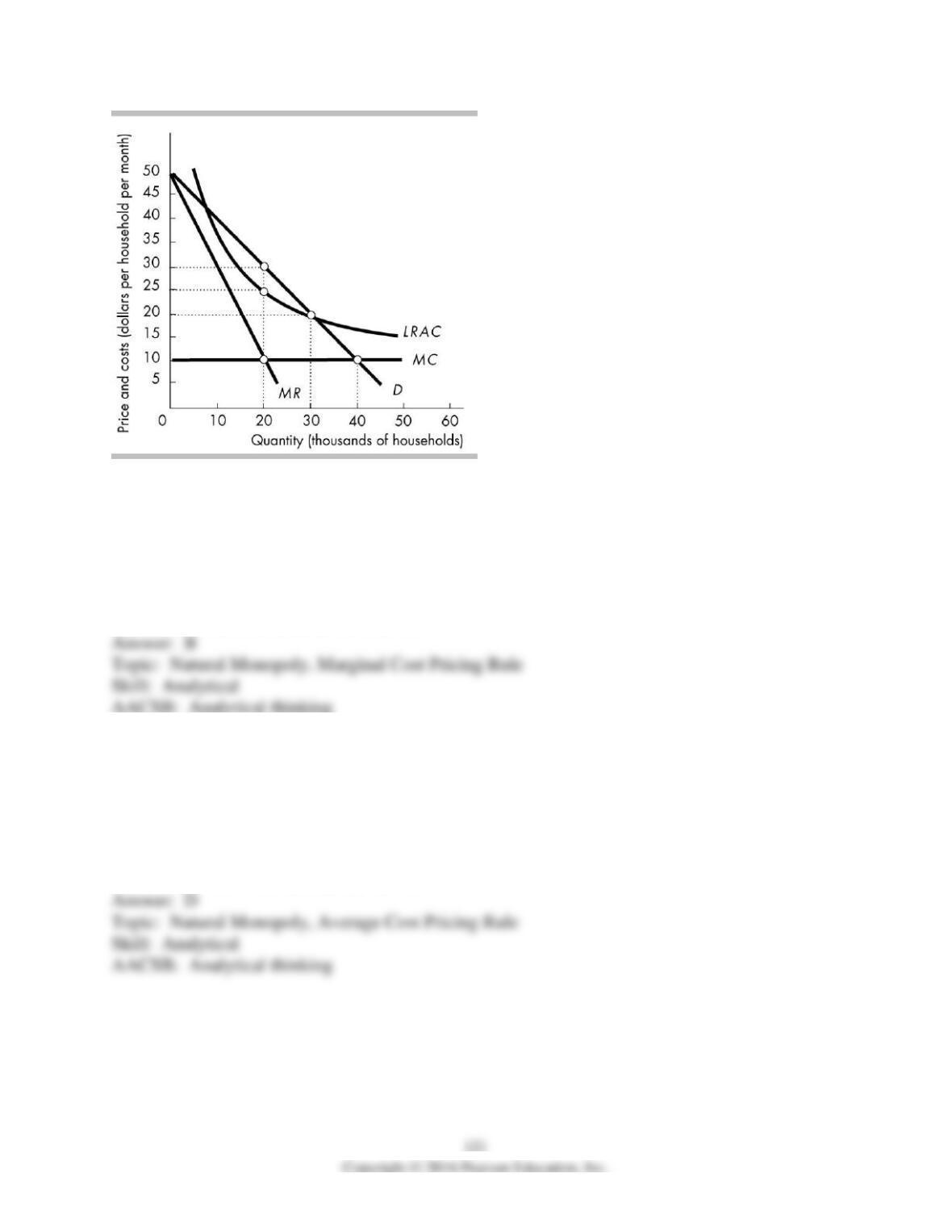
51) Natural gas is a natural monopoly. The figure above shows the market for natural gas in the
city of Lucknow. When a marginal cost pricing rule regulation is imposed, the price per
household per month is ________.
A) $30 and 20,000 household are served
B) $10 and 40,000 household are served
C) $10 and 20,000 household are served
D) $20 and 30,000 households are served
52) Natural gas is a natural monopoly. The figure shows the market for natural gas in the city of
Lucknow. When an average cost price rule regulation is imposed, the price per household per
month is ________.
A) $30 and 20,000 household are served
B) $10 and 40,000 household are served
C) $25 and 20,000 household are served
D) $20 and 30,000 households are served
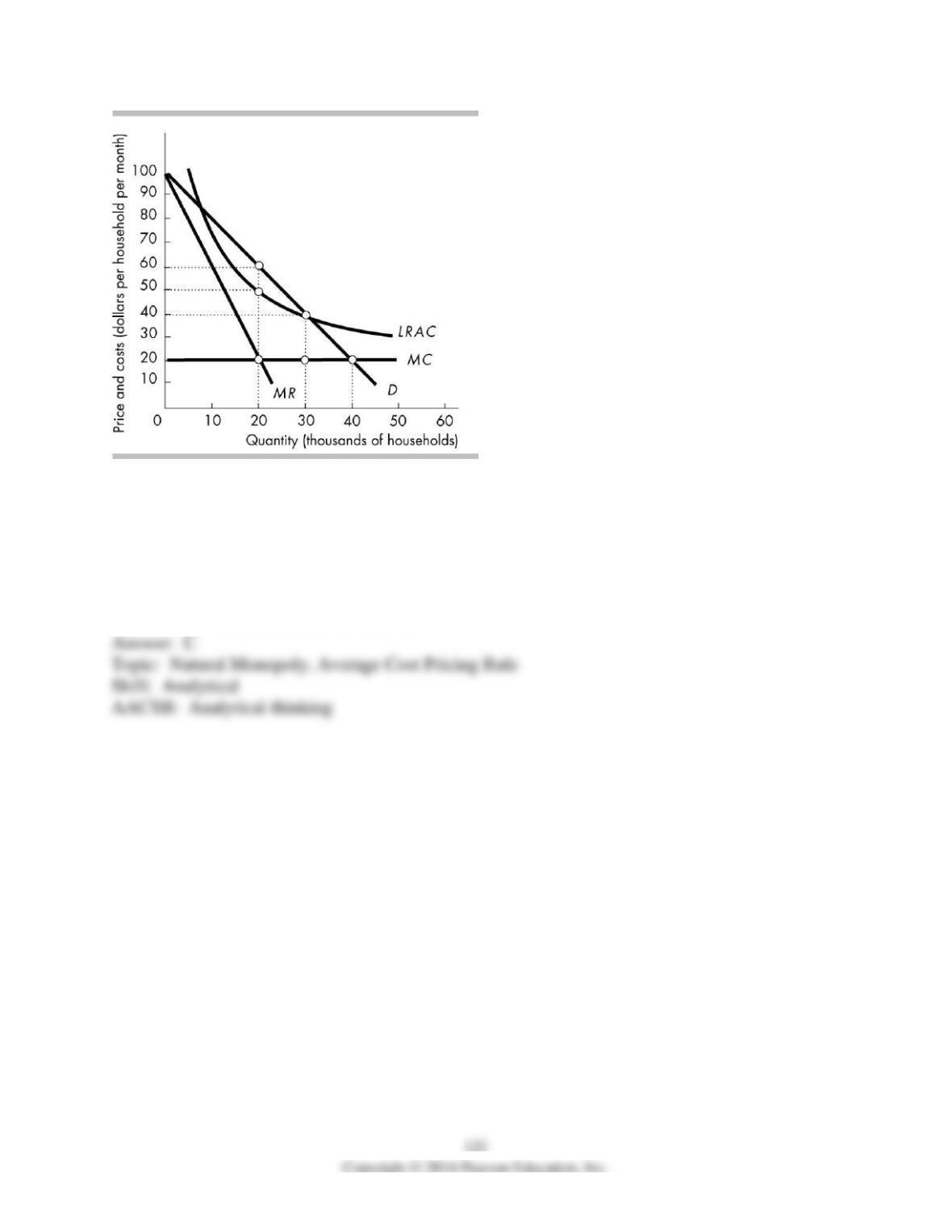
53) Natural gas is a natural monopoly. The figure above shows the market for natural gas in the
city of Lucknow. When an average cost price rule regulation is imposed, the price per household
per month is ________.
A) $20 and 30,000 households are served
B) $40 and 40,000 households are served
C) $40 and 30,000 households are served
D) $60 and 20,000 households are served
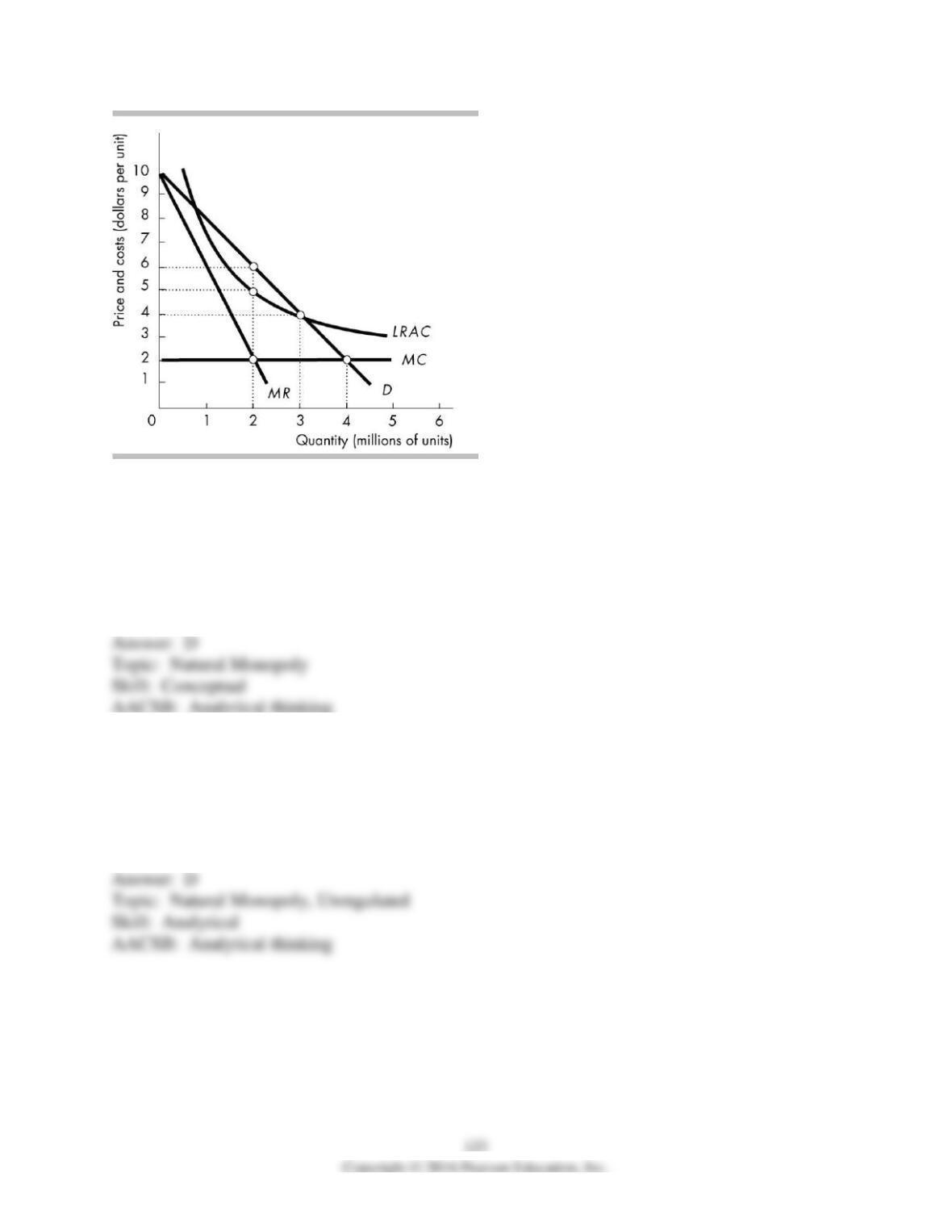
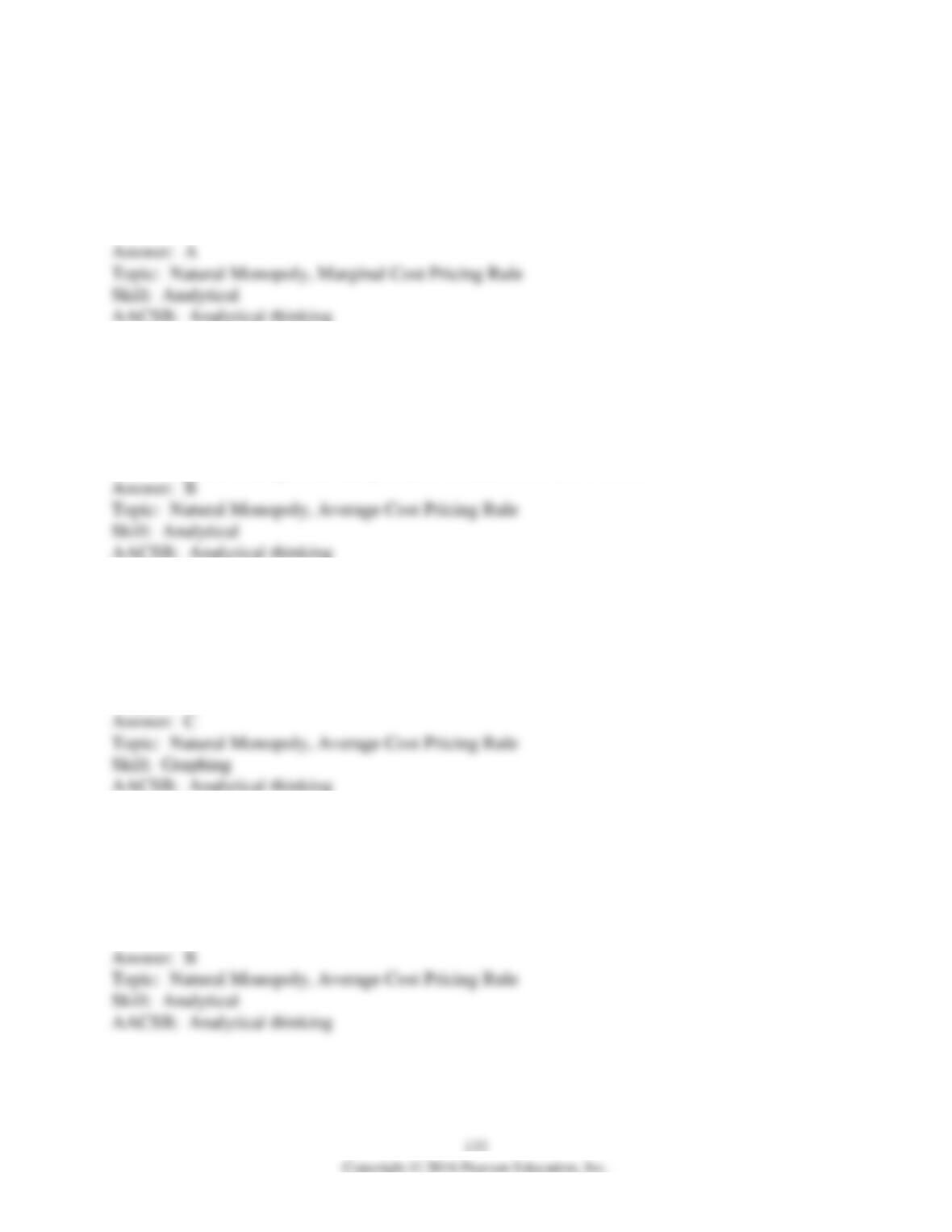
54) We know that the firm shown in the figure above is a natural monopoly because as output
increases, the
A) marginal cost is constant.
B) demand curve slopes downward.
C) marginal revenue curve lies below its demand curve.
D) average total cost decreases so that the firm can supply the market at lower cost than two
firms.
55) If the natural monopoly shown in the figure above is unregulated, then it will charge a price
of
A) $2.
B) $4.
C) $5.
D) $6.
56) If the natural monopoly shown in the figure above is unregulated, it will sell
A) 2 million units.
B) 3 million units.
C) 4 million units.
D) 5 million units.
57) If the natural monopoly shown in the figure above is unregulated, it will make an economic
profit of
A) $2 million.
B) $4 million.
C) $9 million.
D) $0, that is, it earns a normal profit.
58) If the natural monopoly shown in the figure above is unregulated, then consumer surplus will
be
A) $0.
B) $4 million.
C) $8 million.
D) $16 million.
59) If the natural monopoly shown in the figure above is unregulated, then the deadweight loss
will be
A) $0.
B) $2 million.
C) $4 million.
D) $8 million.
60) If a marginal cost pricing rule is imposed on the natural monopoly in the figure above, then
the price will be
A) $2.
B) $4.
C) $5.
D) $6.
61) If a marginal cost pricing rule is imposed on the natural monopoly shown in the figure above,
then it will produce
A) 2 million units.
B) 3 million units.
C) 4 million units.
D) 5 million units.
62) If a marginal cost pricing rule is imposed on the natural monopoly in the figure above, then
the firm will
A) incur an economic loss.
B) make zero economic profit, that is, its owners make a normal profit.
C) make an economic profit of $4 million.
D) make an economic profit of $16 million.
63) If a marginal cost pricing rule is imposed on the natural monopoly in the figure above, then
the consumer surplus will be
A) $0.
B) $8 million.
C) $16 million.
D) $32 million.
64) If a marginal cost pricing rule is imposed on the natural monopoly in the figure above, then
total surplus will be
A) $0.
B) $4 million.
C) $8 million.
D) $16 million.
65) If a marginal cost pricing rule is imposed on the natural monopoly shown in the figure above,
then the deadweight loss will equal
A) $0.
B) $4 million.
C) $8 million.
D) $12 million.
66) An efficient allocation of resources is reached in the figure above when output equals
A) 1 million.
B) 2 million.
C) 3 million.
D) 4 million.
67) If an average cost pricing rule is imposed on the natural monopoly shown in the figure
above, then the price will be
A) $2.
B) $4.
C) $5.
D) $6.
68) If an average cost pricing rule is imposed on the natural monopoly shown in the figure
above, then it will produce
A) 2 million units.
B) 3 million units.
C) 4 million units.
D) 5 million units.
69) If an average cost pricing rule is imposed on the natural monopoly shown in the figure
above, then consumer surplus will be
A) $0.
B) $8 million.
C) $9 million.
D) $16 million.
70) If an average cost pricing rule is imposed on the natural monopoly in the figure above, then
the firm will
A) incur an economic loss.
B) make zero economic profit, that is, its owners make a normal profit.
C) make an economic profit of $4 million.
D) make an economic profit of $9 million.
71) If an average cost pricing rule is imposed on the natural monopoly shown in the figure
above, then the firm’s economic profit will be
A) $9 million.
B) $12 million.
C) $0, that is, the firm’s owners make only a normal profit.
D) negative, that is, the firm incurs an economic loss.
72) If an average cost pricing rule is imposed on the natural monopoly in the figure above, then
the deadweight loss will be
A) $0.
B) $1 million.
C) $9 million.
D) $16 million.
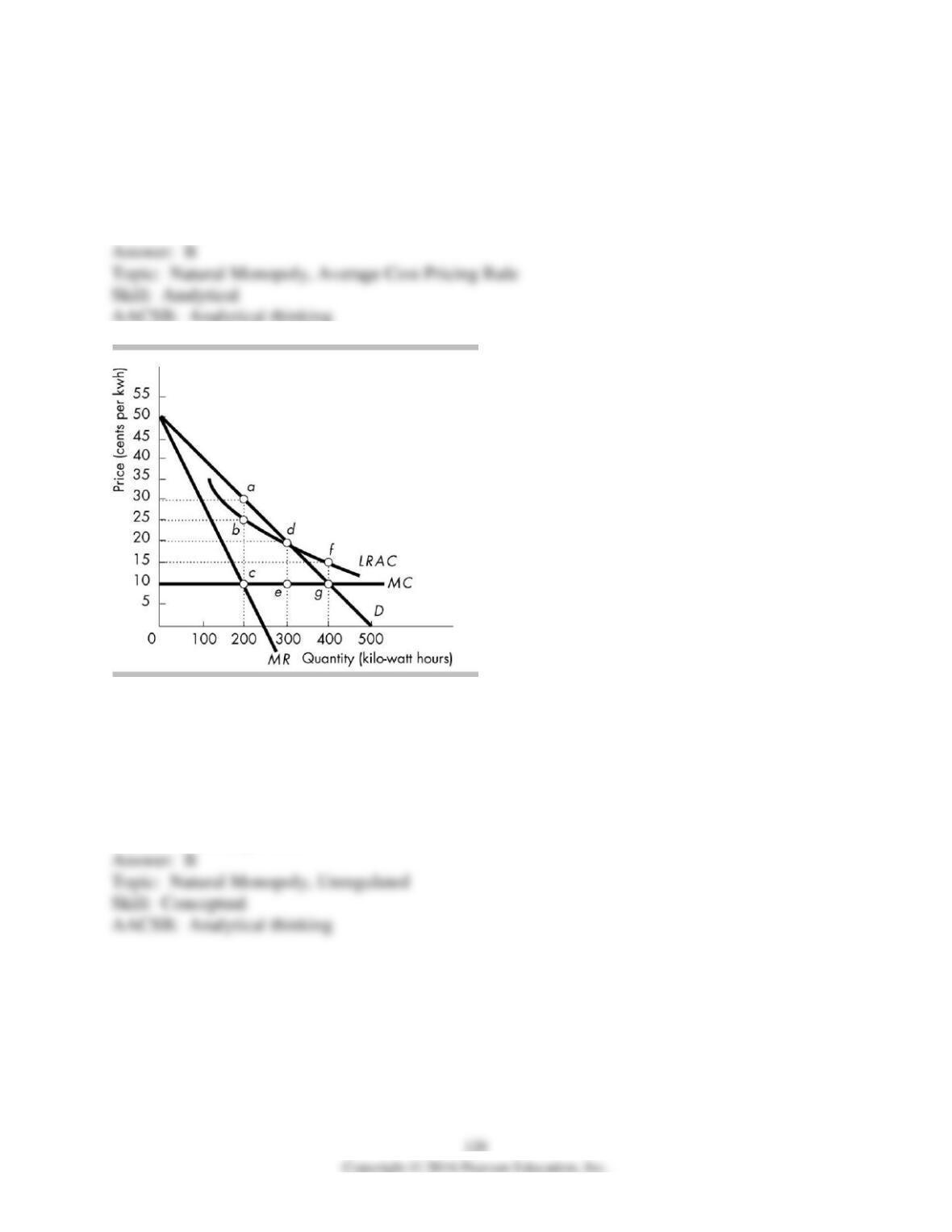
73) The figure above provides information about Light-U-Up Utilities, which is a natural
monopoly that provides electricity. If Light-U-Up is unregulated, it will produce ________ and
sell at a price of ________.
A) 200 kwh; 10¢ per kwh
B) 200 kwh; 30¢ per kwh
C) 300 kwh; 20¢ per kwh
D) 400 kwh; 10¢ per kwh
74) The figure above provides information about Light-U-Up Utilities, which is a natural
monopoly that provides electricity. At the unregulated price and quantity, Light-U-Up’s
economic profit is equal to
A) -$10.
B) $10.
C) $40.
D) $60.
75) The figure above provides information about Light-U-Up Utilities, which is a natural
monopoly that provides electricity. What is the area of deadweight loss when Light-U-Up
produces the unregulated, profit-maximizing level of output?
A) abd
B) acg
C) deg
D) There is no deadweight loss.
76) The figure above provides information about Light-U-Up Utilities, which is a natural
monopoly that provides electricity. If Light-U-Up is regulated and must follow a marginal cost
pricing rule, it will produce ________ and sell at a price of ________.
A) 200 kwh; 10¢ per kwh
B) 300 kwh; 20¢ per kwh
C) 300 kwh; 10¢ per kwh
D) 400 kwh; 10¢ per kwh
77) The figure above provides information about Light-U-Up Utilities, which is a natural
monopoly that provides electricity. If Light-U-Up is regulated, what is its economic profit if it
must follow a marginal cost pricing rule?
A) -$40
B) -$20
C) $0
D) $30
78) The figure above provides information about Light-U-Up Utilities, which is a natural
monopoly that provides electricity. What is the area of deadweight loss when Light-U-Up is
regulated and follows a marginal cost pricing rule?
A) abd
B) acg
C) deg
D) There is no deadweight loss.
79) The figure above provides information about Light-U-Up Utilities, which is a natural
monopoly that provides electricity. If Light-U-Up is regulated and must follow an average cost
pricing rule, it will produce ________ and sell at a price of ________.
A) 200 kwh; 30¢ per kwh
B) 200 kwh; 25¢ per kwh
C) 300 kwh; 20¢ per kwh
D) 400 kwh; 15¢ per kwh
80) The figure above provides information about Light-U-Up Utilities, which is a natural
monopoly that provides electricity. If Light-U-Up is regulated, what is its economic profit if it
must follow an average cost pricing rule?
A) -$60
B) -$20
C) $0
D) $30
81) The figure above provides information about Light-U-Up Utilities, which is a natural
monopoly that provides electricity. What is the area of deadweight loss when Light-U-Up is
regulated and follows an average cost pricing rule?
A) acg
B) degf
C) deg
D) There is no deadweight loss.
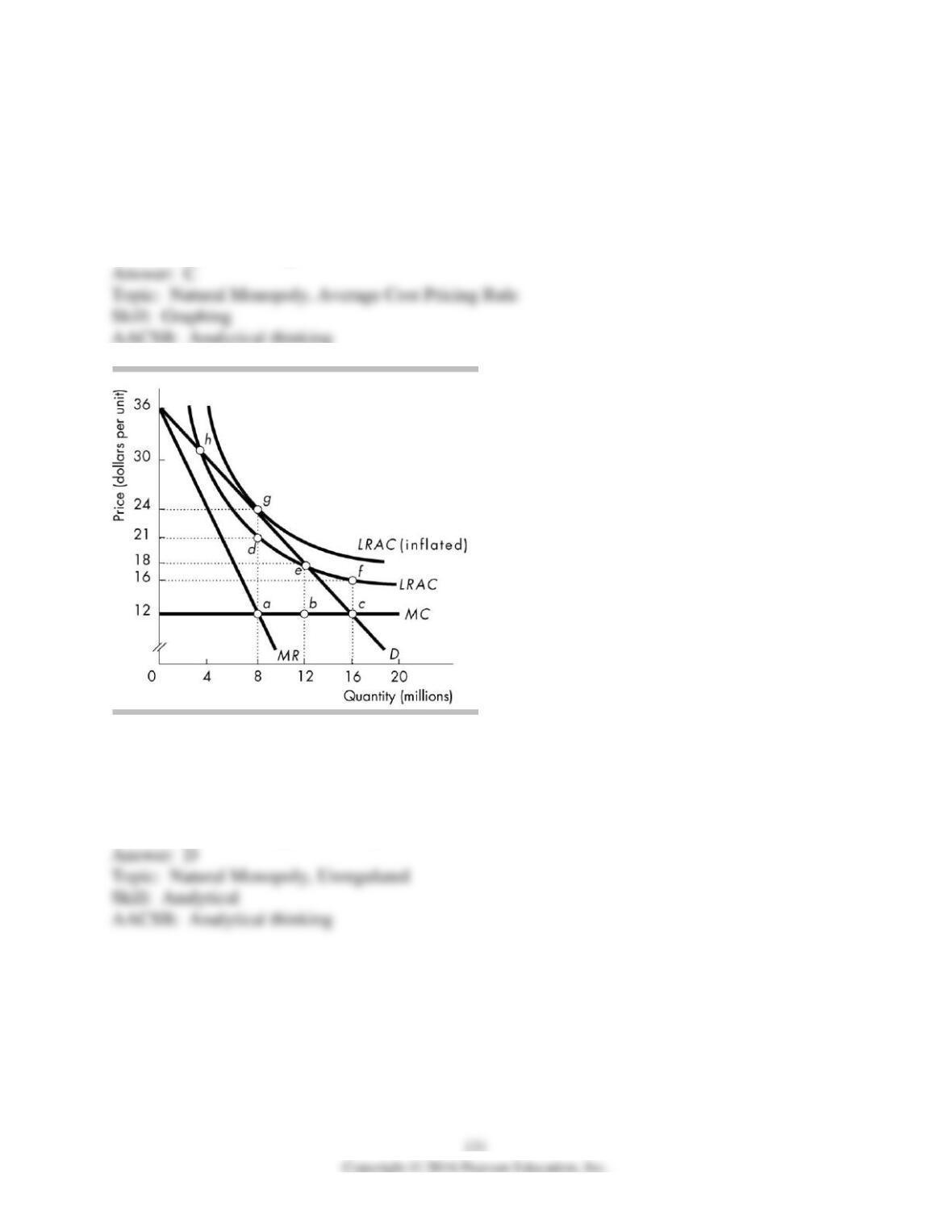
82) In the above figure, if the natural monopoly is not regulated it will produce
A) 12 million units at a price of $18 per unit.
B) 8 million units at a price of $12 per unit.
C) 8 million units at a price of $21 per unit.
D) 8 million units at a price of $24 per unit.
83) In the above figure, if the natural monopoly is not regulated then consumer surplus is
A) $48 million.
B) $60 million.
C) $108 million.
D) $192 million.
84) In the above figure, if this natural monopoly is not regulated the deadweight loss to society is
A) ecf.
B) ebc.
C) gac.
D) gde.
85) In the above figure, if the natural monopoly is regulated using a marginal cost pricing rule,
then the firm will
A) produce 8 million units and make an economic profit of $24 million.
B) produce 12 million units and make zero economic profit.
C) produce 16 million units and incur an economic loss of $64 million.
D) produce 16 million units and make zero economic profit.
86) In the above figure, if the natural monopoly is regulated with a marginal cost pricing rule,
then the deadweight loss to society is
A) zero.
B) ecf.
C) gde.
D) efcb.
87) In the above figure, if the natural monopoly is regulated and a marginal cost pricing rule is
followed, then the consumer surplus will be
A) $192 million.
B) $108 million.
C) $60 million.
D) $48 million.
88) In the above figure, if the natural monopoly is regulated with an average cost pricing rule and
the firm does not inflate its costs, then the firm will produce
A) 8 million units and set a price of $21 per unit.
B) 12 million units and set a price of $18 per unit.
C) 16 million units and set a price of $16 per unit.
D) nothing unless the government provides subsidies to cover its losses.
89) In the above figure, if the natural monopoly is regulated with an average cost pricing rule and
the firm does not inflate its costs, the deadweight loss to society is
A) zero.
B) efc.
C) ebc.
D) gac.
90) In the above figure, if the natural monopoly is regulated with an average cost pricing rule and
the firm does not inflate its costs, then consumer surplus will be
A) $192 million.
B) $108 million.
C) $216 million.
D) $60 million.
91) In the above figure, if the natural monopoly is regulated using an average cost pricing rule,
but the firm can pad its costs and make the regulator believe its costs are LRAC (inflated), then
the price the firm charges will increase from
A) $18 to $24.
B) $12 to $24.
C) $12 to $18.
D) $18 to $36.
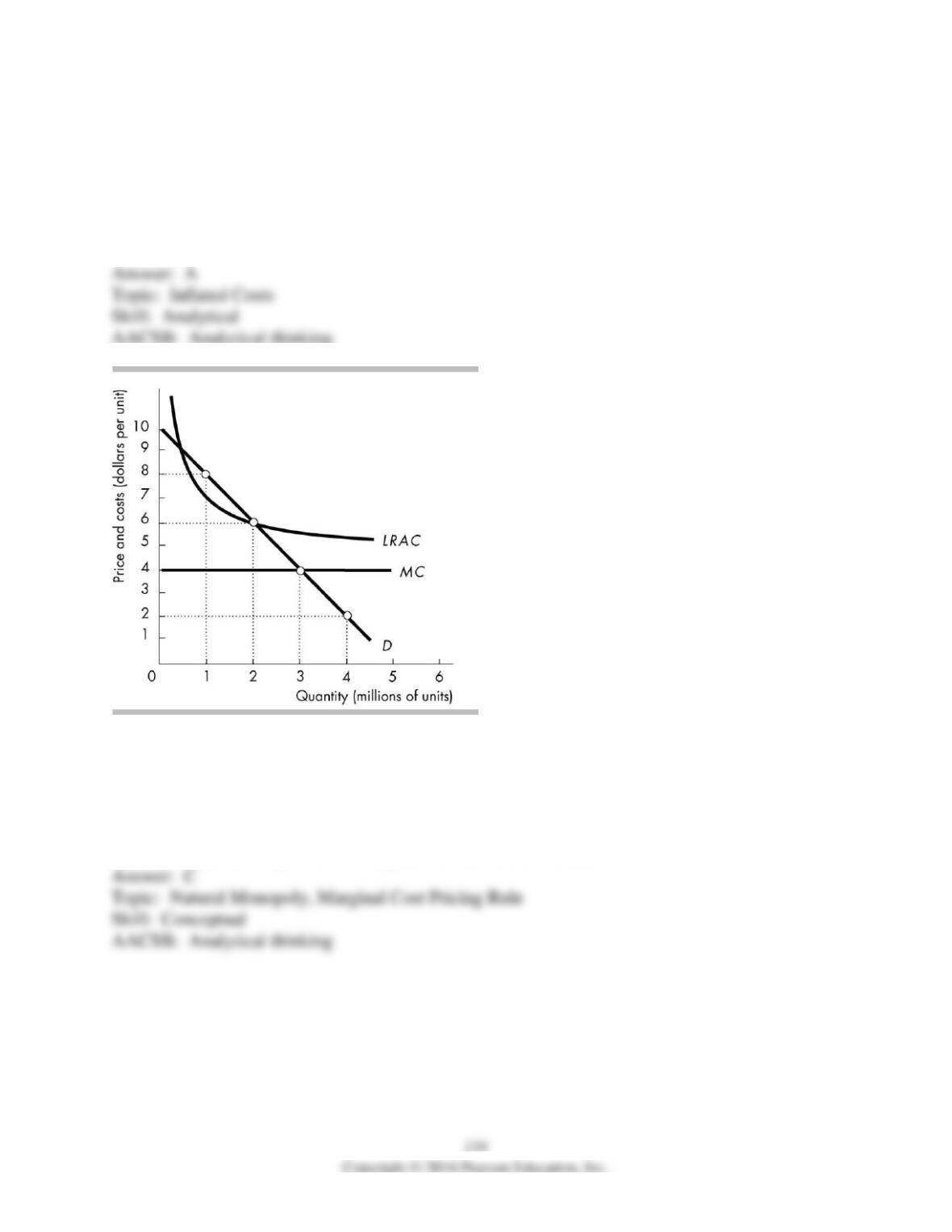
92) The figure above shows the costs and demand curves for the Bigshow Cable Company.
Bigshow Cable Company incurs an economic loss if the regulator set its price at
A) $8.
B) $6.
C) $4.
D) None of the above prices force Bigshow to incur an economic loss.
93) The figure above shows the costs and demand curves for the Bigshow Cable Company. To
avoid any deadweight loss in the market served by Bigshow, the regulator must set the price at
A) $8.
B) $6.
C) $4.
D) $2.
94) The figure above shows the costs and demand curves for the Bigshow Cable Company. If the
regulator wants to set the price so that Bigshow earns the same normal profit as a perfectly
competitive firm, what price should be set?
A) $8
B) $6
C) $4
D) $2
95) The figure above shows the costs and demand curves for the Bigshow Cable Company. If the
regulator of Bigshow Cable Company set its price at $4, the company would
A) receive a producer surplus equal to $18 million.
B) make zero economic profit.
C) incur an economic loss of $7 million.
D) none of the above.
96) The figure above shows the costs and demand curves for the Bigshow Cable Company. If the
firm is required to set its price according to an average cost pricing rule, the price is ________
and the quantity produced is ________ million.
A) $8; 1
B) $6; 1
C) $6; 2
D) $4; 3
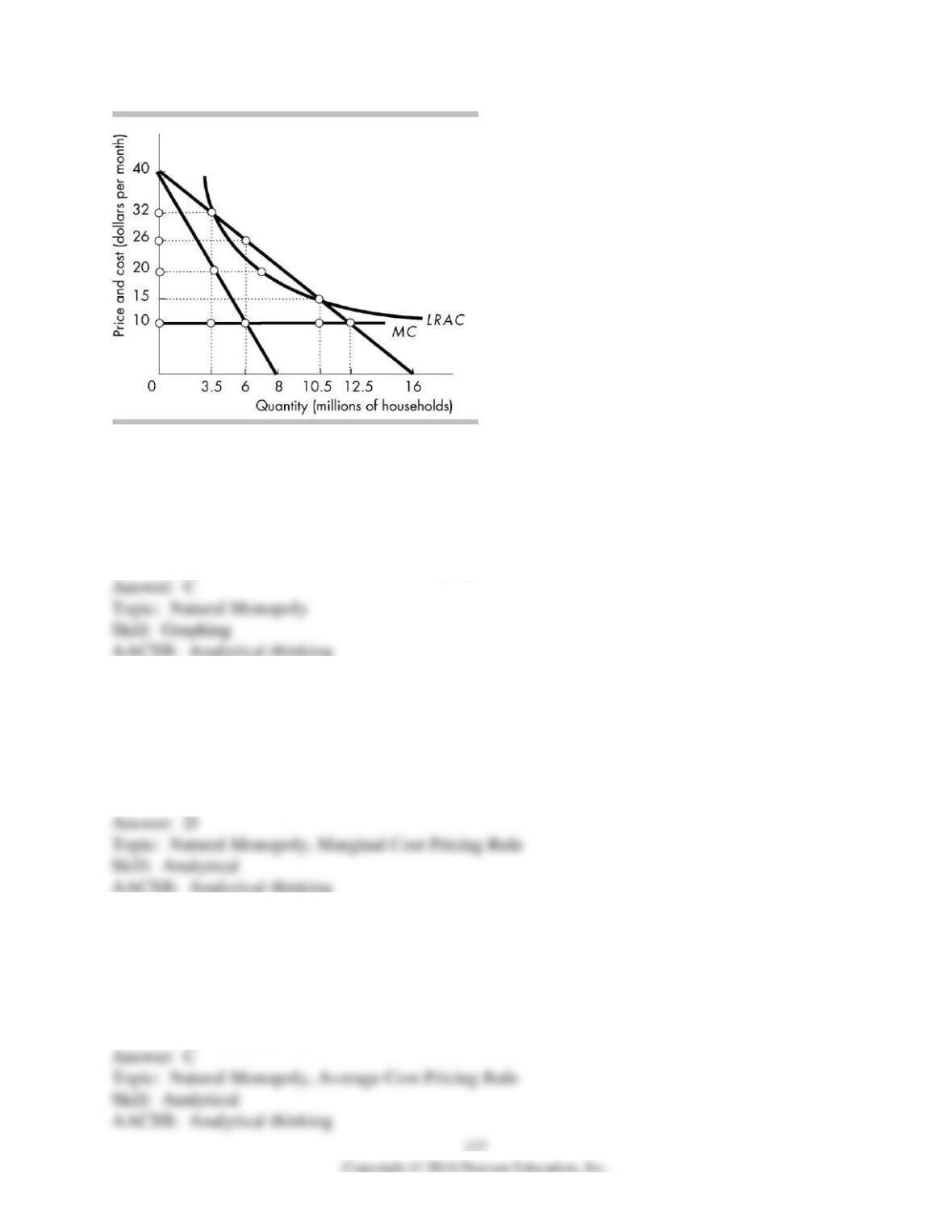
97) Consider the market for cable television in the figure above. This graph depicts a natural
monopoly because the
A) marginal cost curve is constant.
B) demand curve is downward sloping.
C) average cost curve is declining as it crosses the demand curve.
D) marginal revenue curve is downward sloping.
98) Consider the market for cable television, a natural monopoly, shown in the figure above. If
the regulator imposes a marginal cost pricing rule, the firm provides service to
A) 3.5 million households.
B) 6 million households.
C) 10.5 million households.
D) 12.5 million households.
99) Consider the market for cable television, a natural monopoly, shown in the figure above. If
the regulator imposes an average cost pricing rule, the firm provides service to
A) 3.5 million households.
B) 6 million households.
C) 10.5 million households.
D) 12.5 million households.
100) Consider the market for cable television, a natural monopoly, shown in the figure above. If
the regulator imposes an average cost pricing rule, deadweight loss is equal to
A) $5 million.
B) $0 million.
C) more than $10 million and less than $20 million..
D) $20 million or more.
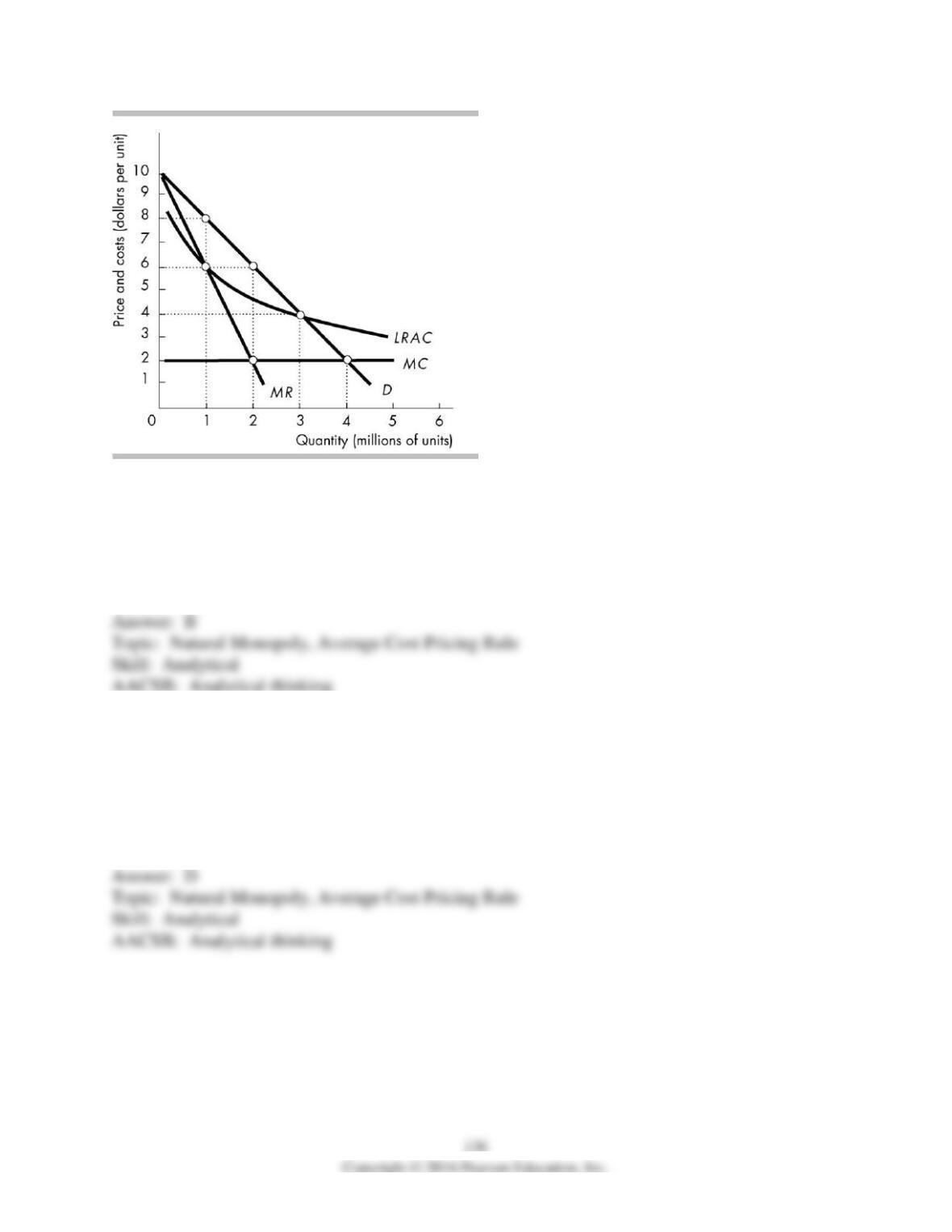
101) The figure above shows the demand curve (D) faced by Visual, Inc., a cable TV company,
and the firm’s marginal revenue (MR), marginal cost (MC), and average cost (LRAC) curves. If
Visual is regulated according to the social interest theory, it will serve ________ million
households and set a price of ________ per household per month.
A) 2; $12
B) 3; $24
C) 4; $12
D) 2; $36
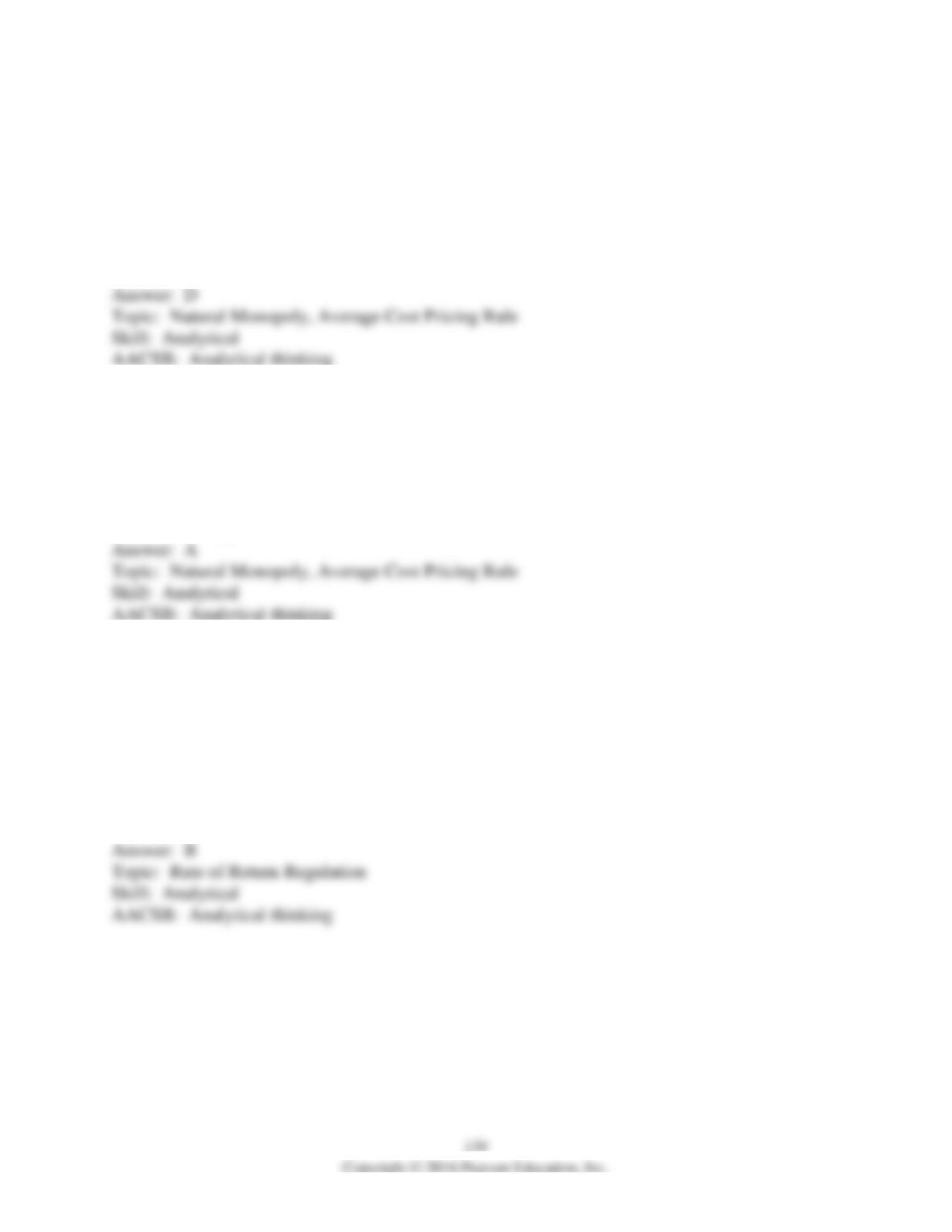
102) The figure above shows the demand curve (D) faced by Visual, Inc., a cable TV company,
and the firm’s marginal revenue (MR), marginal cost (MC), and average cost (LRAC) curves. If
Visual is regulated according to an average cost pricing rule, it will serve ________ million
households and set a price of ________ per household per month.
A) 1; $48
B) 4; $12
C) 2; $36
D) 3; $24
103) The figure above shows the demand curve (D) faced by Visual, Inc., a cable TV company,
and the firm’s marginal revenue (MR), marginal cost (MC), and average cost (LRAC) curves. If
Visual is regulated according to an average cost pricing rule, there will be
A) a deadweight loss of $6 million per month.
B) a deadweight loss of $24 million per month.
C) a deadweight loss of $12 million per month.
D) no deadweight loss.
104) The figure above shows the demand curve (D) faced by Visual, Inc., a cable TV company,
and the firm’s marginal revenue (MR), marginal cost (MC), and average cost (LRAC) curves. If
Visual is regulated using rate of return regulation, and the regulator knows the firm’s costs
curves, the company will serve ________ million households and set a price of ________ per
household per month.
A) 2.5; $30
B) 3; $24
C) 4; $12
D) 2; $36
105) The figure above shows the demand curve (D) faced by Visual, Inc., a cable TV company,
and the firm’s marginal revenue (MR), marginal cost (MC), and average cost (LRAC) curves.
Suppose Visual is regulated according to a price cap rule, with the price cap set at $24 per
household per month. The firm will maximize its profit if it serves ________ million households.
A) 2
B) 2.5
C) 3
D) 3.5
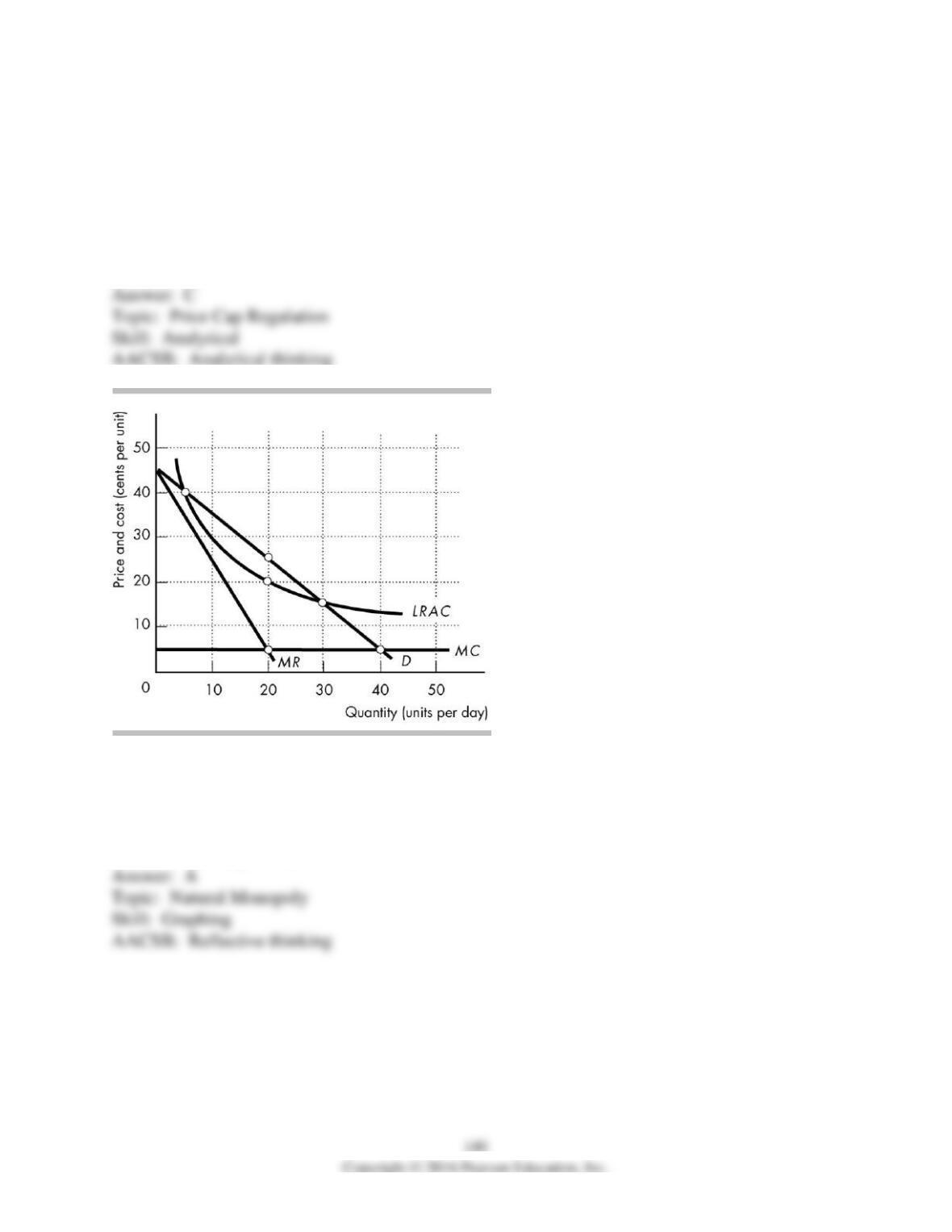
106) The firm shown in the figure above is
A) a natural monopoly.
B) a monopoly, but not a natural monopoly.
C) perfectly competitive.
D) naturally competitive.