110. In the long run, firms will enter a perfectly competitive market if the existing firms are making:
111. In the long run, firms in a perfectly competitive market will:
112. If firms are producing at a profit-maximizing level of output where the price exceeds the average total
cost:
113. If firms are producing at a profit-maximizing level of output where the price exceeds the average total
cost:
114. If firms are producing at a profit-maximizing level of output where the price is less than the average
total cost:
115. If firms are producing at a profit-maximizing level of output where the price is equal to the average
total cost:
Topic: Long-Run Supply
116. If firms are producing at a profit-maximizing level of output where the price is equal to the average
total cost:
117. If a firm is earning a negative economic profit, it means that:
118. If a firm is earning a positive economic profit, it means that it:
119. When economic profits are zero for a firm in a perfectly competitive market, it means that:
120. When economic profits are zero for a firm, it means that:
121. Each point of a firm’s supply curve represents a price-quantity pair where:
122. When firms enter a market, the supply increases and price:
123. As the equilibrium price falls in a perfectly competitive market, so do firms’:
124. When some firms leave a perfectly competitive market, the price:
125. In the long run in a perfectly competitive market:
126. In the long run in a perfectly competitive market:
127. In the long run, firms in a perfectly competitive market produce:
128. In the long run, firms in a perfectly competitive market:
13–42
129. In the long run, firms in a perfectly competitive market choose to produce a quantity:
130. Which of the following holds true at the chosen level of output in the long run for firms in a perfectly
131. Which of the following holds true at the chosen level of output in the long run for firms in a perfectly
competitive market?
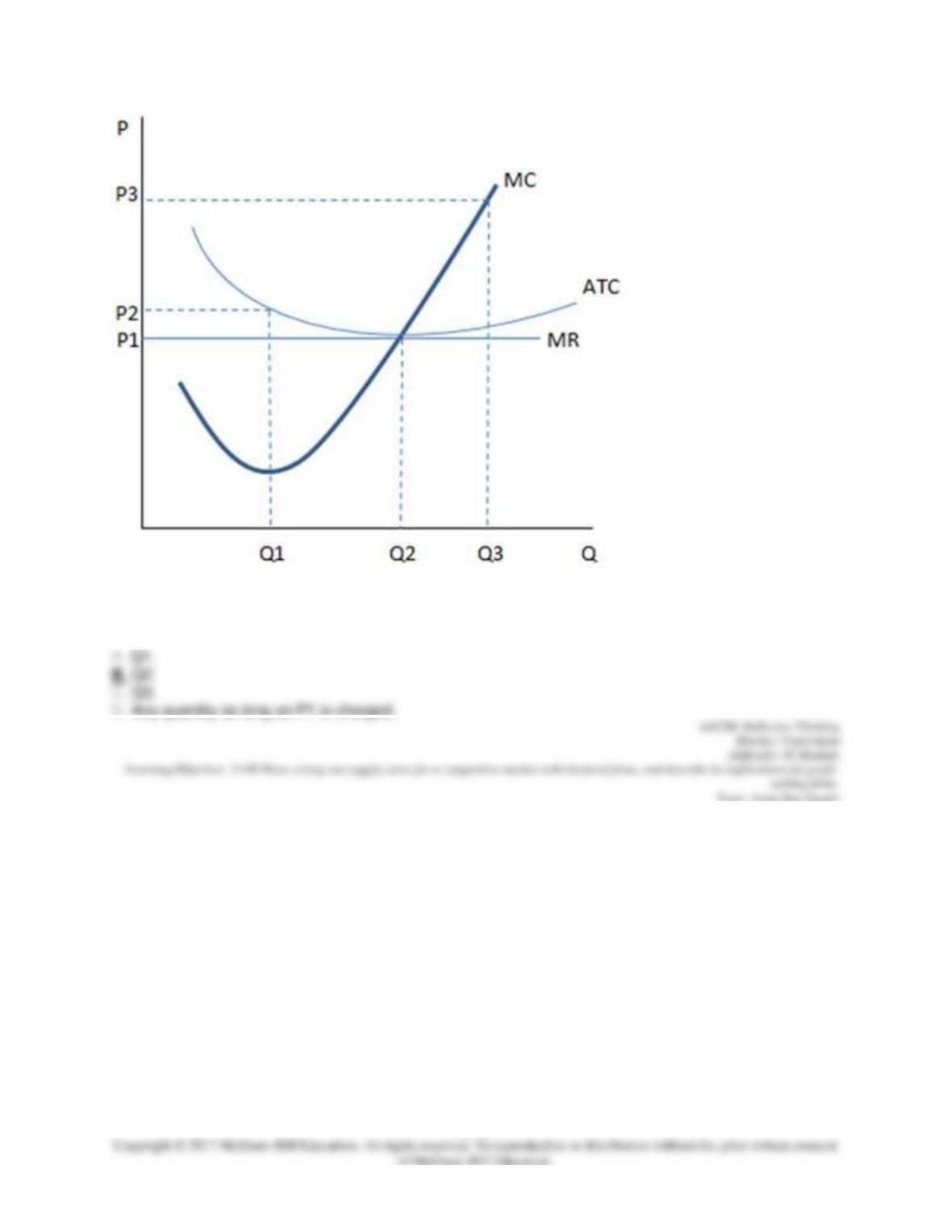
132. This graph represents the cost and revenue curves of a firm in a perfectly competitive market.
13–43
According the graph shown, the firm’s most efficient scale of operation is to produce quantity:
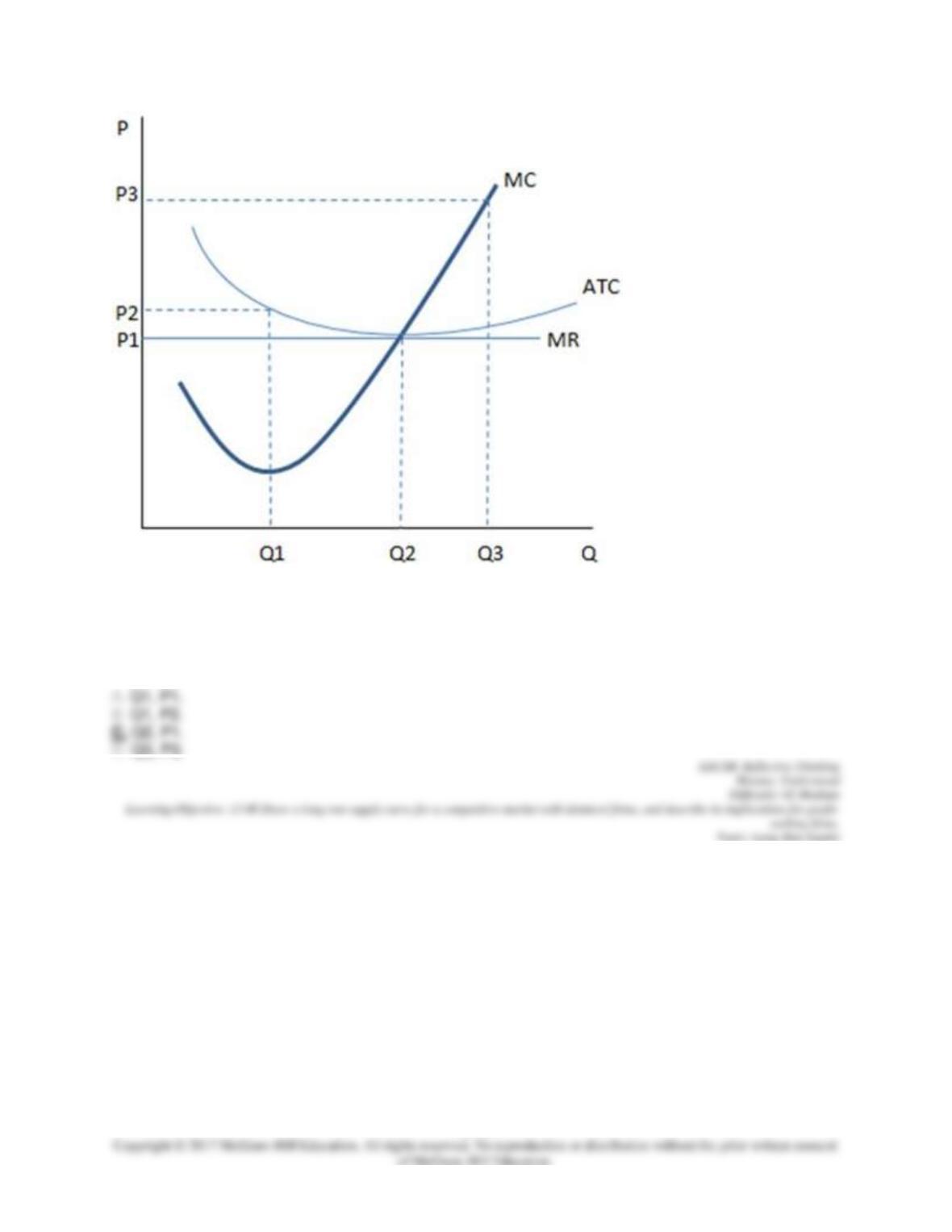
133. This graph represents the cost and revenue curves of a firm in a perfectly competitive market.
13–44
According to the graph shown, the long-run output decision for this firm is:
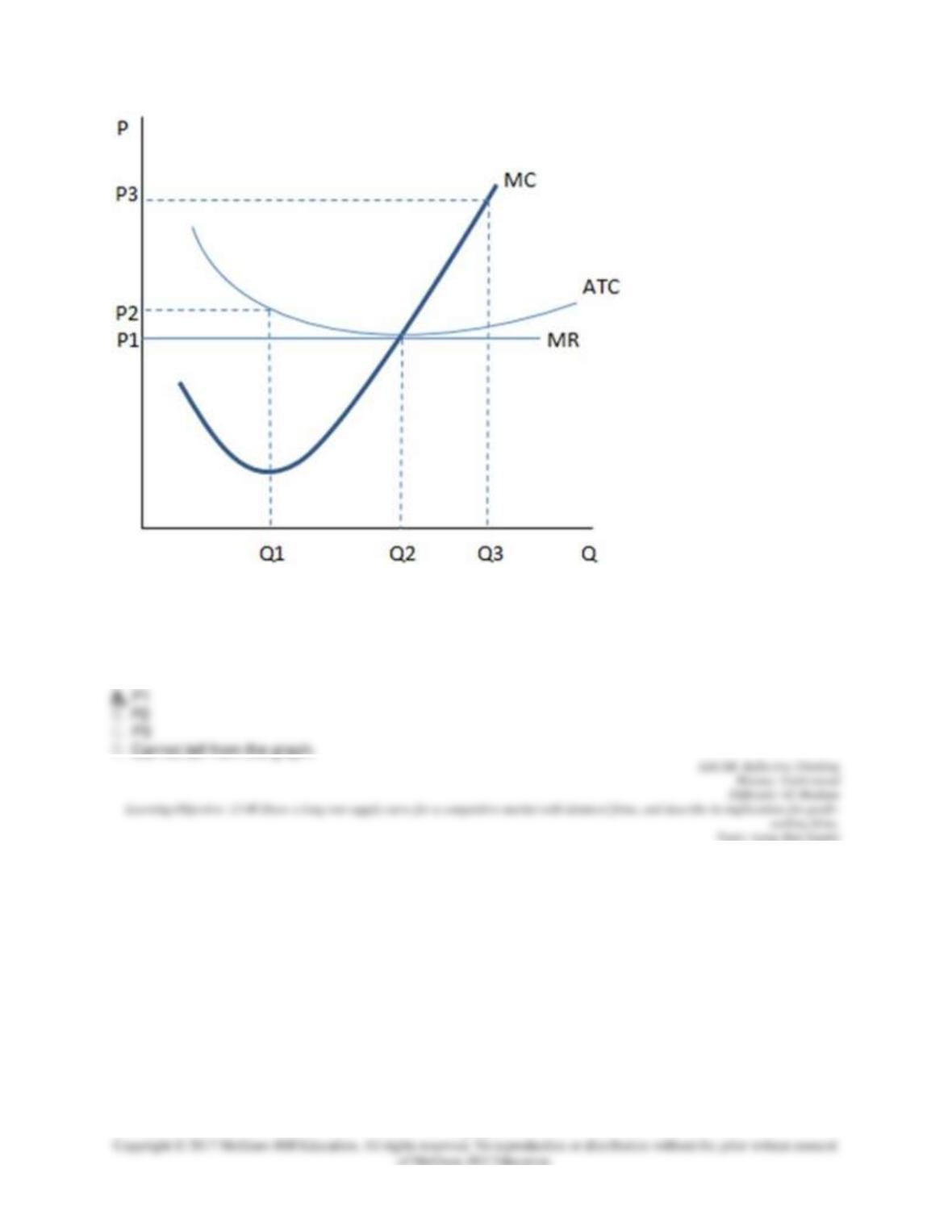
134. This graph represents the cost and revenue curves of a firm in a perfectly competitive market.
13–45
According to the graph shown, what is the market price?
135. This graph represents the cost and revenue curves of a firm in a perfectly competitive market.
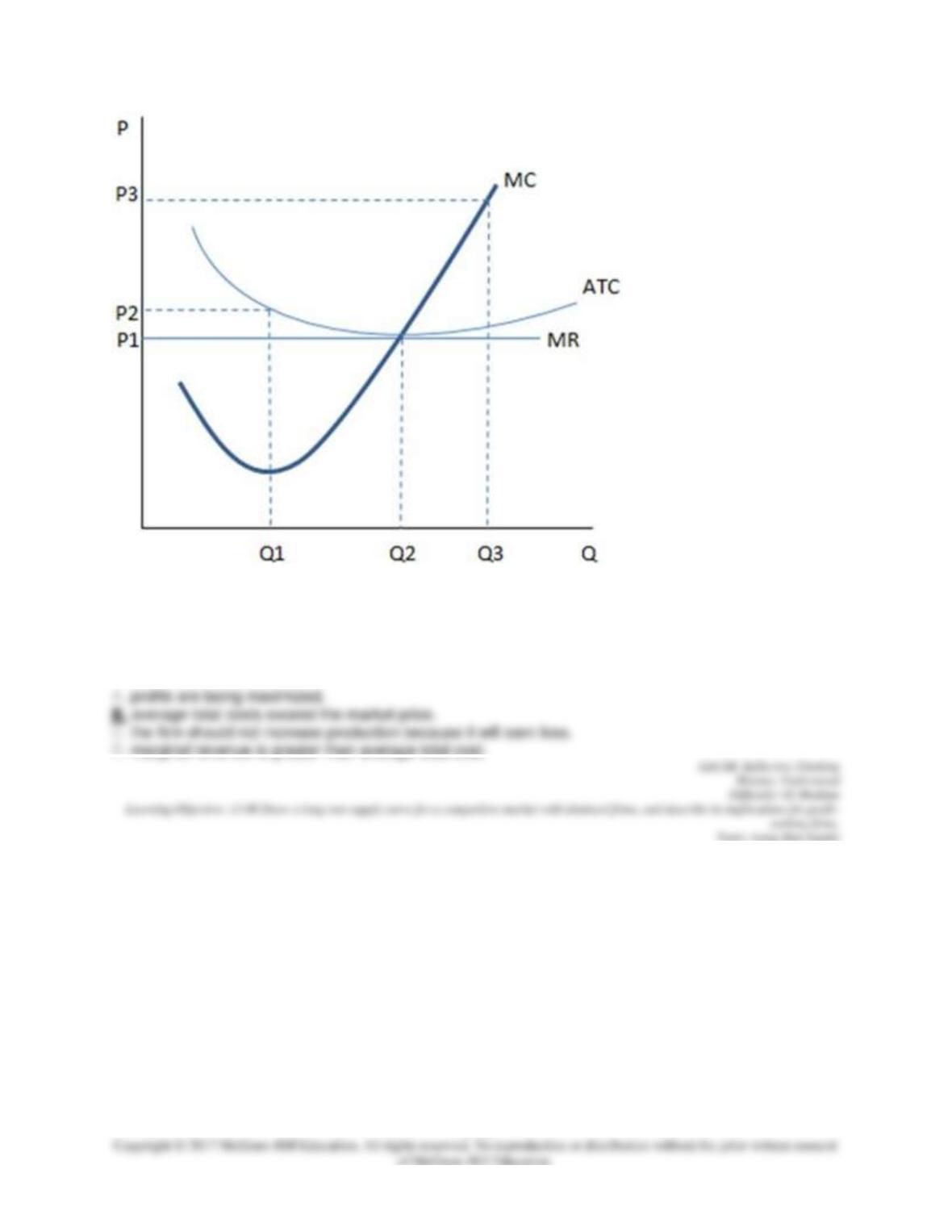
13–46
According to the graph shown, if a firm is producing at Q1:
136. This graph represents the cost and revenue curves of a firm in a perfectly competitive market.
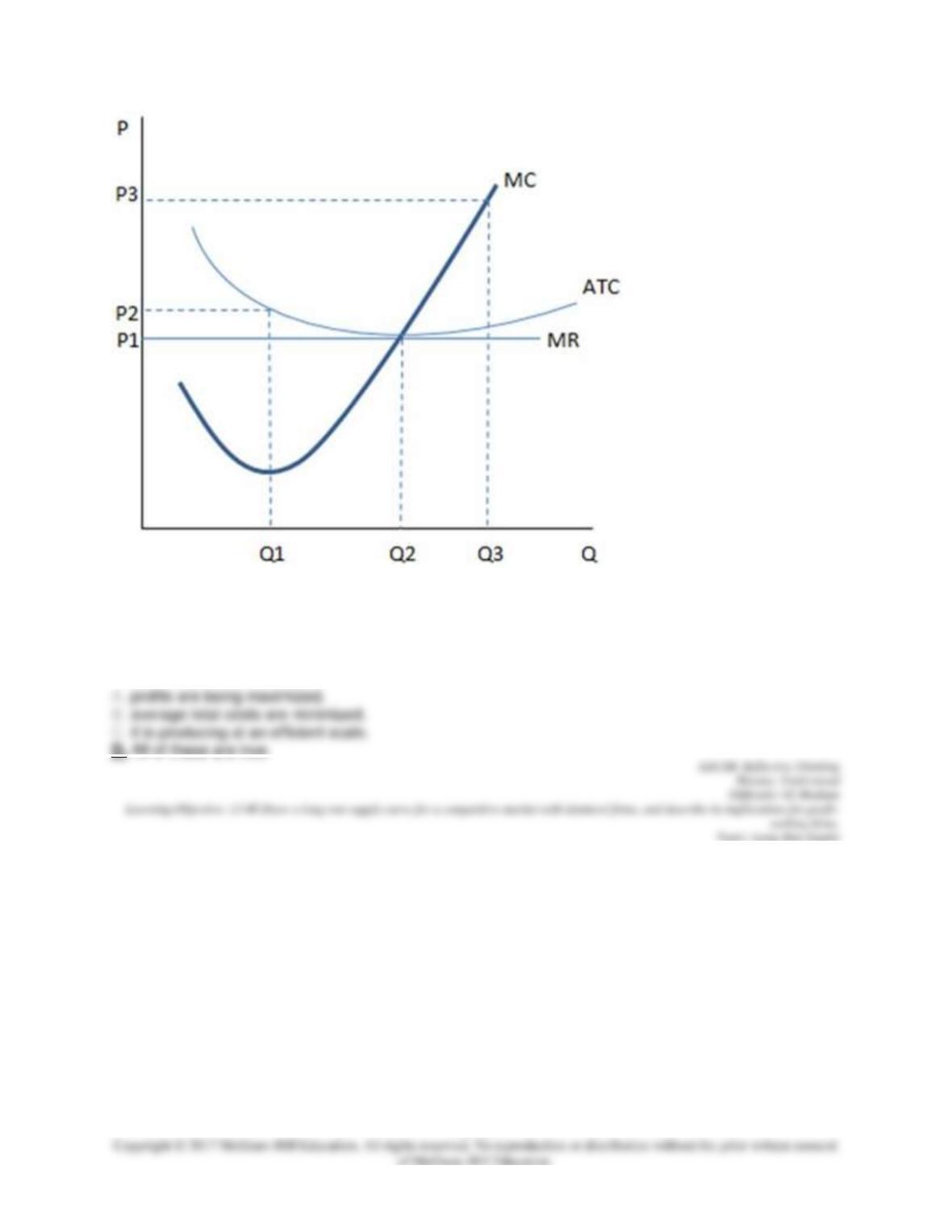
13–47
According to the graph shown, if a firm is producing at Q2:
137. This graph represents the cost and revenue curves of a firm in a perfectly competitive market.
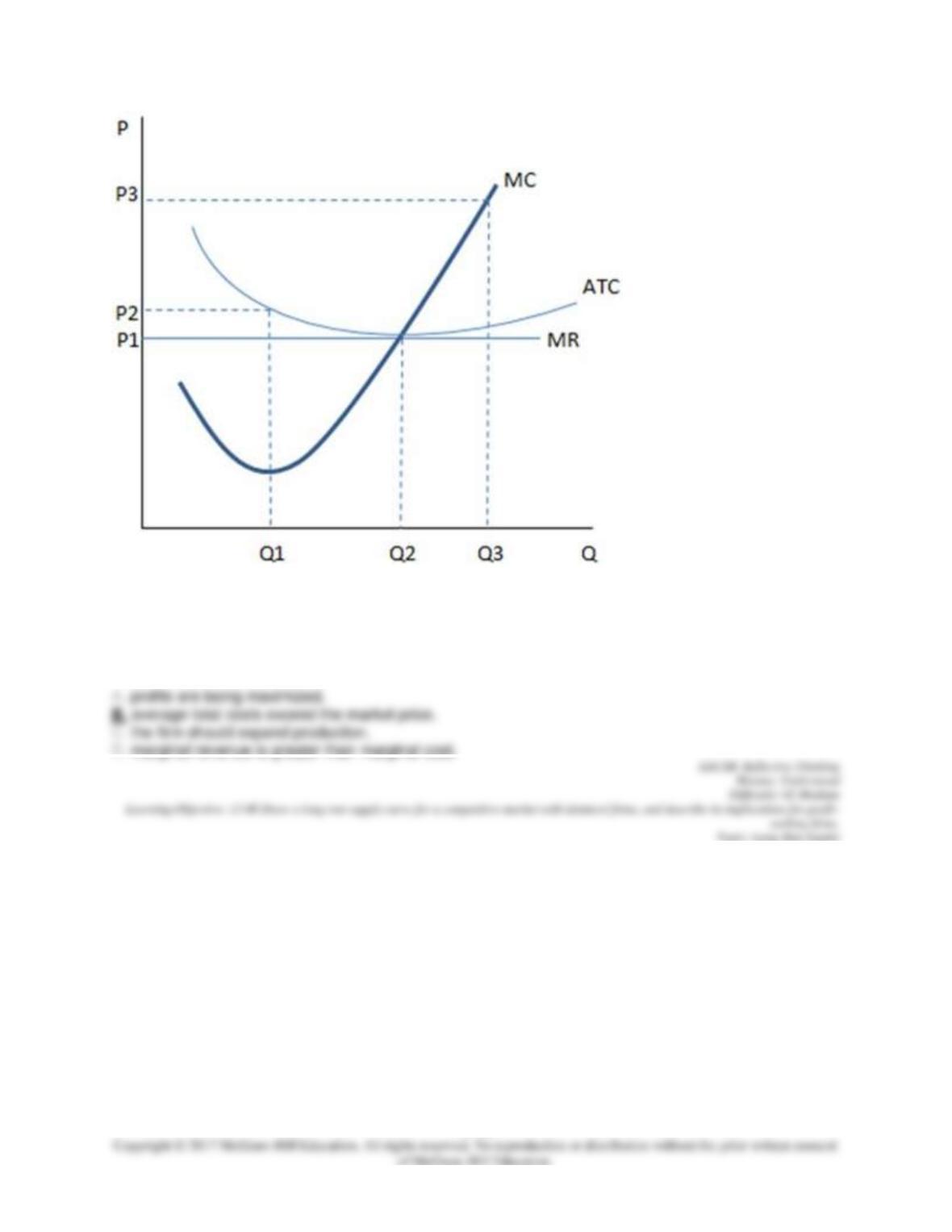
13–48
According to the graph shown, if a firm is producing at Q3:
138. This graph represents the cost and revenue curves of a firm in a perfectly competitive market.
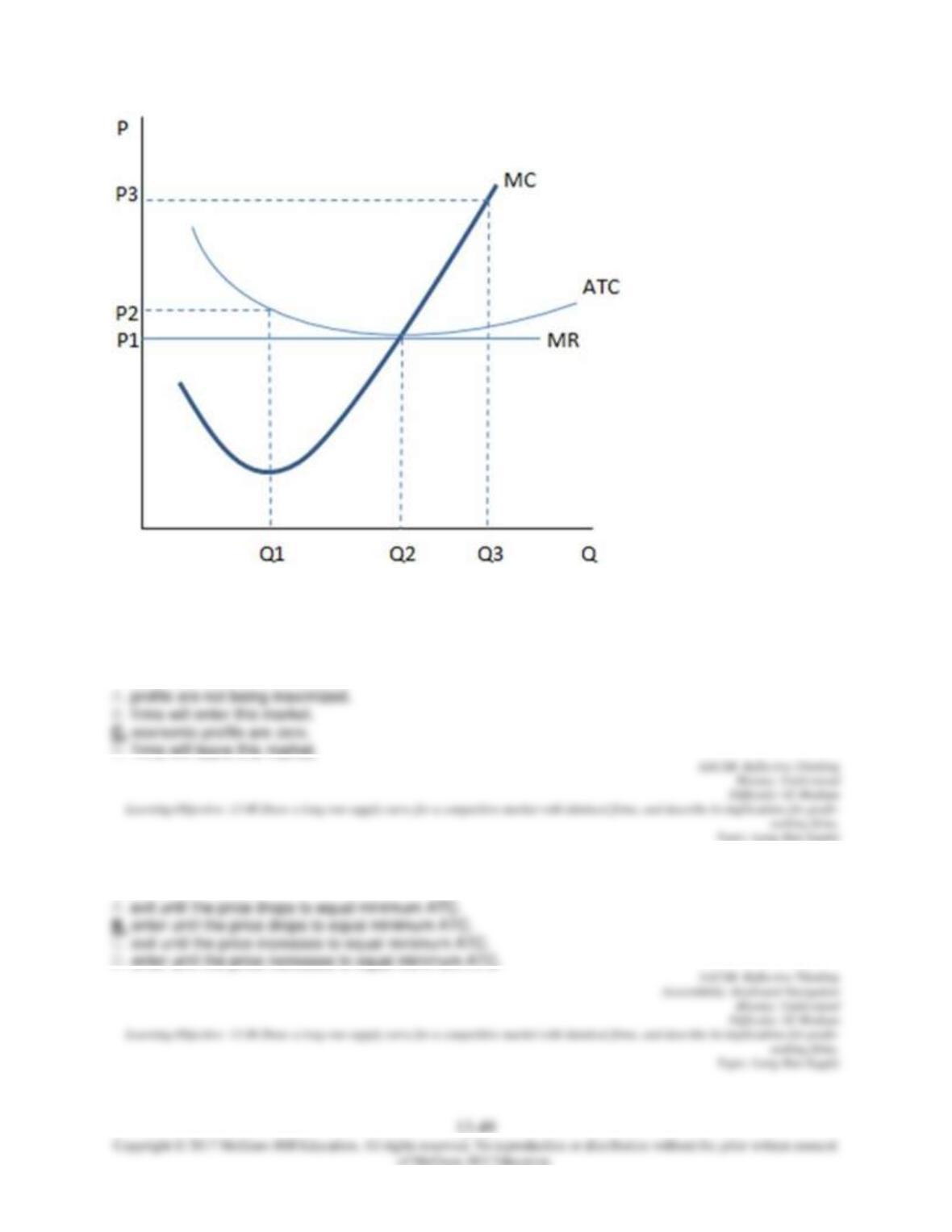
According to the graph shown, if a firm is producing at Q2, and it is identical to others in the market:
139. In a perfectly competitive market, when the price is greater than the minimum average total cost for
most firms, some will:
140. In a perfectly competitive market, when the price is greater than the minimum average total cost for
all firms:
141. In a perfectly competitive market, when the price is below the minimum average total cost for all
firms:
142. Because market price always tends back to the minimum average total cost for all identical firms in a
perfectly competitive market in the long run, in theory:
143. In theory, the long-run supply curve for perfectly competitive market firms who are identical is:
144. In reality, the long-run supply curve tends to be:
145. In reality, the long-run supply curve for a perfectly competitive market is upward sloping because:
146. If the demand increases in a perfectly competitive market, the price will:
147. If demand increases in a perfectly competitive market, then in the short run supply will:
148. If the demand increases in a perfectly competitive market, what will likely occur?
149. If the demand increases in a perfectly competitive market, firms will likely:
150. If the demand in a perfectly competitive market decreases, the price will:
151. If demand in a perfectly competitive market decreases, supply will:
152. If the demand decreases in a perfectly competitive market, firms will likely:
153. When demand increases in a perfectly competitive market, the market price:
154. The short-run supply curve is _______________ and the long-run supply curve is
_______________ in a perfectly competitive market in which all firms have identical cost structures.
13–53
155. When demand increases in a perfectly competitive market, in the short run _______________, and
in the long run _______________.
156. When demand increases in a perfectly competitive market, in the short run __________________,
and in the long run __________________.
Chapter 13 Test Bank Summary
Category
# of Quest
ions
AACSB: Knowledge Application
33
AACSB: Reflective Thinking
123
Accessibility: Keyboard Navigation
119
Blooms: Apply
33
Blooms: Understand
123
Difficulty: 02 Medium
123
Difficulty: 03 Hard
33
Learning Objective: 13-
01 Describe the characteristics of a perfectly competitive market.
23
Learning Objective: 13-02 Calculate average, marginal, and total revenue.
21
Learning Objective: 13-03 Find a firm’s optimal quantity of output.
30
Learning Objective: 13-
04 Describe a firm’s decision to shut down or when to exit the market, and explain the d
ifference between these choices.
28
Learning Objective: 13-05 Draw a short-
run supply curve for a competitive market with identical firms.
5

13–54
Learning Objective: 13-06 Draw a long-
run supply curve for a competitive market with identical firms, and describe its implicat
ions for profit-seeking firms.
34
Learning Objective: 13-07 Explain why a long-run supply curve can slope upward.
4
Learning Objective: 13-08 Calculate the effect of a shift in demand on a market in long-
run equilibrium.
11
Topic: Long-Run Supply
37
Topic: Marginal Revenue and Average Revenue
22
Topic: Market Adjustments
11
Topic: MR, MC, and Profit Maximization
29
Topic: Perfectly Competitive Markets
22
Topic: Profit Maximization
5
Topic: Short-Run Supply
6
Topic: Shutdown and Exit Rules
24