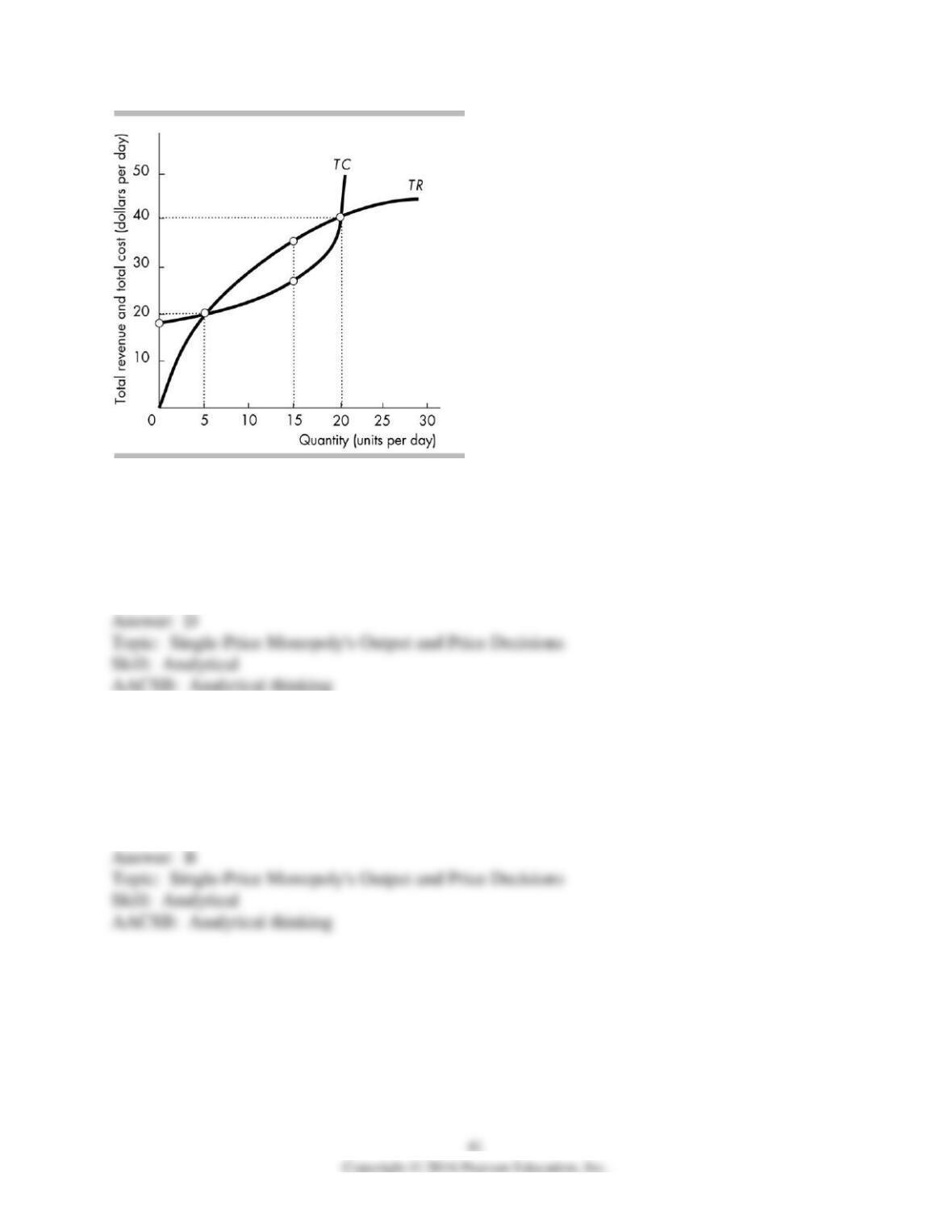
99) The figure above shows a monopoly’s total revenue and total cost curves. The monopoly’s
economic profit is positive if it produces between
A) 0 and 5 units.
B) 0 and 15 units.
C) 0 and 20 units.
D) 5 and 20 units.
100) The figure above shows a monopoly’s total revenue and total cost curves. The monopoly’s
economic profit is zero if it produces
A) 0 units of output.
B) 5 or 20 units of output.
C) 15 units of output.
D) none of the above
101) The figure above shows a monopoly’s total revenue and total cost curves. The monopoly’s
economic profit is maximized when it produces
A) 0 units of output.
B) 5 units of output.
C) 15 units of output.
D) 20 units of output.
102) The figure above shows a monopoly’s total revenue and total cost curves. The monopoly’s
marginal revenue equals its marginal cost when it produces
A) 0 units of output.
B) 5 units of output.
C) 15 units of output.
D) 20 units of output.
103) To maximize its profit, the monopoly with the TR and TC curves shown in the figure above
will produce
A) 0 units of output.
B) 5 units of output.
C) 15 units of output.
D) 20 units of output.
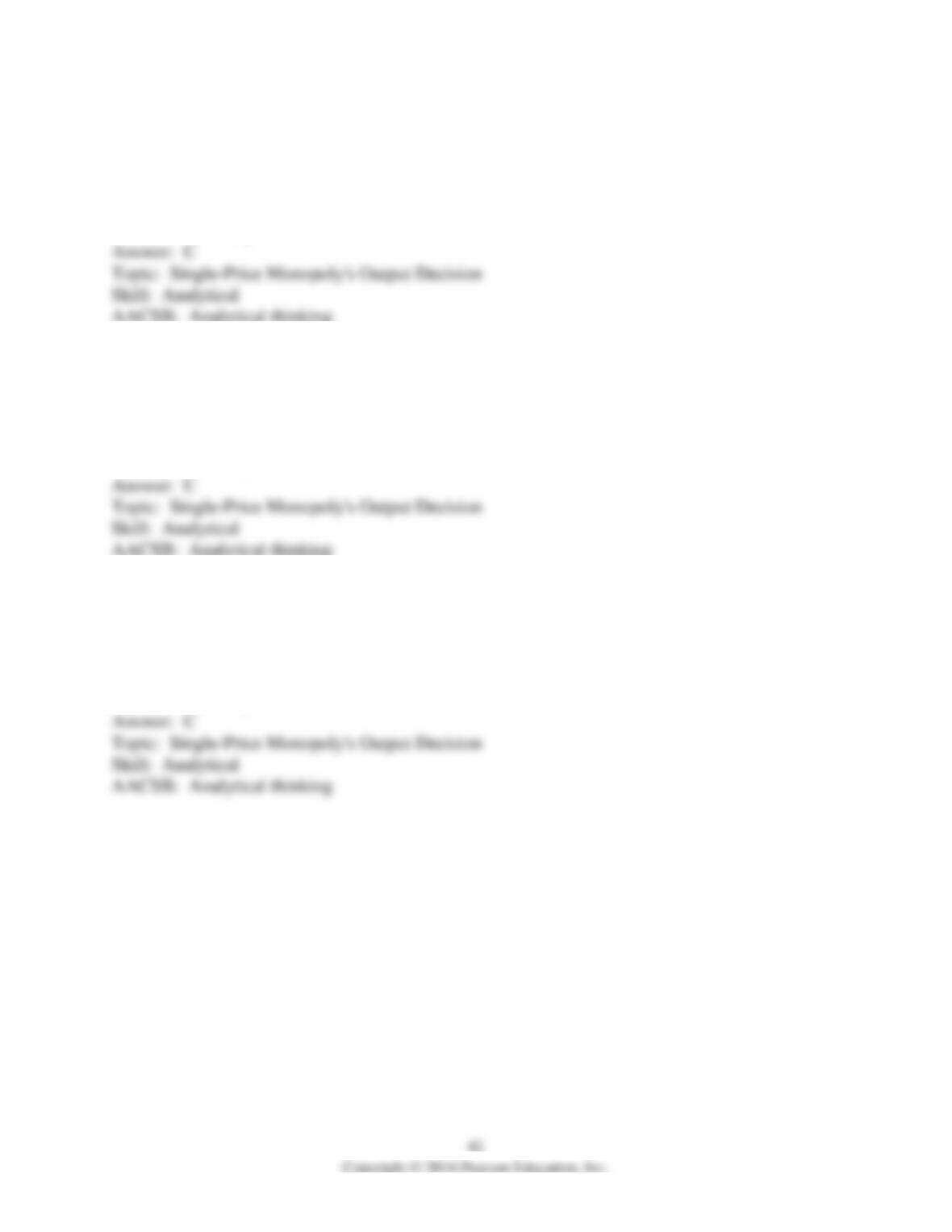
104) In the figure above, the curve labeled “X” can be a
A) monopoly’s demand curve.
B) monopoly’s marginal revenue curve.
C) perfectly competitive firm’s demand curve.
D) perfectly competitive firm’s marginal revenue curve.
105) In the figure above, the curve labeled “W” can be a
A) monopoly’s demand curve.
B) monopoly’s marginal revenue curve.
C) perfectly competitive firm’s demand curve.
D) perfectly competitive firm’s marginal revenue curve.
106) The figure above shows the cost, demand, and marginal revenue curves for a monopoly.
The firm
A) will make an economic profit of $20.
B) will charge a price of $10 per unit.
C) will produce 20 units per day.
D) is a natural monopoly.
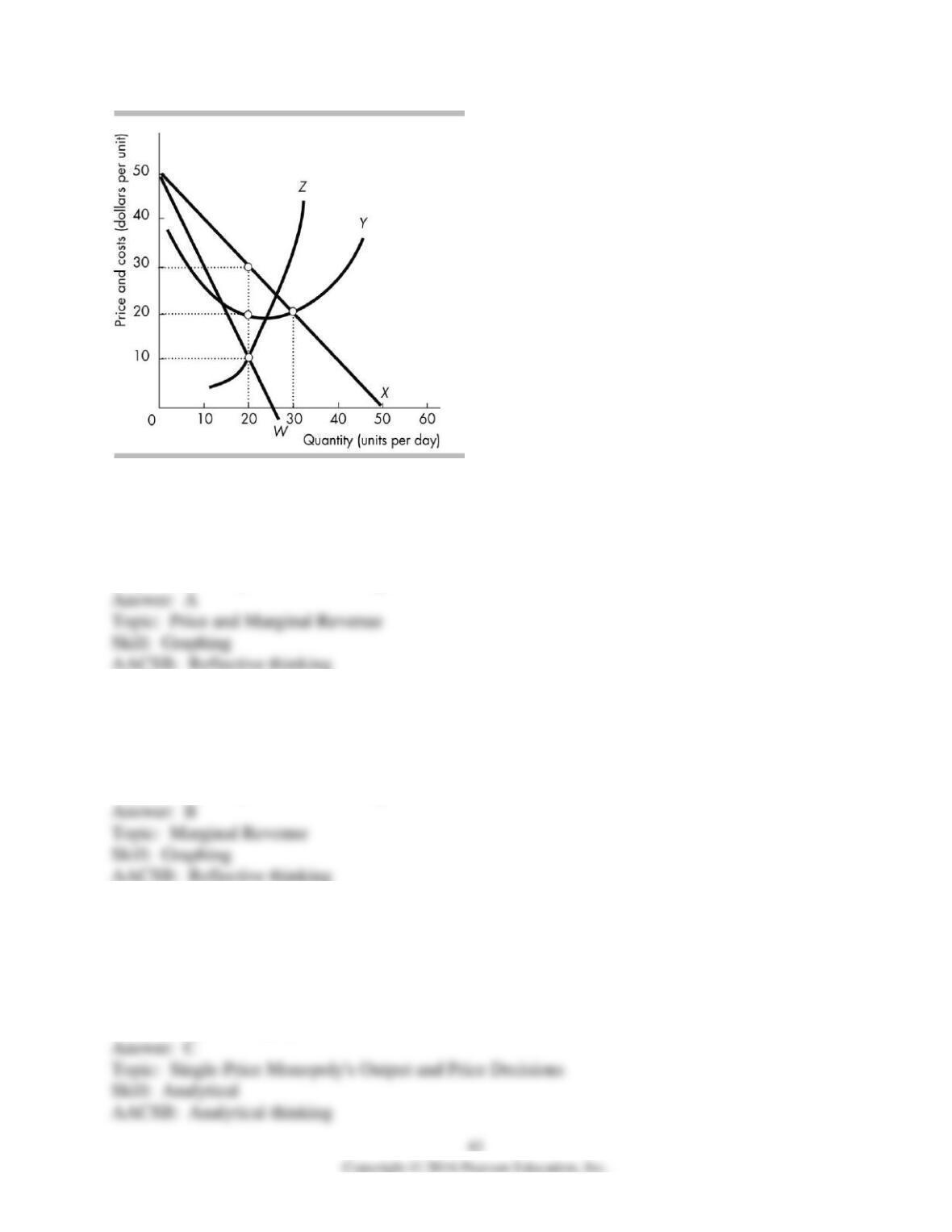
107) The figure above shows the cost, demand, and marginal revenue curves for a monopoly. At
an output level of ________, demand is ________.
A) 20; elastic
B) 50; unit elastic
C) 50; elastic
D) 30; unit elastic
108) For the unregulated, single-price monopoly shown in the figure above, when its profit is
maximized, output will be
A) 4 units per year and the price will be $6.
B) 4 units per year and the price will be $4.
C) 6 units per year and the price will be $4.
D) None of the above answers is correct.
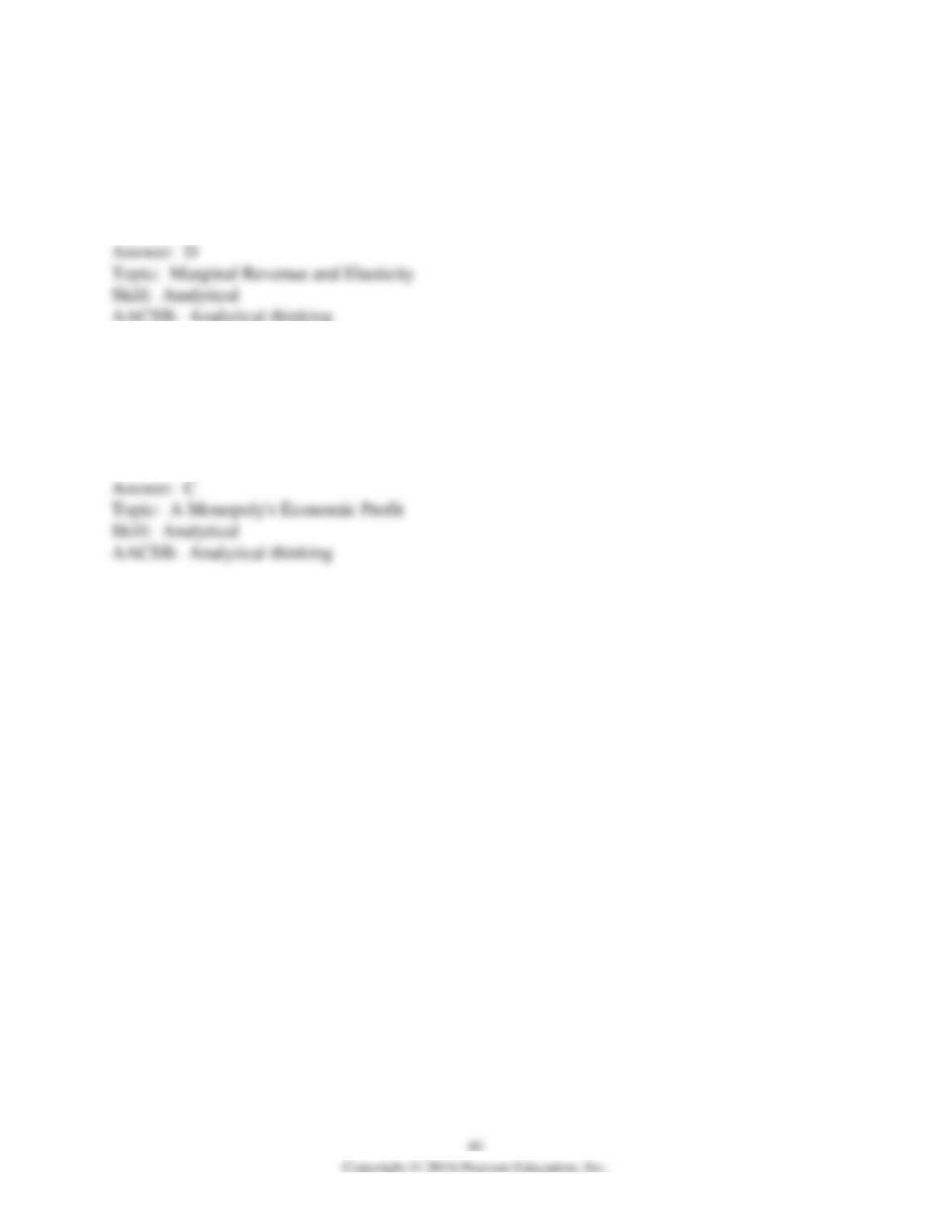
109) The unregulated, single-price monopoly shown in the figure above will produce where its
demand
A) equals its MC curve.
B) equals its ATC curve.
C) is inelastic.
D) is elastic.
110) The unregulated, single-price monopoly shown in the figure above makes a total economic
profit of
A) $24.
B) $16.
C) $8.
D) $4.
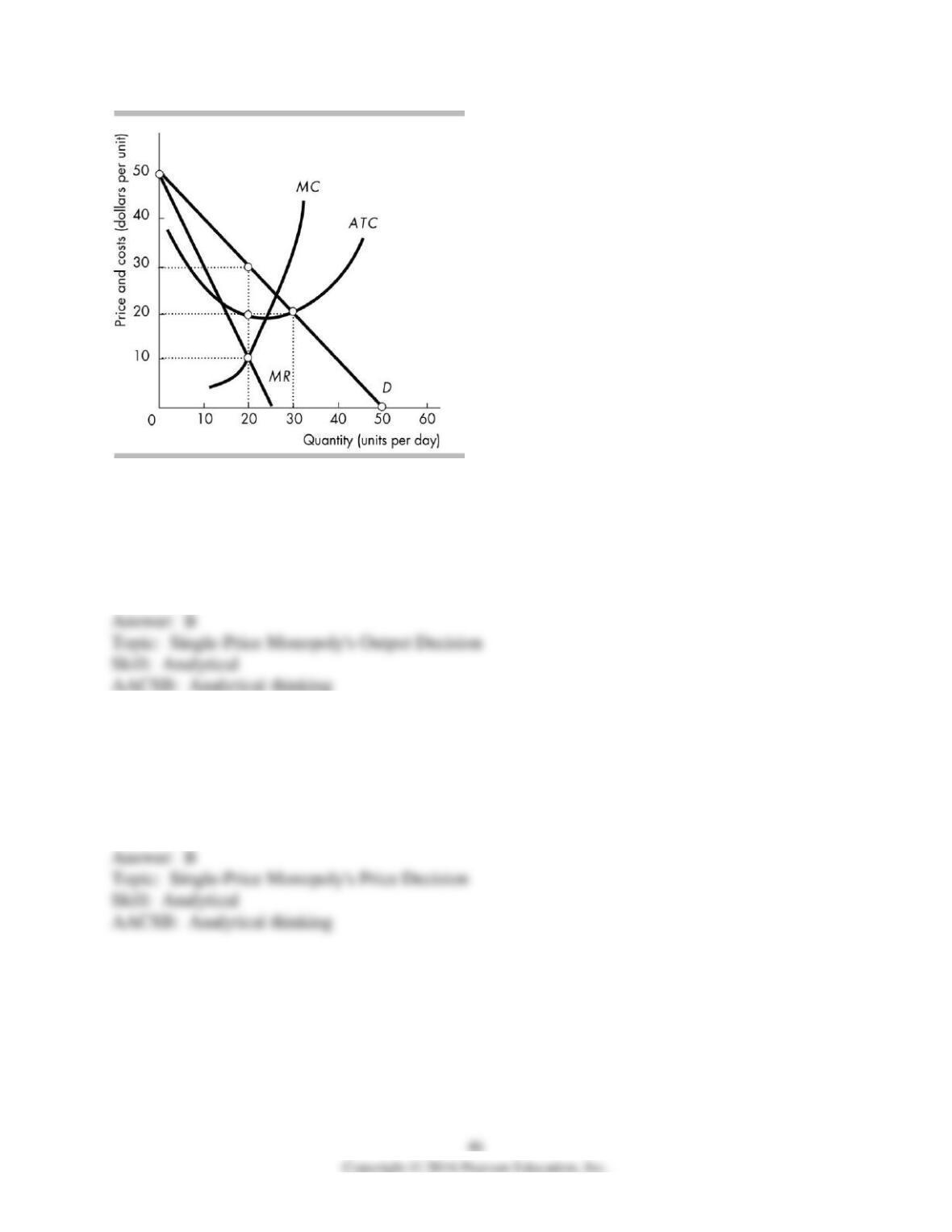
111) The figure above shows the demand and cost curves for a single-price monopoly. What
level of output maximizes the firm’s economic profit?
A) 0 units
B) 20 units
C) 30 units
D) 50 units
112) The figure above shows the demand and cost curves for a single-price monopoly. What
price will the firm charge?
A) $50 per unit
B) $30 per unit
C) $20 per unit
D) $10 per unit
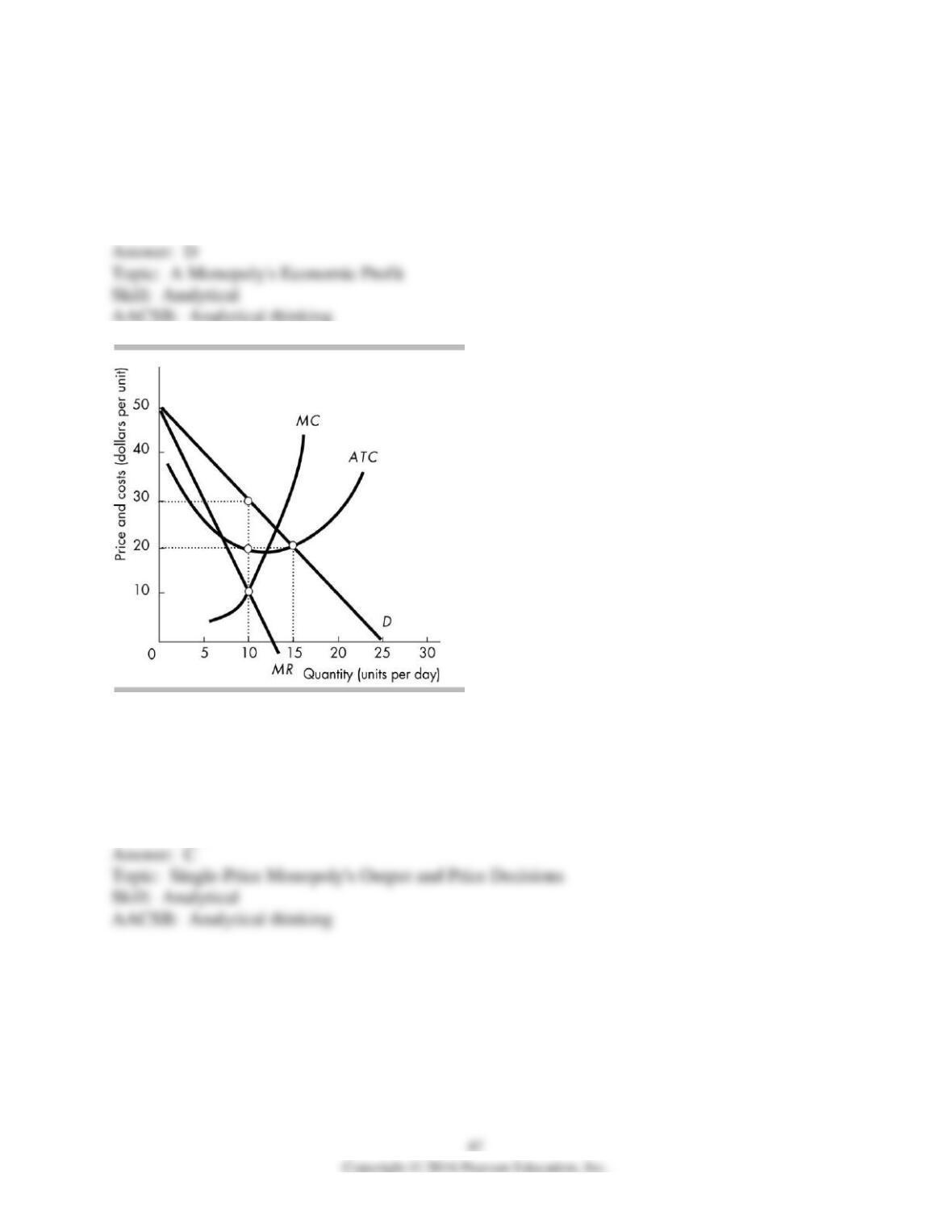
113) The figure above shows the demand and cost curves for a single-price monopoly. What
economic profit does this firm make?
A) zero
B) $600
C) $400
D) $200
114) The figure above shows the demand and cost curves for a single-price monopoly. The firm
will produce ________ units and set a price of ________ per unit.
A) 15; $20
B) 10; $20
C) 10; $30
D) None of the above answers is correct.
115) The figure above shows the demand and cost curves for a single-price monopoly. The firm’s
economic profit equals
A) $0.
B) $300.
C) $100.
D) $50.
116) The figure above shows the demand and cost curves for a single-price monopoly. Which of
the following statements is FALSE?
A) To maximize its profit, the firm will set marginal revenue equal to zero by producing 12.5
units.
B) The firm will make an economic profit.
C) The firm is a not a natural monopoly.
D) The firm will set price where demand is elastic.
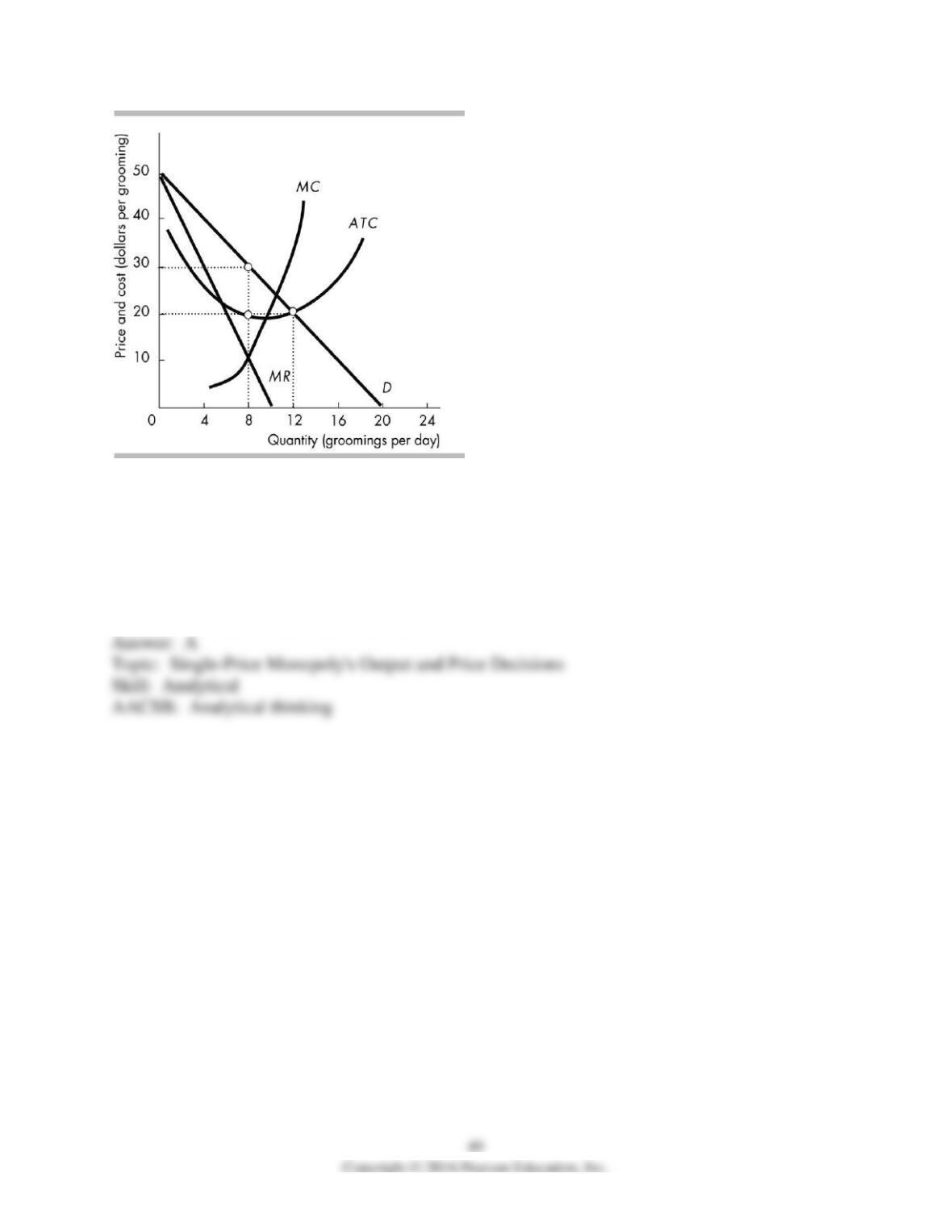
117) Donna owns the only dog grooming salon on Lonely Island. The figure above shows the
dog grooming market. Donna is a single-price monopoly that maximizes profit by charging
________ per grooming and producing ________ groomings per day.
A) $30; 8
B) $20; $8
C) $20; $12
D) None of the above answers is correct.
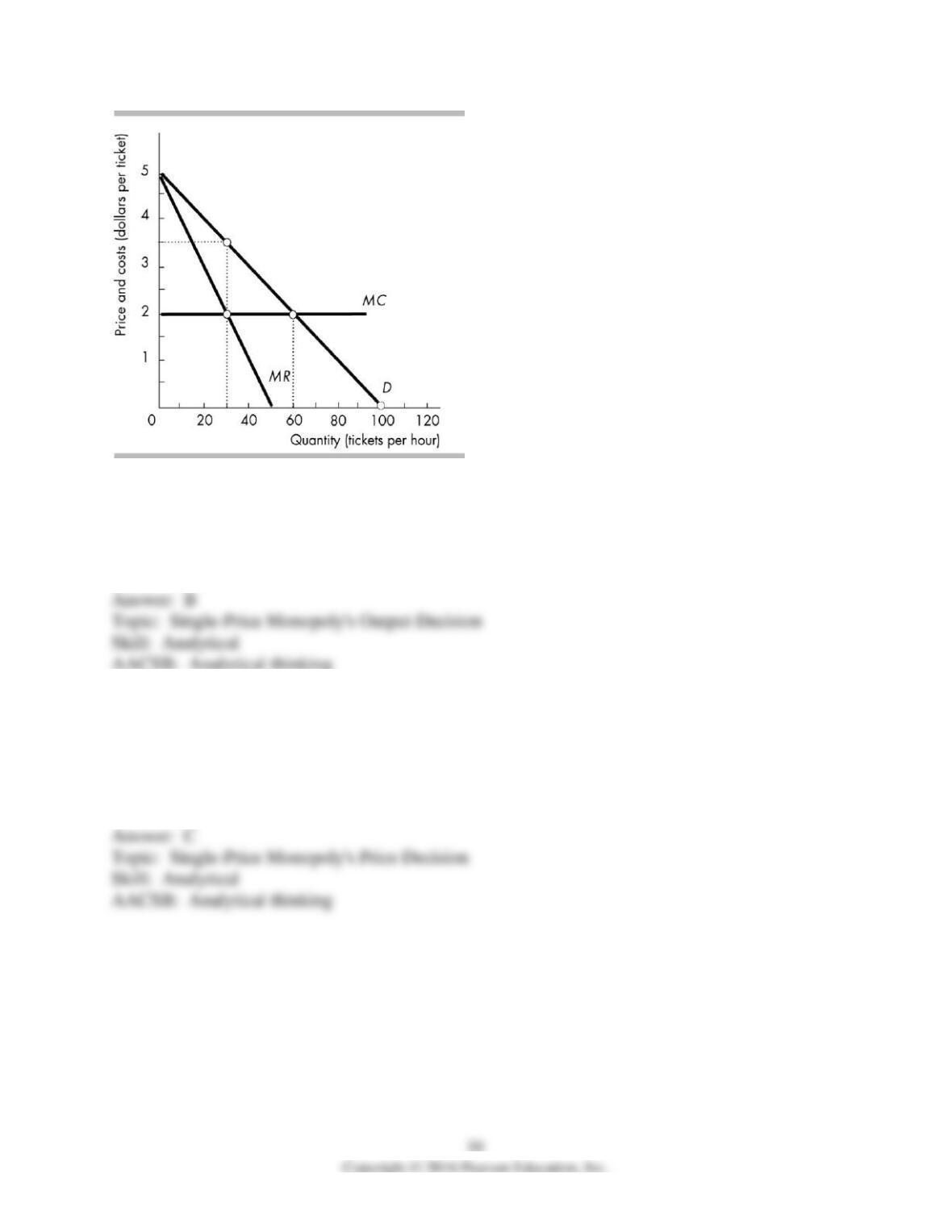
118) The unregulated, single-price monopoly shown in the figure above will sell
A) less than 30 tickets.
B) 30 tickets.
C) 50 tickets.
D) 100 tickets.
119) An unregulated, single-price monopoly is shown in the figure above. If fixed cost is $20,
the monopoly’s total costs when it is maximizing its profit will be
A) $30.
B) $40.
C) $80.
D) $140.
120) An unregulated, single-price monopoly is shown in the figure above. If its fixed cost is $20,
the monopoly’s total economic profit when it is maximizing its profit will be
A) negative.
B) $0.
C) $25.
D) $50.
121) The monopoly illustrated in the figure above is unregulated and charges a single price. The
deadweight loss created by the monopoly is
A) $0.
B) $22.50.
C) $45.00.
D) $90.00.
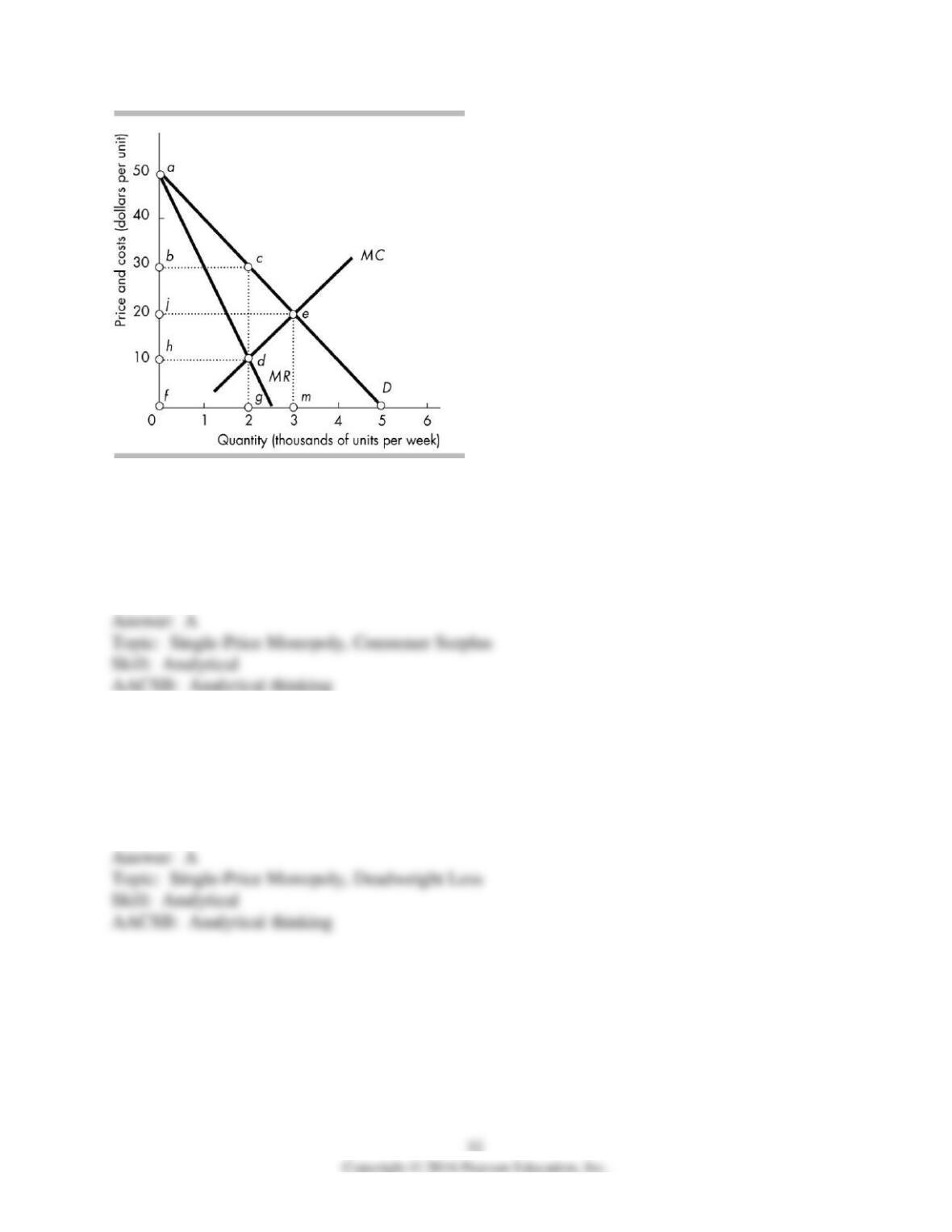
122) The above figure illustrates a single-price unregulated monopolist. If the monopolist
maximizes its profit, the consumer surplus equals ________.
A) $20,000
B) $10,000
C) $45,000
D) $40,000
123) The above figure illustrates a single-price unregulated monopolist. If the monopolist
maximizes its profit, the deadweight loss equals ________.
A) $10,000
B) $20,000
C) $45,000
D) $40,000
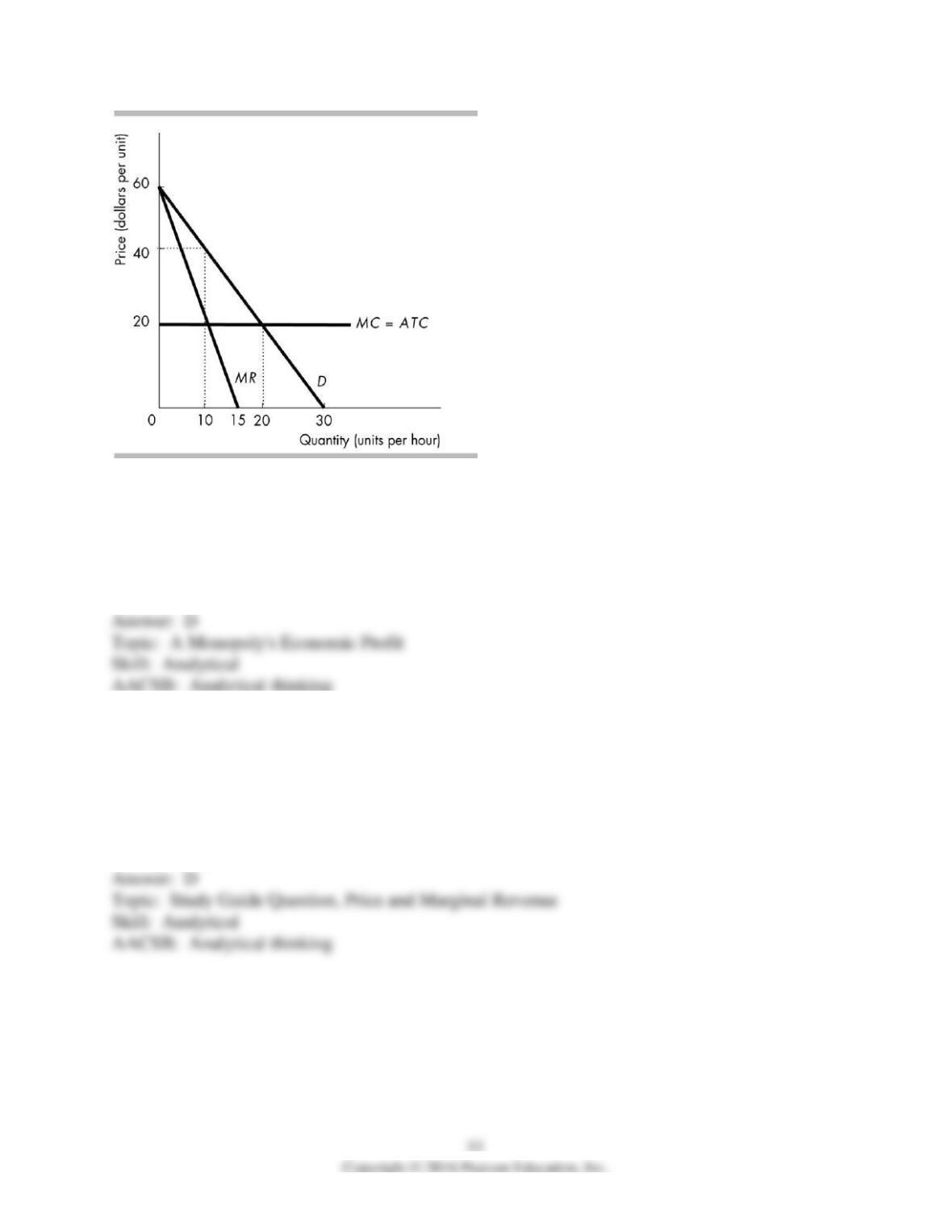
124) The above figure shows the demand and cost curves for a monopolist. What is the
maximum economic profit this firm can make?
A) zero
B) $400
C) $100
D) $200
125) In a small town, Marilyn’s Christmas Tree Lot has a monopoly on sales of Christmas trees.
In order to increase her sales from 100 trees to 101 trees, she must drop the price of all of her
trees from $20 to $19. What is the marginal revenue?
A) $2000
B) $20
C) $19
D) negative $81
126) If a monopoly is producing an amount of output level at which marginal revenue exceeds
marginal cost, in order to increase its profit the monopoly will ________ its price and ________
its output.
A) raise; decrease
B) lower; increase
C) lower; decrease
D) raise; increase
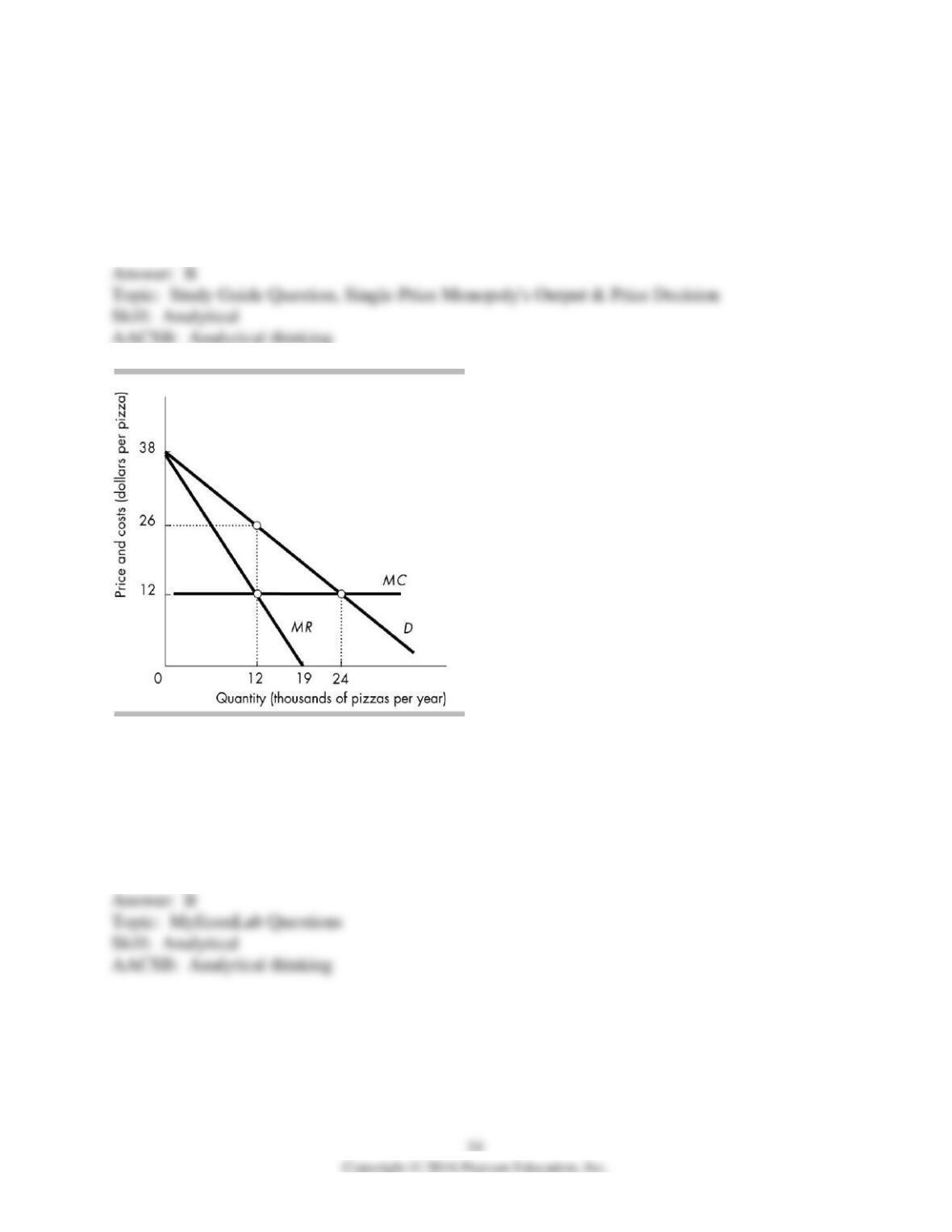
127) La Bella Pizza is the only pizza place on Pepper Island. The figure above shows La Bella
Pizza’s demand curve, marginal revenue curve, and marginal cost curve. At La Bella Pizza’s
profit-maximizing output, its annual total revenue is
A) $168,000.
B) $312,000.
C) $336,000.
D) $624,000.
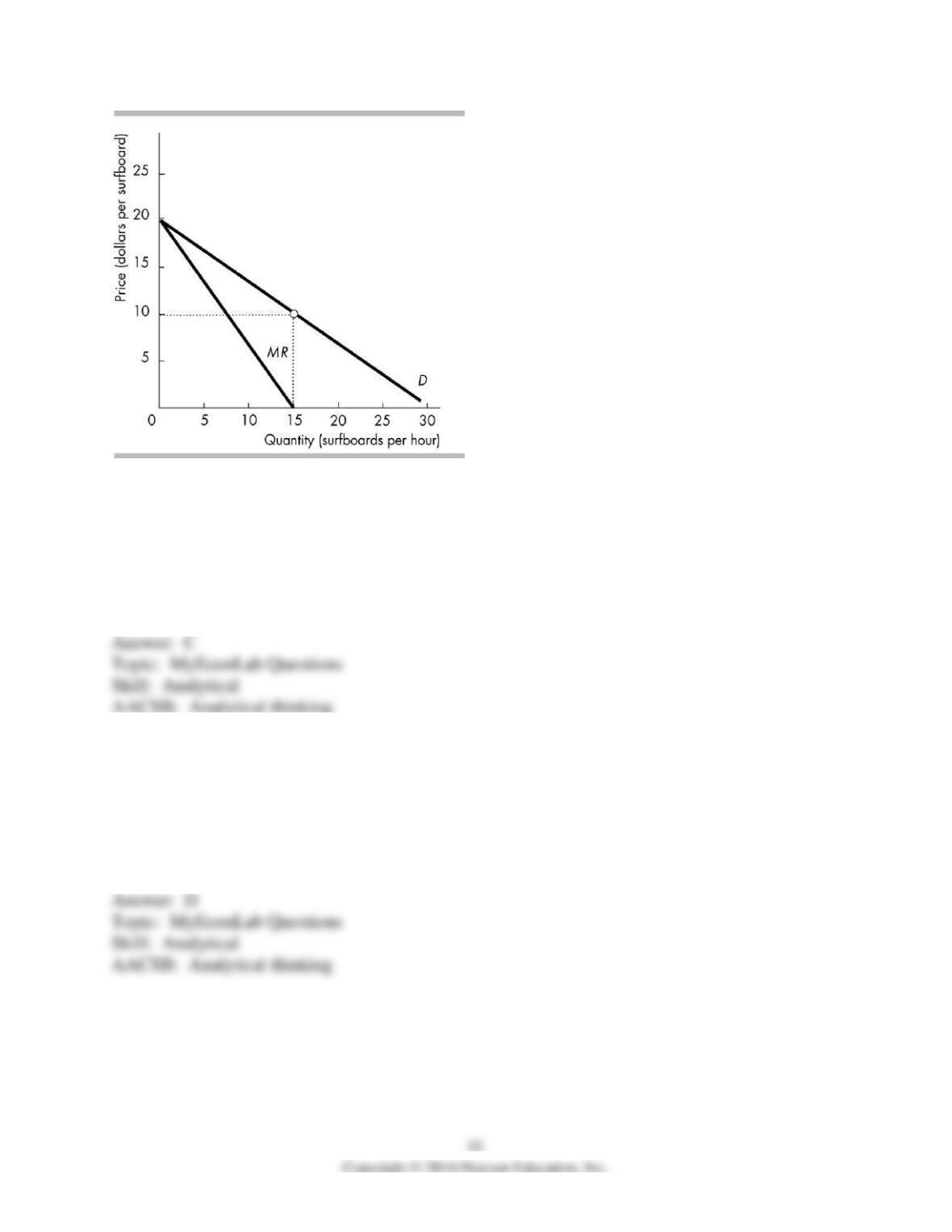
128) Sue’s Surfboards is the sole renter of surfboards on Big Wave Island. Sues demand and
marginal revenue curves are illustrated in the figure above. Sue’s Surfboards currently rents 15
surfboards an hour. Sue’s total revenue from the 15 surfboards is
A) $300.
B) $225.
C) $150.
D) $10.
129) Sue’s Surfboards is the sole renter of surfboards on Big Wave Island. Sue’s demand and
marginal revenue curves are illustrated in the figure above. The change in the total revenue from
renting the 15th surfboard is
A) $20.
B) $15.
C) $10.
D) $0.
130) The figure above shows the demand and marginal revenue curves facing Sue’s Surfboards,
the sole renter of surfboards on Big Wave Island. If Sue is renting 25 surfboards an hour so that
the marginal revenue is negative, then Sue’s Surfboards
A) can increase its profit by increasing the number of rentals.
B) must face an inelastic demand for surfboard rentals.
C) must face a unit elastic demand for surfboard rentals.
D) must face an elastic demand for surfboard rentals.
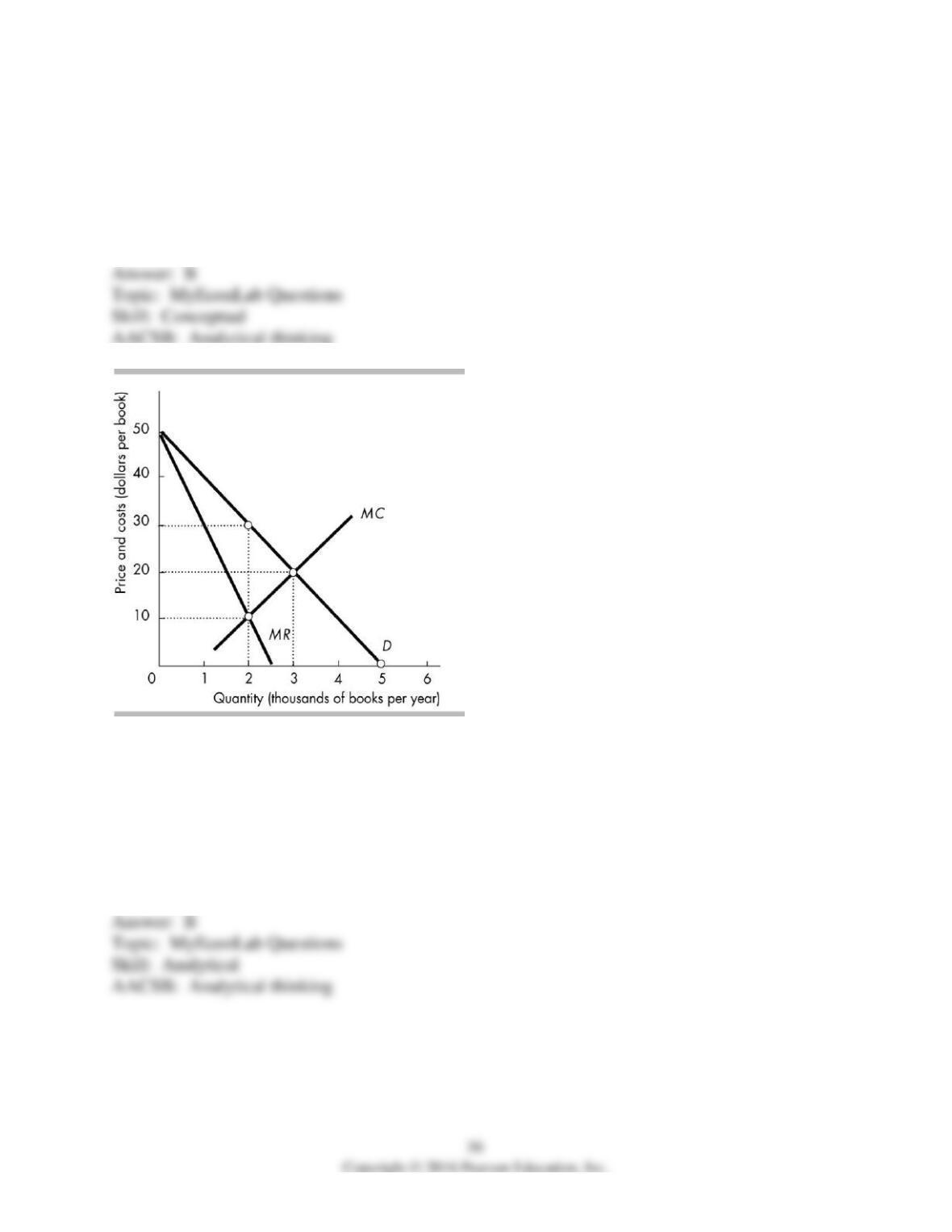
131) Bob’s Books is the only bookstore in town. The figure above shows the demand curve for
books and Bob’s Books’ marginal revenue curve and marginal cost curve. Bob’s Books
maximizes its profit and sets the price of a book equal to ________ and has total annual revenue
of ________.
A) $40; $40,000
B) $30; $60,000
C) $20, $60,000
D) $10; $40,000
3 Single-Price Monopoly and Competition Compared
1) Which of the following is true for BOTH monopoly and a perfectly competitive firm?
A) The demand for the individual firm’s product is perfectly elastic.
B) Economic profits can be sustained indefinitely over time.
C) The marginal revenue curve is horizontal at the market equilibrium price.
D) Profits are maximized by producing at the level of output where marginal revenue is equal to
marginal cost.
2) Which of the following statements is TRUE for both a competitive market and a single-price
monopoly?
A) The firm maximizes profit by producing the quantity at which marginal revenue equals
marginal cost.
B) The firm can make an economic profit in the long run.
C) The price is set where the supply curve and demand curve intersect.
D) The firm always produces at the lowest possible long-run average cost.
3) A key difference between a monopoly and a perfectly competitive firm is that the monopolist
A) does not face fixed costs in the short run.
B) has a marginal revenue curve that lies below its demand curve.
C) has no marginal cost curve.
D) faces a perfectly elastic demand for its product.
4) One difference between perfectly competitive markets and single-price monopoly markets is
that
A) marginal revenue equals marginal cost for perfectly competitive firms, but not for
monopolists.
B) marginal revenue equals price for perfectly competitive firms, but not for single-price
monopolists.
C) marginal cost equals average variable cost for perfectly competitive firms but not for
monopolists.
D) All the above answers are correct.
5) Compared to a single-price monopoly, a perfectly competitive market with the same costs
produces ________ output and has a ________ price.
A) less; lower
B) less; higher
C) more; lower
D) more; higher
6) Relative to a perfectly competitive market with the same cost and demand, a single-price
monopolist produces ________ output and has a ________ price.
A) more; higher
B) less; lower
C) more; lower
D) less; higher
7) Compared to a perfectly competitive industry, a single-price monopoly with the same costs
will
A) create less consumer surplus.
B) create less economic profit.
C) create a deadweight loss.
D) Both answers A and C are correct.
8) A single-price monopolist produces a ________ quantity than a perfectly competitive market
with the same costs and charges a ________ price than the perfectly competitive market.
A) greater; higher
B) greater; lower
C) lesser; lower
D) lesser; higher
9) When comparing a single-price monopoly to a perfectly competitive market with the same
costs
A) both the monopoly’s output and price are lower than the perfectly competitive market’s output
and price.
B) both the monopoly’s output and price are higher than the perfectly competitive market’s
output and price.
C) the monopoly’s output is higher and the monopoly’s price is lower than the perfectly
competitive market’s output and price.
D) the monopoly’s output is smaller and the monopoly’s price is higher than the perfectly
competitive market’s output and price.
10) Which of the following statements is TRUE?
A) A perfectly competitive market produces more output and charges a lower price than a single-
price monopoly.
B) A perfectly competitive market produces more output and charges the same price as a single-
price monopoly.
C) A perfectly competitive market produces less output and charges a lower price than a single-
price monopoly.
D) A perfectly competitive market produces less output and charges the same price as a single–
price monopoly.
11) The fundamental reason a single-price monopoly creates a deadweight loss is that compared
to the efficient outcome, the single-price monopoly
A) raises variable cost.
B) raises fixed cost.
C) restricts output.
D) reduces the elasticity of demand.
12) A single-price monopoly causes a deadweight loss because it ________.
A) restricts its output so it is less than the efficient quantity
B) increases the amount produced beyond the efficient quantity
C) maximizes marginal revenue rather than minimizes marginal cost
D) increases marginal cost
13) When comparing perfect competition to a single-price monopoly with the same costs
A) both market types use resources efficiently.
B) there is a deadweight loss associated with a monopoly.
C) the sum of producer and consumer surplus is maximized under a monopoly.
D) the sum of producer and consumer surplus is minimized under perfect competition.
14) Deadweight loss measures the inefficiency as the loss of
A) consumer surplus only.
B) consumer surplus minus producer surplus.
C) consumer surplus plus producer surplus.
D) producer surplus only.