Web App 12D
1. Which of the following methods involves calculating an average beta for comparable firms and using that beta to
determine a project’s beta?
a.
Risk premium method
b.
Pure play method
c.
Accounting beta method
d.
CAPM method
e.
Discounted cash flow model
b
1
MODERATE
12D Techniques for Measuring Beta Risk
Multiple Choice
False
FOFM.BRIG.17.12.12D – Techniques for Measuring Beta Risk
United States – BUSPROG.FOFM.BRIG.17.03 – BUSPROG: Analytic
United States – OH – DISC.FOFM.BRIG.17.03 – Capital budgeting and cost of capital
School Outcomes, you do not need to include anything for this category.
Pure play method
Multiple Choice: Conceptual
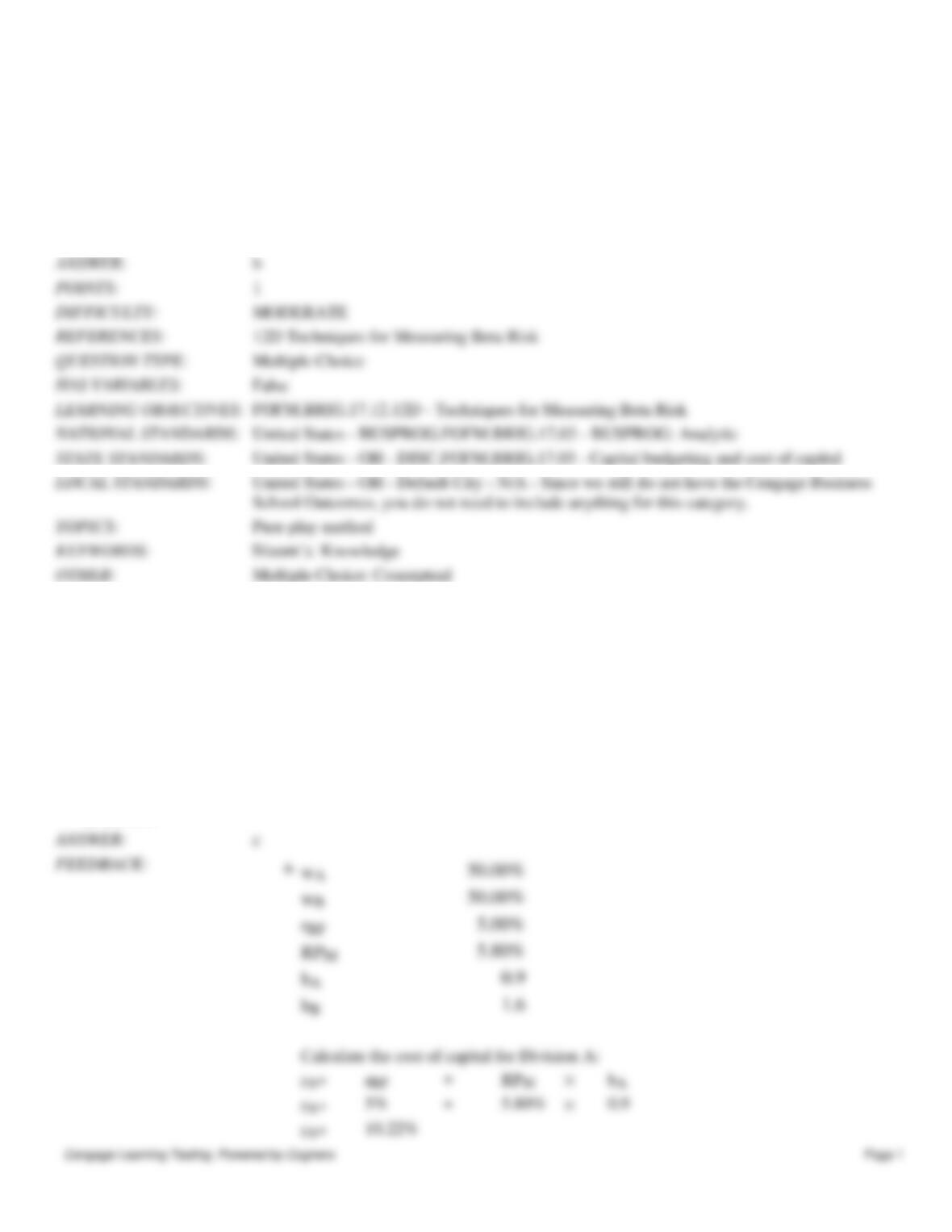
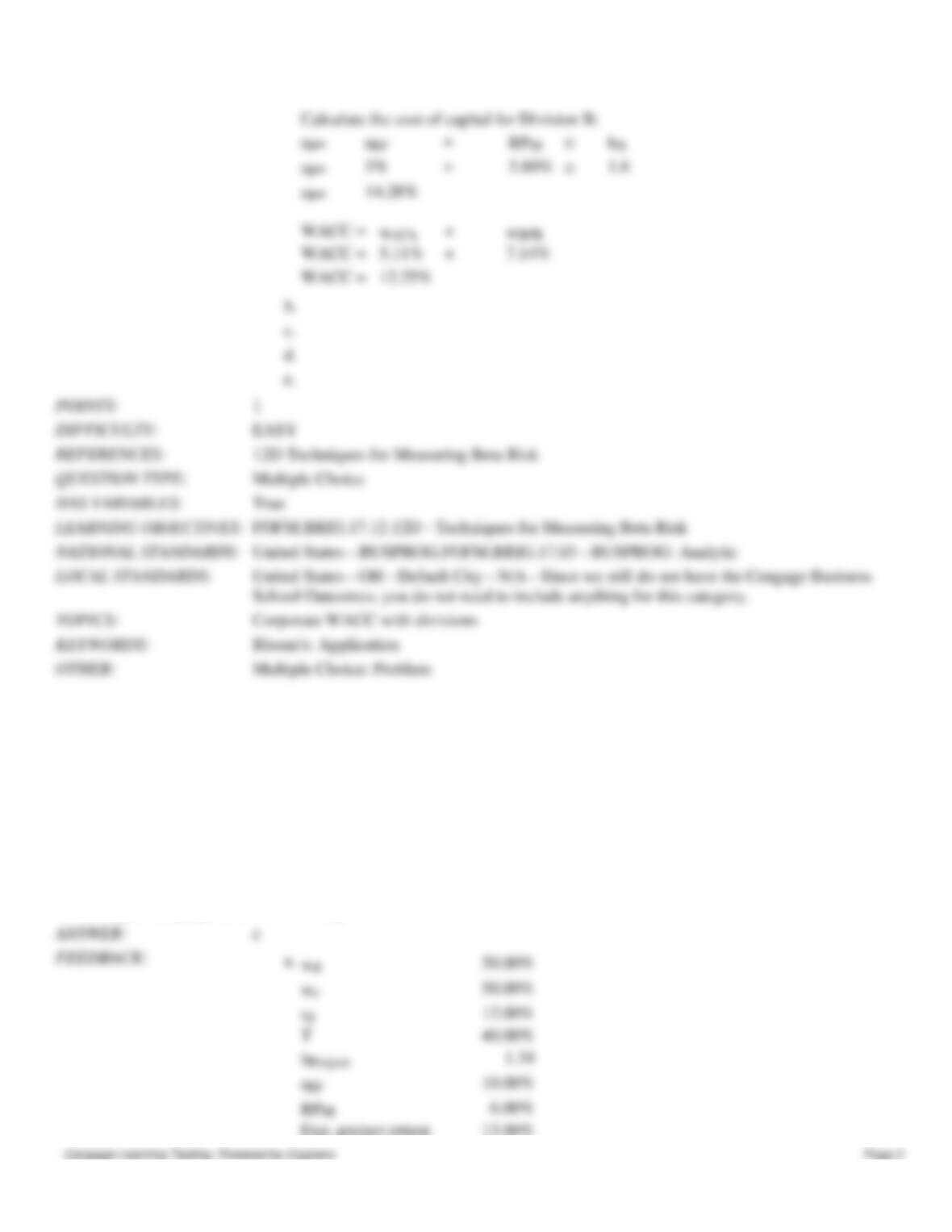
2. Northern Conglomerate has two divisions, Division A and Division B. Northern looks at competing pure-play firms to
estimate the betas of each of the two divisions. After this analysis, Northern concludes that Division A has a beta of 0.9
and Division B has a beta of 1.6. The two divisions are the same size. The risk-free rate is 5% and the market risk
premium is 5.80%. Assume that Northern is 100% equity financed. What is the overall composite WACC for Northern
Conglomerate?
a.
12.86%
b.
14.09%
c.
12.25%
d.
11.64%
e.
10.41%
c
Web App 12D
WACC =
b.
c.
d.
e.
1
12D Techniques for Measuring Beta Risk
Multiple Choice
FOFM.BRIG.17.12.12D – Techniques for Measuring Beta Risk
United States – BUSPROG.FOFM.BRIG.17.03 – BUSPROG: Analytic
School Outcomes, you do not need to include anything for this category.
Corporate WACC with divisions
Multiple Choice: Problem
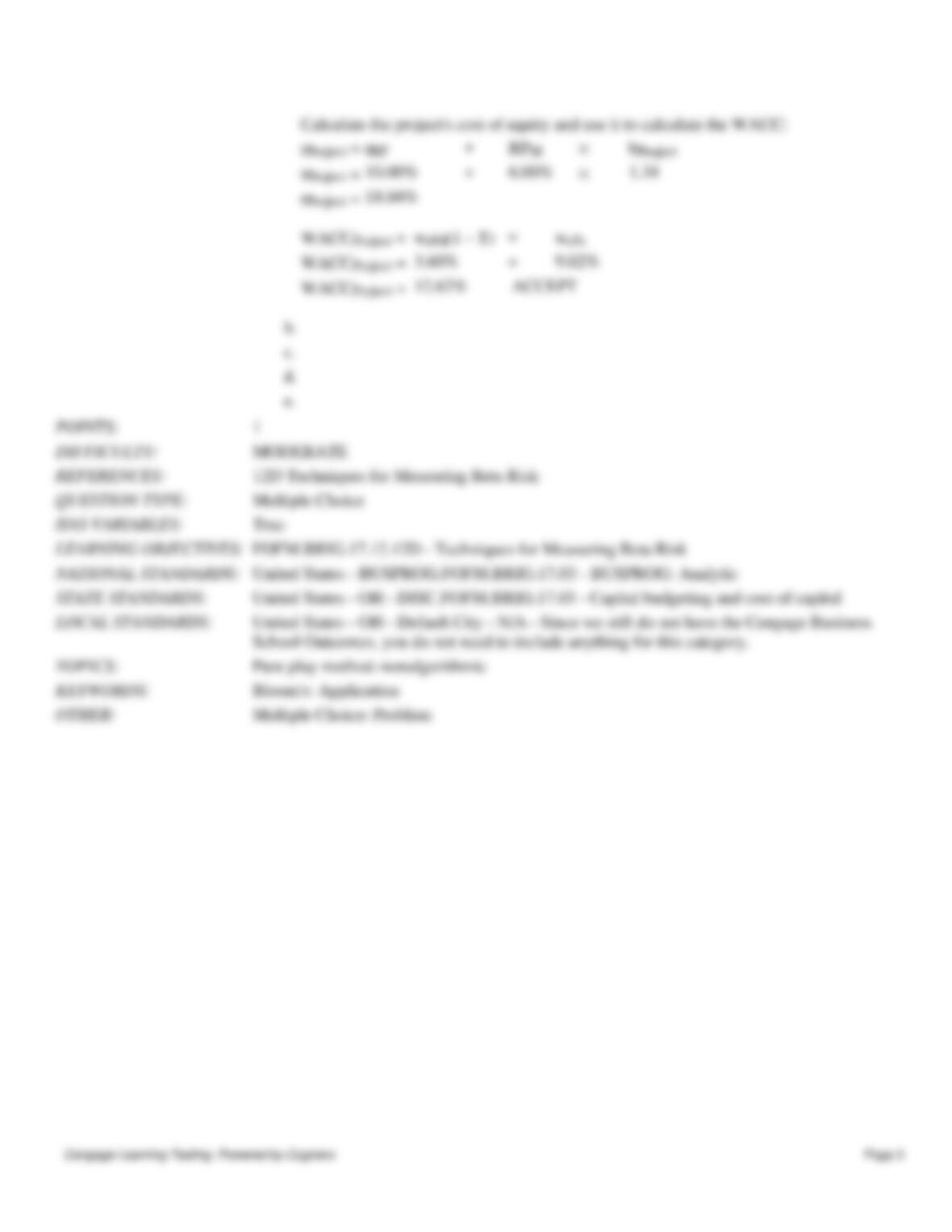
3. Interstate Transport has a target capital structure of 50% debt and 50% common equity. The firm is considering a new
independent project that has a return of 13% and is not related to transportation. However, a pure-play proxy firm has
been identified that has a beta of 1.34. Both firms have a marginal tax rate of 40%, and Interstate’s before-tax cost of debt
is 12%. The risk-free rate is 10% and the market risk premium is 6%. The firm should:
a.
Be indifferent between accepting or rejecting; the firm’s required rate of return on the project equals its
expected return.
b.
Accept the project; its return exceeds the risk-free rate and the before-tax cost of debt.
c.
Accept the project; its return is greater than the firm’s required rate of return on the project of 12.62%.
d.
Reject the project; its return is less than the firm’s required rate of return on the project of 16.9%.
e.
Reject the project; its return is only 13%.
40.00%
Exp. project return
13.00%
Web App 12D