42. Tariffs. The Nippon Switch Corporation is an importer and distributor of Japanese-made packet switches,
special routing devices that direct data traffic to various computers on a large private telecommunications
network for companies like GM, Sears and 3M. The U.S. Commerce Department recently informed the
company that it will be subject to a new 35% tariff on the import cost of computer switch devices. The company
is concerned that the tariff will slow its sales growth, given the highly competitive nature of the packet switch
market. Relevant market demand and marginal revenue relations are:
P
= $400 – $0.035Q
MR
= TR/ Q = $400 – $0.07Q
unable to generate a post-regulation required rate of return.
The company’s marginal cost equals import costs of $100 per unit, plus $20 to cover transportation, insurance, and related selling expenses. In
addition these costs, the company’s fixed costs, including a normal rate of return, come to $250,000 per year on this product.
A.
Calculate the optimal price/output combination and economic profits prior to imposition of the tariff.
B.
Calculate the optimal price/output combination and economic profits after imposition of the tariff.
C.
Compare your answers to parts A and B. Who pays the economic burden of the import tariff?
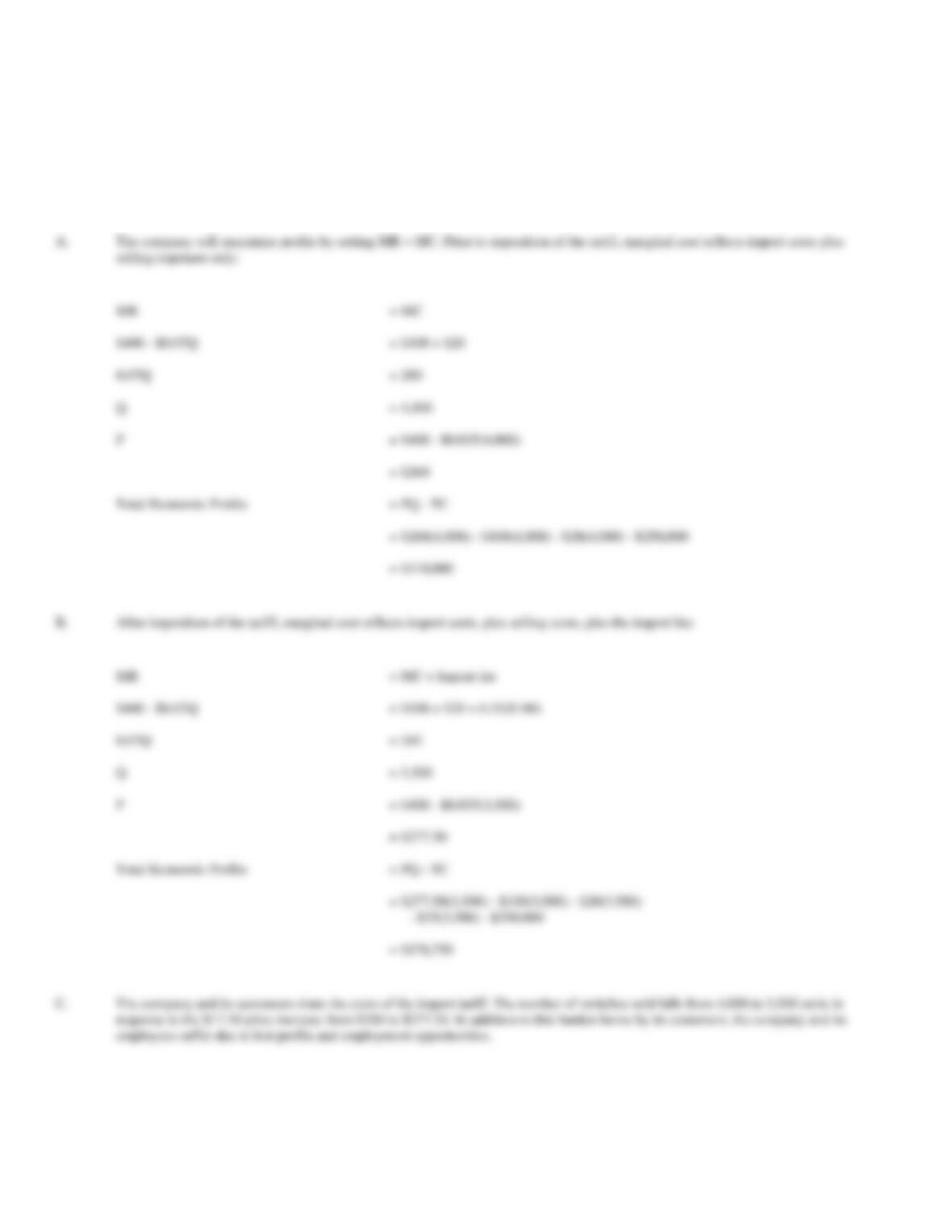
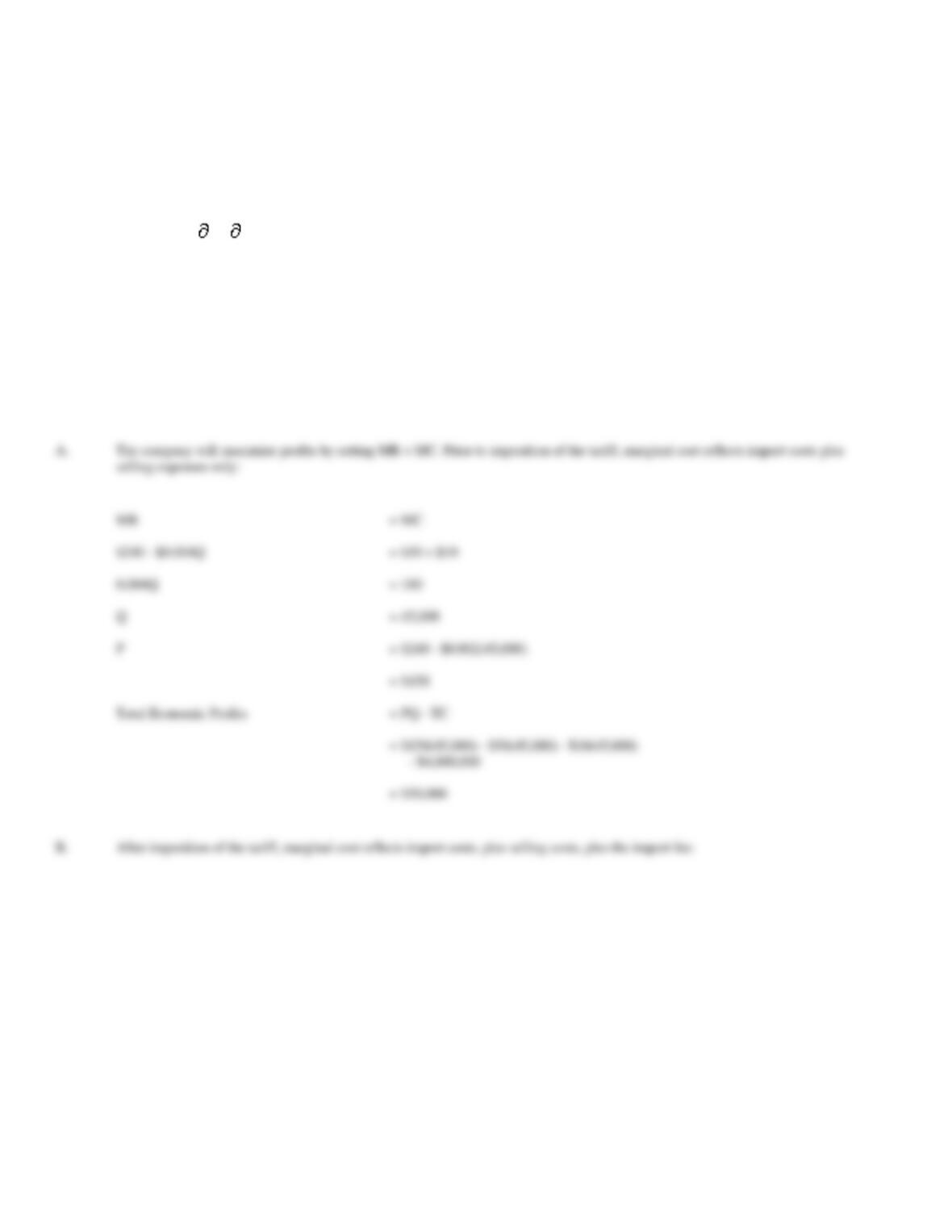
= MC
$400 – $0.07Q
= $100 + $20
0.07Q
= 280
Q
= 4,000
P
= $400 – $0.035(4,000)
= $260
Total Economic Profits
= PQ – TC
= $260(4,000) – $100(4,000) – $20(4,000) – $250,000
= $310,000
B.
After imposition of the tariff, marginal cost reflects import costs, plus selling costs, plus the import fee:
= MC + Import fee
$400 – $0.07Q
= $100 + $20 + 0.35($100)
0.07Q
= 245
Q
= 3,500
P
= $400 – $0.035(3,500)
= $277.50
Total Economic Profits
= PQ – TC
= $277.50(3,500) – $100(3,500) – $20(3,500)
– $35(3,500) – $250,000
= $178,750
43. Tariffs. The Northern Lights Company is an importer and distributor of Scandinavian wool sweaters. The
U.S. Commerce Department recently informed the company that it will be subject to a new 20% tariff on the
import cost of woolen clothing. The company is concerned that the tariff will slow its sales growth, given the
highly competitive nature of the clothing market. Relevant market demand and marginal revenue relations are:
P
= $240 – $0.002Q
MR
= TR/ Q = $240 – $0.004Q
The company’s marginal cost equals import costs of $50 per unit, plus $10 to cover transportation, insurance, and related selling expenses. In addition
these costs, the company’s fixed costs, including a normal rate of return, come to $4 million per year on this product.
A.
Calculate the optimal price/output combination and economic profits prior to imposition of the tariff.
B.
Calculate the optimal price/output combination and economic profits after imposition of the tariff.
C.
Compare your answers to parts A and B. Who pays the economic burden of the import tariff?
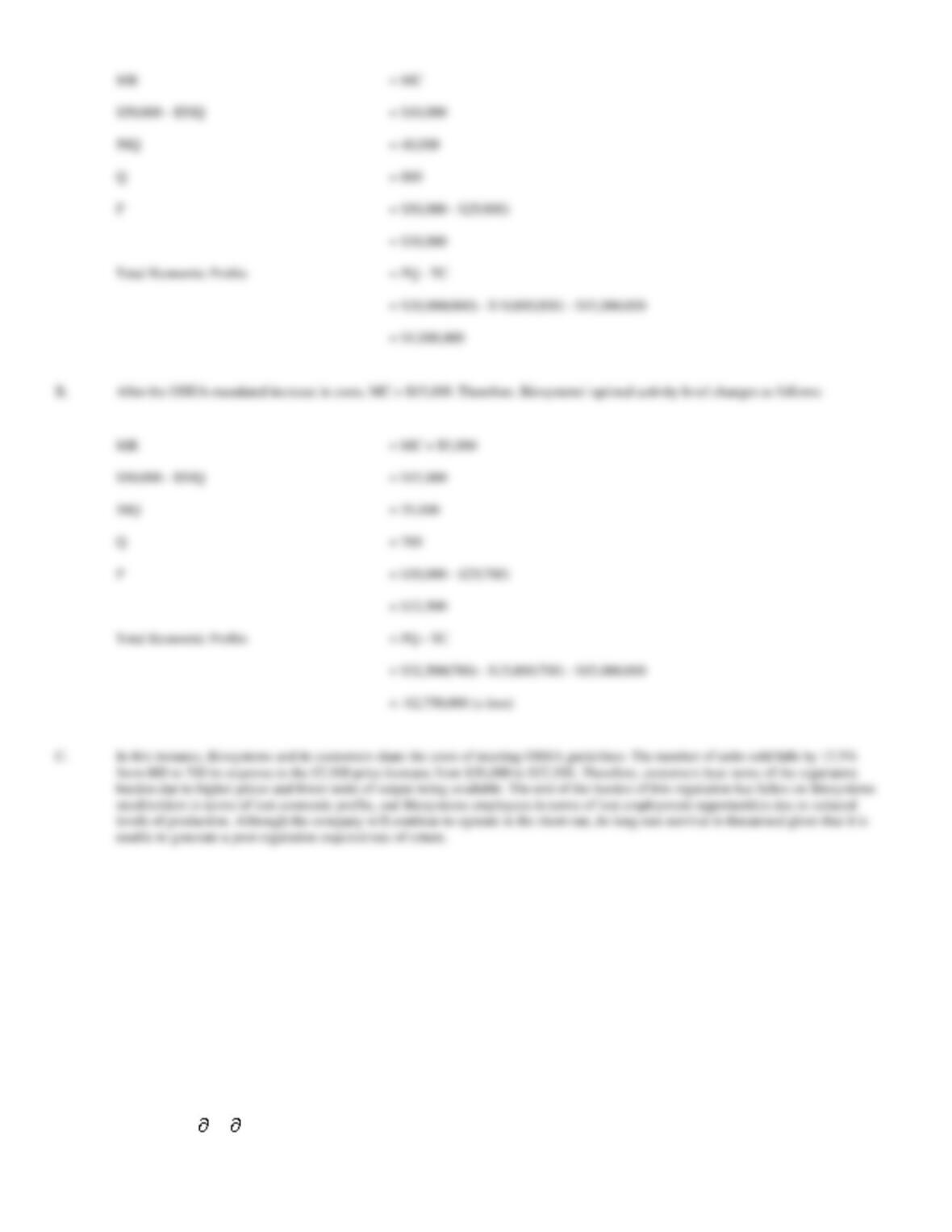
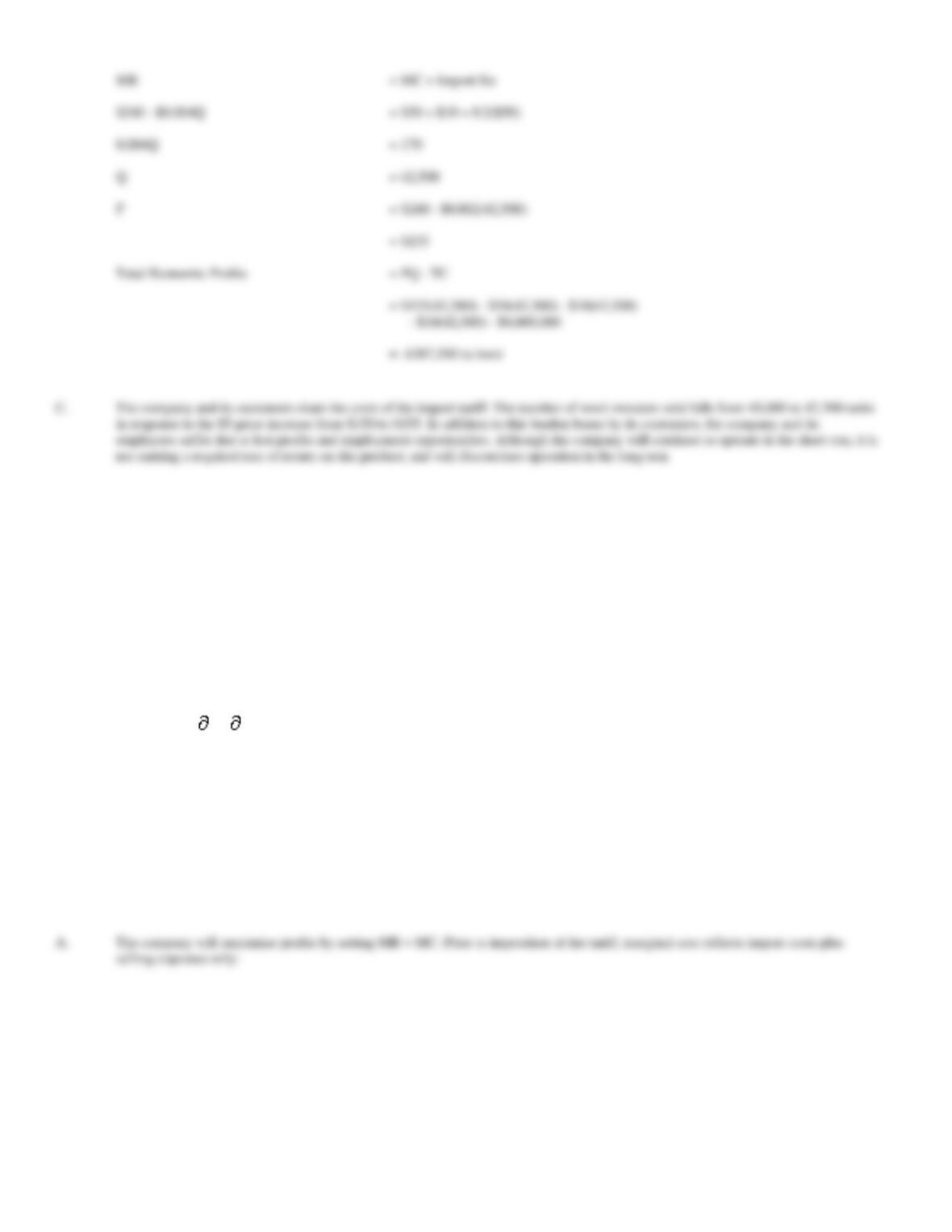
= MC
$240 – $0.004Q
= $50 + $10
0.004Q
= 180
Q
= 45,000
P
= $240 – $0.002(45,000)
= $150
Total Economic Profits
= PQ – TC
= $150(45,000) – $50(45,000) – $10(45,000)
– $4,000,000
= $50,000
B.
After imposition of the tariff, marginal cost reflects import costs, plus selling costs, plus the import fee:
44. Tariffs. The Steel Supply Corporation is an importer and distributor of Taiwanese-made, 96 piece hand-tool
sets (screw drivers, wrenches, and the like). The U.S. Commerce Department recently informed the company
that it will be subject to a new 25% tariff on the import cost of fabricated steel. The company is concerned that
the tariff will slow its sales growth, given the highly competitive nature of the hand-tool market. Relevant
market demand and marginal revenue relations are:
P
= $80 – $0.0001Q
MR
= TR/ Q = $80 – $0.0002Q
The company’s marginal cost equals import costs of $32 per unit, plus $8 to cover transportation, insurance, and related selling expenses. In addition
to these costs, the company’s fixed costs, including a normal rate of return, come to $2,500,000 per year on this product.
A.
Calculate the optimal price/output combination and economic profits prior to imposition of the tariff.
B.
Calculate the optimal price/output combination and economic profits after imposition of the tariff.
C.
Compare your answers to parts A and B. Who pays the economic burden of the import tariff?
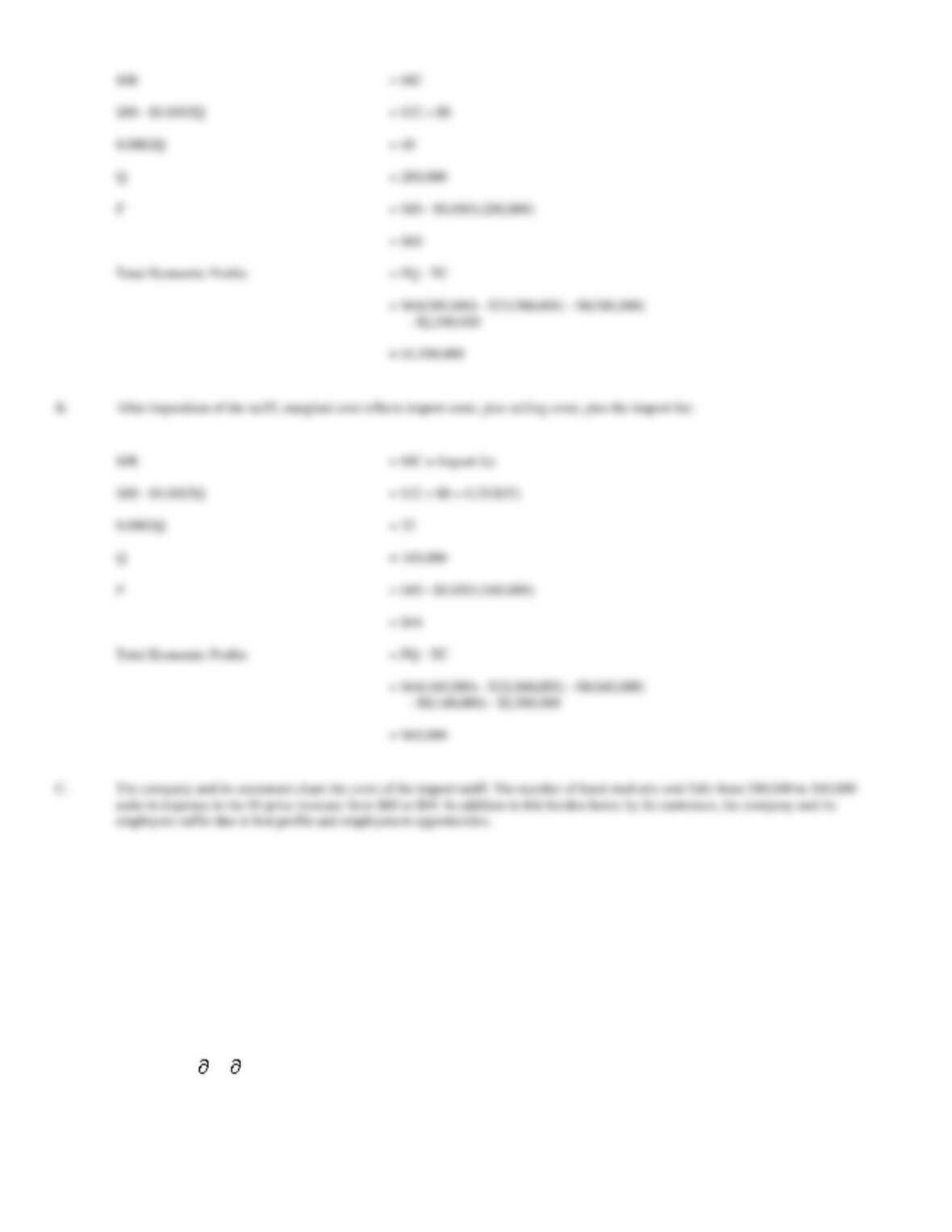
= MC + Import fee
$240 – $0.004Q
= $50 + $10 + 0.2($50)
0.004Q
= 170
Q
= 42,500
P
= $240 – $0.002(42,500)
= $155
Total Economic Profits
= PQ – TC
= $155(42,500) – $50(42,500) – $10(42,500)
– $10(42,500) – $4,000,000
not earning a required rate of return on this product, and will discontinue operation in the long-run.
45. Monopoly Regulation. The Woebegone Telephone Company, a utility serving rural customers in
Minnesota, is currently engaged in a rate case with the regulatory commission under whose jurisdiction it
operates. At issue is the monthly rate the company will charge for basic hookup service. The demand curve for
monthly service is P = $50 – $0.005Q. This implies annual demand and marginal revenue curves of:
P
= $600 – $0.06Q
MR
= TR/ Q = $600 – $0.12Q
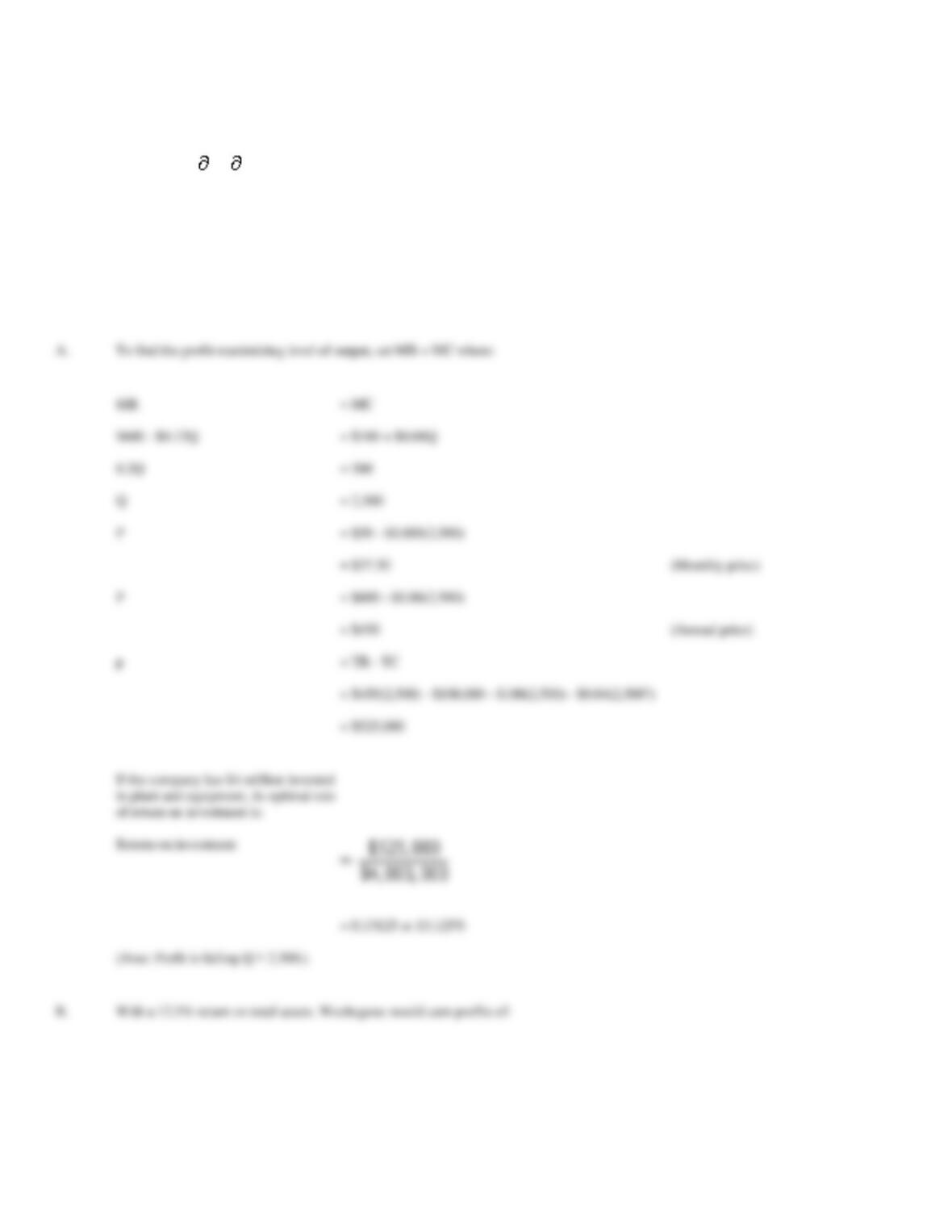
= MC
$80 – $0.0002Q
= $32 + $8
0.0002Q
= 40
Q
= 200,000
P
= $80 – $0.0001(200,000)
= $60
Total Economic Profits
= PQ – TC
= $60(200,000) – $32(200,000) – $8(200,000)
– $2,500,000
After imposition of the tariff, marginal cost reflects import costs, plus selling costs, plus the import fee:
$80 – $0.0002Q
= $32 + $8 + 0.25($32)
Q
= 160,000
= $64
Total Economic Profits
= PQ – TC
= $64(160,000) – $32(160,000) – $8(160,000)
– $8(160,000) – $2,500,000
where P is service price in dollars and Q is the number of customers served. Total and marginal costs per year (before investment return) are
described by the function:
TC
= $100,000 + $100Q + $0.04Q2
MC
= TC/ Q = $100 + $0.08Q
The company has assets of $4 million and the utility commission has authorized a 12.5% return on investment.
A.
Calculate Woebegone’s profit-maximizing price (monthly and annually), output, and rate-of-return levels.
B.
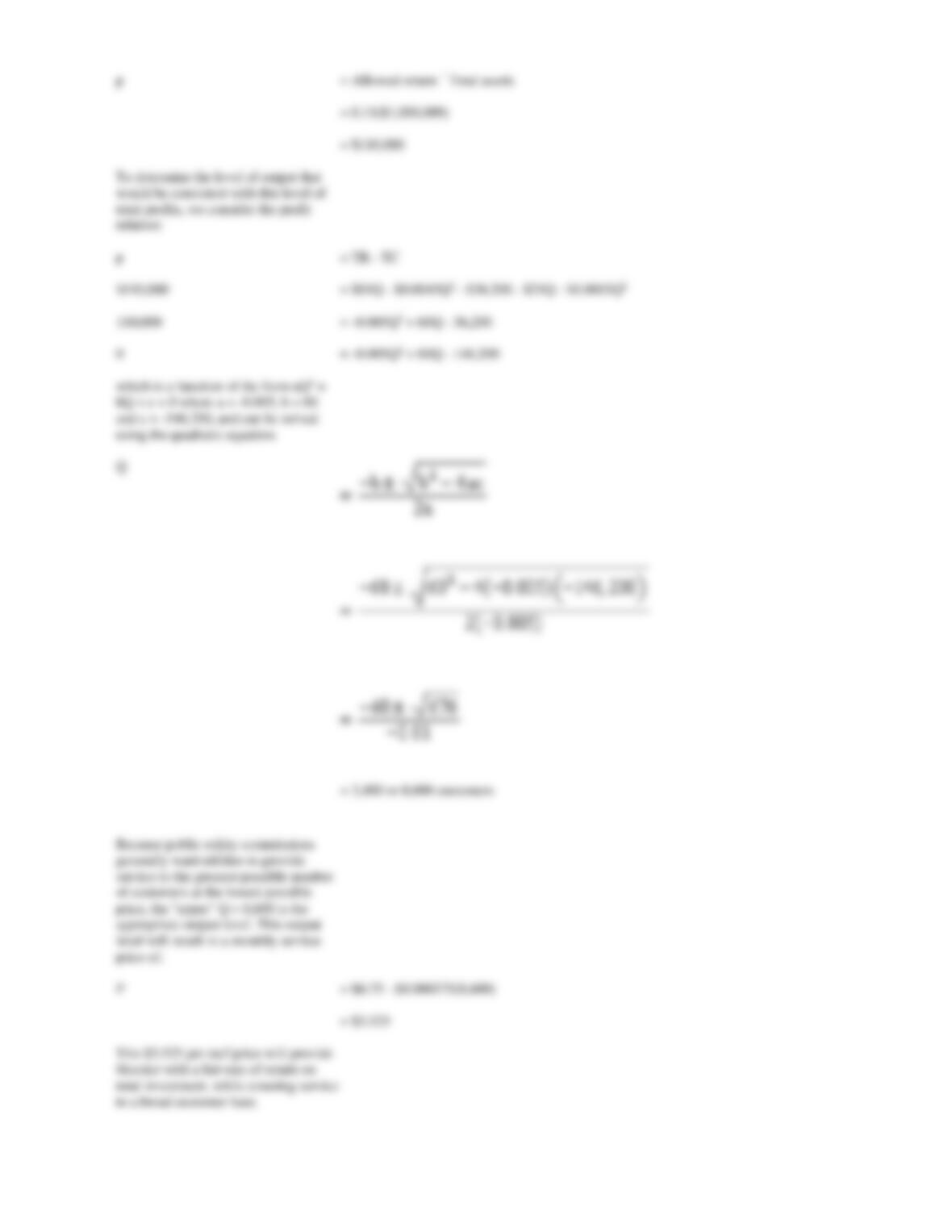
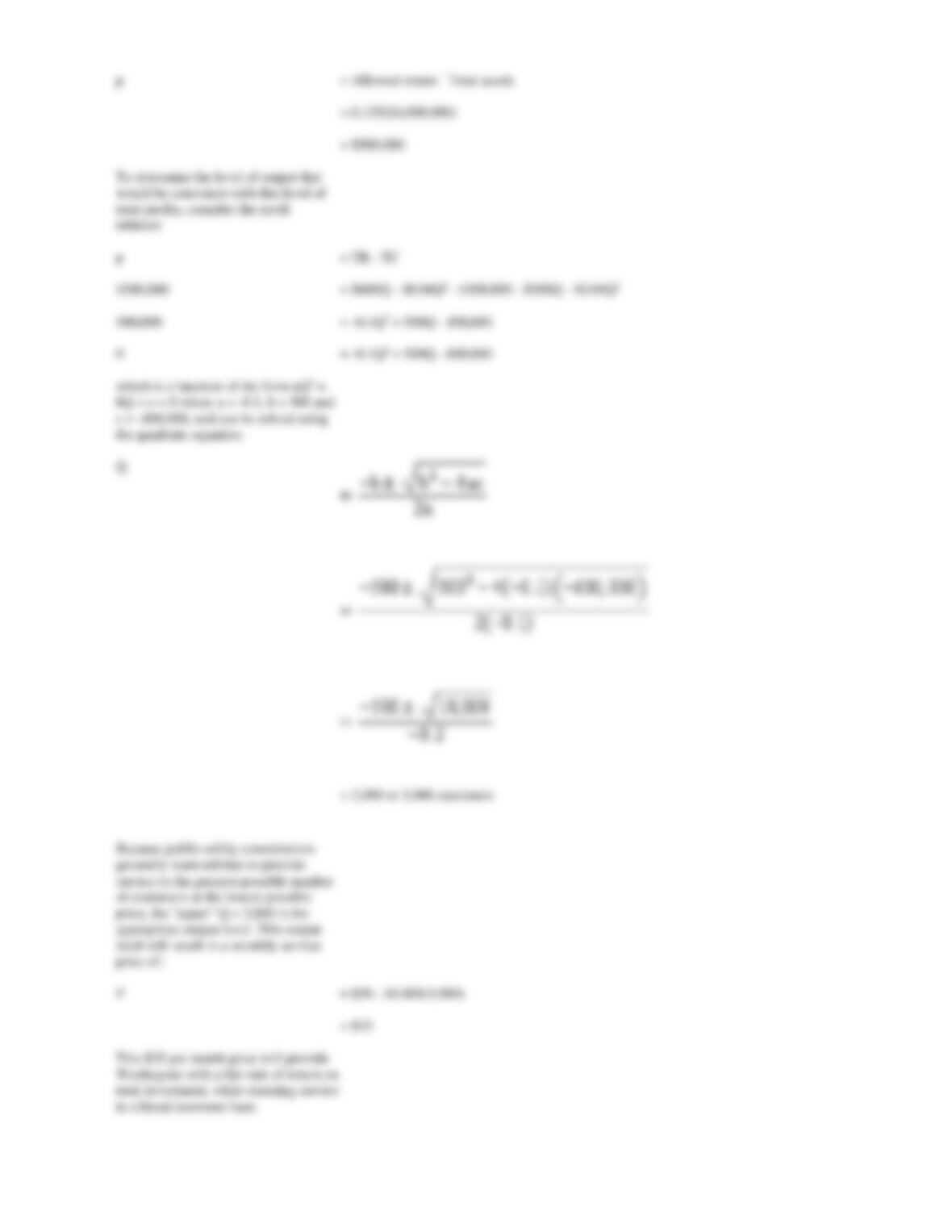
What monthly price should the commission grant to limit Woebegone to a 12.5% rate of return?
A.
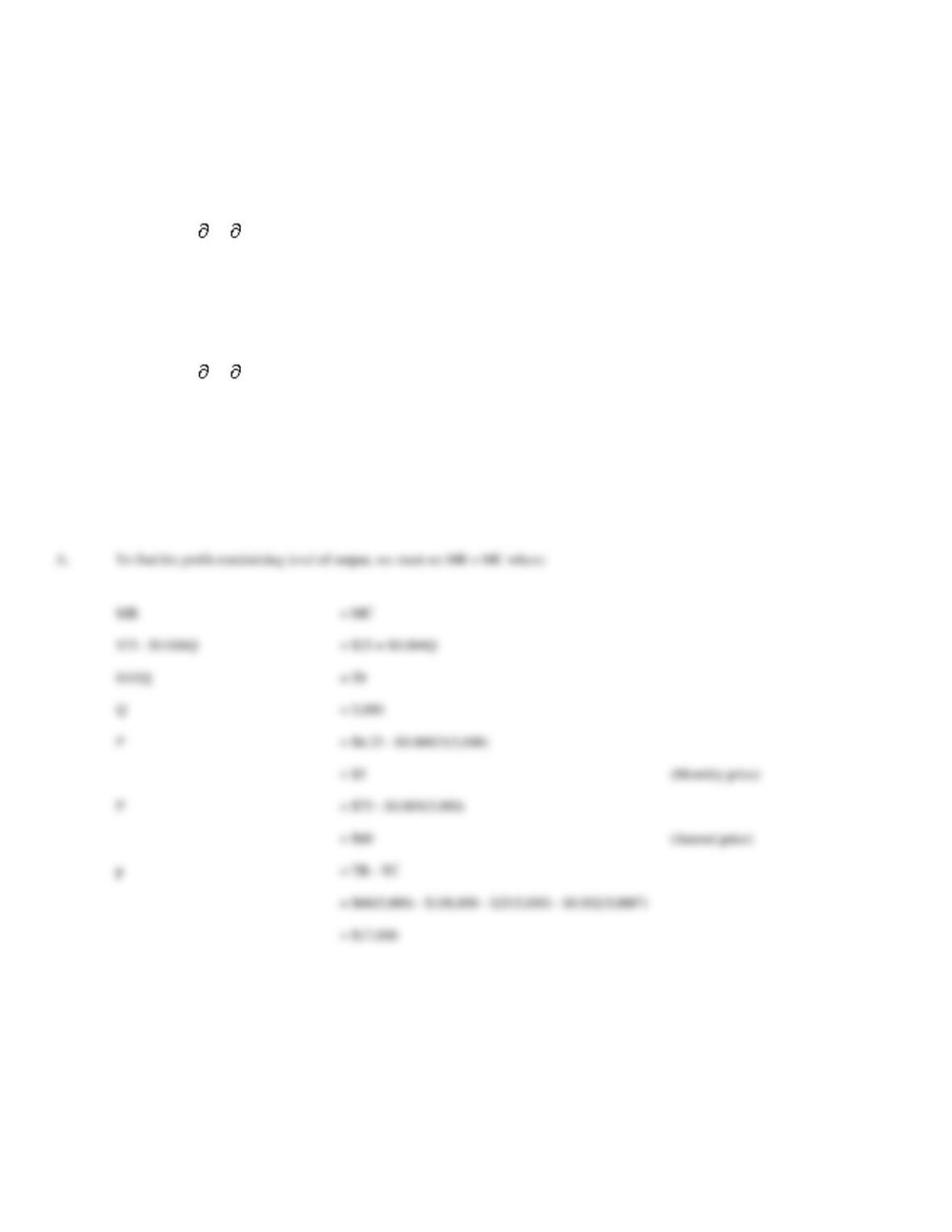
To find the profit-maximizing level of output, set MR = MC where:
= MC
$600 – $0.12Q
= $100 + $0.08Q
0.2Q
= 500
Q
= 2,500
P
= $50 – $0.005(2,500)
= $37.50
(Monthly price)
P
= $600 – $0.06(2,500)
= $450
(Annual price)
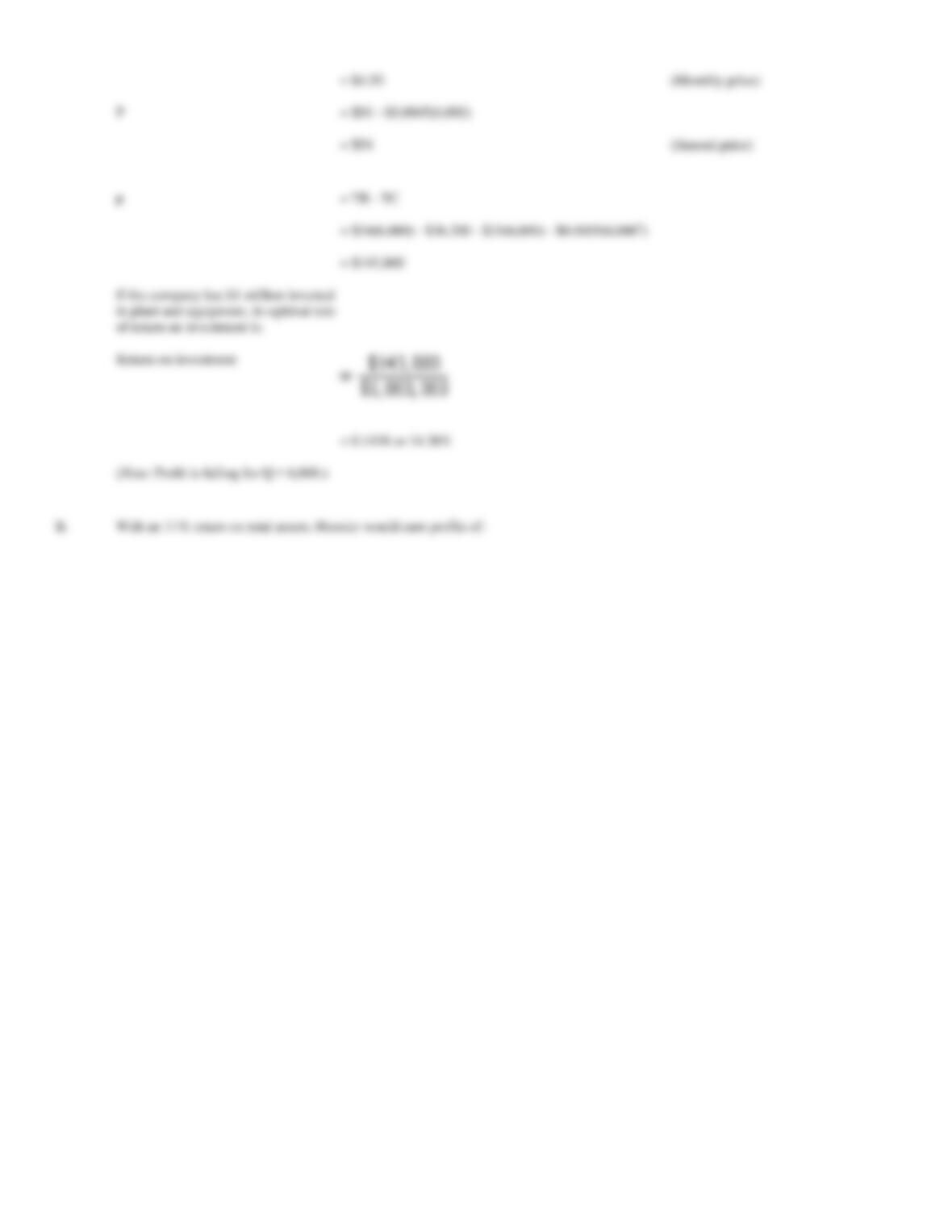
p
= TR – TC
= $525,000
= 0.13125 or 13.125%
B.
With a 12.5% return on total assets, Woebegone would earn profits of:
46. Monopoly Regulation. The Black Hills Telephone Company, a utility serving rural customers in South
Dakota is currently engaged in a rate case with the regulatory commission under whose jurisdiction it operates.
At issue is the monthly rate the company will charge for call waiting service. The demand curve for this
monthly service is P = $6.25 – $0.00025Q. This implies annual demand and marginal revenue curves of:
P
= $75 – $0.003Q
MR
= TR/ Q = $75 – $0.006Q
where P is service price in dollars and Q is the number of customers served. Total and marginal costs per year (before investment return) are
described by the function:
TC
= $108,000 + $25Q + $0.002Q2
MC
= TC/ Q = $25 + $0.004Q
The company has assets of $100,000 used for call waiting services and the utility commission has authorized a 12% return on investment.
A.
Calculate Black Hills’ profit-maximizing price (monthly and annually), output, and rate–of-return levels.
B.
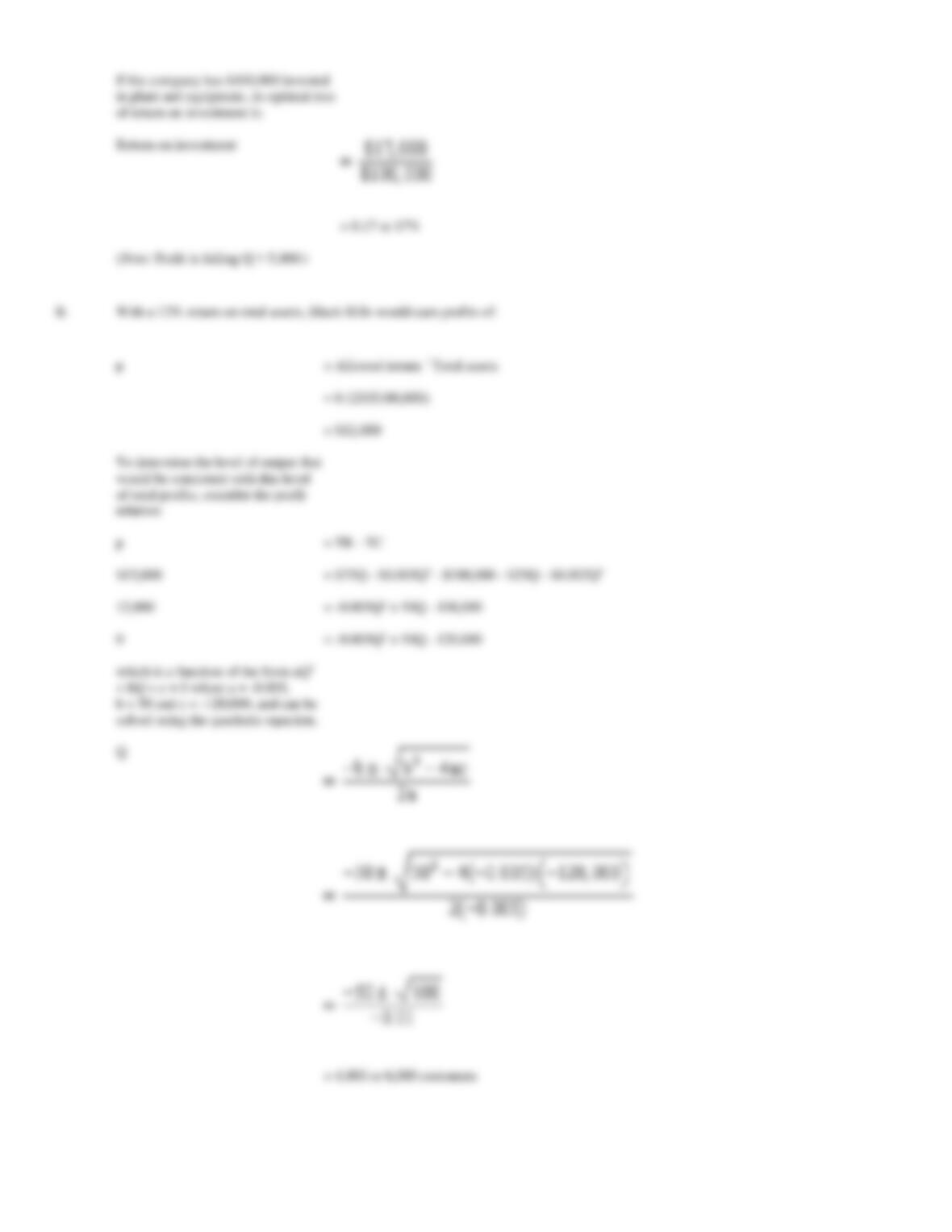
What monthly price should the commission grant to limit Black Hills to an 12% rate of return?
A.
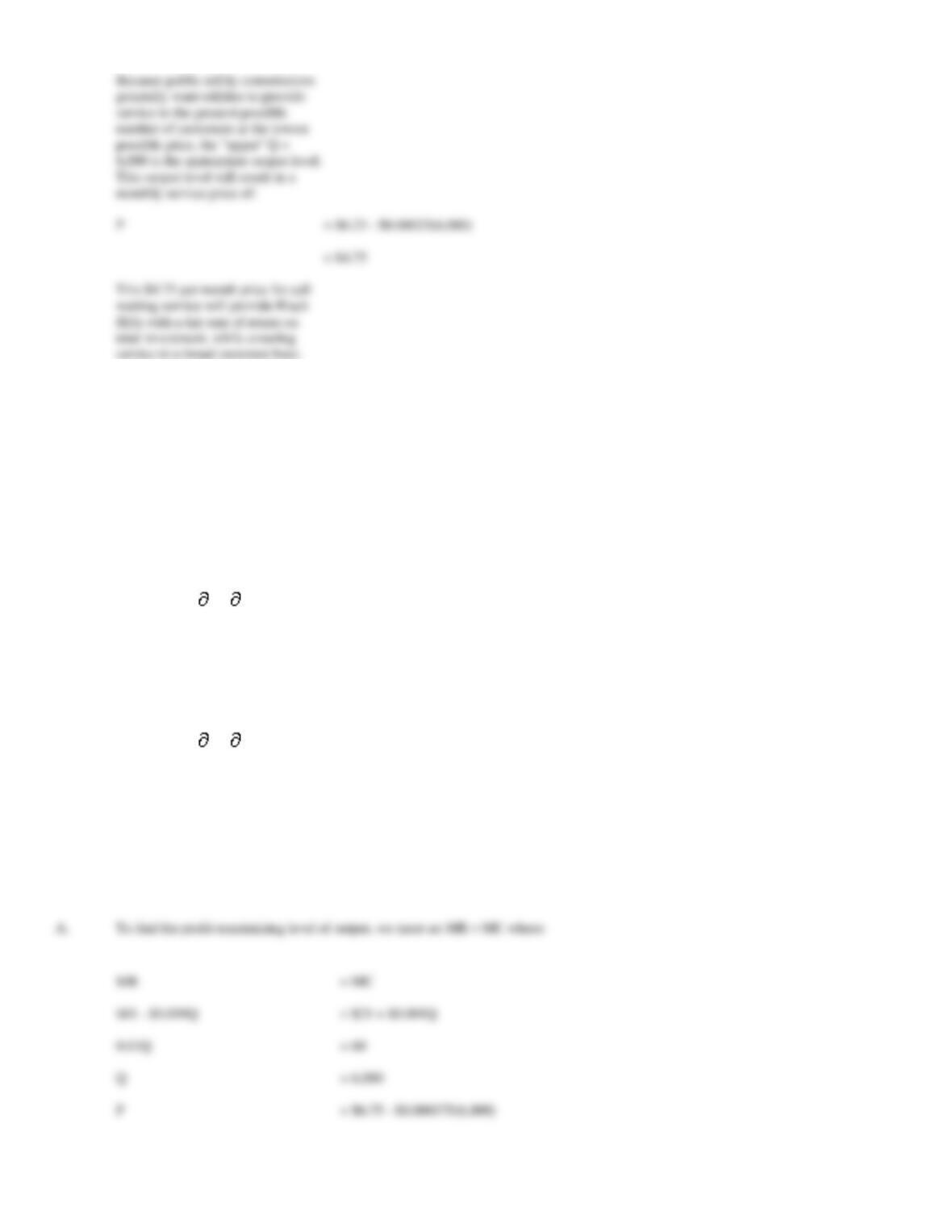
To find the profit-maximizing level of output, we must set MR = MC where:
= MC
0.01Q
= 50
Q
= 5,000
P
= $6.25 – $0.00025(5,000)
= $5
(Monthly price)
= $60
(Annual price)
= $60(5,000) – $108,000 – $25(5,000) – $0.002(5,0002)
47. Monopoly Regulation. The Hoosier Gas Company, a utility serving customers in Bloomington, Indiana, is
currently engaged in a rate case with the regulatory commission under whose jurisdiction it operates. At issue is
the rate the company will charge per mcf usage of natural gas. The demand curve for monthly service is P =
$6.75 – $0.000375Q. This implies annual demand and marginal revenue curves of:
P
= $81 – $0.0045Q
MR
= TR/ Q = $81 – $0.009Q
where P is mcf price in dollars and Q is the units of mcf used, in thousands. Total and marginal costs per year (before investment return) are
described by the function:
TC
= $36,200 + $21Q + $0.0005Q2
MC
= TC/ Q = $21 + $0.001Q
The company has assets of $1 million and the utility commission has authorized an 11% return on investment.
A.
Calculate Hoosier’s profit-maximizing price (monthly and annually), output, and rate-of-return levels.
B.
What monthly price should the commission grant to limit Hoosier to an 11% rate of return?
To find the profit-maximizing level of output, we must set MR = MC where:
= MC
$81 – $0.009Q
= $21 + $0.001Q
0.01Q
= 60
P
= $6.25 – $0.00025(6,000)
= $4.75