1. A game is:
A. a situation in which each member of a group makes at least one decision and cares both about
his own choice and about others’ choices.
2. In a one-stage game:
D. one participant has full information of the other players’ choices before making his choice.
3. In a multiple-stage game:
D. one participant has full information of the other players choices before making his choice.
4. A player’s best response is:
D. None of these is correct.
5. A strategy is dominant if:
A. it is one of several best responses for a player, regardless of other players’ choices.
6. A strategy is dominated if:
D. there is some other strategy that yields a strictly higher payoff in some circumstances and may
yield a lower payoff, depending upon other players’ choices.
7. A strategy is weakly dominated if:
D. there is some other strategy that yields a strictly higher payoff in some circumstances and may
yield a lower payoff, depending upon other players’ choices.
8. The iterative deletion of dominated strategies refers to the following process:
A. continue removing the weakly dominated strategies until there are no more weakly dominated
strategies left to remove.
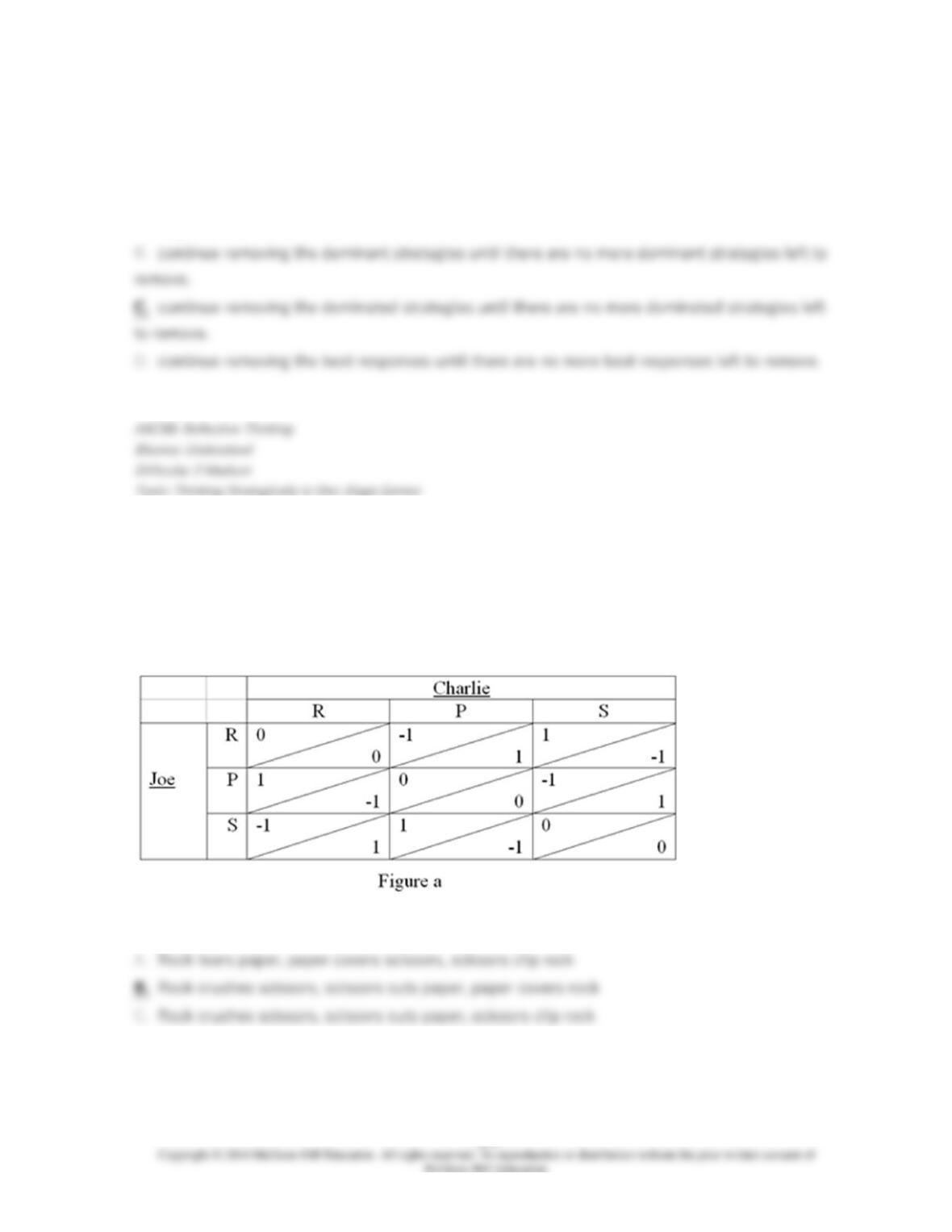
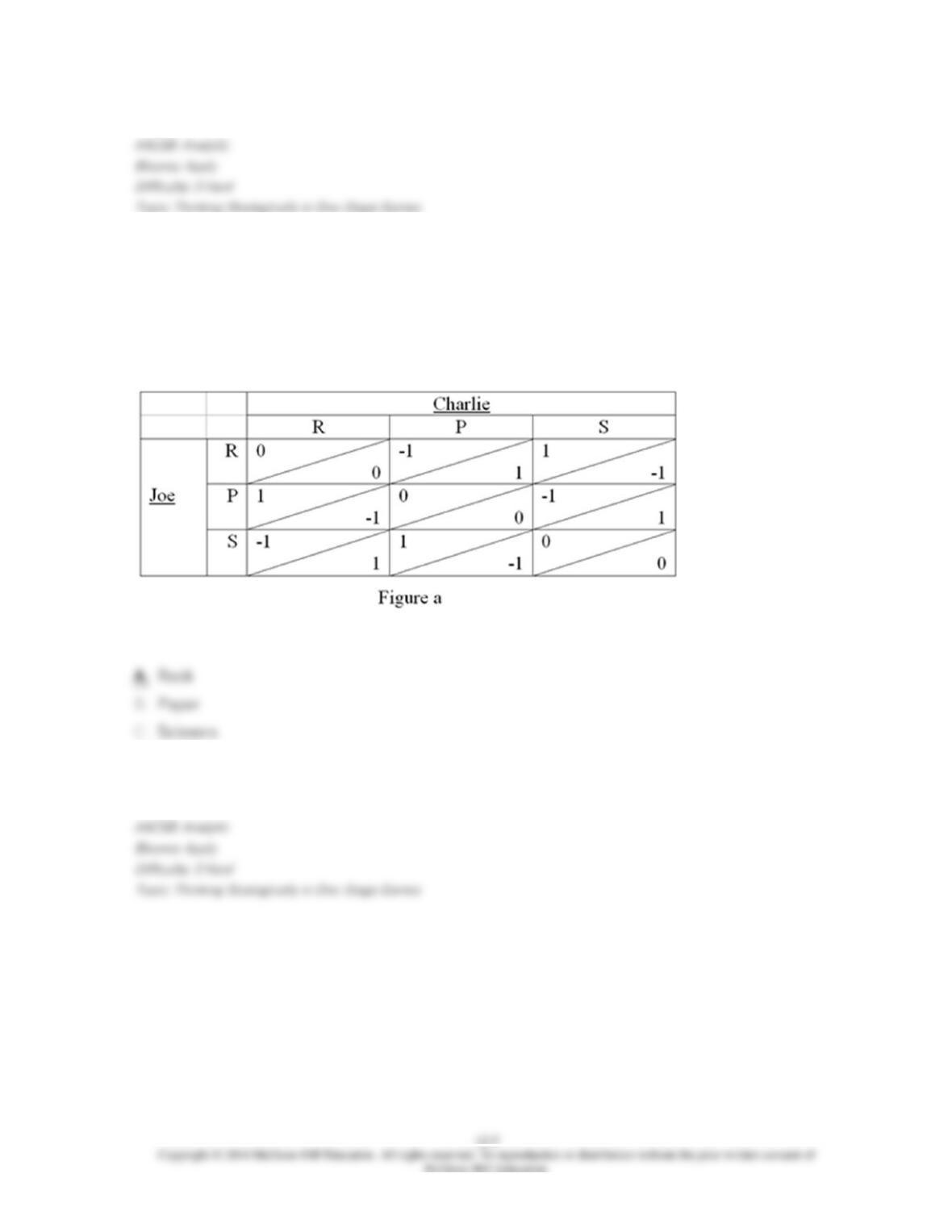
9. Refer to Figure
a
. Charlie and Joe both want to ride shotgun with their mother, so they
play a game of rock-paper-scissors to determine who gets to sit in the front seat. If -1 represents
a loss, 1 a win and 0 a tie, and Joe’s payoff is shown in the upper left–hand corner of each cell,
while Charlie’s appears in the lower right-hand corner, which set of rules is illustrated in the
following payoff matrix?
D. Rock tears paper, paper covers scissors, paper covers rock
10. Refer to Figure
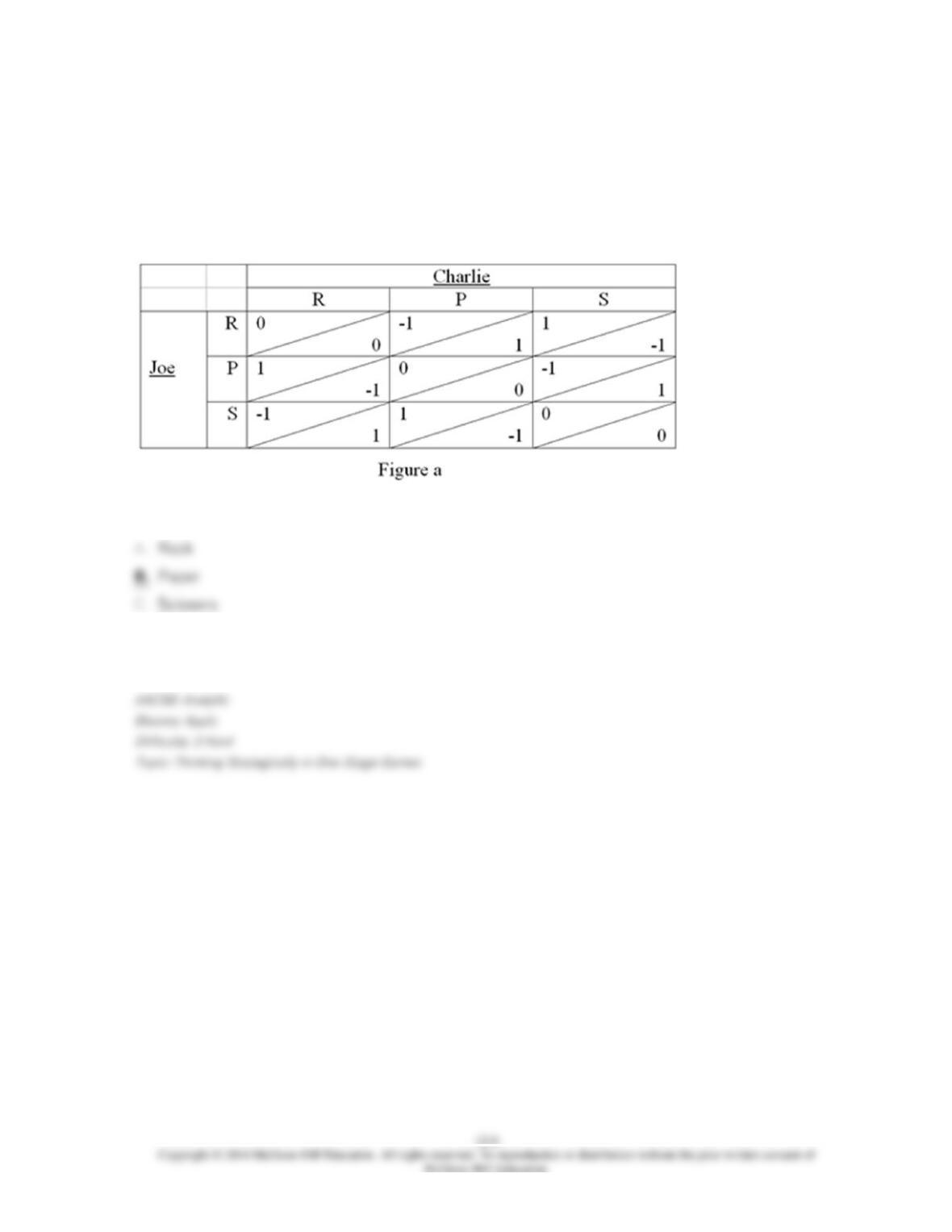
a
. Charlie and Joe both want to ride shotgun with their mother, so they
play a game of rock-paper-scissors to determine who gets to sit in the front seat. In the table, –1
represents a loss, 1 a win and 0 a tie, and Joe’s payoff is shown in the upper left-hand corner of
each cell, while Charlie’s appears in the lower right-hand corner. If Charlie knows Joe always
throws scissors, what is Charlie’s best response?
D. The answer cannot be determined from the information given.
11. Refer to Figure
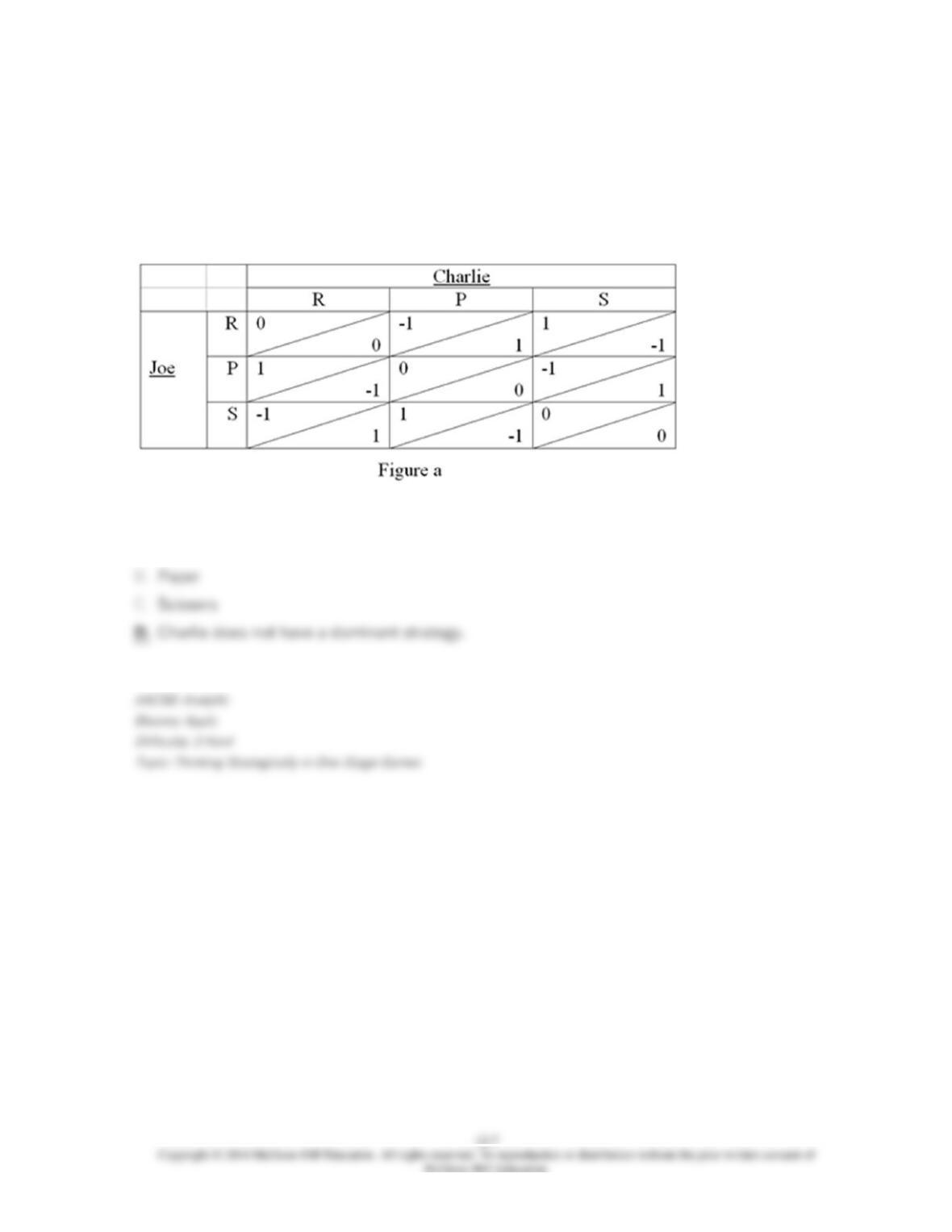
a
. Charlie and Joe both want to ride shotgun with their mother, so they
play a game of rock-paper-scissors to determine who gets to sit in the front seat. In the table, –1
represents a loss, 1 a win and 0 a tie, and Joe’s payoff is shown in the upper left-hand corner of
each cell, while Charlie’s appears in the lower right-hand corner. If Joe knows Charlie thinks he
always throws scissors, what is Joe’s best response?
D. The answer cannot be determined from the information given.
12. Refer to Figure
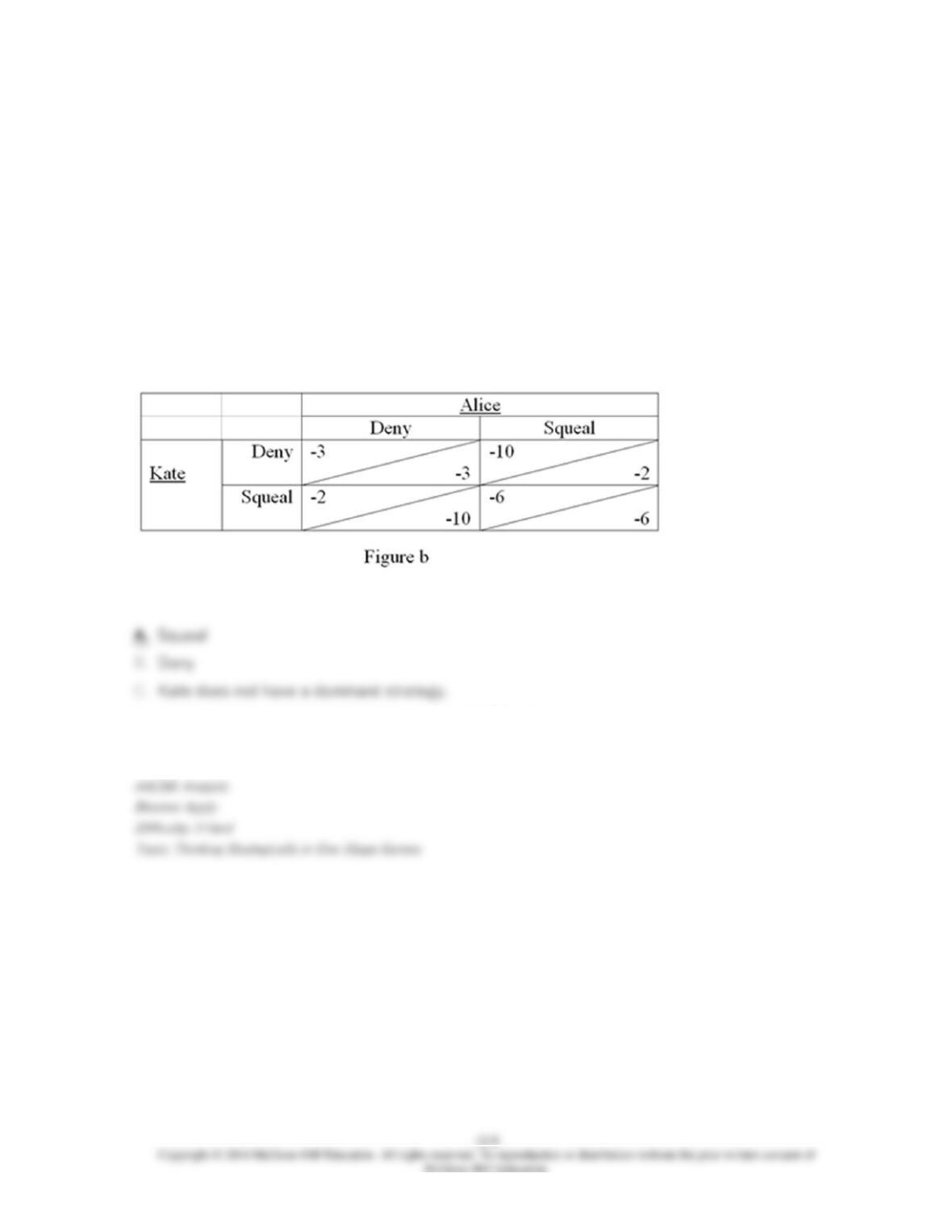
a
. Charlie and Joe both want to ride shotgun with their mother, so they
play a game of rock-paper-scissors to determine who gets to sit in the front seat. In the table, –1
represents a loss, 1 a win and 0 a tie, and Joe’s payoff is shown in the upper left-hand corner of
each cell, while Charlie’s appears in the lower right-hand corner. What is Charlie’s dominant
strategy?
A. Rock
13. Refer to Figure
b
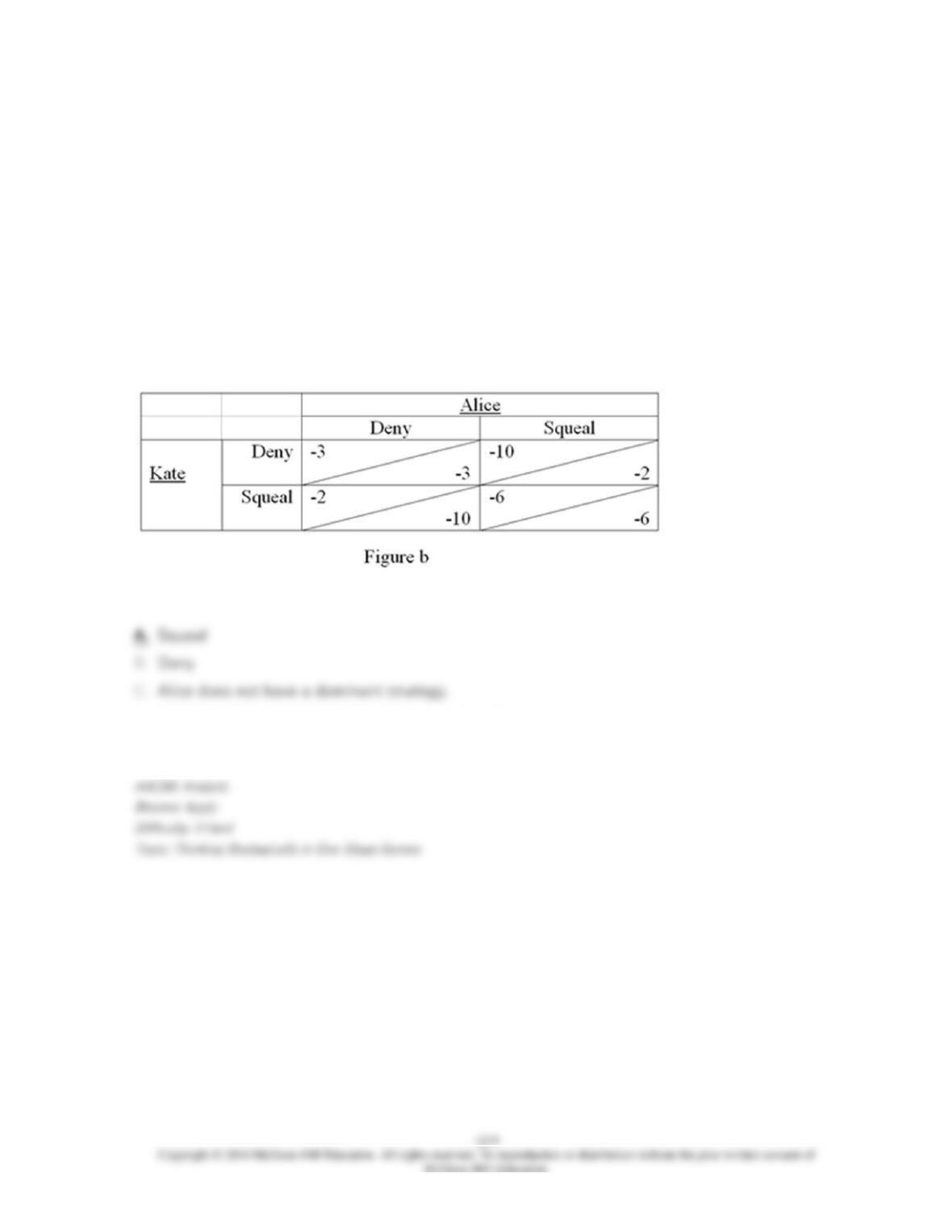
. Kate and Alice are sisters with a very strict mother. The girls are not
allowed to watch television during the day when their mother is at work. The mother comes home
one day and knows at least one girl was watching the television because it is warm. She sends
the girls to their separate bedrooms while she decides what to do. After giving it some thought,
she decides to send a message to the naughty girls and offers them the following deal: if they
both deny watching TV, they will each be grounded for 3 weeks; if one squeals on the other, but
the other denies watching TV, the squealer is grounded for 2 weeks, while the denier is grounded
for 10; if they both squeal, each is grounded for 6 weeks. The following payoff matrix illustrates
the girls’ dilemma, with Kate’s payoff shown in the upper left-hand corner of each cell and Alice’s
in the lower right-hand corner. What is Kate’s dominant strategy?
D. Kate’s dominant strategy depends upon what Alice does.
14. Refer to Figure
b
. Kate and Alice are sisters with a very strict mother. The girls are not
allowed to watch television during the day when their mother is at work. The mother comes home
one day and knows at least one girl was watching the television because it is warm. She sends
the girls to their separate bedrooms while she decides what to do. After giving it some thought,
she decides to send a message to the naughty girls and offers them the following deal: if they
both deny watching TV, they will each be grounded for 3 weeks; if one squeals on the other, but
the other denies watching TV, the squealer is grounded for 2 weeks, while the denier is grounded
for 10; if they both squeal, each is grounded for 6 weeks. The following payoff matrix illustrates
the girls’ dilemma, with Kate’s payoff shown in the upper left-hand corner of each cell and Alice’s
in the lower right-hand corner. What is Alice’s dominant strategy?
D. Alice’s dominant strategy depends upon what Kate does.
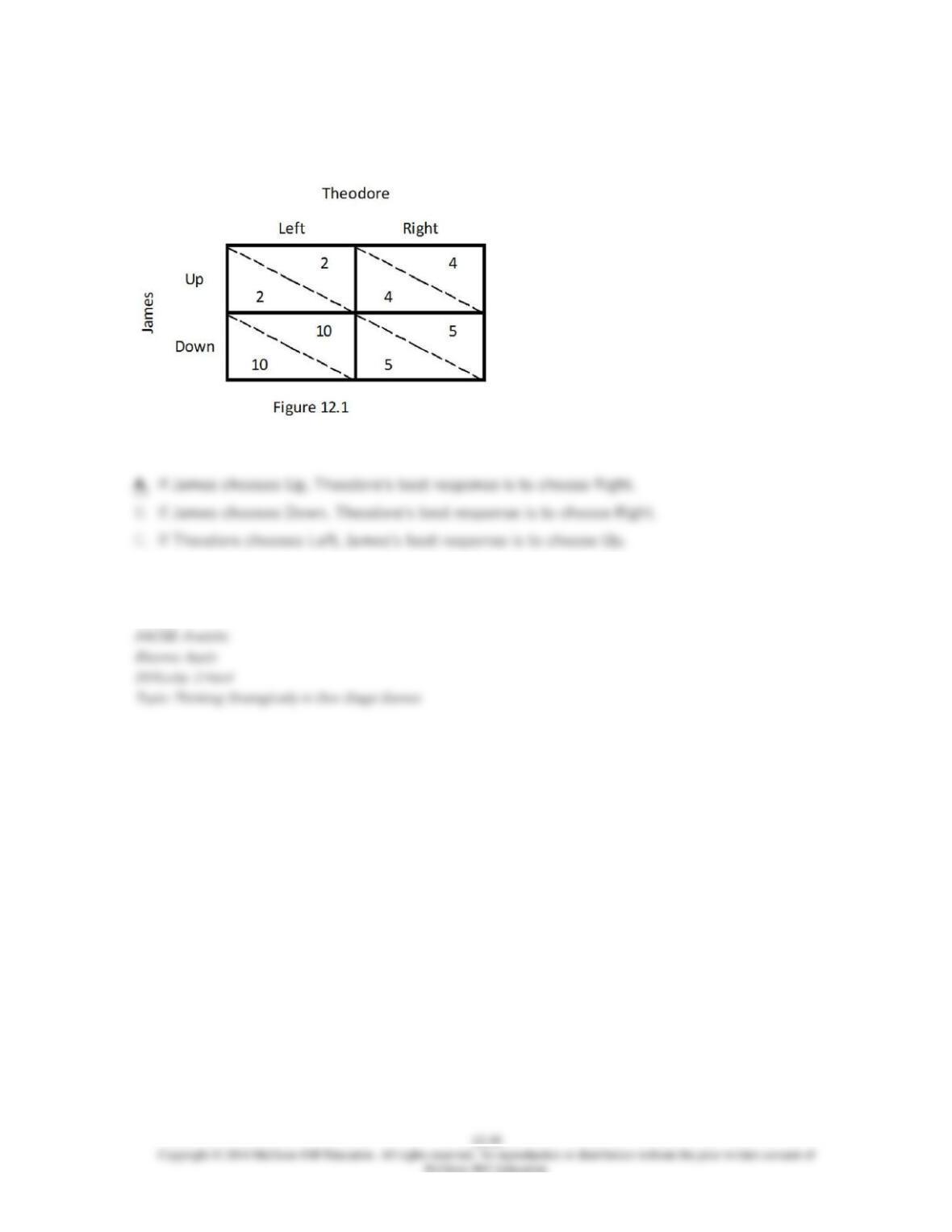
15. Refer to the game between James and Theodore depicted in Figure 12.1. Which of the
following is true?
D. If Theodore chooses Right, James’s best response is to choose Up.
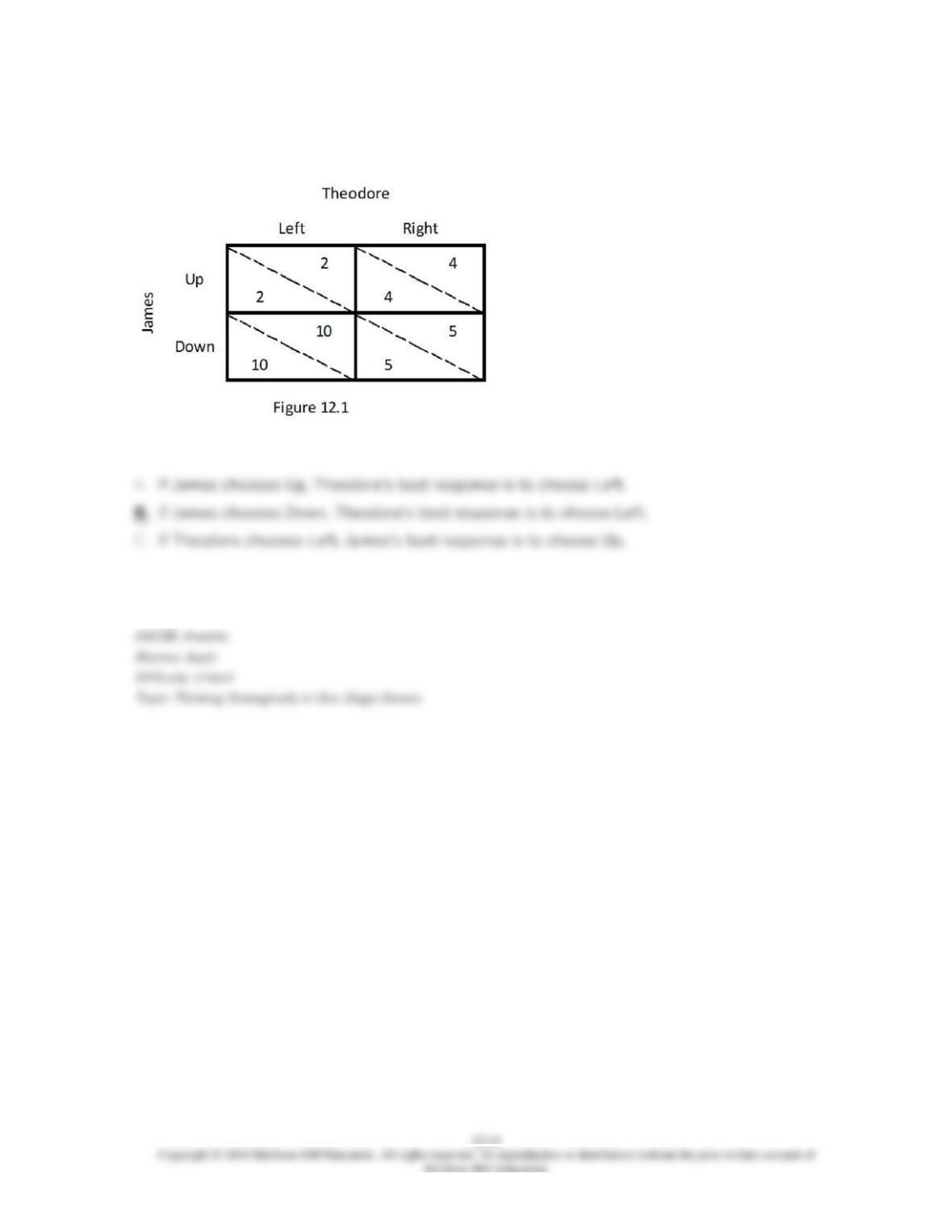
16. Refer to the game between James and Theodore depicted in Figure 12.1. Which of the
following is true?
D. If Theodore chooses Right, James’s best response is to choose Up.
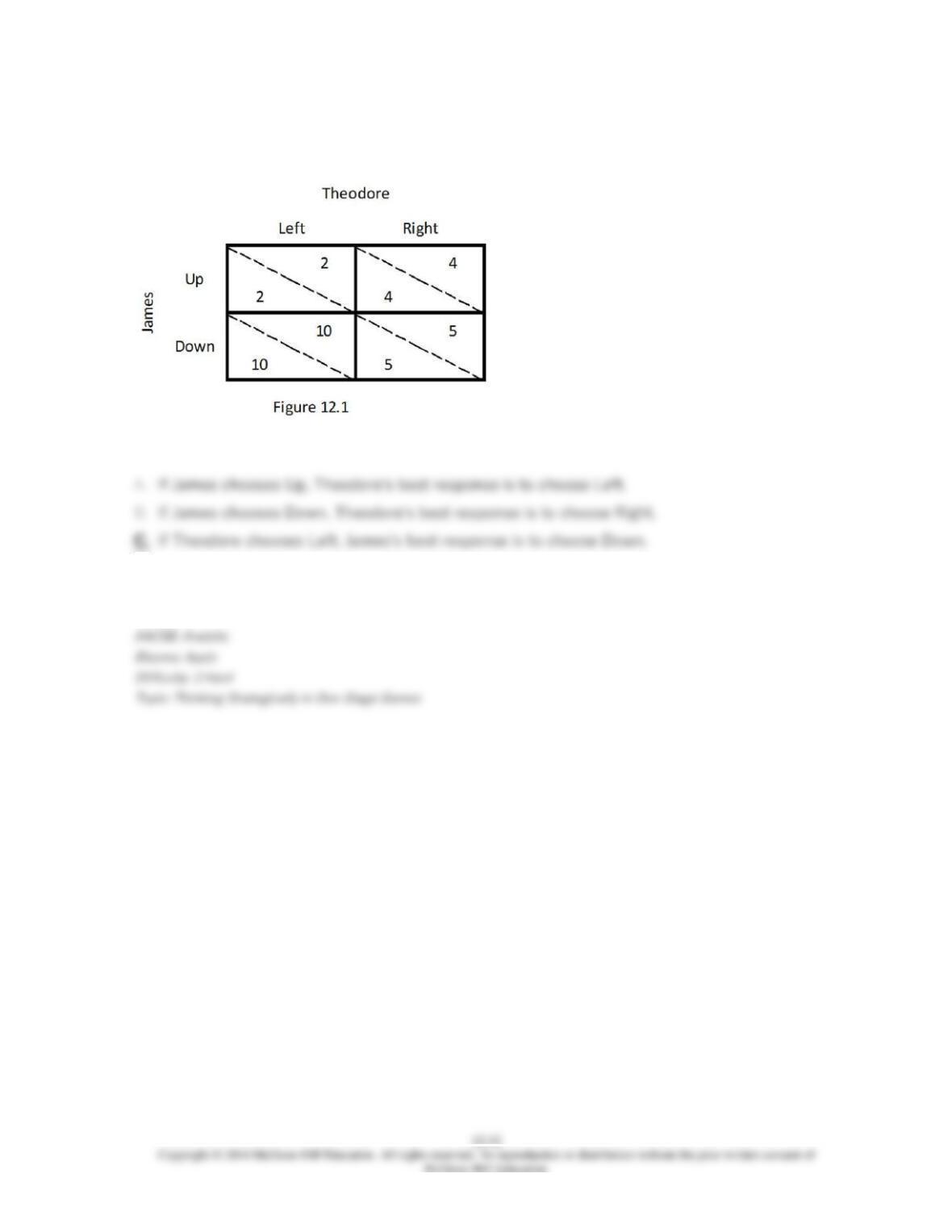
17. Refer to the game between James and Theodore depicted in Figure 12.1. Which of the
following is true?
D. If Theodore chooses Right, James’s best response is to choose Up.
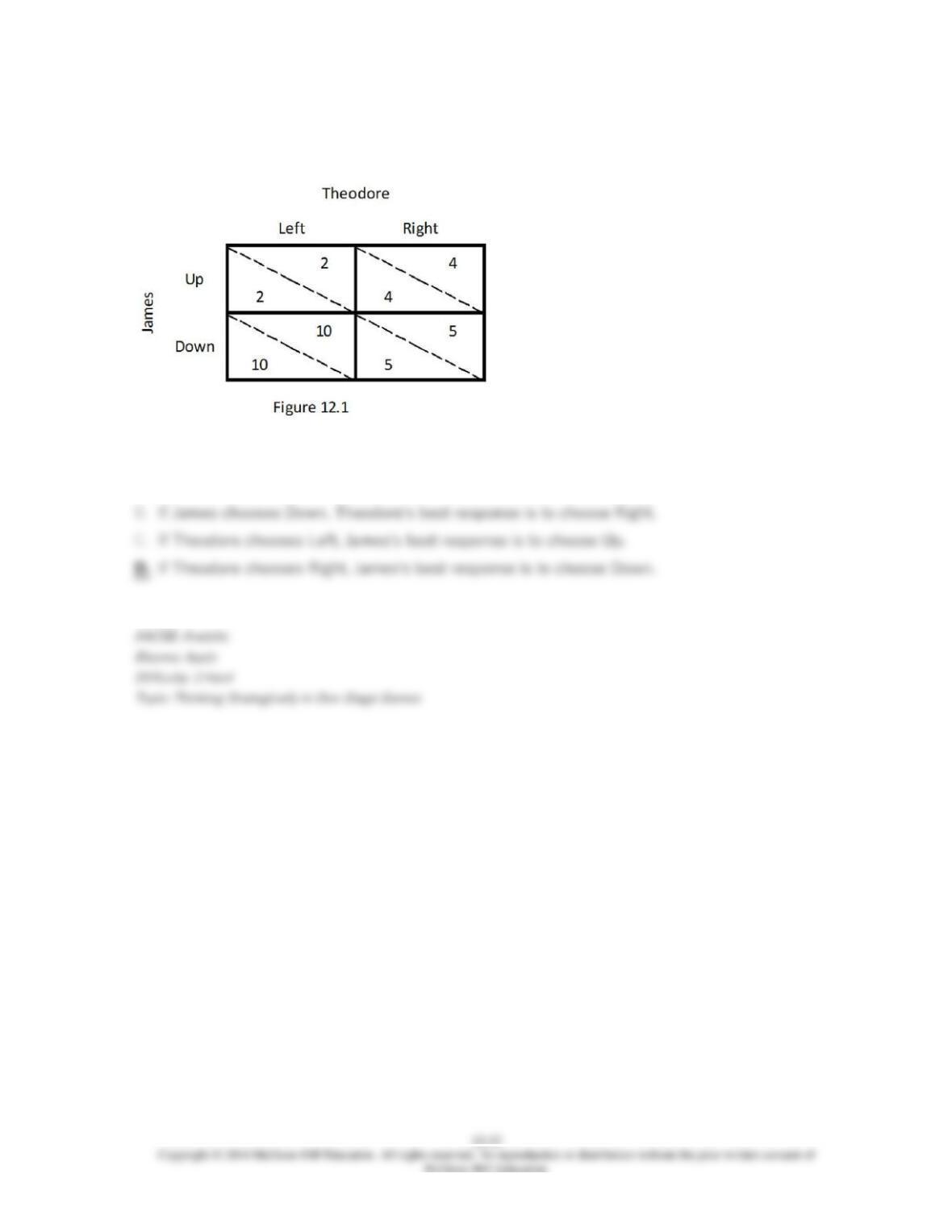
18. Refer to the game between James and Theodore depicted in Figure 12.1. Which of the
following is true?
A. If James chooses Up, Theodore’s best response is to choose Left.
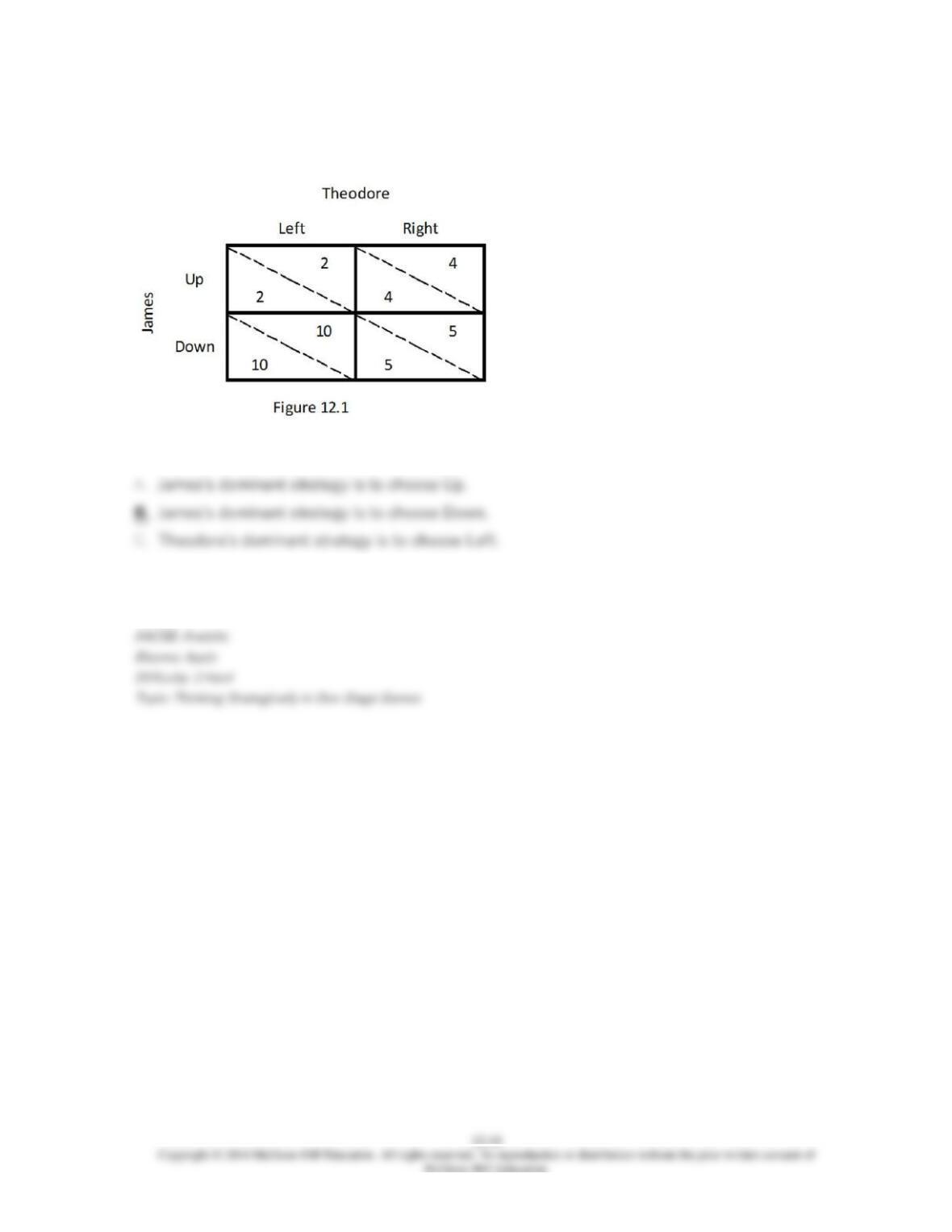
19. Refer to the game between James and Theodore depicted in Figure 12.1. Which of the
following is true?
D. Theodore’s dominant strategy is to choose Right.
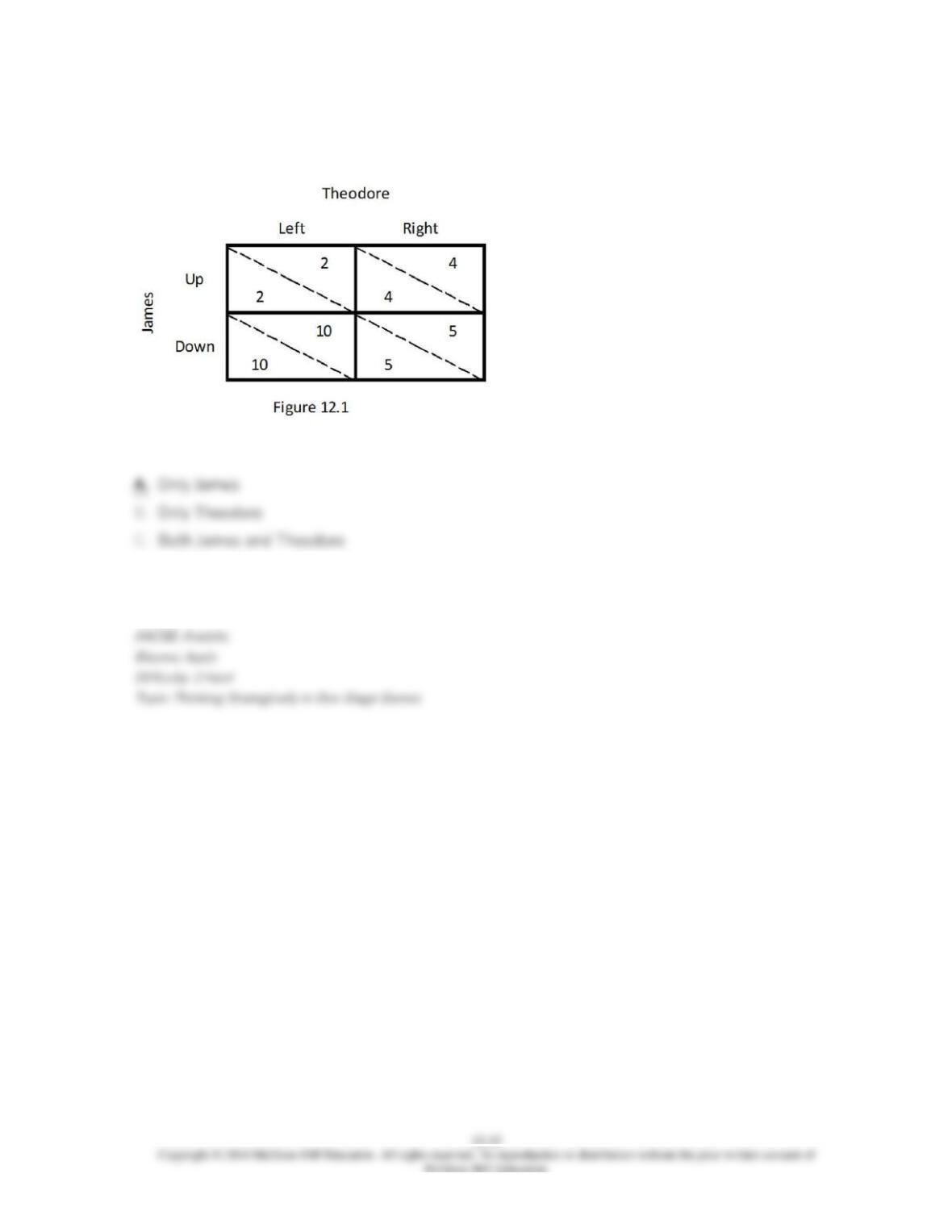
20. Refer to the game between James and Theodore depicted in Figure 12.1. Who has a
dominant strategy?
D. Neither James nor Theodore
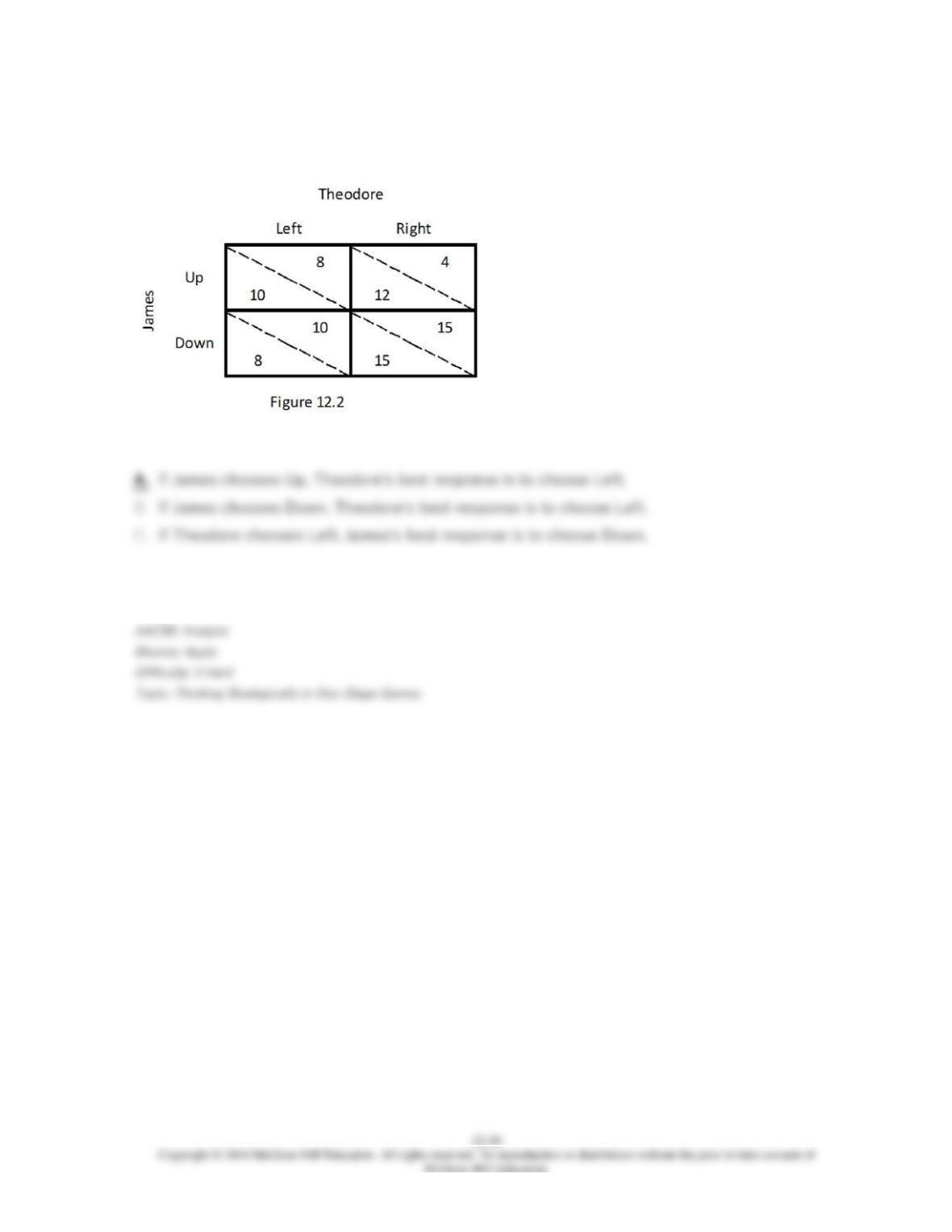
21. Refer to the game between James and Theodore depicted in Figure 12.2. Which of the
following is true?
D. If Theodore chooses Right, James’s best response is to choose Up.
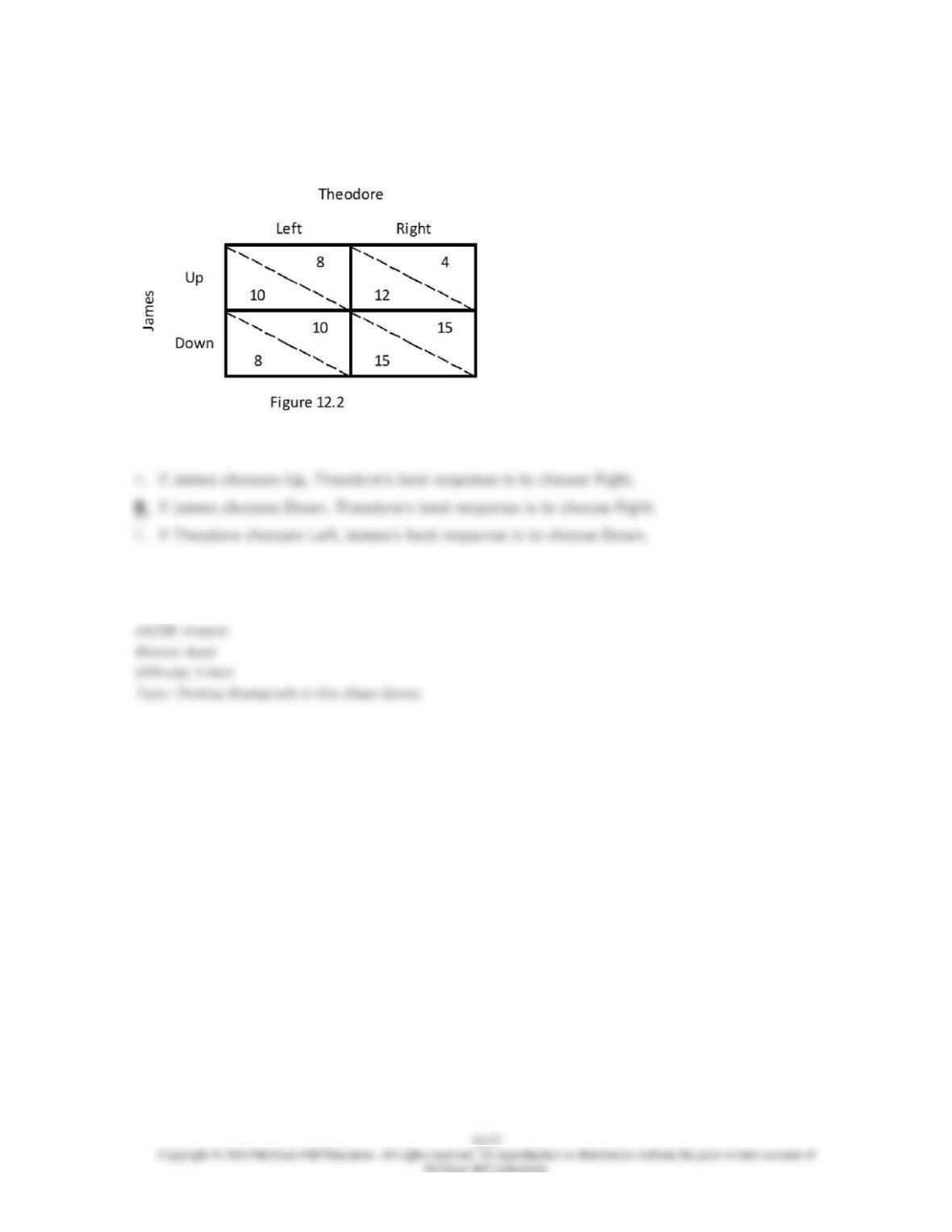
22. Refer to the game between James and Theodore depicted in Figure 12.2. Which of the
following is true?
D. If Theodore chooses Right, James’s best response is to choose Up.
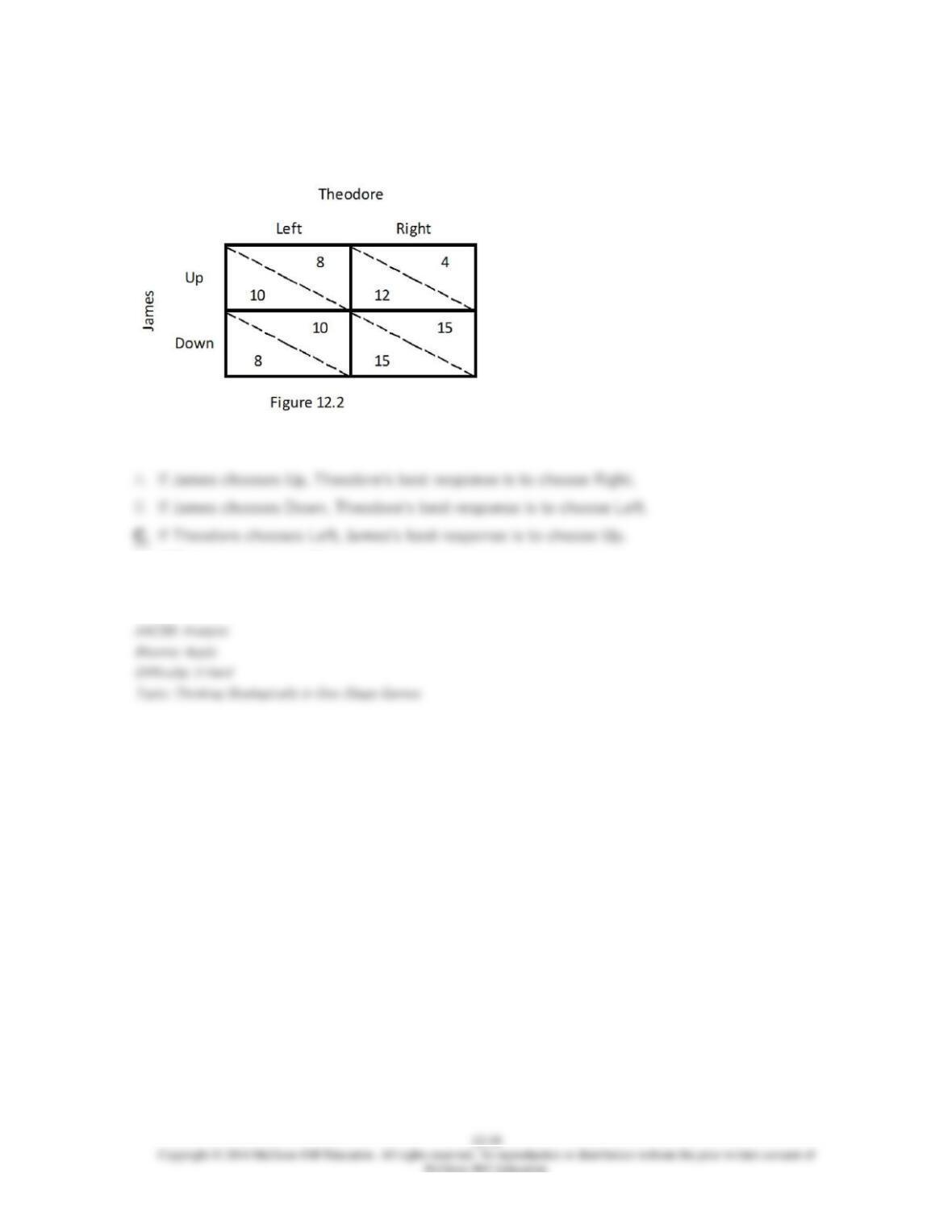
23. Refer to the game between James and Theodore depicted in Figure 12.2. Which of the
following is true?
D. If Theodore chooses Right, James’s best response is to choose Up.
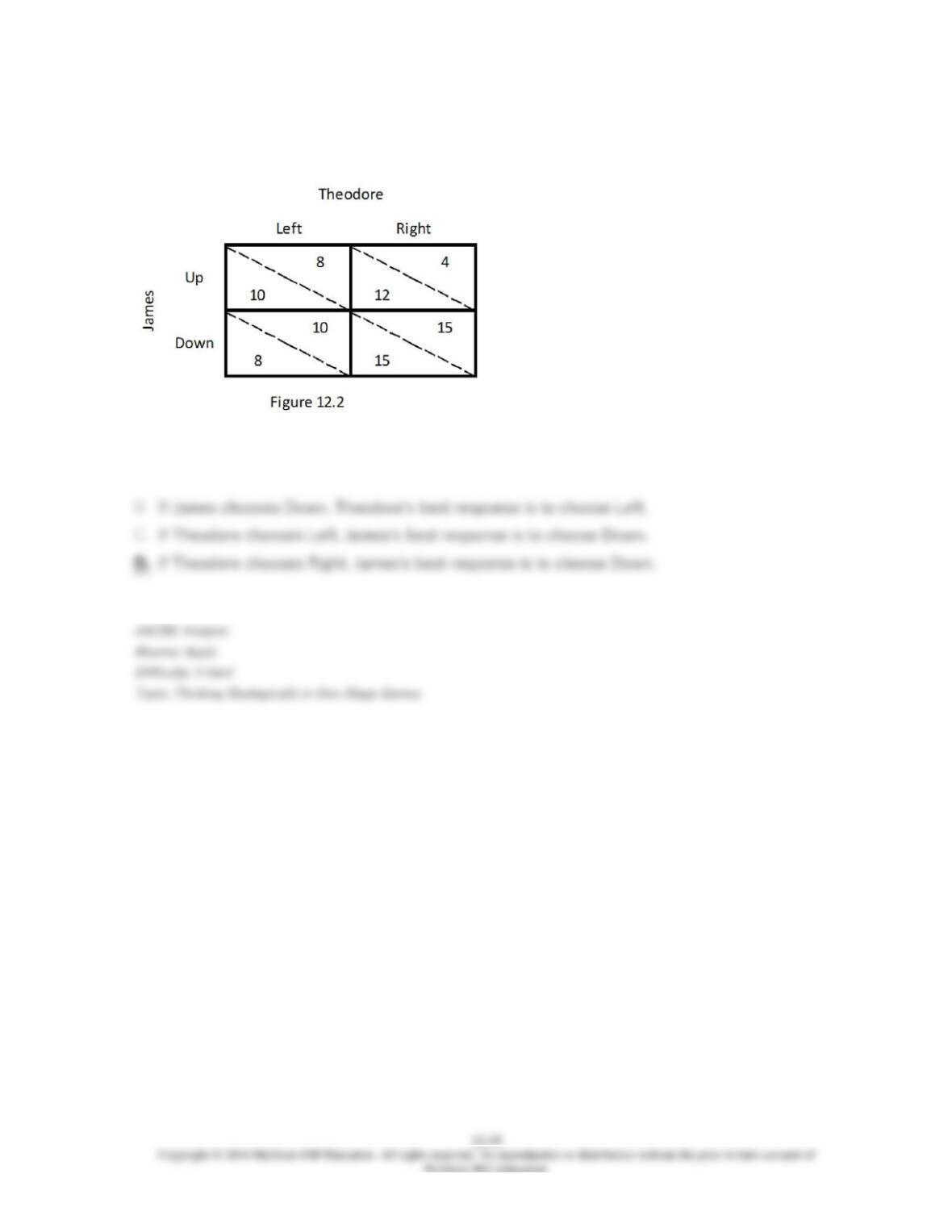
24. Refer to the game between James and Theodore depicted in Figure 12.2. Which of the
following is true?
A. If James chooses Up, Theodore’s best response is to choose Right.
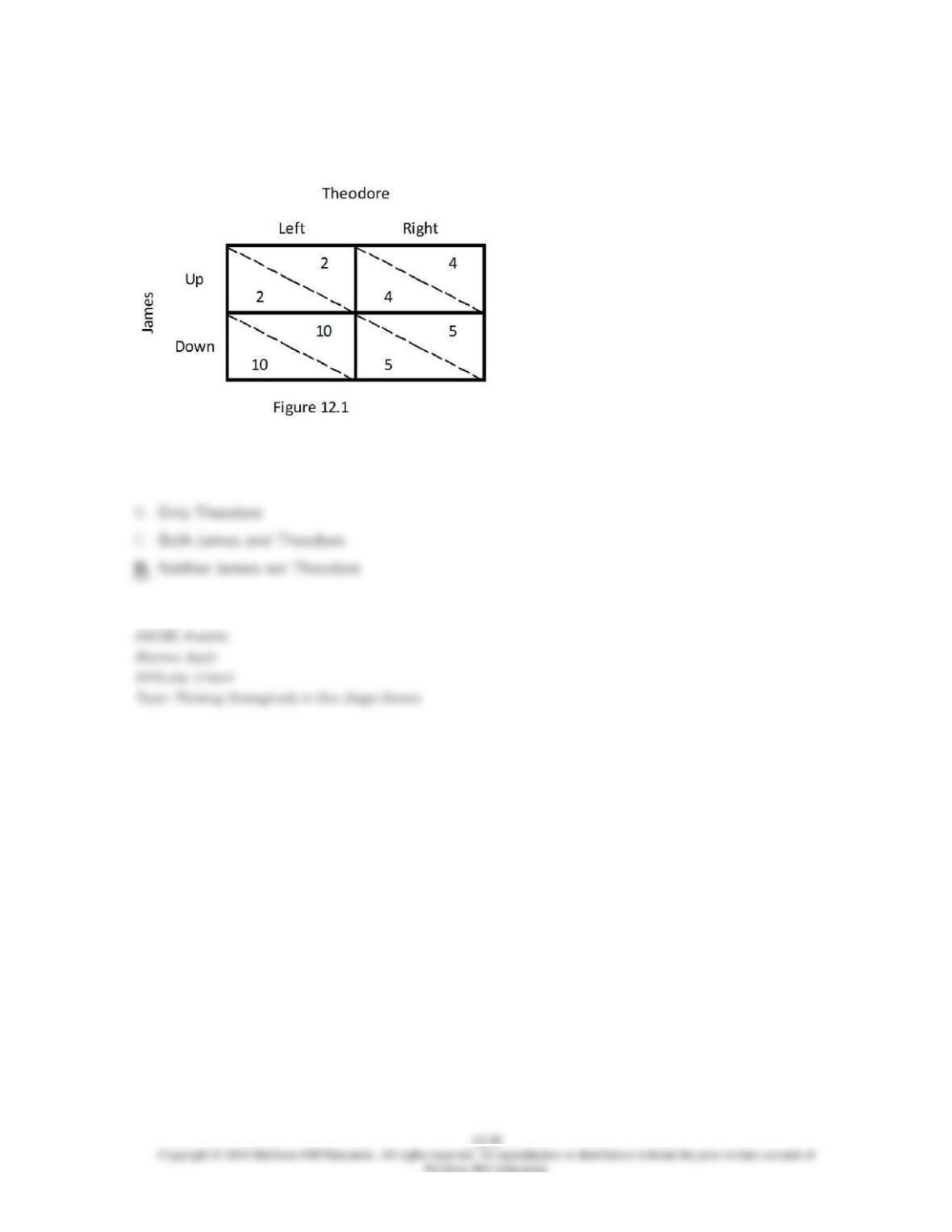
25. Refer to the game between James and Theodore depicted in Figure 12.1. Who has a
dominant strategy?
A. Only James