Chapter 10 – Pure Monopoly
52. At the profit-maximizing level of output, a monopolist will always operate where:
53. Suppose that a monopolist calculates that at present output and sales levels, marginal
revenue is $1.00 and marginal cost is $2.00. He or she could maximize profits or minimize
losses by:
54. Many people believe that monopolies charge any price they want to without affecting
sales. Instead, the output level for a profit-maximizing monopoly is determined by:
Chapter 10 – Pure Monopoly
55. Suppose that a monopolist calculates that at present output and sales, marginal cost is
$4.00 and marginal revenue is $5.00. The firm could increase profits by:
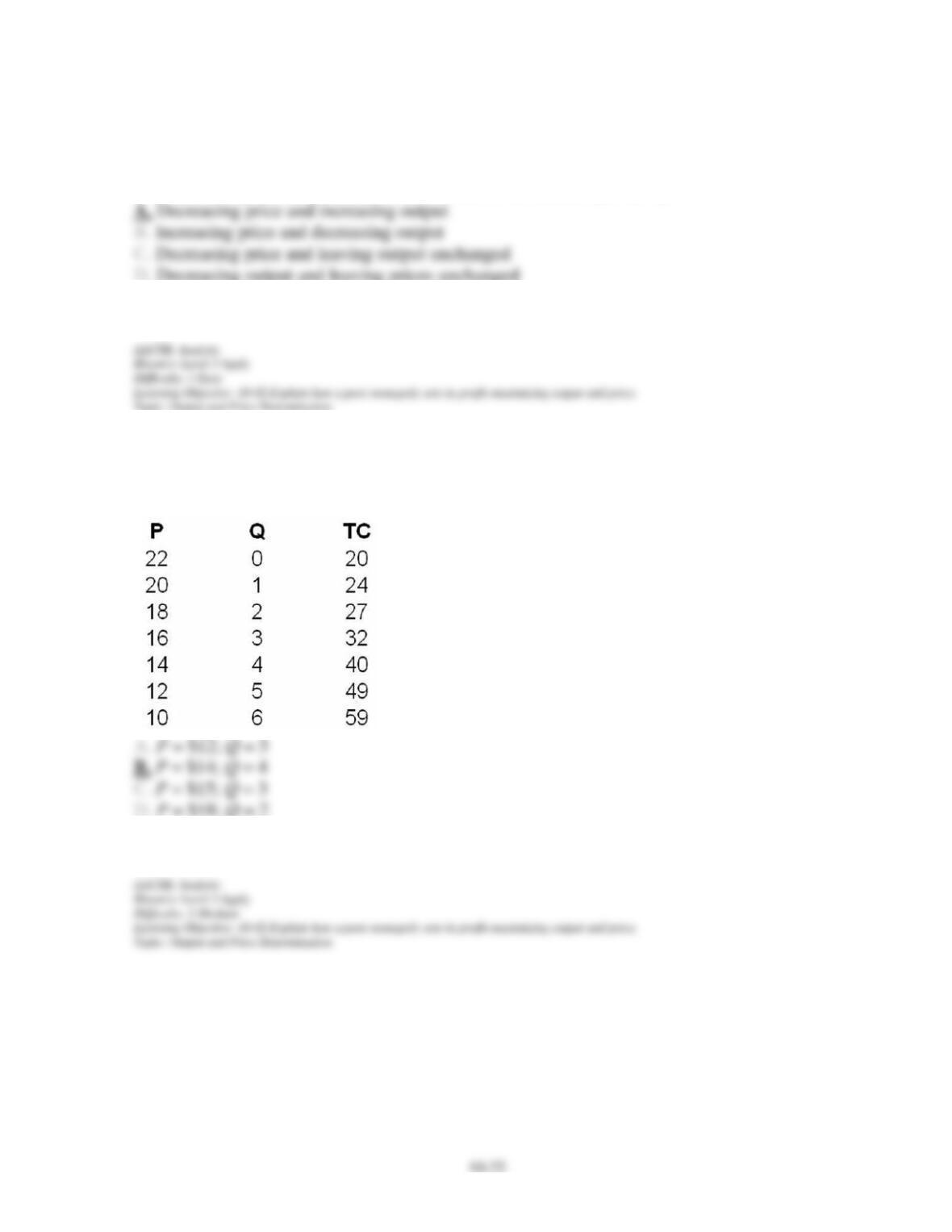
56. The data below relate to a pure monopolist and the product it produces. What is the profit-
maximizing output and price for this monopolist?
Chapter 10 – Pure Monopoly
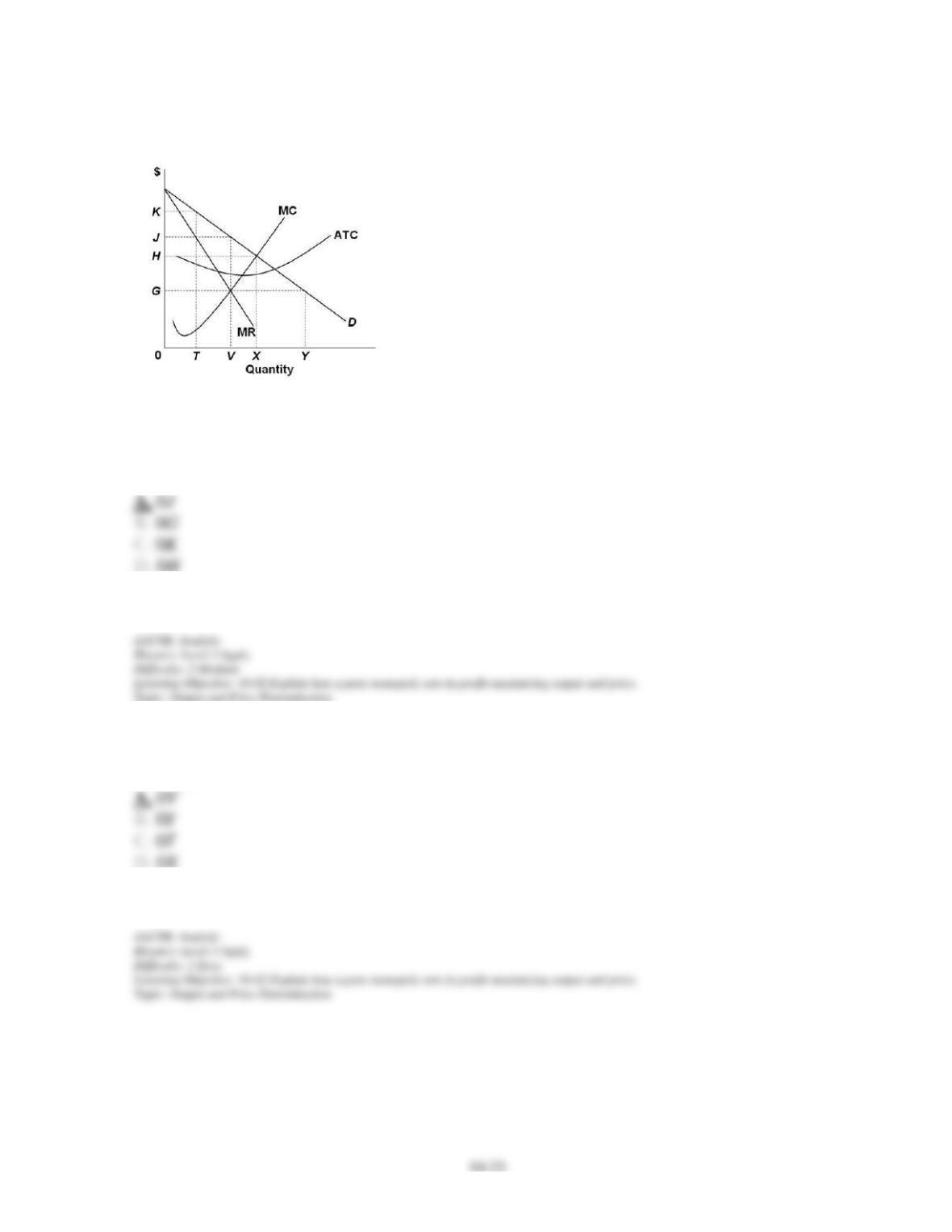
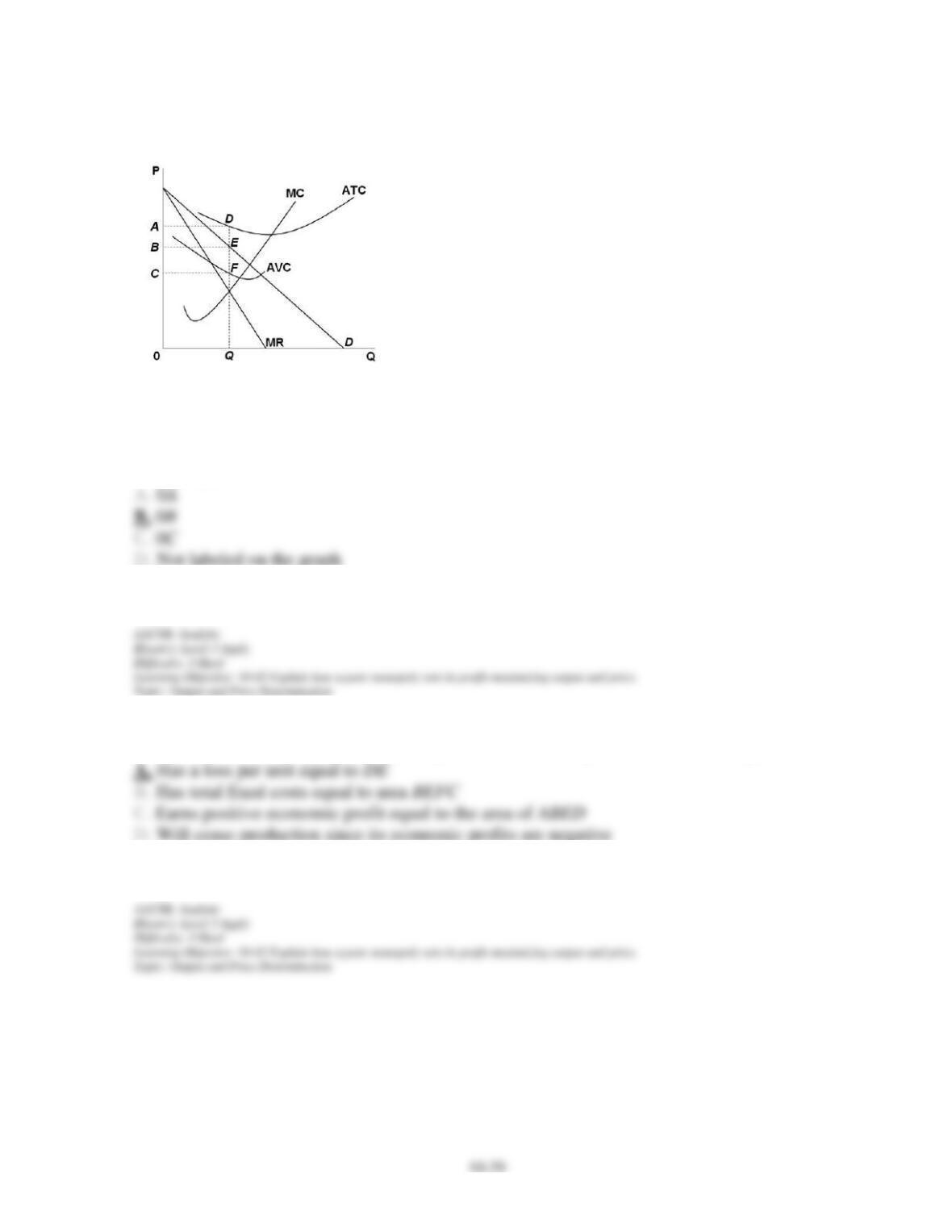
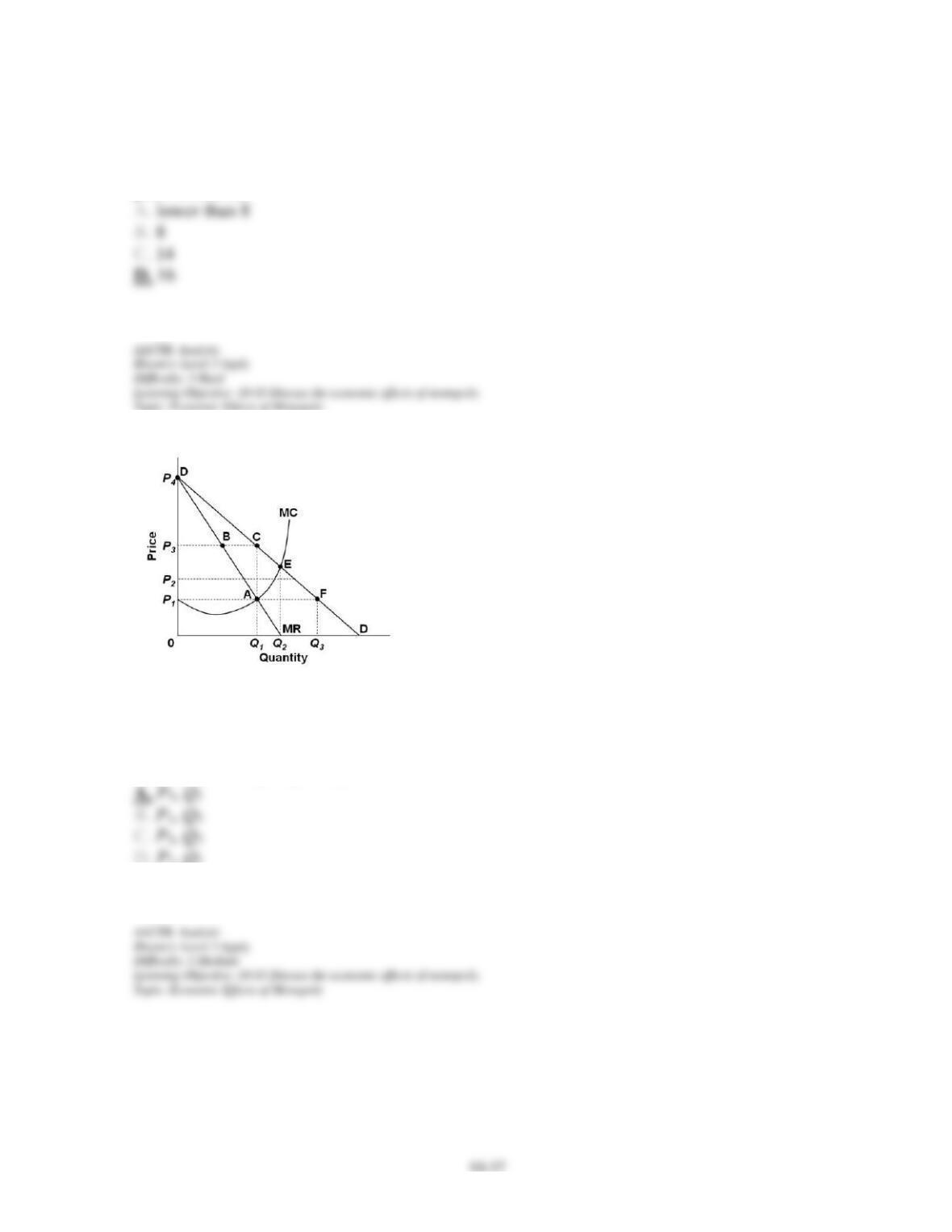
57. Refer to the above graph for a profit-maximizing monopolist. The firm will set its price
at:
58. Refer to the above graph for a profit-maximizing monopolist. The firm will produce the
quantity:
Chapter 10 – Pure Monopoly
59. Refer to the above graph for a profit-maximizing monopolist. At equilibrium, the firm will
be earning:
61. Pure monopolists:
Chapter 10 – Pure Monopoly
10–25
62. A firm will earn economic profits whenever:
63. The supply curve for a monopoly is:
Chapter 10 – Pure Monopoly
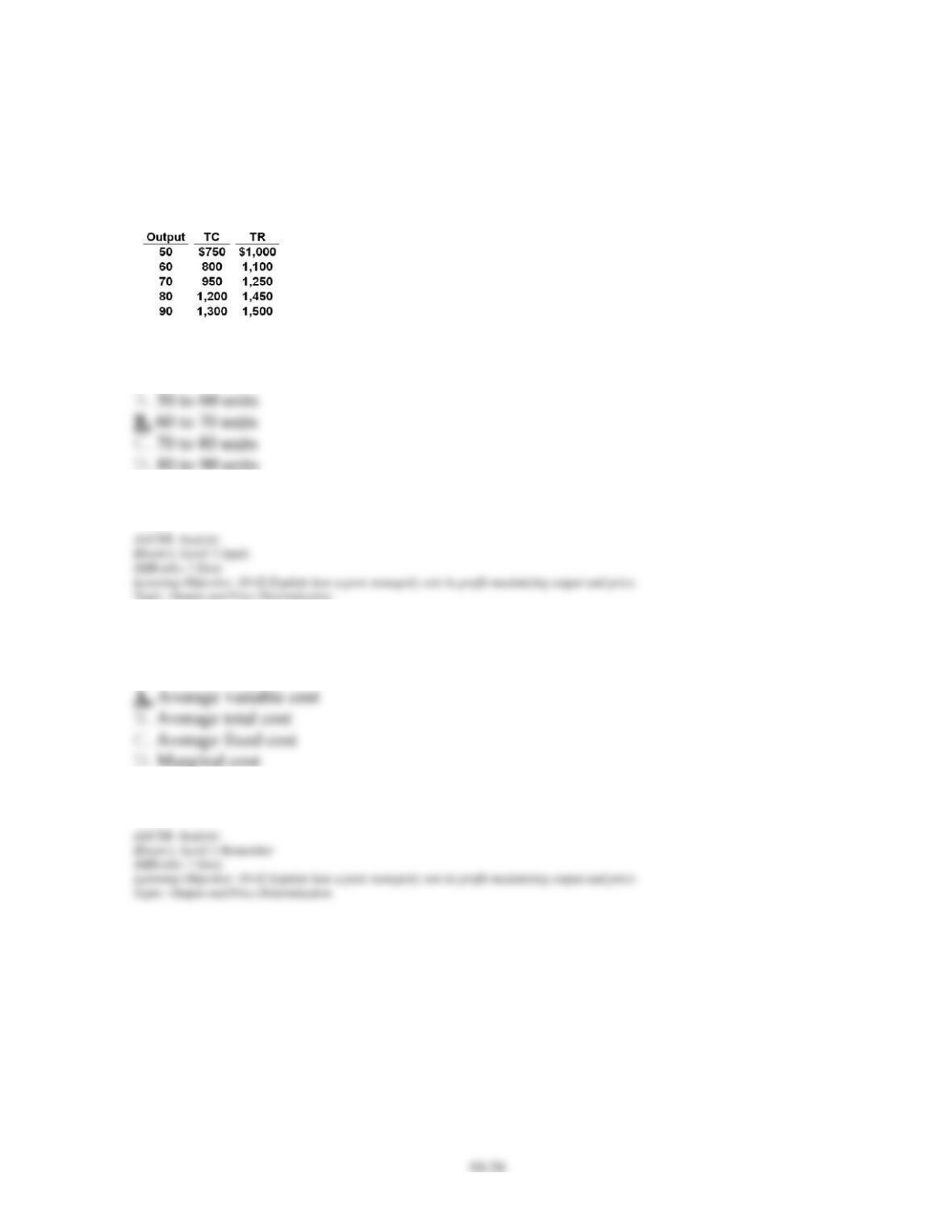
64. The following data show the relationship between output, total costs, and total revenue for
a pure monopoly
Within which of the following ranges of output will the firm earn maximum economic
profits?
65. A profit-maximizing firm should shut down in the short run if the average revenue it
receives is less than:
Chapter 10 – Pure Monopoly
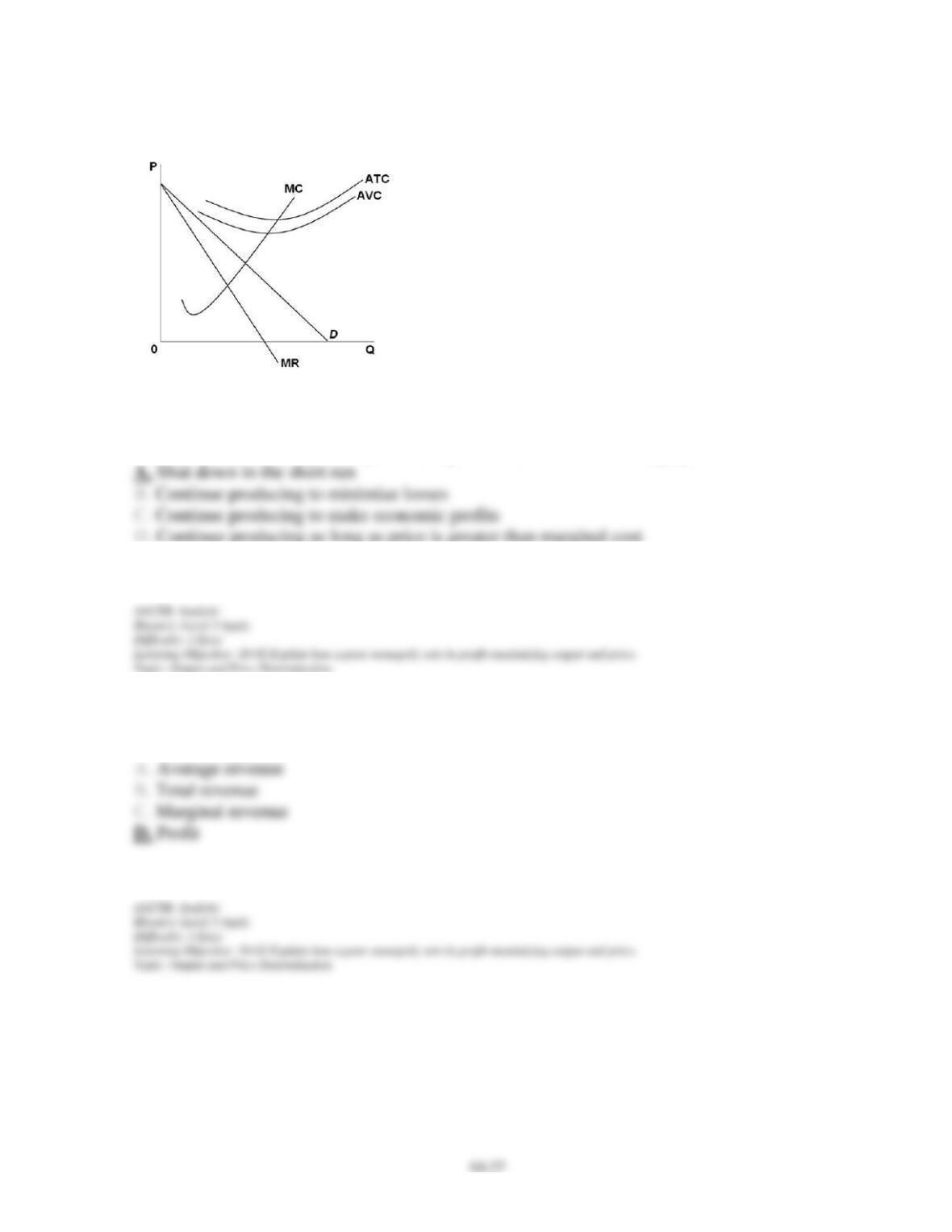
66. A profit-maximizing monopolist facing the situation shown in the graph above should:
67. At equilibrium, the profit-maximizing monopolist facing the situation shown in the graph
will face a negative:
Chapter 10 – Pure Monopoly
68. In the short run equilibrium, a monopolist’s profits:
69. In response to a cost-reducing technological breakthrough in the production of its product,
a profit-maximizing monopolist will normally:
70. If marginal costs decrease and the MC curve shifts down, a typical monopolist will:
Chapter 10 – Pure Monopoly
71. Refer to the above graph for a monopolist in short-run equilibrium. This monopolist will
charge a price:
72. Refer to the above graph for a monopolist in short-run equilibrium. This monopolist:
Chapter 10 – Pure Monopoly
73. Refer to the above graph for a monopolist in short-run equilibrium. This monopolist has
total fixed cost equal to area:
74. Which of the following does not necessarily apply to a pure monopoly?
75. Which statement is correct?
Chapter 10 – Pure Monopoly
76. Under which of the following conditions would a profit-maximizing monopolist
necessarily raise price?
77. The supply curve for a pure monopolist:
Chapter 10 – Pure Monopoly
78. On the graph above, what is the profit-maximizing level of output for a pure monopolist?
79. Monopolists are said to be allocatively inefficient because:
80. Allocative inefficiency due to unregulated monopoly is characterized by the condition:
Chapter 10 – Pure Monopoly
81. When compared with the purely competitive industry with identical costs of production, a
monopolist will produce:
82. At an equilibrium level of output in a pure monopoly:
83. Which is a major criticism of a monopoly as a source of allocative inefficiency?
Chapter 10 – Pure Monopoly
84. A nondiscriminating pure monopolist is generally viewed as:
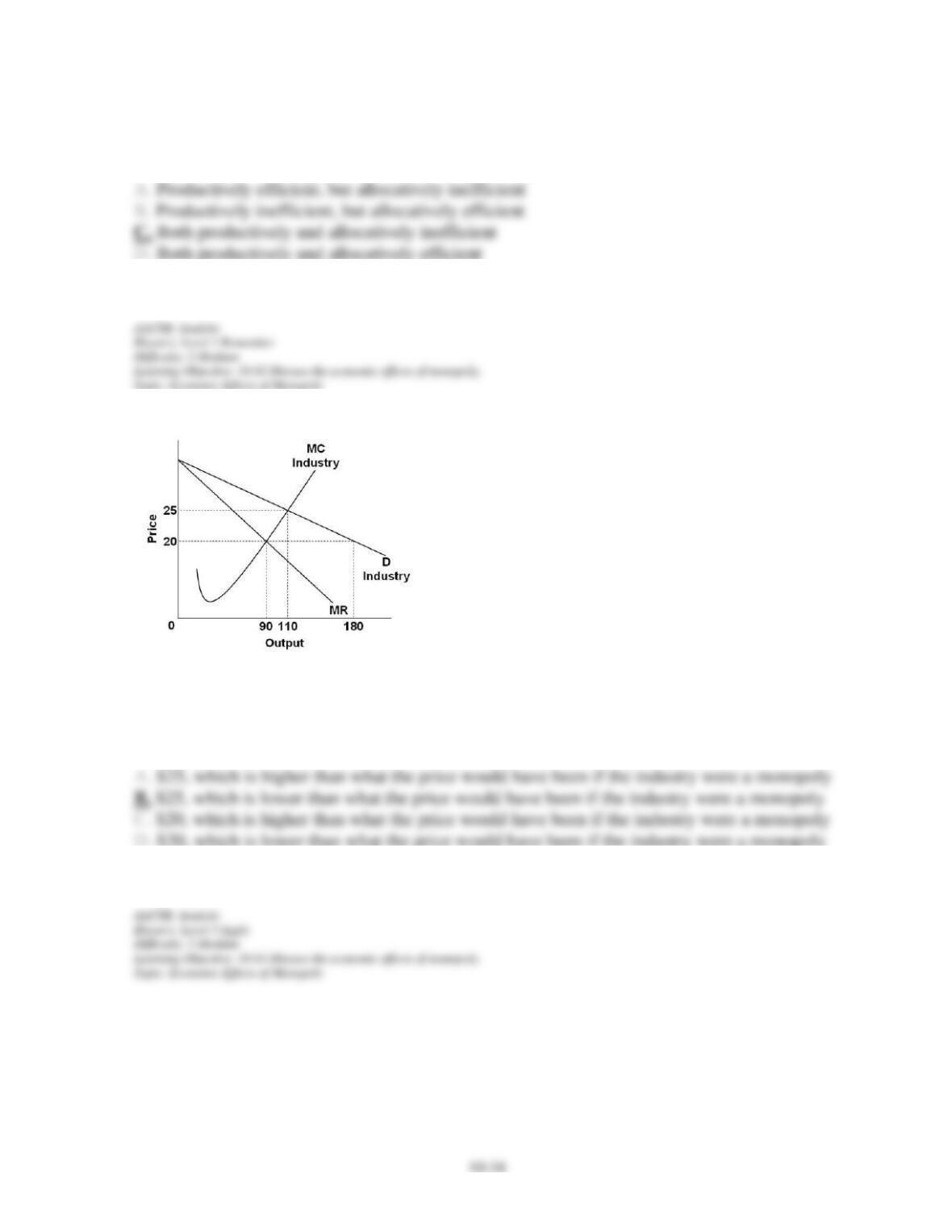
85. Refer to the graph above. If the industry were purely competitive, then the market price
would be:
Chapter 10 – Pure Monopoly
86. Based on the graph above, what is the difference between the purely competitive
equilibrium level of output and the pure monopoly equilibrium level of output?
87. Compared to the purely competitive industry, a pure monopoly:
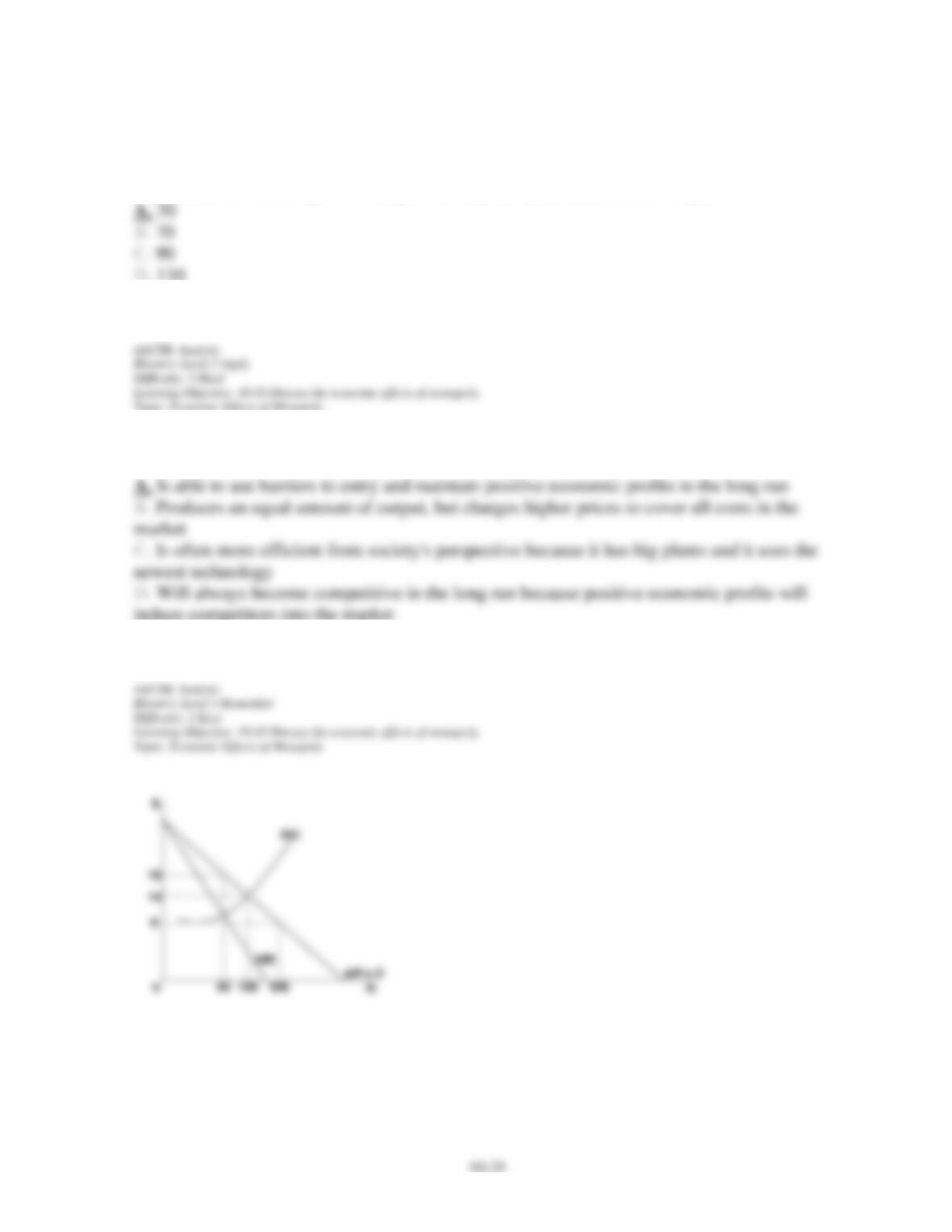
Chapter 10 – Pure Monopoly
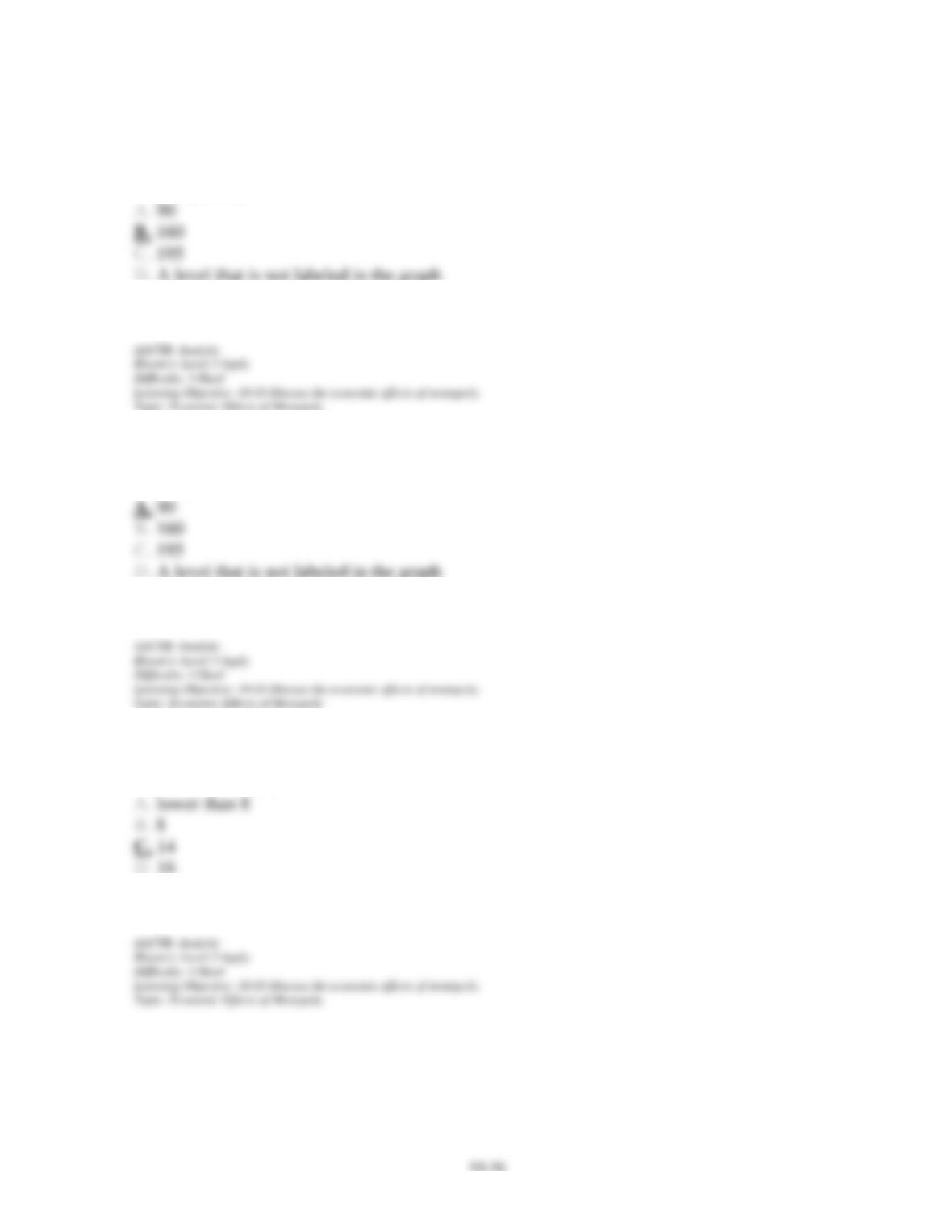
88. Refer to the graph above for an industry. If the industry were purely competitive, the
output quantity would be:
89. Refer to the graph above for an industry. If the industry had a pure monopoly, the output
quantity would be:
90. Refer to the graph above for an industry. If the industry were purely competitive, the
market price would be:
Chapter 10 – Pure Monopoly
91. Refer to the graph above for an industry. If the industry had a pure monopoly, the product
price would be:
92. Refer to the above graph for an industry. If the industry were served by a pure monopoly,
the price and output quantity would be:
Chapter 10 – Pure Monopoly
93. Refer to the above graph for an industry. If the industry was initially a monopoly, but the
monopolist was broken up into a large number of small, purely competitive firms and
production costs remained unchanged, then market price and industry output would be:
94. Marginal costs may fall lower due to a product’s ability to satisfy a large number of
consumers at the same time. This characteristic of a product is called:
95. What is the term that refers to increases in the value of a product to each user, including
existing users, as the total number of users increases?