38. The difference between revenue and cost during a single year of a project’s life is called
the:
A. interest rate.
39. The NPV criterion states that an investment project is profitable when its NPV is ______
and unprofitable when its NPV is ______.
D. negative; negative
40. Suppose you make $1,000 investment today that you believe will have a one-time return of
$2,500 in 5 years. If the interest rate is 12%, will you have a profitable investment?
D. No, because the NPV is negative
41. Suppose you are looking to add more capacity to your current manufacturing plant. The
new project will cost $6 million up front and is projected to increase revenue $1.5 million a year
for each of the next 5 years. If the interest rate is 8%, what is this project’s NPV and is it a
profitable investment?
D. -$944,444; no it is not profitable
42. Suppose you make a $5,000 investment that will return $3,000 in year 2 and another
$3,500 in year 4. With an interest rate of 4.5%, what is the NPV of this project?
D. $2,162.50
43. Suppose you have put $5,000 into a project that should generate cash inflows of $1,250
for each of the next 5 years. If the interest rate is 8% is this a good investment?
A. Yes, because you will earn a profit of $1,250 dollars in 5 years
44. What is another term for time value of money?
A. Net present value
45. The rate of interest at which a project’s NPV is exactly zero is called its:
D. zero net rate.
46. A project is profitable when its internal rate of return is ______ the interest rate.
D. less variable
47. Suppose the interest rate is 8%. If a project requires an initial investment of $5,000 and
returns $5,500 in a year, what is its internal rate of return?
A. 2%
48. You have made an investment of $250 that will yield a profit of $30 in one year. If the
interest rate is 11.5%, what is your internal rate of return?
A. 10.7%
49. You have made an investment of $250 that will yield a profit of $30 in one year. If the
interest rate is 11.5% is this a good investment?
D. No, because the interest rate is greater than the internal rate of return
50. Which of the following is NOT a reason why an increase in the interest rate usually makes
investment projects less attractive?
A. At a higher rate, future dollars are worth less compared to current dollars.

51. When someone buys a bond, they give up the bond’s price in exchange for:
D. stock.
52. A bond’s internal rate of return is also known as its:
A. coupon.
53. The amount of time required before a project’s total inflows match its total outflows is
the:
D. yield to maturity.
54. If a project has an initial investment of $20,000 and consecutive yearly cash inflows of
$5,000, $8000, $10,000 and $7,000, respectively, what is its payback period?
D. 3 years
55. Suppose you have put $5,000 into a project that should generate cash inflows of $1,250
for each of the next 5 years. How long will it take to recover your initial investment?
A. 3 years
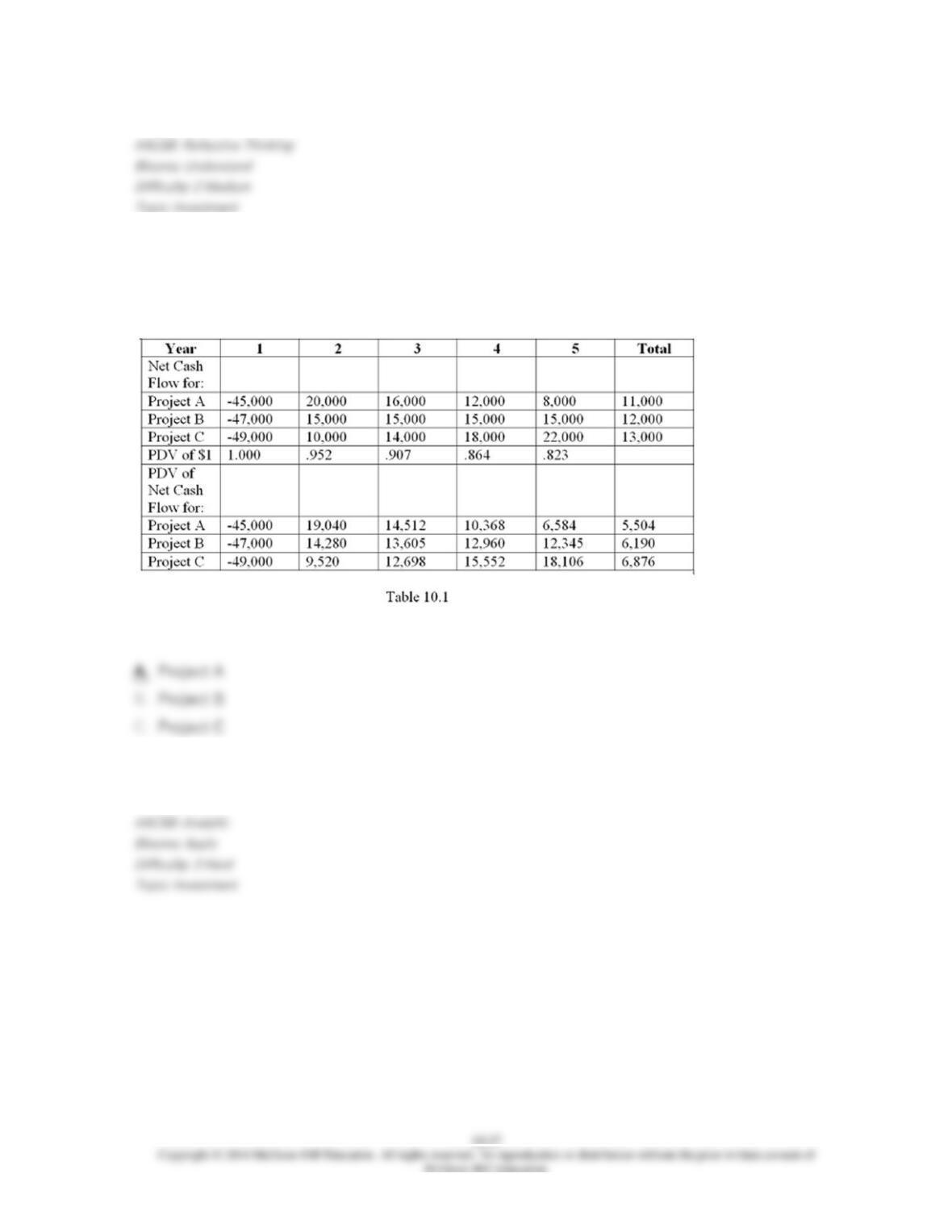
56. Table 10.1 shows the cash flows and discounted cash flows for three mutually exclusive
projects available to a company. Assume an interest rate of 5%. Which project has the highest
internal rate of return?
D. It cannot be determined from the information given.
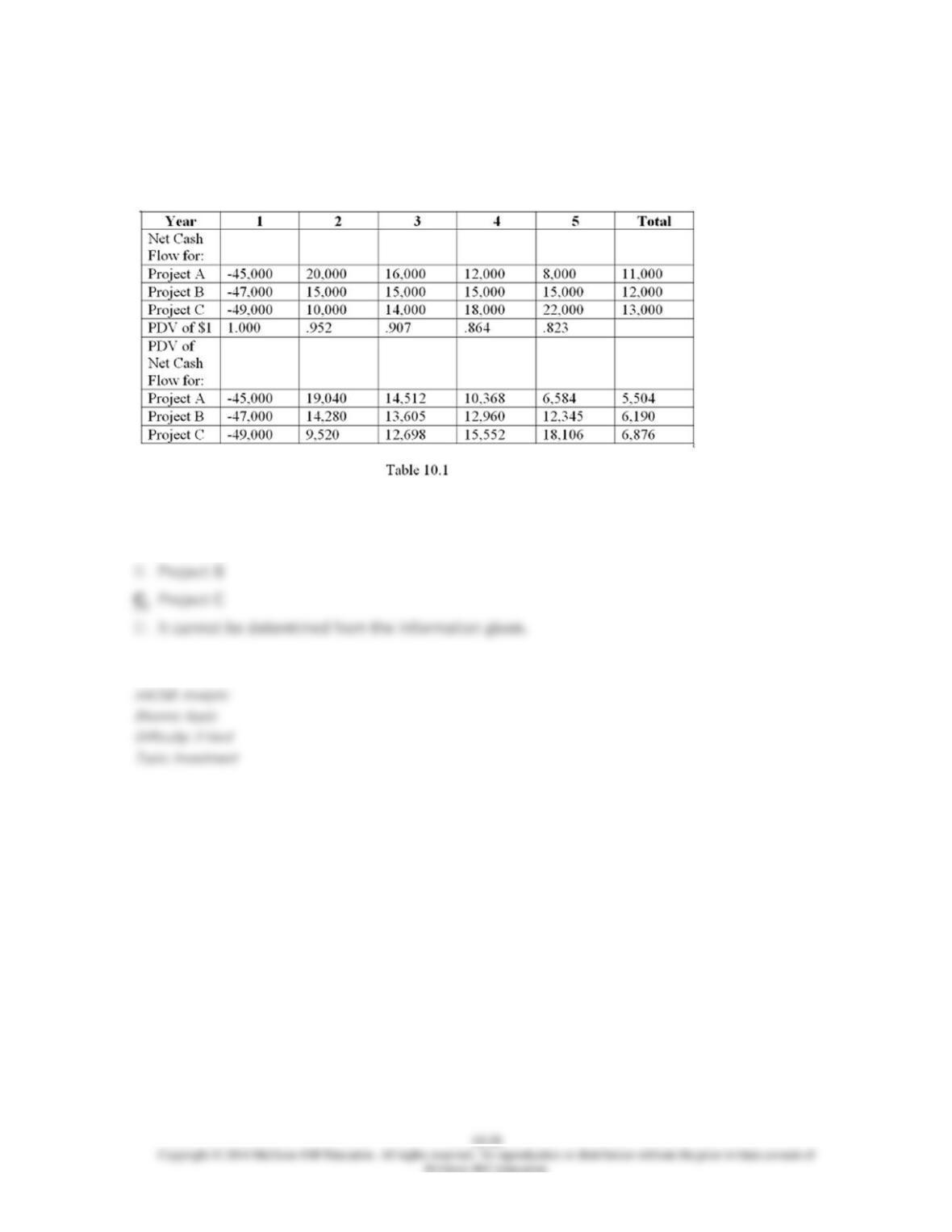
57. Table 10.1 shows the cash flows and discounted cash flows for three mutually exclusive
projects available to a company. Assume an interest rate of 5%. Which project has the highest
NPV?
A. Project A
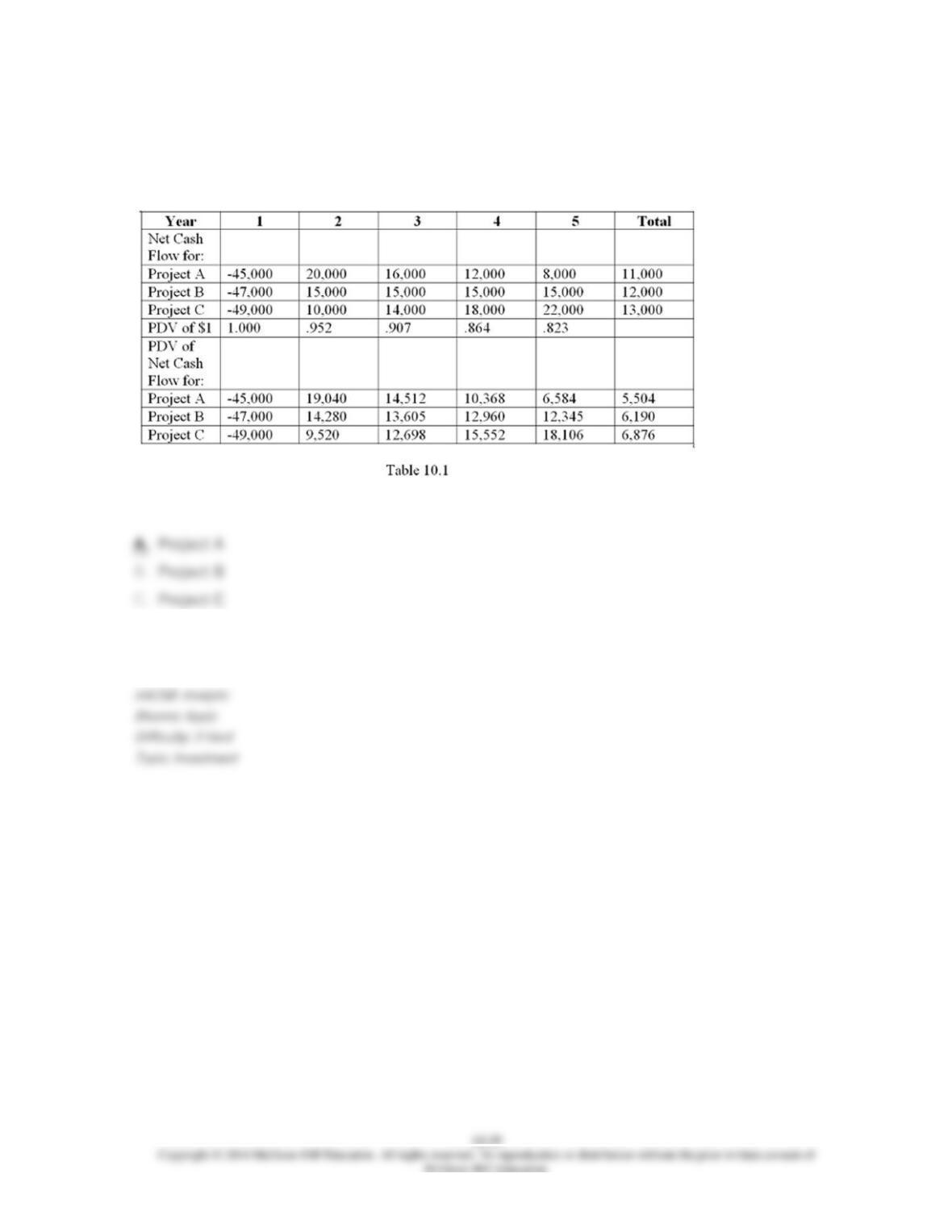
58. Table 10.1 shows the cash flows and discounted cash flows for three mutually exclusive
projects available to a company. Assume an interest rate of 5%. Which project has the shortest
payback period?
D. It cannot be determined from the information given.
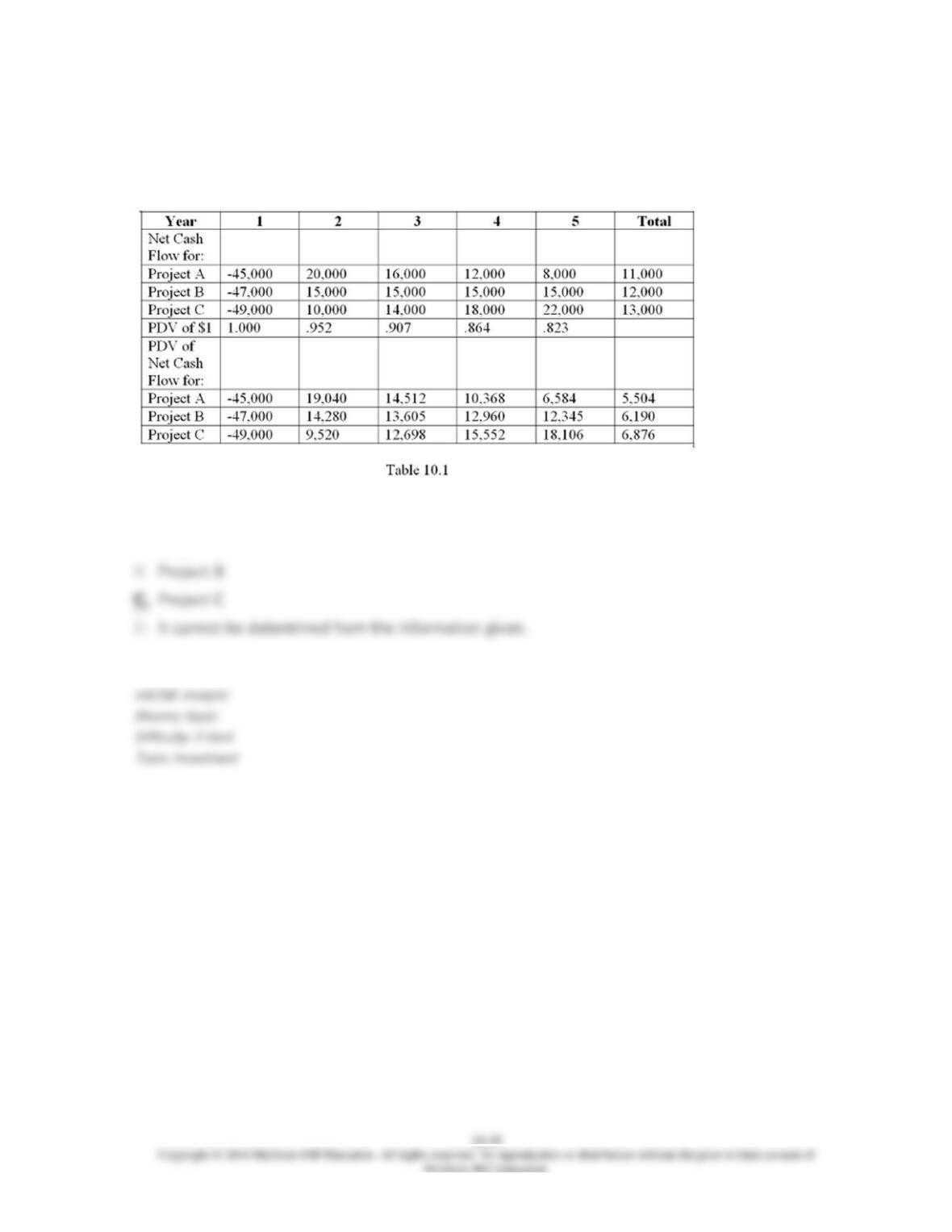
59. Table 10.1 shows the cash flows and discounted cash flows for three mutually exclusive
projects available to a company. Assume an interest rate of 5%. Which project should the
company choose if they want to maximize their return?
A. Project A
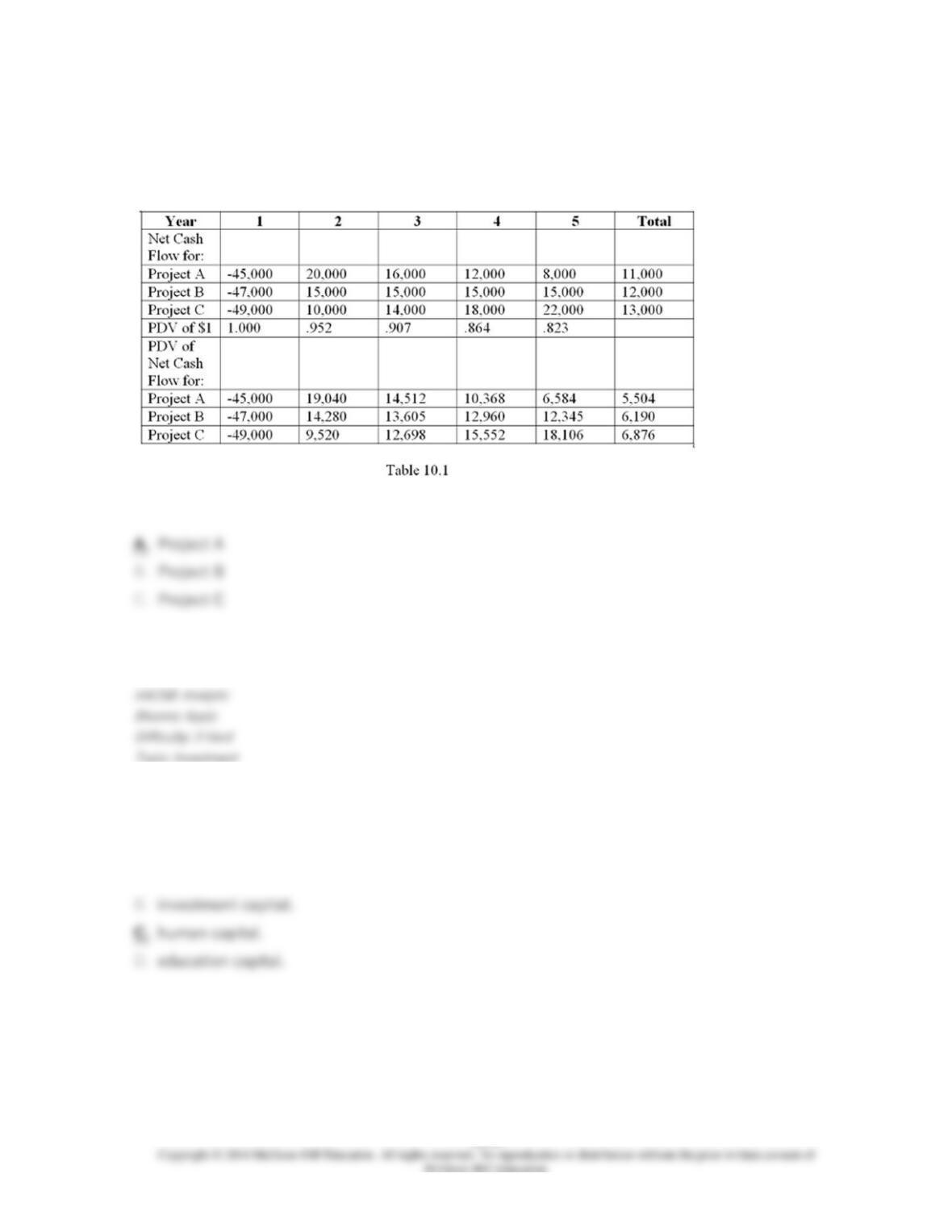
60. Table 10.1 shows the cash flows and discounted cash flows for three mutually exclusive
projects available to a company. Assume an interest rate of 5%. Which project should the
company choose if they want to recover their initial investment as soon as possible?
D. It cannot be determined from the information given.
61. Durable, marketable skills that generate higher income are also known as:
A. physical capital.
62. Jennifer has just finished high school and is deciding whether to start working or go to
college. She has already been offered a job that pays $35,000 a year. Four years of college will
cost $12,000 each year. She would earn an extra $20,000 each year after she graduates for the 45
years she plans on working until she retires. Assume that the interest rate is 8.5%. What is
Jennifer’s opportunity cost of one year of college?
A. $12,000
63. Jennifer has just finished high school and is deciding whether to start working or go to
college. She has already been offered a job that pays $35,000 a year. Four years of college will
cost $12,000 each year. She would earn an extra $20,000 each year after she graduates for the 45
years she plans on working until she retires. Assume that the interest rate is 8.5%. What is the net
present value of the decision to invest in college?
A. $136,877
64. Jennifer has just finished high school and is deciding whether to start working or go to
college. She has already been offered a job that pays $35,000 a year. Four years of college will
cost $12,000 each year. She would earn an extra $20,000 each year after she graduates for the 45
years she plans on working until she retires. Jennifer should invest in college when the net
present value of that investment is ______ and the internal rate of return is ______ the current
interest rate.
D. negative; less than
65. Jennifer has just finished high school and is deciding whether to start working or go to
college. She has already been offered a job that pays $35,000 a year. Four years of college will
cost $12,000 each year. She would earn an extra $20,000 each year after she graduates for the 45
years she plans on working until she retires. Assume that the interest rate is 8.5%. Given this
information, what should Jennifer do?
D. It cannot be determined from the information given.
Essay Questions
66. What would the interest rate need to be in order to earn $100 on an investment of $1,000
over two years? Assume interest compounds annually.
67. Suppose you invest $5,000 for 5 years. The interest rate for the first 2 years is 4.7%, 5.2%
for year 3 and 5.4% for the final 2 years. Assuming interest compounds annually, what would your
investment have returned in those 5 years?

68. Suppose you use the rate of inflation as the interest rate for determining the present value
of $1. What would the present value of $3,000 received in three equal yearly payments be if the
current rate of inflation is 3.5% and increases by 15 basis points each year?
69. Joe has just retired and would like to convert some of his savings into an annuity that will
pay him an equal amount each year for the next 5 years. If the current interest rate is 5.75%, how
much money will he have to invest in order to receive $30,000 a year?

70. If you were to invest $10,000 for two years and the interest rates for each of those years
are 4.5% and 4.65% respectively, how much interest would you earn from the end of year one until
the end of year two? Assume interest compounds annually.
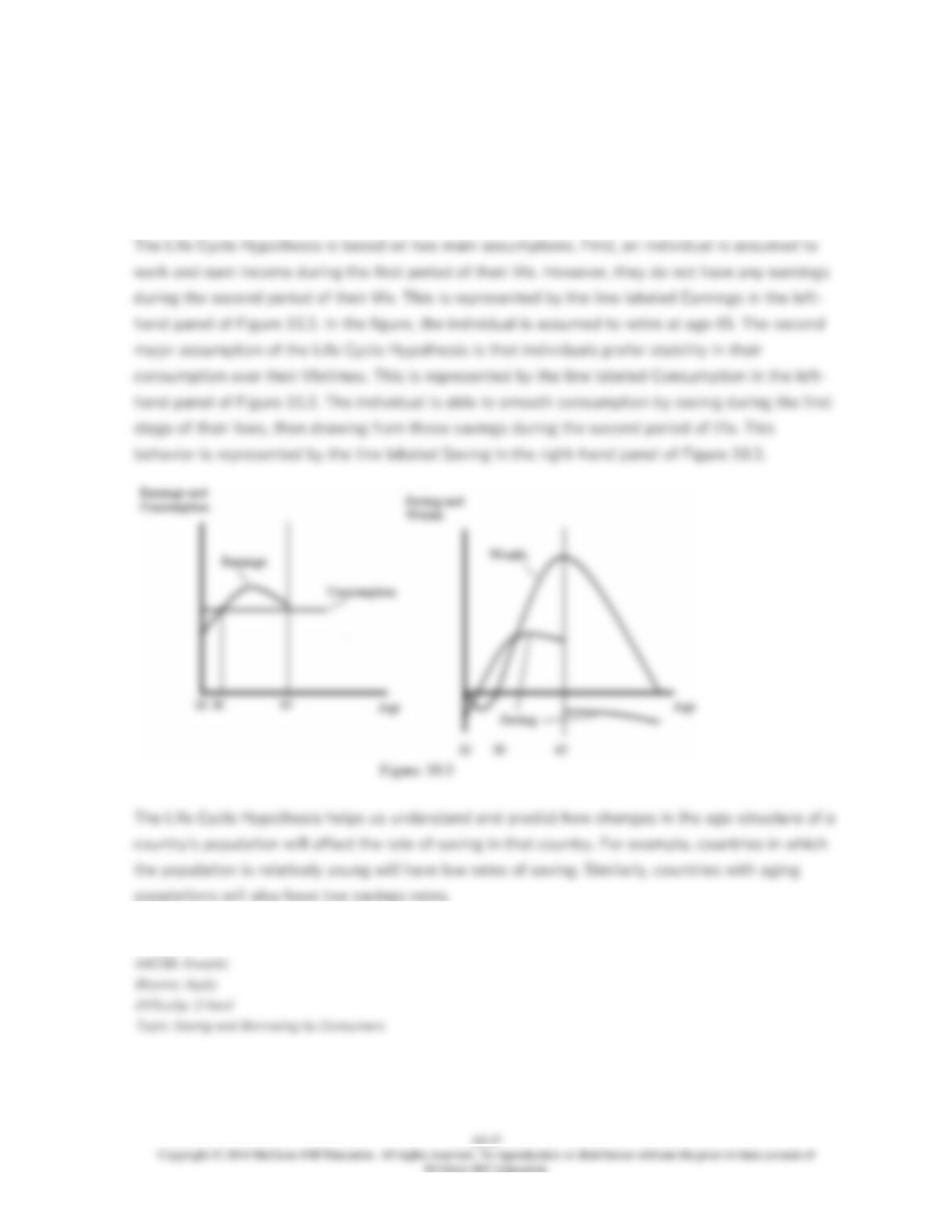
71. Using a carefully-labeled graph, explain the Life Cycle Hypothesis. What are some of the
implications of the Life Cycle Hypothesis?
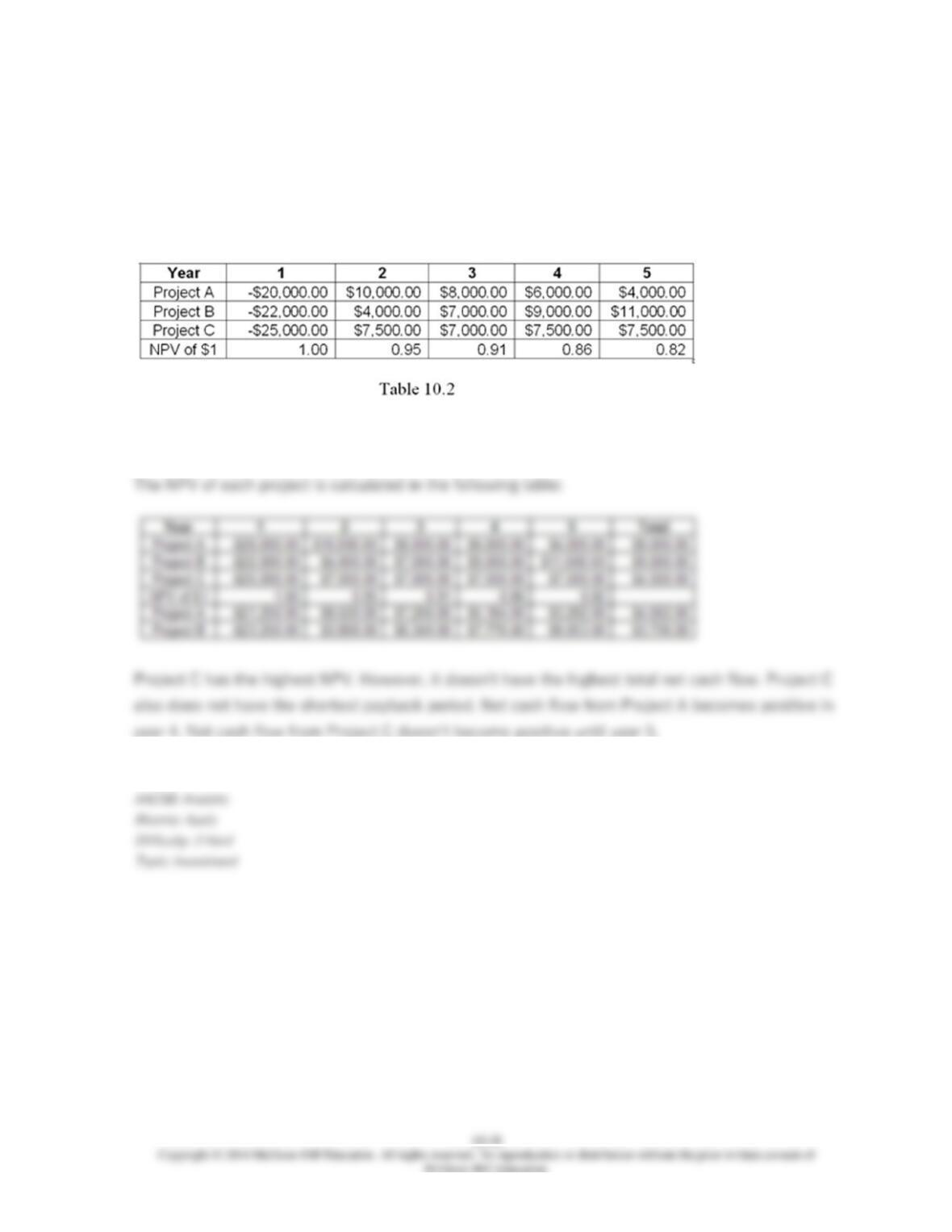
72. The Table 10.2 below shows net cash flows for 3 mutually exclusive projects from which a
company can choose. Each project requires an investment in the first year, then produces a
positive net cash flow for each of the following four years. Assuming an interest rate of 5%, which
project would the company choose? Does the best project have the highest total net cash flow?
The shortest payback period?