i
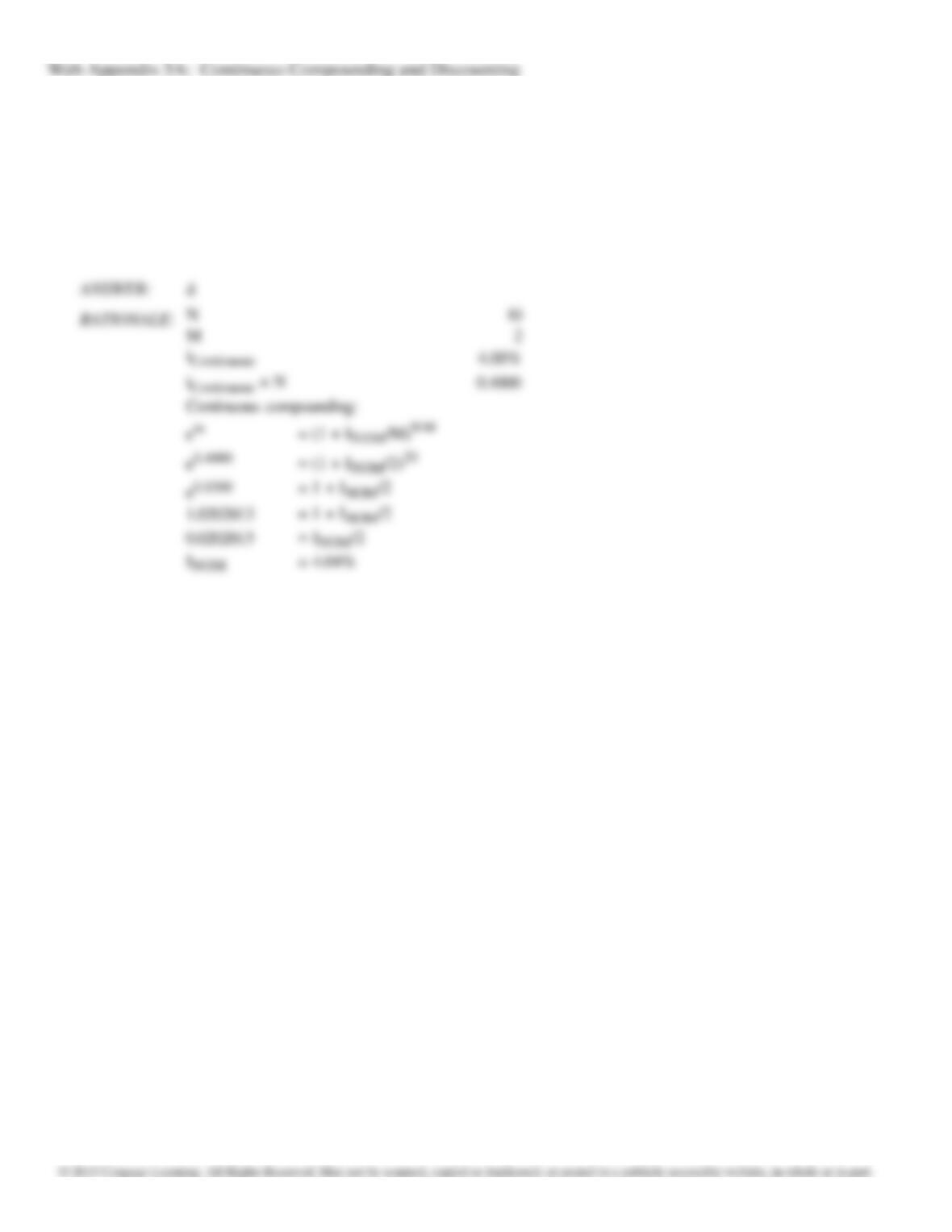
9.00%
i × N
0.5400
WEB APPENDIX 5A: CONTINUOUS COMPOUNDING AND
DISCOUNTING
1.
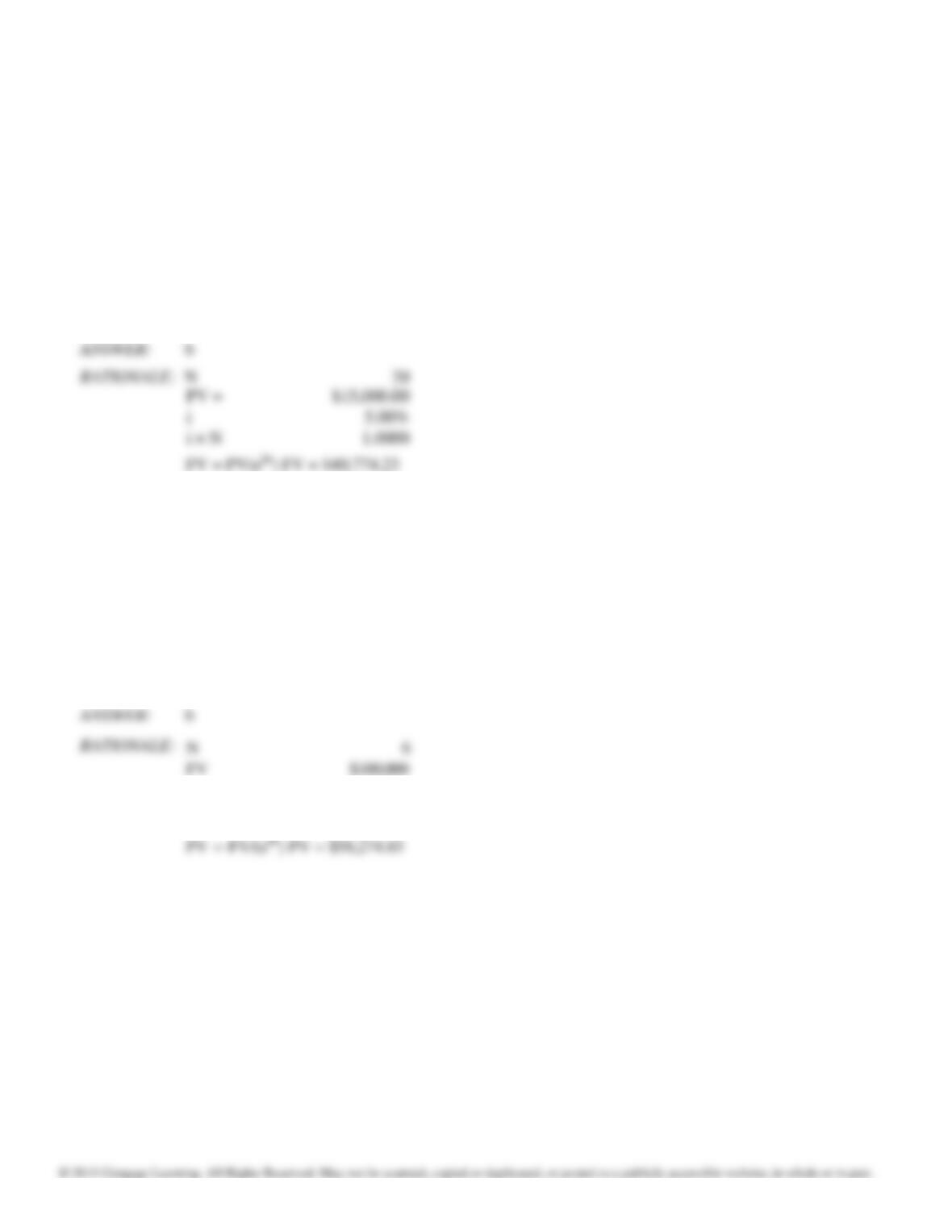
If you receive $15,000 today and can invest it at a 5% annual rate compounded continuously, what will be your
ending value after 20 years?
a. $38,735.52
b. $40,774.23
c. $42,812.94
d. $44,953.59
e. $47,201.27
2.
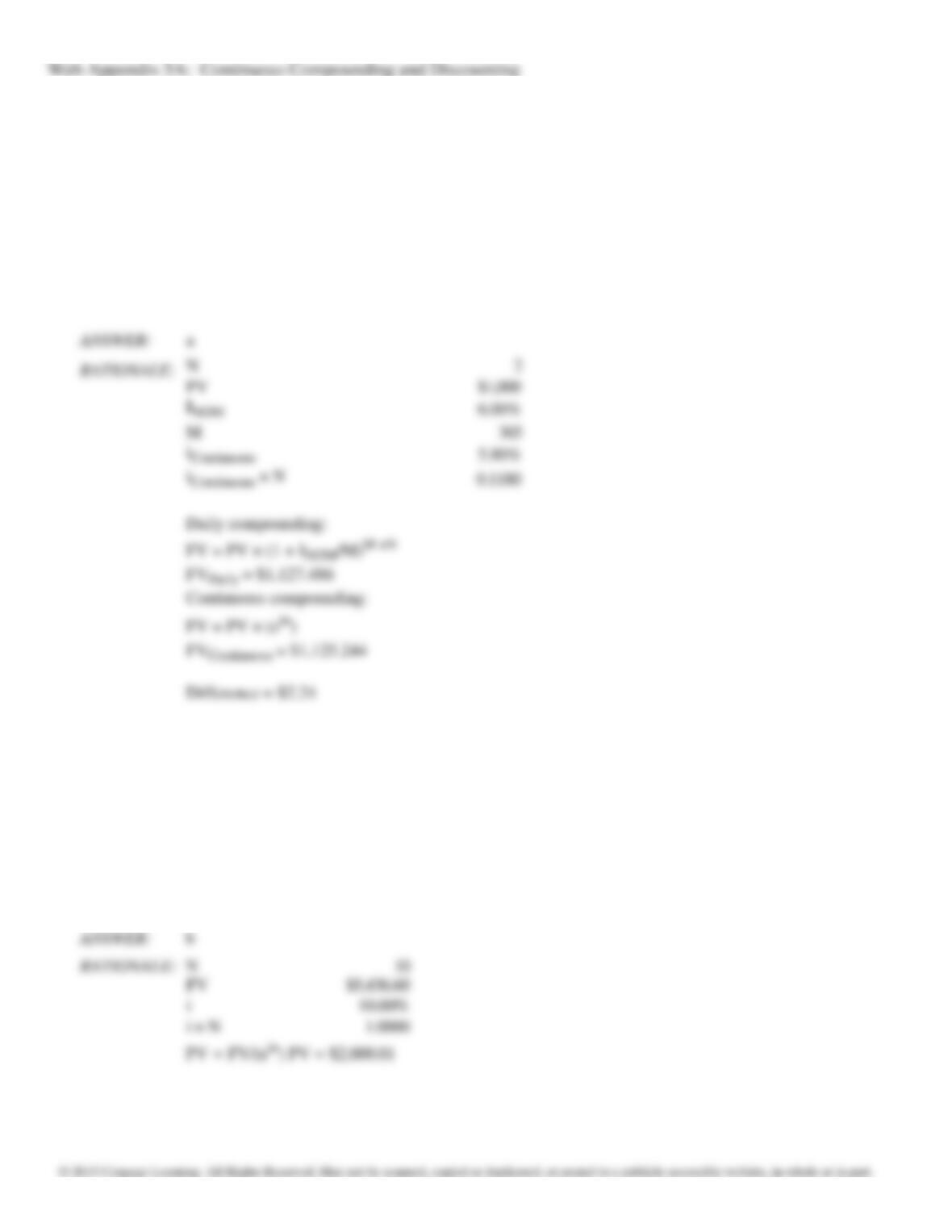
In six years’ time, you are scheduled to receive money from a trust established by your grandparents. When the
trust matures there will be $100,000 in the account. If the account earns 9% compounded continuously, how much
is in the account today?
a. $55,361.08
b. $58,274.83
c. $61,188.57
d. $64,247.99
e. $67,460.39
3.
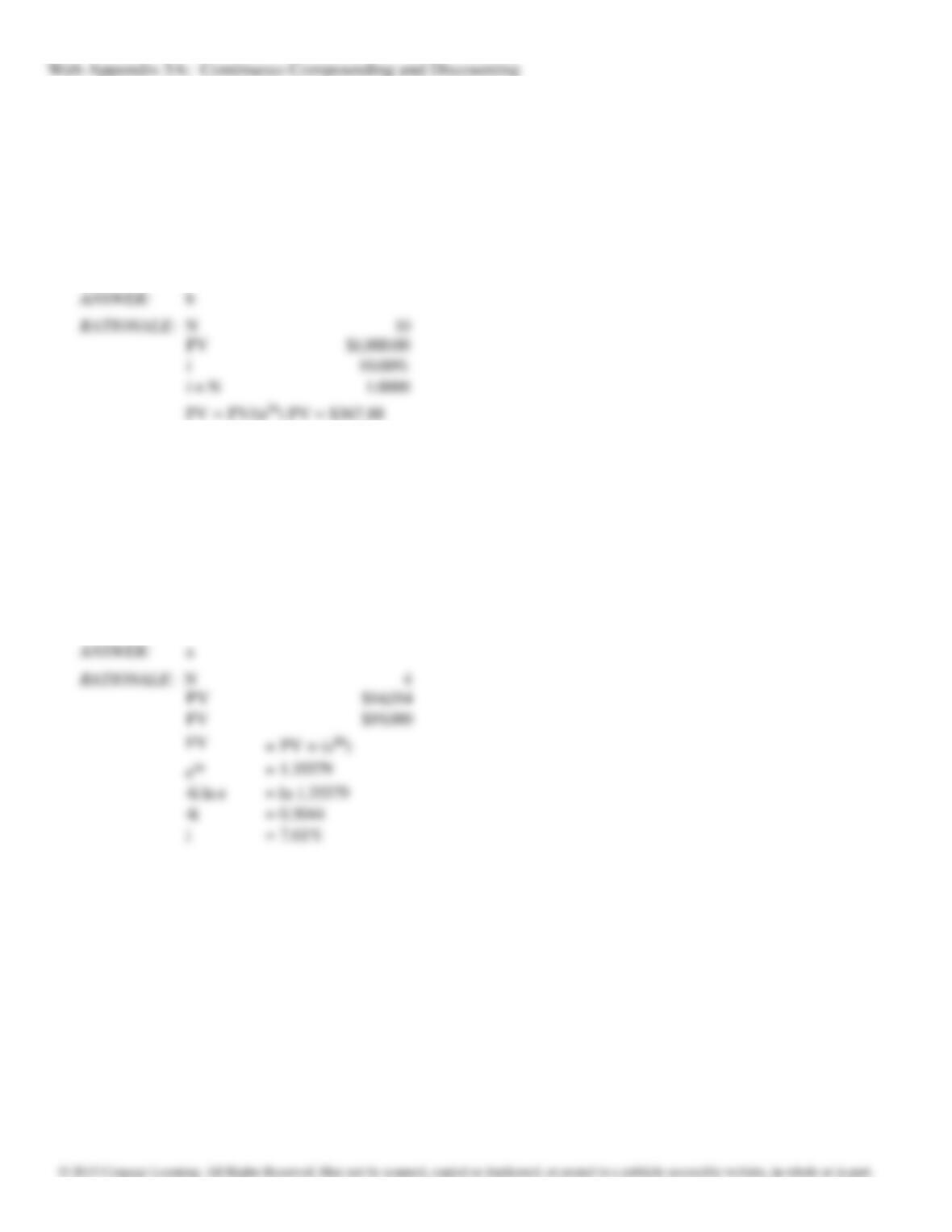
Assume one bank offers you a nominal annual interest rate of 6% compounded daily while another bank offers you
continuous compounding at a 5.9% nominal annual rate. You decide to deposit $1,000 with each bank. Exactly two
years later you withdraw your funds from both banks. What is the difference in your withdrawal amounts between
the two banks?
a. $2.24
b. $2.35
c. $2.47
d. $2.59
e. $2.72
4.
You have $5,436.60 in an account that pays 10% interest, compounded continuously. If you deposited some funds 10
years ago, how much was your original deposit?
a. $1,900
b. $2,000
c. $2,100
d. $2,205
e. $2,315
5.
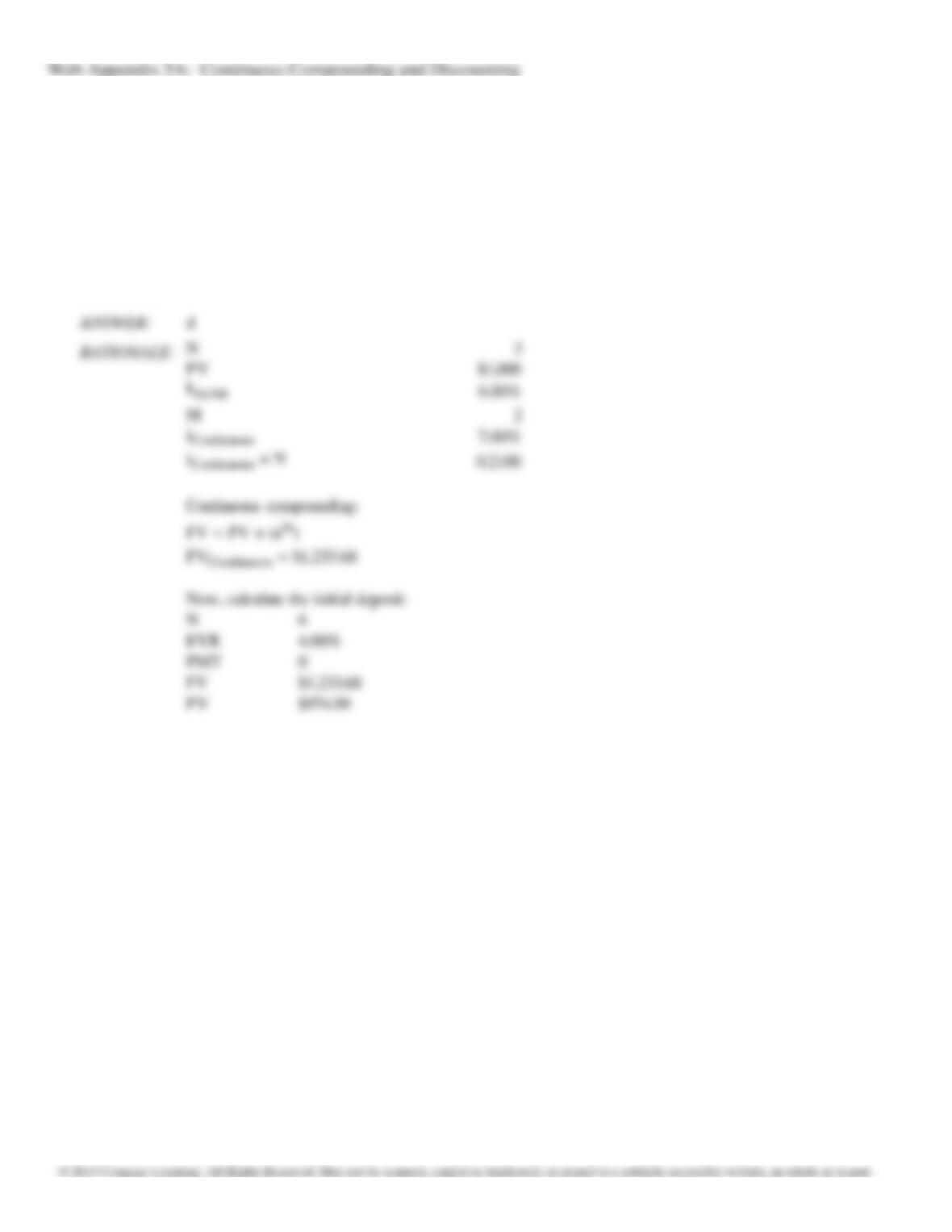
How much should you be willing to pay for an account today that will have a value of $1,000 in 10 years under
continuous compounding if the nominal rate is 10%?
a. $349.49
b. $367.88
c. $386.27
d. $405.59
e. $425.87
6.
You need a down payment of $19,000 in order to purchase your first home 4 years from today. You currently have
$14,014 to invest. In order to achieve your goal, what nominal interest rate, compounded continuously, must you earn
on this investment?
a. 7.61%
b. 7.99%
c. 8.39%
d. 8.81%
e. 9.25%
7.
You place $1,000 in an account that pays 7% interest compounded continuously. You plan to hold the account
exactly
3 years. Simultaneously, in another account you deposit money that earns 8% compounded semiannually. If
the
accounts are to have the same amount at the end of the 3 years, how much of an initial deposit do you need to
make
now in the account that pays 8% interest compounded semiannually?
a. $ 835.94
b. $ 879.93
c. $ 926.24
d. $ 974.99
e. $1,023.74
8.
For a 10-year deposit, what annual rate payable semiannually will produce the same effective rate as 4%
compounded continuously?
a. 3.46%
b. 3.65%
c. 3.84%
d. 4.04%
e. 4.24%