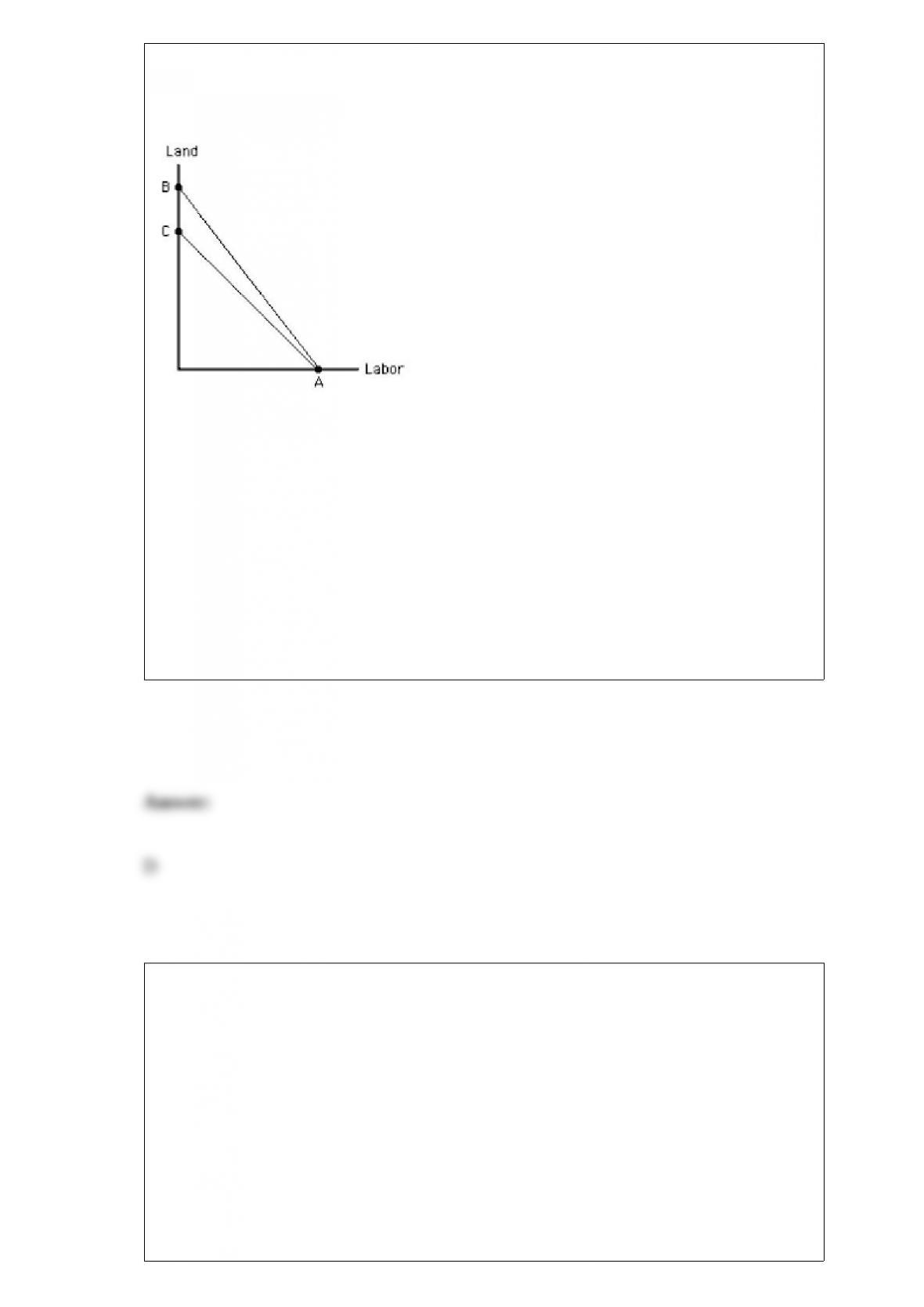
Exhibit 7-18
In Exhibit 7-18, the rotation from AC to AB reflects a(n)
a. increase in the price of labor
b. increase in the price of land
c. decrease in the price of labor
d. decrease in the price of land
e. increase in the amount the producer can spend
Vertical integration is
a. the expansion of a firm into earlier or later stages of production
b. an attempt by a firm to allow market prices to coordinate more transactions
c. an attempt by a firm to minimize shirking
d. an attempt by a firm to minimize the need to coordinate transactions within its
boundaries
e. a way for a firm to accumulate information about its competitors

A resource owner will supply resources up to the point where marginal resource cost is
equal to marginal revenue product.
a. True
b. False
Because more than half the federal welfare budget goes for health care, only 15% of
U.S. residents lacked health insurance in 2009.
a. True
b. False
At its present rate of output, 200 units, a perfectly competitive firm has total cost of
$10,000, marginal cost of $38, and fixed cost of $2,000, and it charges the market price
of $38 per unit. To maximize profit or minimize loss, this firm should
a. increase output
b. reduce output but not to zero
c. maintain the present rate of output
d. shut down
e. raise the price
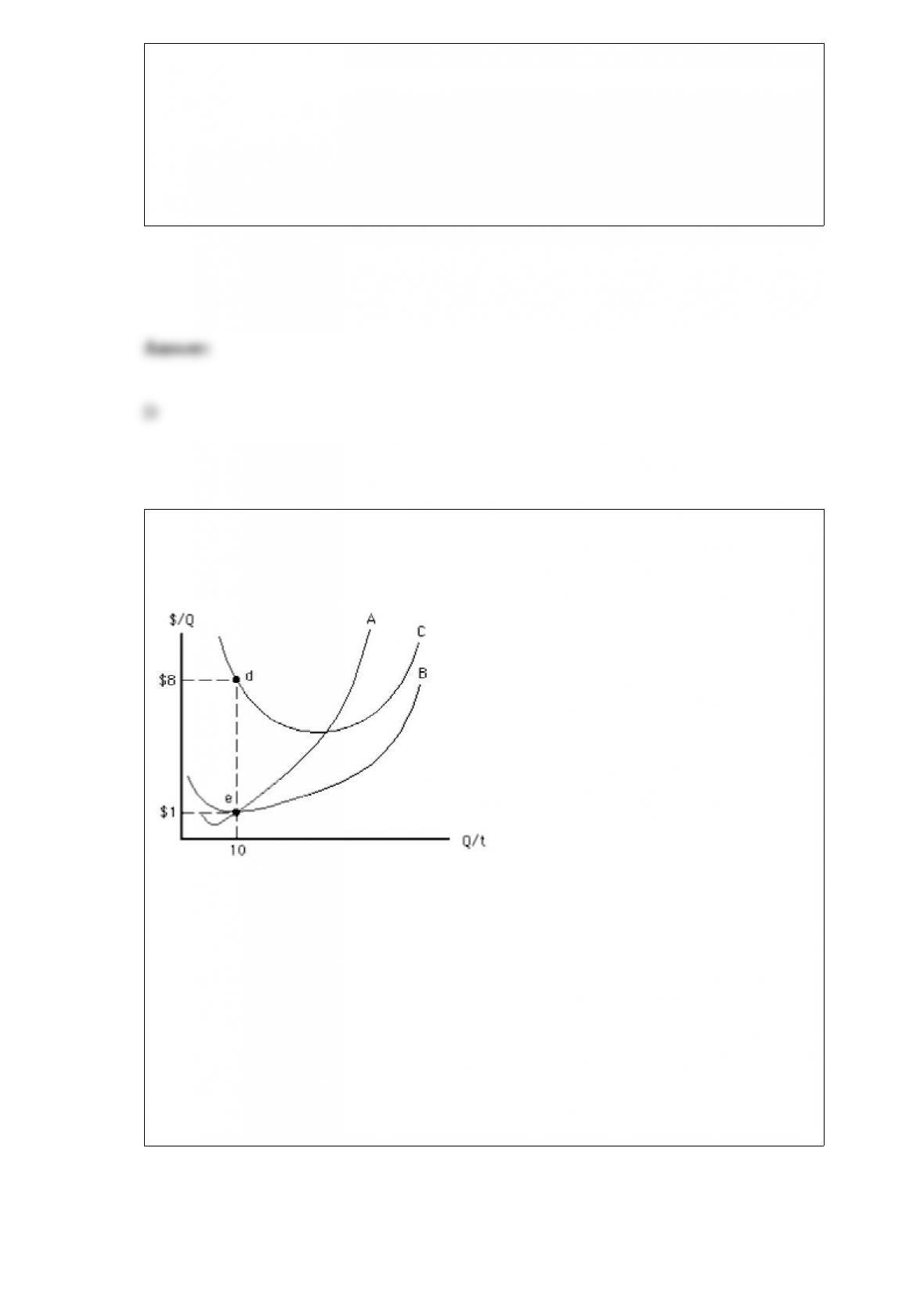
Exhibit 7-8
In Exhibit 7-8, when output is 10,
a. total cost equals $10
b. fixed cost equals $1
c. variable cost equals $10
d. marginal cost equals $10
e. fixed cost equals $10

The horizontal (labor) intercept of Manny Motors’ isocost line is 3 million, and the
vertical (robot) intercept is 5 million. Which of the following best describes what would
happen to the isocost line if auto workers’ wages decreased?
a. It would shift to the left.
b. It would rotate outward along the horizontal axis.
c. It would rotate inward along the horizontal axis.
d. It would rotate outward along the vertical axis.
e. It would rotate inward along the vertical axis.
Exhibit 6-21
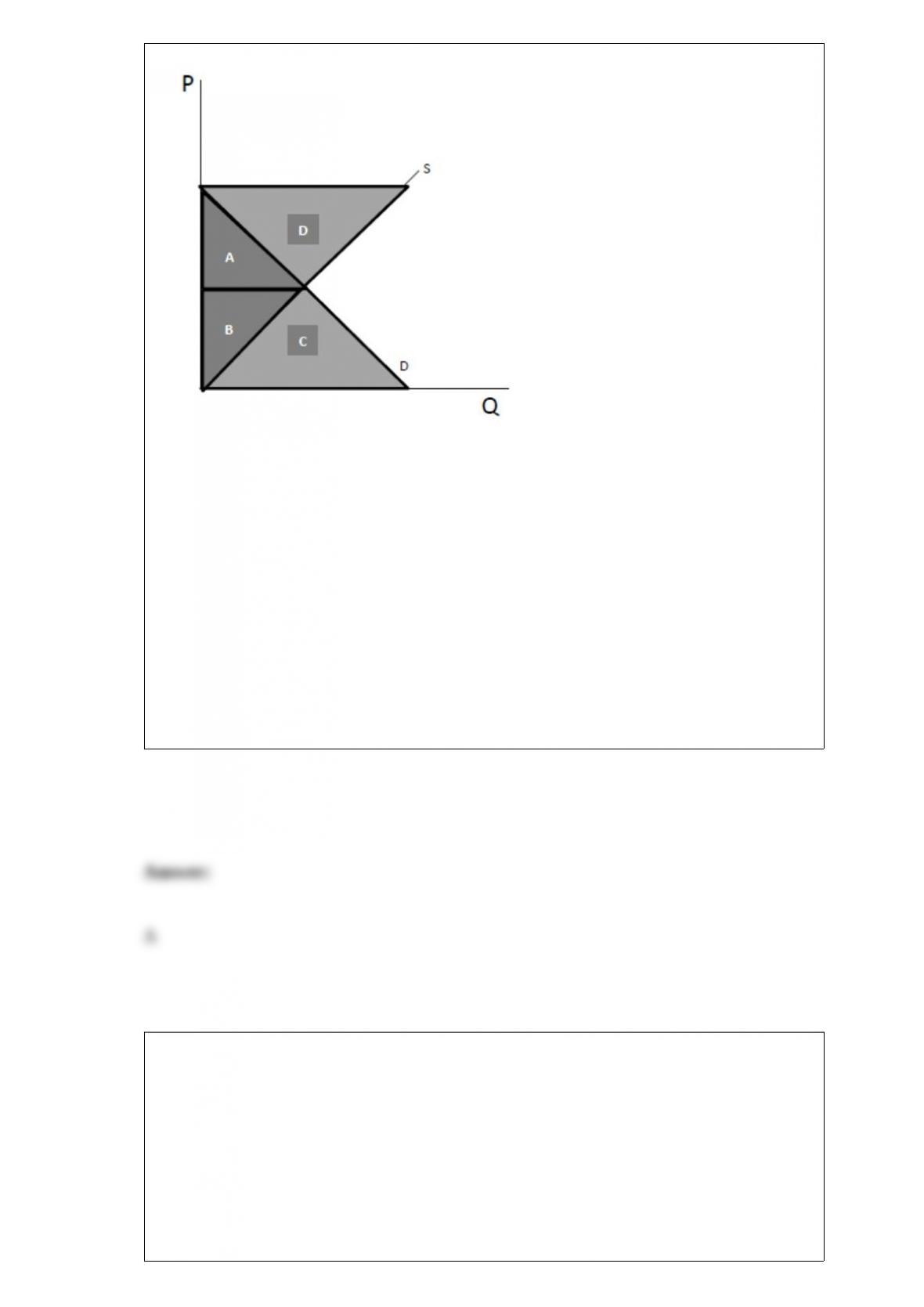
Refer to Exhibit 6-21. When this market is in equilibrium, the consumer surplus is the
area of:
a. A
b. A + B
c. B
d. C
e. D
Spacely Sprockets, Inc., usually pays $1,000 for a million flanges, which it uses as
inputs in the manufacture of sprockets. It also spends an average of $20 per million
flanges on finding manufacturers and negotiating contracts. Spacely is capable of
making its own flanges at a cost of $980 per million. Given these costs,
a. Spacely should continue to contract out for flanges
b. Spacely should start to manufacture its own flanges

c. it’s not possible to say what Spacely should do
d. Spacely should stop paying the additional $20 to find and negotiate contracts and just
buy the flanges outright for $1,000 per million
e. Spacely should move away from the use of flanges and toward an input that it can
produce by itself
The equilibrium price and quantity in a free market usually reflect private marginal
costs and benefits, not social ones.
a. True
b. False
Nonprofit, or not-for-profit, firms
a. maximize revenue instead of profit
b. minimize cost rather than maximize profit
c. often pursue goals other than profit maximization
d. pursue profit as their main goal despite their name
e. have no incentive to produce efficiently

A resource is something that
a. is used to produce goods and services
b. is provided by nature, not made by society
c. exists in unlimited quantities
d. must be produced by a firm
e. consumes goods and services
Along a linear demand curve, total revenue is maximized when demand is
a. elastic
b. inelastic
c. unit elastic
d. perfectly elastic
e. perfectly inelastic
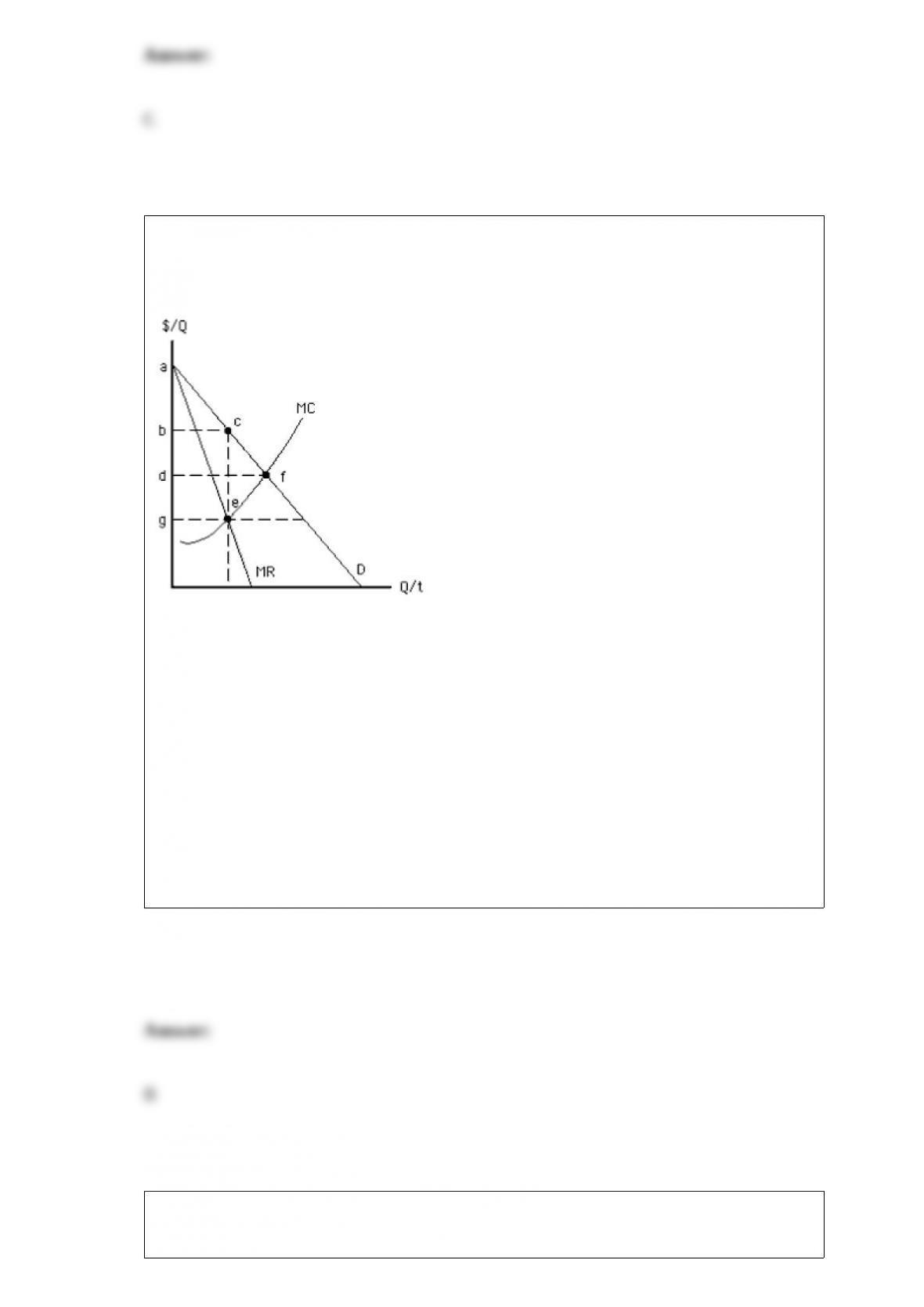
Exhibit 15-2
In Exhibit 15-2, the consumer surplus that results from a regulated monopoly that
charges a price equal to MC, is shown by area
a. abc
b. adf
c. cef
d. dfeg
e. bcfd
Households

a. own and sell resources
b. play a very minor role in the economy
c. supply goods and services
d. are the largest purchasers of resources
e. none of the above
Public goods legislation involves
a. widespread benefits and concentrated costs
b. widespread benefits and widespread costs
c. concentrated benefits and widespread costs
d. concentrated benefits and costs
e. regulating natural monopolies to avoid price gouging
A preliminary conclusion about welfare reform is that
a. work requirements do seem to yield substantial declines in welfare caseloads
b. work requirements cause welfare caseloads to increase
c. such reform can only be instituted when the economy is strong
d. welfare can be reformed even when the economy is weak
e. welfare rolls decline faster when the economy is weak because more people need
income during those times
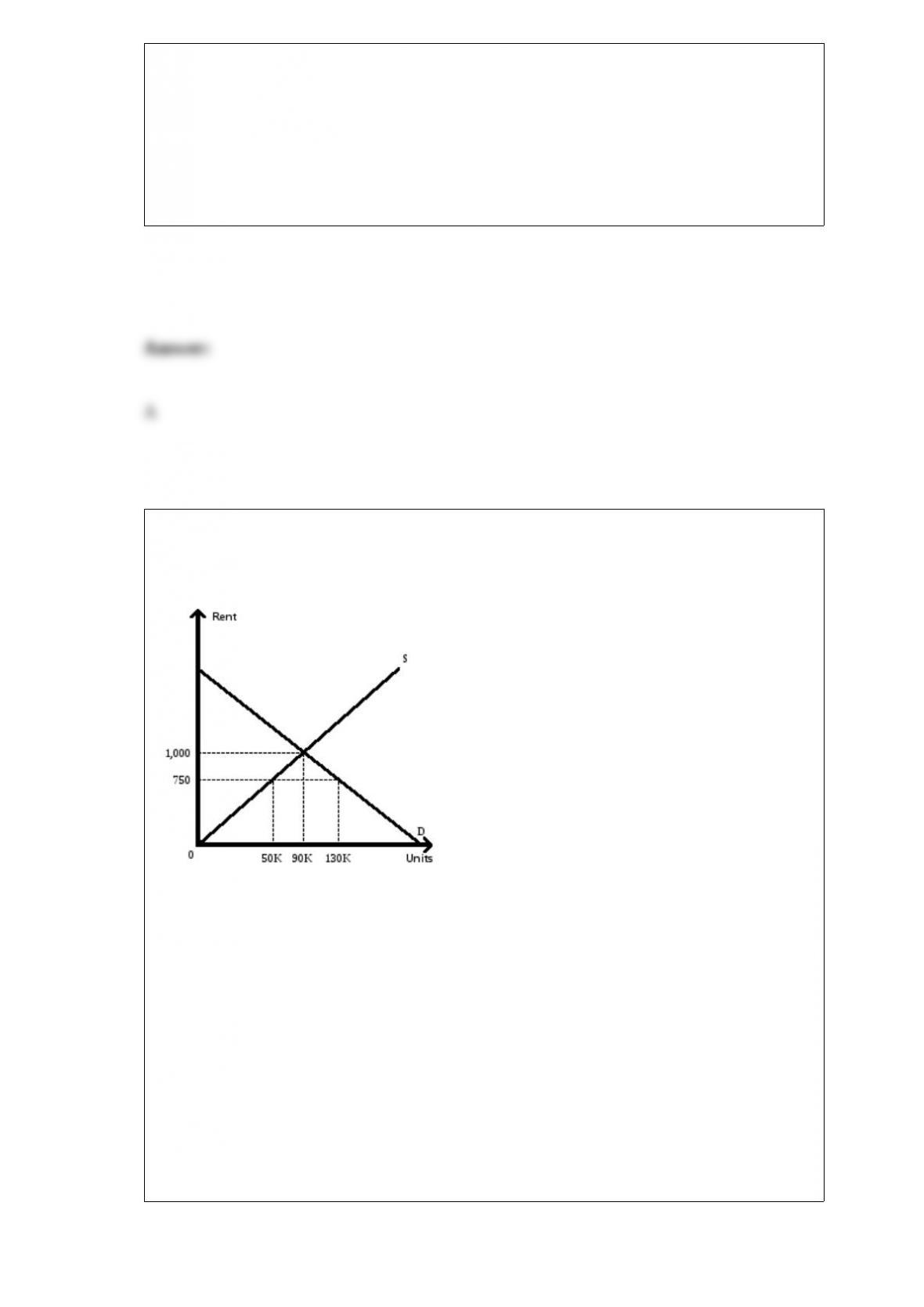
Exhibit 4-8
Based on Exhibit 4-8, a rent ceiling of $750 per month would result in a number of
units rented of
a. There is not enough information to determine the answer.
b. 50,000
c. greater than 50,000 but less than 90,000
d. 90,000
e. 130,000
Private firms and public bureaus differ in the sense that
a. only private firms employ capital
b. public bureaus usually show a profit
c. some public bureaus are inefficient
d. ownership of private firms is transferable
e. ownership of public bureaus is transferable in the marketplace
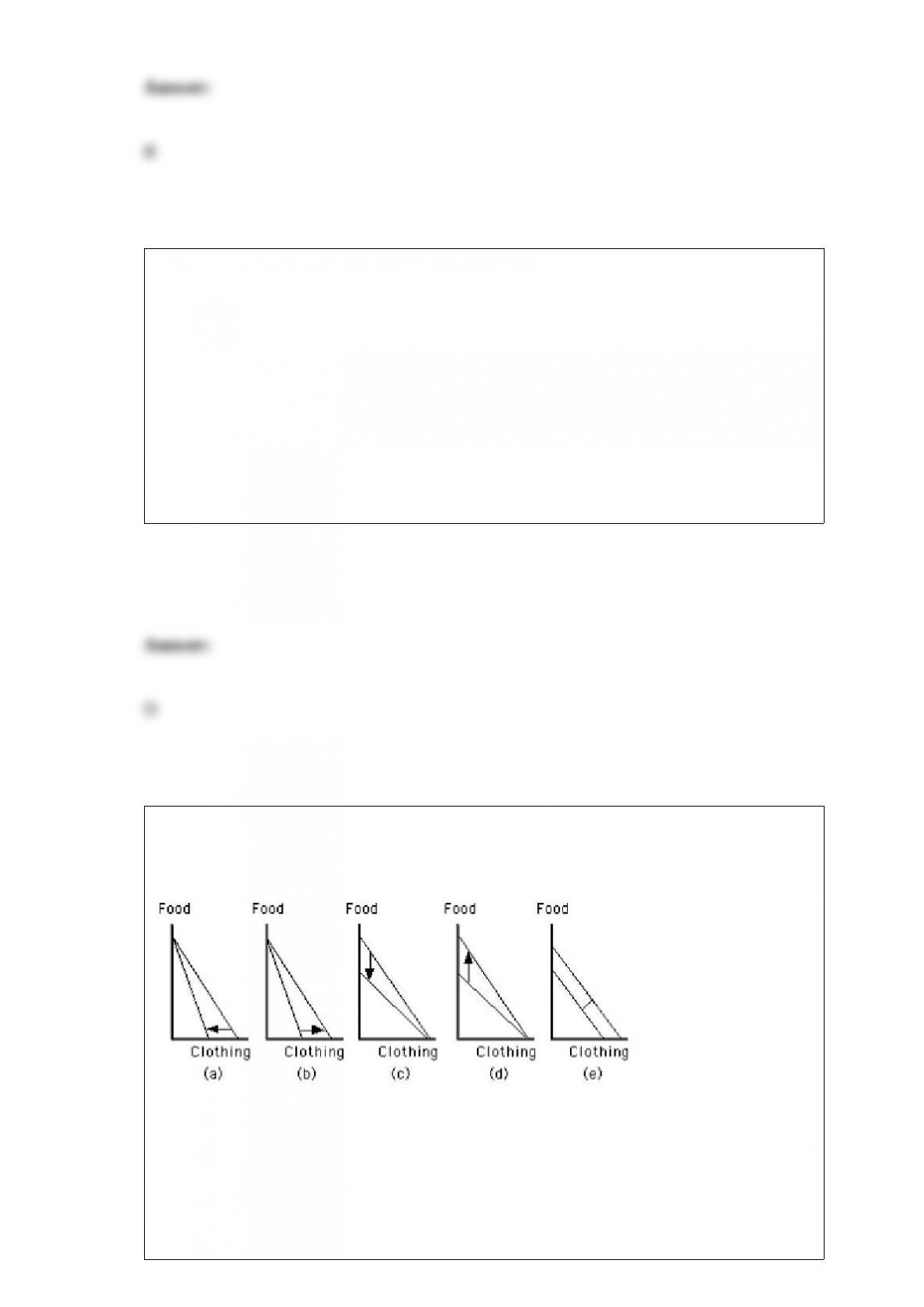
Exhibit 6-29
Which graph in Exhibit 6-29 shows the effect of a decrease in the price of clothing,
other things constant?
a. Graph a
b. Graph b

c. Graph c
d. Graph d
e. Graph e
If people have more time to adjust to a price change, the price elasticity of demand for
that good is likely to
a. increase
b. decrease
c. fall to zero
d. become equal to -1
e. remain unchanged
The marginal rate of return on investment is found by dividing the marginal resource
cost per year by the marginal revenue product.
a. True
b. False

De Beers Consolidated Mines has monopoly power
a. because of economies of scale
b. through its control over key patents
c. through its control of an essential resource
d. through government-imposed barriers to entry
e. because of its reputation for supplying high-quality diamonds
If a regulator sets the price equal to the natural monopolist’s marginal cost,
a. the monopoly will experience a loss
b. the monopoly will earn a profit
c. the monopoly will earn zero profit
d. consumers will be worse off than they would be if the firm’s profit maximization
activities were unregulated
e. the monopoly will be better off than it would be if its profit maximization activities
were unregulated

Larger quantities of any good will be supplied at higher prices because
a. consumers will be more satisfied
b. higher prices attract resources from other uses
c. people are naturally lazy and have to be bribed to give up their leisure
d. price and quantity supplied are inversely related
e. of the law of decreasing opportunity cost
The major advantage of a market economy is that
a. it maximizes the need for resource-flow data
b. prices convey most of the information necessary to coordinate economic activity
among firms
c. data are aimed at central planners
d. prices are essentially meaningless
e. All of the answers are correct
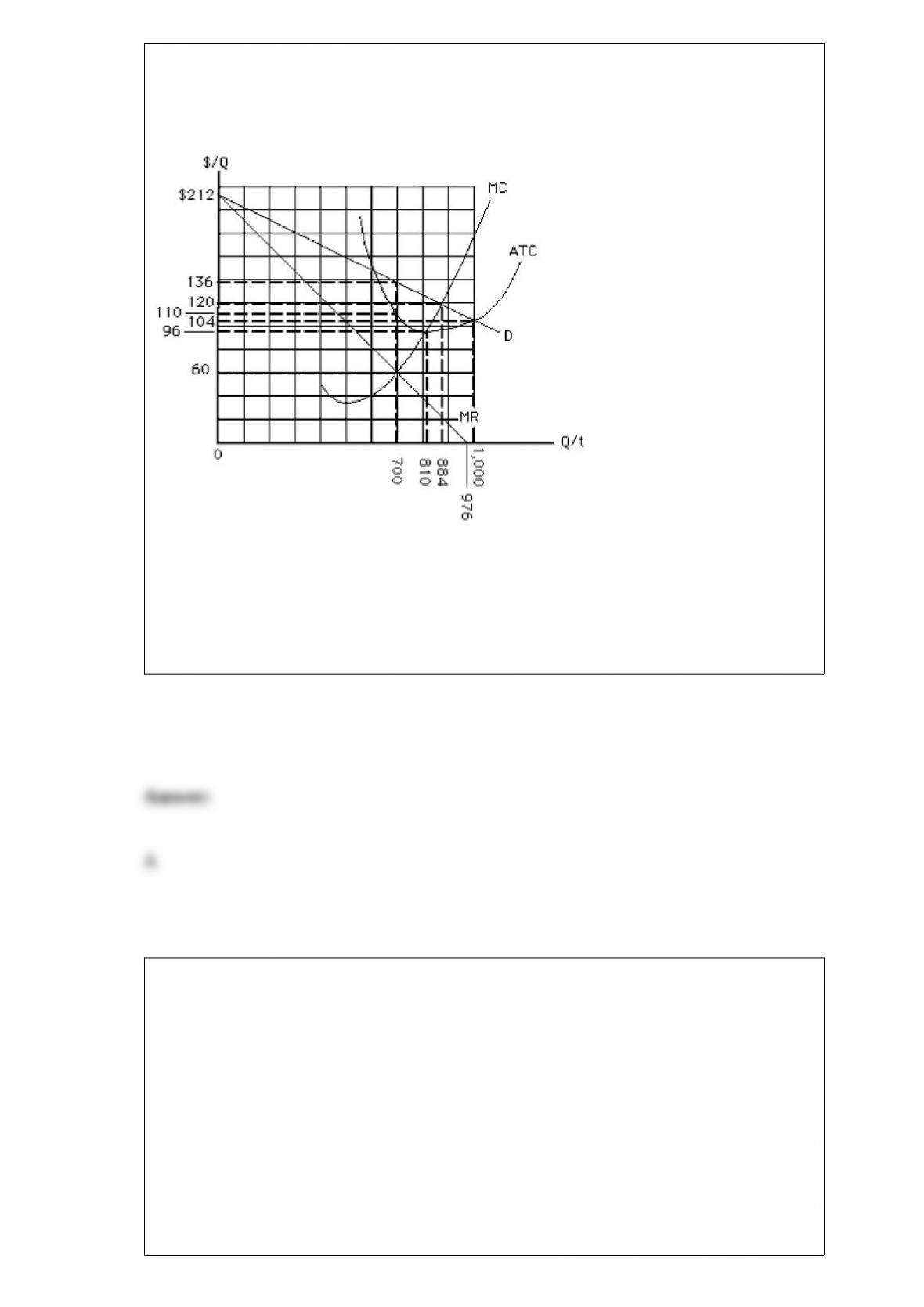
Exhibit 9-11
If the monopolist in Exhibit 9-11 engages in perfect price discrimination, price would
a. vary between $212 and $120
b. vary between $212 and $104
c. be $136 on all units
d. be $110 on all units
e. be $104 on all units
Recently it has been discovered that lobsters grown on lobster farms can feed on algae,
which is a cheaper lobster food. As a result of this discovery,
a. the supply curve for lobster will shift to the left
b. the supply curve for lobster will shift to the right
c. there will be an increase in the quantity of lobsters supplied
d. there will be a decrease in the quantity of lobsters supplied
e. both supply and demand curves will shift to the right
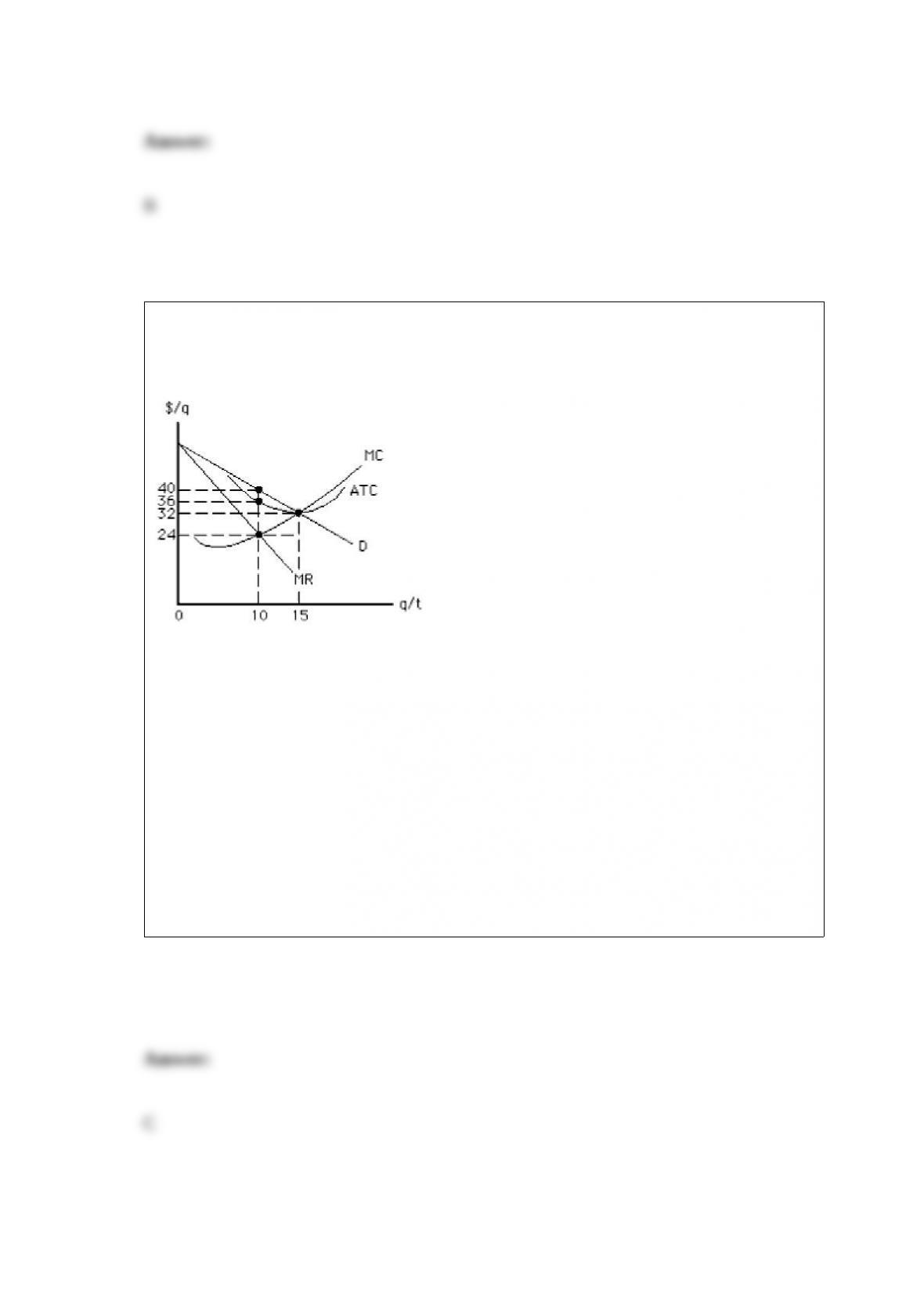
Exhibit 10-4
In the short run, which of the following should the firm in Exhibit 10-4 do?
a. Produce 10 units at a price of $36 per unit.
b. Produce 10 units at a price of $24 per unit.
c. Produce 10 units at a price of $40 per unit.
d. Produce 15 units at a price of $32 per unit.
e. We cannot determine what the firm should do without knowing its average variable
cost.
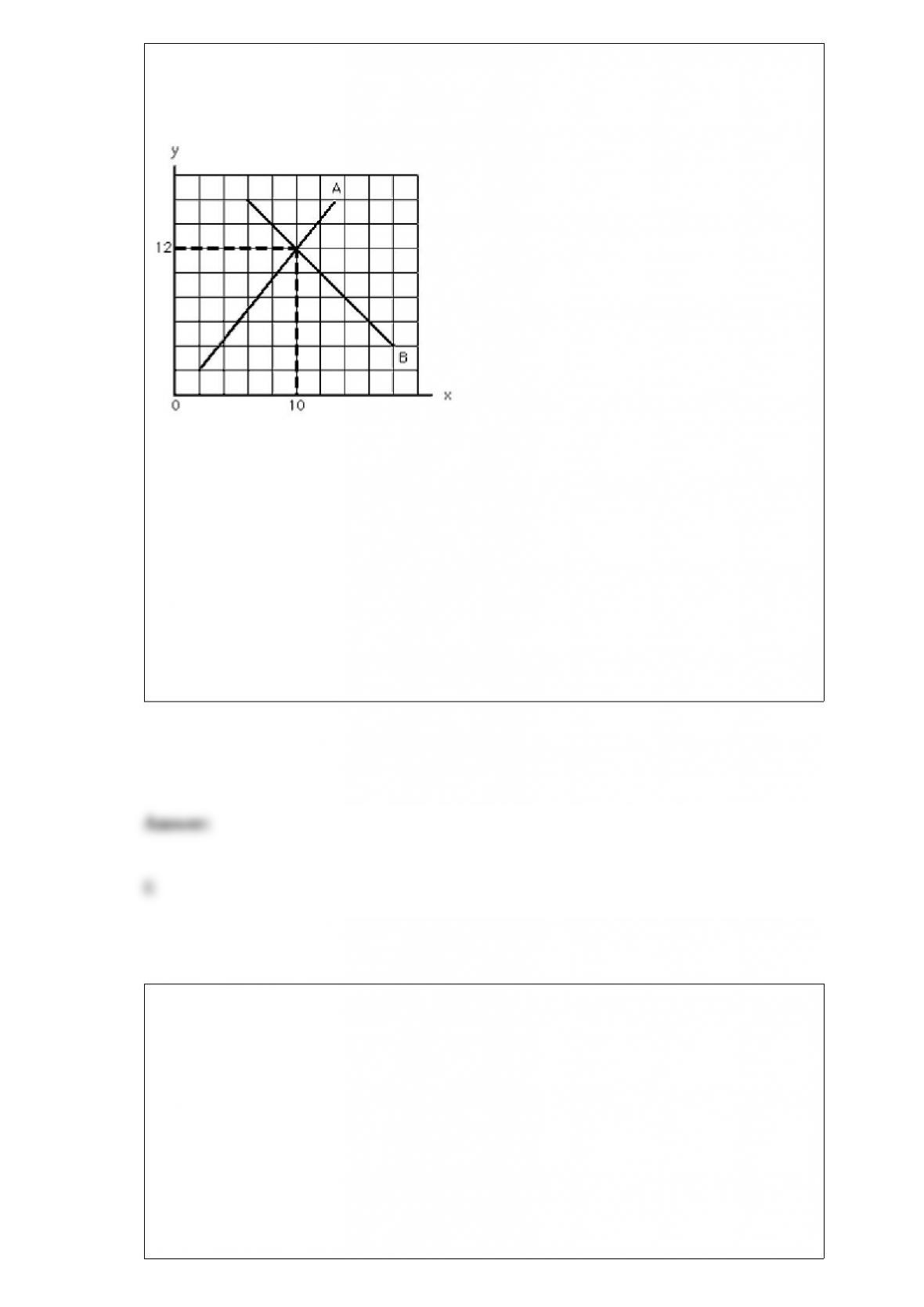
Exhibit 1-5
In Exhibit 1-5, curve B has a slope of
a. 0
b. 1.25
c. 1.33
d. -1.25
e. -1.33
If the cross-price elasticity of demand is -3, then
a. the goods are substitutes
b. one good is price inelastic
c. one good is an inferior good
d. one good is a luxury good
e. the goods are complements

Suppose Ben buys out Jerry’s ownership in the firm but retains him as a salaried
employee. If so,
a. economic profit increases
b. economic profit decreases
c. there is no change in economic profit
d. there is no change in accounting profit
e. accounting profit increases
Intellectual property
a. requires copyright protection that is expensive to obtain, but cheap to enforce
b. usually ends up being owned by the government
c. is costly to produce, but can be transmitted at low cost
d. cannot be owned by anyone
e. is usually located on college campuses
The World Bank sorts countries into the following three major groups:
a. high-income economies, middle-income economies, low-spending economies
b. high-spending economies, middle-spending economies, low-spending economies
c. super-high-income economies, middle-income economies, low-income economies
d. high-income economies, middle-income economies, zero-income economies
e. high-income economies, middle-income economies, low-income economies