
Game theory focuses on
a. strategic behavior among interdependent firms
b. professional athletic events
c. competition between the players in board games
d. competition between those in the political arena and those in the market place
e. the interaction between firms in a competitive industry and those in a
non-competitive industry
Which of the following is true about GNP?
a. includes profits earned by a Mercedes factory in Alabama
b. excludes profits earned by General Electric in India
c. measures the market value of all goods and services produced by resources supplied
the home country’s residents and firms, regardless of the location of the resource
d. stands for Generally Nice Products
e. used by countries to classify the World Bank
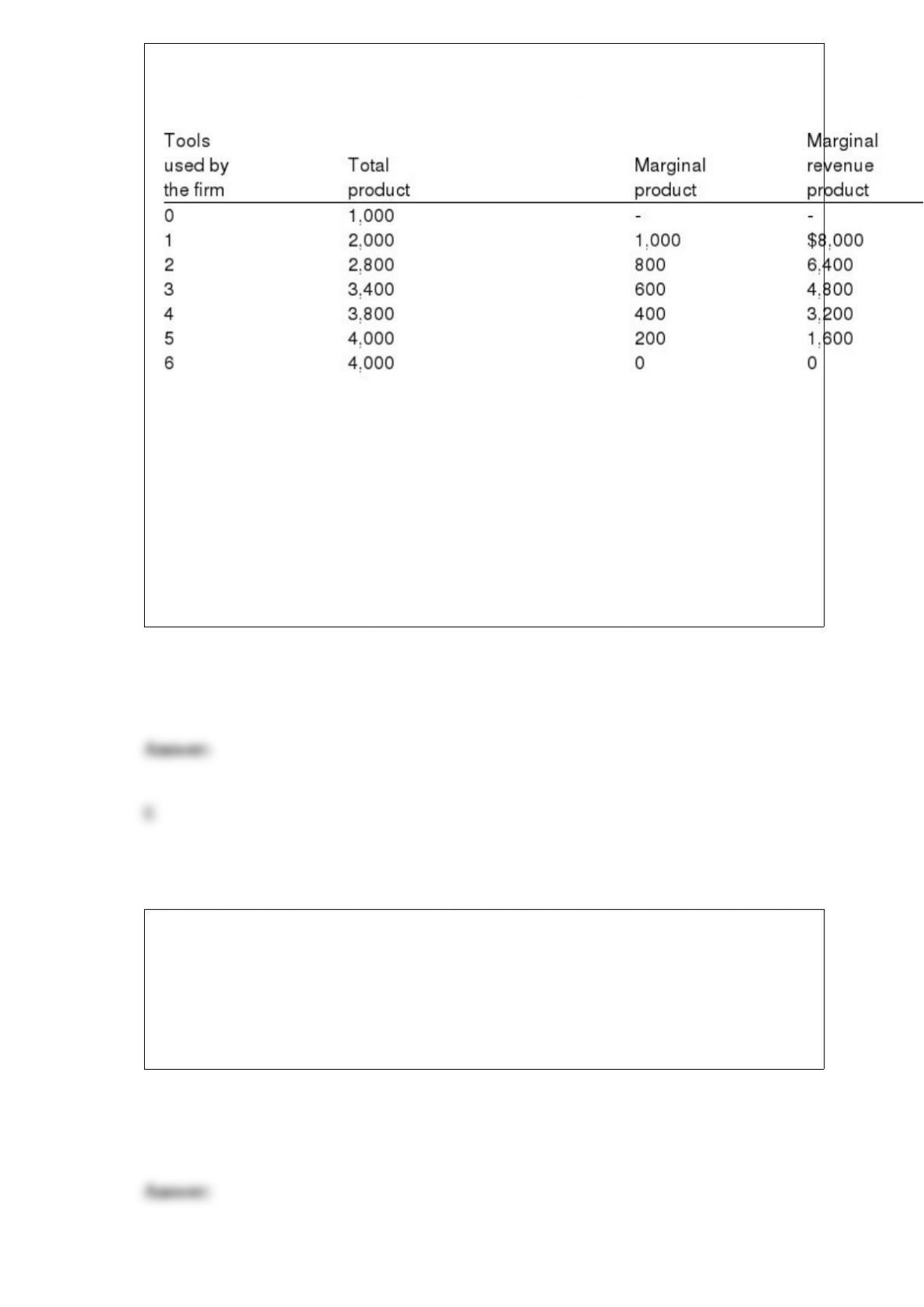
Exhibit 13-3
Exhibit 13-3 gives data on the number of tools a certain firm buys to use in its
production process. Assume that the tools are expected to last indefinitely, that
operating expenses are negligible, and that the price of the firm’s output is expected to
remain constant in the future. At what interest rate would the firm in Exhibit 13-3
choose not to buy any machines?
a. 10%
b. 20%
c. 30%
d. 35%
e. 40%
The fallacy of composition is the error of believing a cause-effect relationship exists
between two events that are associated in time.
a. True
b. False
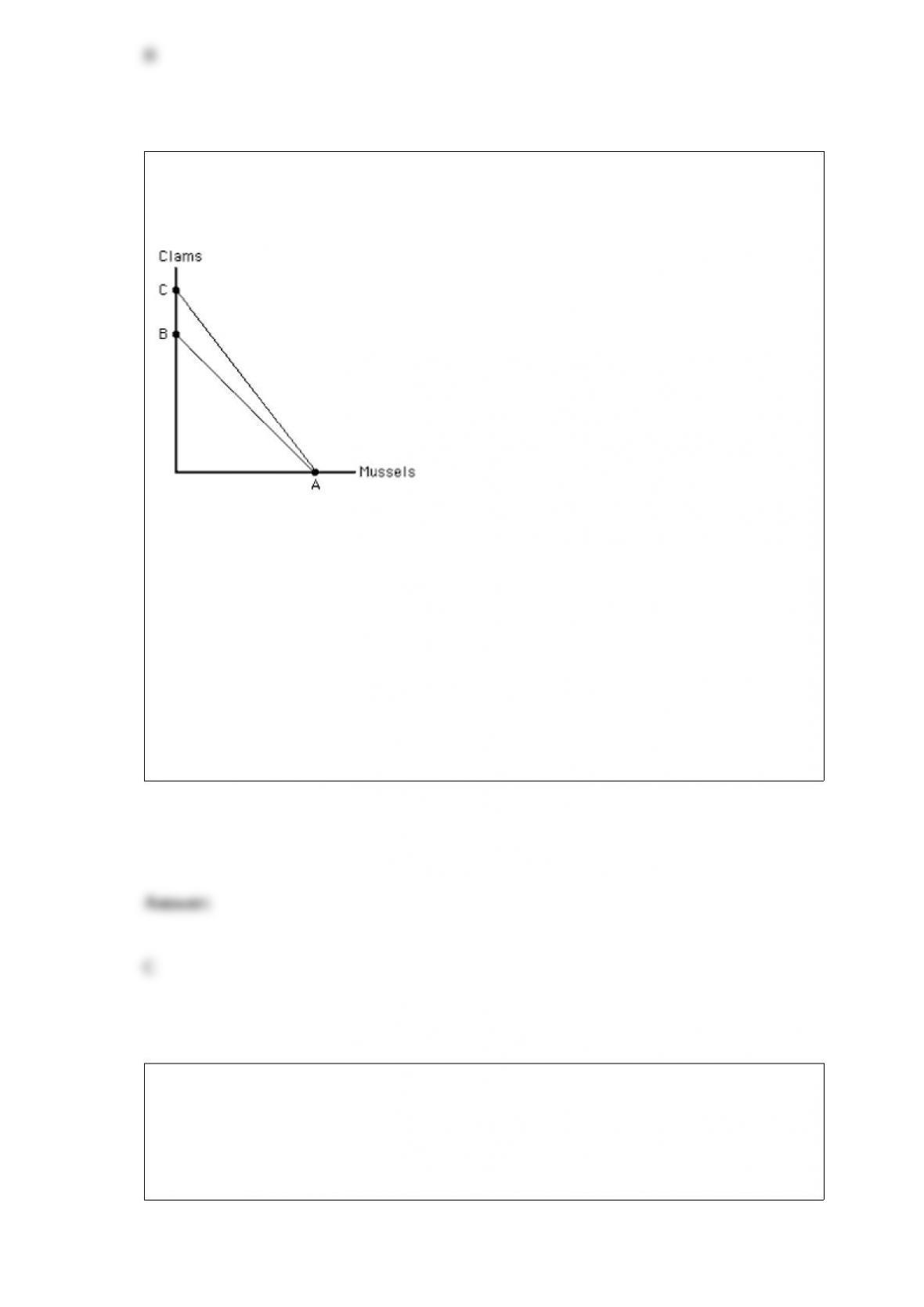
Exhibit 6-27
Consider Exhibit 6-27. The rotation of the budget line from AB to AC represents a(n)
a. increase in the price of clams
b. increase in the price of mussels
c. decrease in the price of clams
d. decrease in the price of mussels
e. increase in the amount the consumer can spend
A market is said to be allocatively efficient when the marginal cost of producing each
good equals the marginal benefit that consumers derive from that good
a. True
b. False

The demand for labor curve bends backward whenever the income and substitution
effects work in opposite directions.
a. True
b. False
If a citizen decides he has had enough of big government and launches a personal
campaign to expose big spenders in Congress,
a. he is likely to have his taxes reduced dramatically
b. his taxes are not likely to fall very much
c. he will be thrown in jail
d. he is likely to get elected by other voters
e. he will get the support of many special-interest groups
A price floor set below the equilibrium price will result in a surplus.
a. True
b. False
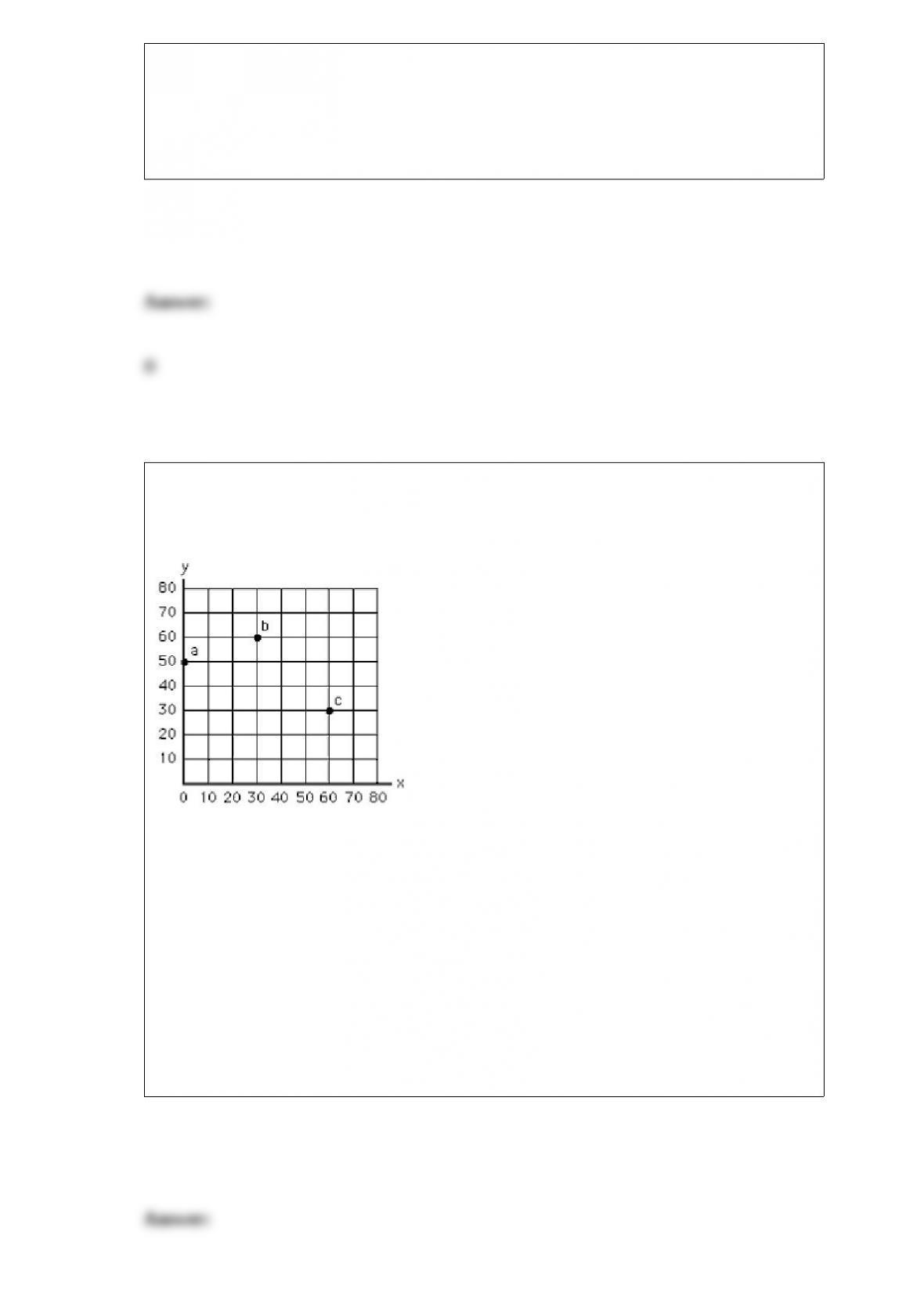
Exhibit 1-1
In Exhibit 1-1 the movement from point b to point c represents
a. an increase in x of 30 units and an increase in y of 10 units
b. an increase in x of 10 units and an increase in y of 30 units
c. an increase in x of 60 units and a decrease in y of 20 units
d. an increase in x of 20 units and a decrease in y of 60 units
e. an increase in x of 20 units and a decrease in y of 30 units

A profit-maximizing firm invests up to the point at which the marginal rate of return on
capital is greatest.
a. True
b. False
Fixed costs are defined as
a. the total costs of a firm’s production
b. the additional cost of the last unit produced
c. costs that increase proportionately as the quantity produced increases
d. costs that do not vary as quantity produced increases
e. implicit costs only
Exhibit 11-12
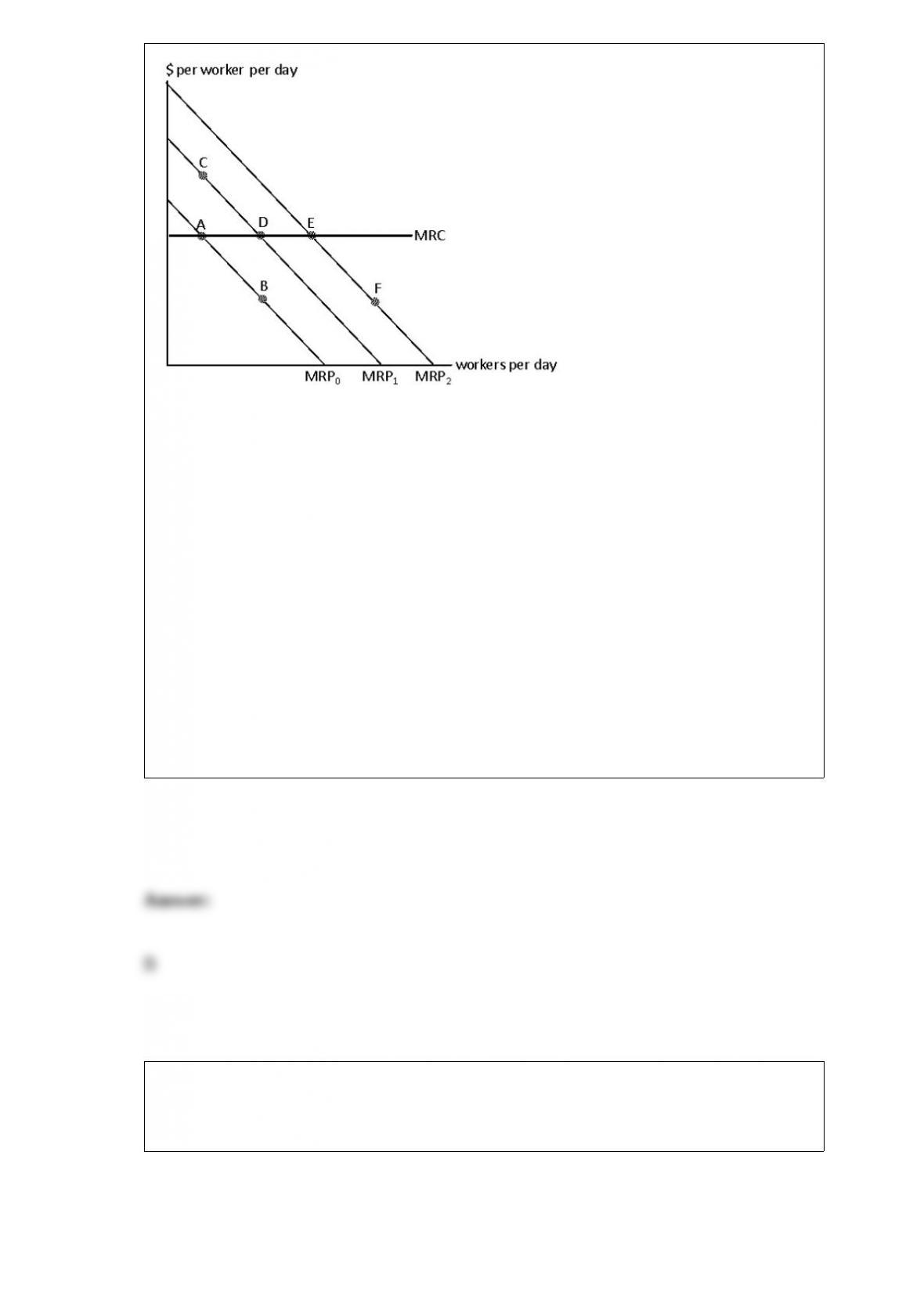
Exhibit 11-12 depicts a single firm hiring labor in a perfectly competitive labor market.
Initially, the marginal revenue product of labor is represented by MRP1 and the firm
operates at point D. Suppose there is a technological advance that increases the
productivity of labor, which point depicts the likely impact on this firm in their hiring
decision?
a. point C
b. point E
c. point A
d. point D
e. cannot tell from the information provided
Exhibit 13-8
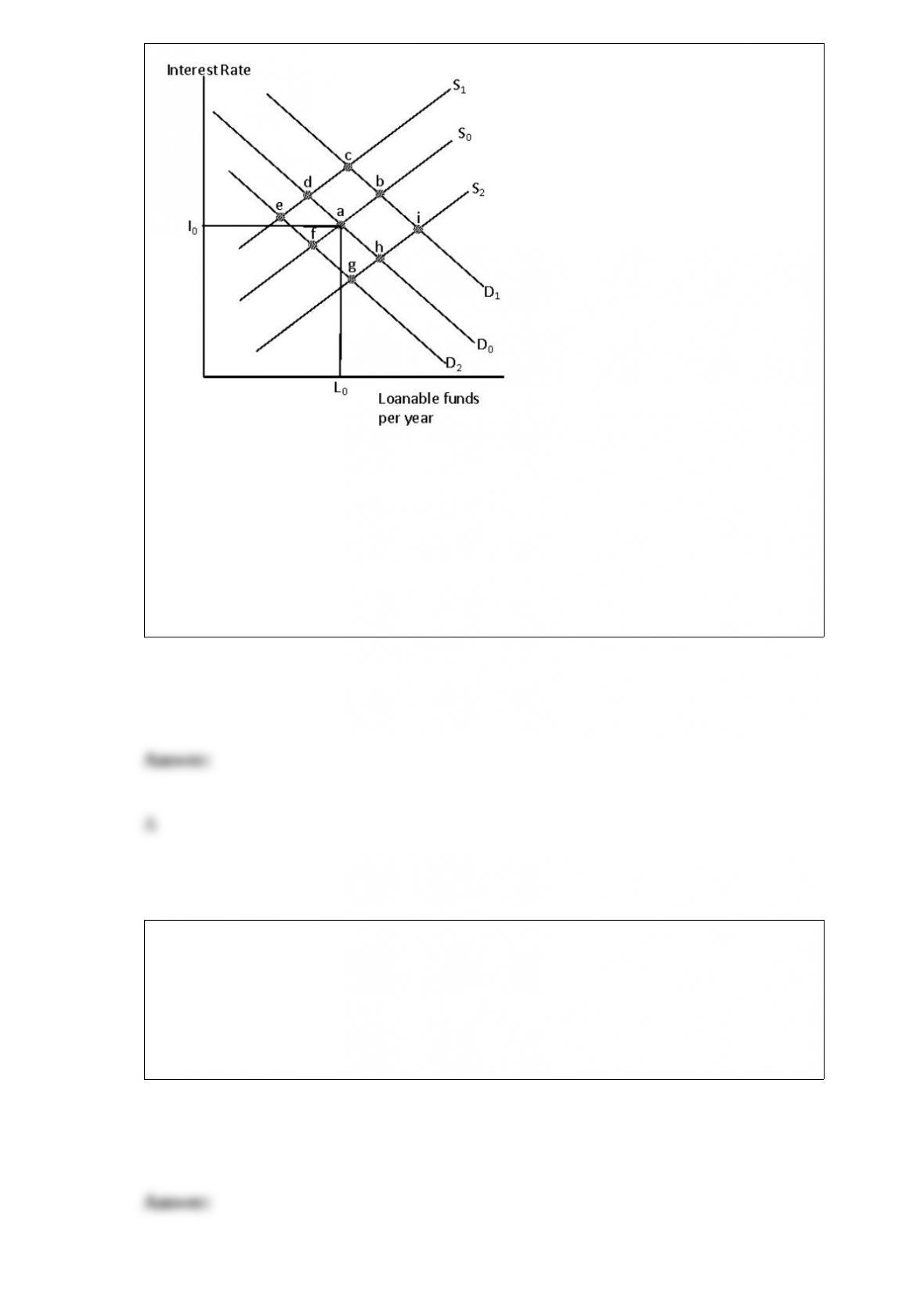
In Exhibit 13-8, D0 and S0represent the initial demand and supply of loanable funds. If
the federal government borrows more money to fund a deficit it would shift the
equilibrium in this market from point a to
a. point b
b. point c
c. point d
d. point f
e. point h
If a firm that experiences economies of scope doubles its production of an item, its
costs will less than double.
a. True
b. False
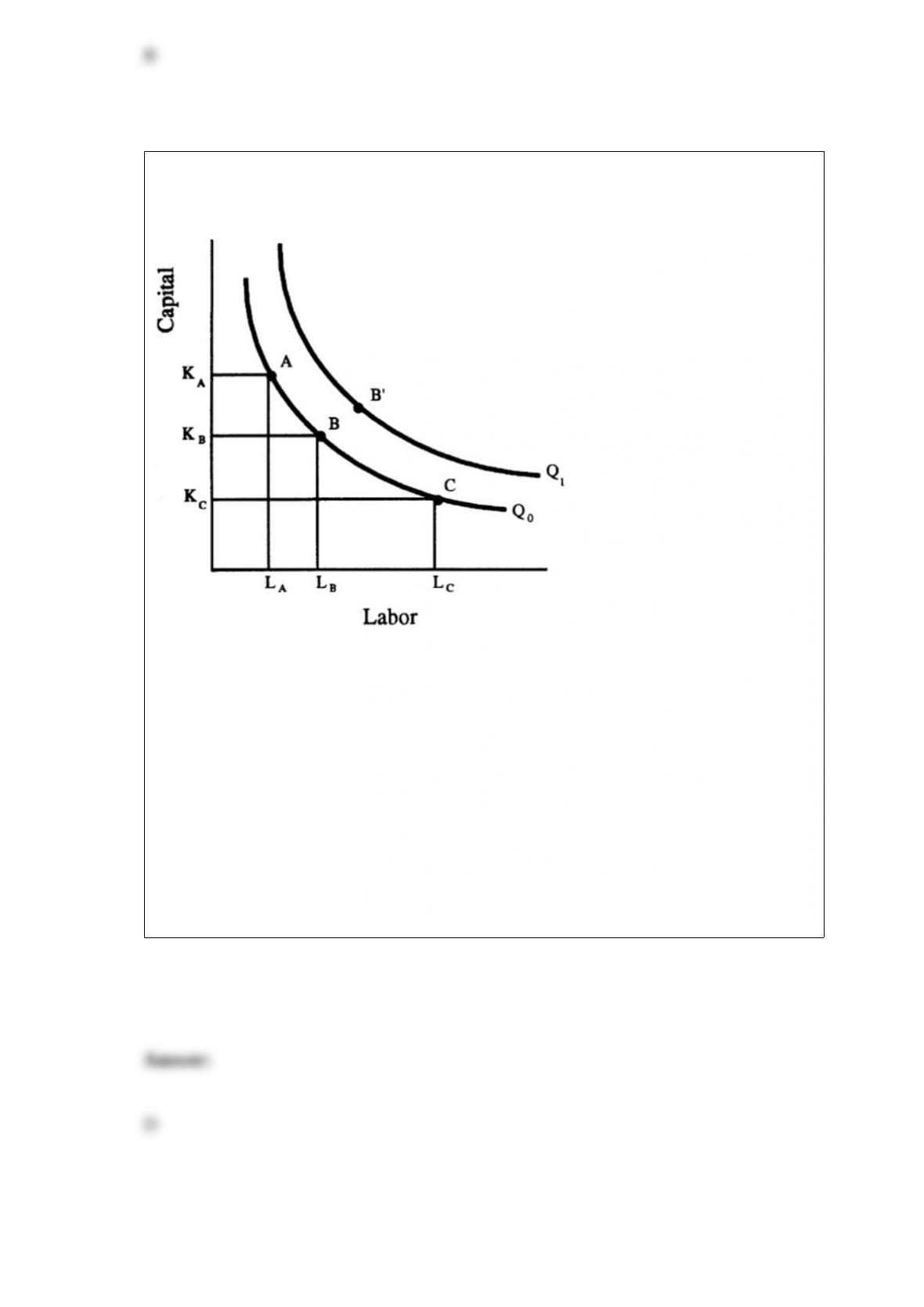
Exhibit 7-23 Production Isoquants ans Isocosts
In terms of output produced, which of the following expresses the relationships
illustrated in Exhibit 7-23?
a. A > B > C
b. A = B > C
c. B > C > A
d. A = B = C
e. C > B > A
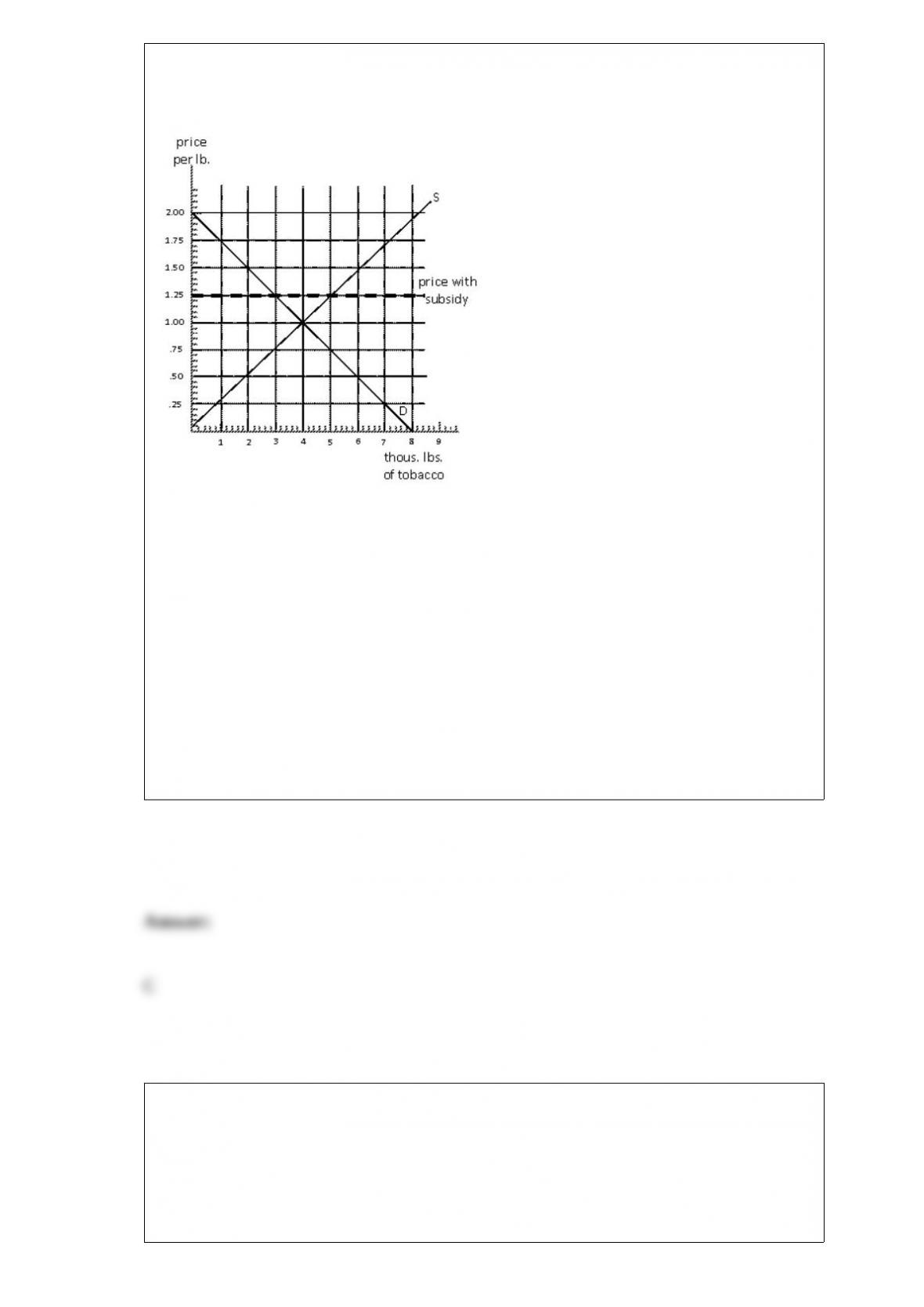
Exhibit 16-5
Exhibit 16-5 represents the market for leaf tobacco. Suppose the government imposes a
floor of $1.25 in this market. How much tobacco will be traded in this market?
a. 1,000 lbs.
b. 2,000 lbs.
c. 3,000 lbs.
d. 4,000 lbs.
e. 5,000 lbs.
If a country has an absolute advantage in the production of every good, it cannot benefit
from trade with other countries.
a. True
b. False
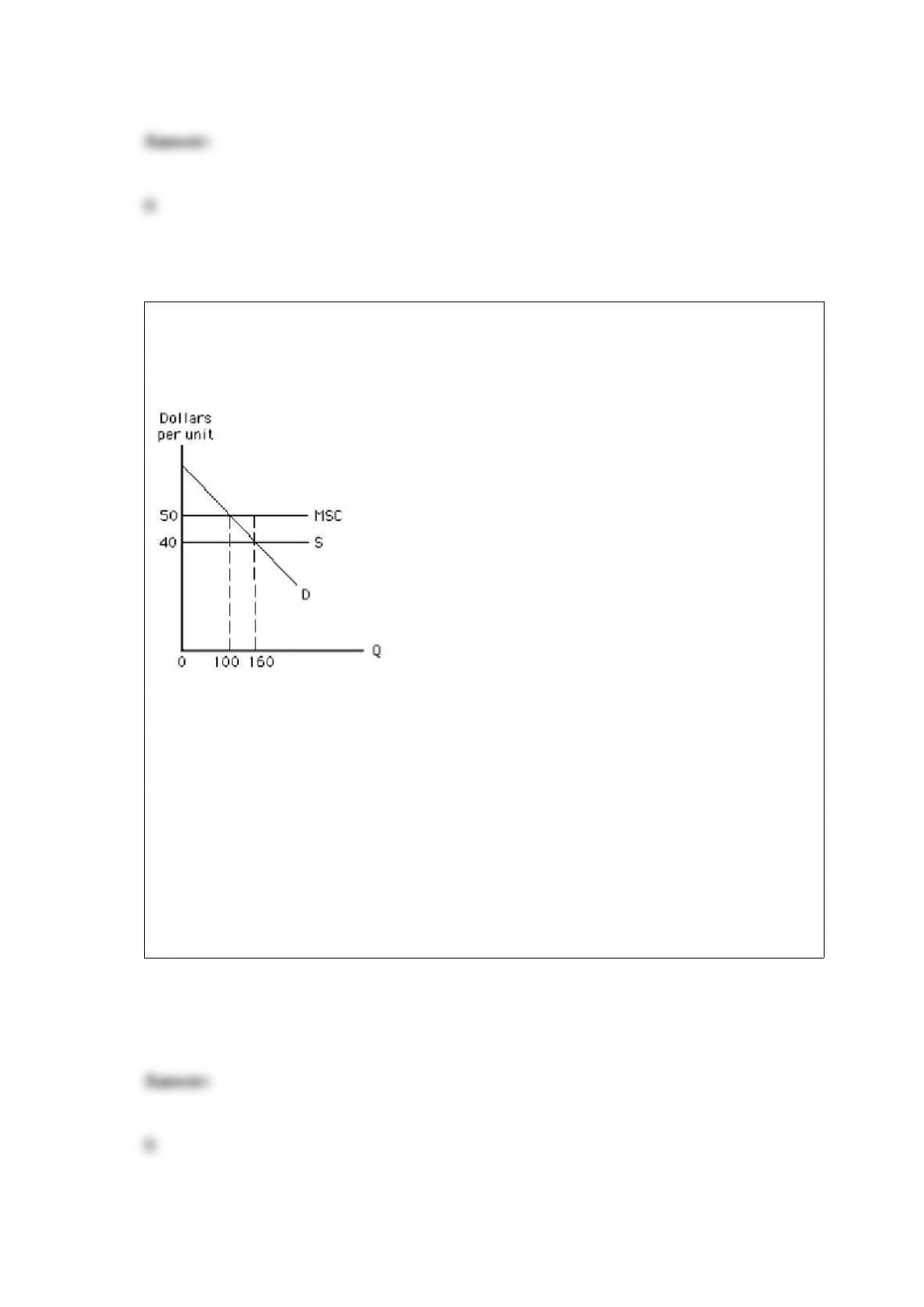
Exhibit 17-1
In Exhibit 17-1, the socially efficient level of output is
a. 0 units
b. 100 units
c. between 100 and 160 units
d. 160 units
e. the answer cannot be determined from the information given
Which agency was created by Congress in 1914 to investigate and regulate unfair
methods of competition?
a. the Department of Justice
b. the Federal Trade Commission
c. the Interstate Commerce Commission
d. the General Accounting Office
e. the Council on Competitiveness
Exhibit 6-11
If the good in Exhibit 6-11 were free, then
a. total utility, consumer surplus, and consumer expenditure would be undefined
b. total utility and consumer surplus would be positive, but consumer expenditure
would be undefined
c. total utility, consumer surplus, and consumer expenditure would all equal 0
d. total utility, consumer surplus, and consumer expenditure would all be maximized

e. total utility and consumer surplus would be valued at $36; consumer expenditure
would be 0
If Andre Preneur puts together a company that yields a profit of $40,000 per year and
this profit stream is expected to continue indefinitely, what price can he sell the
company for if the discount rate equals 8 percent?
a. $40,000
b. $60,000
c. $100,000
d. $250,000
e. $500,000
U.S. antitrust policy is focused primarily on market conduct.
a. True
b. False

Marginal resource cost is the
a. cost of hiring another unit of a resource
b. additional revenue generated by hiring one more unit of a resource
c. additional output generated by hiring one more unit of a resource
d. total cost of hiring a resource
e. average cost of hiring a resource
The more narrowly a product is defined, the less elastic the demand for that product
will be.
a. True
b. False
Suppose Jerry consumes three hamburgers at McDonald’s one evening. He figured the
last one was just worth the price he paid for it. If the hamburgers he buys have a price
of $1, then
a. he earned no consumer surplus
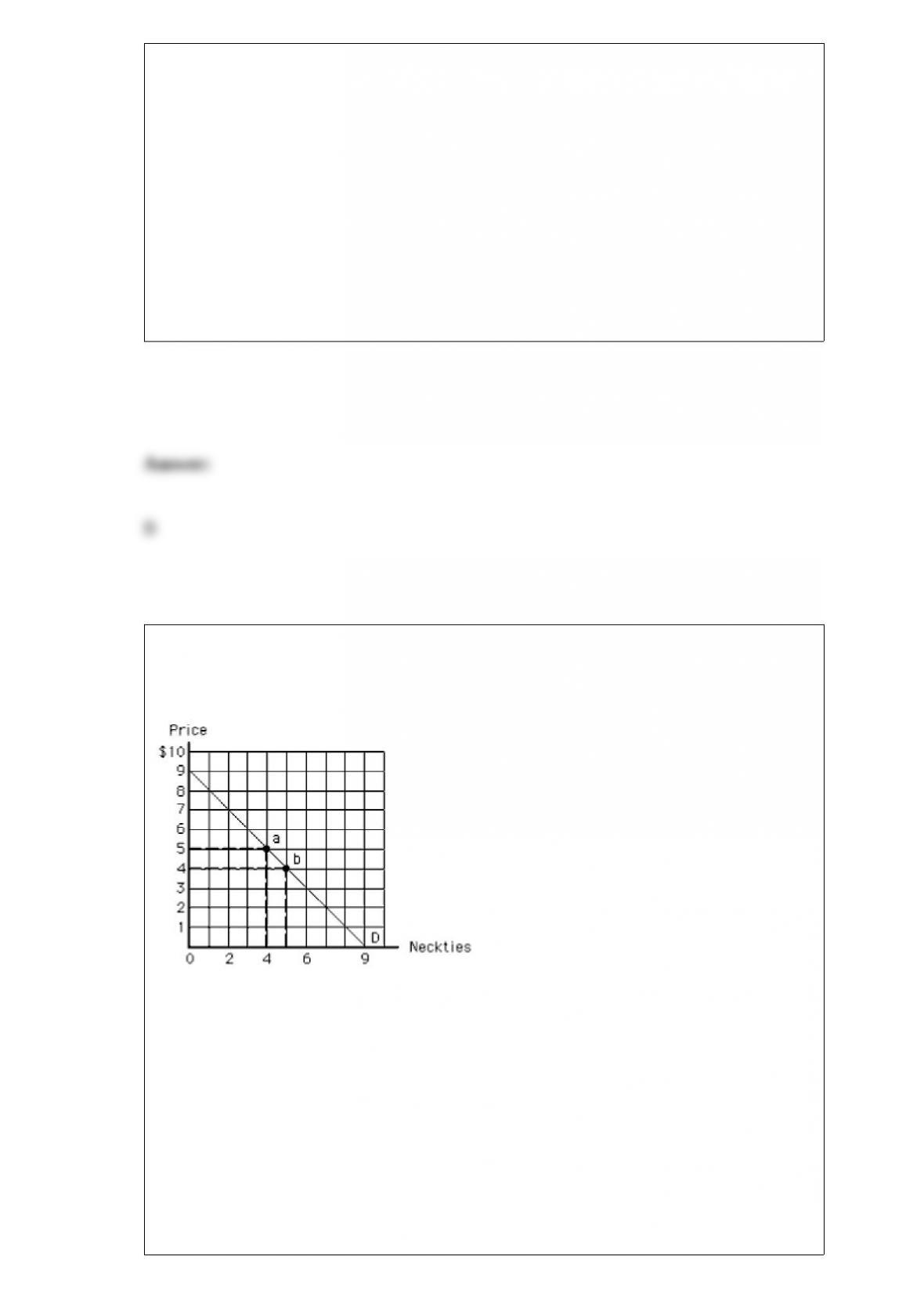
b. he would have earned consumer surplus if he had eaten one more hamburger
c. he was irrational
d. he may have earned consumer surplus on the first two hamburgers
e. he earned $1 consumer surplus on the third hamburger alone
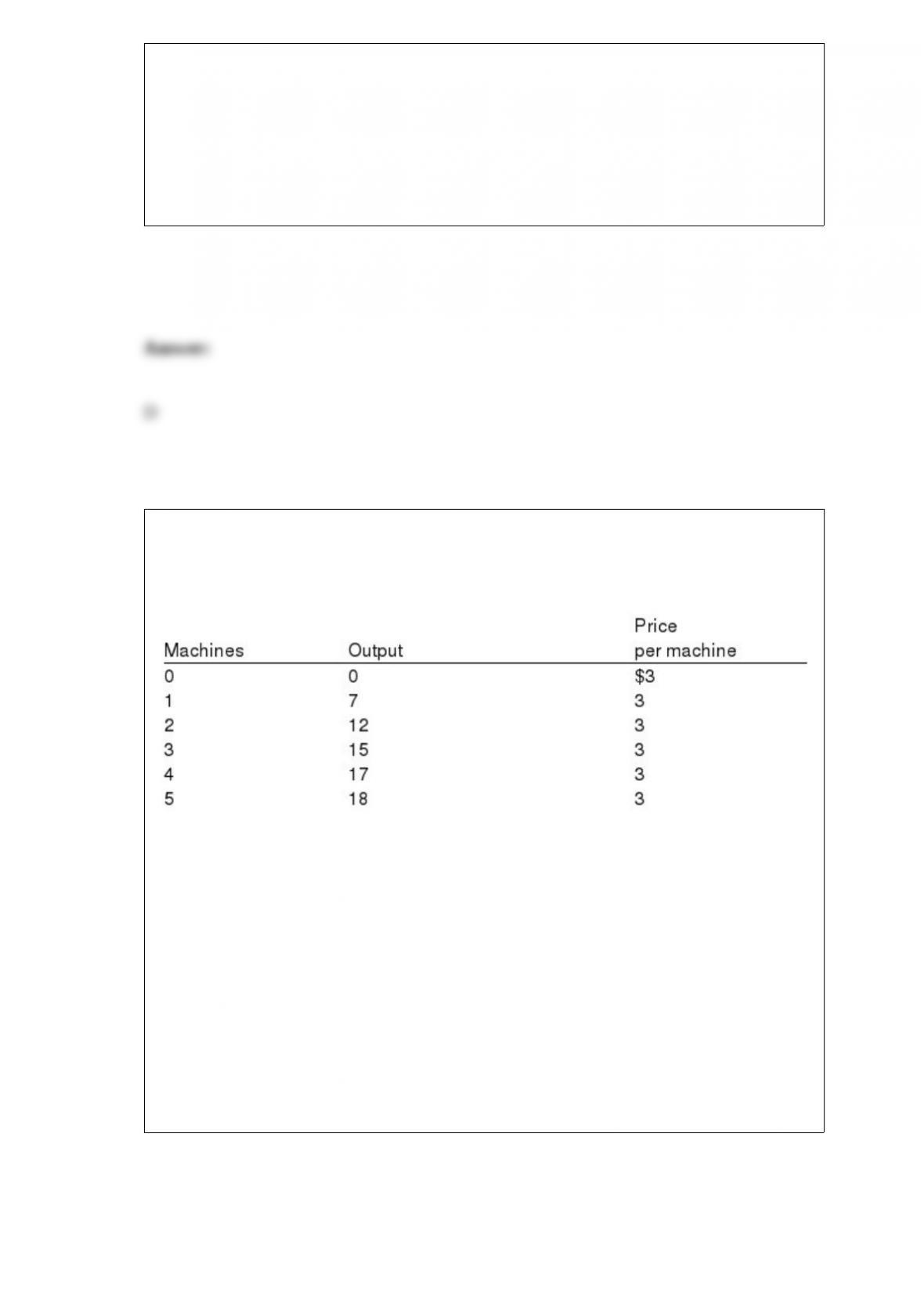
Exhibit 11-7
In Exhibit 11-7, diminishing returns first becomes evident with the addition of the
__________ machine.
a. first
b. second
c. third
d. fourth
e. fifth

If those accused of antitrust violations sign a consent decree, they have
a. agreed to stop doing what they are accused of doing
b. admitted to guilt
c. agreed to a court trial
d. contested the charges against them
e. charged the government with wrongdoing
What happens to consumer surplus as price falls along a given demand curve?
a. It always increases.
b. It always decreases.
c. It never changes.
d. It increases only if price increases just a little.
e. It depends on the elasticity of demand and supply.

A camera manufacturer will sell its cameras only to retailers who agree to buy its brand
of film. This is an example of
a. price discrimination
b. exclusive dealing
c. a tying contract
d. interlocking directorates
e. a trust
Assume that you allocate your income to calzones and juice and that you have not yet
spent your entire budget. If the marginal utility of a fourth calzone is 100 and the
marginal utility of a third glass of juice is 50, you would
a. eat a fourth calzone because it has higher marginal utility
b. drink a third glass of juice
c. drink a third glass of juice if its price is lower than the price of calzones
d. drink a third glass of juice if its price is less than half the price of the calzone
e. drink a third glass of juice because it has lower marginal utility