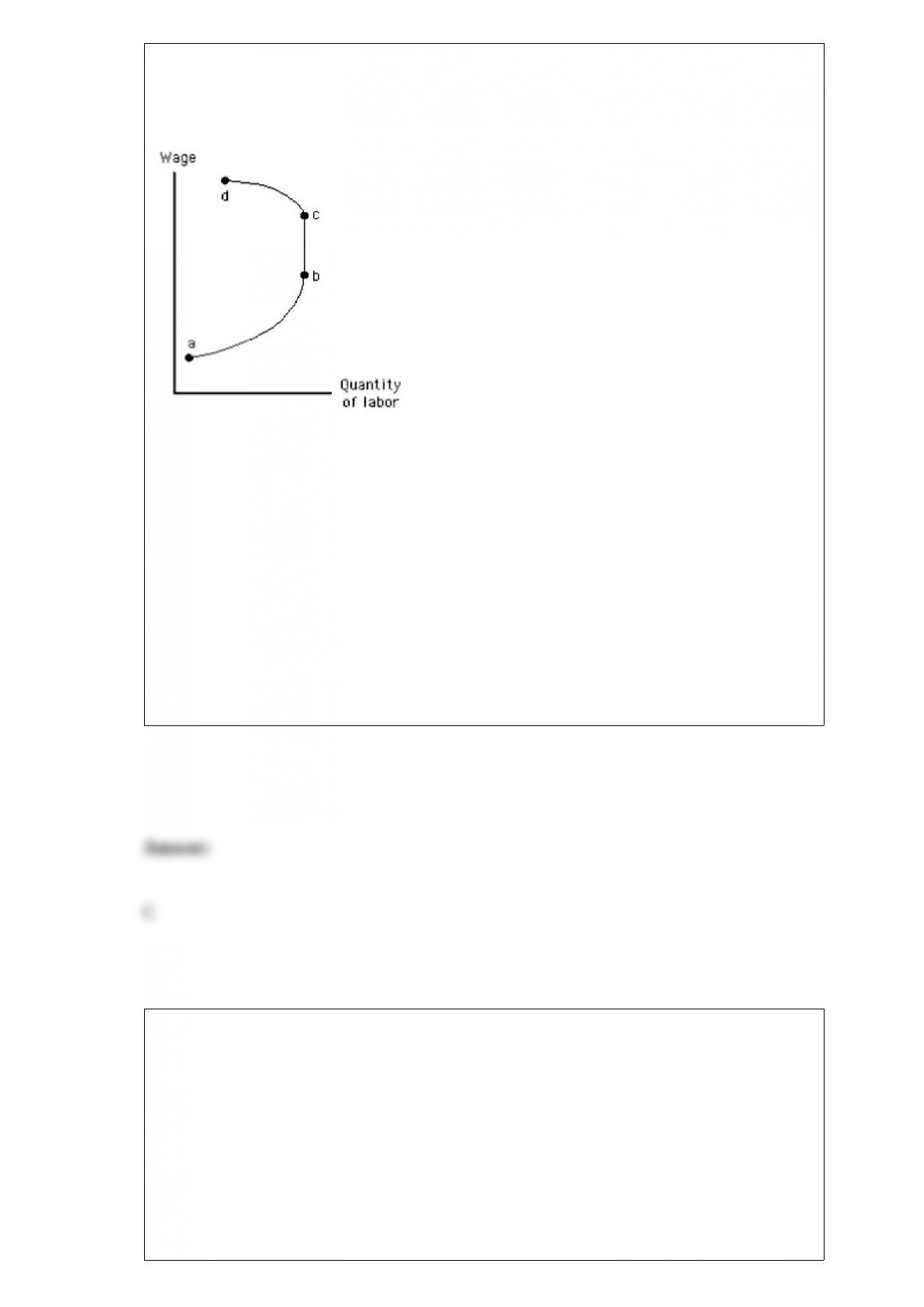
Exhibit 12-1
Along which part of the labor supply curve in Exhibit 12-1 does the income effect of a
wage change just equal the substitution effect?
a. between points a and b
b. between points a and c
c. between points b and c
d. between points b and d
e. between points c and d
A tax is said to be progressive if
a. the absolute size of the tax (in dollars) increases as income increases
b. the wealthy pay a smaller percentage of their income than the poor
c. the average tax rate falls as income rises
d. the proportion of income paid as taxes increases as income increases

e. the proceeds are used to pay for liberal political programs
A service like CARFAX, which provides a used car buyer with the complete history of
a used car, is profitable because of the problem of asymmetric information.
a. True
b. False
Which of the following is true of a natural monopoly?
a. If regulated, the firm will have a higher level of output than an unregulated firm,
whether the regulation is based on average cost, marginal cost, or normal profit.
b. If regulated, the firm will have a lower level of output than an unregulated firm,
whether the regulation is based on average cost, marginal cost, or normal profit.
c. If regulated, the firm that is only allowed a normal profit will be allowed to charge a
price in excess of its average cost.
d. If regulated, the firm that is only allowed a normal profit will be allowed to produce
more than a firm that must set a price equal to its marginal cost.
e. If regulated, the firm that is only allowed a normal profit will be allowed to produce
more than a firm that must set a price equal to its average cost.

Barter occurs when
a. two people share everything
b. one product is exchanged directly for another product
c. money is used to buy goods
d. money is exchanged directly for other money
e. goods are used to buy money
A natural monopoly results when a firm has
a. a license
b. a patent
c. official approval to produce a product
d. decreasing average costs over the range of market demand
e. exclusive use of a natural resource
If the U.S. dollar depreciates, it becomes cheaper for U.S. residents to travel in foreign
countries.
a. True
b. False
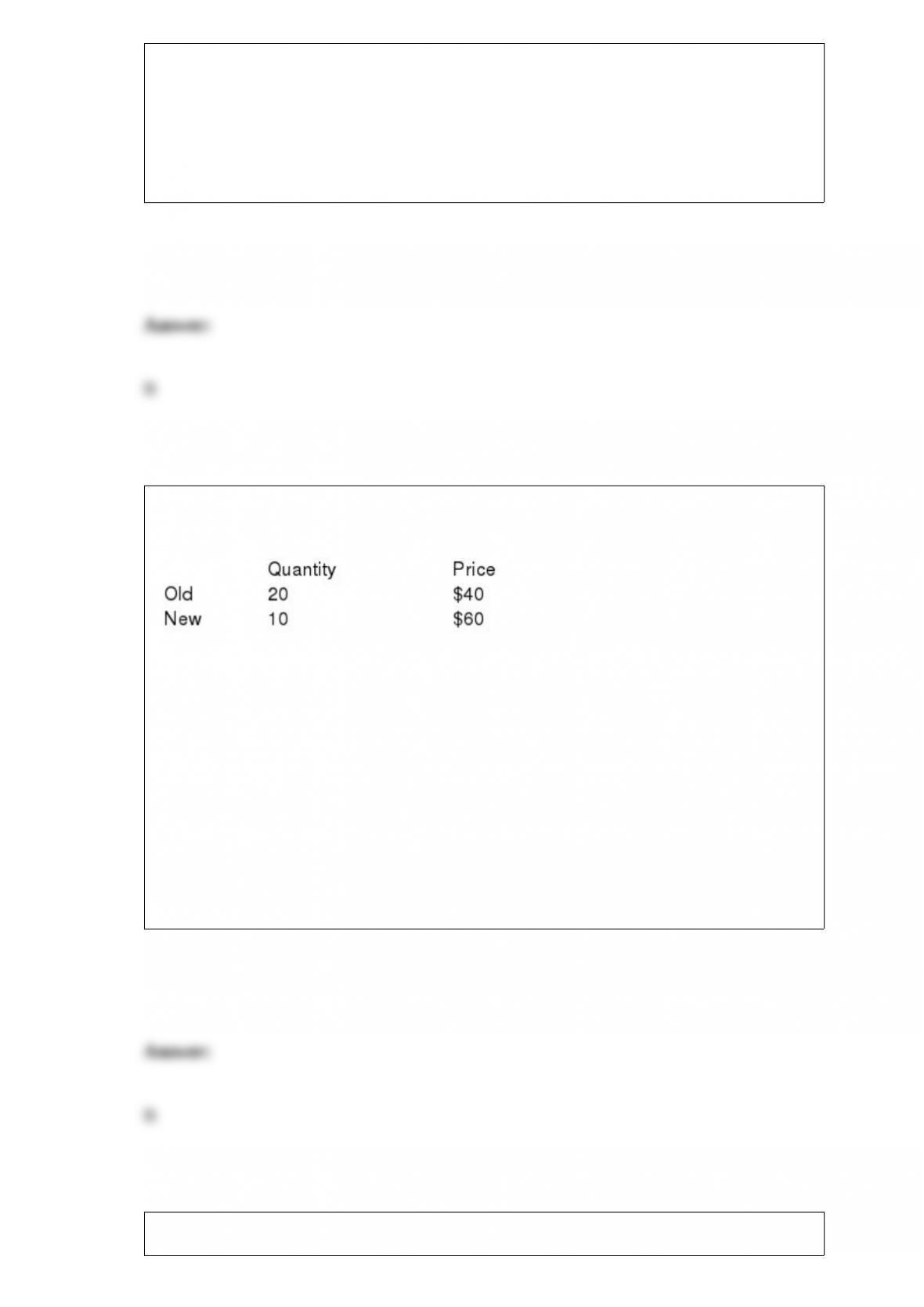
Exhibit 5-2
Based on the information in Exhibit 5-2, the demand for the good is __________ and an
increase in price from $40 to $60 per unit will __________ total revenue.
a. unit elastic; increase
b. elastic; decrease
c. unit elastic; not change
d. inelastic; increase
e. elastic; decrease
A natural monopoly, such as the local telephone company, is characterized by

a. a lack of natural competitors
b. low fixed costs and diseconomies of scale
c. economies of scale
d. a lack of government regulation
e. constant costs of production
Demand curves usually slope downward because of the income and substitution effects,
and because of the law of diminishing marginal utility.
a. True
b. False
Which of the following is a defining characteristic of a public good?
a. It is produced and distributed by the government.
b. The decision to produce it is made by the public through the voting process.
c. It is produced and distributed by private firms according to government regulations.
d. It is freely available to everyone once it is produced.

e. It is purchased by one government agency from another government agency.
Suppose that for Jason the marginal utility of $50-per-serving caviar is 100 and the
marginal utility of $1-per-serving popcorn is 10. For his snack, Jason should buy
a. the caviar if he has the $50; otherwise the popcorn
b. the caviar if he has the $50; otherwise nothing
c. the popcorn, whether he has the $50 or not
d. one serving each of the caviar and popcorn, if he has $51
e. five servings of popcorn for each serving of caviar
Exhibit 4-7
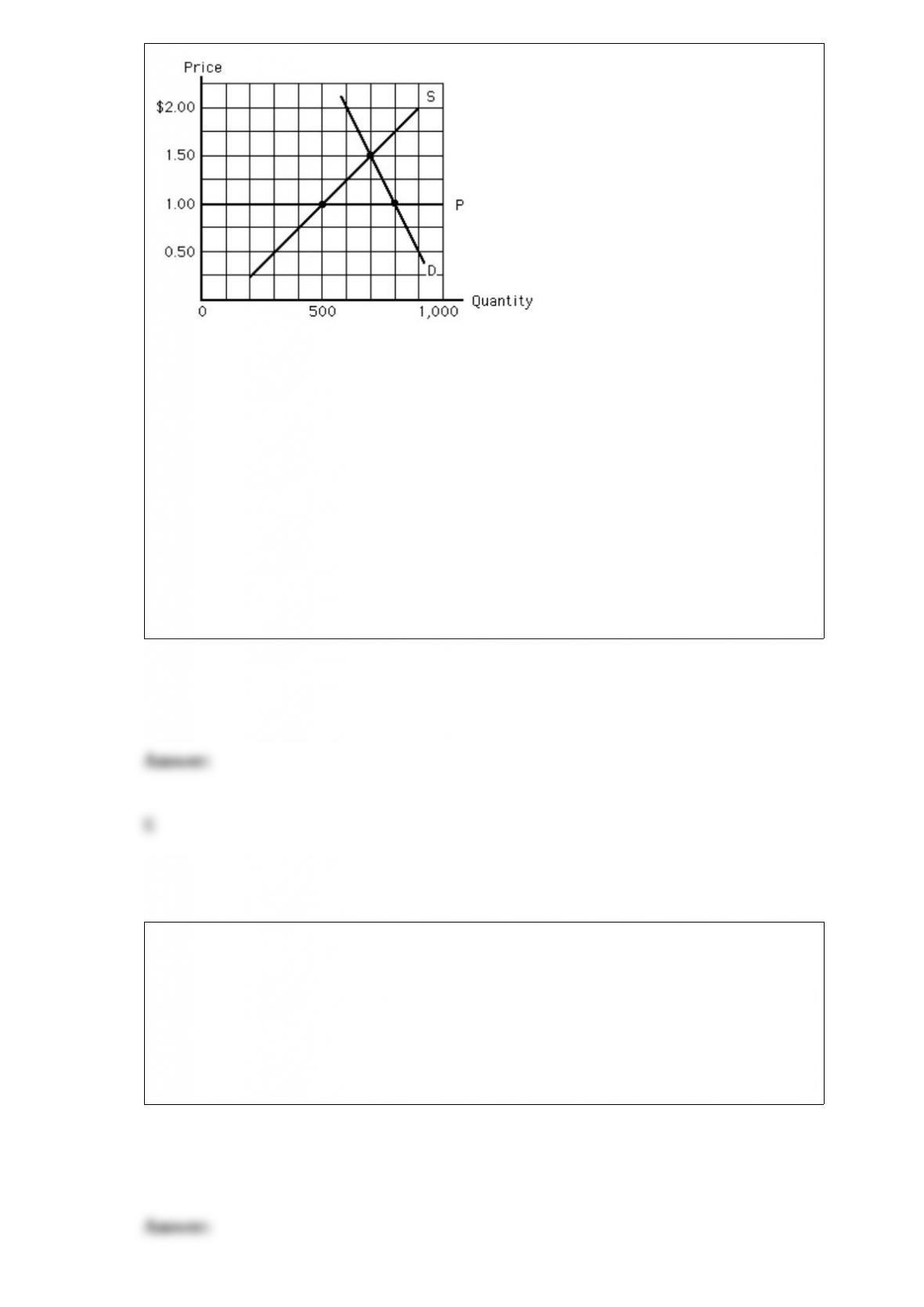
Exhibit 4-7 depicts the milk market. The horizontal line, P, represents a price ceiling
imposed by the government. Which of the following is true?
a. In equilibrium, the quantity demanded is 800 gallons.
b. At the ceiling price, there is a surplus.
c. The quantity demanded at the price ceiling will equal the quantity supplied.
d. The equilibrium price would be $1 per unit without the price ceiling.
e. The quantity supplied at the price ceiling will equal the quantity sold.
The total revenue curve for a perfectly competitive firm
a. is a vertical line intersecting the horizontal axis
b. is a horizontal line intersecting the vertical axis
c. starts part way up the vertical axis, then slopes upward in a backwards-S curve
d. is a straight line starting from the origin and sloping upward
e. starts at the origin, sloping upward at first and then sloping downward
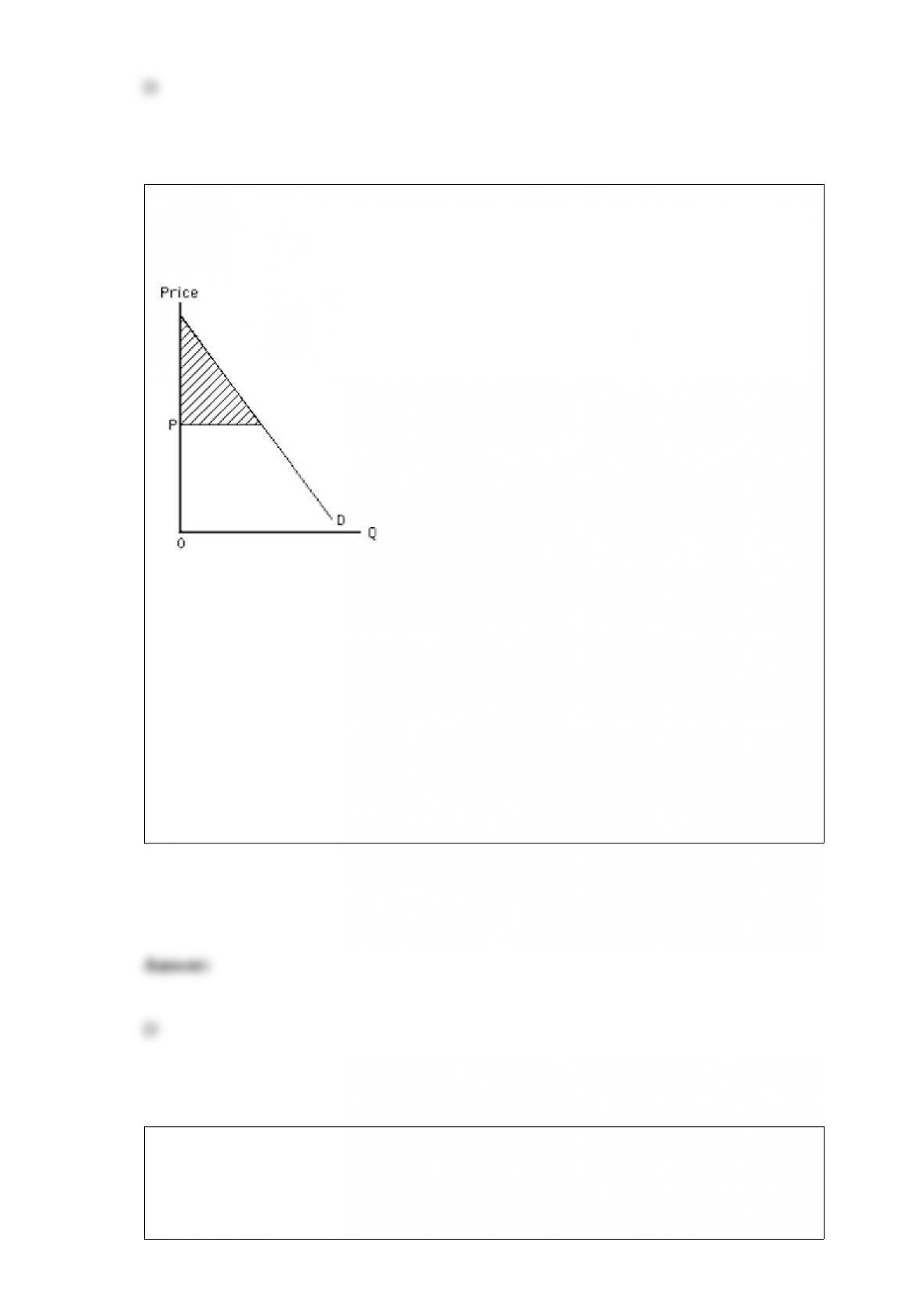
Exhibit 6-13
When the price is P in Exhibit 6-13, the shaded area represents
a. a shortage
b. producer surplus
c. a price floor
d. consumer surplus
e. a price ceiling
The greater the availability of close substitutes for a product, the greater the price
elasticity of demand for that product.
a. True
b. False
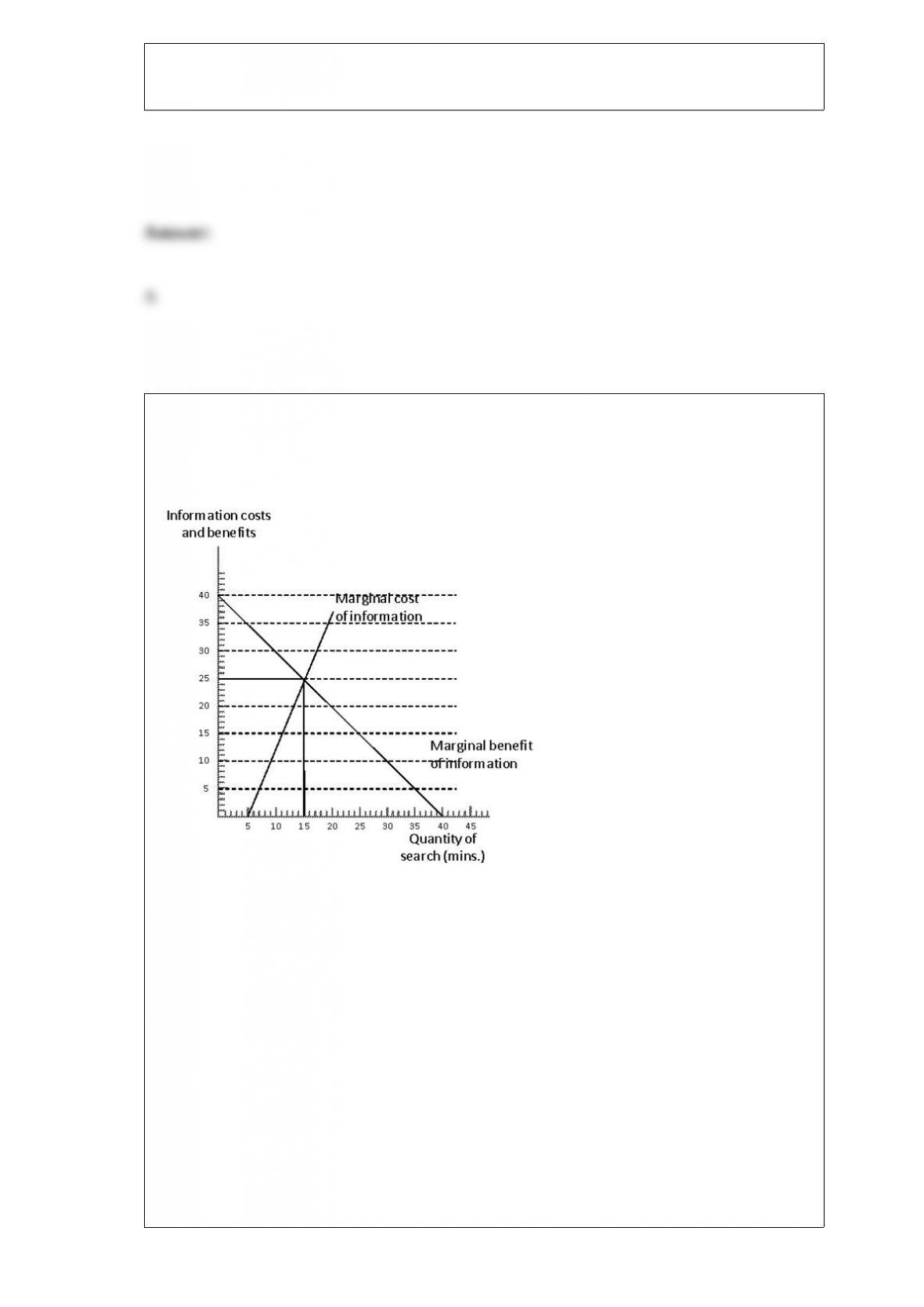
Exhibit 14-3
In Exhibit 14-3, the marginal benefit curve reflects
a. the fact that as Jira spends more time searching for information about HD televisions,
additional information yields less and less improvement in the value of the product she
will get
b. the opportunity cost of the Jira’s time
c. the fact that greater and greater distances must be covered to acquire a marginal piece
of information
d. the fact that the cost of gathering information diminishes as more is gathered
e. the fact that there is much common knowledge about consumption

Agricultural subsidies in the United States are paid for by
a. consumers of the product
b. taxpayers and consumers
c. other industries
d. special taxes
e. import tariffs
Marginal revenue is defined as
a. total revenue divided by quantity
b. total revenue minus total cost
c. the change in total revenue divided by the change in quantity
d. the change in total revenue divided by quantity
e. the change in total revenue
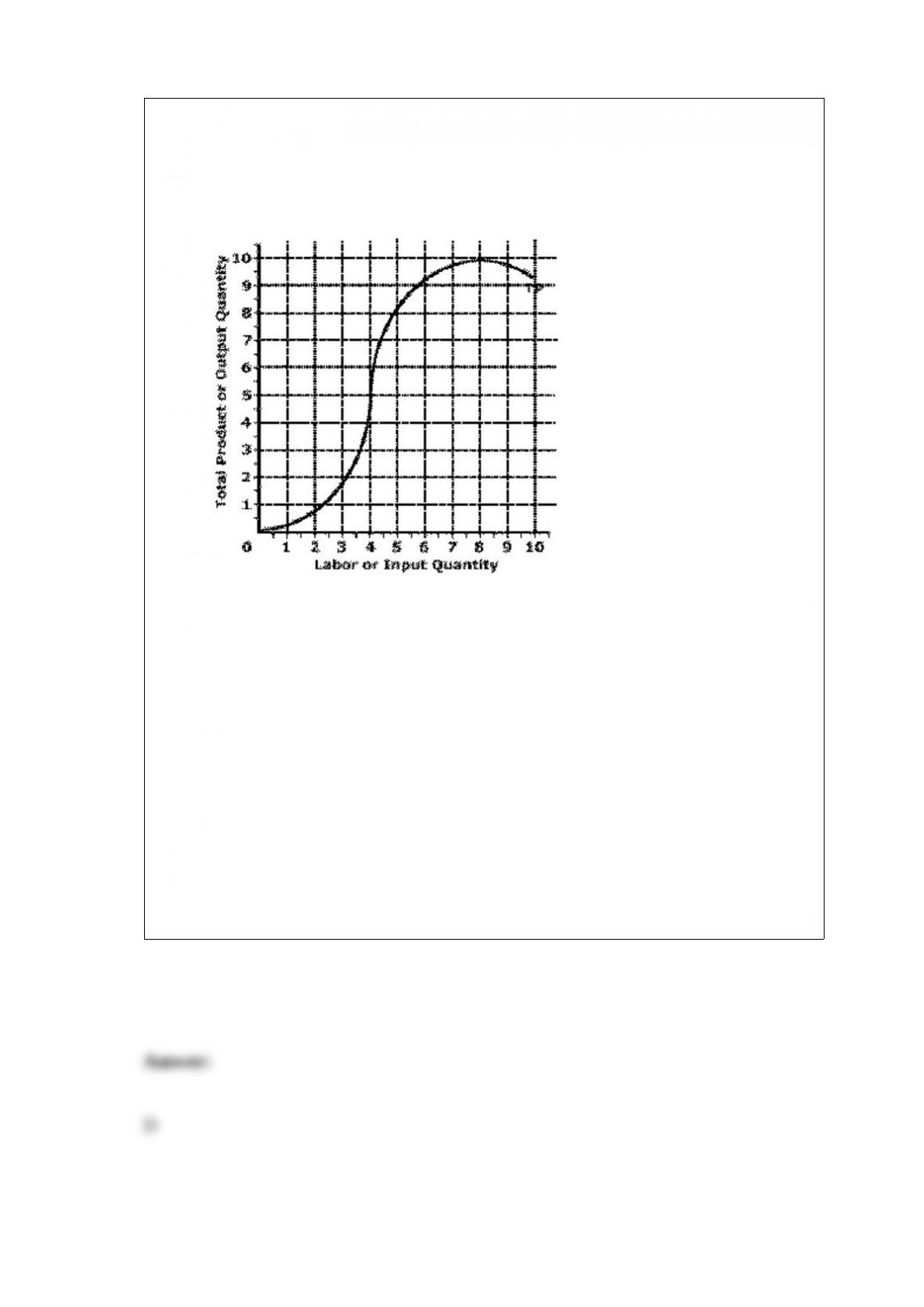
Exhibit 7-13 The Total Product of Labor
Given the information in Exhibit 7-13, what is the average product when three units of
labor are employed?
a. more than two-thirds units of output
b. less than one-third of a unit of output
c. less than the average product when two units of labor are employed
d. more than the average product when two units of labor are employed
e. cannot be determined from the graph of total product

We see permanent price differentials in land because
a. the demand for land is high
b. land has few uses
c. location is the inherent quality that often determines its value
d. real estate brokers are inefficient
e. land is not traded in free markets
The general term elasticity refers to a relationship between
a. quantity demanded and price only
b. quantity supplied and price only
c. quantity supplied or demanded and price only
d. quantity supplied or demanded and anything other than price
e. percentage changes in any two variables
If a person saves $1,000, how much will she have at the end of three years if the market
interest rate is 6 percent?

a. $1,060
b. $1,135
c. $1,156
d. $1,191
e. $1,600
The slope of an inverted U-shaped curve is infinity at the top of the curve.
a. True
b. False
A prisoner’s dilemma is a situation in which
a. a change in marginal cost may not lead to a change in price
b. a firm’s competitors follow a price increase but ignore a price decrease
c. oligopolists behave irrationally
d. oligopolists attempt to maximize sales rather than profits
e. an oligopolists demand curve may become perfectly inelastic
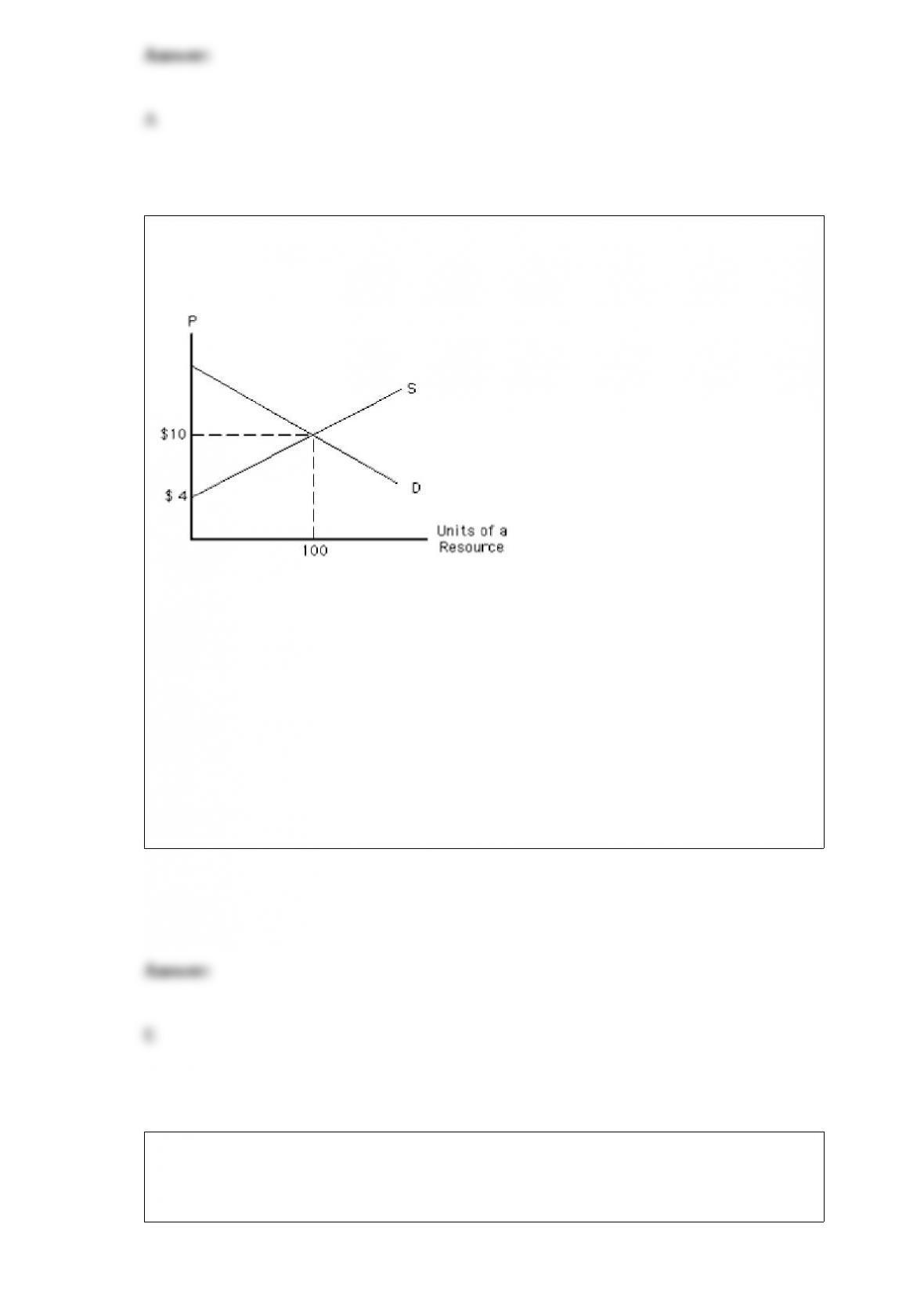
Exhibit 11-3
In Exhibit 11-3, economic rent at equilibrium equals
a. $40
b. $60
c. $10
d. $700
e. $300
Exhibit 7-17
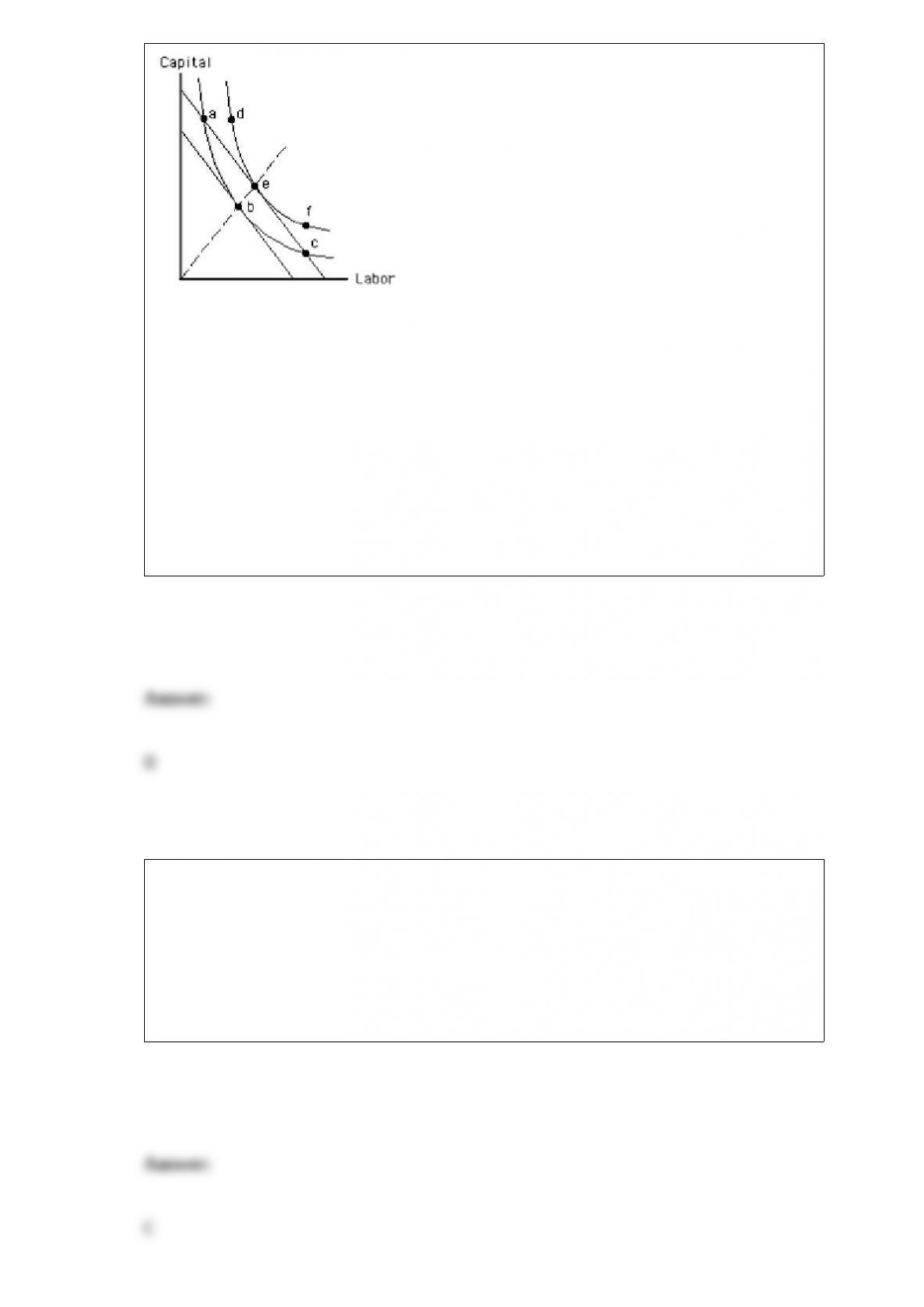
At point b in Exhibit 7-17, output is
a. higher than at points a and c, but cost is the same
b. the same as at points a and c, but cost is lower
c. the same as at points a and c, but cost is higher
d. lower than at points a and c and so is cost
e. higher than at point a
Which of the following is true of monopoly?
a. There are no barriers to entry.
b. The firm is a price taker.
c. There are no close substitutes for the product being produced.
d. There are many firms in the industry.
e. The firm faces a horizontal demand curve.
As output rises, marginal product eventually diminishes and
a. marginal cost increases
b. average cost falls
c. total cost falls
d. fixed cost is increasing
e. average product is negative
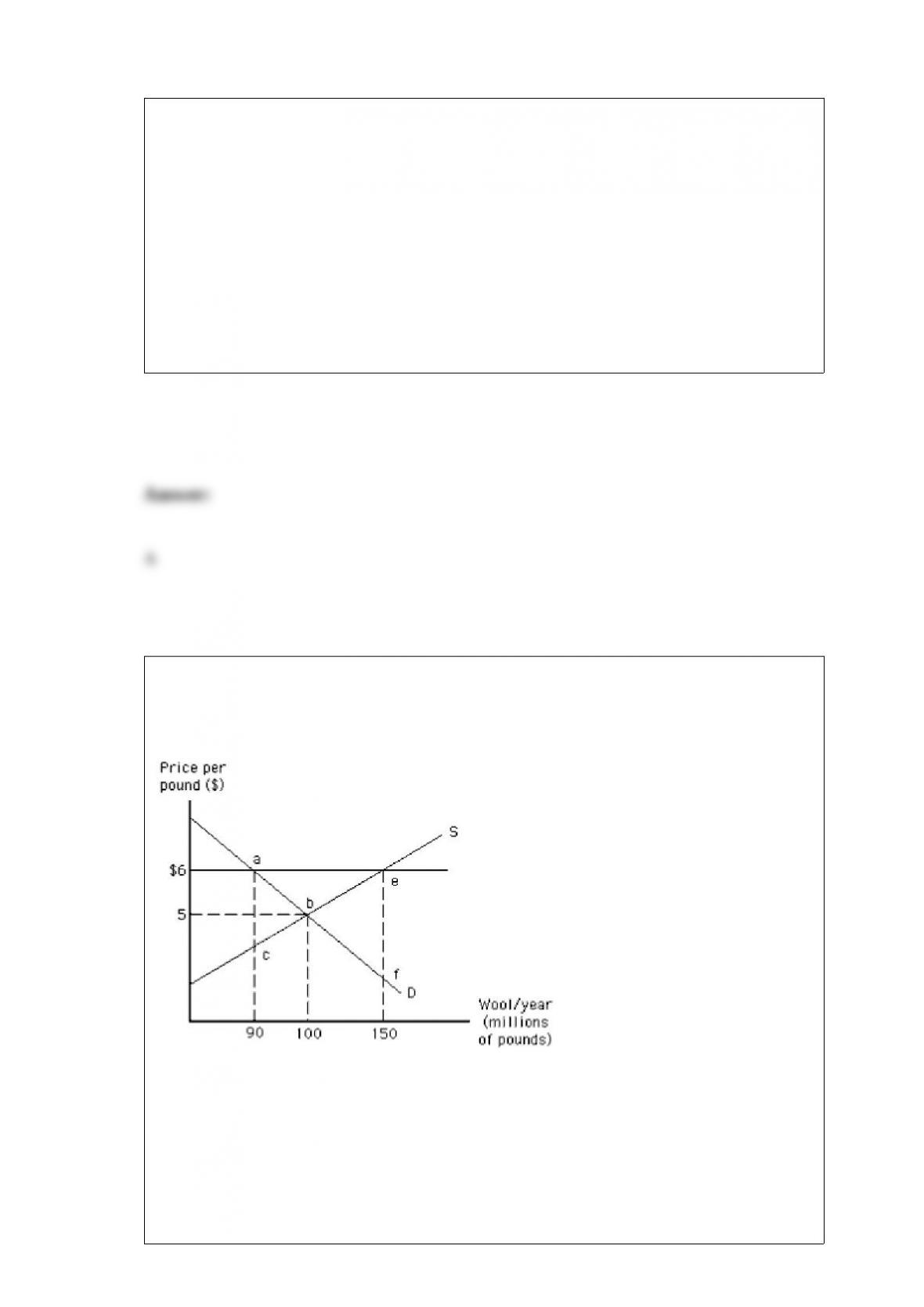
Exhibit 16-2
Refer to Exhibit 16-2. If the government commits to buying the surplus wool created by
the $6 price support, how much will they have to spend?
a. $540 million
b. $360 million

c. $600 million
d. $900 million
e. $300 million
Susie spends more of October thinking about her Halloween costume than she spends
thinking about a proposed law that will be on the November ballot. Which of the
following is true?
a. This behavior is rational if she expects a greater benefit from the costume than from
any possible effect her vote could have on the proposed law.
b. This behavior is rational if she is planning to spend the time from Halloween to
Election Day thinking about the law.
c. This behavior is not rational because the law is more important than the costume.
d. In order for this behavior to be considered rational, it would have to be true that Susie
is too ignorant to fully understand the law.
e. In order for this behavior to be considered rational, it would have to be true that Susie
would not be affected by the law.
Which of the following represents the resource supply curve faced by a firm that hires
resources in a perfectly competitive resource market?

a. its ATC curve
b. its AVC curve
c. its MRP curve
d. its MRC curve
e. its AFC curve
At the December meeting of the American Economic Association, 2,500 new Ph.D.s
look for college teaching jobs. If the average wage offer is $40,000 and Tedium
University makes that offer, it is likely to
a. be ignored
b. attract only average Ph.D.s
c. attract applicants from top schools
d. attract Ph.D.s with strong dissertations
e. attract applicants of below-average quality