
The government’s profit from issuing fiat money is known as
A) seigniorage.
B) menu costs.
C) commodity profit.
D) tax distortions.
C = $40 million + 0.6(1 – 0.2)Y
I = $35 million
G = $31 million
NX = -$6 million
Based on the above data, the value of the expenditure multiplier is
A) 1.14
B) 1.92
C) 2.08
D) 8.33
The debt-to-GDP ratio increases when the primary deficit ________ or when

seigniorage ________.
A) increases; increases
B) increases; decreases
C) decreases; increases
D) decreases; decreases
Suppose the working-age population of a fictional economy falls into the following
categories: 30 are retired; 45 are stay-at-home parents; 120 are employed full time; 40
are employed part time; 25 are unemployed but are actively looking for employment;
15 are unemployed and are not actively looking for employment. The official
unemployment rate as calculated by the BLS would be
A) 9.62%.
B) 13.51%.
C) 14.55%.
D) 20%.
If the price level is constant in the short run,
A) the short-run aggregate demand curve is horizontal.

B) the short-run aggregate demand curve is vertical.
C) the short-run aggregate supply curve is horizontal.
D) the short-run aggregate supply curve is vertical.
When the Fed makes an open market purchase, long-term real interest rates will
________, which will ________ GDP.
A) increase; increase
B) increase; decrease
C) decrease; increase
D) decrease; decrease
Table 2.3
2007 2010 2013
Quantity Price Quantity Price Quantity Price
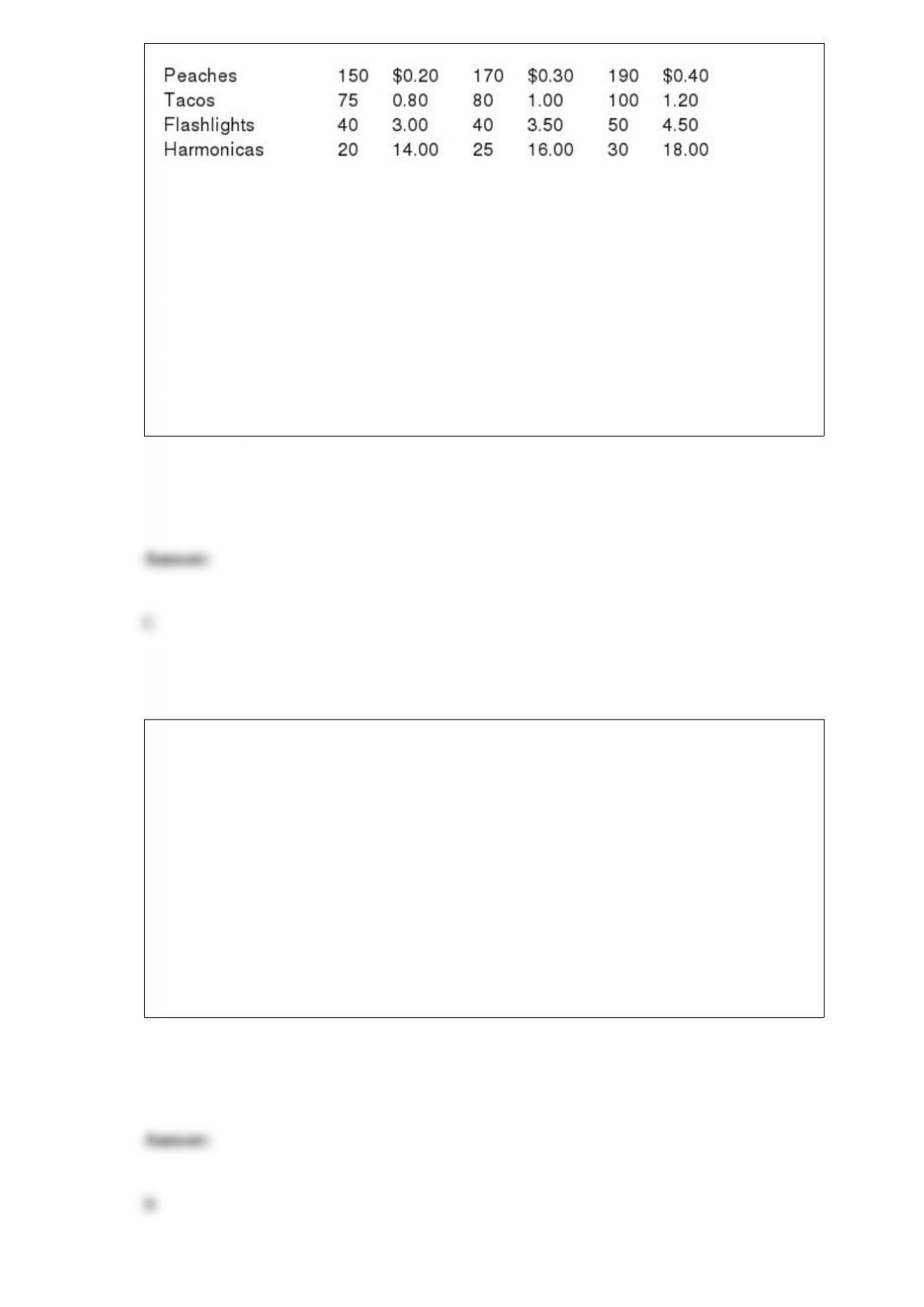
Table 3 gives quantities and prices for each good produced in a simple economy in
2007, 2010, and 2013.
Refer to Table 2.3. Assume that 2010 is the base year. The GDP deflator for 2010 is
A) 67.1
B) 84.5
C) 100
D) 118.3
If the real wage needs to decrease to restore equilibrium in a labor market, this can
happen by
A) keeping the nominal wage constant and allowing deflation to allow the real wage to
decline.
B) keeping the nominal wage constant and allowing inflation to allow the real wage to
decline.
C) raising the nominal wage and allowing deflation to allow the real wage to decline.
D) raising the nominal wage so long as there is no inflation occurring in the economy.

From the Keynesian perspective, an increase in cyclical unemployment during a
recession represents
A) an equivalent increase in the natural rate of unemployment.
B) a roughly equal mix of voluntary and involuntary unemployment.
C) involuntary unemployment.
D) a decrease in the number of discouraged workers in an economy.
In the steady state, real GDP per worker ________, and real GDP per effective worker
________.
A) will grow; will grow
B) will grow; is constant
C) is constant; will grow
D) is constant; is constant
Gross national product (GNP) of the United States is the value of all final goods and
services
A) produced anywhere in the world by residents of the United States.
B) produced in the United States by residents of any nation.
C) produced and consumed within the United States.
D) produced anywhere in the world, but consumed by residents of the United States.
For each of the following policy options the government can undertake to make the
debt sustainable, explain the economic consequences and the resulting change to
potential GDP:
a. increasing seigniorage
b. increasing taxes on wages
c. increasing taxes on capital income
d. decreasing expenditure on government capital goods
e. decreasing expenditure on transfer programs such as Social Security, Medicare, and
Medicaid
The number of Mexican pesos required to buy the same number of goods and services
in Mexico as one U.S. dollar buys in the United States is a description of the ________
exchange rate.
A) actual
B) real
C) purchasing power parity
D) chain-weighted
Crowding out is a reduction in private investment caused by government budget
deficits, and may partially offset the expansionary effects of fiscal policy. The exact
degree of crowding out depends on all of the following except
A) how much of the deficit is financed by households, firms, and governments outside
of the United States.
B) how much real interest rates increase.

C) the level of the marginal corporate income tax rate.
D) the sensitivity of investment to the real interest rate.
A positive demand shock causes a ________ the IS curve and a ________ the aggregate
demand curve.
A) movement up along; shift to the right of
B) shift to the right of; movement down along
C) movement down along; movement down along
D) shift to the right; shift to the right of
For each of the following situations, choose a fiscal policy and explain how it could be
used to correct the economic problem.
a. Real GDP is below potential GDP following a financial market crisis.
b. A positive demand shock increases aggregate expenditure beyond the full
employment level and leads to fears of rising inflation.
c. The economy is in a recession due to rising defaults on mortgages following the
bursting of a housing bubble.
Assuming seigniorage equals zero, the federal debt is ________ and the budget deficit
is ________.
A) a flow variable representing the total value of government bonds outstanding; a
stock variable representing the yearly increase in value of newly issued government
bonds
B) a stock variable representing the total value of government bonds outstanding; a
flow variable representing the yearly increase in value of newly issued government

bonds
C) a flow variable representing the yearly increase in value of newly issued government
bonds; a stock variable representing the total value of government bonds outstanding
D) a stock variable representing the yearly increase in value of newly issued
government bonds; a flow variable representing the total value of government bonds
outstanding
Other things equal, the ________ the real interest rate, the ________ the potential pool
of borrowers.
A) higher; less risky
B) higher; more risky
C) lower; smaller
D) lower; less qualified
Assume the economy is initially in equilibrium where potential GDP is greater than real
GDP. If the expected inflation rate, the term structure effect, and the default-risk
premium are constant, a decrease in the Fed’s target short-term nominal interest rate
will ________ the MP curve and the output gap will become ________.
A) shift up; smaller

B) shift up; larger
C) shift down; smaller
D) shift down; larger
The Federal Reserve System consists of
A) one Federal Reserve Bank and 12 Federal Reserve districts, each with one branch
bank.
B) a main central bank located in New York, with 11 additional branch banks located
across the country.
C) 12 Federal Reserve Banks, each of which have a degree of independence from the
U.S. government.
D) 12 independent banks in the 12 Federal Reserve districts, each of which are owned
and controlled by the federal government.
Explain whether each of the following variables is a lagging, leading, or coincident
indicator: In each case, is the economy likely in a recession, heading for a recession, in
an expansion, or heading for an expansion?
a. Industrial production is falling.
b. The number of building permits issued for new private housing units begins to
decline.
c. The number and amount of commercial and industrial loans start to rise.
d. The average prime interest rate charged by banks begins to fall.
e. The M2 money supply begins to rise.
Figure 10.7
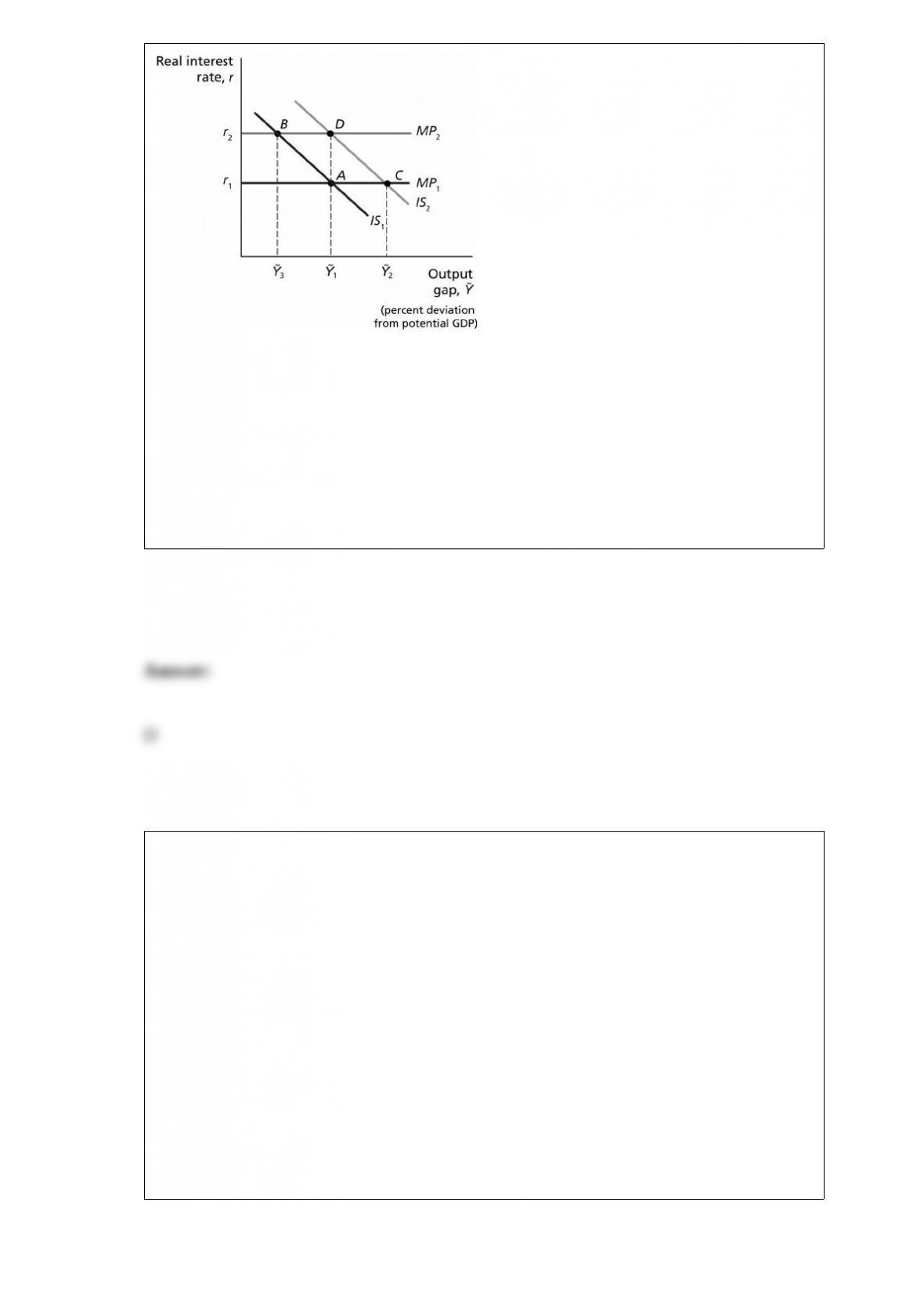
Refer to Figure 10.7. A movement from point D to point C could be caused by
A) a positive demand shock.
B) an increase in the term premium investors expect in the future.
C) an increase in the term structure effect.
D) an increase in the expected rate of inflation.
Explain which of the following goods and services are included and which are not
included in U.S. GDP:
a. Jacinda buys termite spray at her local Home Depot.
b. Jacinda uses the termite spray she purchased at her local Home Depot to treat her
house for termites.
c. Arturo hires a pest control company to treat his house for termites.
d. Jeannine sells her 1969 Pontiac GTO to a local car museum.
e. Simon purchases a new John Deere tractor to use on his farm.
f. Ravi purchases 2 round-trip airline tickets between Chicago and Las Vegas.
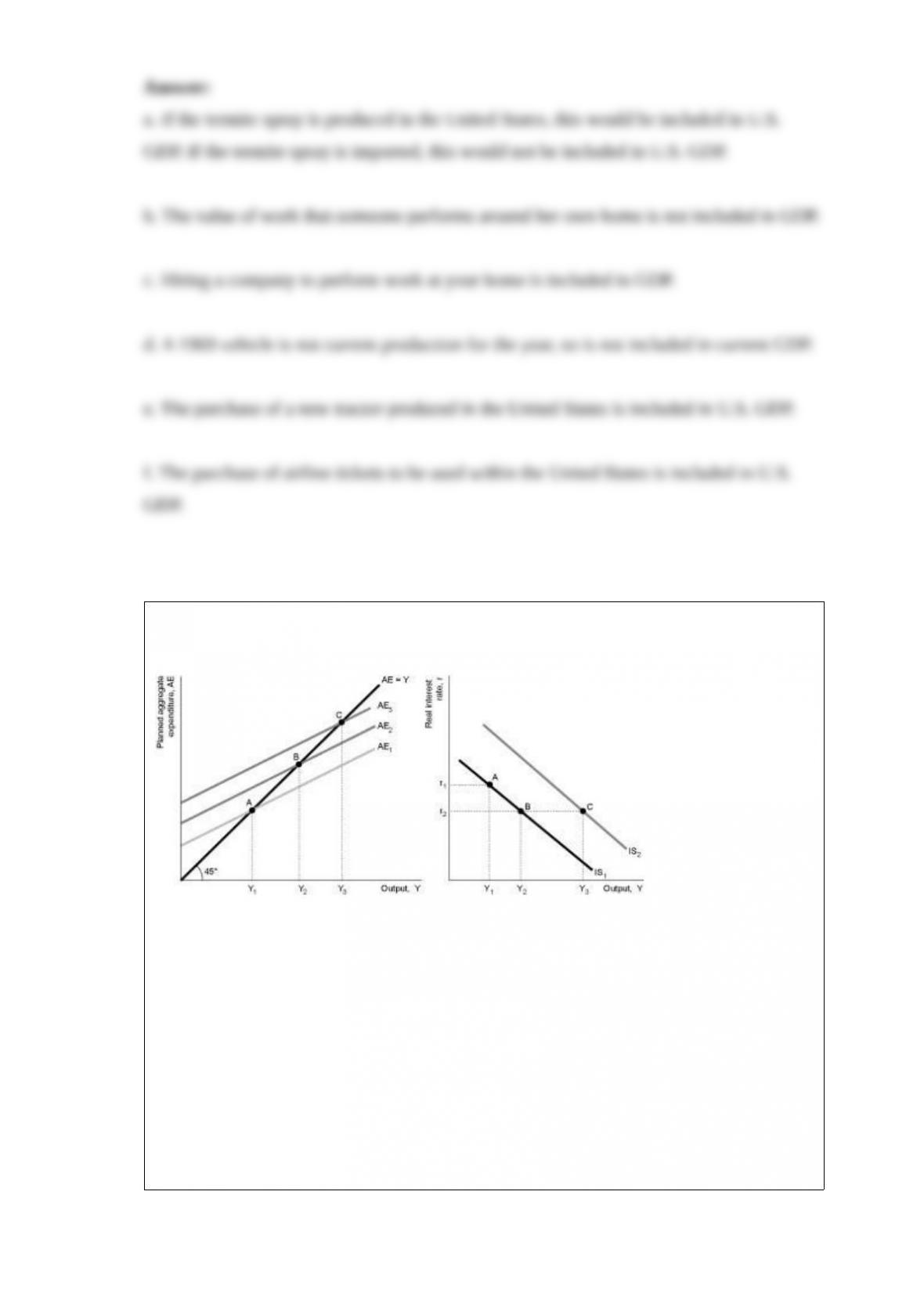
Figure 10.3
Panel (a) Panel (b)
Refer to Figure 10.3. A negative demand shock with no change in the real interest rate
is best represented by ________ in panel (a) and ________ in panel (b).
A) a shift from AE3 to AE2; a shift from IS2 to IS1
B) a shift from AE2 to AE3; a shift from IS1 to IS2
C) a shift from AE2 to AE1; a movement from point B to point A
D) a shift from AE3 to AE1; a movement from point C to point A
Which of the following best represents total saving?
A) T – (G + TR)
B) (Y – TR) + I
C) (Y – C – G – NX)
D) (Y + TR – T) + C
Figure 14.1
Refer to Figure 14.1. Other things equal, an increase in the Fed’s concern about
deviations of inflation from the target inflation rate is best represented as a movement
from
A) point X to point Z.
B) point Z to point X.
C) point Z to point Y.
D) point Y to point X.
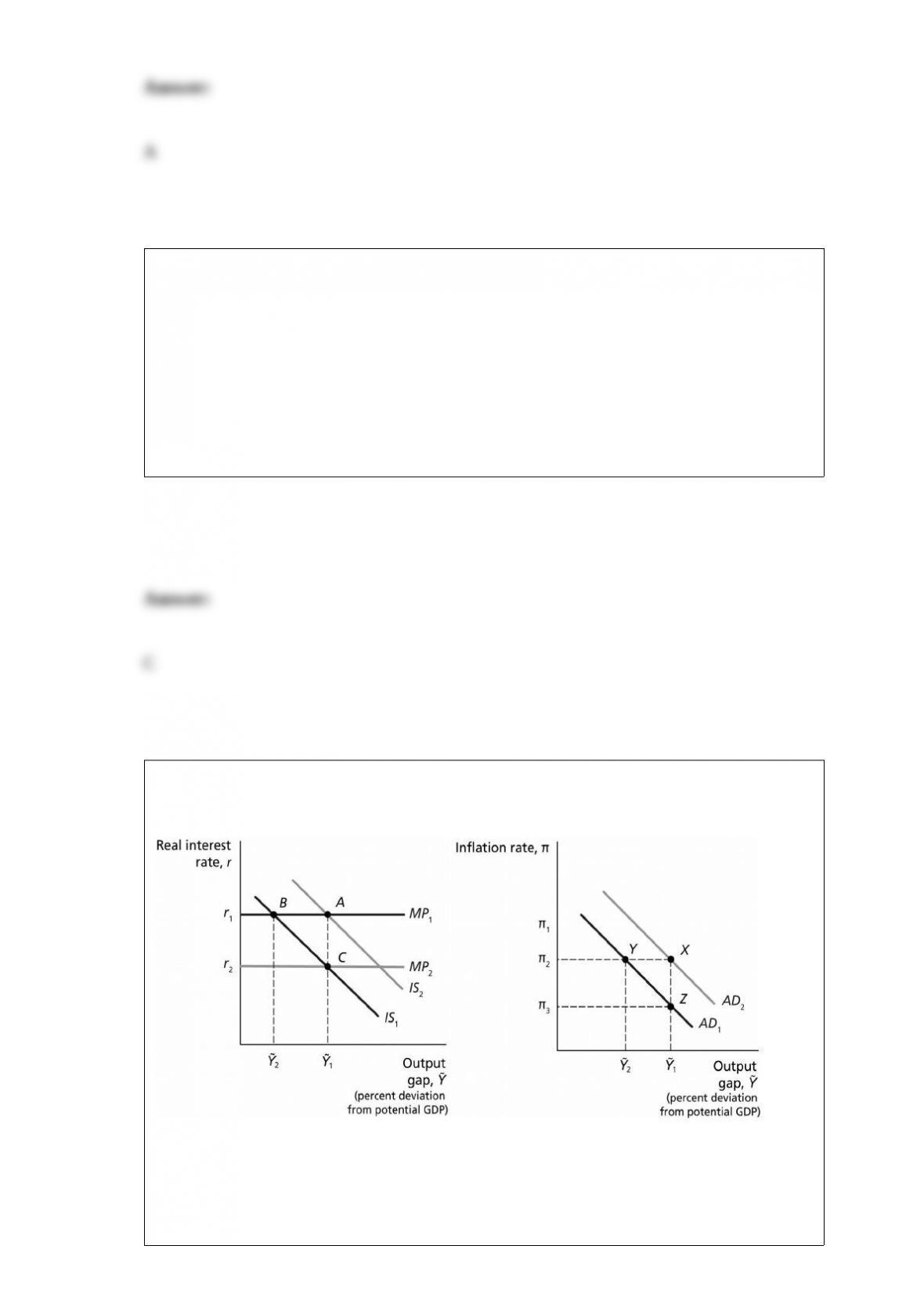
Figure 13.3
Panel (a) Panel (b)
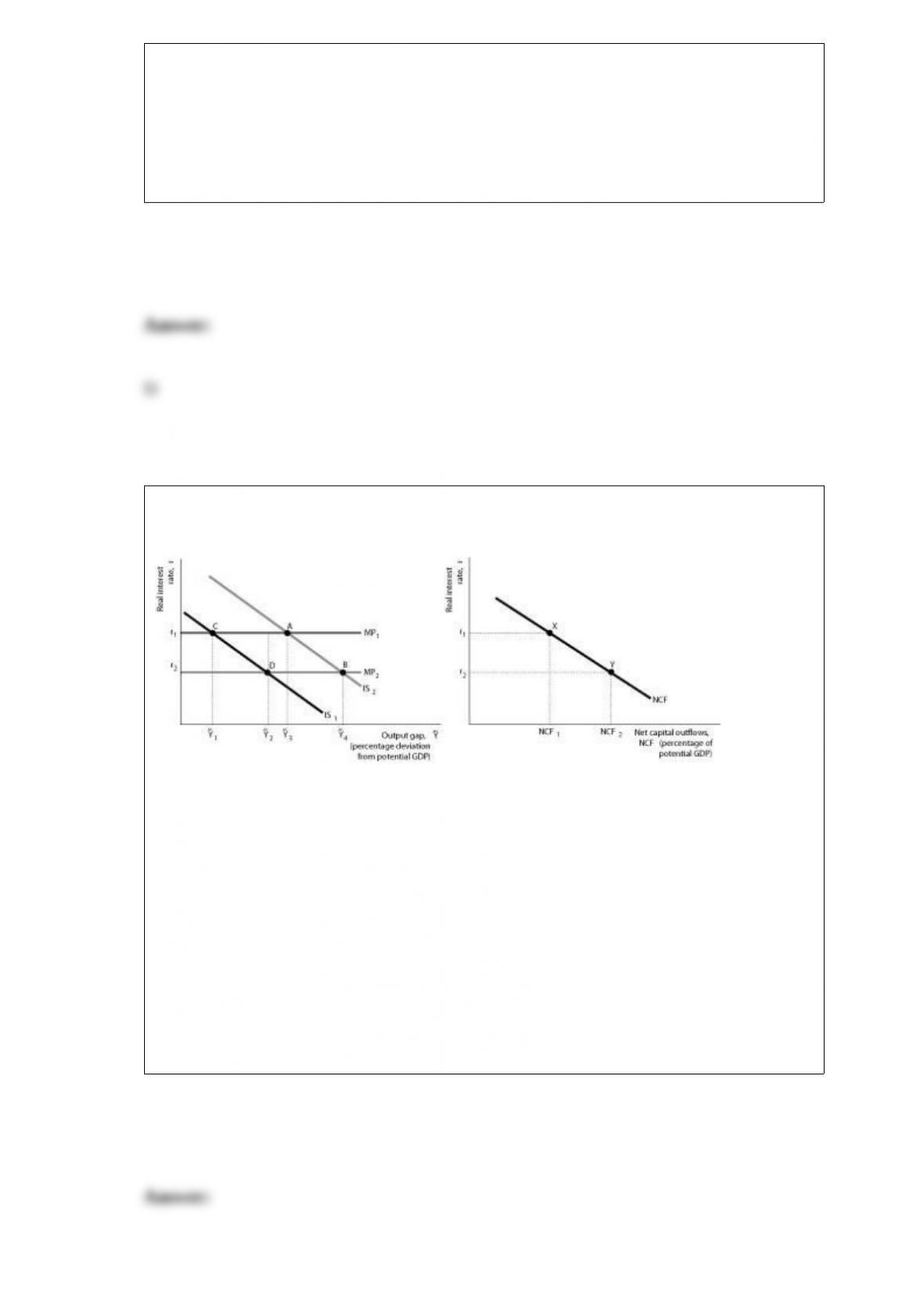
Refer to Figure 13.3. If exchange rates are floating, an expansionary fiscal policy and
the typical Fed response to the change in inflation caused by the fiscal policy would
best be represented by a movement from ________ in panel (a) and a corresponding
movement from ________ in panel (b).
A) point A to point D; point X to point Y
B) point C to point B; point X to point Y
C) point D to point A; point Y to point X
D) point B to point C; point Y to point X

Hector’s wealth is zero, he expects to work for another 45 years at a constant salary of
$80,000 and live for another 60 years. If yearly taxes are $20,000 and Hector
completely smooths consumption over his lifetime, Hector’s annual consumption is
________ less than it would be if yearly taxes were zero.
A) $5,000
B) $7,500
C) $15,000
D) $20,000
The part of the balance of payments that records purchases of assets a country has made
abroad and foreign purchases of assets in the country is the
A) capital account.
B) current account.
C) financial account.
D) statistical discrepancy account.
National income accounting reveals that the value of total production in an economy
A) is always greater than the value of total income in the economy.
B) is always less than the value of total income in the economy.
C) is always equal to the value of total income in the economy.
D) may be greater than, less than , or equal to the value of total income in the economy.