1)
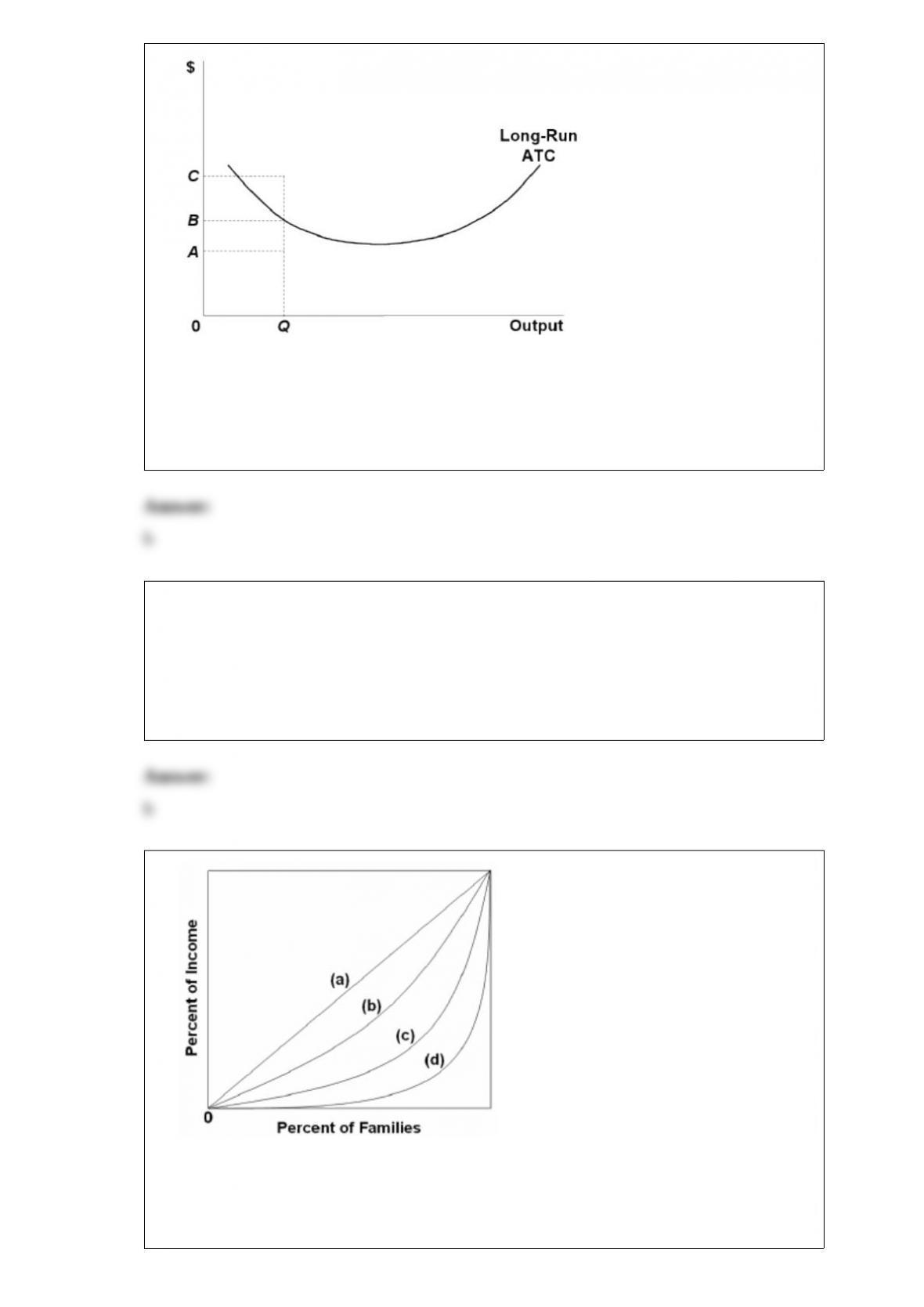
refer to the above diagram. for output level q, per unit costs of a are:
a.unattainable and imply the inefficient use of resources.
b.unattainable, given resource prices and the current state of technology.
c.attainable, but imply the inefficient use of resources.
d.attainable and imply least-cost production of this output.
2) as applied to the price level, the “rule of 70” indicates that the number of years
required for the price to double can be found by:
a.dividing “70” into the annual rate of inflation.
b.dividing the annual rate of inflation into “70.”
c.subtracting the annual change in nominal incomes from “70.”
d.multiplying the annual rate of inflation by “70.”
3)
Refer to the above diagram. If line c represents the distribution of income in 1970 in the
United States, we would expect the distribution of income for 2006 to be:
A.line a.
B.line b.
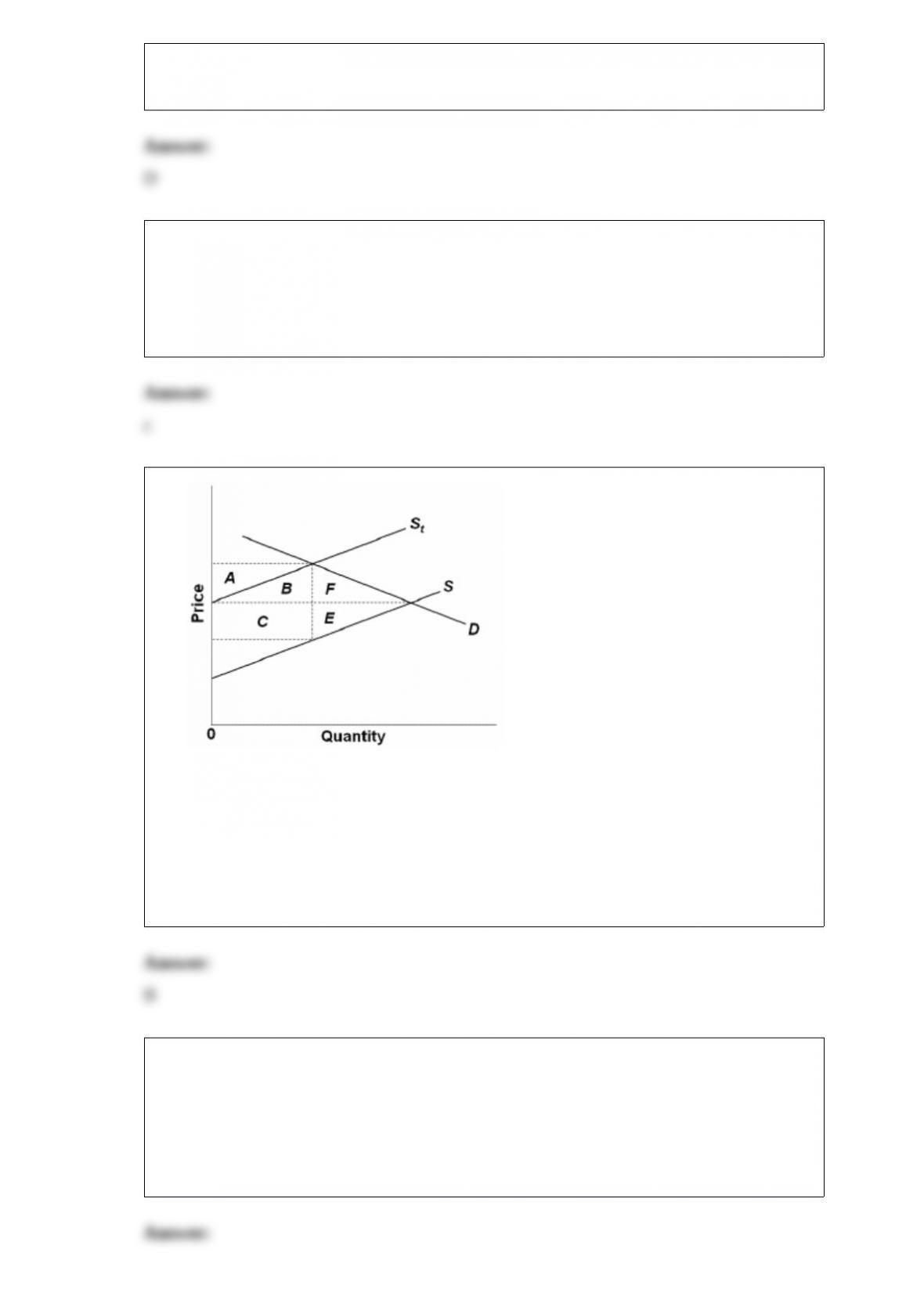
C.line c.
D.line d.
4) if we say that two variables are directly related, this means that:
a.the relationship between the two is purely random.
b.an increase in one variable is associated with a decrease in the other variable.
c.an increase in one variable is associated with an increase in the other variable.
d.the two graph as a downsloping line.
5)
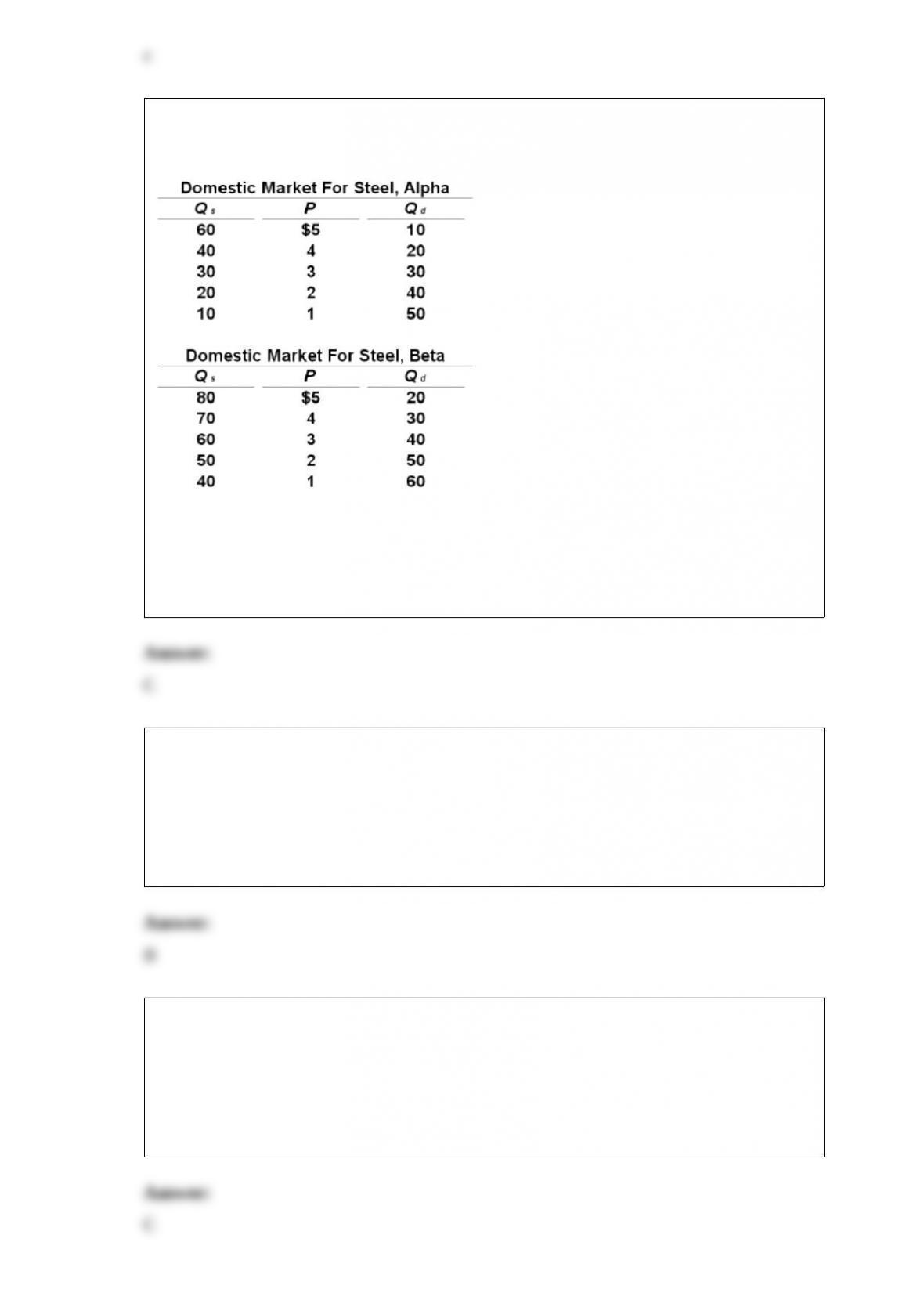
Refer to the above diagram in which S is the before-tax supply curve and St is the
supply curve after an excise tax is imposed. The total amount of the tax paid by
producers is shown by area(s):
A.A + B + F.
B.C only.
C.A + B + C.
D.E + F.
6) for most producing firms:
a.marginal cost rises as output is carried to a certain level, and then begins to decline.
b.total costs rise as output is carried to a certain level, and then begin to decline.
c.average total costs decline as output is carried to a certain level, and then begin to rise.
d.average total costs rise as output is carried to a certain level, and then begin to
decline.
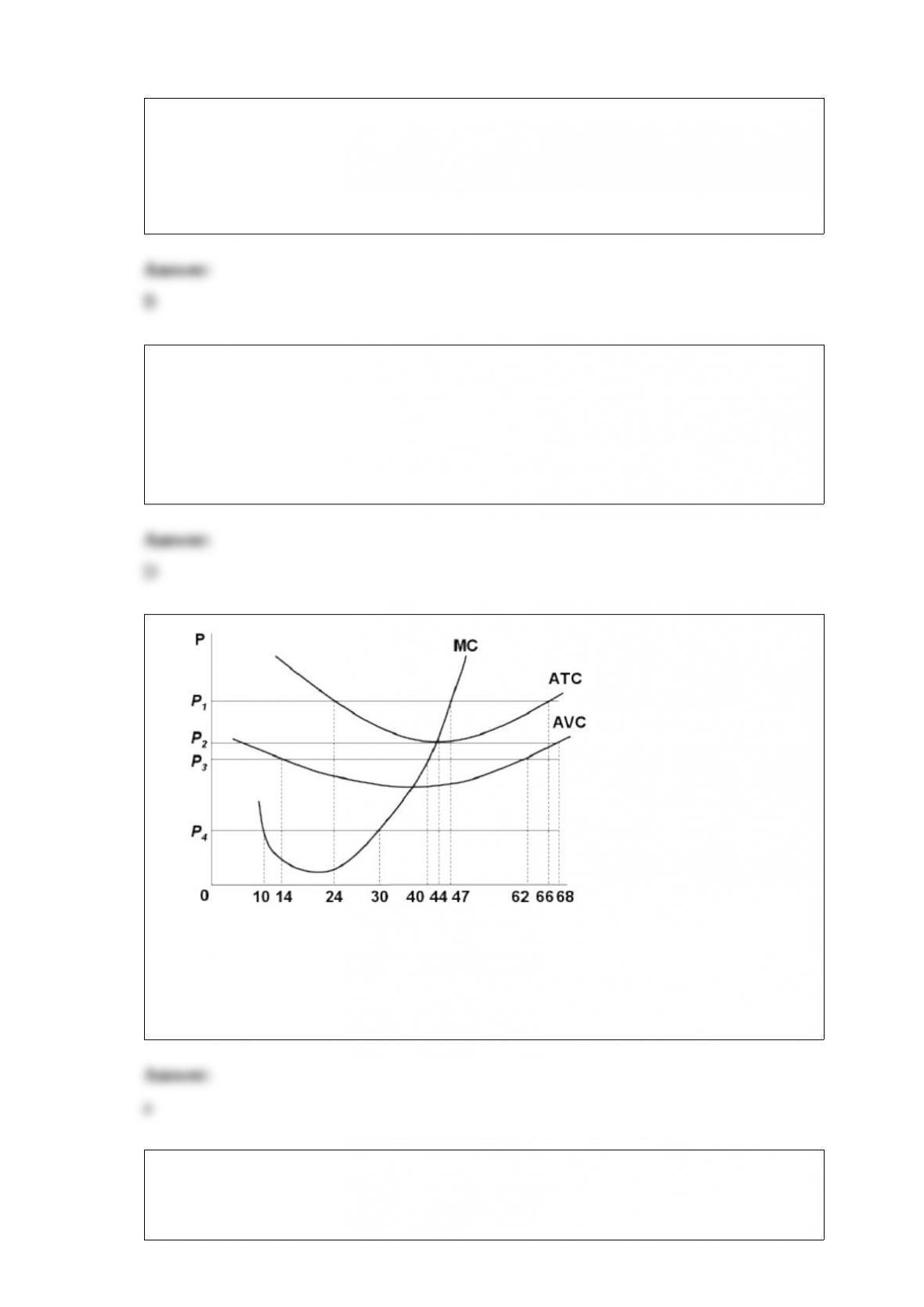
7) The following data for the hypothetical nations of Alpha and Beta. Qs is domestic
quantity supplied and Qd is domestic quantity demanded.
Refer to the above data. At a world price of $5:
A.Alpha will want to import 50 units of steel.
B.Beta will want to import 60 units of steel.
C.Alpha will want to export 50 units of steel.
D.neither country will want to export steel.
8) The Group of Eight (G8) nations which periodically have jointly intervened to
influence the value of the dollar include:
A.Canada, U.S., France, Britain, Russia, Mexico, Germany, and Brazil.
B.Canada, U.S., France, Japan, Italy, Germany, Russia, and Great Britain.
C.Canada, U.S., Mexico, Brazil, Argentina, Peru, Uruguay, and Chile.
D.Italy, France, Britain, Germany, Netherlands, Norway, Russia, and Sweden.
9) A major difficulty with the argument that trade barriers are necessary because foreign
workers are paid low wages is that:
A.labor costs and product prices are not related.
B.there is no discernible relationship between wage rates and labor productivity.
C.wage rates and labor productivity are directly related.
D.wage rates and labor productivity are inversely related.
10) Over the past several decades, farm employment has:
A.grown absolutely, but declined as a percentage of total employment.
B.declined both absolutely and as a percentage of total employment.
C.increased both absolutely and as a percentage of total employment.
D.declined absolutely, but increased as a percentage of total employment.
11) If the nominal wage rises by 6 percent, and the price level falls by 2 percent, the
real wage will:
A.be unaffected.
B.rise by 4 percent.
C.fall by 4 percent.
D.rise by 8 percent.
12)
refer to the above diagram. at p4, this firm will:
a.shut down in the short run.
b.produce 30 units and incur a loss.
c.produce 30 units and earn only a normal profit.
d.produce 10 units and earn only a normal profit.
13) where total utility is at a maximum, marginal utility is:
a.negative.
b.positive and increasing.

c.zero.
d.positive but decreasing.
14) economic theory suggests that the optimal level of immigration in the united states:
a.is zero.
b.occurs where the marginal benefit of the last immigrant equals or just exceeds the
marginal cost of the last immigrant.
c.occurs where the marginal benefit of the last immigrant equals or just exceeds zero.
d.occurs at the level where the difference between the marginal benefit and marginal
cost of the last immigrant is maximized.