1) the distribution of income among the owners of land, labor, capital, and
entrepreneurial ability is known as:
a.income differentials.
b.the personal distribution of income.
c.the functional distribution of income.
d.the concentration ratio.
2) The commercial banking system borrows from the Federal Reserve Banks. As a
result, the checkable deposits:
A.of commercial banks are unchanged, but their reserves increase.
B.and reserves of commercial banks both decrease.
C.of commercial banks are unchanged, but their reserves decrease.
D.and reserves of commercial banks are both unchanged.
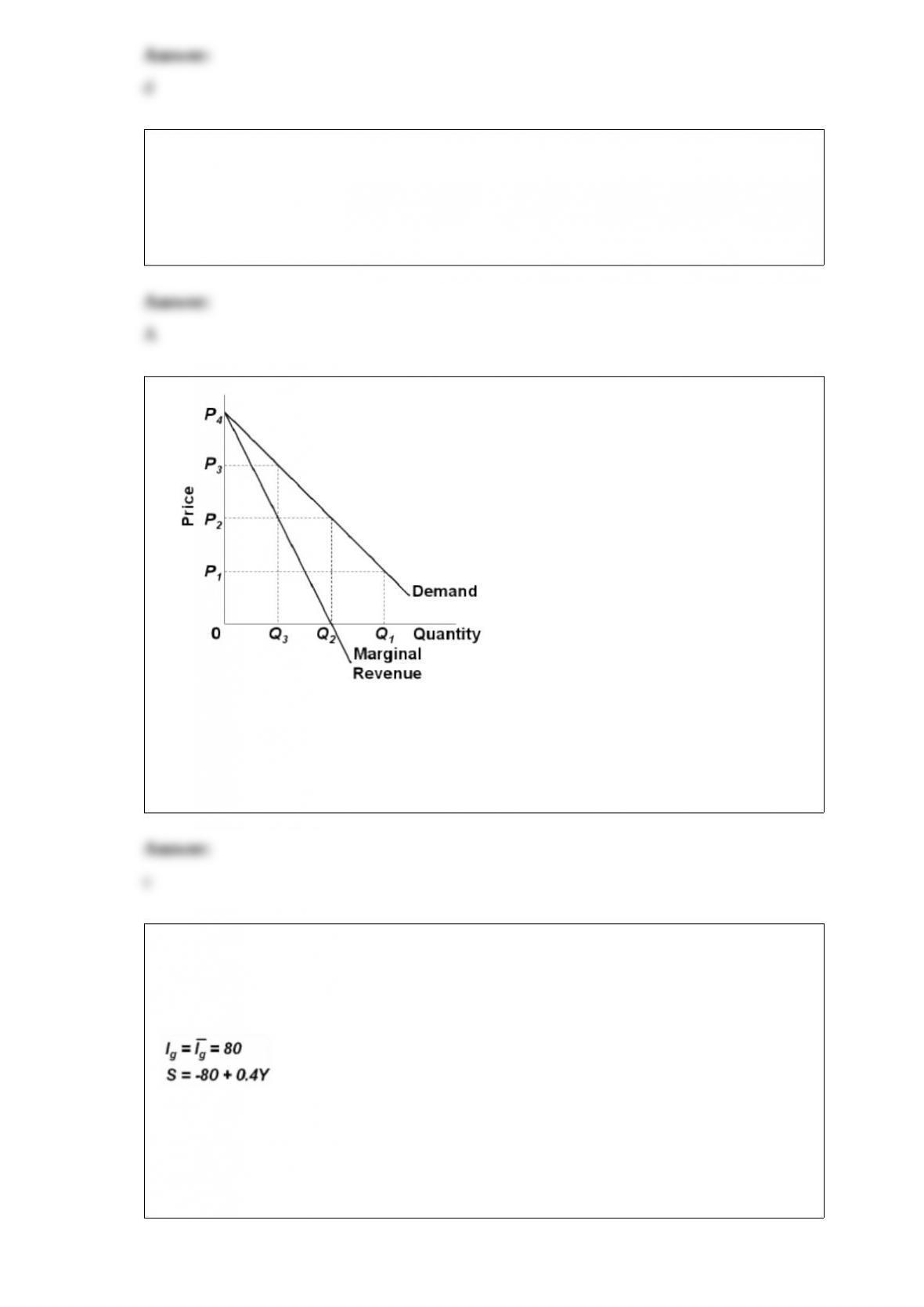
3)
the above diagram shows two product supply curves. it indicates that:
a.over range q1q2price elasticity of supply is greater for s1than for s2.
b.over range q1q2price elasticity of supply is greater for s2than for s1.
c.over range q1q2price elasticity of supply is the same for the two curves.
d.not enough information is given to compare price elasticities.
4) which of the following is not characteristic of indifference curves?
a.they are downsloping.
b.they are convex to the origin.
c.their slope diminishes as we move from northwest to southeast on a given curve.
d.curves closer to the origin reflect higher levels of total utility.
5) In the United States, the money supply (M1) is comprised of:
A.coins, paper currency, and checkable deposits.
B.currency, checkable deposits, and Series E bonds.
C.coins, paper currency, checkable deposits, and credit balances with brokers.
D.paper currency, coins, gold certificates, and time deposits.
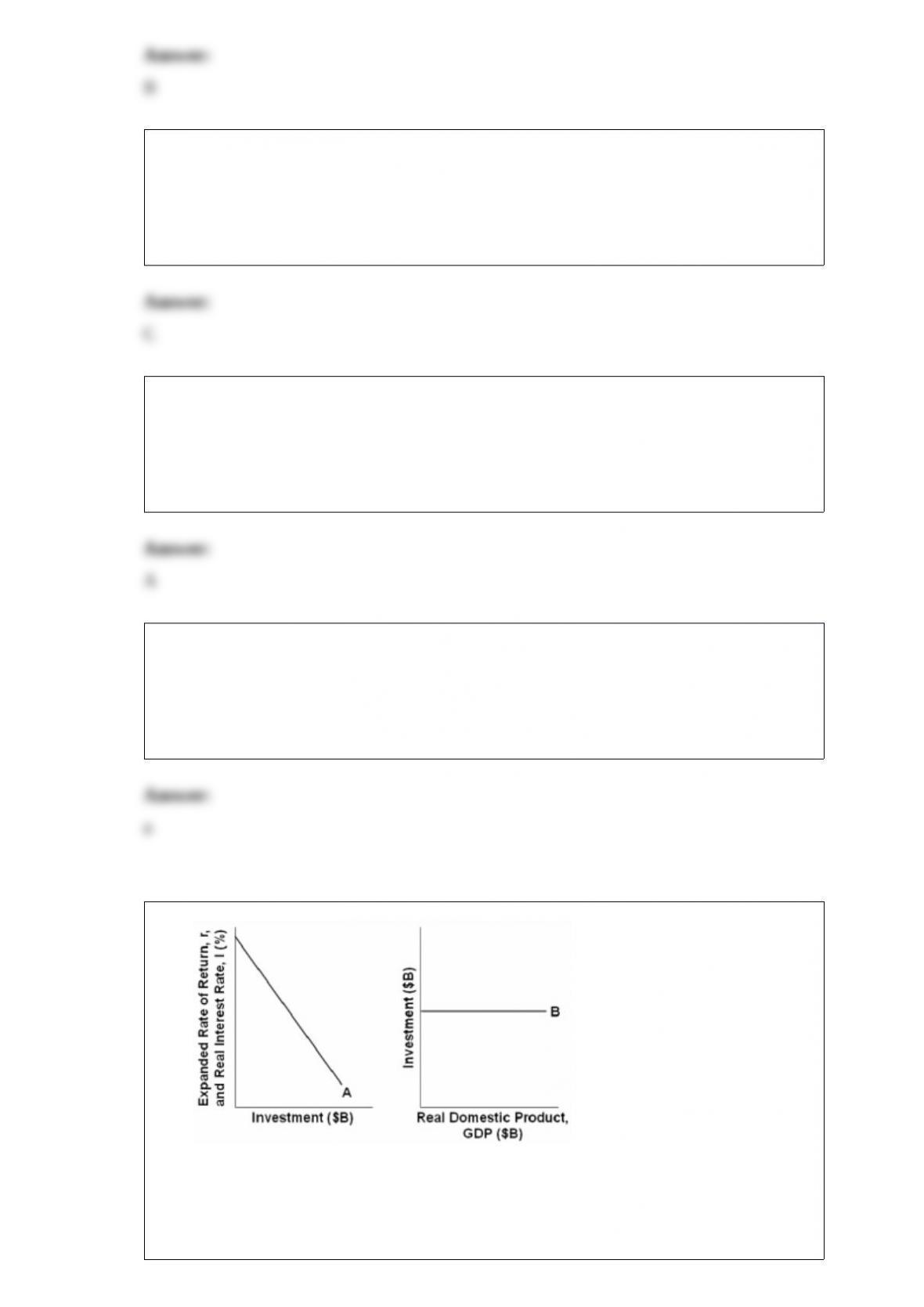
6)
refer to the above diagram. demand is relatively elastic:
a.in the p2p1 price range.
b.in the 0p1 price range.
c.in the p2p4 price range.
d.only at price p2.
7) (Advanced analysis) Answer the next question(s) on the basis of the following
information for a private closed economy, where Ig is gross investment, S is saving, and
Y is gross domestic product (GDP).
Refer to the above information. The equilibrium GDP will be:
A.$160.
B.$400.
C.$360.
D.$480.
8) Other things equal, the short-run aggregate supply curve shifts positions when:
A.the price level changes.
B.the rate of inflation changes.
C.nominal wages and other input prices change.
D.aggregate demand changes.
9) The crowding model is primarily concerned with explaining:
A.occupational discrimination.
B.human-capital discrimination.
C.the size of the discrimination coefficient.
D.why affirmative action is reverse discrimination.
10) the narrower the definition of a product:
a.the larger the number of substitutes and the greater the price elasticity of demand.
b.the smaller the number of substitutes and the greater the price elasticity of demand.
c.the larger the number of substitutes and the smaller the price elasticity of demand.
d.the smaller the number of substitutes and the smaller the price elasticity of demand.
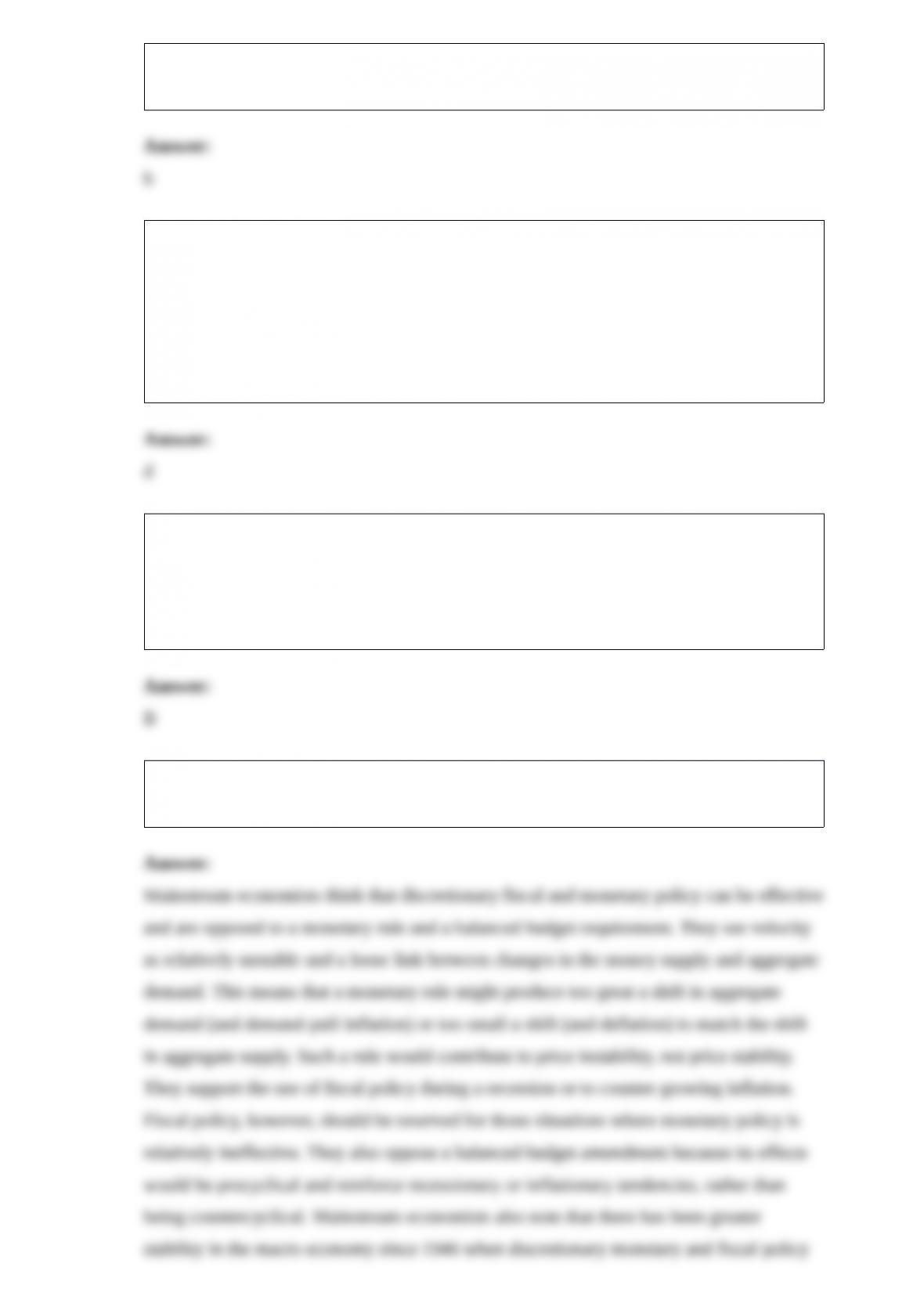
11)
Refer to the above diagram. The location of curve B depends on the:
A.level of real GDP.
B.location of curve A only.
C.interest rate only.

D.interest rate together with the location of curve A.
12) (Advanced analysis) Answer the next question(s) on the basis of the following
information for a private closed economy.
where S is saving, Ig is gross investment, i is the real interest rate, and Y is GDP.
Refer to the above information. In equilibrium the level of consumption will be:
A.$80.
B.$95.
C.$65.
D.$70.
13) (last word) the 2006 massachusetts law requiring all residents to have health care
insurance is expected to:
a.bankrupt the state government.
b.help restrain rapidly rising health care prices.
c.reduce health insurance costs to those who are already insured and paying a hidden
surcharge for uninsured patients.
d.increase wages across the state.
14) Economic profit is most closely associated with:
A.the process of saving and investing.
B.monopoly, innovation, and uninsurable risks.
C.long-run competitive equilibrium.
D.a static economy.
15) suppose that a pure monopolist can sell 4 units of output at $2 per unit and 5 units at
$1.75 per unit. the monopolist will produce and sell the fifth unit if its marginal cost is:
a.$1 or less.
b.$.75 or less.
c.$1.75 or less.
d.$2 or less.
16) for which of the following reasons do economic growth rates tend to understate the
growth of economic well-being?
a.products and services tend to improve over time.
b.leisure time increases over time.
c.new cleaner technologies often replace older, less environmentally-friendly
technology.
d.all of these.
17) The spread of innovation through imitation refers to:
A.invention.
B.diffusion.
C.duplication.
D.diversification.
18) Explain the mainstream economists justification for the use of discretionary fiscal
and monetary policy and their criticisms of policy rules.
19) Which is more importantlabor quantity or labor productivityas a source of economic
growth in the United States? Explain.
20) Do changes in relative expected returns on stocks, real estate and production
facilities affect the value of a nations currency?
21) Explain why the long run product price for a perfectly competitive firm will equal
its minimum average total cost.
22) Explain the difference between nominal and real interest rates.
23) What are the major imports and exports of the United States?
24) Does velocity change in response to changes in the money supply according to
monetarists?
25) (Last Word) Give five examples showing how different factors affect interest rate
calculations.
26) How do high rates of inflation affect the acceptability of a nations currency?
27) What are the economic effects of imposition of a new occupational license or
examination on a labor market?