1) To determine the velocity of money you would need to know:
A.nominal GDP and real GDP.
B.the money supply and the price level.
C.nominal GDP and the money supply.
D.nominal GDP and the interest rate.
2) since 1996, cash welfare payments to immigrants have:
a.risen by 20 percent.
b.risen by 10 percent.
c.fallen by 73 percent.
d.fallen by 39 percent.
3)
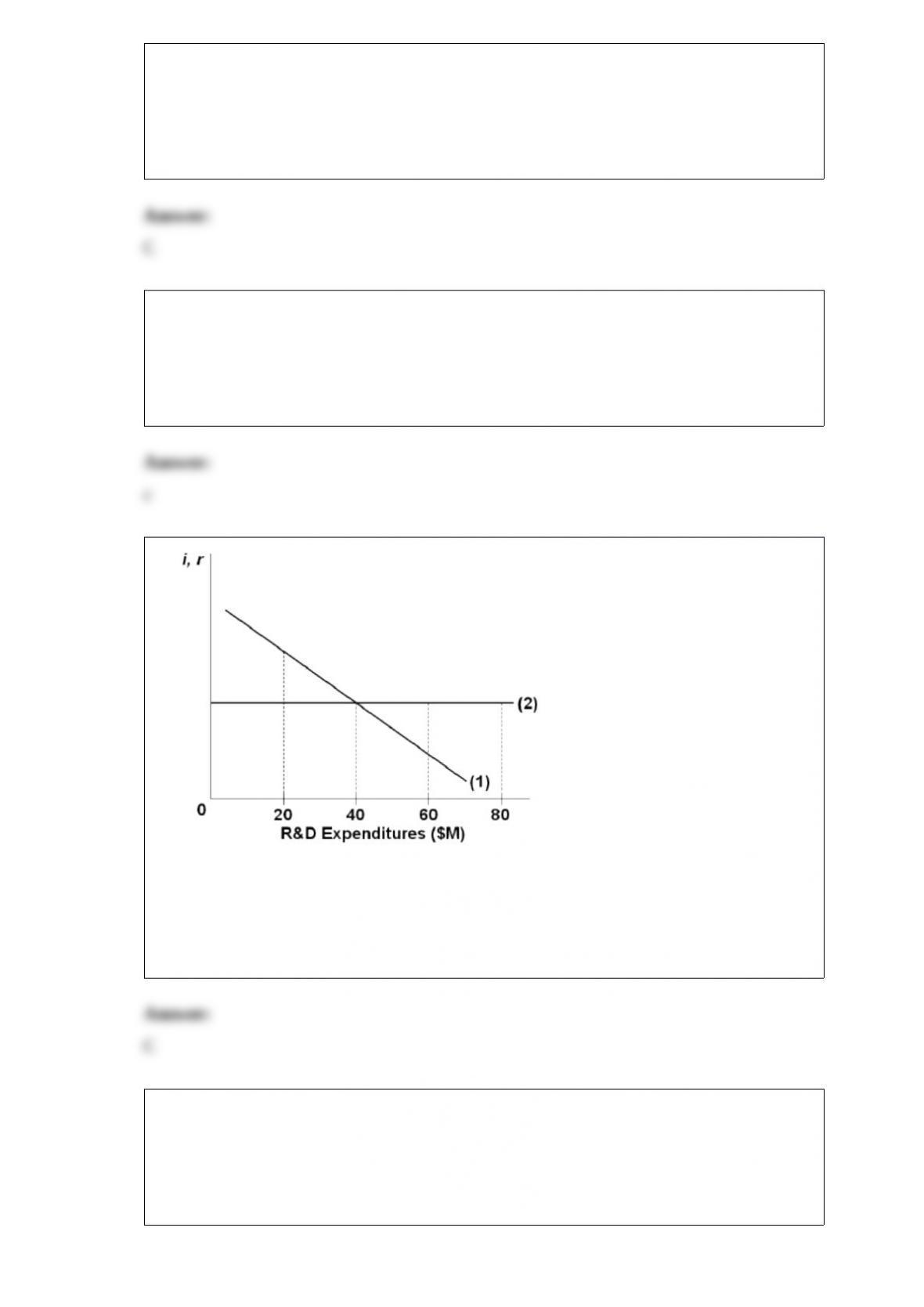
In the above diagram, at $60 million of R&D expenditure the:
A.expected rate of return exceeds the interest rate cost of funds.
B.firm is spending an optimal amount on R&D.
C.interest rate cost of funds exceeds the expected rate of return.
D.expected rate of return on R&D is negative.
4) Inclusive unionism is practiced mostly by:
A.professional and semiprofessional employees.
B.small unions comprised of skilled workers, such as the bricklayers.
C.industrial unions.
D.craft unions.

5) Assume monetary equilibrium exists-that is, the desired and the actual supply of
money are equal-when nominal GDP equals $480 billion and the money supply is $160
billion. According to a strict monetarist view, an increase in the money supply of $10
billion will increase the nominal GDP by:
A.$30 billion.
B.$25 billion.
C.$20 billion.
D.$10 billion.
6) Negative net exports in the United States in 2007:
A.resulted in a recessionary expenditure gap.
B.resulted in an inflationary expenditure gap.
C.were offset by sufficiently large expenditures by households, businesses, and
government.
D.prompted the government to raise tariffs on all imported goods.
7) Assume the economy is operating at less than full employment. An expansionary
monetary policy will cause interest rates to ________, which will ___________
investment spending.
A.decrease; decrease
B.decrease; increase
C.increase; increase
D.increase; decrease
8)
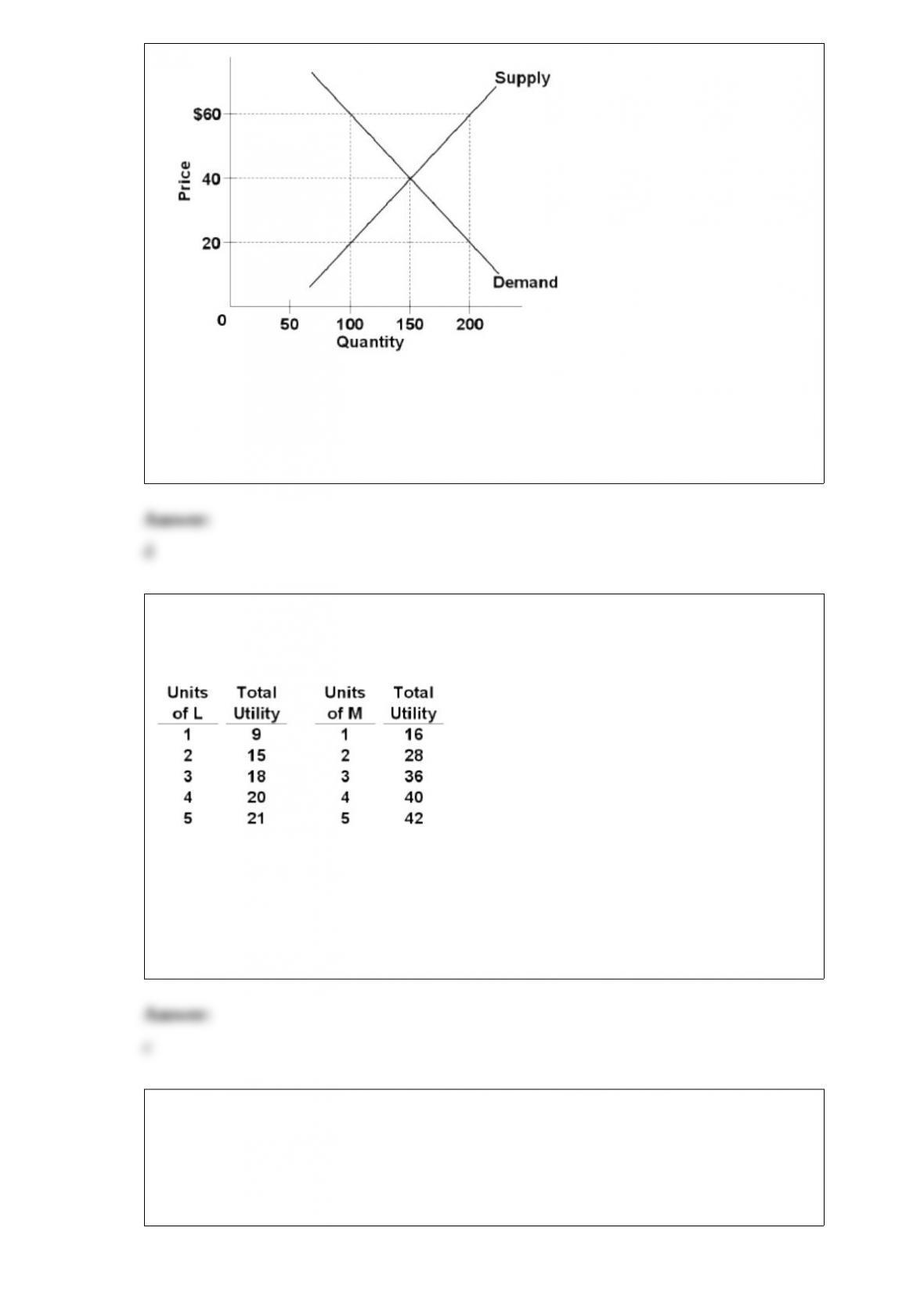
refer to the above diagram. a price of $20 in this market will result in:
a.a shortage of 50 units.
b.a surplus of 50 units.
c.a surplus of 100 units.
d.a shortage of 100 units.
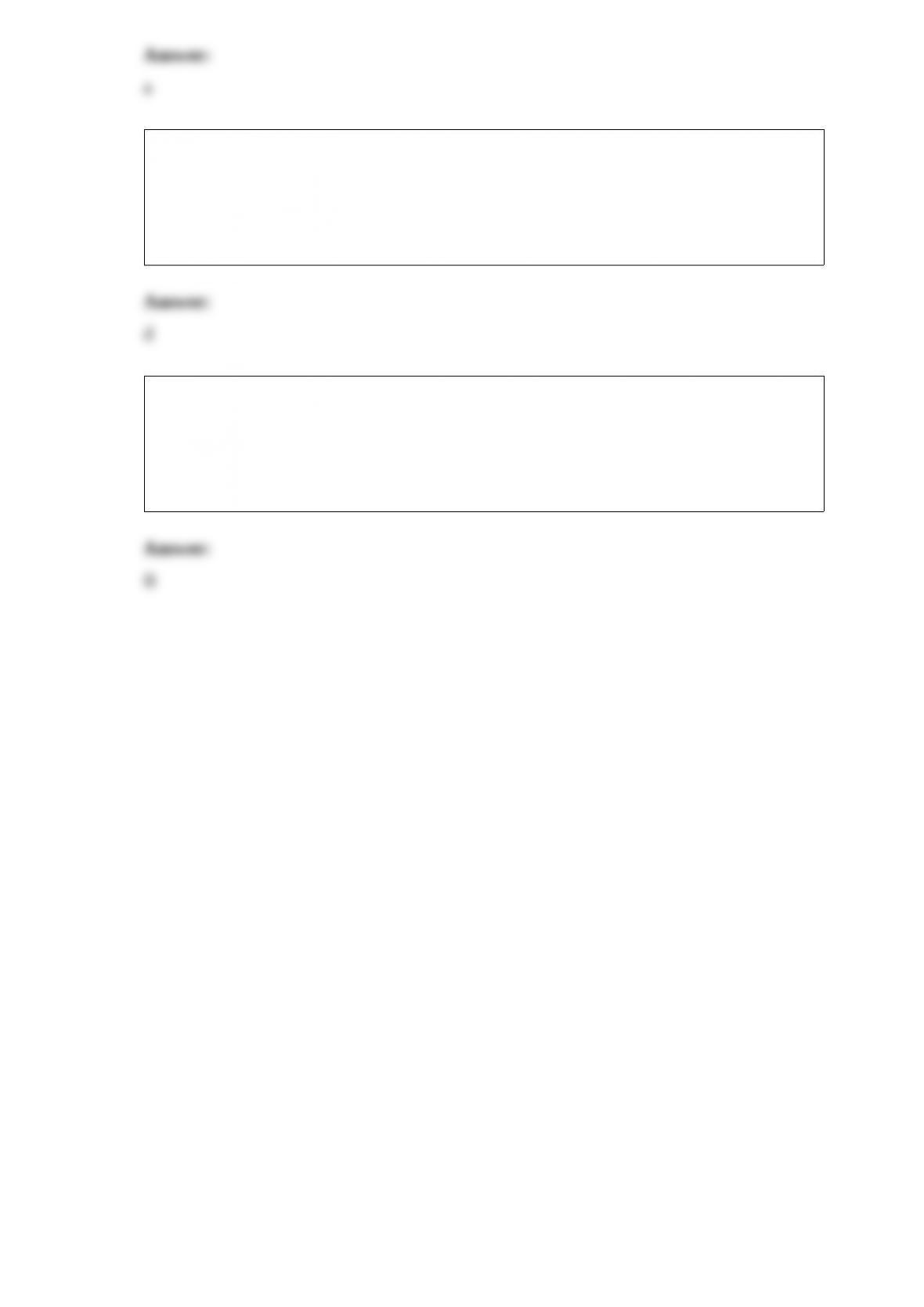
9) the following total utility data for products l and m. assume that the prices of l and m
are $3 and $4 respectively and that the consumer’s income is $18.
refer to the above data. what level of total utility does the consumer realize in
equilibrium?
a.87 utils
b.114 utils
c.51 utils
d.58 utils
10) the problems of aggregate inflation and unemployment are:
a.major topics of macroeconomics.
b.not relevant to the u.s. economy.
c.major topics of microeconomics.
d.peculiar to command economies.
11) the fact that nominal gdp has risen faster than real gdp:
a.suggests that the base year of the gdp price index has been shifted.
b.tells us nothing about what has happened to the price level.
c.suggests that the general price level has fallen.
d.suggests that the general price level has risen.
12) The highest quintile of households in the income distribution:
A.receives about 58 percent of the total income.
B.is comprised of 20 percent of all households.
C.is comprised of 5 percent of all households.
D.receives about 35 percent of the total income.