1) Commercial banks create money when they:
A.accept cash deposits from the public.
B.purchase government securities from the central banks.
C.create checkable deposits in exchange for IOUs.
D.raise their interest rates.
2)
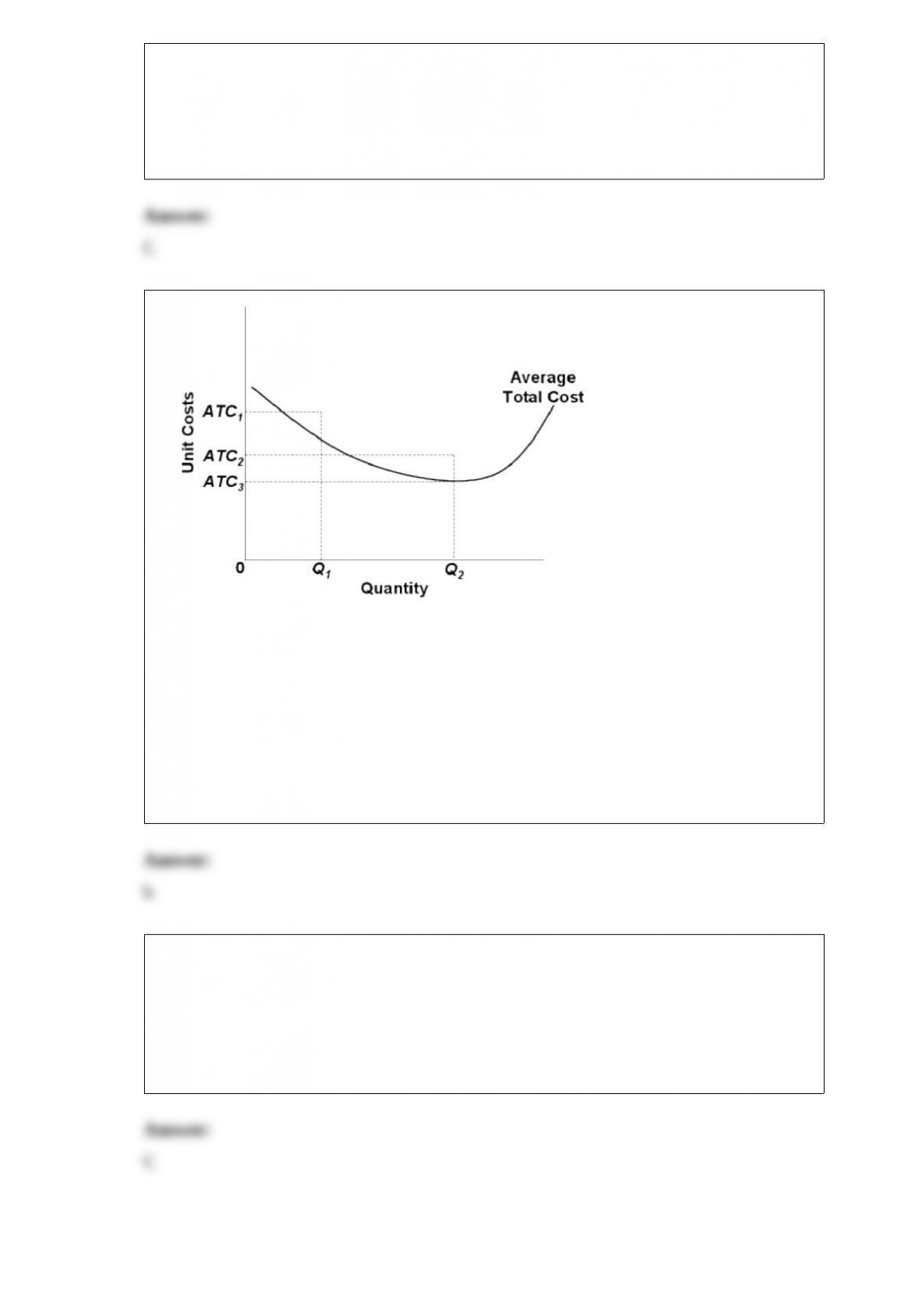
refer to the above long-run cost diagram for a firm. if the firm produces output q2 at an
average cost of atc2, then the firm is:
a.producing the profit-maximizing output, but is failing to minimize production costs.
b.incurring x-inefficiency, but is producing that output at which all existing economies
of scale might be realized.
c.incurring x-inefficiency and is failing to produce the output at which all economies of
scale might be realized.
d.producing that output with the most efficient combination of inputs and is realizing all
existing economies of scale.
3) The property tax may be regressive even though wealthy people own much more
taxable property than do poor people. This possibility arises because:
A.marginal and average tax rates on property tend to converge.
B.wealthy people can evade property taxes while poor people cannot.
C.property taxes on rental property and business property are shifted.
D.statutory property tax rates decline as the value of property rises.
4) Critics of the World Trade Organization (WTO) say that liberalized world trade does
all of the following except:
A.produce environmental degradation.
B.allow producers to circumvent labor protections such as workplace safety, child labor
restrictions, and collective bargaining rights.
C.helps developing nations escape from poverty.
D.promote the interests of multinational corporations.
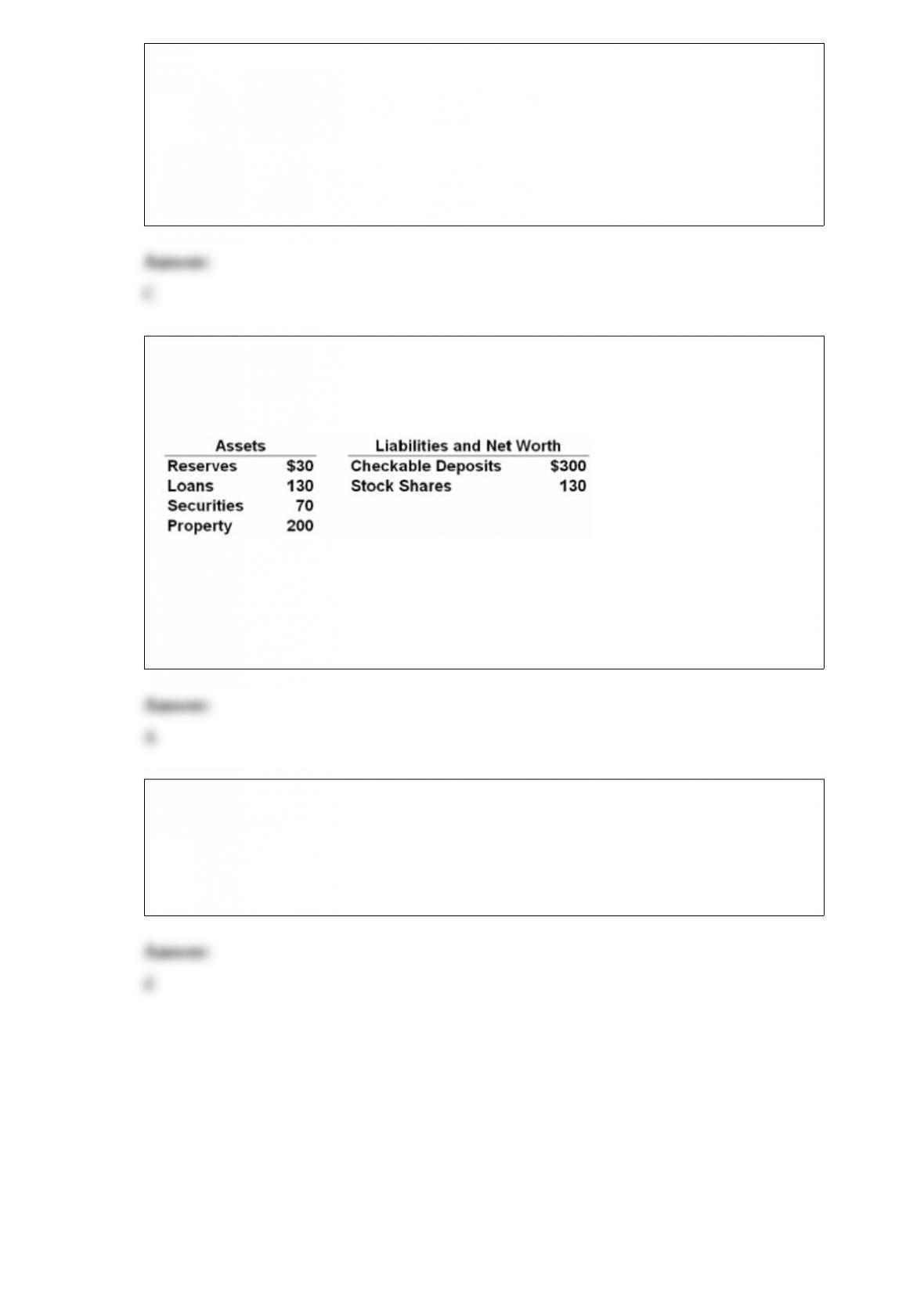
5) The following consolidated balance sheet for the commercial banking system.
Assume the required reserve ratio is 10 percent. All figures are in billions.
Refer to the above data. The commercial banking system has excess reserves of:
A.$0 billion.
B.$30 billion.
C.$60 billion.
D.$70 billion.
6) the ability of a good or service to satisfy wants is called:
a.utility maximization.
b.opportunity cost.
c.revenue potential.
d.utility.
7)
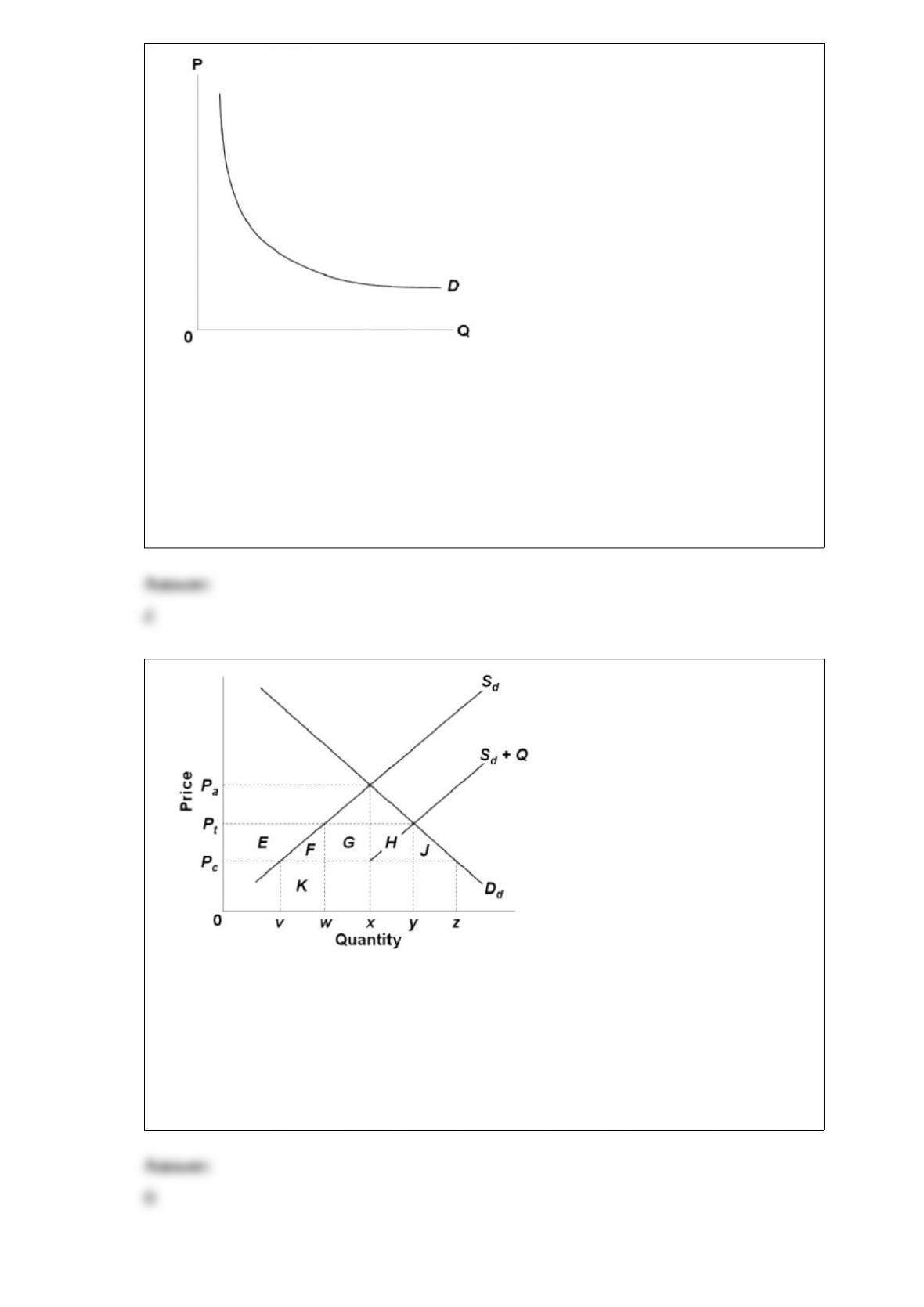
refer to the above diagram which is a rectangular hyperbola, that is, a curve such that
each rectangle drawn from any point on the curve will be of identical area. in
comparing the price elasticity and the slope of this demand curve we can conclude that
the:
a.slope of a demand curve measures its elasticity.
b.elasticity of a demand curve measures its slope.
c.slope and elasticity of the curve are both constant throughout.
d.slope of the curve varies, but its elasticity is constant.
8)
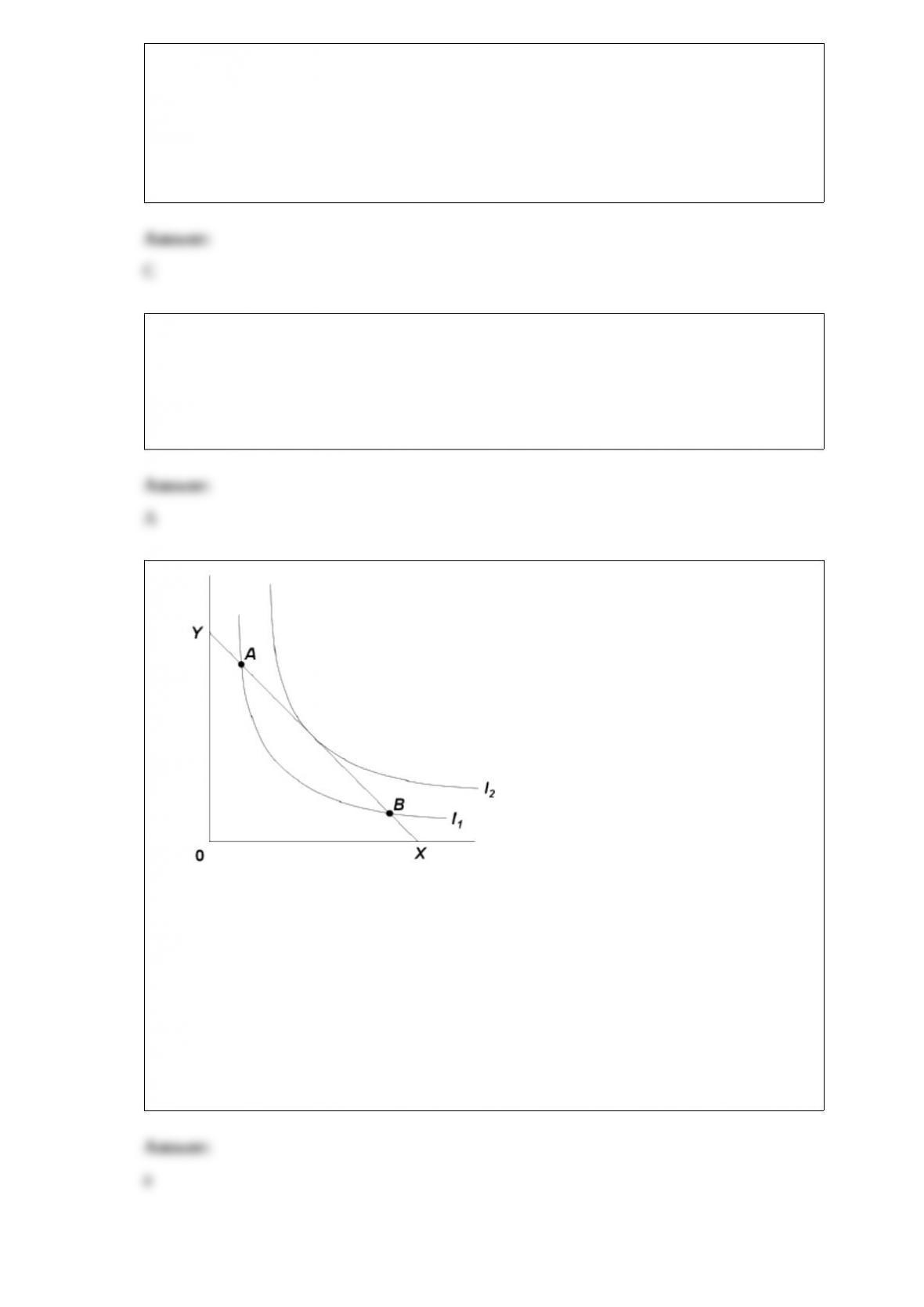
Refer to the above diagram, where Sd and Dd are the domestic supply and demand for a
product and Pc is the world price of that product. Sd + Q is the product supply curve
after an import quota is imposed. A quota of wy will:
A.lower domestic price and increase domestic consumption.
B.increase the revenues of domestic producers by areas E + F + K
C.increase the revenues of domestic producers by areas G + H
D.increase the revenues of domestic producers by areas E + F + G + H + J
9) Assume that, under a system of floating exchange rates, Mexicans decide to increase
their investments in the United States. As a result:
A.the peso and the dollar will both depreciate.
B.the peso and the dollar will both appreciate.
C.the peso will depreciate and the dollar will appreciate.
D.the peso will appreciate and the dollar will depreciate.
10) What do investment and government expenditures have in common?
A.both represent injections to the circular flow
B.both represent leakages from the circular flow
C.neither is subject to the multiplier effect
D.both represent a decline in indebtedness
11)
in the above diagram:
a.the consumer is indifferent between points a and b, but neither point maximizes his
utility.
b.the consumer is indifferent between points a and b and either point will maximize his
utility.
c.any combination of x and y entailing more of y and less of x than shown at b would
be preferred.
d.any combination of x and y entailing more of x and less of y than shown at a would
be preferred.

12) Approximately what percentage of the world’s income is received by the richest
one-fifth of the world’s population?
A.20 percent
B.30 percent
C.60 percent
D.80 percent
13) a single-price monopoly is economically undesirable because, at the profit
maximizing output:
a.marginal revenue exceeds product price at all profitable levels of production.
b.monopolists always price their products on the basis of the ability of consumers to
pay rather than on costs of production.
c.mc > p.
d.society values additional units of the monopolized product more highly than it does
the alternative products those resources could otherwise produce.