
Since World War II, GATT has been responsible for reducing the average tariff among
member countries from about
a. 40 percent to about 5 percent.
b. 40 percent to about 20 percent.
c. 80 percent to about 20 percent.
d. 20 percent to about 10 percent.
The adage, “There is no such thing as a free lunch,” is used to illustrate the principle
that
a. goods are scarce.
b. people face tradeoffs.
c. income must be earned.
d. households face many decisions.
For an imaginary economy, when the real interest rate is 5 percent, the quantity of
loanable funds demanded is $1,000 and the quantity of loanable funds supplied is
$1,000. Currently, the nominal interest rate is 9 percent and the inflation rate is 2
percent. Currently,
a. the market for loanable funds is in equilibrium.
b. the quantity of loanable funds supplied exceeds the quantity of loanable funds
demanded, and as a result the real interest rate will rise.
c. the quantity of loanable funds supplied exceeds the quantity of loanable funds
demanded, and as a result the real interest rate will fall.
d. the quantity of loanable funds demanded exceeds the quantity of loanable funds
supplied, and as a result the real interest rate will rise.
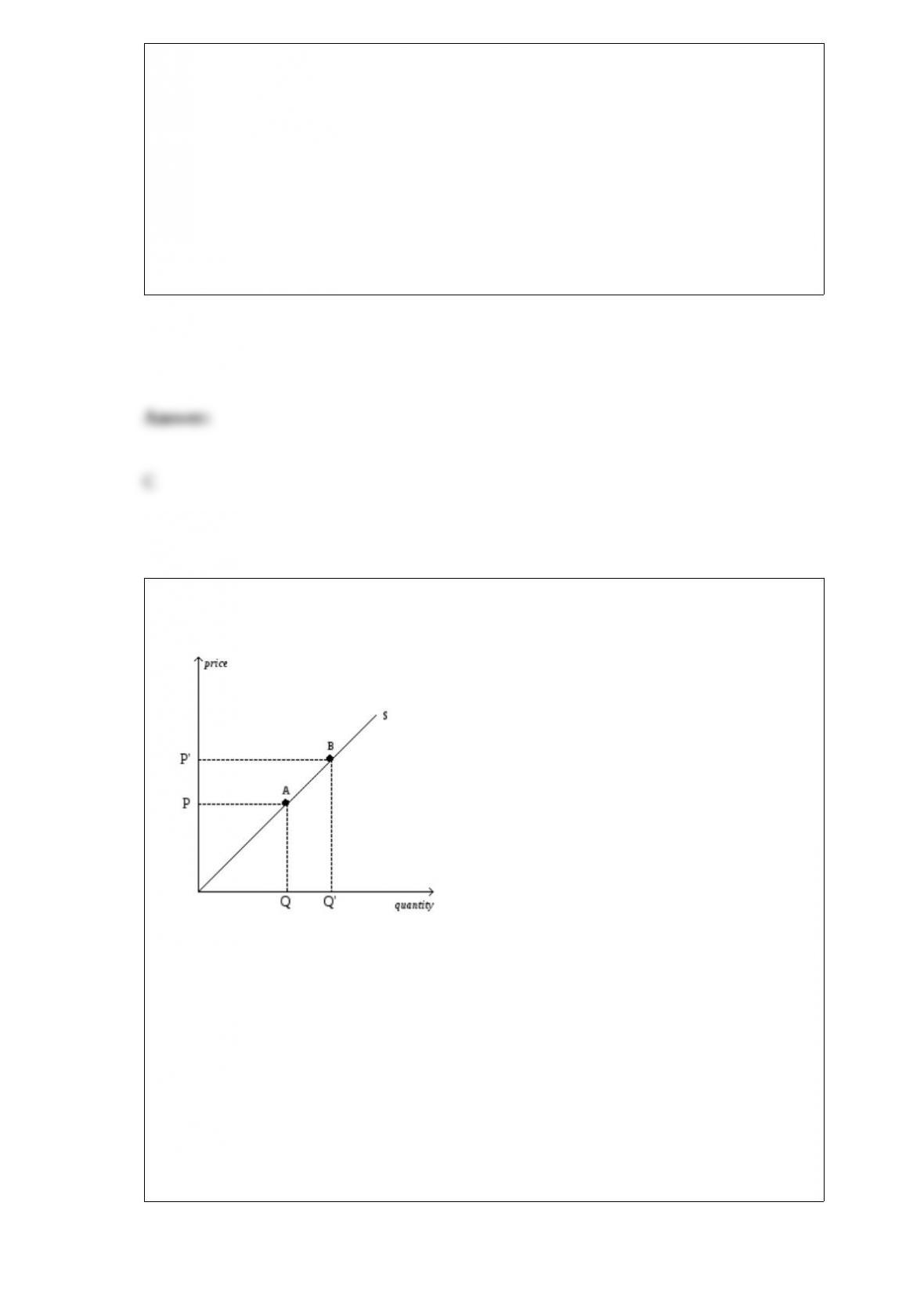
Figure 4-9
Refer to Figure 4-9. The movement from point A to point B on the graph represents
a. an increased willingness and ability on the part of suppliers to supply the good at
each possible price.
b. an increase in the number of suppliers.
c. a decrease in the price of a relevant input.
d. an increase in the price of the good that is being supplied and the suppliers’ responses
to that price change.

If car manufacturers begin using new labor-saving technology on their assembly lines,
we would not expect
a. a smaller quantity of labor to be used.
b. the supply of cars to increase.
c. the firms’ costs to fall.
d. individual car manufacturers to move up and to the right along their individual
supply curves.
Table 3-12
Labor Hours Needed to
Make 1 Pound of: Amount
Produced in 40 hours
Refer to Table 3-12. Relative to the farmer, the rancher has an absolute advantage in
the production of
a. meat, but not in the production of potatoes.
b. potatoes, but not in the production of meat.
c. both meat and potatoes.
d. neither meat nor potatoes.
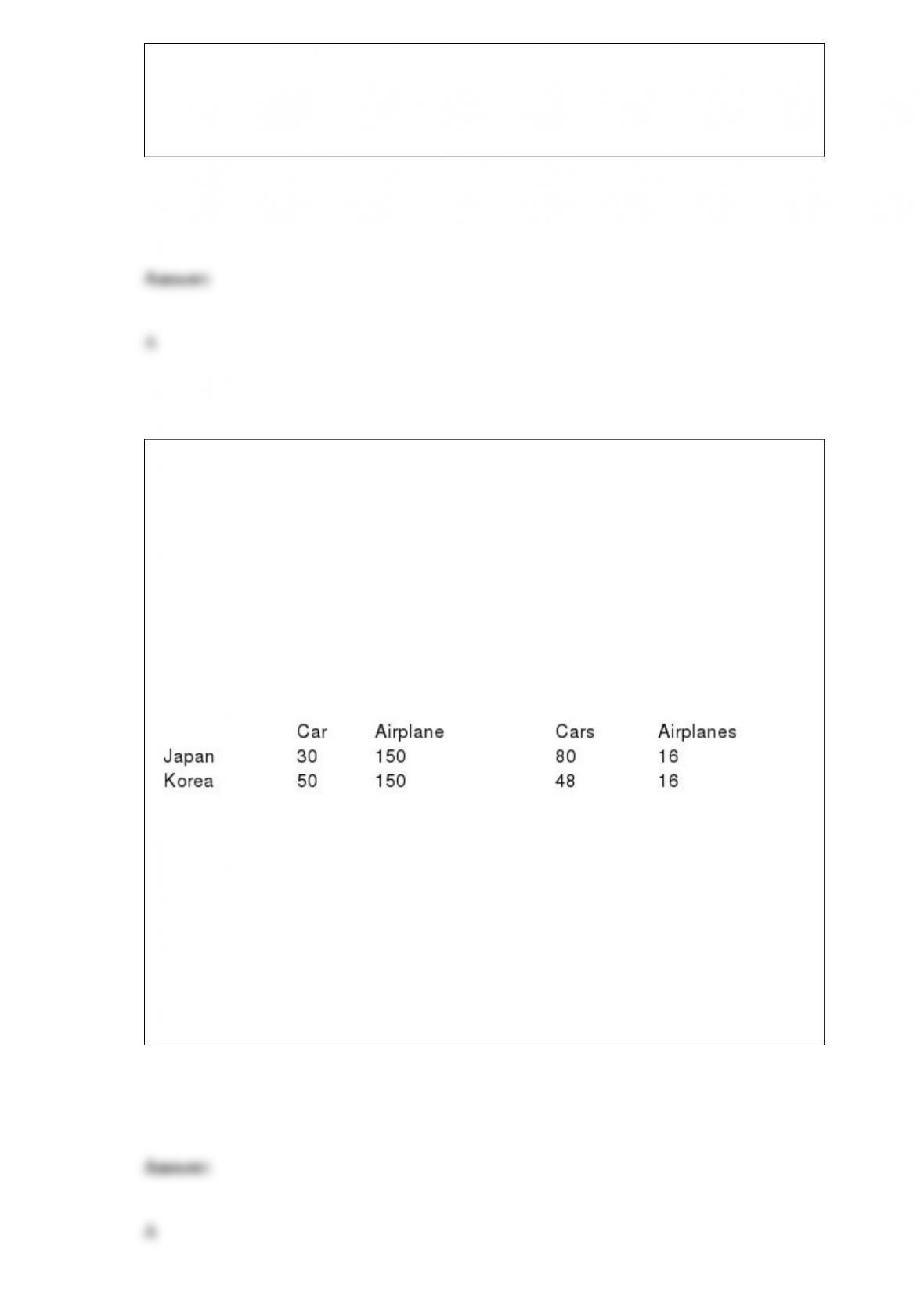
Table 3-7
Assume that Japan and Korea can switch between producing cars and producing
airplanes at a constant rate.
Hours Needed
to Make 1 Quantity Produced
in 2400 Hours
Refer to Table 3-7. Japan and Korea would not be able to gain from trade if Korea’s
opportunity cost of one car changed to
a. 1/5 airplane.
b. 1/3 airplane.
c. 3 airplanes.
d. 5 airplanes.
April, who currently owns stock in four companies, has decided to expand her portfolio
by purchasing stock in virtually every company that sells stock. In doing so, April will
a. increase the risk of her portfolio.
b. decrease some, but not all, of the risk of her portfolio.
c. decrease all of the risk of her portfolio.
d. leave the risk of her portfolio unchanged from its present level.
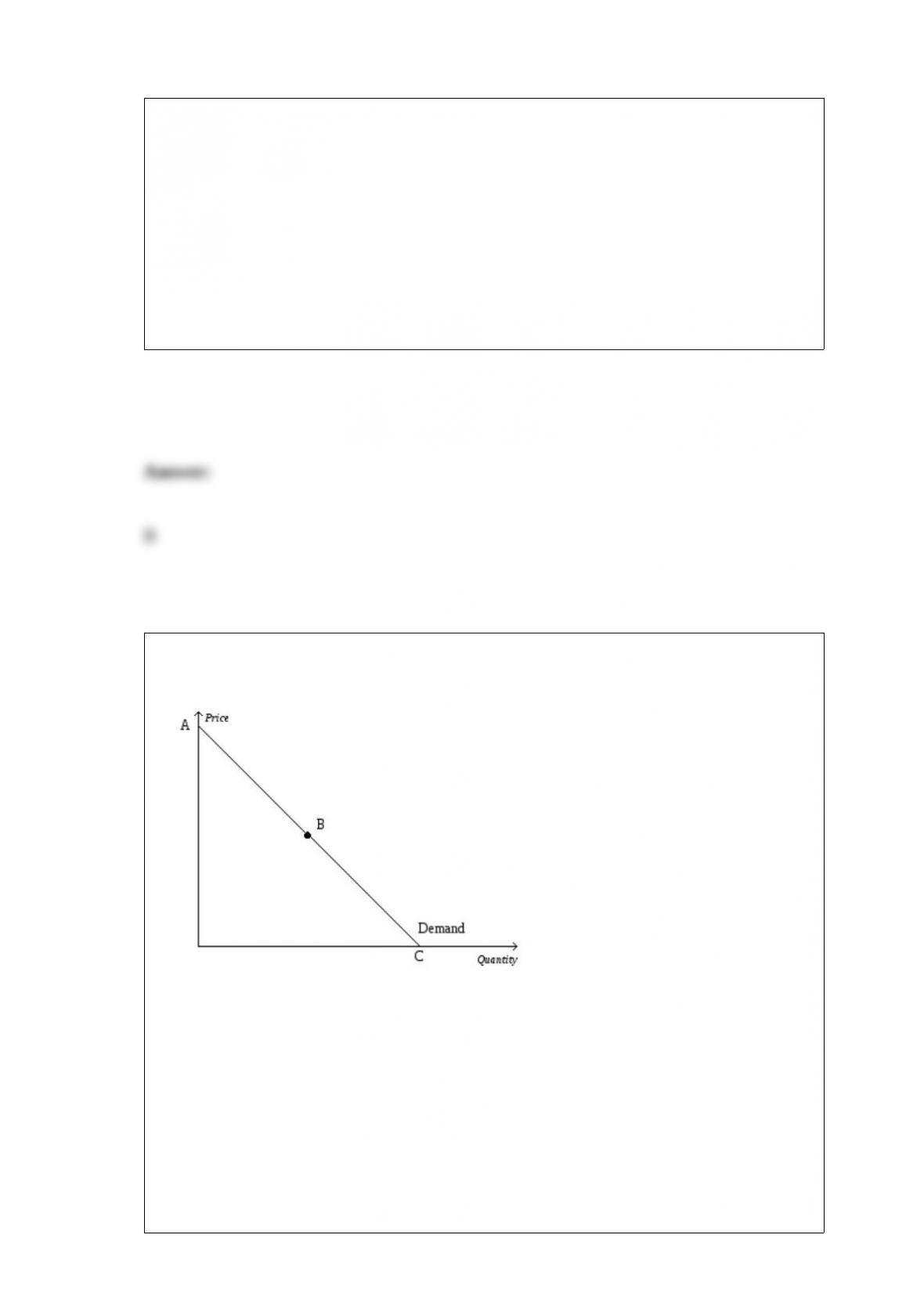
Figure 5-4
Refer to Figure 5-4. If the price increases in the region of the demand curve between
points A and B, we can expect total revenue to
a. increase.
b. stay the same.
c. decrease.
d. first increase, then decrease until total revenue is maximized.

“Owners of firms in young industries should be willing to incur temporary losses if they
believe that those firms will be profitable in the long run.” This observation helps to
explain why many economists are skeptical about the
a. national-security argument.
b. infant-industry argument.
c. unfair-competition argument.
d. jobs argument.
To be counted as employed in the U.S. labor force statistics a person
a. must be working for pay and be working full time.
b. must be working for pay, but does not have to be working full time.
c. does not have to be working for pay if they are working for a family business, but
must be employed full time.
d. does not have to be working for pay if they are working for a family business and
does not have to be working full time

Table 3-8
Assume that Huang and Min can switch between producing parasols and producing
porcelain plates at a constant rate.
Labor Hours Needed
to Make 1 Quantity Produced
in 36 Hours
Refer to Table 3-8. Which of the following points would not be on Huang’s production
possibilities frontier, based on a 36-hour production period?
a. (18 parasols, 0 plates)
b. (12 parasols, 2 plates)
c. (6 parasols, 4 plates)
d. (2 parasols, 6 plates)
Which of the following is correct concerning stock market irrationality?
a. Bubbles could arise, in part, because the price that people pay for stock depends on
what they think someone else will pay for it in the future.

b. Economists almost all agree that the evidence for stock market irrationality is
convincing and the departures from rational pricing are important.
c. Some evidence for the existence of market irrationality is that informed and
presumably rational managers of mutual funds generally beat the market.
d. All of the above are correct.
Suppose the money supply tripled, but at the same time velocity fell by half and real
GDP was unchanged. According to the quantity equation the price level
a. is 5 times its old value.
b. is 3 times its old value.
c. is 6 times its old value.
d. is the same as its old value.
Keynes believed that economies experiencing high unemployment should adopt
policies to
a. reduce the money supply.
b. reduce government expenditures.
c. increase aggregate demand.

d. increase aggregate supply.
Suppose that a worker in Radioland can produce either 4 radios or 1 television per year
and a worker in Teeveeland can produce either 2 radios or 5 televisions per year. Each
nation has 100 workers, and each country specializes according to the principle of
comparative advantage. If Radioland trades 100 televisions to Teeveeland in exchange
for 100 radios each year, then each country’s maximum consumption of new radios and
televisions per year will be
a. higher than it would be in the absence of trade because of the gains from trade.
b. the same as it would be in the absence of trade.
c. less than it would be in the absence of trade because neither country is specializing in
the product in which it has a comparative advantage.
d. less than it would be in the absence of trade because Teeveeland has an absolute
advantage in both goods and so it cannot benefit by trading with Radioland.
In the simple circular-flow diagram, the participants in the economy are
a. firms and government.
b. households and firms.
c. households and government.
d. households, firms, and government.
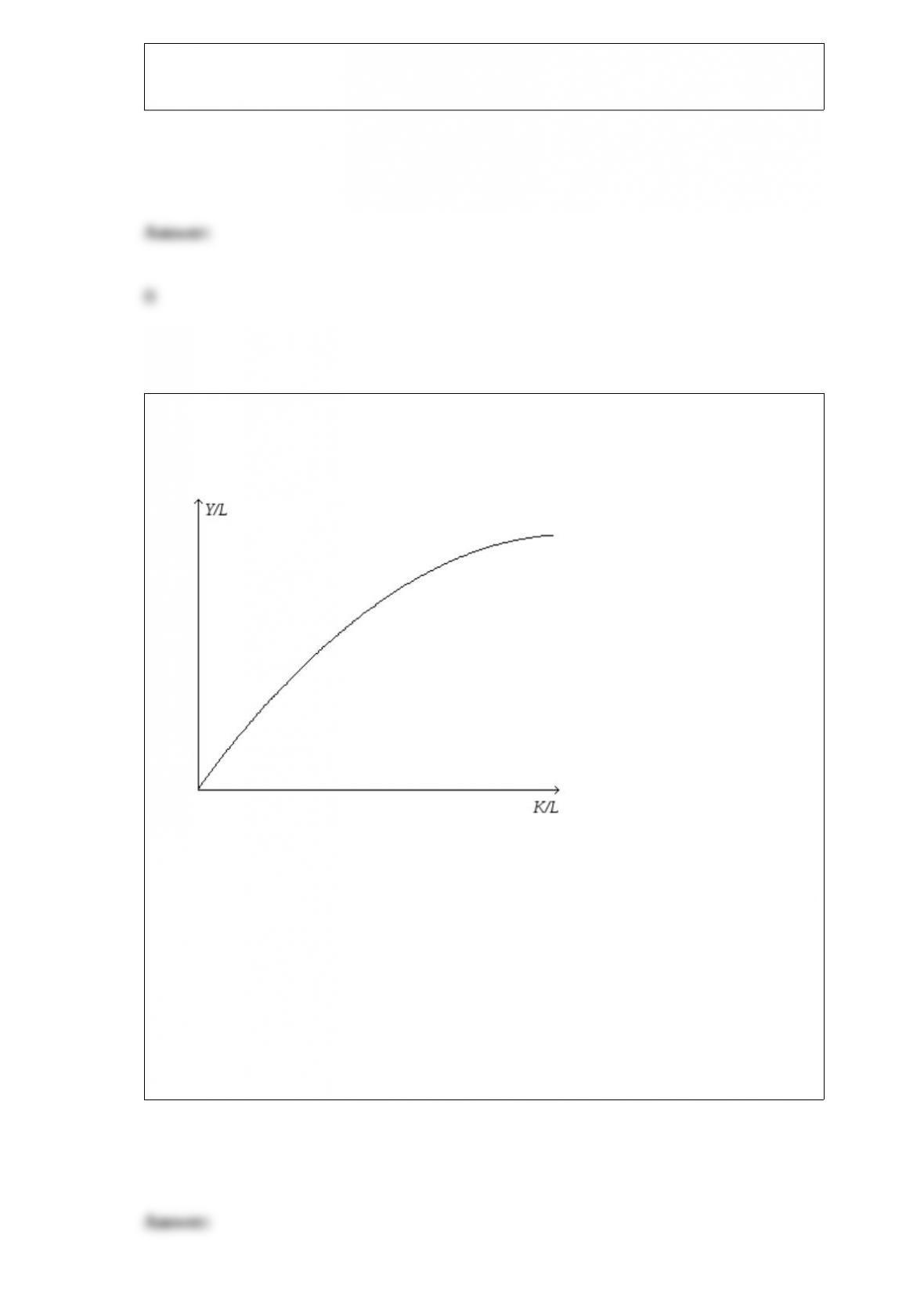
Figure 12-1. On the horizontal axis, K/L represents capital (K) per worker (L). On the
vertical axis, Y/L represents output (Y) per worker (L).
Refer to Figure 12-1. The shape of the curve is consistent with which of the following
statements about the economy to which the curve applies?
a. In the long run, a higher saving rate leads to a higher growth rate of productivity.
b. In the long run, a higher saving rate leads to a higher growth rate of income.
c. Returns to capital become increasingly smaller as the amount of capital per worker
increases.
d. All of the above are correct.

GDP is not a perfect measure of well-being; for example,
a. GDP incorporates a large number of non-market goods and services that are of little
value to society.
b. GDP places too much emphasis on the value of leisure.
c. GDP fails to account for the quality of the environment.
d. All of the above are correct.
Which of the following is likely to have the most price inelastic demand?
a. white chocolate chip with macadamia nut cookies
b. hardback novels
c. salt
d. box seats at a major league baseball game

When the price level falls, people want to
a. hold more money and the quantity of aggregate goods and services demanded
increases.
b. hold more money and the quantity of aggregate goods and services demanded
decreases.
c. hold less money and the quantity of aggregate goods and services demanded
increases.
d. hold less money and the quantity of aggregate goods and services demanded
decreases.
If consumers often purchase muffins to eat while they drink their lattés at local coffee
shops, what would happen to the equilibrium price and quantity of lattés if the price of
muffins rises?
a. Both the equilibrium price and quantity would increase.
b. Both the equilibrium price and quantity would decrease.
c. The equilibrium price would increase, and the equilibrium quantity would decrease.
d. The equilibrium price would decrease, and the equilibrium quantity would increase.
Other things the same, an increase in the amount of capital firms wish to purchase

would initially shift
a. aggregate demand right.
b. aggregate demand left.
c. aggregate supply right.
d. aggregate supply left.
In the United States, incomes historically have grown about 2 percent per year. At this
rate, average income doubles every
a. 15 years.
b. 25 years.
c. 35 years.
d. 45 years.
After a binding price floor becomes effective, a
a. smaller quantity of the good is bought and sold.
b. a larger quantity of the good is demanded.

c. a smaller quantity of the good is supplied.
d. All of the above are correct.
The difference between slope and elasticity is that slope
a. is a ratio of two changes, and elasticity is a ratio of two percentage changes.
b. is a ratio of two percentage changes, and elasticity is a ratio of two changes.
c. measures changes in quantity demanded more accurately than elasticity.
d. none of the above; there is no difference between slope and elasticity.
Which of the following is correct?
a. Risk-averse people will not hold stock.
b. Diversification cannot reduce firm-specific risk.
c. The larger the percentage of stock in a portfolio, the greater the risk, but the greater
the average return.
d. Stock prices are determined by fundamental analysis rather than by supply and
demand.

Suppose that velocity rises while the money supply stays the same. It follows that
a. P x Y must rise.
b. P x Y must fall.
c. P x Y must be unchanged.
d. the effects on P x Y are uncertain.
Suppose that someone makes the argument that because empty alcohol containers are
found at many accidents, the containers cause accidents. This would be an example of
a. sound logic.
b. reverse causality.
c. omitted variables.
d. bias.
A U.S. citizen buys bonds issued by an automobile manufacturer in Japan. Her
expenditures are U.S.
a. foreign direct investment that increase U.S. net capital outflow.
b. foreign direct investment that decrease U.S. net capital outflow.
c. foreign portfolio investment that increase U.S. net capital outflow.
d. foreign portfolio investment that decrease U.S. net capital outflow.
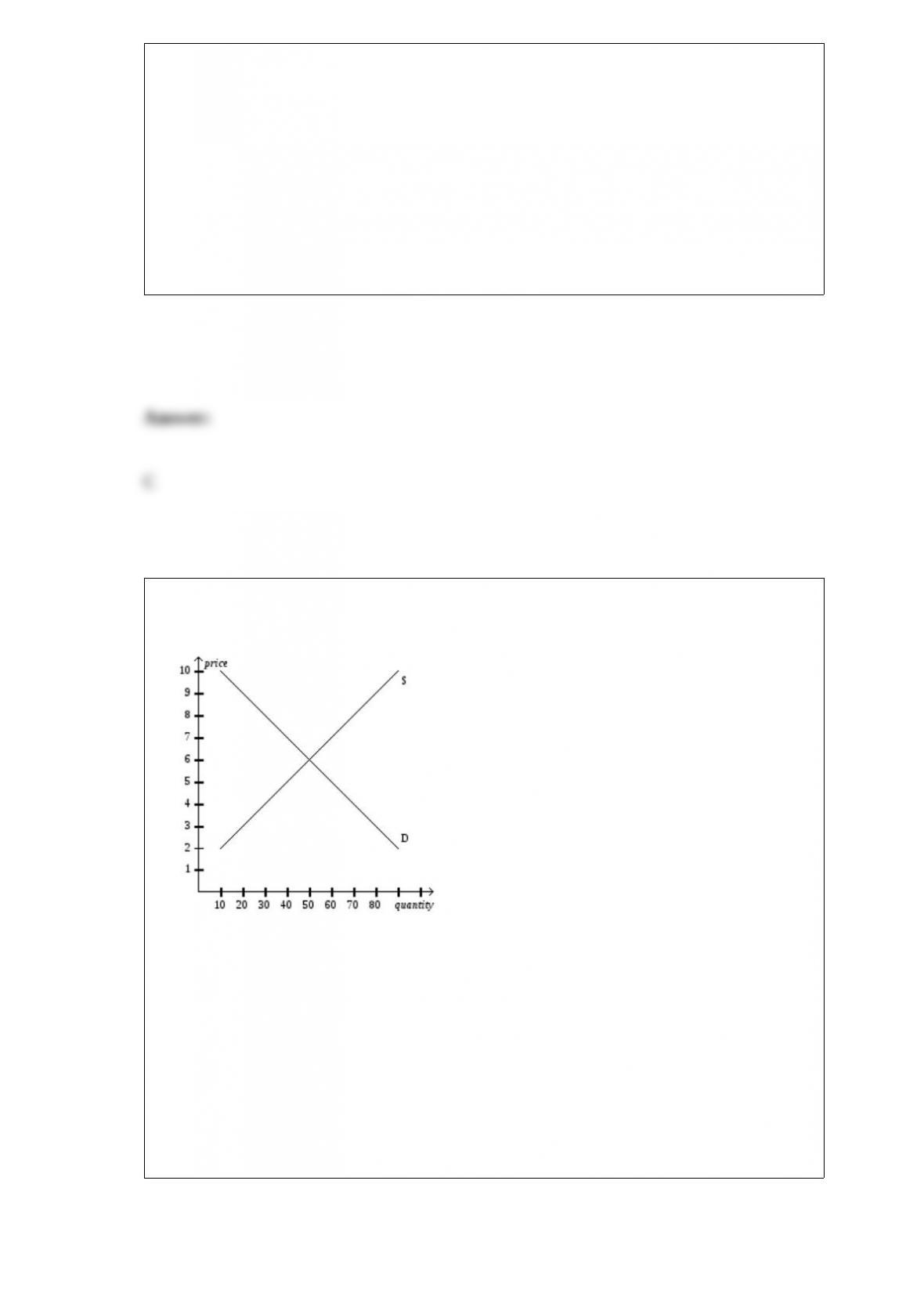
Figure 6-7
Refer to Figure 6-7. For a price floor to be binding in this market, it would have to be
set at
a. any price below $6.
b. a price between $3 and $6.
c. a price between $6 and $9.
d. any price above $6.

A tax on buyers increases the size of a market.
The Bureau of Labor Statistics produces data on unemployment based on the number of
people collecting unemployment insurance.
Other things the same, technological progress raises the price level.

Studies by economists have found that a 10 percent increase in the minimum wage
decreases teenage employment 10 percent.
The unemployed who quit their jobs, were fired for cause, or just entered the labor force
are not eligible for unemployment insurance.
The Bureau of Labor Statistics’ U-1 measure of joblessness includes only very
long-term unemployed.
Let P represent price; let QS represent quantity supplied; and assume the equation of the
supply curve is . If 90 units of the good are produced and sold, then
producer surplus amounts to $1,350.

Producer surplus is the cost of production minus the amount a seller is paid.
Minimum-wage laws affect all workers.
Economists at the Congressional Budget Office estimated that for 2009, the U.S. natural
rate of unemployment was 5.0 percent.

A binding minimum wage causes the quantity of labor demanded to exceed the quantity
of labor supplied.
Public policy, without intending to do so, can increase frictional unemployment.
The recessions associated with the business cycle come at regular intervals.
In a market economy, prices are the signals that guide the allocation of scarce resources.

As the interest rate increases, the present value of future sums decreases, so firms will
find fewer investment projects profitable.