
The President receives economic policy advice from economists at each of the
following except
a. the Council of Economic Advisors.
b. the Department of the Treasury.
c. the Congressional Budget office.
d. the Department of Labor.
Table 712
The numbers reveal the opportunity costs of providing 10 piano lessons of equal
quality.
SellerCost
Marcia$200
Jan$250
Cindy$350
Greg$400
Peter$700
Bobby$800
Refer to Table 712. You wish to purchase 10 piano lessons for yourself and for your
brother, so you take bids from each of the sellers. You will take lessons at the same
time, so one teacher cannot provide lessons to both of you. You must pay the same price
for both sets of lessons, and you will not accept a bid below a seller’s cost because you
are concerned that the seller will not provide all 10 lessons. What bid will you accept?
a. $351
b. $349
c. $201
d. $199
The art in scientific thinking is
a. finding the right problem to study.
b. deciding which assumptions to make.
c. the ability to make an abstract subject easy to understand.
d. not something in which economists have to be skilled.

Suppose an airline determines that its customers traveling for business have inelastic
demand and its customers traveling for vacations have an elastic demand. If the airline’s
objective is to increase total revenue, it should
a. increase the price charged to vacationers and decrease the price charged to business
travelers.
b. decrease the price charged to vacationers and increase the price charged to business
travelers.
c. decrease the price to both groups of customers.
d. increase the price for both groups of customers.
Suppose that the equilibrium price in the market for widgets is $5. If a law increased the
minimum legal price for widgets to $6, producer surplus
a. would necessarily increase even if the higher price resulted in a surplus of widgets.
b. would necessarily decrease because the higher price would create a surplus of
widgets.
c. might increase or decrease.
d. would be unaffected.
Who once said that taxes are the price we pay for a civilized society?
a. Aristotle
b. George Washington
c. Oliver Wendell Holmes, Jr.
d. Ronald Reagan
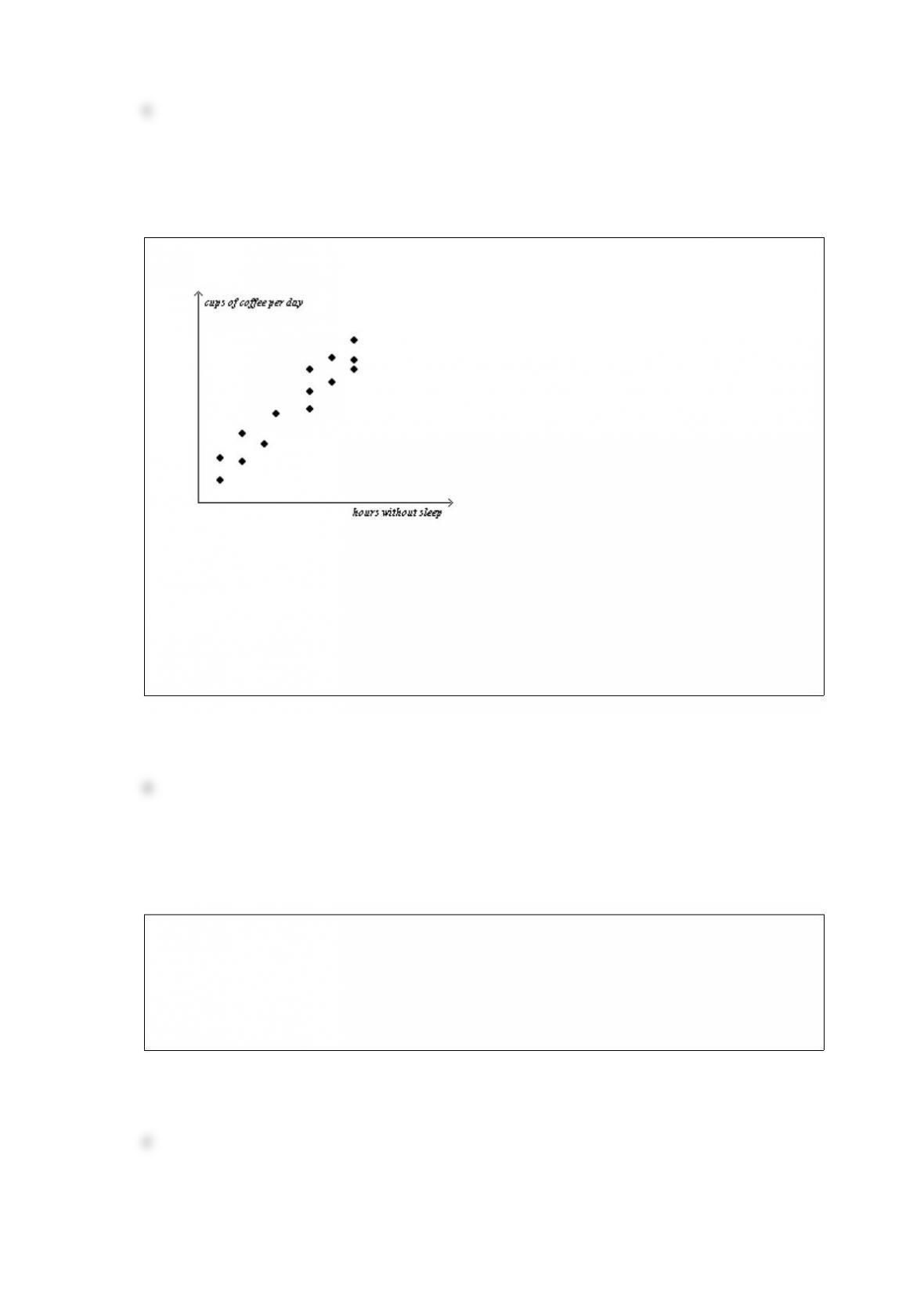
Figure 216
Refer to Figure 216. Cups of coffee per day and the hours that someone can go without
sleep appear to have
a. a positive correlation.
b. a negative correlation.
c. a random correlation.
d. no correlation.
A likely example of complementary goods for most people would be
a. butter and margarine.
b. lawnmowers and automobiles.
c. chips and salsa.
d. cola and lemonade.
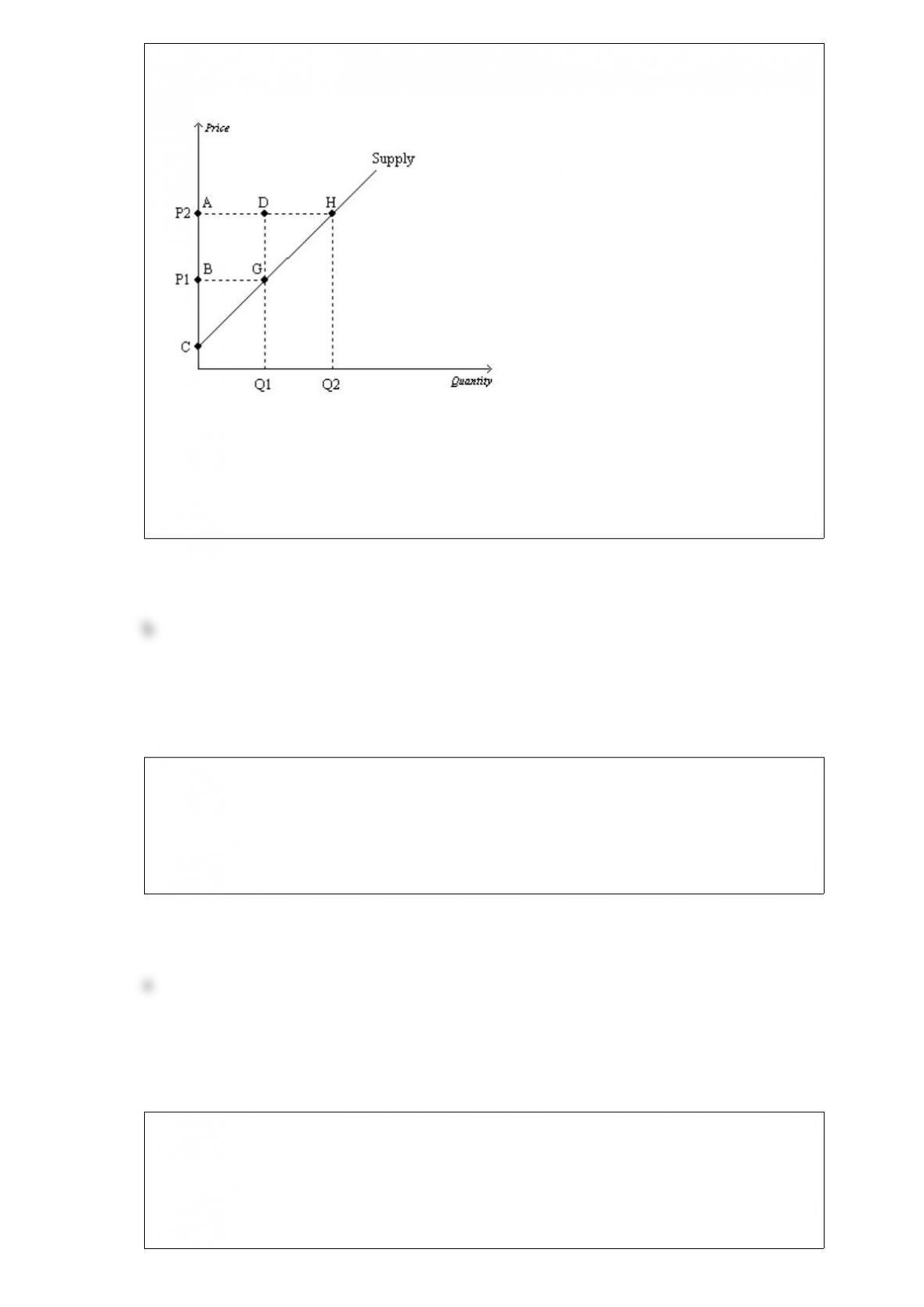
Figure 710
Refer to Figure 710. Which area represents producer surplus when the price is P2?
a. BCG
b. ACH
c. ABGD
d. AHGB
Another term for factors of production is
a. inputs.
b. output.
c. goods.
d. services.
Which of the following is likely to have the most price inelastic demand?
a. mintflavored toothpaste
b. toothpaste
c. Colgate mintflavored toothpaste
d. a generic mintflavored toothpaste
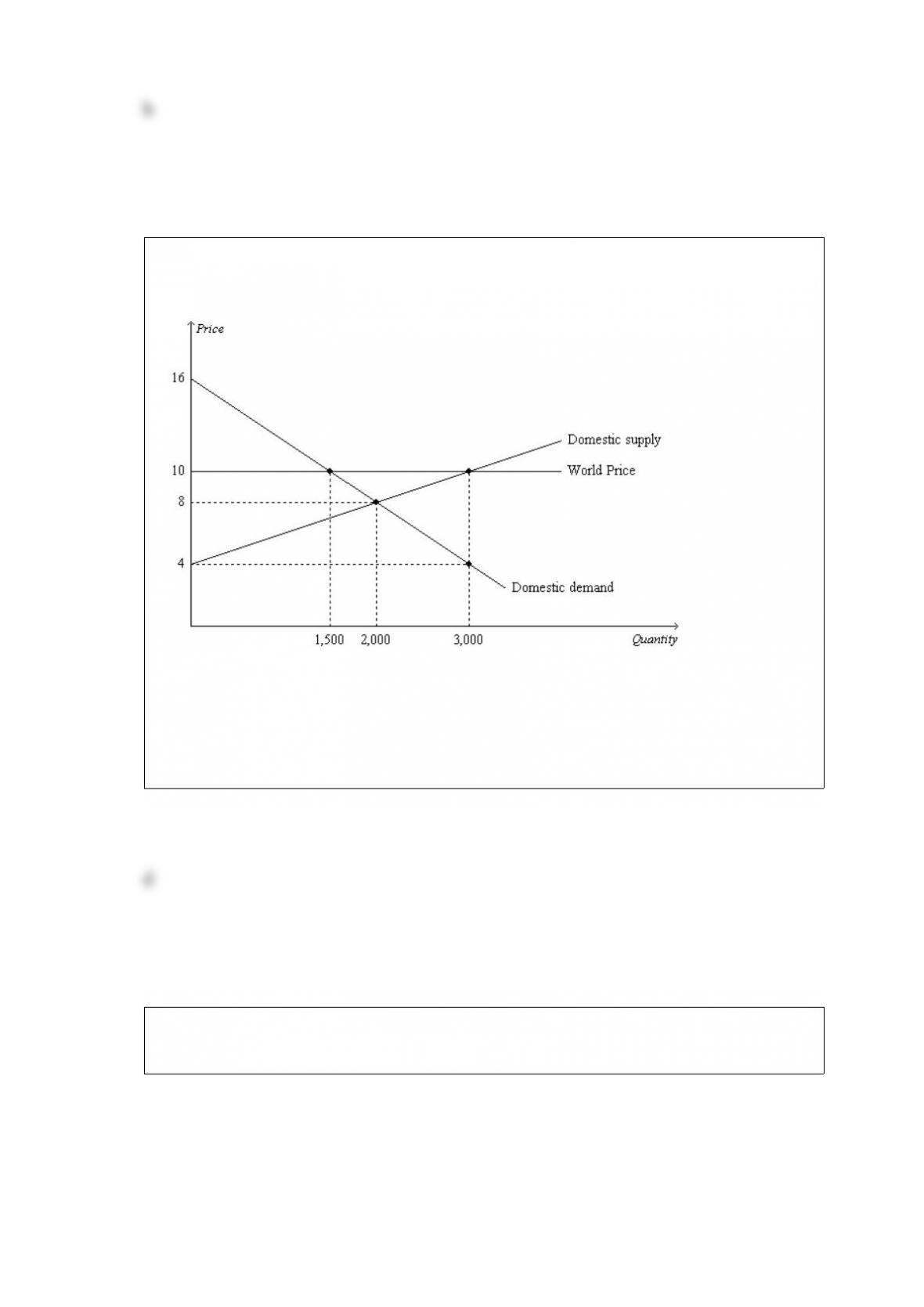
Figure 920
The figure illustrates the market for rice in Vietnam.
Refer to Figure 920. With trade, Vietnamese rice producers will produce
a. 2,000 units of rice and their producer surplus will be 4,000.
b. 2,000 units of rice and their producer surplus will be 7,500.
c. 3,000 units of rice and their producer surplus will be 7,500.
d. 3,000 units of rice and their producer surplus will be 9,000.
Figure 425
The graph below pertains to the supply of paper to colleges and universities.
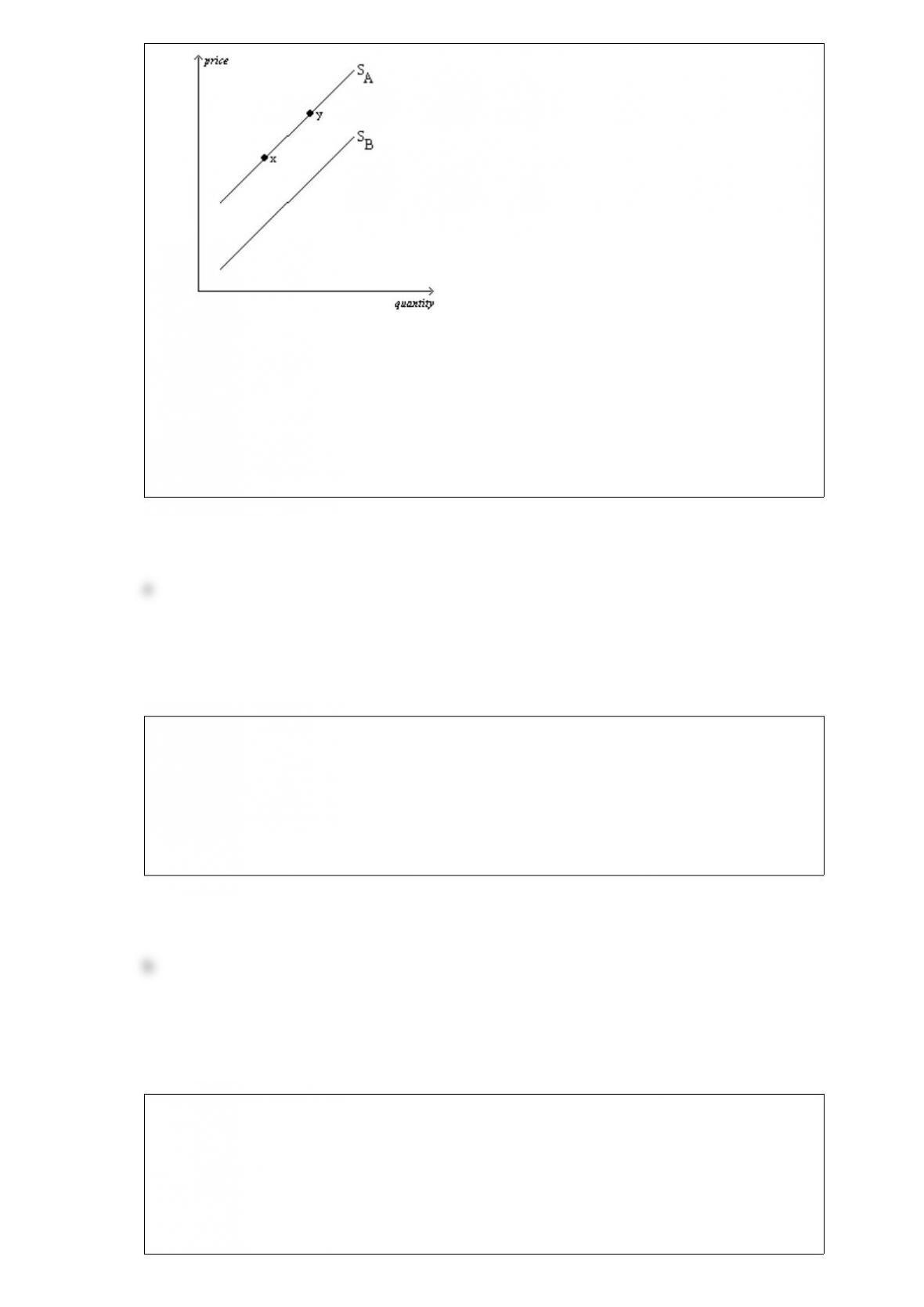
Refer to Figure 425. All else equal, buyers expecting paper to be more expensive in the
future would cause a current move from
a. x to y.
b. y to x.
c. SA to SB.
d. SB to SA.
Japan imposes a $300 per ton tariff on imported steel, raising the price charged in Japan
to $1,000. Using only this information, which of the following statements is correct?
a. The world price for steel is $300.
b. The world price for steel is $700.
c. The world price for steel is $1,000.
d. The world price for steel is $1,300.
Which of the following is an example of using the scientific method with a natural
experiment?
a. measuring how long it takes a marble to fall from a ten story building
b. comparing plant growth with and without a soil additive
c. tracking the price of oil when a war in the Middle East interrupts the flow of crude oil
d. observing the reaction when two chemicals are mixed together
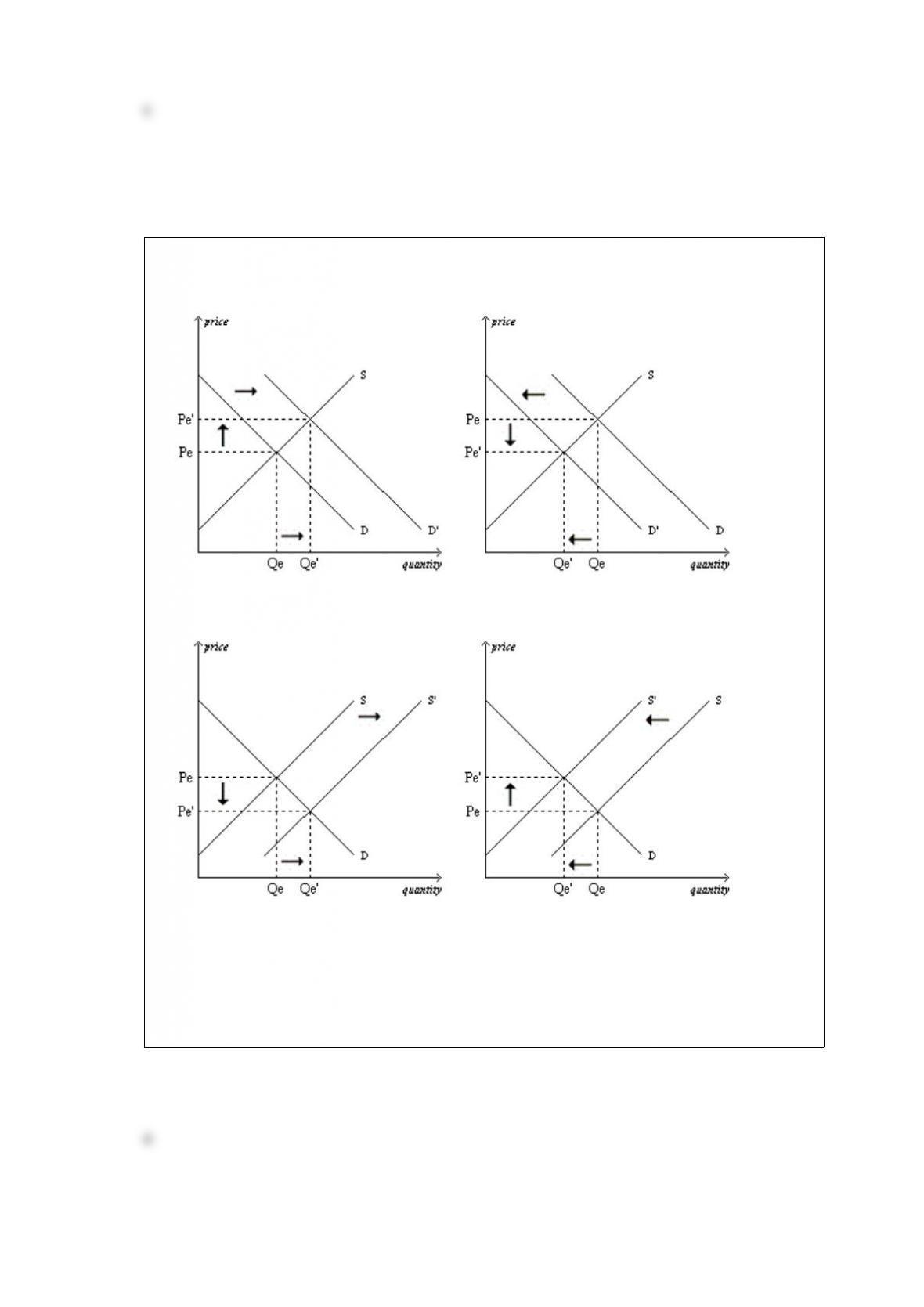
Figure 427
Panel (a)Panel (b)
Panel (c)Panel (d)
Refer to Figure 427. Panel (b) shows which of the following?
a. a decrease in demand and a decrease in quantity supplied
b. a decrease in demand and a decrease in supply
c. a decrease in quantity demanded and a decrease in quantity supplied
d. a decrease in quantity demanded and a decrease in supply
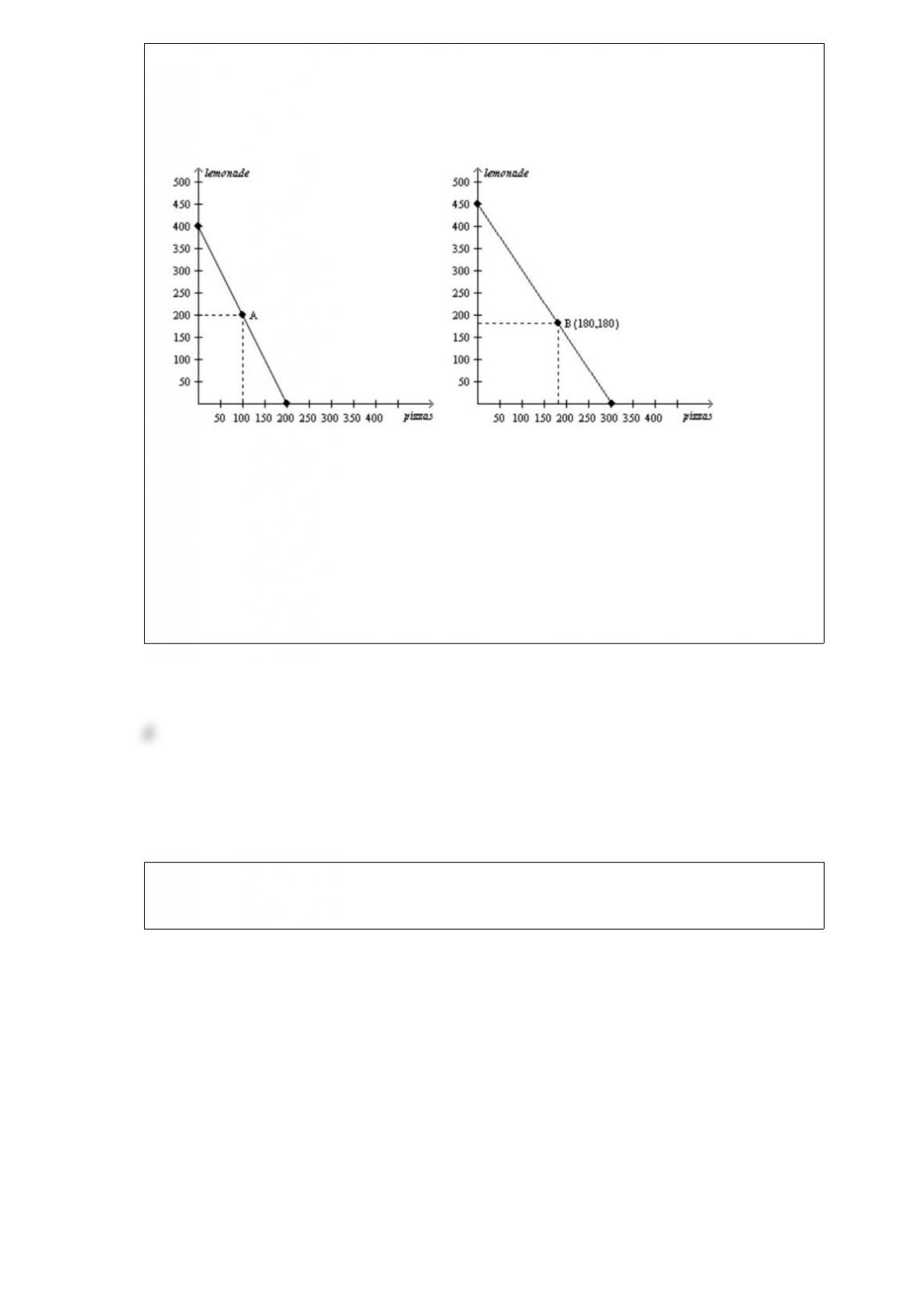
Figure 322
Alice and Betty’s Production Possibilities in one 8hour day.
Alice’s Production Possibilities FrontierBetty’s Production Possibilities Frontier
Refer to Figure 322. Which of the following statements is correct regarding
comparative advantage?
a. Alice has a comparative advantage in the production of both lemonade and pizzas.
b. Betty has a comparative advantage in the production of both lemonade and pizzas.
c. Alice has a comparative advantage in the production of pizzas while Betty has a
comparative advantage in the production of lemonade.
d. Alice has a comparative advantage in the production of lemonade while Betty has a
comparative advantage in the production of pizzas.
Figure 210
Panel (a) Panel (b)
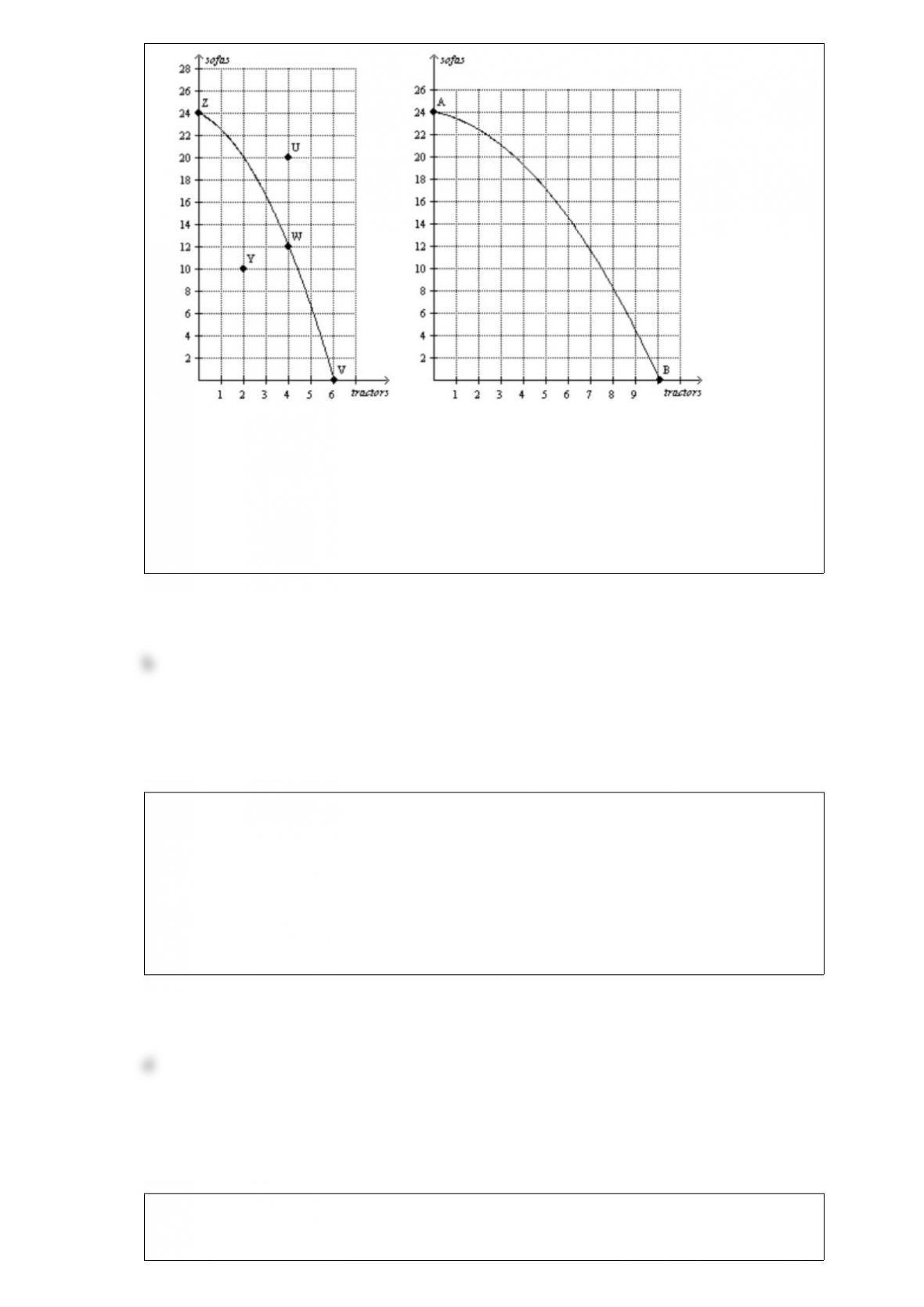
Refer to Figure 210, Panel (a). The movement from point W to point Y could be
caused by
a. economic growth.
b. unemployment.
c. an improvement in efficiency.
d. an advance in production technology.
The nation of Isolani forbids international trade. In Isolani, you can exchange 1 car for
5 motorcycles. In other countries, you can exchange 1 car for 4 motorcycles. These
facts indicate that
a. other countries have an absolute advantage, relative to Isolani, in producing cars.
b. Isolani has a comparative advantage, relative to other countries, in producing cars.
c. if Isolani were to allow trade, it would import motorcycles.
d. the world price of motorcycles exceeds the price of motorcycles in Isolani.
The government has just passed a law requiring that all residents earn the same annual
income regardless of work effort. This law is likely to
a. increase efficiency and increase equality.
b. increase efficiency but decrease equality.
c. decrease efficiency but increase equality.
d. decrease efficiency and decrease equality.
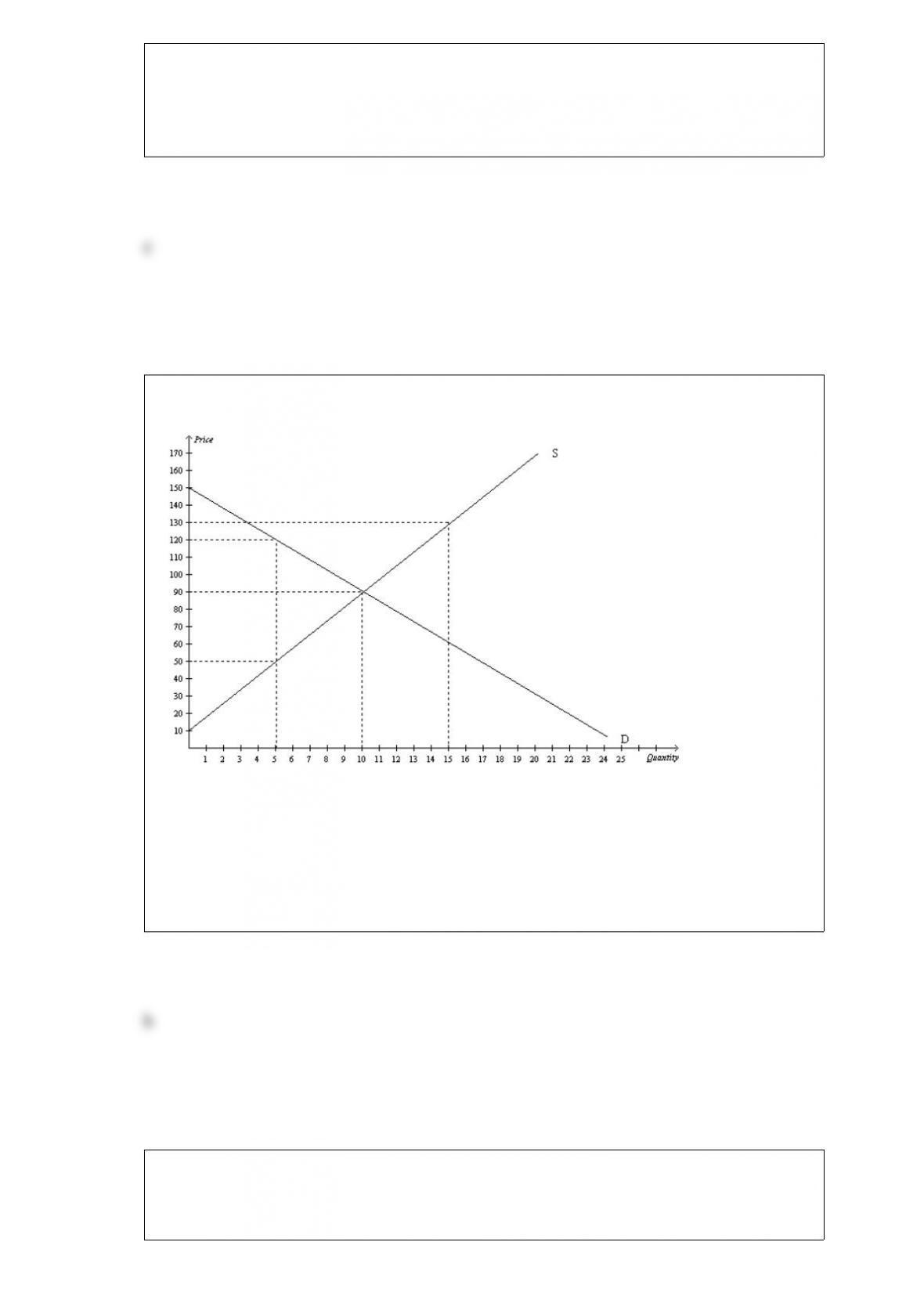
Figure 714
Refer to Figure 714. If the market price increases to $130 due to an increase in
demand, then producer surplus is
a. $1,800.
b. $900.
c. $975.
d. $1,950.
Which of the following events would unambiguously cause a decrease in the
equilibrium price of cotton shirts?
a. an increase in the price of wool shirts and a decrease in the price of raw cotton

b. a decrease in the price of wool shirts and a decrease in the price of raw cotton
c. an increase in the price of wool shirts and an increase in the price of raw cotton
d. a decrease in the price of wool shirts and an increase in the price of raw cotton
Suppose the government imposes a tax on cheese. The deadweight loss from this tax
will likely be greater in the
a. first year after it is imposed than in the eighth year after it is imposed because
demand and supply will be more elastic in the first year than in the eighth year.
b. first year after it is imposed than in the eighth year after it is imposed because
demand and supply will be less elastic in the first year than in the eighth year.
c. eighth year after it is imposed than in the first year after it is imposed because
demand and supply will be more elastic in the first year than in the eighth year.
d. eighth year after it is imposed than in the first year after it is imposed because
demand and supply will be less elastic in the first year than in the eighth year.
When quantity demanded has increased at every price, it might be because
a. the number of buyers in the market has decreased.
b. income has increased, and the good is an inferior good.
c. the costs incurred by sellers producing the good have decreased.
d. the price of a complementary good has decreased.
Figure 68
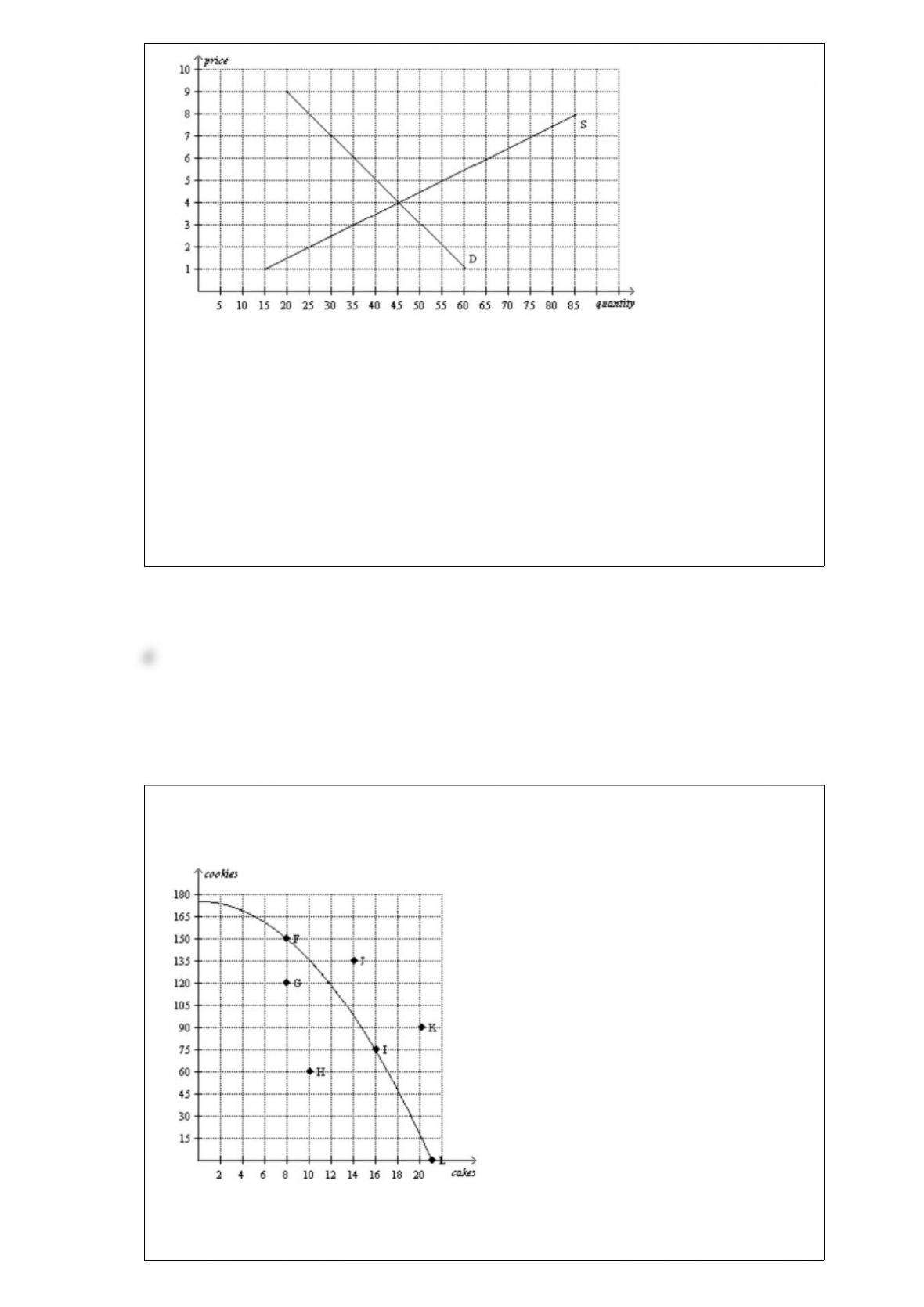
Refer to Figure 68. When a certain price control is imposed on this market, the
resulting quantity of the good that is actually bought and sold is such that buyers are
willing and able to pay a maximum of P1 dollars per unit for that quantity and sellers
are willing and able to accept a minimum of P2 dollars per unit for that quantity. If P1P2
= $3, then the price control is
a. a price ceiling of $2.00.
b. a price ceiling of $5.00.
c. a price floor of $5.00.
d. either a price ceiling of $2.00 or a price floor of $5.00.
Figure 213
Refer to Figure 213. One difference between points F and G is that
a. Point G is unattainable with current resources, but point F is attainable.
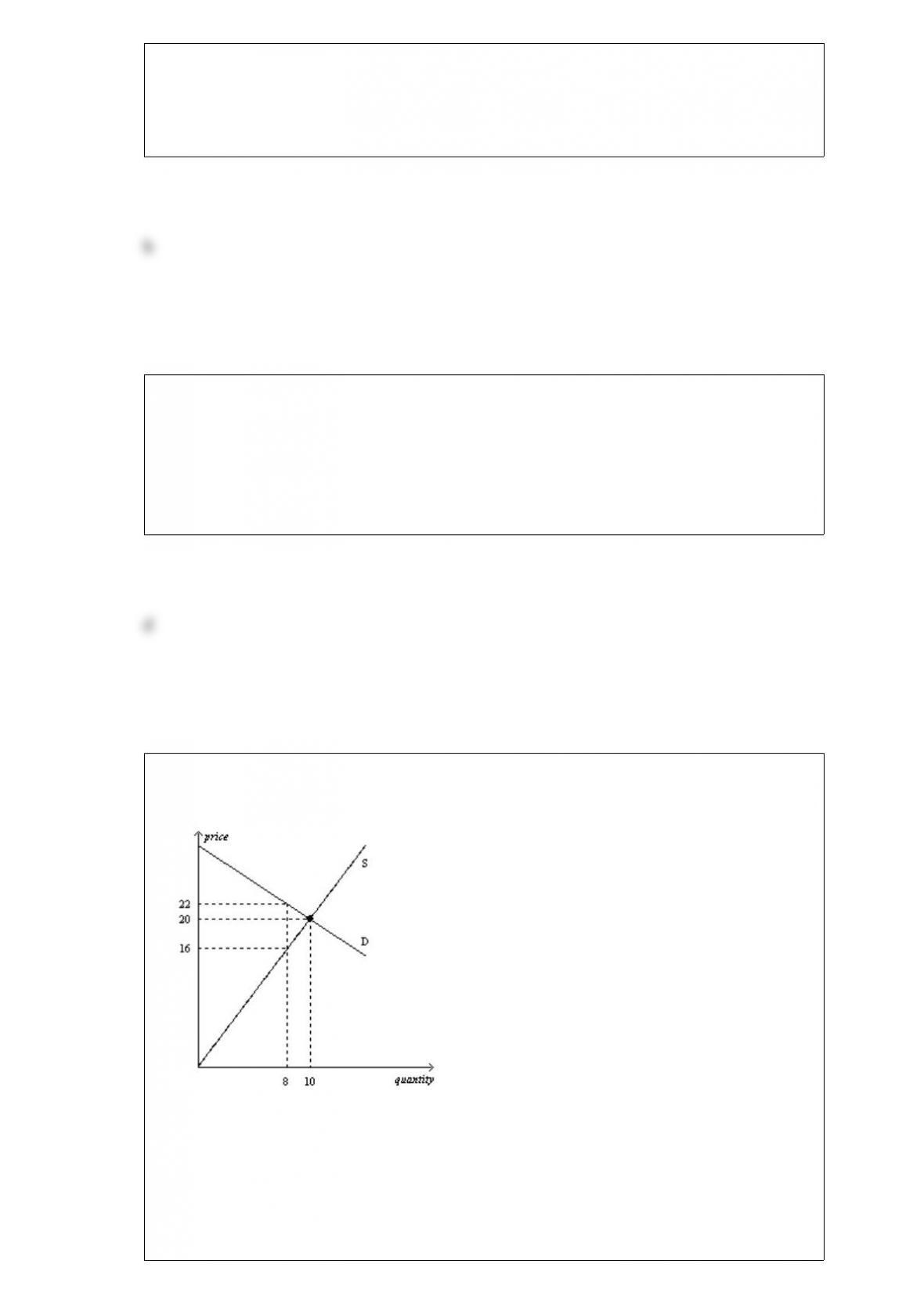
b. All resources are fully employed at point F but there is unemployment at point G.
c. More output can be produced at point F but no additional output can be produced at
point G.
d. This economy produces more cookies at point G than at point F.
In a market economy, who or what determines who produces each good and how much
is produced?
a. the government
b. lawyers
c. lotteries
d. prices
Figure 627
This figure shows the market demand and market supply curves for good Z.
Refer to Figure 627. Suppose a tax of $6 per unit is imposed on this market. How
much will buyers pay per unit after the tax is imposed?
a. $16
b. between $16 and $20
c. between $20 and $22
d. $22
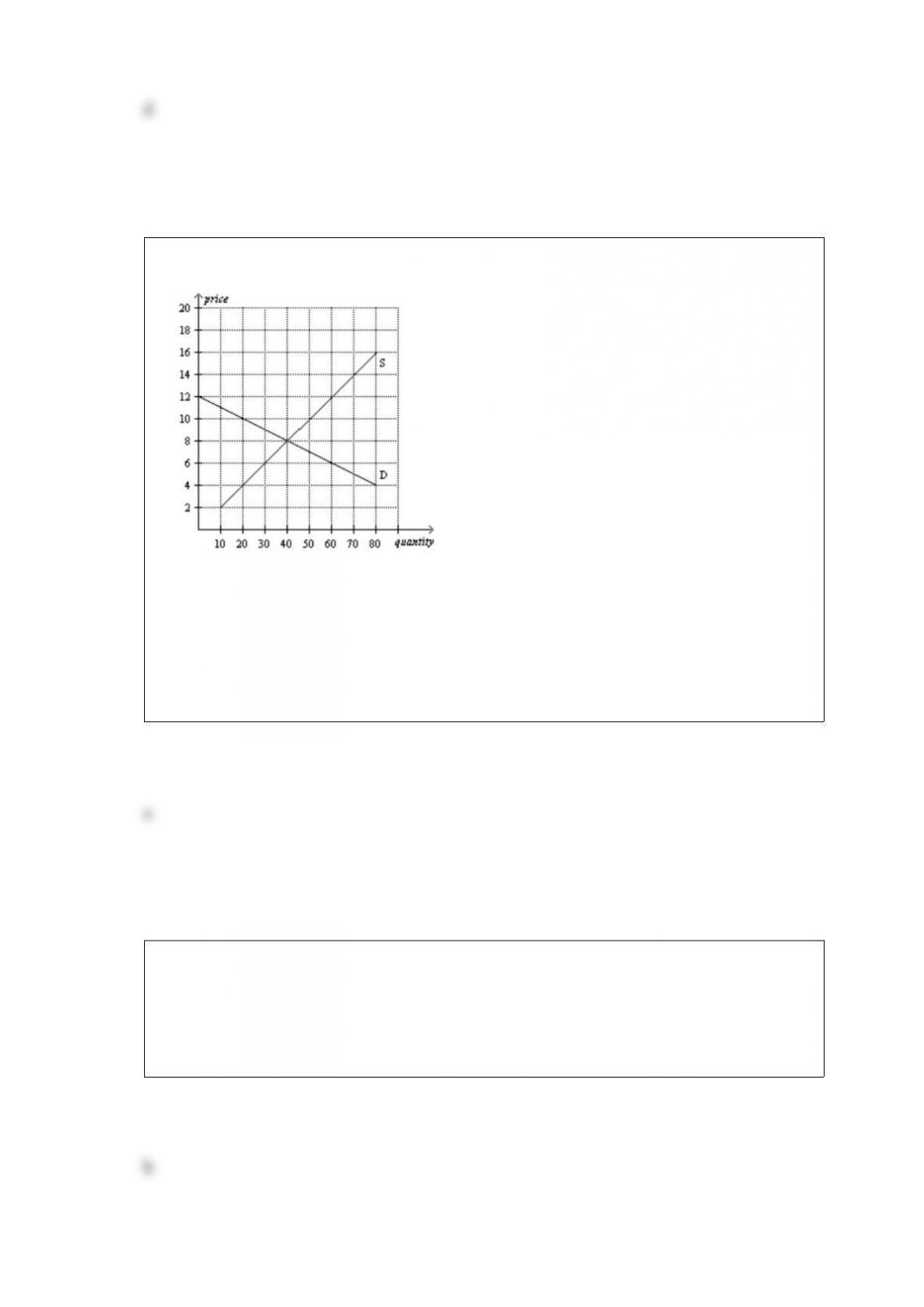
Figure 66
Refer to Figure 66. If the government imposes a price ceiling of $8 on this market,
then there will be
a. no shortage.
b. a shortage of 10 units.
c. a shortage of 20 units.
d. a shortage of 40 units.
The case of perfectly elastic demand is illustrated by a demand curve that is
a. vertical.
b. horizontal.
c. downwardsloping but relatively steep.
d. downwardsloping but relatively flat.

Suppose that a worker in Agland can produce either 10 units of organic grain or 2 units
of incense per year, and a worker in Zenland can produce either 5 units of organic grain
or 15 units of incense per year. There are 20 workers in Agland and 10 workers in
Zenland. Currently the two countries do not trade. Agland produces and consumes 100
units of grain and 20 units of incense per year. Zenland produces and consumes 50 units
of grain and no incense per year. If each country made the decision to specialize in
producing the good in which it has a comparative advantage, then the combined yearly
output of the two countries would increase by
a. 30 units of grain and 100 units of incense.
b. 30 units of grain and 150 units of incense.
c. 50 units of grain and 90 units of incense.
d. 50 units of grain and 130 units of incense.
Which markets are represented in the simple circularflow diagram?
a. markets for goods and services and markets for financial assets
b. markets for factors of production and markets for financial assets
c. markets for goods and services and markets for factors of production
d. markets for goods and services and markets for imports and exports