1) ideally, value judgments are involved at the:
a.levels of facts, theory, and policy.
b.levels of facts and theory only.
c.level of facts only.
d.level of policy only.
2) Which of the following represents the most expansionary fiscal policy?
A.a $10 billion tax cut
B.a $10 billion increase in government spending
C.a $10 billion tax increase
D.a $10 billion decrease in government spending
3) Factors that impede the attainment of economic efficiency in the public sector are
called:
A.market failures.
B.externalities.
C.government failures.
D.voting irregularities.
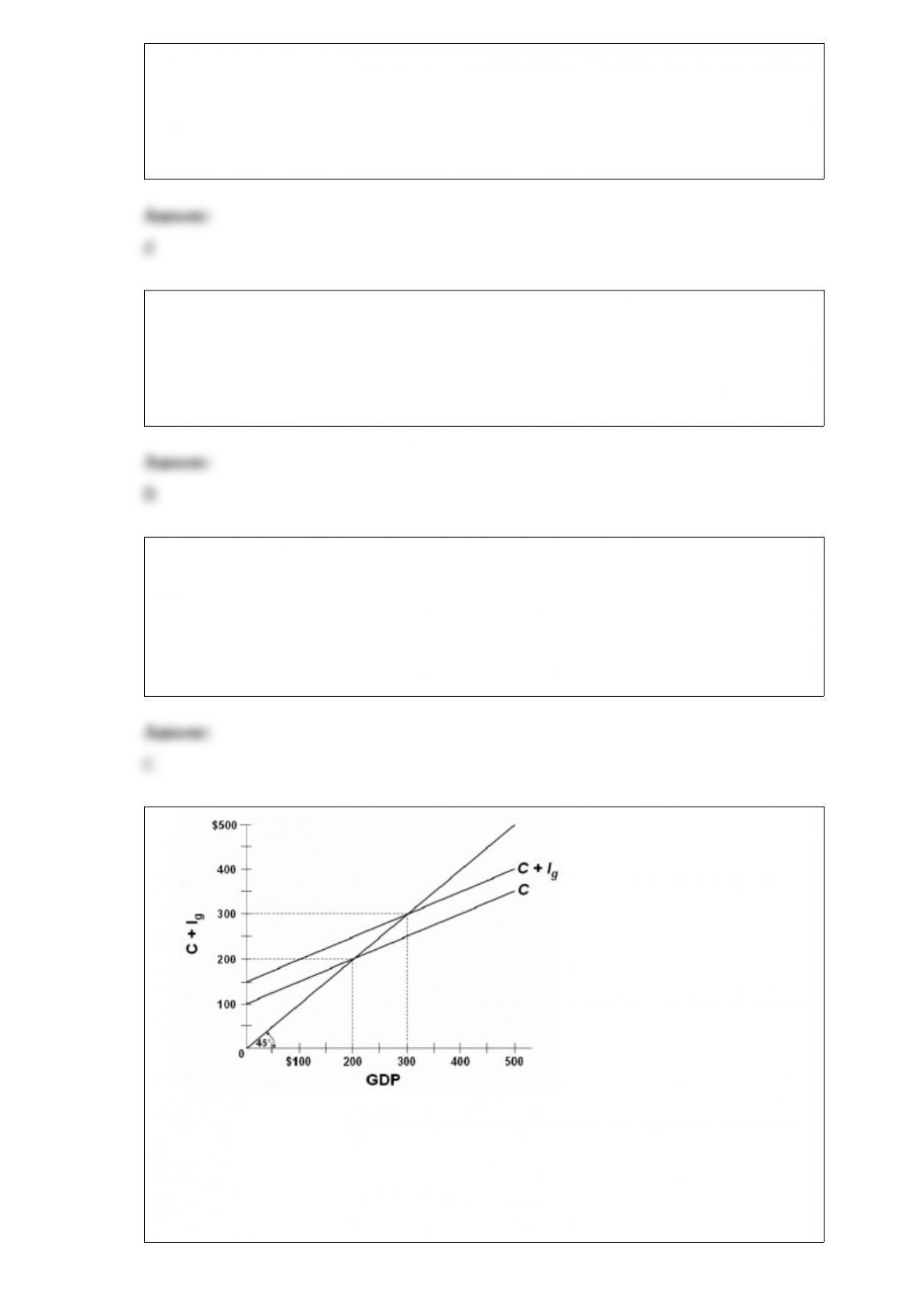
4)
Refer to the above diagram for a private closed economy. At the equilibrium level of
GDP the APC and APS:
A.are 5/6 and 1/6 respectively.
B.are equal to the MPC and MPS respectively.
C.are 4/5 and 1/5 respectively.
D.cannot be determined from the information given.
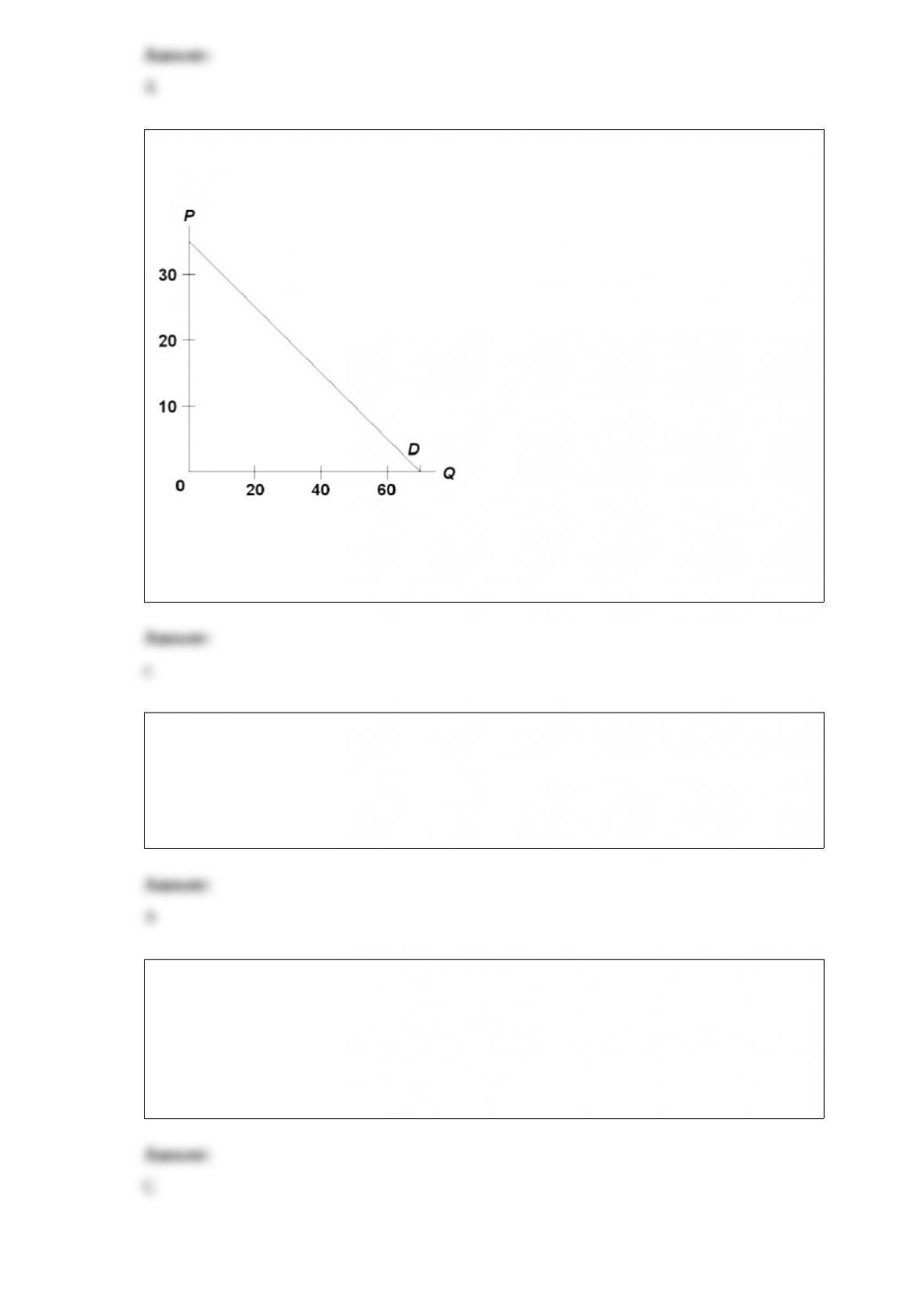
5) (advanced analysis) the equation for the demand curve in the below diagram:
a.is p = 70 – q.
b.is p = 35 – 2q.
c.is p = 35 – .5q.
d.cannot be determined from the information given.
6) In the U.S. balance of payments, U.S. purchases of assets abroad are a(n):
A.U.S. dollar outflow.
B.U.S. dollar inflow.
C.current account item.
D.inpayment.
7) The demographic transition view of population growth argues that, on average (and
as perceived by parents) the marginal:
A.benefits of extra children are larger in IACs than in DVCs.
B.costs of extra children are lower in IACs than in DVCs.
C.costs of extra children are larger in IACs than in DVCs.
D.benefits of extra children are the same in DVCs and IACs.

8) At the present time the largest percentage of the national incomes of the low-income
DVCs is used for:
A.imports of the finished products of foreign industries.
B.food.
C.infrastructure.
D.industrial development.
9) an industry comprised of a small number of firms, each of which considers the
potential reactions of its rivals in making price-output decisions is called:
a.monopolistic competition.
b.oligopoly.
c.pure monopoly.
d.pure competition.
10) Many countries remain poor because they currently are poor. This statement
summarizes the:
A.infrastructure problem.
B.vicious circle of poverty.
C.capricious universe view.
D.problem of capital flight.
11) Which of the following best describes the typical growth pattern of trees for
logging?
A.Trees grow slowly at first, then grow exponentially until cut down.
B.Trees grow quickly at first, then continue to grow at a declining rate.
C.Trees grow quickly at first, then plateau for a time before resuming an exponential
growth pattern.
D.Trees grow slowly at first, quickly in the middle years, and then at a diminishing rate
into old age.
12) other things equal, canadian imports of u.s. goods:
a.create a supply of canadian dollars in the foreign exchange market.
b.create a supply of u.s. dollars in the foreign exchange market.

c.reduce the demand for u.s. dollars.
d.have no effect on the u.s. dollar price of canadian dollars.
13) transfer payments differ from government purchases in that the:
a.former make a contribution to the domestic output, while the latter do not.
b.former are associated with state and local governments, while the latter are associated
with the federal government.
c.latter are not directly resource absorbing, while the former are.
d.former are not directly resource absorbing, while the latter are.
14) In the extended aggregate demand-aggregate supply model:
A.long-run equilibrium occurs wherever the aggregate demand curve intersects the
short-run aggregate supply curve.
B.the long-run aggregate supply curve is horizontal.
C.the level of real output is the same in the long run regardless of the location of the
aggregate demand curve.
D.the short-run aggregate supply curve is downsloping.
15) The absolute income gap between the IACs and the DVCs has:
A.remained constant over time.
B.increased over time.
C.decreased over time.
D.increased in nominal terms, but decreased in real terms.
16) Supply-side economist Arthur Laffer has argued that:
A.there is no empirically proven relationship between tax rates and incentives.
B.large reductions in personal and corporate income taxes will increase aggregate
supply much more than aggregate demand.
C.the only way to eliminate inflation is to increase taxes to induce a recession severe
enough to eliminate inflationary expectations.
D.large cuts in income taxes will increase aggregate demand more than aggregate
supply.
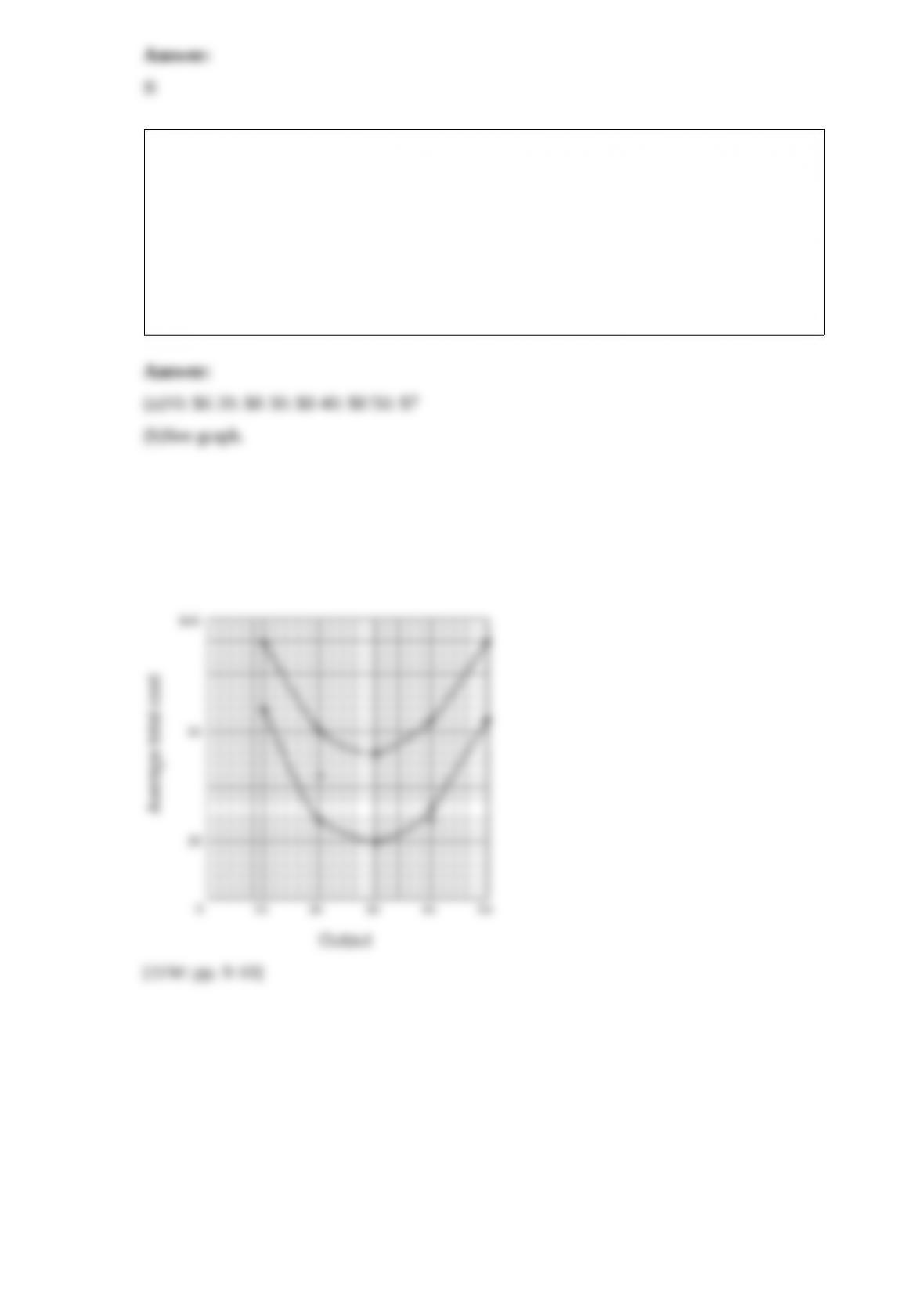
17) Below are two average total cost schedules for a firm. The first schedule (ATC1)
shows the cost of producing the product at five levels of output before a new
innovation. The second schedule (ATC2) shows the average total cost at the five output
levels after the innovation. What was the reduction in average total cost at each of the
five levels of output as a result of the innovation?
(a)What was the reduction in average total cost at each of the five levels of output as a
result of the innovation?
(b)Plot the average cost curves for the schedules on the graph below.