
Which of the following statements is false?
a. There are more poor white persons than there are poor African-American persons.
b. People are more likely to be poor when they are young than at any other time.
c. Families headed by females are more likely to be poor than families headed by males.
d. The uneducated and poorly educated are more likely to be poor than the educated.
e. none of the above
Special interest groups
a. often gain from public policies that may not be in accord with the interests of the
general public.
b. never gain from public policies that are not in accord with the interests of the general
public.
c. always gain from public policies that are not in accord with the interests of the
general public.
d. never lobby for public policies that are not in accord with the interests of the general
public.
e. always lobby for public policies that are not in accord with the interests of the general
public.
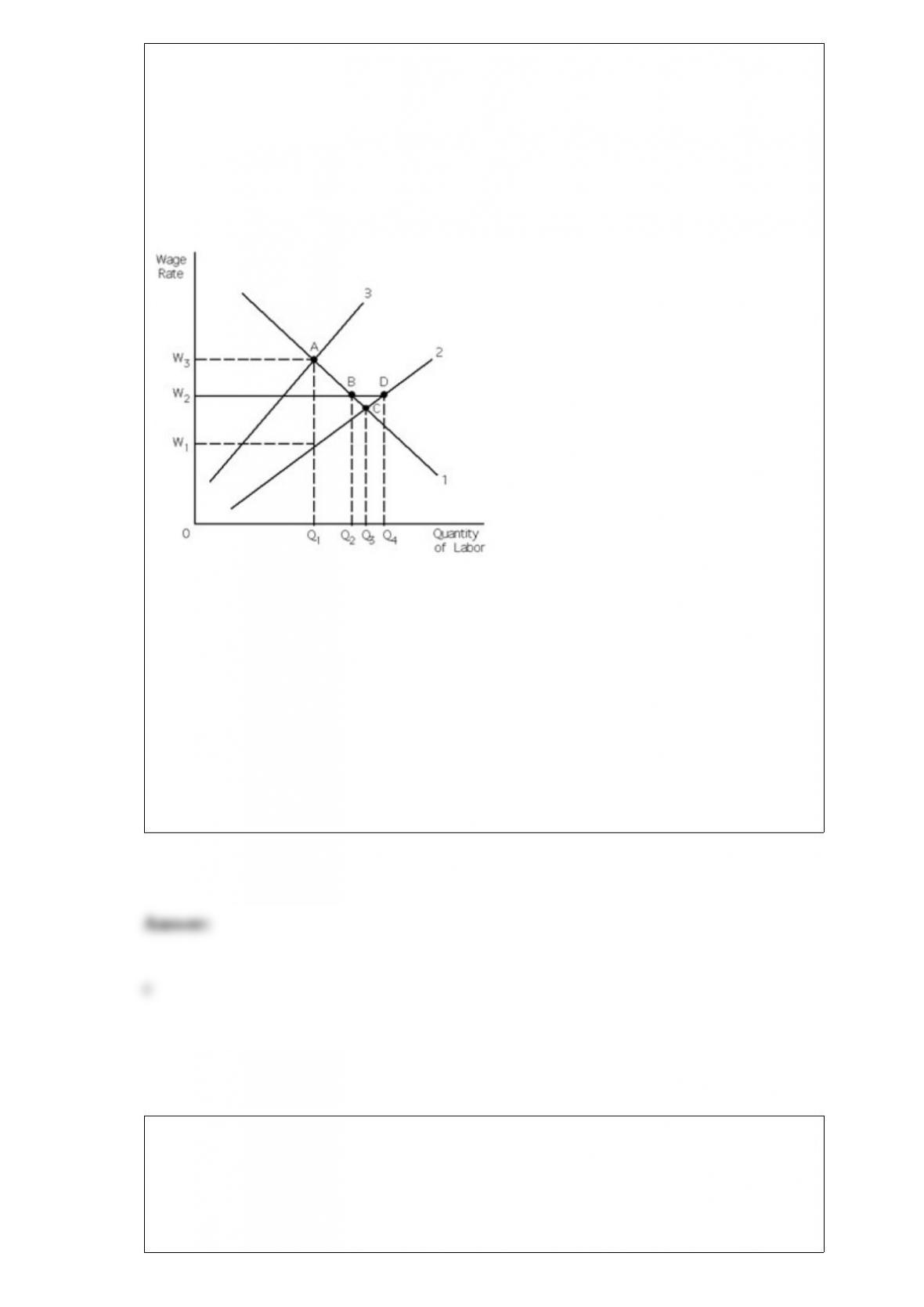
Refer to Exhibit 28-11. The firm in the exhibit is a monopsony. We have deliberately
not identified the three curves in the exhibit. They are simply curves 1, 2, and 3. If
(union) collective bargaining with the monopsony guarantees the wage rate that
workers will be paid is W2, then how many more workers will the monopsony hire than
it would hire if it could pay its chosen (or preferred) wage?
Exhibit 28-11
a. Q4 – Q1 more workers
b. Q3 – Q2 more workers
c. Q2 – Q1 more workers
d. Q3 – Q1 more workers
e. Q4 – Q3 more workers
The perfectly competitive firm produces the quantity of output at which __________,
and the single-price monopolist produces the quantity of output at which __________.
The perfectly price-discriminating monopolist is like the __________ in this regard.
a. P = MC; P > MC; single-price monopolist
b. P > MC; P = MC; perfectly competitive firm
c. P = MC; P > MC; perfectly competitive firm
d. P > MC; P = MC; single-price monopolist
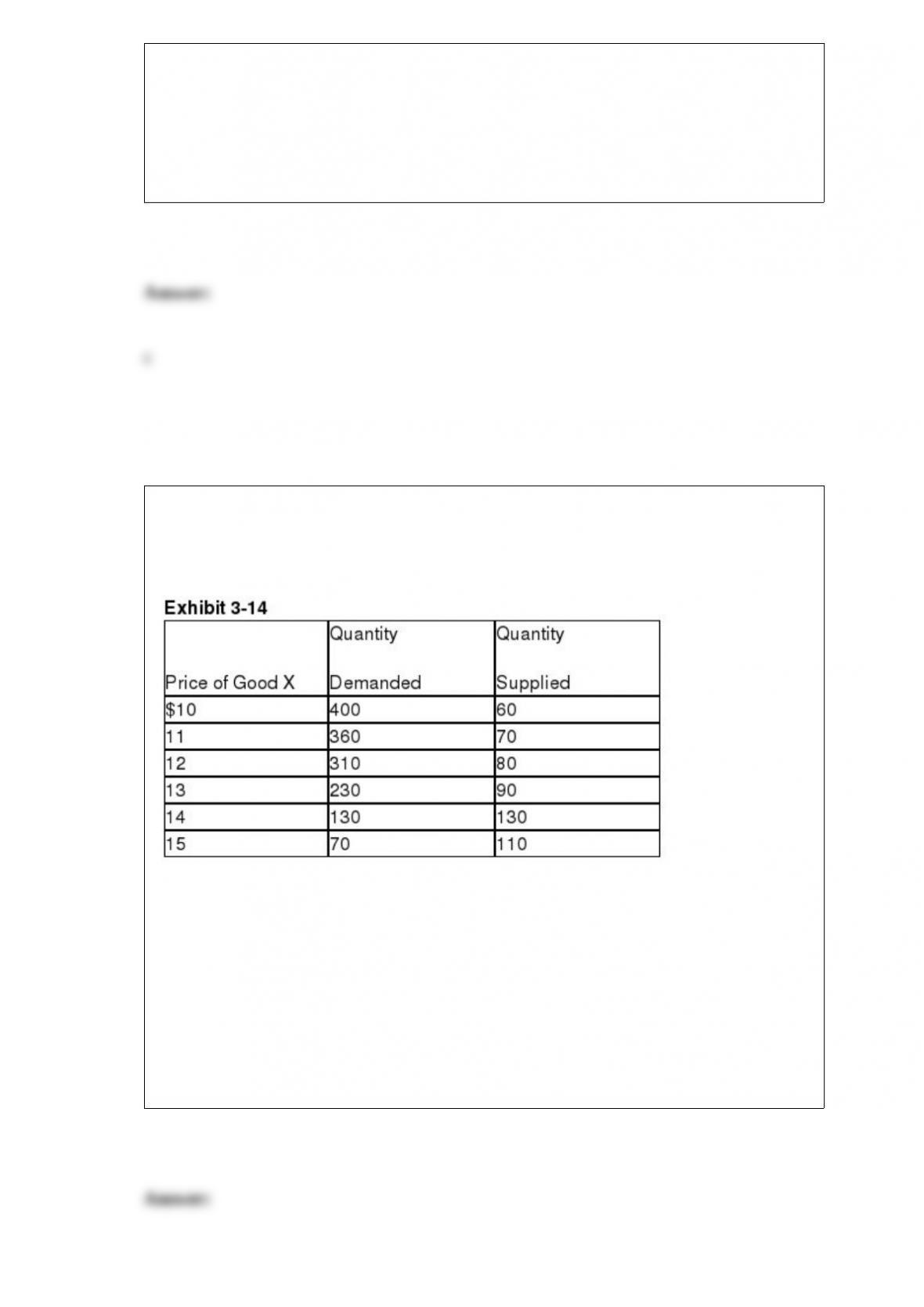
Refer to Exhibit 3-14.At a price of $15, there is a ____________ unit____________ of
good X.
a. 40; shortage
b. 90; surplus
c. 40; surplus
d. 20; shortage
e. 20; surplus
In every economy people vie for the economy’s rationing device, a process called
a. competition.
b. entrepreneurship.
c. marginal benefit.
d. positive economics.
The effect of a decrease in interest rates upon economic growth is an example of
positive economics.
a. True
b. False
Economists use the term utility to mean usefulness.
a. True
b. False
The hotel industry contains some aspects that economists consider to be part of the
‘hidden fee’ economy.
a. True
b. False
Income elasticity of demand for a normal good is always
a. less than zero.
b. greater than zero.
c. equal to zero.
d. less than one.
Refer to Exhibit 20-9.What is the price elasticity of demand between $2 and $4?
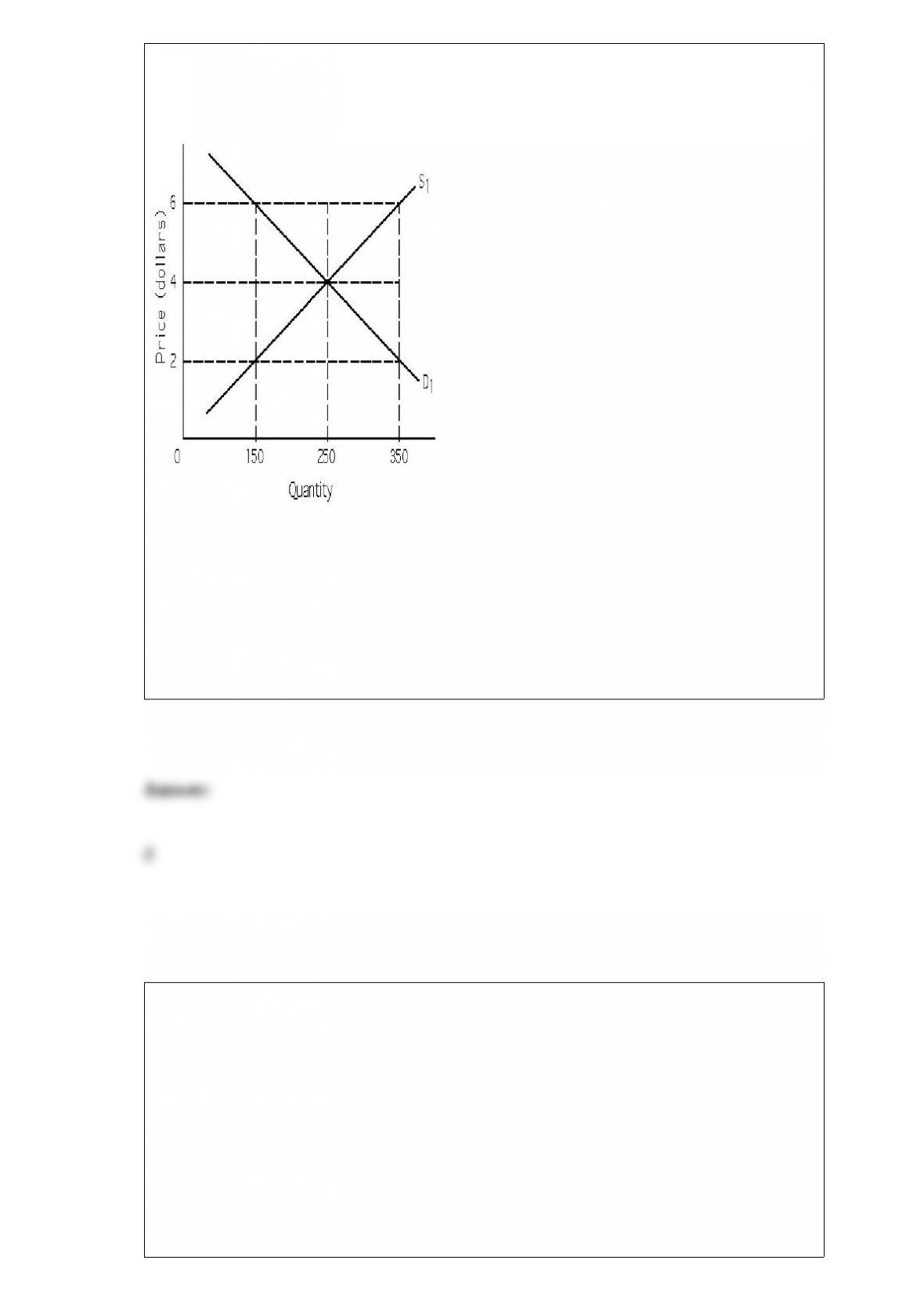
Exhibit 20-9
a. 2.0
b. 0.75
c. 1.33
d. 0.50
A local government prevents any firm from competing with a natural monopoly firm.
Those people who believe this is a wise policy action would likely say
a. this is a desirable state of affairs since if competition is allowed, the natural
monopoly firm will out compete all newcomers and in the end the newcomers will go
out of business.
b. the public doesn’t want more than one company to produce certain goods that it buys.
c. the first company that provides a certain good to the public should have the right to
produce that good without competition from others.
d. if competition is allowed, no firm in the industry will be able to earn profits.
e. none of the above
Which of the following statements is true?
a. Bad weather isn’t always that bad for farmers’ incomes.
b. An individual farmer would probably increase his revenues if he experienced good
weather and other farmers experienced bad weather.
c. Price elasticity of demand is a relevant factor to a farmer’s income.
d. a and b
e. a, b, and c
Tiffany gives $50 to Jeremy for his birthday.This is an example of a(n)
a. involuntary transfer.
b. involuntary-voluntary transfer.
c. voluntary transfer.
d. gift.
e. c and d
A person is said to be in consumer equilibrium if she
a. equates marginal utilities per dollar spent.
b. has diminishing marginal utility of money.
c. purchases only normal goods.
d. has an incentive to redirect her purchases.
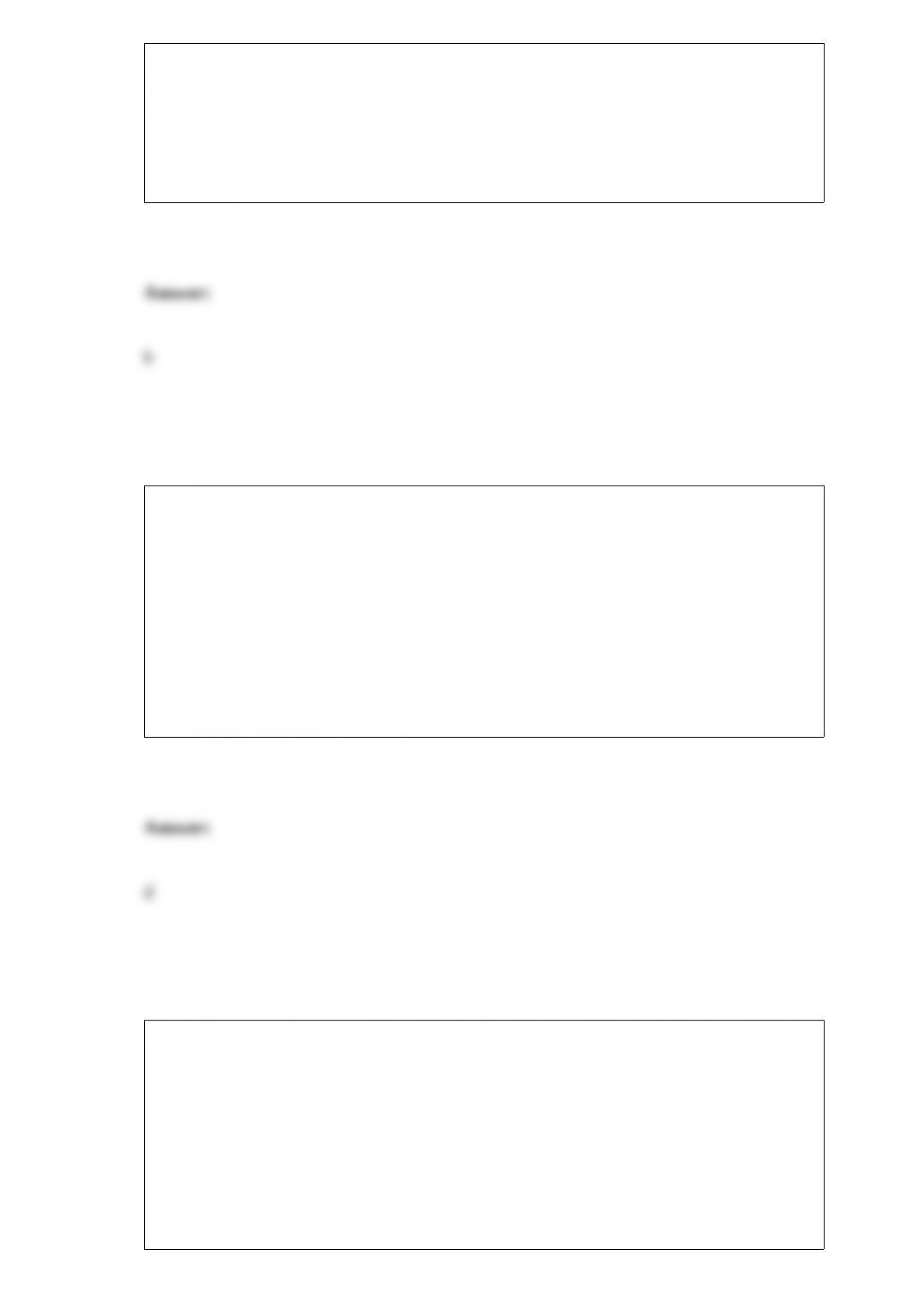
Refer to Exhibit 24-8. A profit-maximizing single-price monopolist will set the price at
a. $90 per unit.
b. $82 per unit.
c. $65 per unit.
d. $75 per unit.
e. There is not enough information provided to answer this question.
A monopolistic competitor faces a __________ demand curve and its price is
__________ marginal revenue.
a. horizontal; equal to
b. downward-sloping; equal to
c. horizontal; greater than
d. downward-sloping; greater than
Hank goes to a Korean restaurant for the first time and he has no prior knowledge
ofKorean. He orders the Daenjang Chigae prepared medium hot and hopes for the best.
Here an information __________ is __________ a market outcome.
a. symmetry; affecting
b. symmetry; not affecting
c. asymmetry; affecting
d. asymmetry; not affecting
If Cassandra bought 12 blouses last year when her income was $55,000 and she buys 10
blouses this year when her income is $49,000, then her income elasticity of demand is
a. -1.58.
b. +1.58.
c. -0.63.
d. +0.63.
e. -2.33.
If the demand for health care is elastic and health care co-payments are lowered, the
percentage change in the quantity demanded of health care will be _______________
than the percentage decrease in co-payments, and the total dollar amount spent on
health care will ___________.
a. greater; rise
b. less; rise
c. greater; fall
d. less; fall
The marginal utility curve for units 1 through 5 of good Z lies above the horizontal
axis.What does this imply must be true about the total utility curve for units 1 through 5
of good Z?
a. That portion of good Z’s total utility curve must be upward sloping.
b. That portion of good Z’s total utility curve must be downward sloping.
c. That portion of good Z’s total utility curve must be horizontal.
d. That portion of good Z’s total utility curve must also lie above the horizontal axis.
A seller that has the ability (to some degree) to control the price of the product it sells is
called a price
a. taker.
b. searcher.
c. breaker.
d. twister.
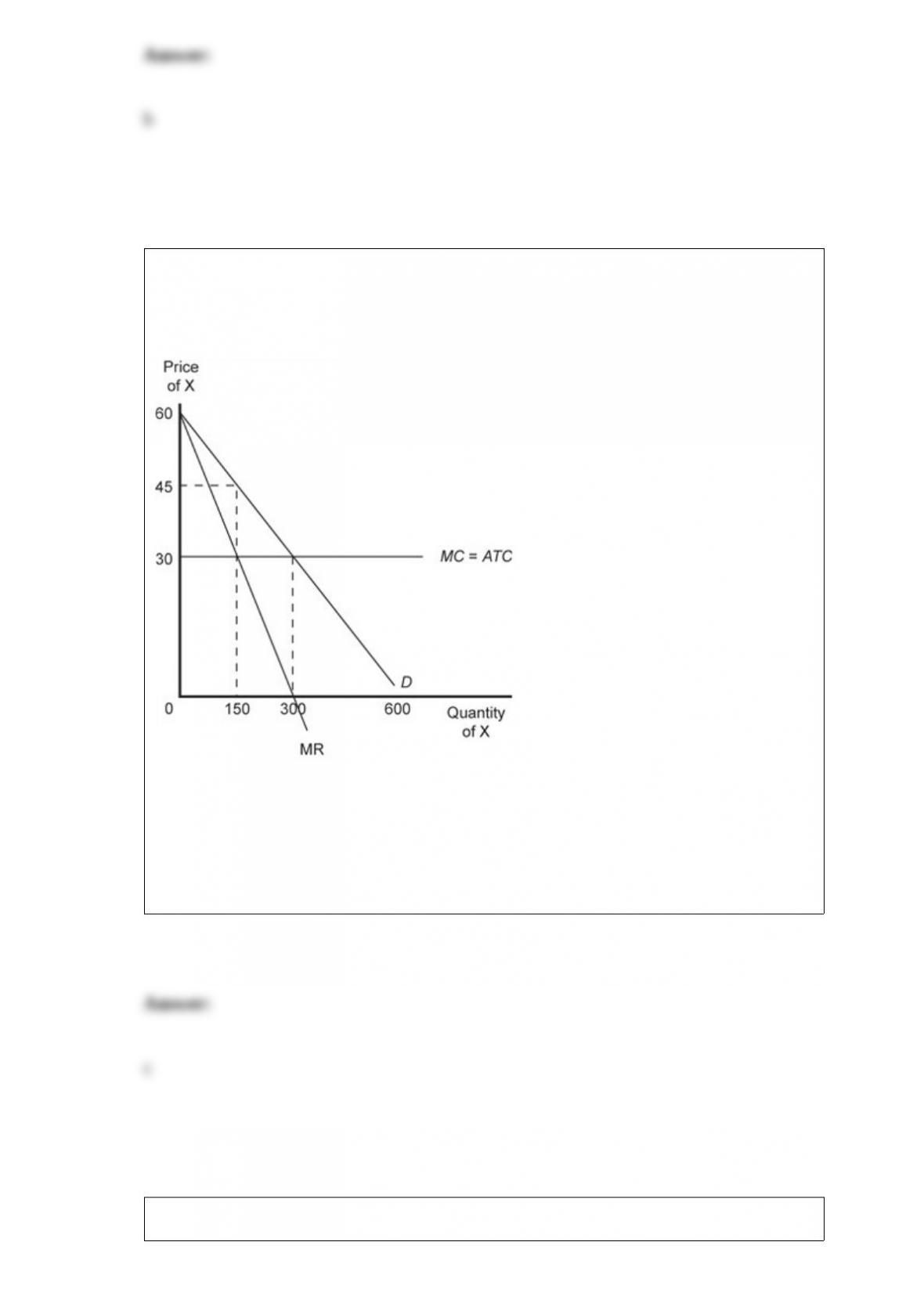
Refer to Exhibit 24-7. The total revenue collected by a profit-maximizing single-price
monopolist is
Exhibit 24-7
a. $4,500.
b. $2,250.
c. $6,750.
d. $9,000.
In economics, scarcity implies
a. disutility.
b. utility.
c. choice.
d. inefficiency.
e. a, c, and d