Baxter International, a manufacturer of hospital supplies, acquired American Hospital
Supply, a distributor of hospital supplies. This is an example of
A) a conglomerate merger.
B) a horizontal merger.
C) a vertical merger.
D) a two-dimensional merger.
Table 2-11
Table 2-11 shows the number of labor hours required to produce a digital camera and a
pound of wheat in China and South Korea.
If the two countries specialize and trade, who should export digital cameras?
A) There is no basis for trade between the two countries.
B) China
C) South Korea
D) They should both be importing digital cameras.
Since 1950,
A) economic expansions in the United States have been so short that expansions barely
exist.
B) the average length of expansions in the United States have become shorter as
compared to before 1950.
C) the average length of expansions in the United States have become longer as
compared to before 1950.
D) the average length of expansions in the United States are about the same length as
compared to before 1950.
How will contractionary monetary policy in Japan affect the demand and supply of the
yen in the foreign exchange market?
A) The demand for the yen will fall, and the supply of the yen will increase.
B) The demand for the yen will increase, and the supply of the yen will fall.
C) The demand for the yen will fall, and the supply of the yen will fall.
D) The demand for the yen will increase, and the supply of the yen will increase.
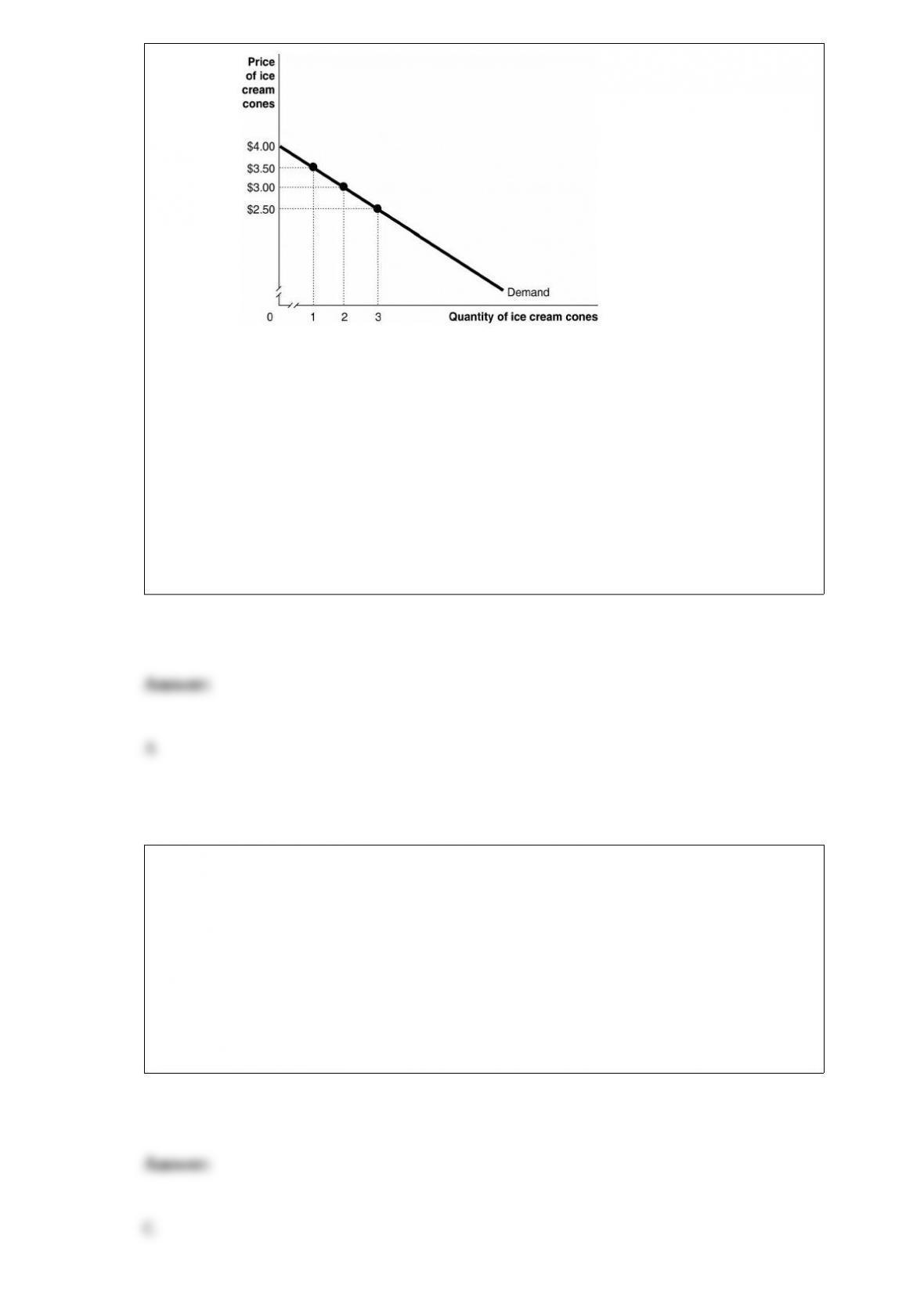
Figure 4-1 Figure 4-1 shows Kendra’s
demand curve for ice-cream cones.
If the market price is $2.50, what is the consumer surplus on the third ice cream cone?
A) $0
B) $0.50
C) $1.50
D) $2.50
“Free riding” is a characteristic of which type of good?
A) a private good
B) a common resource
C) a public good
D) a good that is both rival and excludable

Since 1972, the world price of oil has been largely determined by OPEC, which
controls about 75 percent of the world’s proven oil reserves. Since 1972 the price of oil
has
A) fluctuated. OPEC’s situation is an example of a prisoner’s dilemma.
B) risen slowly, but steadily. Members of OPEC fear that if they raise the price of oil
too quickly this will lead oil-buying nations to accuse OPEC of price gouging, which is
illegal under international law.
C) steadily fallen through the 1970s, then risen continually in the years since then.
OPEC’s actions are an example of implicit collusion.
D) been tied by OPEC to the rate of inflation in the United States. If, for example, the
rate of inflation is 5 percent in one year, OPEC will raise the price of oil by 5 percent
the next year.
Academic book publishers hire editors, designers, and production and marketing
managers who help prepare books for publication. Because these employees work on
several books simultaneously, the number of people the company hires will not go up
and down with the quantity of books the company publishes during any particular year.
The salaries and benefits of people in these job categories will be included in
A) fixed cost and marginal cost but not variable cost.
B) fixed cost but not variable cost and total cost.
C) marginal cost and total cost but not fixed cost.
D) fixed cost and total cost but not variable cost.
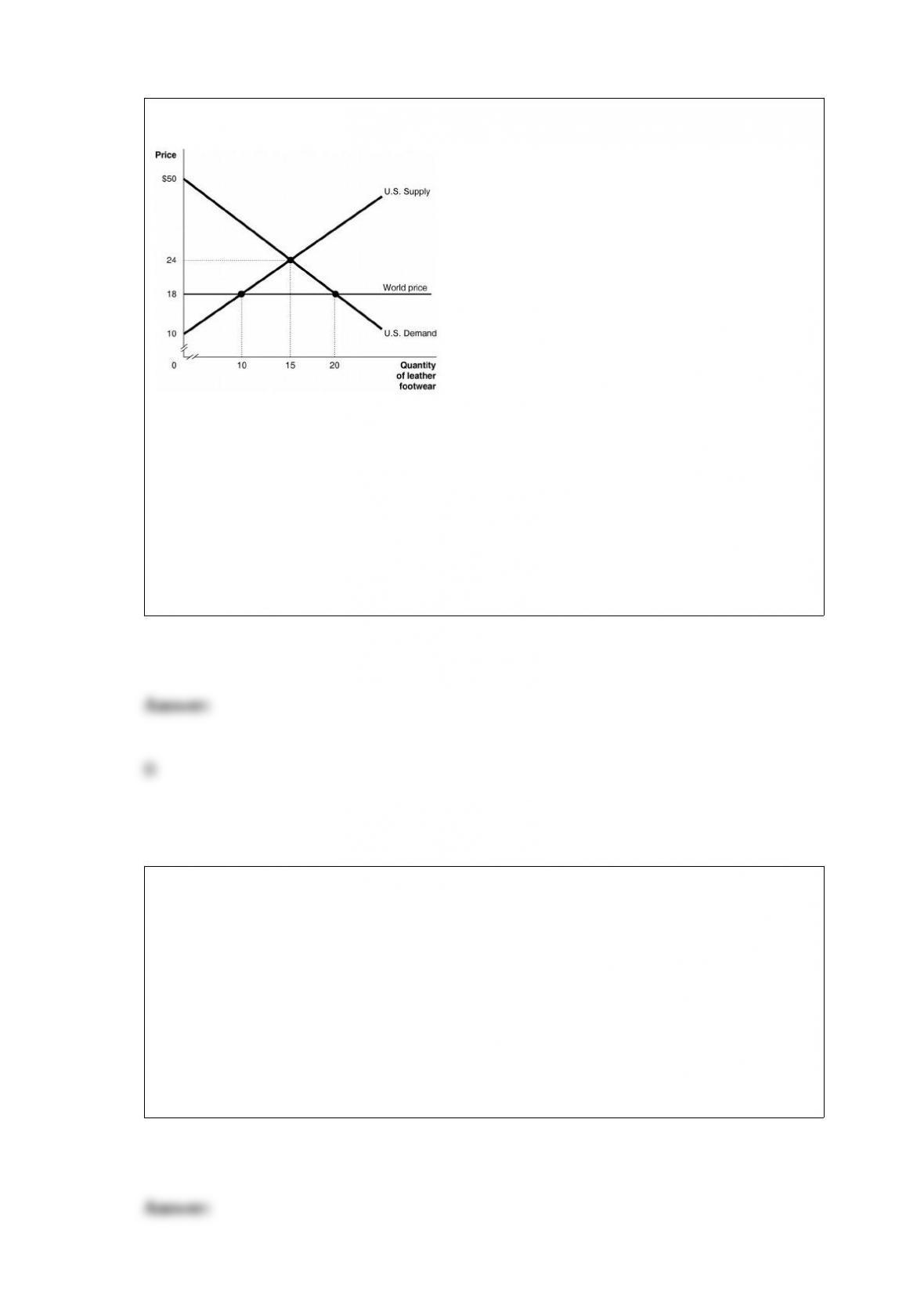
Figure 9-1
Figure 9-1 shows the U.S. demand and supply for
leather footwear. Under autarky, the producer surplus is
A) $40
B) $105
C) $195
D) $285
A Big Mac costs $4.56 in the United States and 9.2 zlotys in Poland. If the exchange
rate is 3 zlotys per dollar, purchasing power parity predicts that
A) the dollar is undervalued.
B) the dollar is overvalued.
C) the zloty is overvalued.
D) both the zloty and dollar are undervalued.
What are menu costs?
A) the full list of a firm’s costs of production
B) the costs to a firm of changing prices
C) the cost to a household of borrowing money when there is deflation
D) the opportunity cost of dining in a restaurant instead of at home
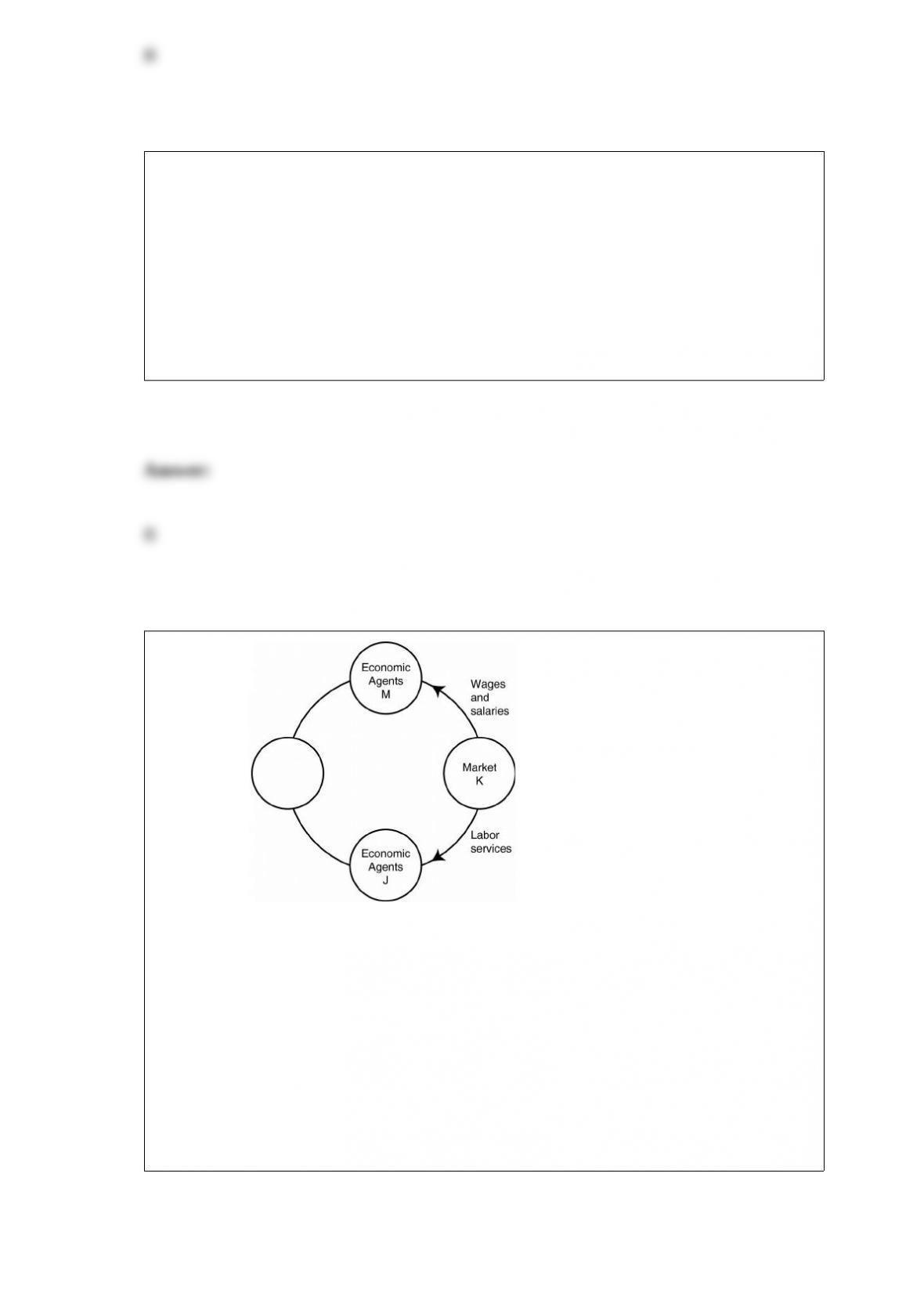
Figure 2-16
One segment of the circular flow diagram in the figure shows the flow of labor services
from market K to economic agents J. What is market K and who are economic agents J?
A) K = factor markets; J = households
B) K = product markets; J = households
C) K = factor markets; J = firms
D) K = product markets; J = firms
Which of the following is a normative economic statement?
A) The price of wheat is too low.
B) The current low price of wheat is the result of increased worldwide supply.
C) When the price of wheat falls, the quantity of wheat purchased rises.
D) When the price of wheat falls, the cost of wheat-based products falls.
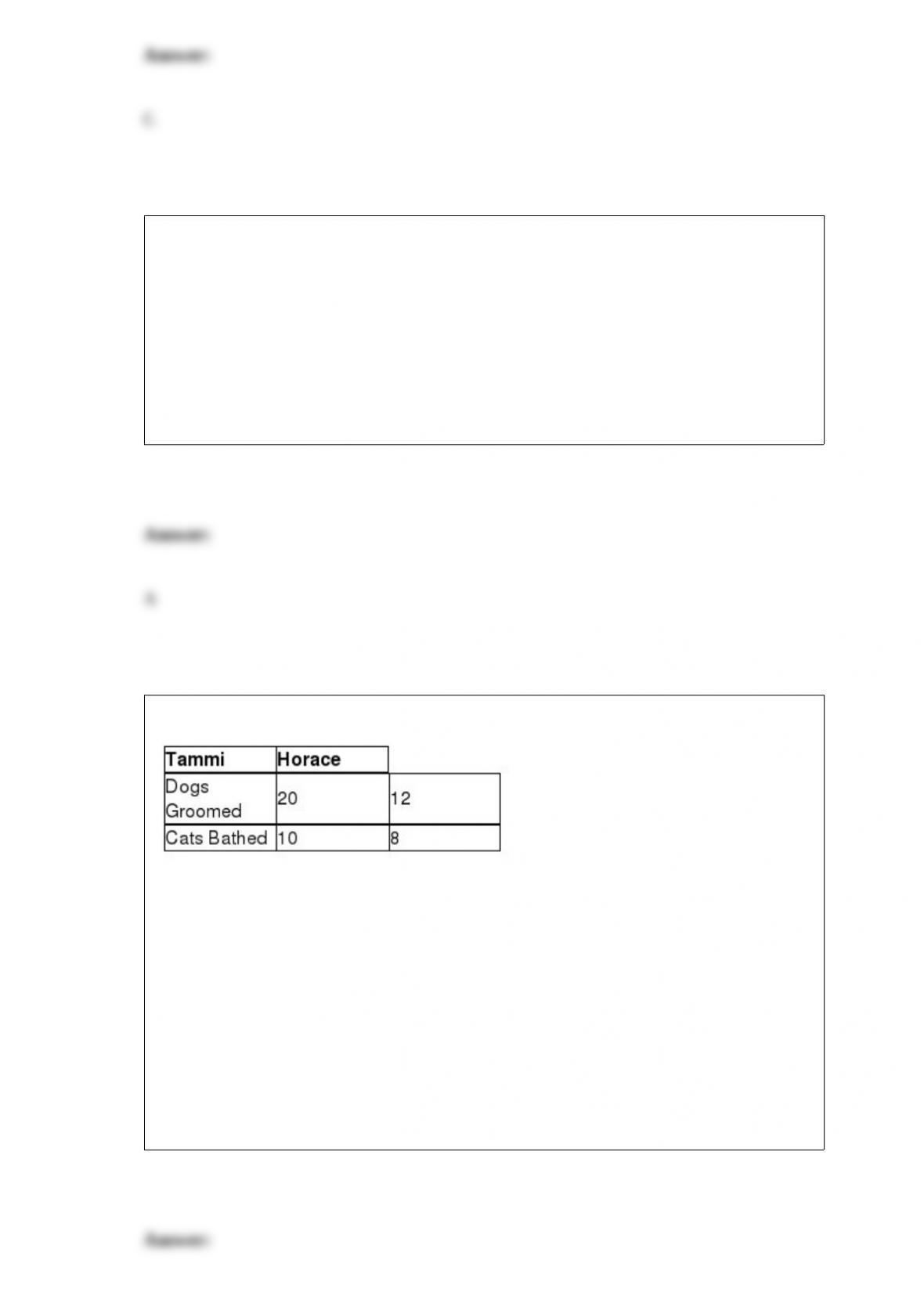
Table 2-13
Table 2-13 shows the output per day of two pet groomers, Tammi and Horace. They can
either devote their time to grooming dogs or bathing cats.
What is Horace’s opportunity cost of bathing a cat?
A) half a groomed dog
B) two groomed dogs
C) two-thirds of a groomed dog
D) one and a half groomed dogs