
the imposition of a tariff on imported steel for the home country results in:1)
a.improving terms of trade and rising volume of trade
b.higher steel prices and falling steel consumption
c.lower profits for domestic steel companies
d.higher unemployment for domestic steel workers
2) the introduction of community indifference curves into our trading example focuses
attention on the nation’s:
a.income level
b.resource prices
c.tastes and preferences
d.productivity level
3) today, special drawing rights (sdrs) represent the most important currency basket
against which developing countries maintain pegged exchange rates.
a.true
b.false
4) assume the united states is a large consumer of steel that is able to influence the
world price. its demand and supply schedules are respectively denoted by du.s. and su.s.
in figure 4.2. the overall (united states plus world) supply schedule of steel is denoted
by su.s.+w.
figure 4.2. import tariff levied by a “large” country
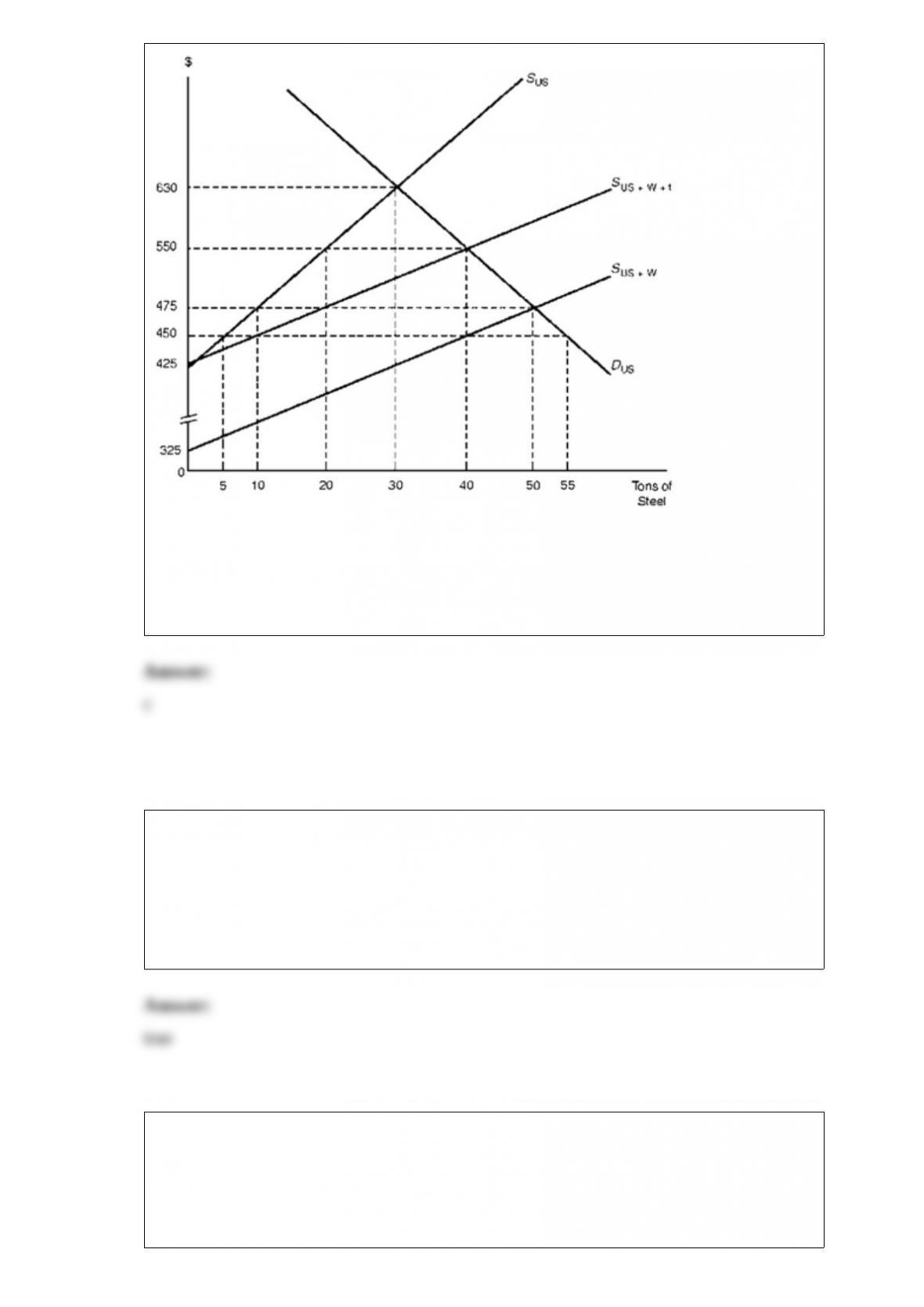
according to figure 4.2, the tariff leads to the overall welfare of the united states:
a.rising by $250
b.rising by $500
c.falling by $250
d.falling by $500
5) according to the normal-trade-relations (most-favored-nation) principle, if the united
states extends mfn treatment to china and then grants a low tariff on imports of shirts
from south korea, the united states is obligated to provide the identical low-tariff on
imports of shirts from china.
a.true
b.false
6) suppose japan increases its imports from sweden, leading to a rise in sweden’s
exports and income level. with a higher income level, sweden imports more goods from
japan. thus a change in imports in japan results in a feedback effect on its exports. this
process is best referred to as the:
a.monetary approach to balance-of-payments adjustment
b.discretionary income adjustment process
c.foreign repercussion effect
d.price-specie flow mechanism
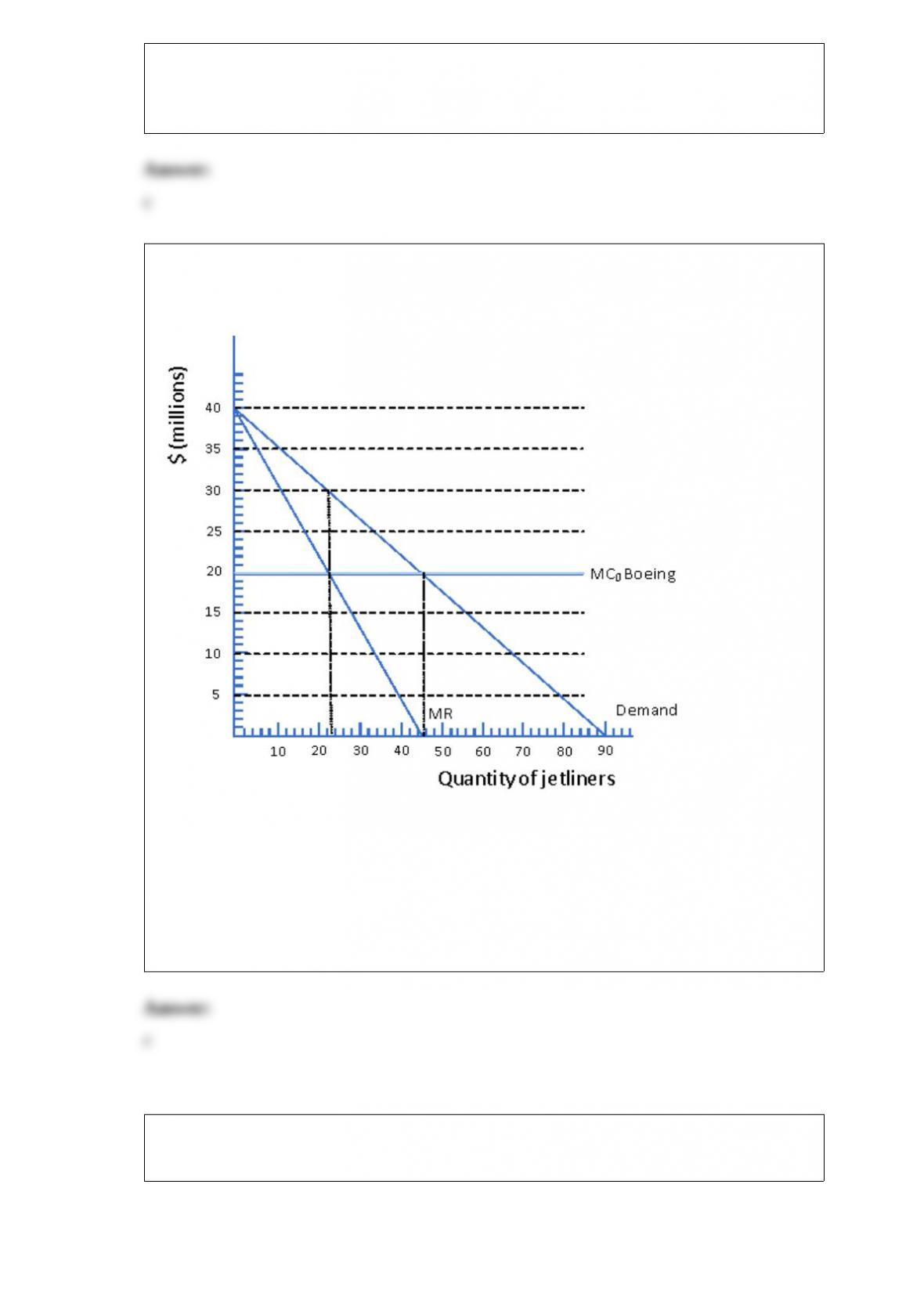
7) figure 6.4japanese market for jetliners
consider the japanese market for jetliners as depicted in figure 6.4.suppose lone
producer of jetliners in the world is boeing and boeing faces a constant marginal cost of
$20 million per jetliner.how much profit will boeing make?
a.0
b.$150 million
c.$230 million
d.$250 million
8) figure 2.1. production possibilities schedule
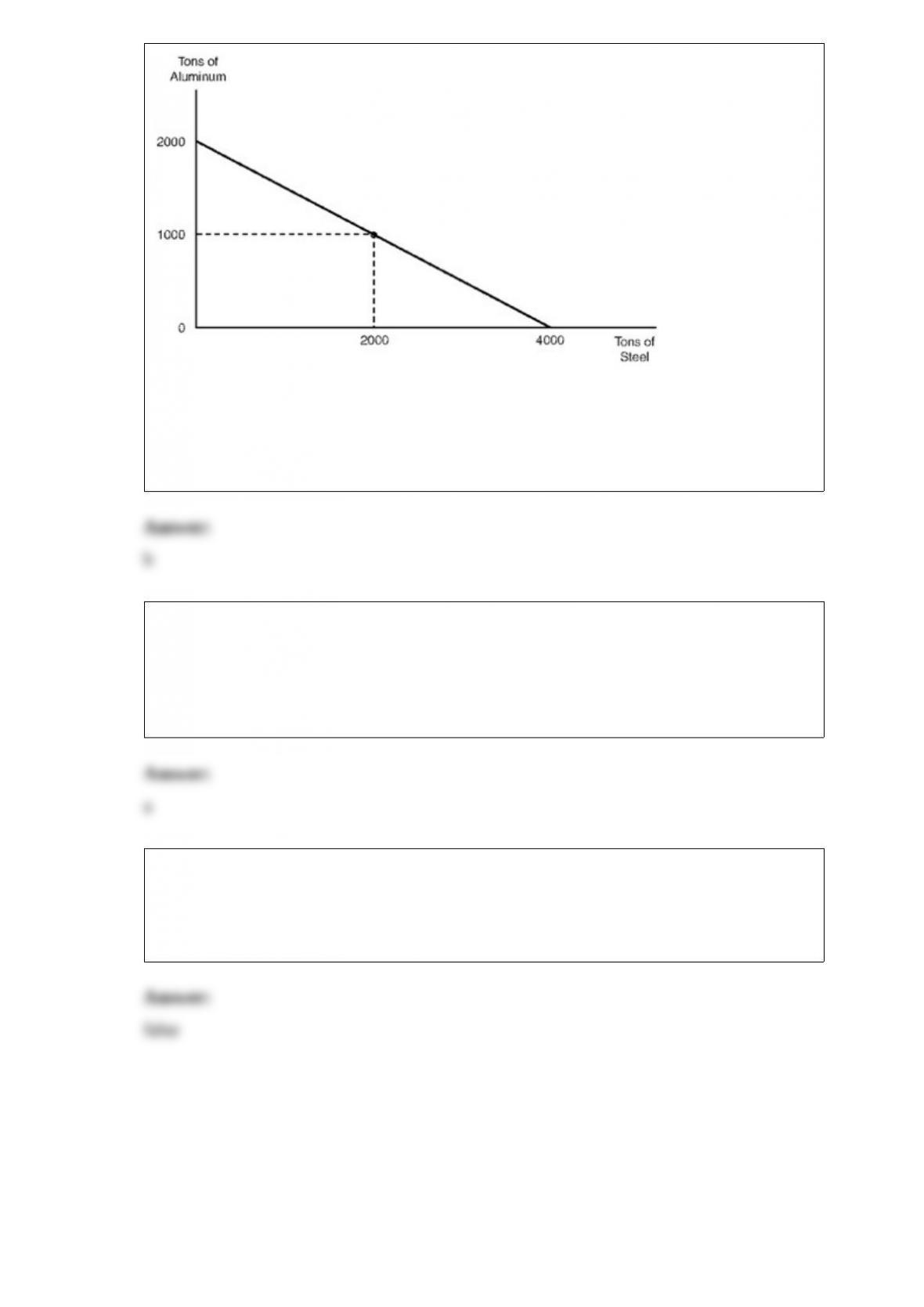
referring to figure 2.1, the relative cost of aluminum in terms of steel is:
a.4.0 tons
b.2.0 tons
c.0.5 tons
d.0.25 tons
9) introducing indifference curves into our trade model permits us to determine:
a.where a nation chooses to locate along its production possibilities curve in autarky
b.the precise location of a nation’s production possibilities curve
c.whether absolute cost or comparative cost conditions exist
d.the currency price of one product in terms of another product
10) the north american free trade agreement was expected to provide proportionately
smaller benefits to mexico than to the united states or canada.
a.true
b.false
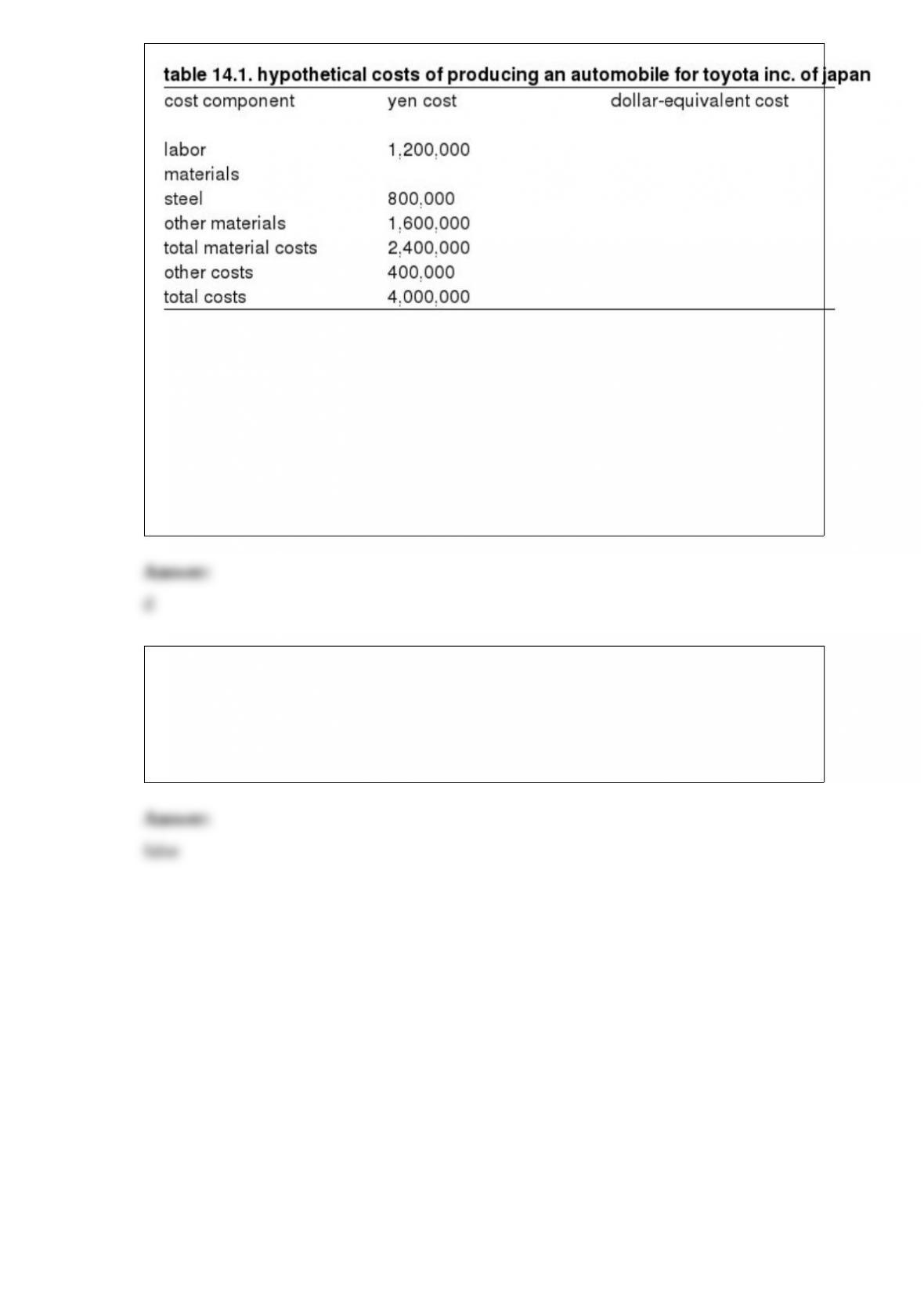
11) refer to table 14.1. assume that toyota inc. obtains all of its automobile inputs from
japanese suppliers. if the yen’s exchange value appreciates from 200 yen = $1 to 100
yen = $1, the dollar-equivalent cost of a toyota automobile equals:
a.$10,000
b.$20,000
c.$30,000
d.$40,000
12) the net-debtor status, that the united states achieved in its balance of international
indebtedness by the mid-1980s, reflected the continuous current-account surplus that
the united states attained in its balance of payments during the 1970s.
a.true
b.false