
The law of diminishing marginal utility says that
a. the marginal utility gained by consuming equal successive units of a good will
decline as the amount consumed increases.
b. the more of a particular good one consumes, the greater is the utility received from
the consumption of that good.
c. the marginal utility gained by consuming equal successive units of a good will
increase as the amount consumed increases.
d. the more of a particular product one sells, the less utility one receives from selling.
e. none of the above
Most economists believe that the market __________ produce nonexcludable public
goods because of the __________.
a. will;monetary incentive they have to produce them
b. will not; externality problem
c. will not; free rider problem
d. will;market shortage that often accompanies the production of public goods.
e. none of the above
If the demand for good X is inelastic in the short run, then it will be __________ in the
long run (as more time passes).

a. inelastic
b. elastic
c. unit elastic
d. perfectly inelastic
e. There is not enough information to answer the question.
A public choice theorist believes that
a. men and women in the market sector are fundamentally different people than men
and women in the public sector.
b. government is likely to be composed of better people than the market sector.
c. high fixed costs in government influence the behavior of government workers.
d. government workers are generally lazy.
e. none of the above
Exhibit 1-2
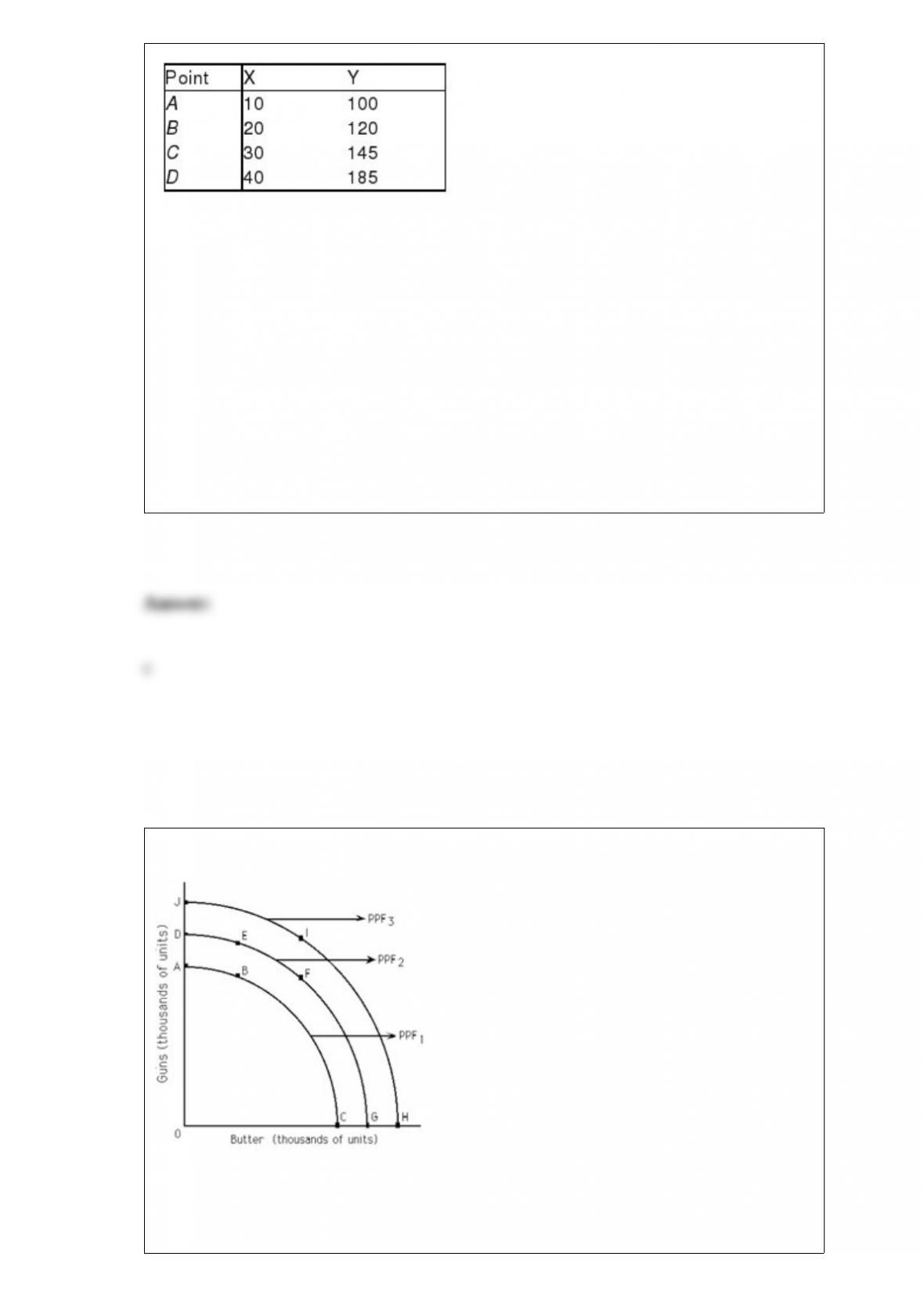
According to the data provided in this table, what is the slope of the line between points
C and D, if these data were graphed with X on the horizontal axis and Y on the vertical
axis?
a. -4.00
b. -0.25
c. 4.00
d. 0.25
e. none of the above
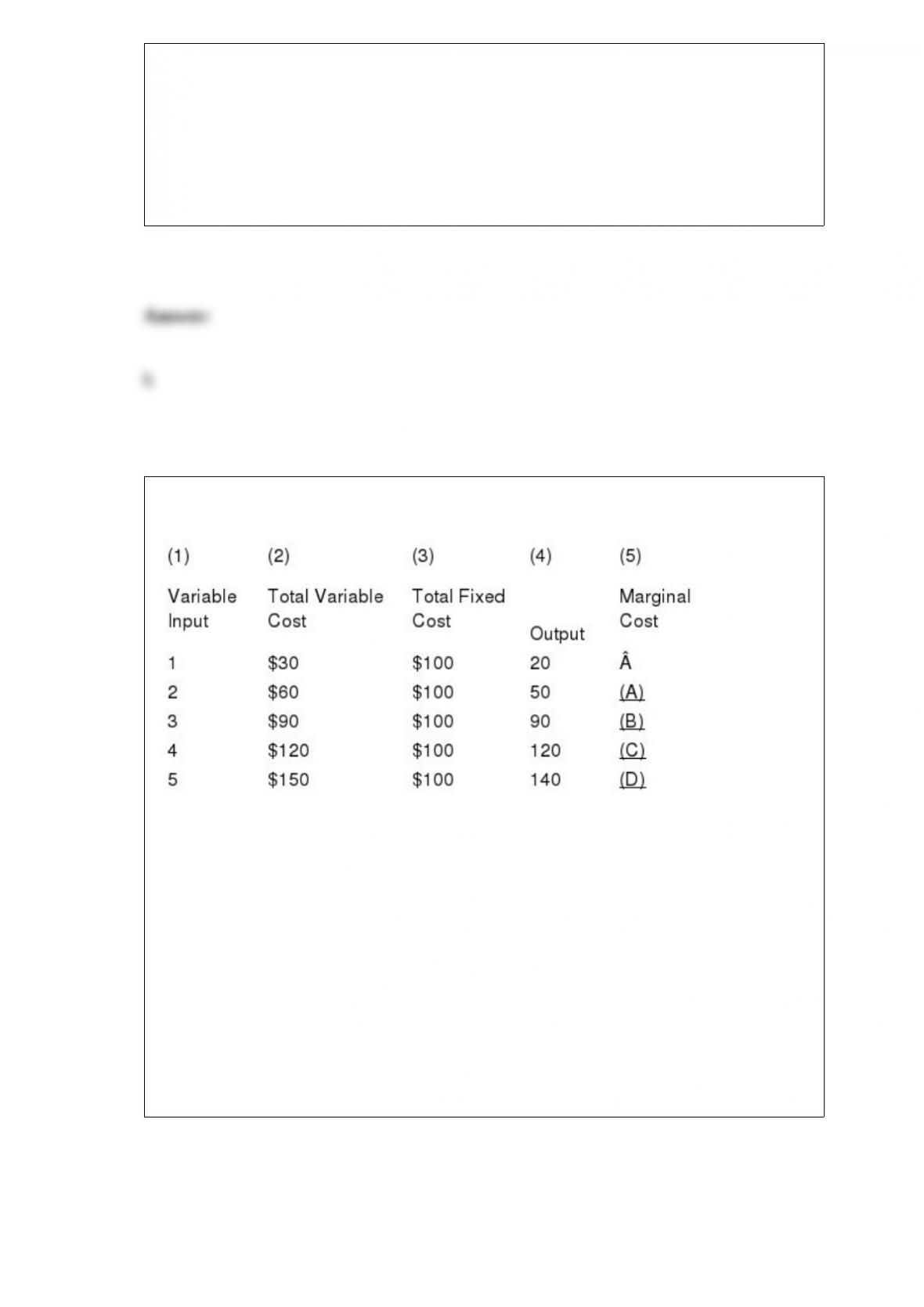
Exhibit 2-2
The production possibilities frontiers shown in this exhibit depict _______________
opportunity costs.
a. constant
b. increasing
c. decreasing
d. There is not enough information provided to answer this question.
Exhibit 22-2
Diminishing marginal returns set in with the addition of which unit of the variable
input?
a. the first
b. the second
c. the third
d. the fourth
e. the fifth
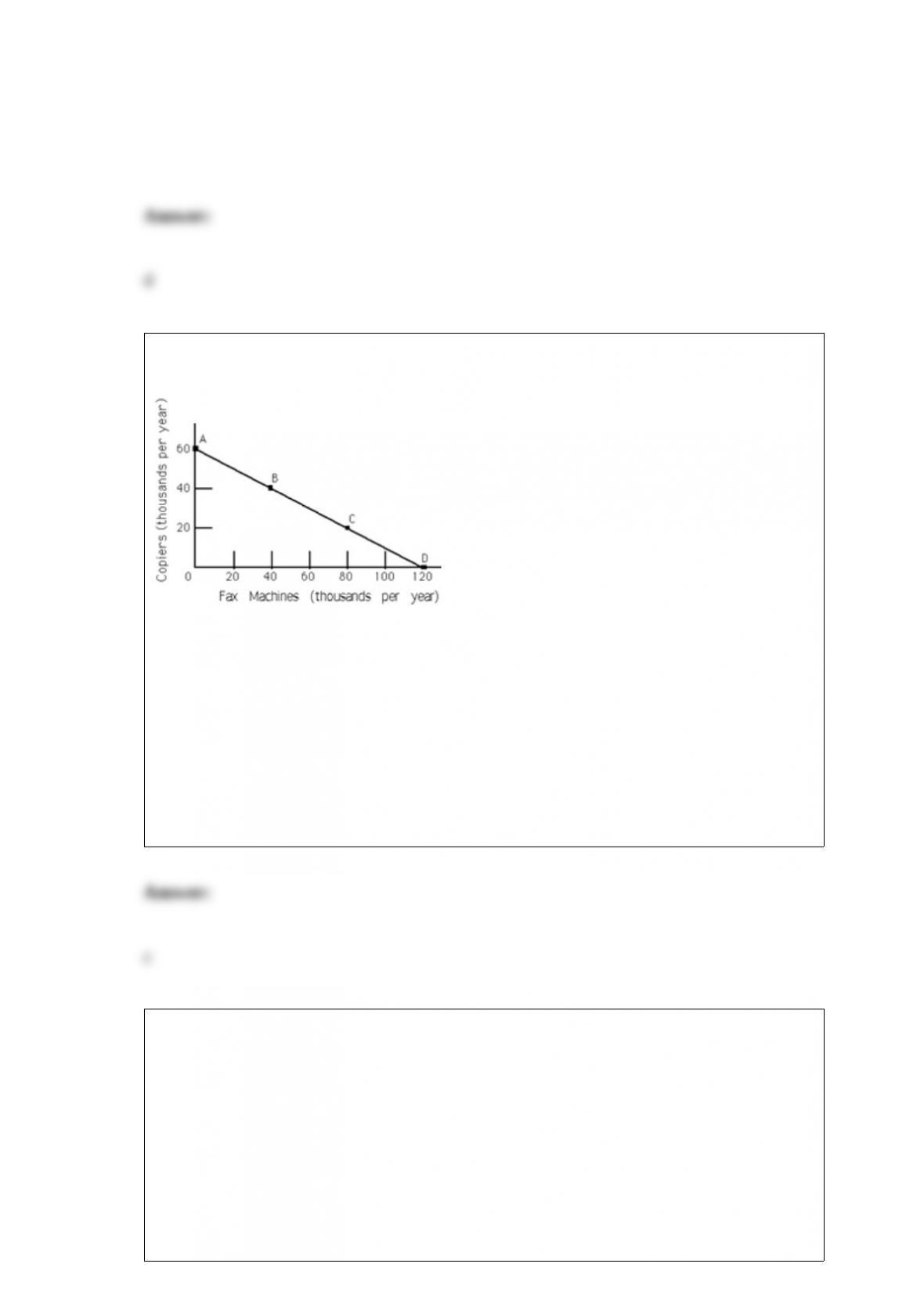
Exhibit 2-4
The line joining points A and D is called the
a. production function frontier.
b. utility function.
c. production possibilities frontier.
d. demand curve.
If, at a particular wage rate in a competitive market, the quantity demanded of labor
exceeds the quantity supplied of labor, then
a. the supply curve will shift to the left, the demand curve will shift to the right, and the
surplus of labor will be eliminated.
b. since wages are so low, the quantity supplied of workers will decrease further, and
the quantity demanded will increase further.
c. some workers will begin to demand higher wages, as a result, employers will begin to

hire more workers.
d. the supply curve will shift to the right, the demand curve will shift to the left, and the
shortage of labor will be eliminated.
e. none of the above
Which of the following statements is true?
a. A person who chooses to work at a job that pays $40,000 a year instead of a job that
pays $80,000 a year is considered (by economists) to be irrational.
b. The wage rate paid in one labor market can affect the supply of labor in another labor
market.
c. The wage rate paid in one labor market can affect (albeit indirectly) the wage rate
paid in another labor market.
d. The demand for every type of labor is always the same.
e. b and c
Is there a difference between the terms interest and interest rate?
a. No. Interest is simply a shorthand version of interest rate.
b. Yes. Interest refers to the return that capital earns, whereas interest rate is the
payment to someone who lends money to someone else.
c. Yes. Interest is what one earns by placing funds in a savings account, whereas
interest rate is the rate that the U.S. Treasury pays for borrowed funds when the
government incurs a deficit.
d. Yes. Interest is a dollar payment for the use of funds, whereas interest rate is the ratio
of that dollar amount to the total amount of funds borrowed.