If opportunity costs are ________, the production possibilities frontier would be
graphed as a negatively sloped straight line.
A) decreasing
B) increasing
C) negative
D) constant
Pakistan has developed a comparative advantage in the production of clothing. The
source of its comparative advantage in these products is
A) a favorable climate.
B) technology.
C) abundant supplies of natural resources.
D) a large supply of unskilled workers.
If the U.S. government implements a tariff on Chinese tire imports, the price of
Chinese-made tires will ________, the quantity demanded will ________, and
consumer surplus will ________.
A) increase; decrease; decrease
B) increase; not change; increase
C) decrease; increase; not change
D) increase; decrease; increase
If actual inflation is less than expected inflation, which of the following will be true?
A) Real wages will rise.
B) Real wages will fall.
C) The Phillips curve will be a vertical line.
D) The unemployment rate will fall.
In 2012, Peelville consumed 30,000 bananas. In 2013, banana consumption rose to
35,000. Calculate the percentage change in banana consumption.
A) 11.66%
B) 14.28%
C) 16.67%
D) 22.25%
Emily is a writer. She buys pens and paper for $20 and writes a 500-page novel that she
sells to a publishing company for $500,000. If the publisher prints 1 million copies that
sell for $25 each, what is the contribution to GDP of Emily’s novel?
A) $25 million
B) $20 million
C) $500,000
D) $50,000
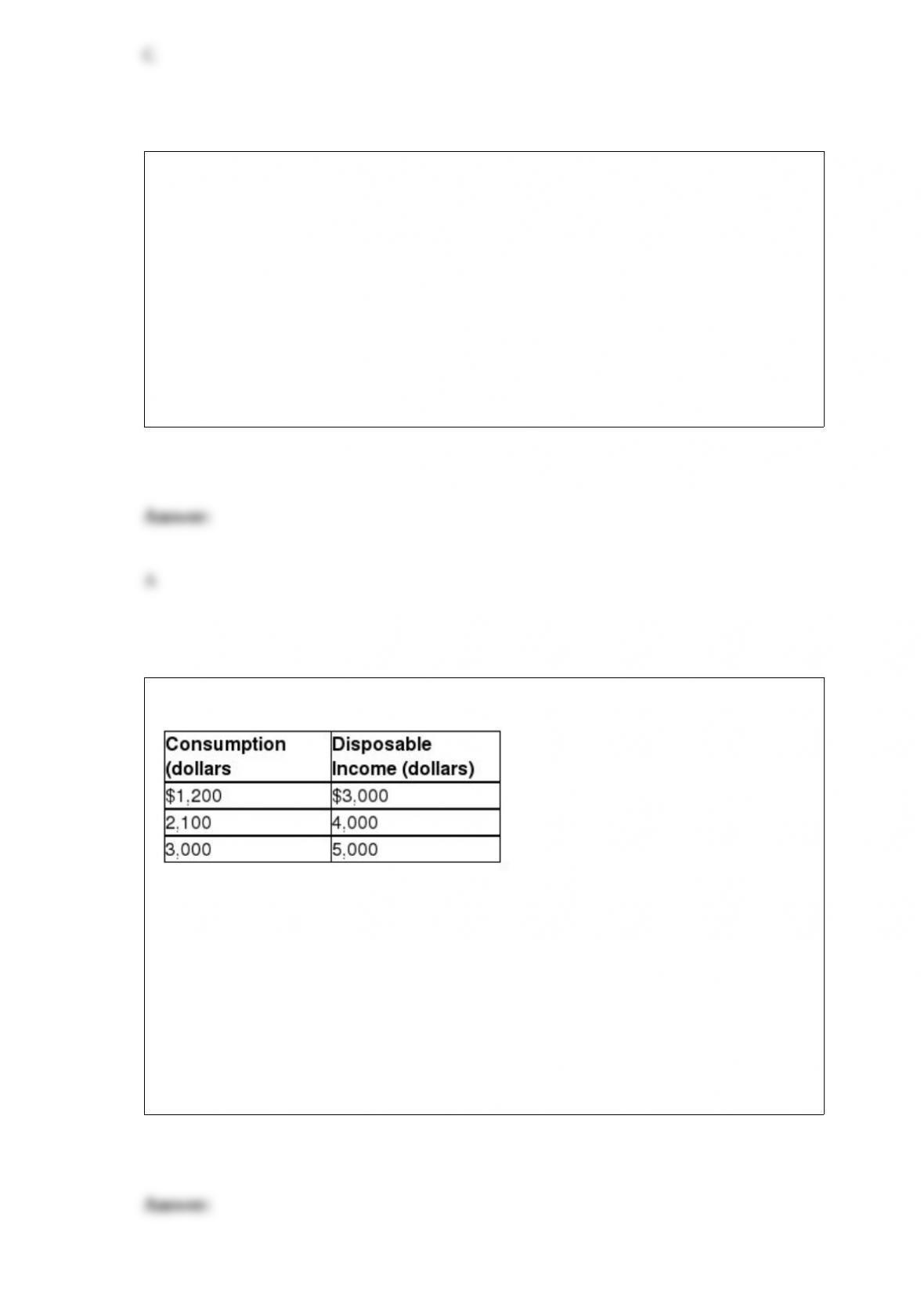
Table 12-3
Refer to Table 12-3. Given the consumption schedule in the table above, the marginal
propensity to consume is
A) 0.1.
B) 0.3.
C) 0.6.
D) 0.9.
Potential GDP is estimated to grow at a rate of 3.2% in the United States. Actual GDP
in the U.S.
A) always grows at a slower rate than potential GDP.
B) always grows at a faster rate than potential GDP.
C) always grows at the same rate as potential GDP.
D) is the same as potential GDP if all firms in the economy were working at capacity.
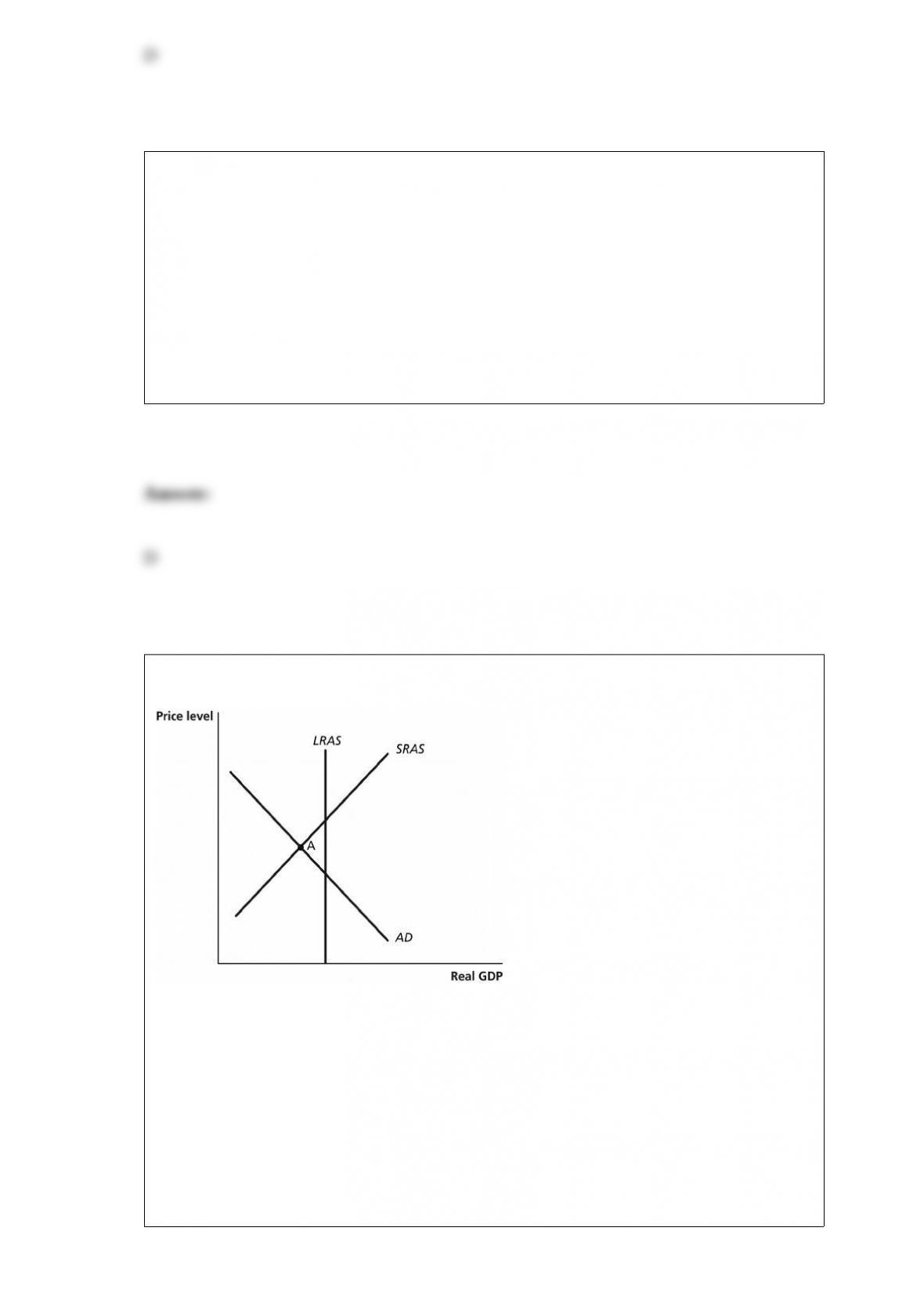
Figure 15-6
Refer to Figure 15-6. In the figure above, if the economy is at point A, the appropriate
monetary policy by the Federal Reserve would be to
A) lower interest rates.
B) raise interest rates.
C) lower income taxes.
D) raise income taxes.
Explain how each of the following events would affect the aggregate demand curve.
a. Lower interest rates
b. A decrease in net exports
c. A decrease in the price level
d. Slower income growth in other countries
e. A decrease in imports
The balance of payments includes all of the following accounts except
A) the current account.
B) the financial account.
C) the capital account.
D) the national debt account.
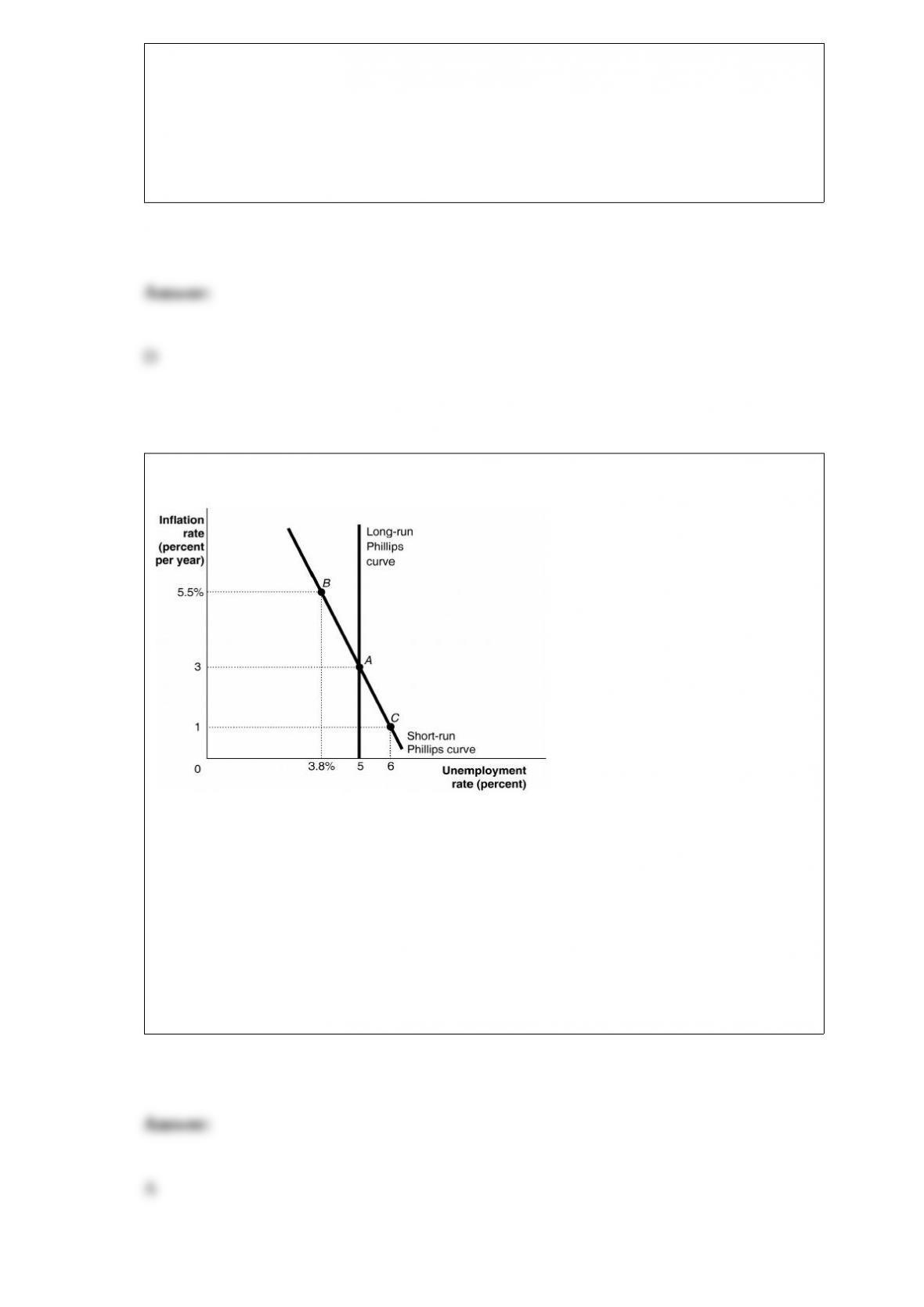
Figure 17-2
Refer to Figure 17-2. At which point is the unemployment rate equal to the natural rate
of unemployment?
A) A
B) B
C) C
D) There is insufficient information on the graph to answer this question.
A production possibilities frontier with a ________ shape indicates increasing
opportunity costs as more and more of one good is produced.
A) linear
B) bowed inward
C) bowed outward
D) perfectly horizontal
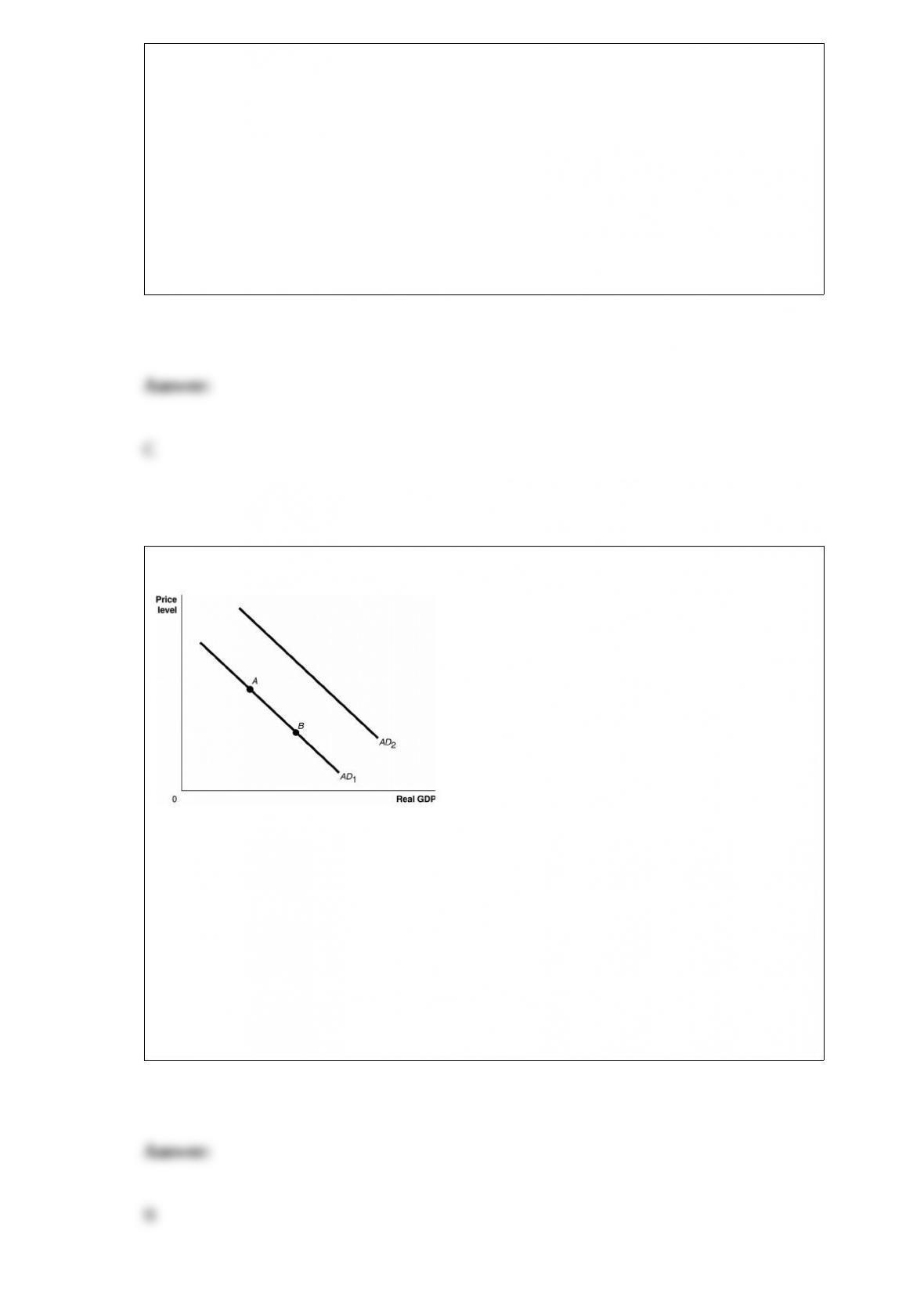
Figure 13-1
Refer to Figure 13-1. Ceteris paribus, a decrease in firms’ expectations of the future
profitability of investment spending would be represented by a movement from
A) AD1 to AD2.
B) AD2 to AD1.
C) point A to point B.
D) point B to point A.
Nominal GDP will increase
A) only if the price level rises.
B) only if the price level falls.
C) only if the quantity of final goods and services produced rises.
D) if either the price level or the quantity of goods and services produced rises.
Article Summary
In what is being called a “bail-in,” the finance ministers of the 17-nation Eurozone
agreed to step in to assist the banking system in the nation of Cyprus. With this
arrangement, the banks receive an infusion of capital, but depositors are being changed
a special bank levy of up to 10% on deposit accounts. Like in the United States, Cyprus
does have deposit insurance which guarantees deposits up to a certain level, but the size
of the debt owed by the Cypriot banks was so large that agreeing to the special bank
levy and ignoring the deposit insurance seemed necessary to get support from the
European Union. Some analysts have also stated that the levy may have been needed to
prevent bank runs on foreign-owned accounts, which have been estimated to make up
one-third of the total deposits in Cypriot banks.
Source: Megan McArdle, “After Cyprus Bank Bailout, Depositors Race to Withdraw
Their Cash. Is the Rest of Europe Next?” Daily Beast, March 17, 2013.
Refer to the Article Summary. In 2013, the European Union agreed to essentially bail
out the banks in the nation of Cyprus. In doing this, the EU was, in effect, acting as a
A) shadow bank.
B) conductor of open market operations.
C) private equity firm.
D) lender of last resort.