
Which of the following statements is false?
A) When marginal cost equals average total cost, average total cost is at its highest
value.
B) The marginal cost curve intersects the average variable cost curve and the average
total cost curve at their minimum points.
C) The difference between average total cost and average fixed cost is average variable
cost.
D) Firms often refer to the process of lowering average fixed cost as ‘spreading the
overhead.”
Which of the following countries is not one of the top three exporting countries in the
world?
A) China
B) Germany
C) South Korea
D) the United States
Table 2-19
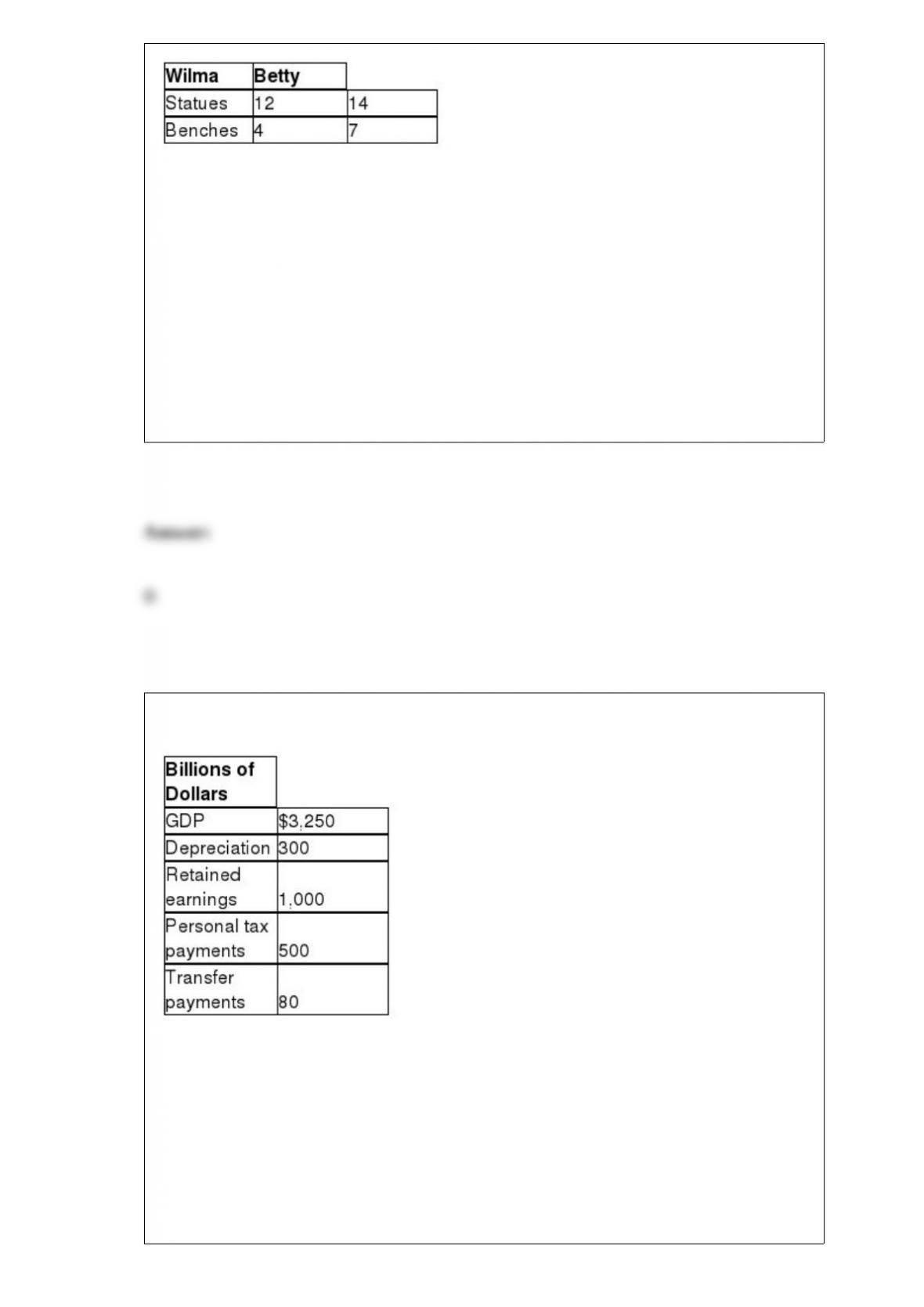
Table 2-19 shows the output per month of two people, Wilma and Betty. They can either
devote their time to making marble statues or making marble benches.
What is Betty’s opportunity cost of making a bench?
A) 1/2 statue
B) 2 statues
C) 1.75 benches
D) 2.8 statues
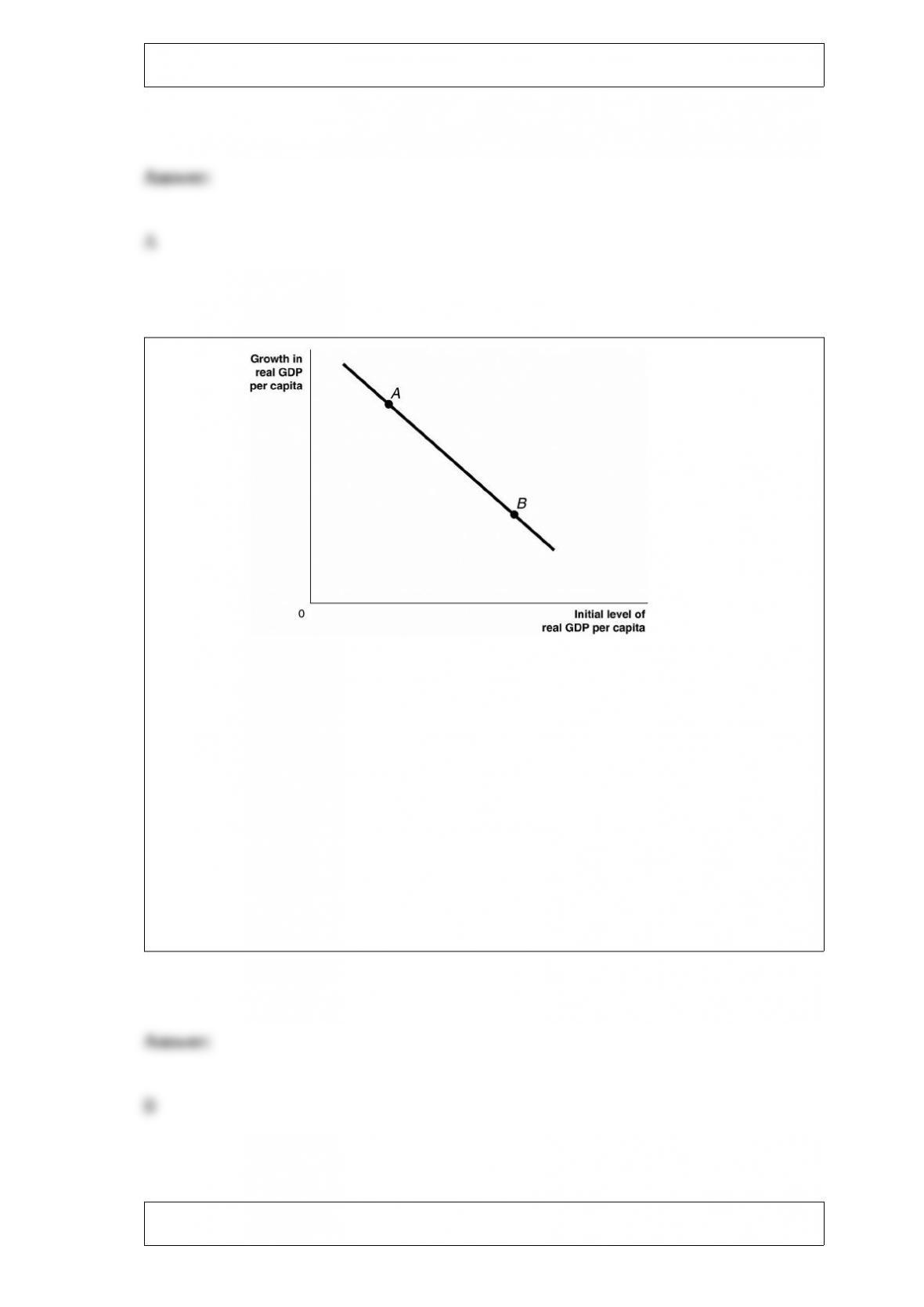
Table 19-30
Based on the table above, what is personal income for this economy?
A) $1,950 billion
B) $2,250 billion
C) $2,450 billion
D) $5,130 billion
Figure 11-5
Based on the “catch-up line” drawn above, poorer countries are more likely to be at a
point like ________, where growth in GDP is relatively ________, while richer
countries are more likely to be at a point like ________, where growth in GDP is
relatively ________.
A) A; low; B; high
B) A; high; B; low
C) B; low; A; high
D) B; high; A; low
In Singapore the government places a $5,000 tax on the buyers of new automobiles.

After the purchase of a new car, a buyer must pay the government $5,000. How would
the imposition of the tax on buyers be illustrated in a graph?
A) The tax will shift the demand curve to the right by $5,000.
B) The tax will shift the demand curve to the left by $5,000.
C) The tax will shift both the demand and supply curve to the right by $5,000.
D) The tax will shift the supply curve to the left by $5,000.
Compared to a monopolistic competitor, a monopolist faces
A) a more elastic demand curve.
B) a more inelastic demand curve.
C) a more elastic demand curve at higher prices and a more inelastic demand curve at
lower prices.
D) a demand curve that has a price elasticity coefficient of zero.
Scarcity refers to the situation in which
A) unlimited wants exceed limited resources.
B) unlimited resources exceed limited wants.
C) a country’s population is larger than its resource base.

D) a nation’s poverty level increases faster than its population.
Which of the following would not occur as a result of a monopolistically competitive
firm suffering a short-run economic loss?
A) The firm could exit the industry in the long run.
B) If the firm does not exit the industry in the long run, its demand curve will shift to
the left.
C) If the firm does not exit the industry in the long run, its demand curve will shift to
the right.
D) If the firm remains in the industry in the long run, it will break even.
The demand for loanable funds is downward sloping because the ________ the interest
rate, the ________ the number of profitable investment projects a firm can undertake,
and the ________ the quantity demanded of loanable funds.
A) lower; greater; greater
B) lower; smaller; greater
C) greater; greater; greater
D) greater; smaller; greater

When foreign investors in Thailand began to realize that Thailand could not maintain its
peg to the dollar indefinitely, they began to ________ in Thailand and exchange
________. This change in investment by foreigners is termed capital flight.
A) purchase more investments; dollars for baht to purchase these investments
B) sell off their investments; the baht they received for dollars
C) sell off their investments; the dollars they received for baht
D) purchase more investments; baht for dollars to purchase these investments
Interest rates in the economy have risen. How will this affect aggregate demand and
equilibrium in the short run?
A) Aggregate demand will fall, the equilibrium price level will fall, and the equilibrium
level of GDP will fall.
B) Aggregate demand will fall, the equilibrium price level will rise, and the equilibrium
level of GDP will fall.
C) Aggregate demand will rise, the equilibrium price level will rise, and the equilibrium
level of GDP will rise.
D) Aggregate demand will rise, the equilibrium price level will fall, and the equilibrium
level of GDP will rise.

Scenario 25-2 Imagine that Kristy deposits $10,000 of currency into her checking
account deposit at Bank A and that the required reserve ratio is 20%.
As a result of Kristy’s deposit, checking account deposits in the banking system as a
whole (including the original deposit) could eventually increase up to a maximum of
A) $8,000.
B) $10,000.
C) $50,000.
D) $100,000.
If there is a market outcome in which the marginal benefit to consumers of the last unit
produced is equal to its marginal cost of production and consumer surplus plus producer
surplus is maximized, then
A) maximum deadweight loss occurs.
B) economic efficiency is achieved.
C) profits are maximized.
D) costs are minimized.
Examples of assets that are included in household wealth would be

A) stocks, bonds, and savings accounts.
B) stocks, loans owed, and savings accounts.
C) stocks, bonds, and mortgages.
D) stocks, credit cards, and savings accounts.
A form of implicit collusion where one firm in an oligopoly announces a price change
which is matched by other firms in the same industry is
A) “follow the leader” pricing.
B) price leadership.
C) retaliation pricing.
D) “tit-for-tat” pricing.
Sarah is a full-time student who is not looking for work. What kind of unemployment is
Sarah experiencing?
A) cyclical
B) structural
C) frictional
D) Sarah is not experiencing unemployment of any kind, because she is not currently

part of the labor force.
Which of the following is an example of a common resource?
A) elephants in the wild
B) lions in a zoo
C) a college education
D) public transportation