1) a goal of the international monetary fund is to make short-term loans to member
nations so as to allow them to correct balance of payments disequilibriums without
resorting to measures that would destroy national prosperity.
a.true
b.false
2) in the post world war ii era, the japanese government formed industrial policies to
encourage the development of its steel, auto, shipbuilding, and machine tool industries.
a.true
b.false
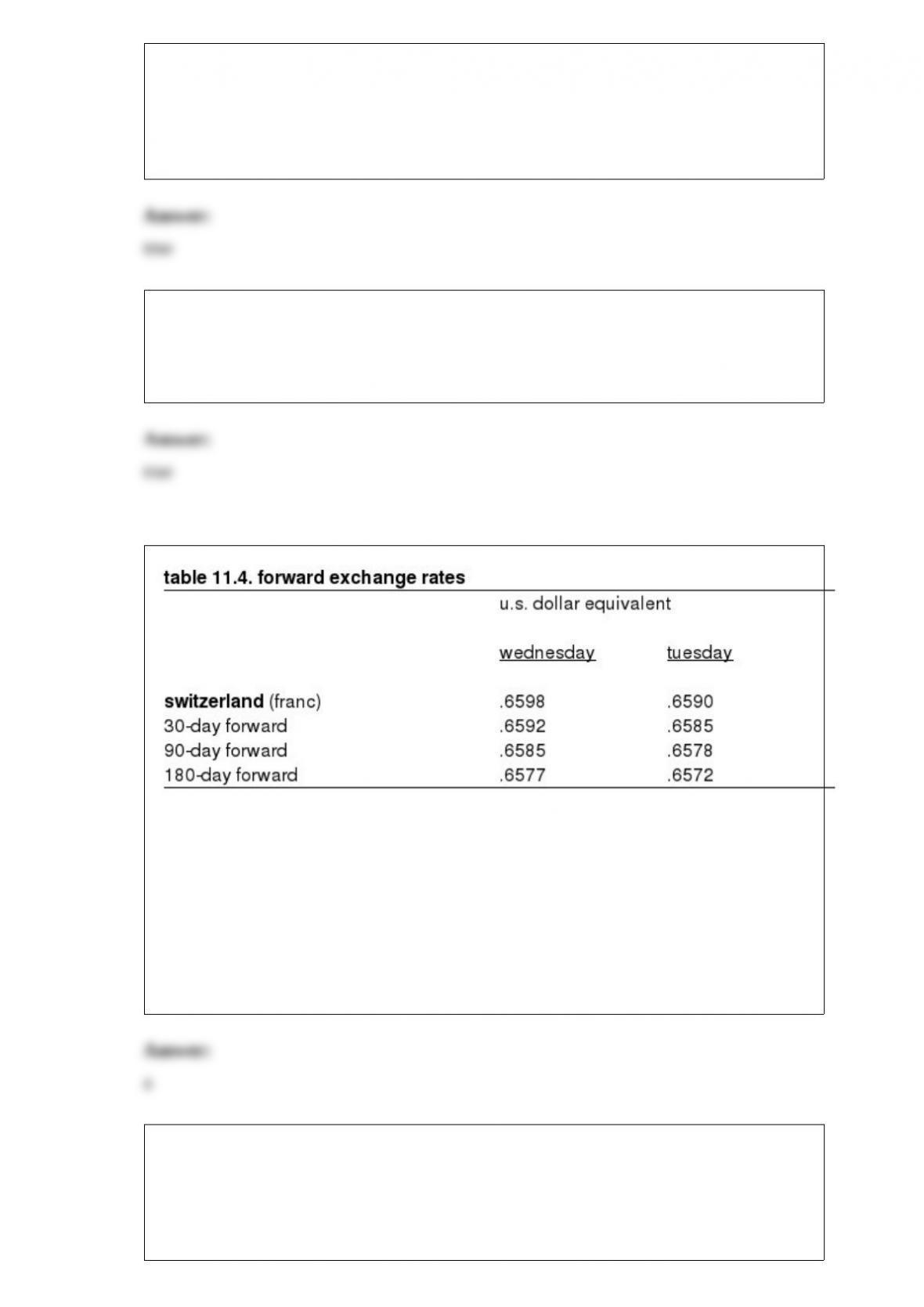
3) refer to table 11.4. comparing the franc’s forward rates against the franc’s spot rate,
the exchange market’s consensus is that over the period of a forward contract, the
franc’s spot rate will:
a.depreciate against the dollar
b.appreciate against the dollar
c.remain constant against the dollar
d.none of the above
4) a firm’s ____, relative to that of other firms, is generally regarded as the most
important determinant of competitiveness.
a.income level
b.tastes and preferences
c.governmental regulation
d.productivity
5) credit (+) items in the balance of payments correspond to anything that:
a.involves receipts from foreigners
b.involves payments to foreigners
c.decreases the domestic money supply
d.increases the demand for foreign exchange
6) in the 1970s, the major industrial countries abandoned the managed-floating
exchange rate system and adopted a system of fixed exchange rates tied to the price of
gold.
a.true
b.false
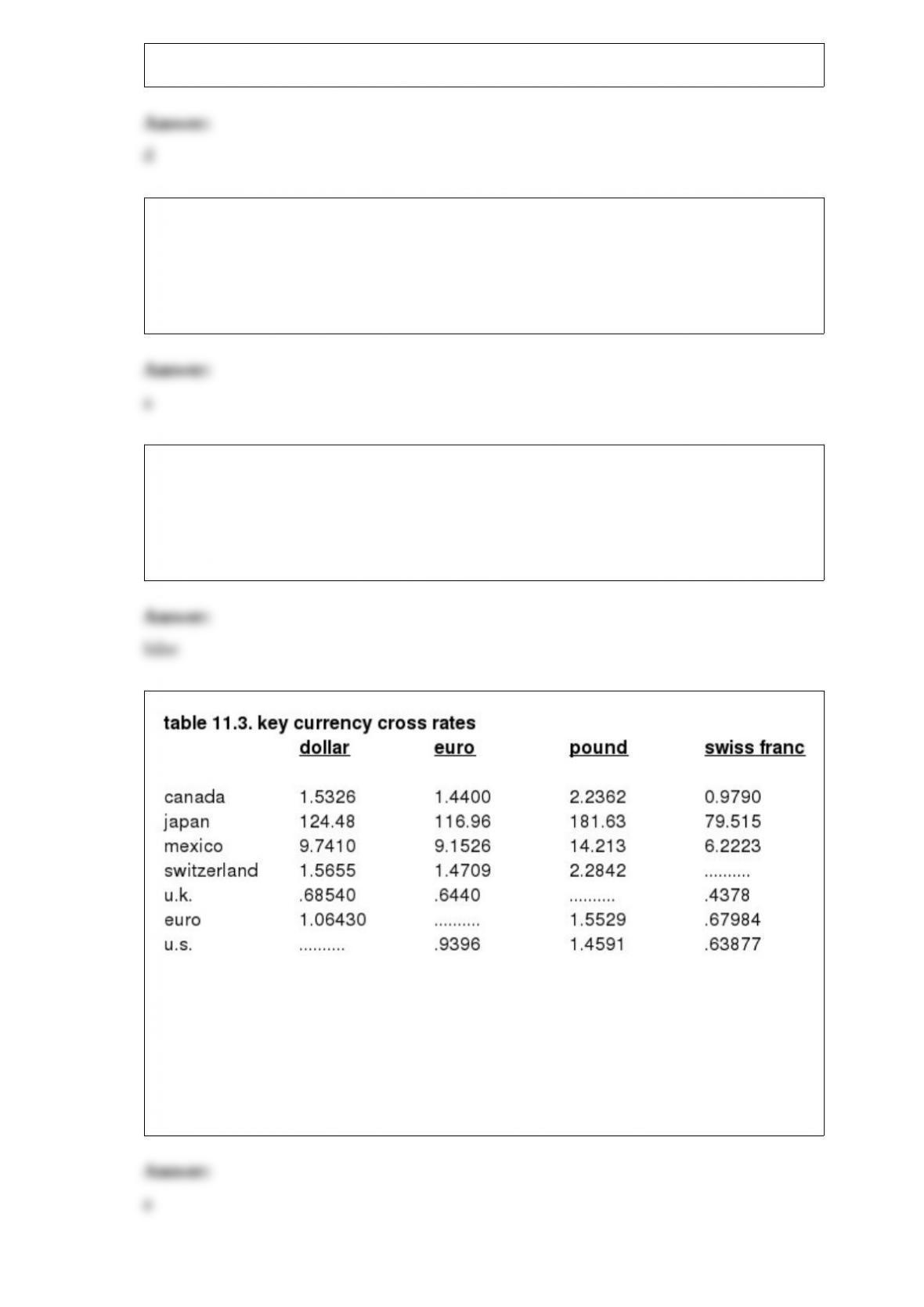
7) referring to table 11.3, the yen cost of purchasing 100 british pounds is roughly:
a.18,000 yen
b.19,000 yen
c.20,000 yen
d.21,000 yen
8) to offset an appreciation in the dollar’s exchange value, the federal reserve can nudge
interest rates down in the united states which results in net investment outflows.
a.true
b.false
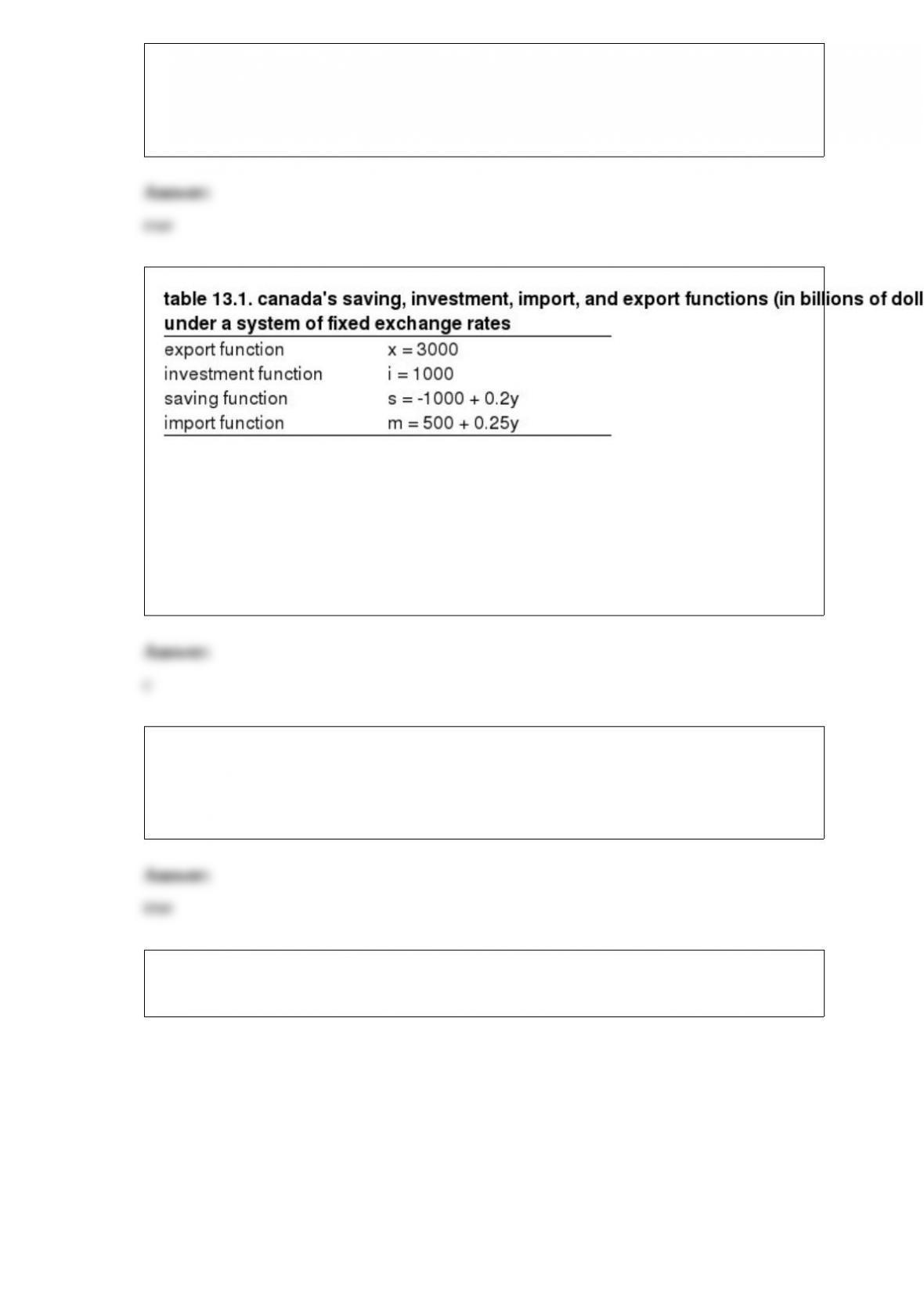
9) referring to table 13.1, canada’s equilibrium level of income is:
a.$8000 billion
b.$9000 billion
c.$10,000 billion
d.$11,000 billion
10) expenditure-switching policies include currency revaluation, currency devaluation,
and direct controls such as tariffs, quotas, and subsidies.
a.true
b.false
11) figure 6.5 japanese market for jetliners
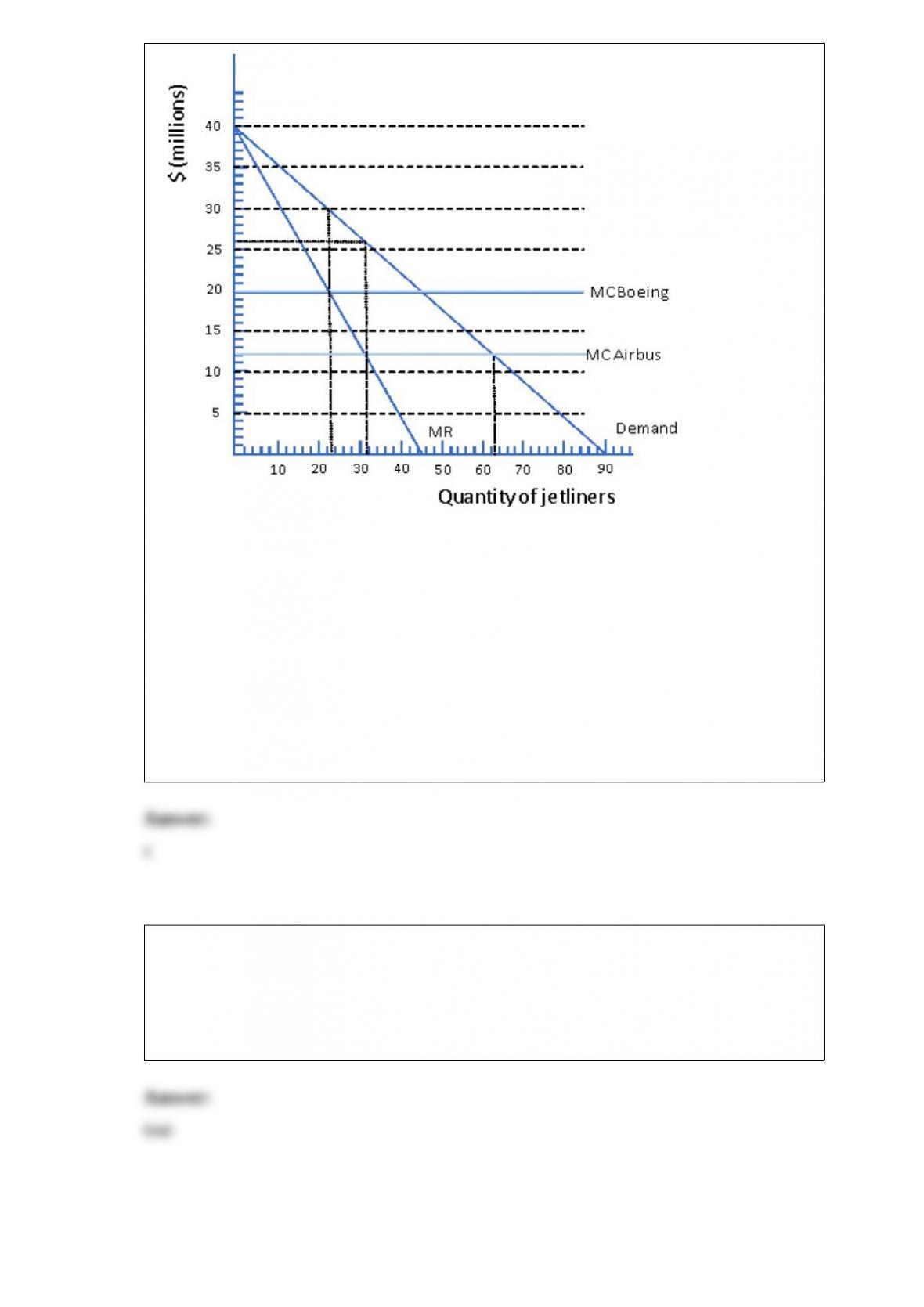
consider the japanese market for jetliners as depicted in figure 6.5.suppose lone
producer of jetliners in the world is boeing and boeing faces a constant marginal cost of
$20 million per jetliner but now a european manufacturer, airbus, begins
production.airbus faces the same marginal cost as boeing but the european government
provides airbus with a subsidy of $8 million per jetliner produced.as a result of the
competition, boeing leaves the japanese market leaving airbus as a monopoly.how much
profit will airbus earn?
a.$230 million
b.$350 million
c.$416 million
d.$450 million
12) in 1985 and 1986 u.s. interest rates fell relative to interest rates in japan. under
floating exchange rates, this would lead to the dollar’s exchange value depreciating
against the yen.
a.true
b.false

13) empirical research suggests that most countries’ price elasticities of demand for
imports and exports are very inelastic, suggesting that currency depreciation would
result in a worsening of a country’s balance of trade.
a.true
b.false