
When Sophie, a French citizen, purchases a Dell computer in Paris that was produced in
Texas, the purchase is
A) both a U.S. and an French import.
B) a U.S. import and an French export.
C) a U.S. export and an French import.
D) neither an export nor an import for either country.
When individuals use all available information about an economic variable to make a
decision, expectations are
A) underestimates of reality.
B) accurate.
C) rational.
D) overestimates of reality.
Most economists agree that an automatic mechanism brings the economy back to
potential GDP in the long run. In mid-2011, two years after the recession of 2007-2009
had ended, real GDP in the United States
A) had returned to potential GDP.
B) had exceeded potential GDP by 1.5 percent.
C) remained more than 7 percent below potential GDP.
D) was predicted to never return to potential GDP.
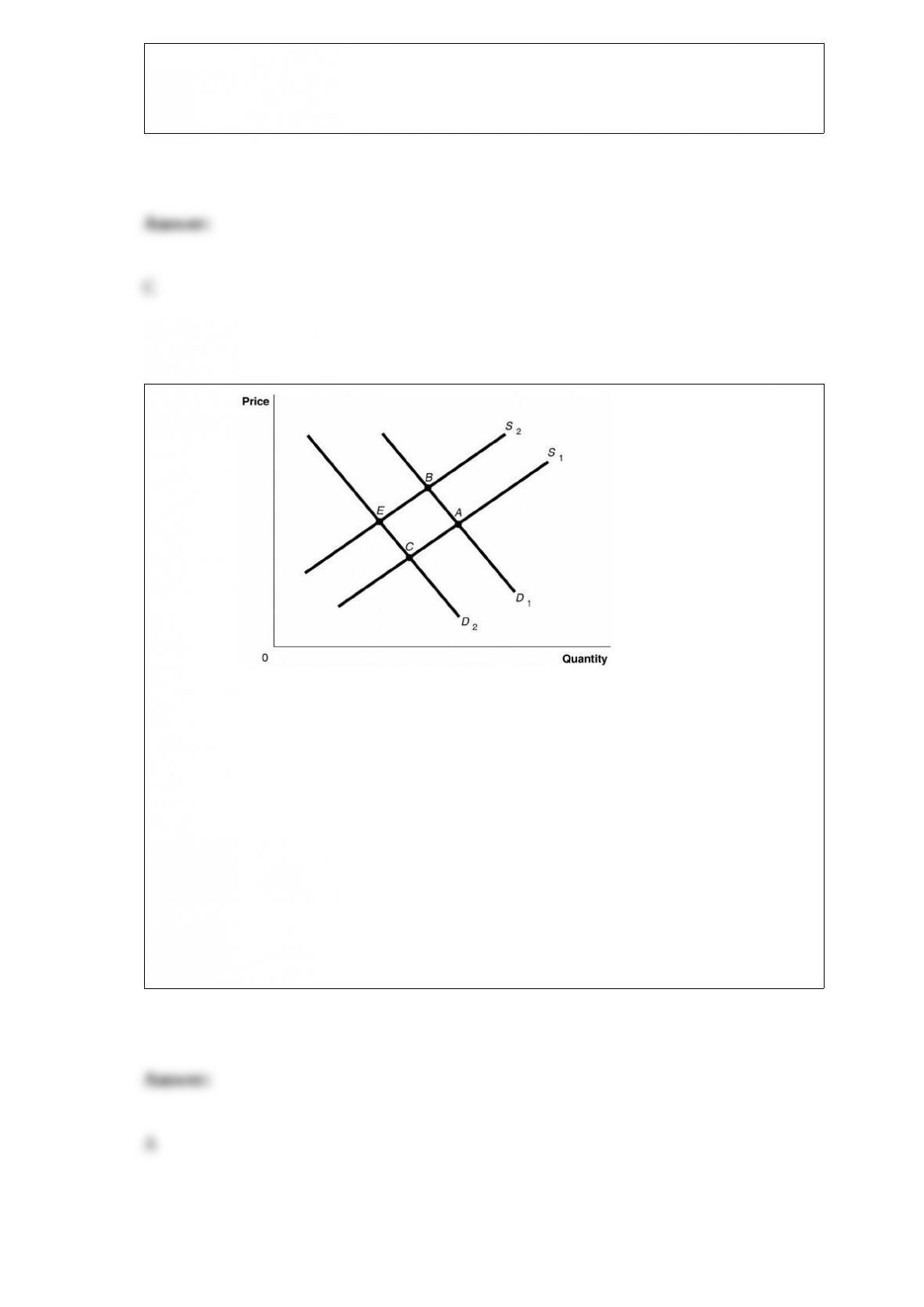
Figure 3-8
The graph in this figure illustrates an initial competitive equilibrium in the market for
apples at the intersection of D1 and S1 (point A). If there is an increase in the wages of
apple workers and an increase in the price of oranges, a substitute for apples, the
equilibrium could move to which point?
A) none of the points shown
B) B
C) C
D) E
Which of the following could decrease unemployment and inflation simultaneously?
A) a decrease in oil prices
B) expansionary monetary policy
C) contractionary monetary policy
D) an increase in the real wage
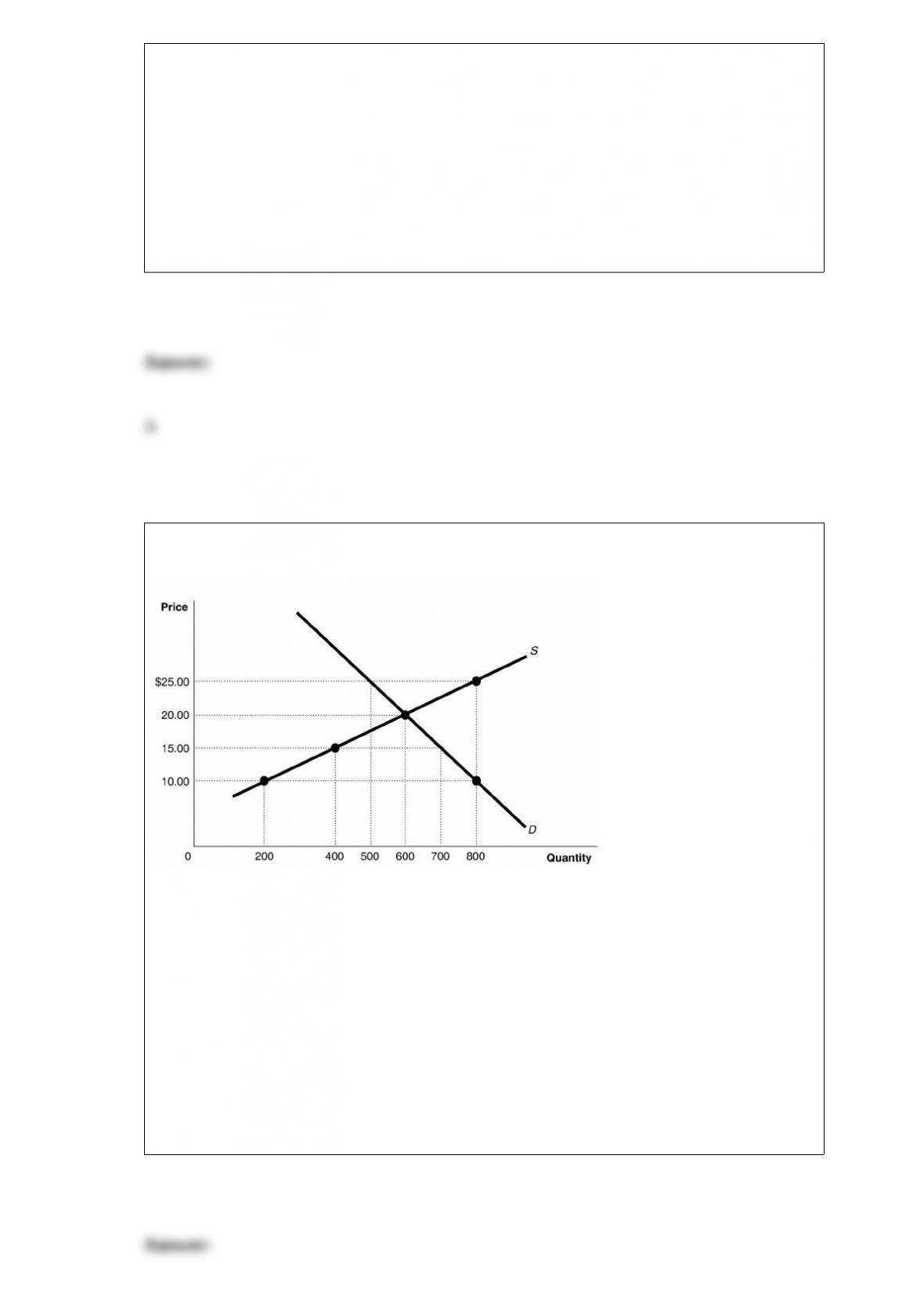
Figure 3-4
If the current market price is $25, the market will achieve equilibrium by
A) a price increase, increasing the supply and decreasing the demand.
B) a price decrease, decreasing the supply and increasing the demand.
C) a price decrease, decreasing the quantity supplied and increasing the quantity
demanded.
D) a price increase, increasing the quantity supplied and decreasing the quantity
demanded.

The absolute value of the slope of the budget constraint is equal to
A) the marginal rate of substitution between the two goods in question.
B) the price of good on the vertical axis divided by the price of the good on the
horizontal axis.
C) the price of good on the horizontal axis divided by the price of the good on the
vertical axis.
D) quantity of the good on the vertical axis divided by the quantity of the good on the
horizontal axis.
A curve showing the lowest cost at which a firm is able to produce a given level of
output in the long run is
A) a long-run production function.
B) a long-run marginal cost curve.
C) a minimum efficient scale curve.
D) a long-run average total cost curve.

If demand is inelastic, the absolute value of the price elasticity of demand is
A) one.
B) less than one.
C) greater than one.
D) greater than the absolute value of the slope of the demand curve.
The slope of an isoquant measures
A) the price ratio of the two inputs.
B) the average product of labor.
C) the ratio of the marginal utility of the two inputs.
D) the rate at which inputs can be substituted for each other keeping total output
constant.
The exchange rate system agreed to in 1944, in which the U.S. government agreed to
buy or sell gold at a fixed price of $35 per ounce, is referred to as
A) the gold standard.
B) the Bretton Woods System.
C) a floating currency standard.

D) a flexible exchange rate system.
Macroeconomics, as opposed to microeconomics, includes the study of what
determines the
A) average price levels of goods and services in the economy.
B) price charged for laptop computers by Dell.
C) wages paid to employees by Dell.
D) quantity of Dell employees.
In a market economy, ________ interact in markets to decide the answers to the
fundamental economic questions.
A) state and local governments
B) large corporations
C) households and firms
D) the judicial and legislative branches of the federal government

In 2012, Peelville consumed 30,000 bananas. In 2013, banana consumption rose to
35,000. Calculate the percentage change in banana consumption.
A) 11.66%
B) 14.28%
C) 16.67%
D) 22.25%
Use a graph to show the effects of a contractionary monetary policy to reduce inflation
and move an economy back to potential real GDP. Explain what happens to aggregate
demand, real GDP, and the price level.
Explain why international capital markets have expanded since the 1980s.
Carefully define the two categories of saving in the economy.

What is perfect price discrimination and why do economists believe that no firm is able
to practice perfect price discrimination?
Describe the process of “creative destruction” using a specific example.
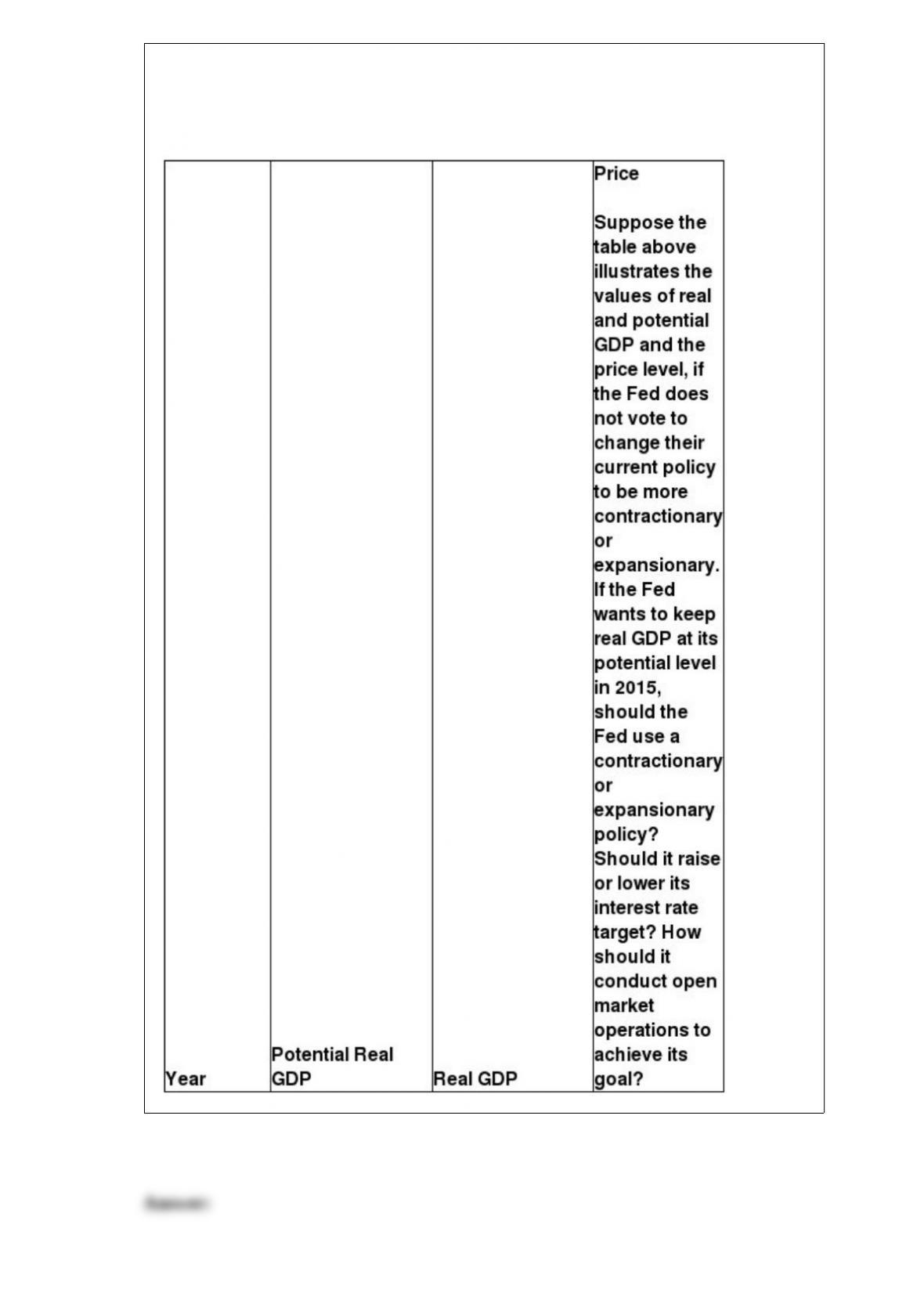
Table 15-6
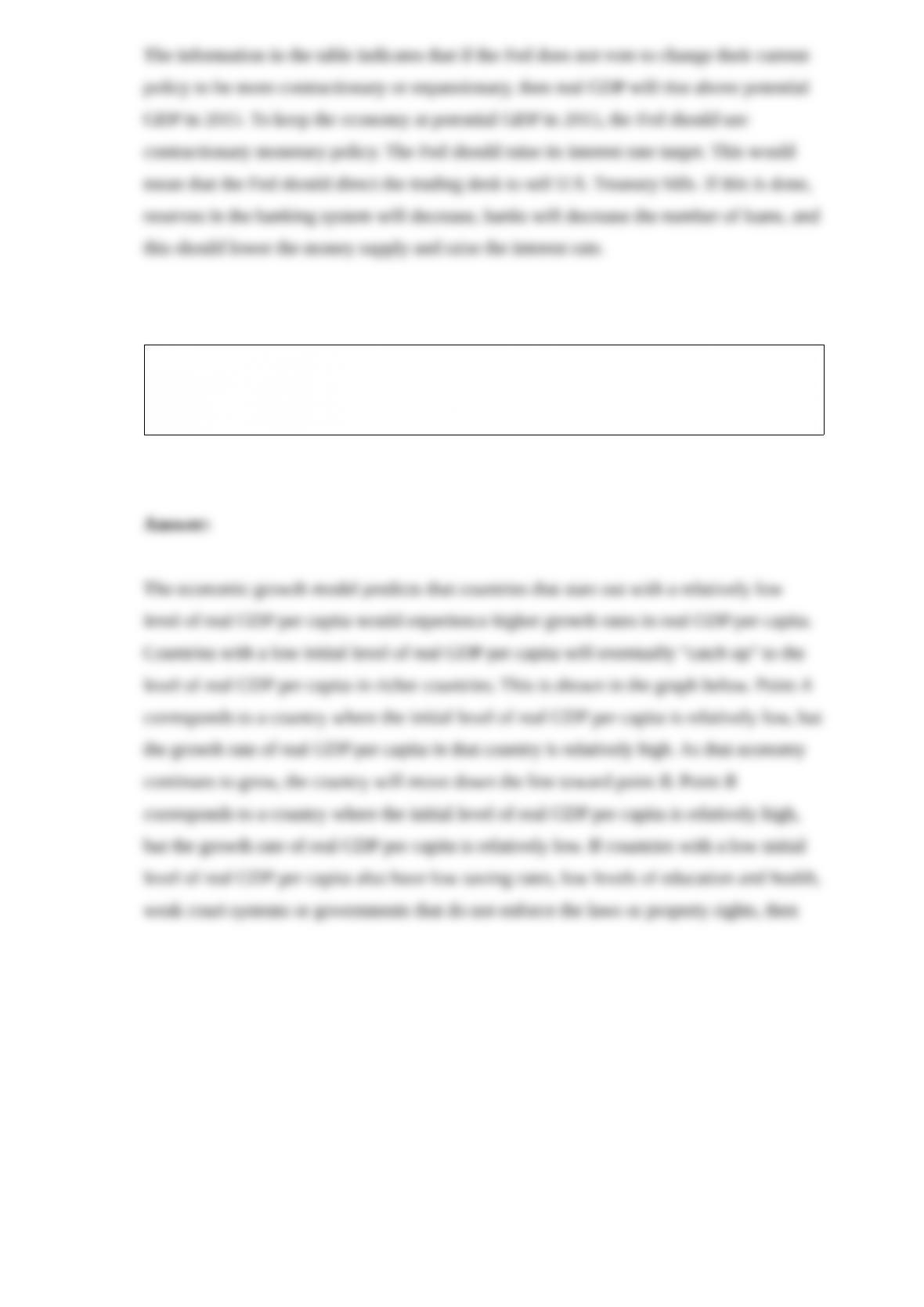
Would you expect to see higher or lower growth rates for countries that start out with a
relatively low level of real GDP per capita? Explain using the concept of “catch-up” and
support your answer with a graph.
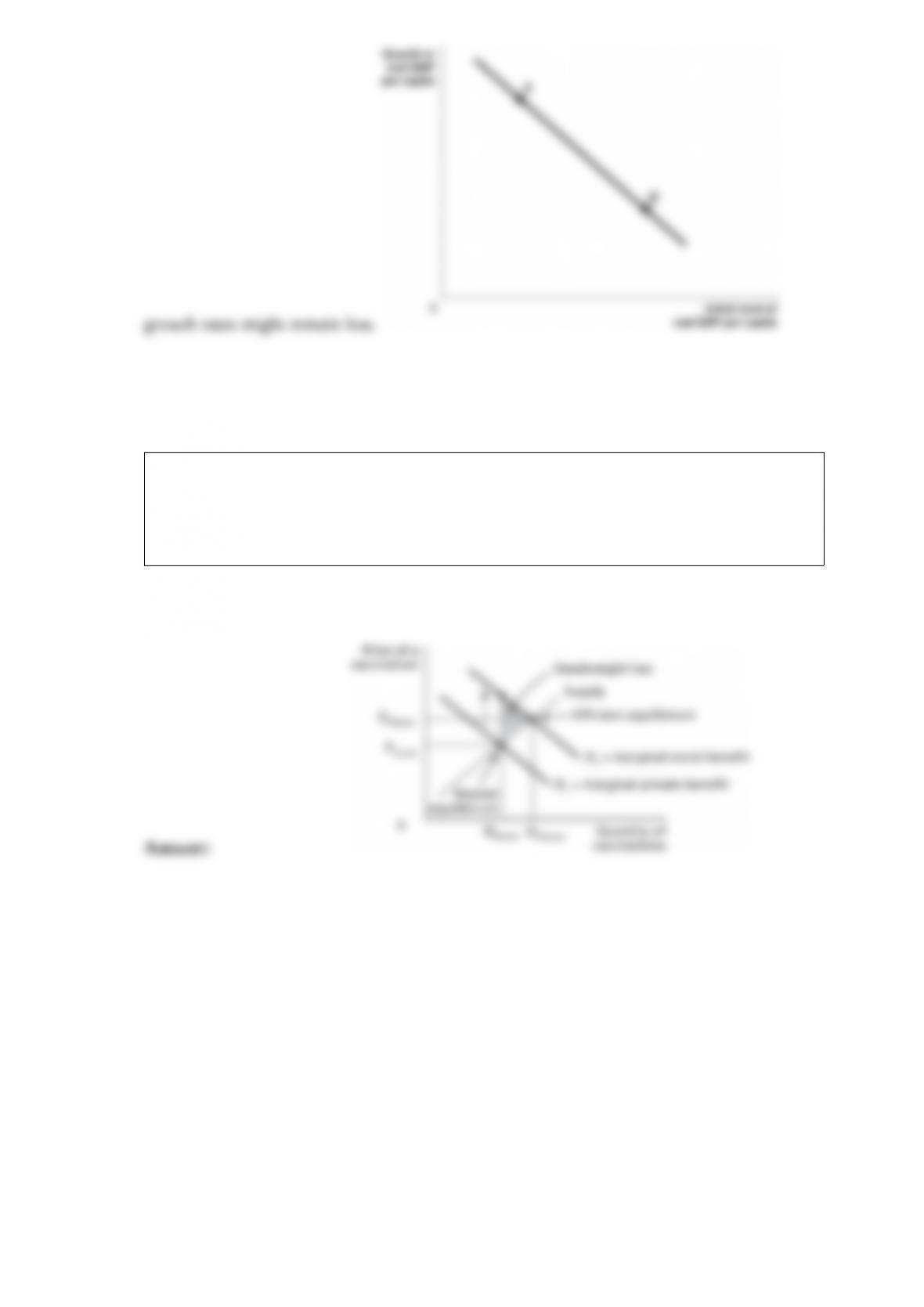
Vaccinations tend to result in a positive externality. Draw a graph showing the market
for vaccinations, including both the marginal private benefit curve and the marginal
social benefit curve. Identify the market equilibrium price and quantity, the efficient
equilibrium price and quantity, and the deadweight loss.