
Nominal federal spending is a
a. good indicator of how responsibility the federal government is
b. good indicator of the overall economy’s performance
c. measure of the public’s concern for the educational needs of the country
d. warning sign that our governmental officials are sometimes out of control
e. misleading measure of government’s effect, unless it is seen in the context of the
country’s income
Whenever spending changes, which of the following dampens the overall effect on
GDP?
a. A change in the money supply.
b. A change in taxes.
c. A change in the interest rate.
d. A change in the public’s expectations.
e. None of the above.
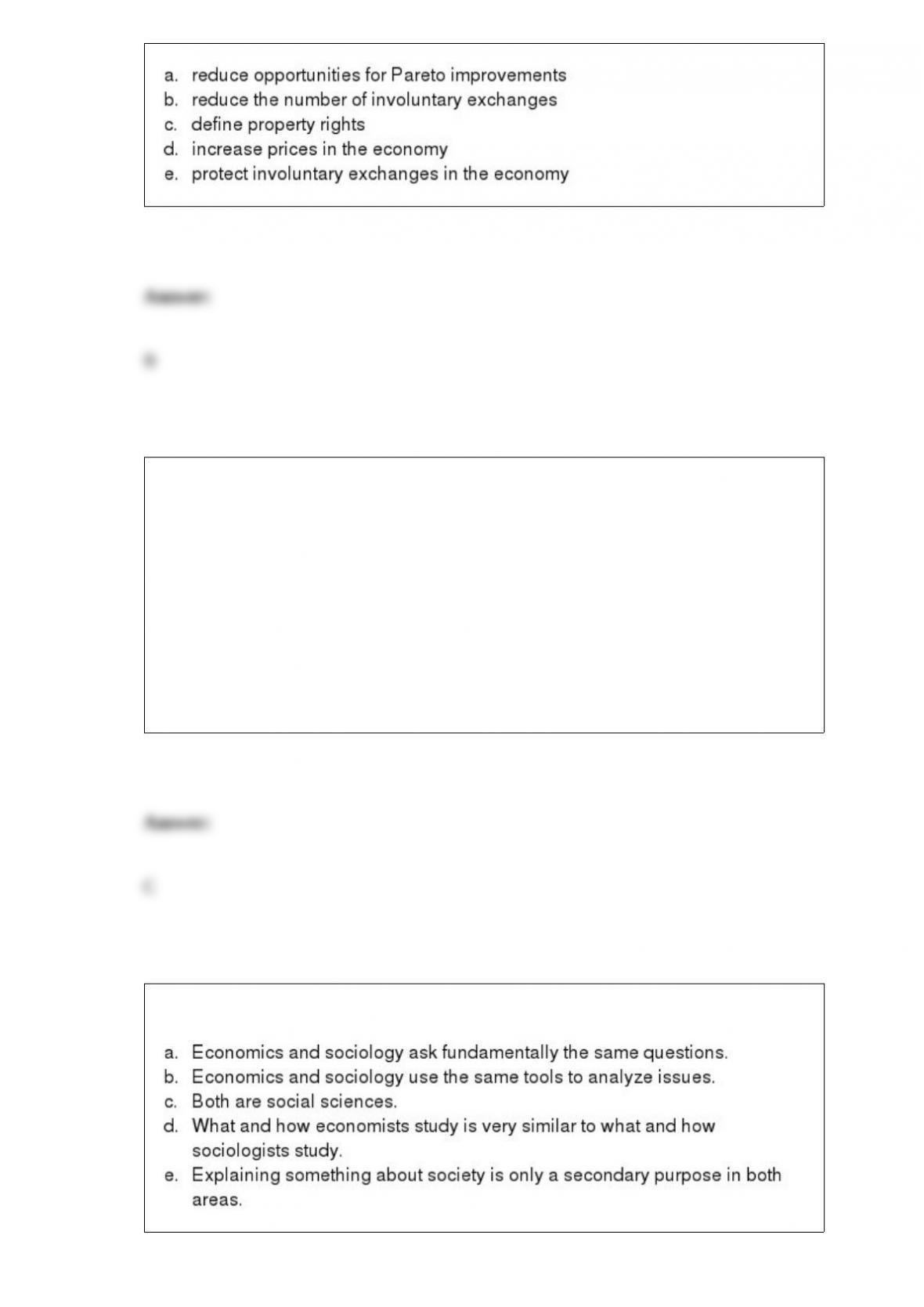
An economic function of criminal law is to
When income increases, aggregate expenditure will rise by
a. the change in GDP
b. the change in GDP minus the MPC
c. the change in GDP times the MPC
d. the MPC
e. the change in GDP divided by the MPC
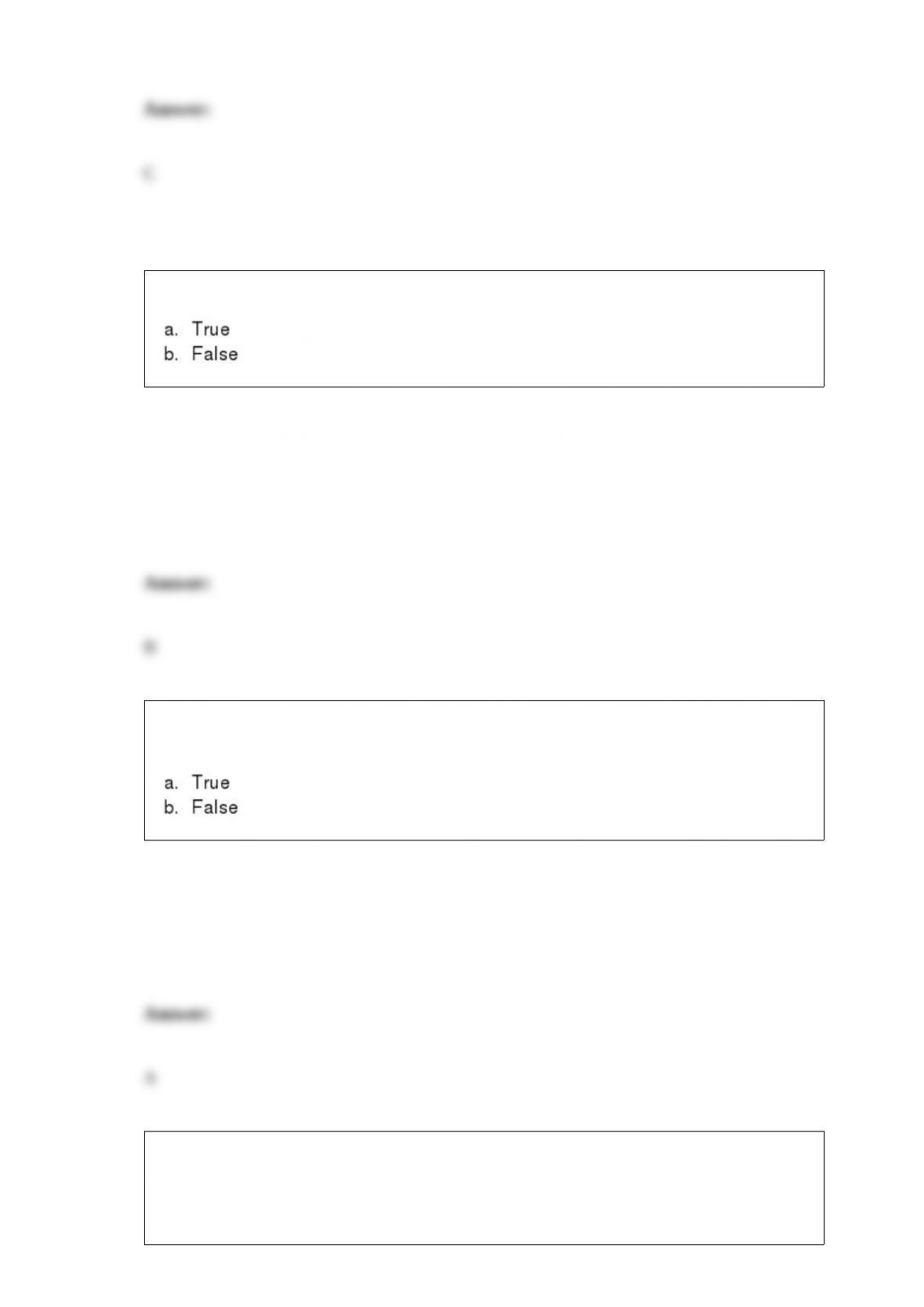
What does economics have in common with sociology?
In a recession, tax payments tend to increase and transfer payments tend to decrease.
One problem with assets bubbles is that while it is easy to identify them as such in
retrospect, it is not easy to do so in advance.
In the long run
a. both supply and demand shocks have permanent effects on real GDP.
b. real GDP can remain below potential.
c. real GDP can remain above potential.
d. both supply and demand shocks have no effect on real GDP.
e. supply shocks have permanent effects on real GDP but demand shocks have no
effect.
Which of the following would increase household saving and thus equilibrium
investment spending?
a. A reduction in the investment tax credit.
b. An increase in the corporate profits tax.
c. A decrease in the capital gains tax.
d. An increase in the investment tax credit.
e. An increase in government regulation.
If aggregate expenditure exceeds GDP, we expect inventories to shrink and firms to
increase production.
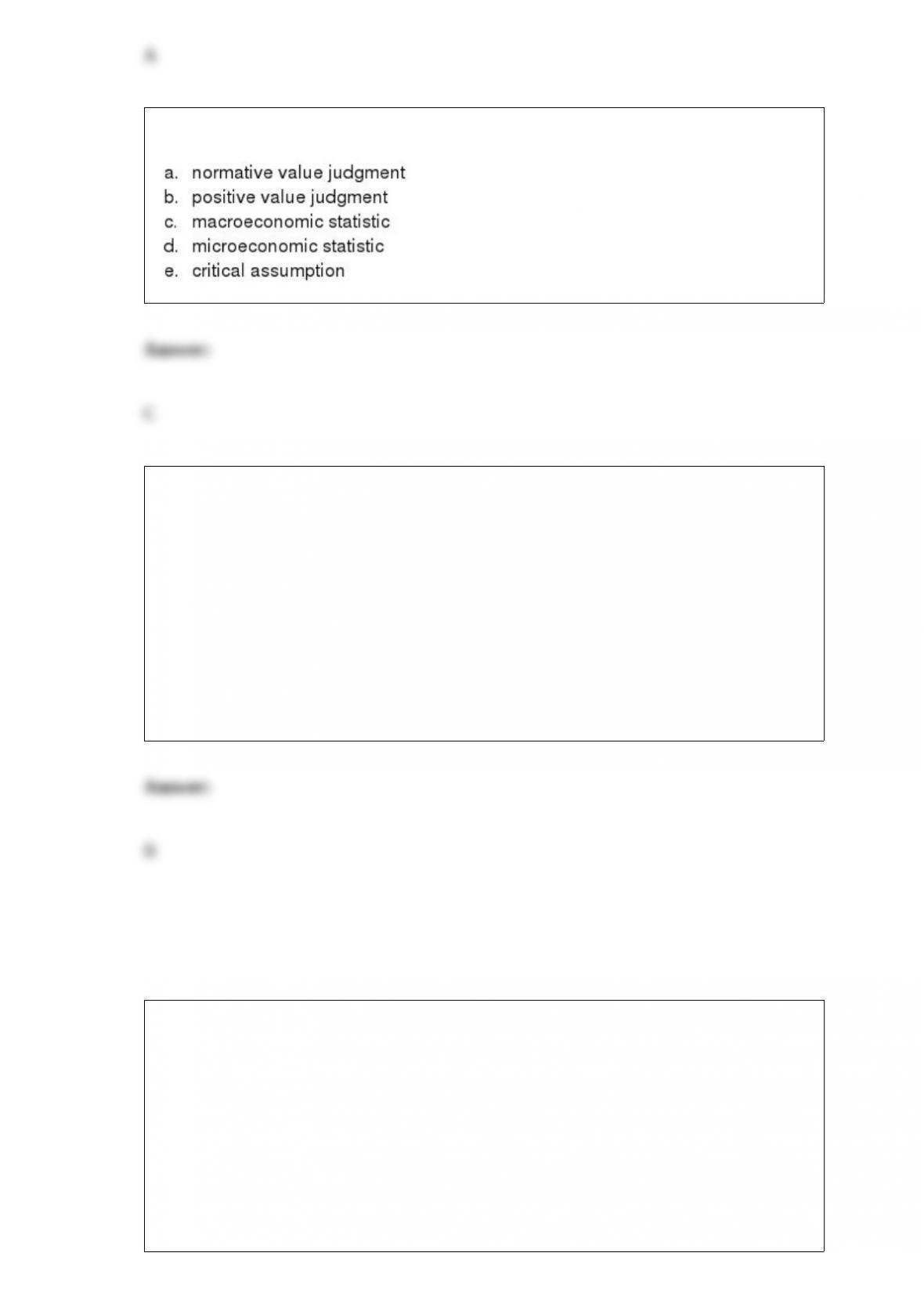
The inflation rate for the economy as a whole is a
Which of the following is considered to be the major cause of the recession of 2001?
a. A decrease in defense spending
b. A spike in oil prices and the collapse of the housing bubble
c. A decline in oil prices and the collapse of the housing bubble
d. Federal Reserve policy
e. None of the above.
Which of the following policies would be most likely to encourage households to save
more?
a. Significant reductions in the social safety net
b. Increasing social security benefits to all recipients, regardless of their contribution
into the system
c. Elimination of the tax deduction on individual retirement account (IRA)
contributions
d. Replacement of sales and excise taxes with an income tax
e. Elimination of government insurance of bank deposits
Which of the following is an opportunity cost of cyclical unemployment?
a. A higher wage rate
b. A lower interest rate
c. Lower taxes paid by the employed
d. Costs of updating prices
e. Lost earnings of the unemployed
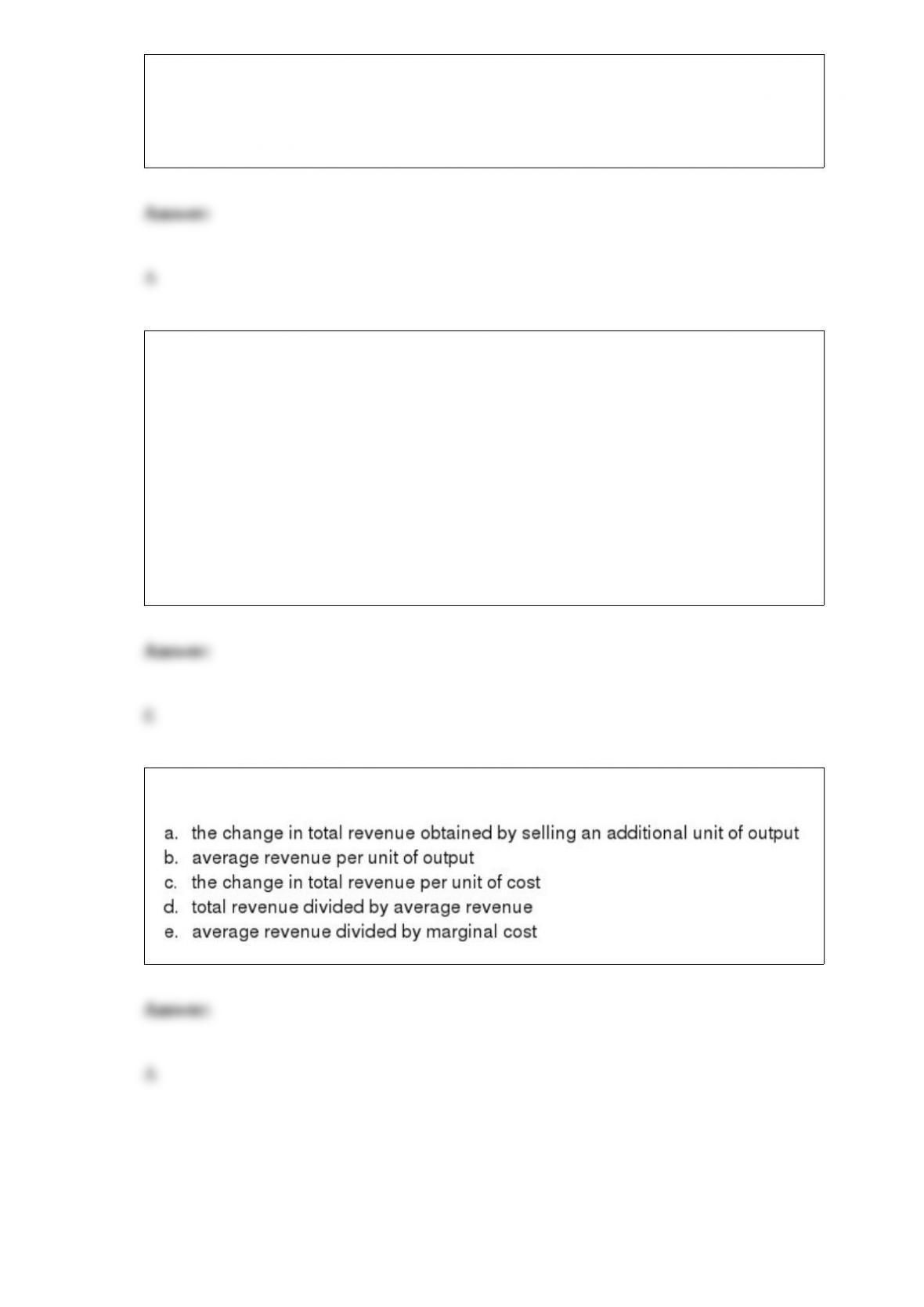
Marginal revenue is