
If consumption is defined as C = 1,350 + 0.6Y, then the marginal propensity to consume
is 0.6.
Answer:
Unlike a perfectly competitive firm, a monopolistic competitor does not have a
short-run shut-down point.
Answer:
If a monopolist engages in first-degree price discrimination, it will produce the same
output level as a perfectly competitive industry.
Answer:
A product’s price approaches its marginal cost as market concentration increases.
Answer:

If the demand curve for a product is vertical, any tax increase on the product is paid for
entirely by the consumer.
Answer:
If the demand curve for a product shifts to the right and the supply curve for the product
shifts to the left, equilibrium price and equilibrium quantity will both increase.
Answer:
In a two-good, two country world, if one country has an absolute advantage in the
production of both goods, it must also have a comparative advantage in the production
of both goods.
Answer:
If a country produces only two goods, then it is not possible to have an absolute
advantage in the production of both those goods.
Answer:
If a country sets a pegged exchange rate that is above the equilibrium exchange rate,
how can the country maintain the peg?
A) by purchasing surplus domestic currency at the pegged rate
B) by selling surplus domestic currency at the pegged rate
C) by purchasing surplus domestic currency at the equilibrium exchange rate
D) by increasing the pegged exchange rate
Answer:
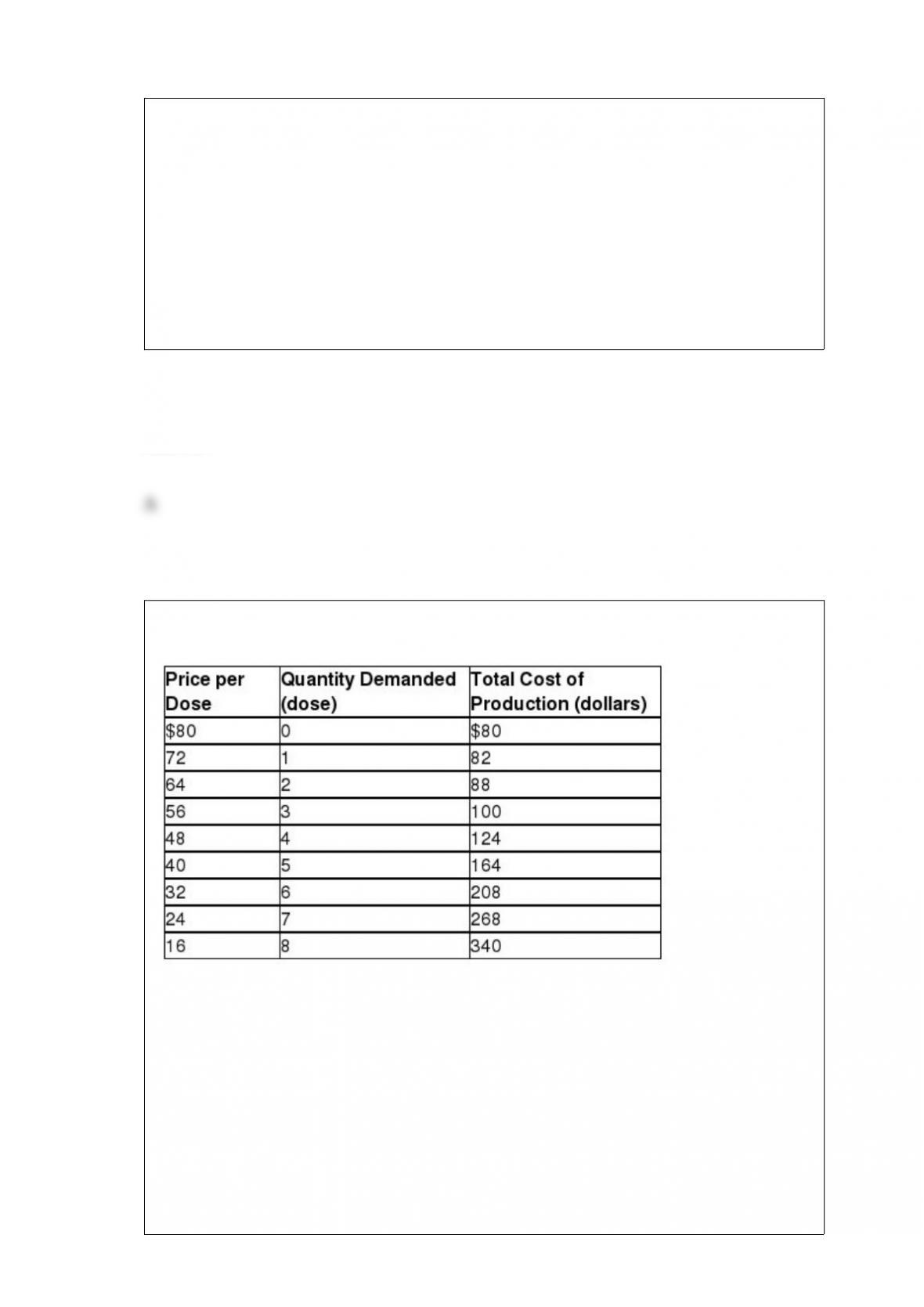
Table 15-4
Shakti Inc. has been granted a patent for its Arnica toothache balm. Table 15-4 shows
the demand and the total cost schedule for the firm. What is the amount of Shakti’s
profit?
A) $68
B) $72
C) $124
D) $192

Answer:
The way in which a corporation is structured and the impact a corporation’s structure
has on the firm’s behavior is referred to as
A) corporate taxation.
B) structure composition theory.
C) structural behavior.
D) corporate governance.
Answer:
Firms price discriminate
A) to reduce the quantity sold so as to reduce production costs.
B) to increase profits.
C) to take advantage of customers.
D) to increase total economic surplus.
Answer:

You are made better off in which of the following situations?
A) you borrow 10,000 pesos, you earn income in dollars, the dollar depreciates against
the peso, you must pay back the loan in pesos
B) you borrow $10,000, you earn income in pesos, the dollar depreciates against the
peso, you must pay back the loan in dollars
C) you borrow $10,000, you earn income in pesos, the dollar appreciates against the
peso, you must pay back the loan in dollars
D) you borrow 10,000 pesos, you earn income in pesos, the dollar depreciates against
the peso, you must pay back the loan in pesos
Answer:
Inflation that is ________ than what is expected benefits ________ and hurts
________.
A) less; lenders; borrowers
B) less; borrowers; lenders
C) greater; lenders; borrowers
D) greater; lenders; no one
Answer:
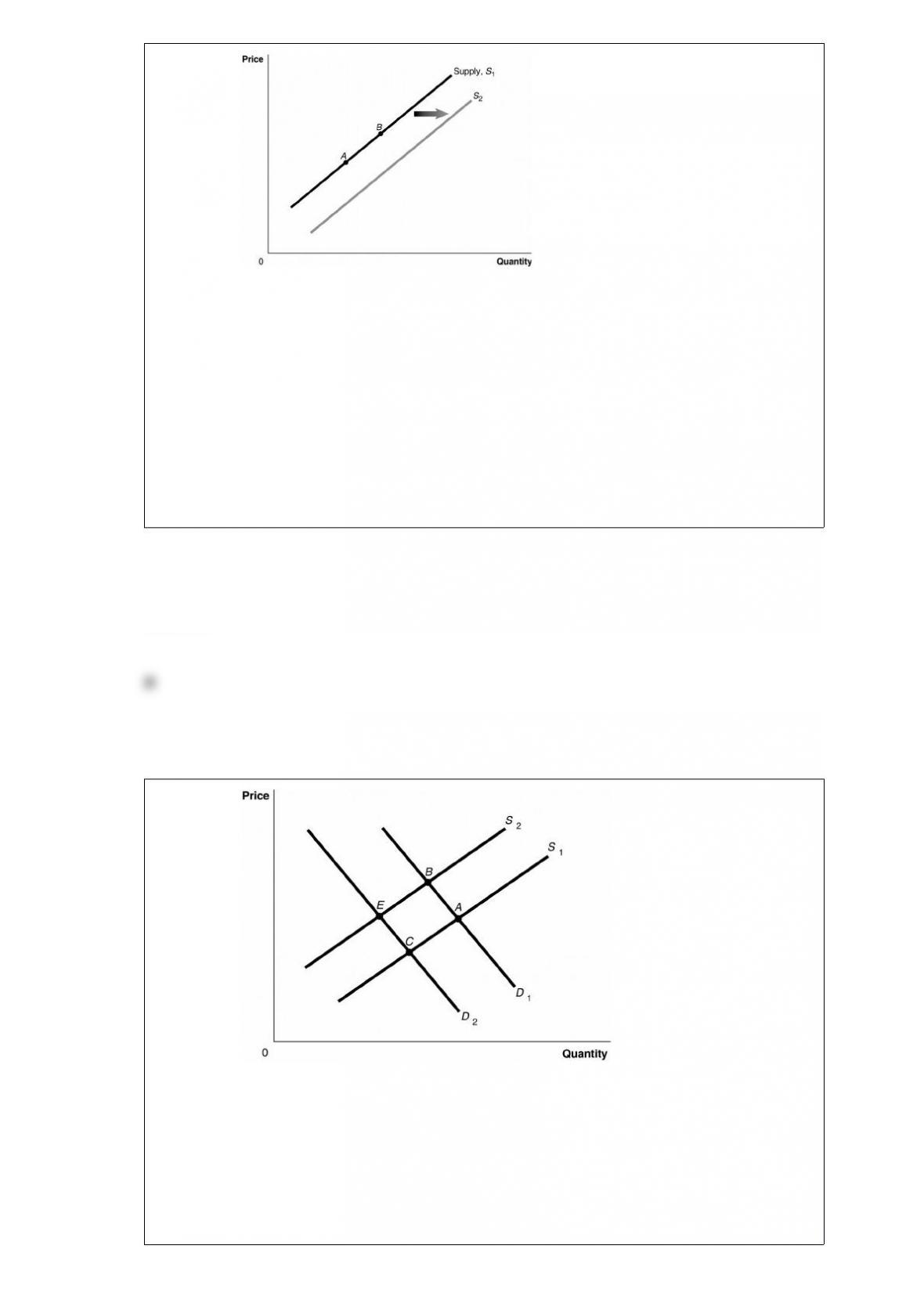
Figure 3-2
A decrease in the price of the product would be represented by a movement from
A) A to B.
B) B to A.
C) S1 to S2.
D) S2 to S1.
Answer:
Figure 3-8
The graph in this figure illustrates an initial competitive equilibrium in the market for
motorcycles at the intersection of D2 and S1 (point C). Which of the following changes
would cause the equilibrium to change to point B?
A) A positive change in the technology used to produce motorcycles and decrease in the
price of motorcycle insurance, a complement to motorcycles.
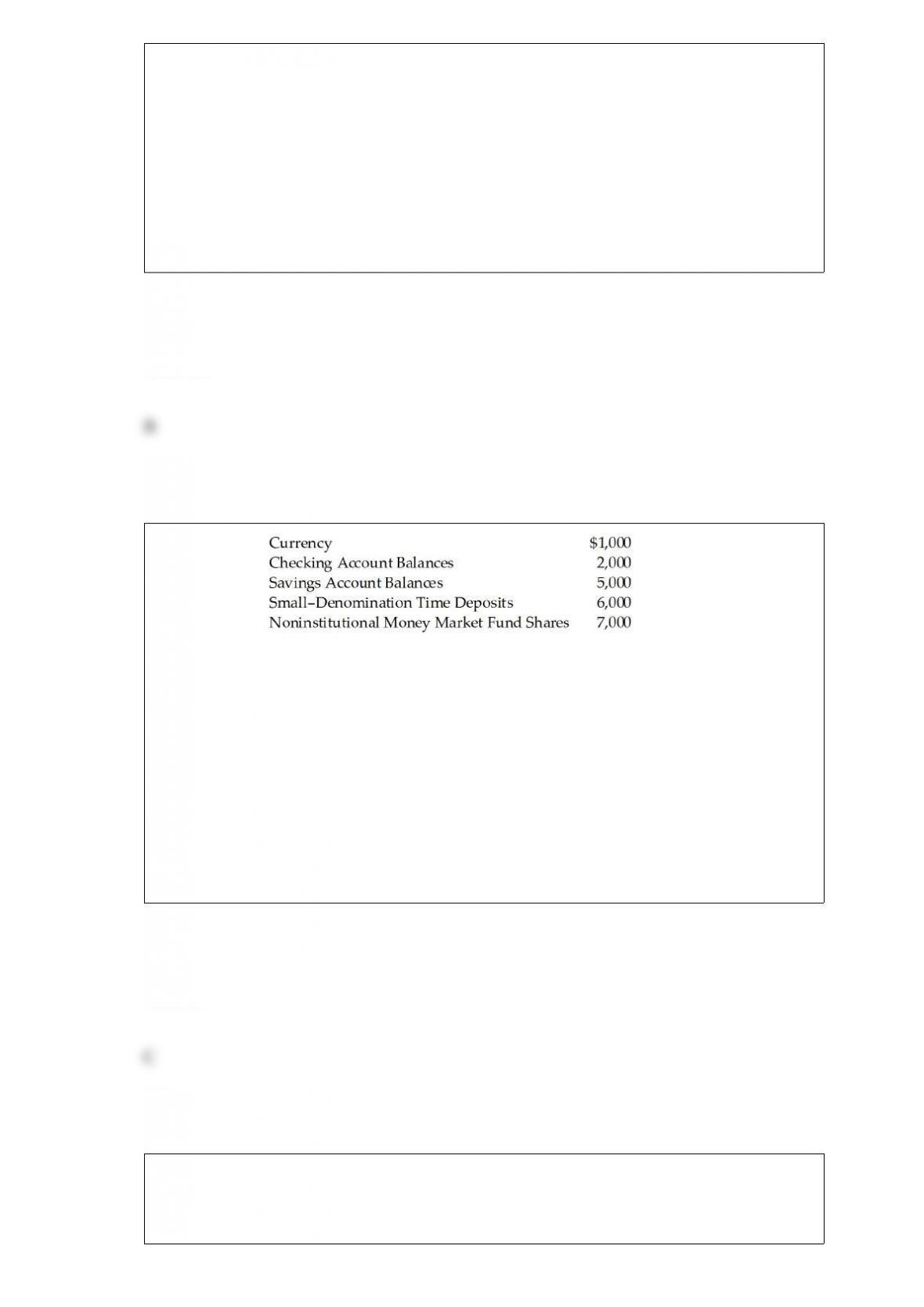
B) An increase in the wages of motorcycle workers and a decrease in the price of
motorcycle insurance, a complement to motorcycles.
C) An increase in the number of motorcycle producers and an increase in the number of
consumers who prefer riding motorcycles.
D) An increase in the wages of motorcycle workers and an increase in the price of
motorcycle insurance, a complement to motorcycles.
Answer:
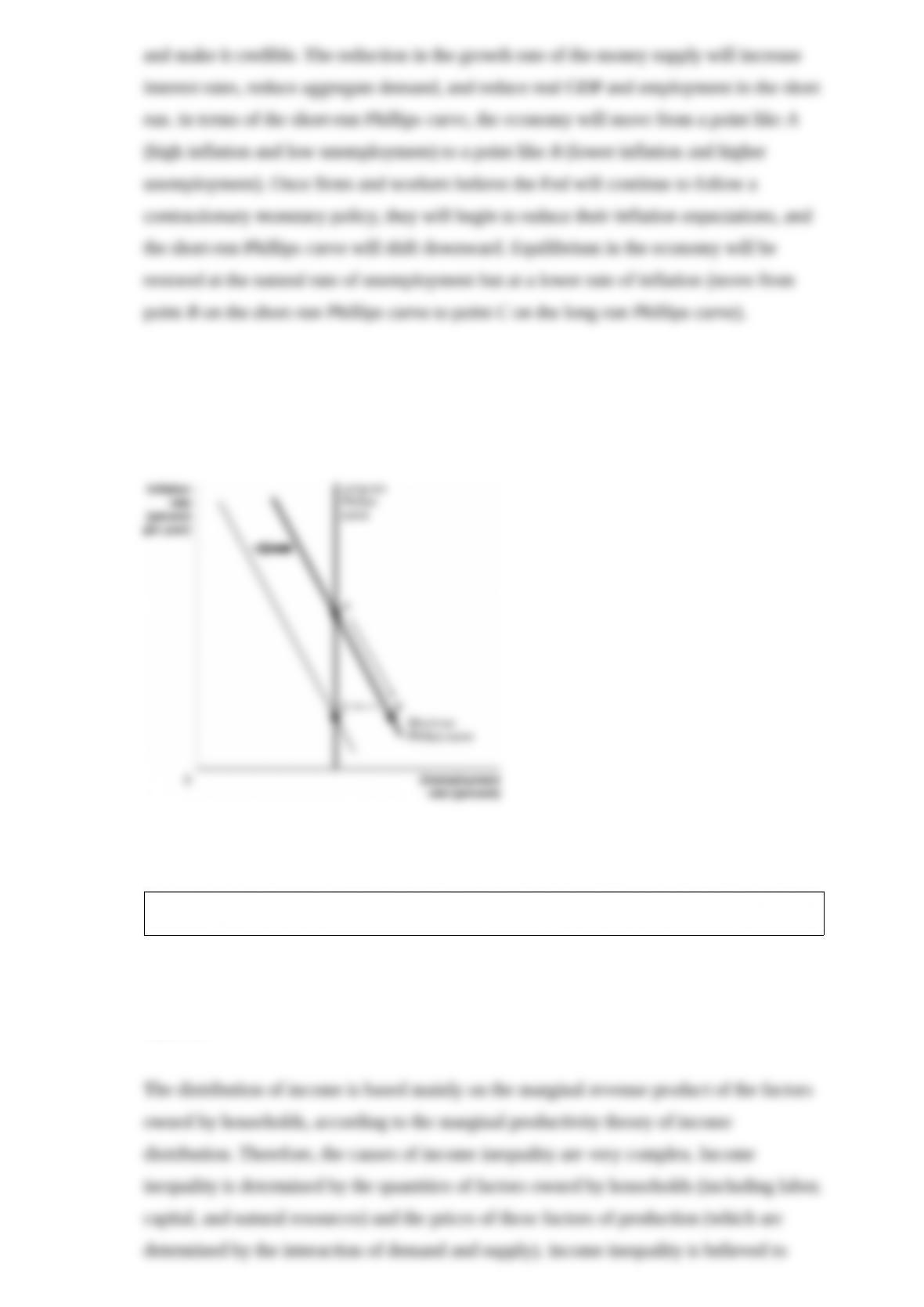
Scenario 25-1 Consider the
information above for a simple economy. Assume there are no traveler’s checks.
M1 in this simple economy equals
A) $1,000.
B) $2,000.
C) $3,000.
D) $8,000.
Answer:
Which of the following is not among Porter’s competitive forces?
A) power of buyers

B) power of suppliers
C) threat of new entrants
D) changing consumer tastes
Answer:
Robert Lucas, a Nobel laureate in economics, argues that there are ________ returns to
human capital.
A) increasing
B) decreasing
C) constant
D) negative
Answer:
If the Federal Reserve wants to reduce inflation from 4 percent to 3 percent
permanently, how can that goal be achieved, and what impact will that have on
employment in the short run and the long run? Support your answer with a graph of the
Phillips curve in the short run and the long run.
Answer:
Describe the main factors economists believe cause inequality of income.
Answer:
What is the main reason for changes in GDP in the short run?
Answer:
When will an increase in aggregate demand not result in lower unemployment rates in
the short run?
Answer:
What is a monopoly? Can a firm be a monopoly if close substitutes for its product
exists?
Answer:
Although gold is highly valued by most people, it is difficult to use as a medium of
exchange. Explain.
Answer: