1) A competitive firm sells its output for $50 per unit. Assume that labor is the only
input that varies for the firm. The marginal product of the 10th worker is 10 units of
output per day; the marginal product of the 11th worker is 8 units of output per day. The
firm pays its workers a wage of $160 per day. For the 10th worker, the value of the
marginal product of labor is
a.$250.
b.$400.
c.$500.
d.$1,280.
2) Interdependence among individuals and interdependence among nations are both
based on the gains from trade.
a.True
b.False
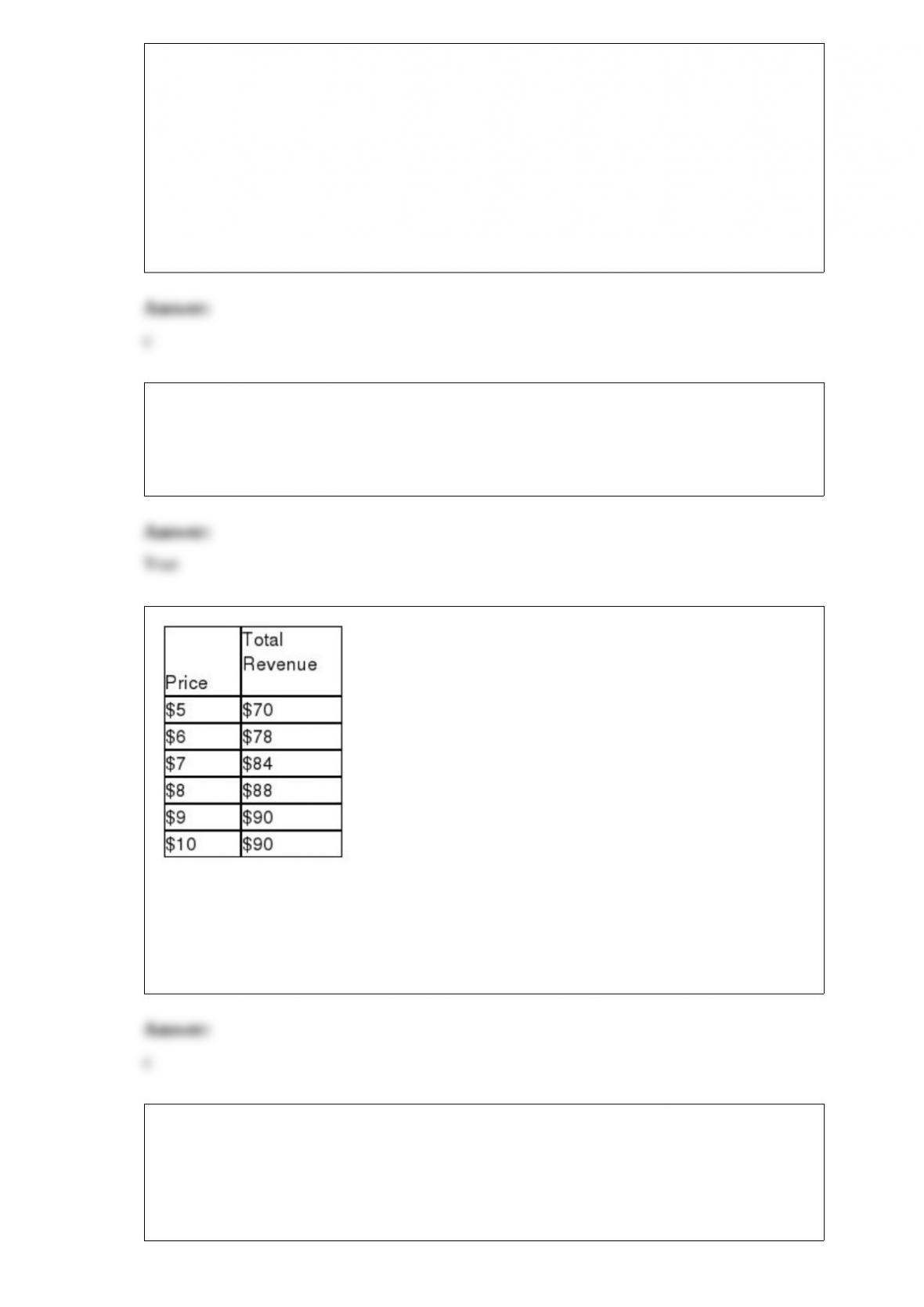
3) As price rises from $5 to $6, the using the midpoint method is approximately
a. 0.07.
b. 0.18.
c. 0.41.
d. 2.45.
4) Which of the following observations was made famous by Adam Smith in his book
The Wealth of Nations?
a.There is no such thing as a free lunch.
b.People buy more when prices are low than when prices are high.
c.No matter how much people earn, they tend to spend more than they earn.

d.Households and firms interacting in markets are guided by an invisible hand that
leads them to desirable market outcomes.
5) When the nation of Brownland first permitted trade with other nations, domestic
producers of wheat experienced
an increase in producer surplus of $4 million and total surplus in Brownland’s wheat
market increased by $1 million. We can conclude that
a.Brownland became an exporter of wheat.
b.consumer surplus in Brownland increased by $3 million.
c.the opening of trade caused the domestic supply curve for wheat in Brownland to shift
to the left.
d.this example is inconsistent with the economic theory of international trade.
6) Business owners who care only about making money are
a.likely to discriminate against certain groups of workers.
b.likely to be replaced by discriminating businesses.
c.more concerned about racial discrimination than gender discrimination.
d.at an advantage when competing against those who practice discrimination.
7) Refer to Scenario 9-2. If Boxland prohibits international trade in cardboard, then the
equilibrium price of a ton of cardboard is
a.$36 and the equilibrium quantity of cardboard is 74 tons.
b.$44 and the equilibrium quantity of cardboard is 88 tons.
c.$52 and the equilibrium quantity of cardboard is 96 tons.
d.$60 and the equilibrium quantity of cardboard is 100 tons.
8) If Bradley‘s Butcher Shop sells its product in a competitive market, then
a.the price of that product depends on the quantity of the product that Bradley‘s Butcher
Shop produces and sells because the firm‘s demand curve is downward sloping.
b.Bradley‘s Butcher Shop‘s total cost must be a constant multiple of its quantity of
output.
c.Bradley‘s Butcher Shop‘s total revenue must be proportional to its quantity of output.
d.Bradley‘s Butcher Shop‘s total revenue must be equal to its average revenue.
9) Land of Many Lakes (LML) sells butter to a broker in Albert Lea, Minnesota.
Because the market for butter is generally considered to be competitive, LML does not
choose the
a.quantity of butter to produce.
b.price at which it sells its butter.
c.profits it earns.
d.All of the above are correct.
10) If a government sells debt to help meet its expenditures, then the government has a
a.budget surplus. Other things the same, the surplus rises if government expenditures
rise.
b.budget surplus. Other things the same, the surplus rises if government expenditures
fall.
c.budget deficit. Other things the same, the deficit rises if government expenditures rise.
d.budget deficit. Other things the same the deficit rises if government expenditures fall
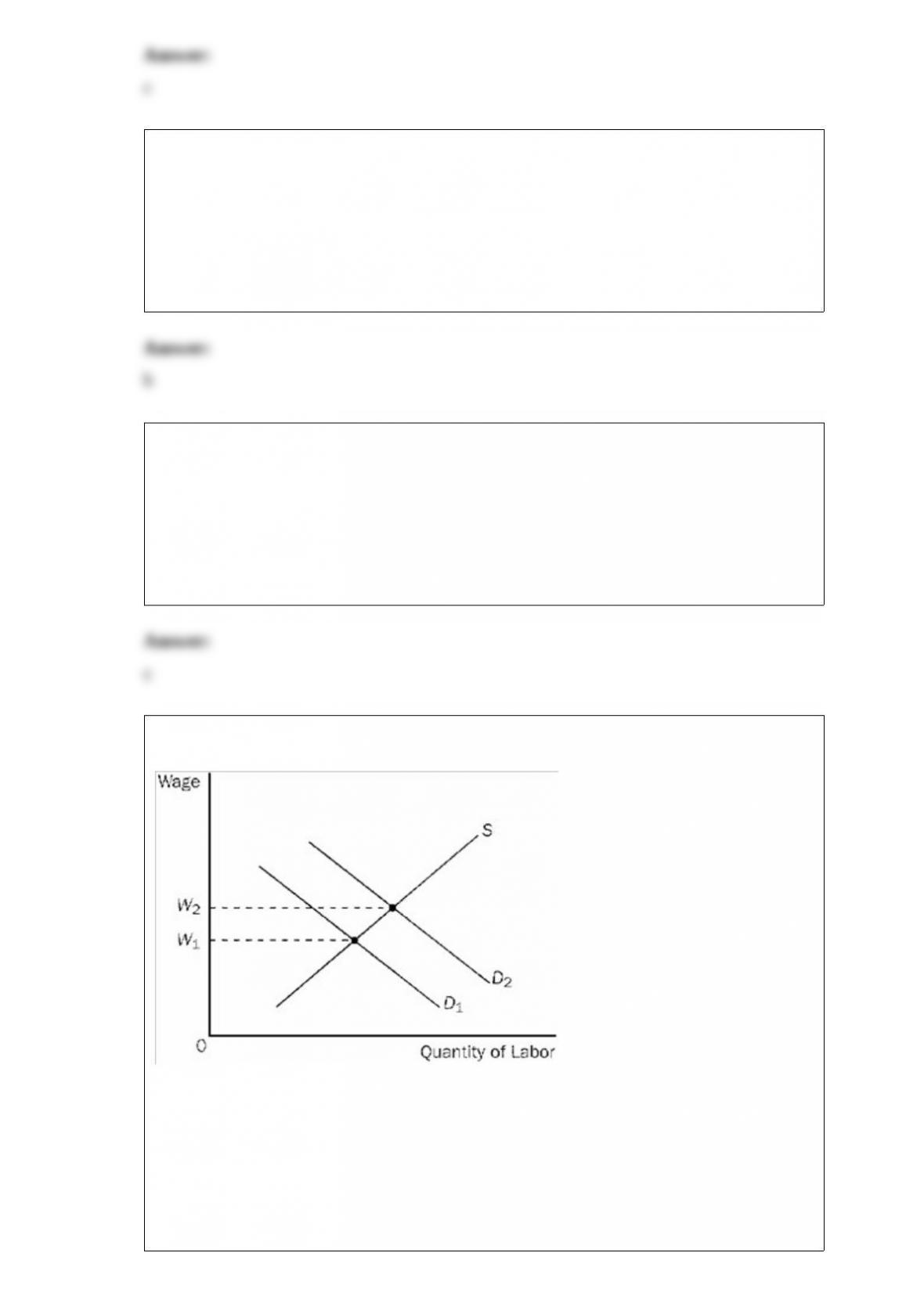
11) Figure 18-10
Refer to Figure 18-10. If the relevant labor demand curve is D2 and the current wage is
W1,
a.there is a surplus of labor.
b.there is a shortage of labor.
c.the quantity of labor supplied exceeds the quantity of labor demanded.
d.workers are failing to take into account the work-leisure tradeoff in deciding what
quantity of labor to supply at alternative wages.

12) A negative externality
a.is an adverse impact on a bystander.
b.causes the product in a market to be under-produced.
c.is an adverse impact on market participants.
d.is present in markets where the good or service does not have any impact on
bystanders.
13) Which of the following statements is not correct?
a.Tradable pollution permits have an advantage over corrective taxes if the government
is uncertain as to the optimal size of the tax necessary to reduce pollution to a specific
level.
b.Both corrective taxes and tradable pollution permits provide market-based incentives
for firms to reduce pollution.
c.Corrective taxes set the maximum quantity of pollution, whereas tradable pollution
permits fix the price of pollution.
d.Both corrective taxes and tradable pollution permits reduce the cost of environmental
protection and thus should increase the public’s demand for a clean environment.
14) Table 17-5
The information in the table below shows the total demand for premium-channel digital
cable TV subscriptions in a small urban market. Assume that each digital cable TV
operator pays a fixed cost of $200,000 (per year) to provide premium digital channels in
the market area and that the marginal cost of providing the premium channel service to
a household is zero.
Refer to Table 17-5. Assume there are two profit-maximizing digital cable TV
companies operating in this market. Further assume that they are not able to collude on
the price and quantity of premium digital channel subscriptions to sell. What price will

premium digital channel cable TV subscriptions be sold at when this market reaches a
Nash equilibrium?
a.$30
b.$60
c.$90
d.$120
15) Maxine’s Production Possibilities FrontierDaisy’s Production Possibilities
Frontier
a.5/6 pound of beef
b.6/5 pounds of beef
c.3/5 pounds of beef
d.5/3 pounds of beef
20) Scenario 10-4
The demand curve for fire extinguishers slopes downward and the supply curve for fire
extinguishers slopes upward. The production of the 500th fire extinguisher entails the
following:
♦ a private cost of $10;
♦ an external cost of $0;
♦ a private value of $9;
♦ an external benefit of $3.
Is the market-equilibrium quantity of fire extinguishers less than, equal to, or greater
than 500? Explain.
21) One example of price discrimination occurs in the publishing industry when a
publisher initially releases an expensive hardcover edition of a popular novel and later
releases a cheaper paperback edition. Use this example to demonstrate the benefits and
potential pitfalls of a price discrimination pricing strategy.
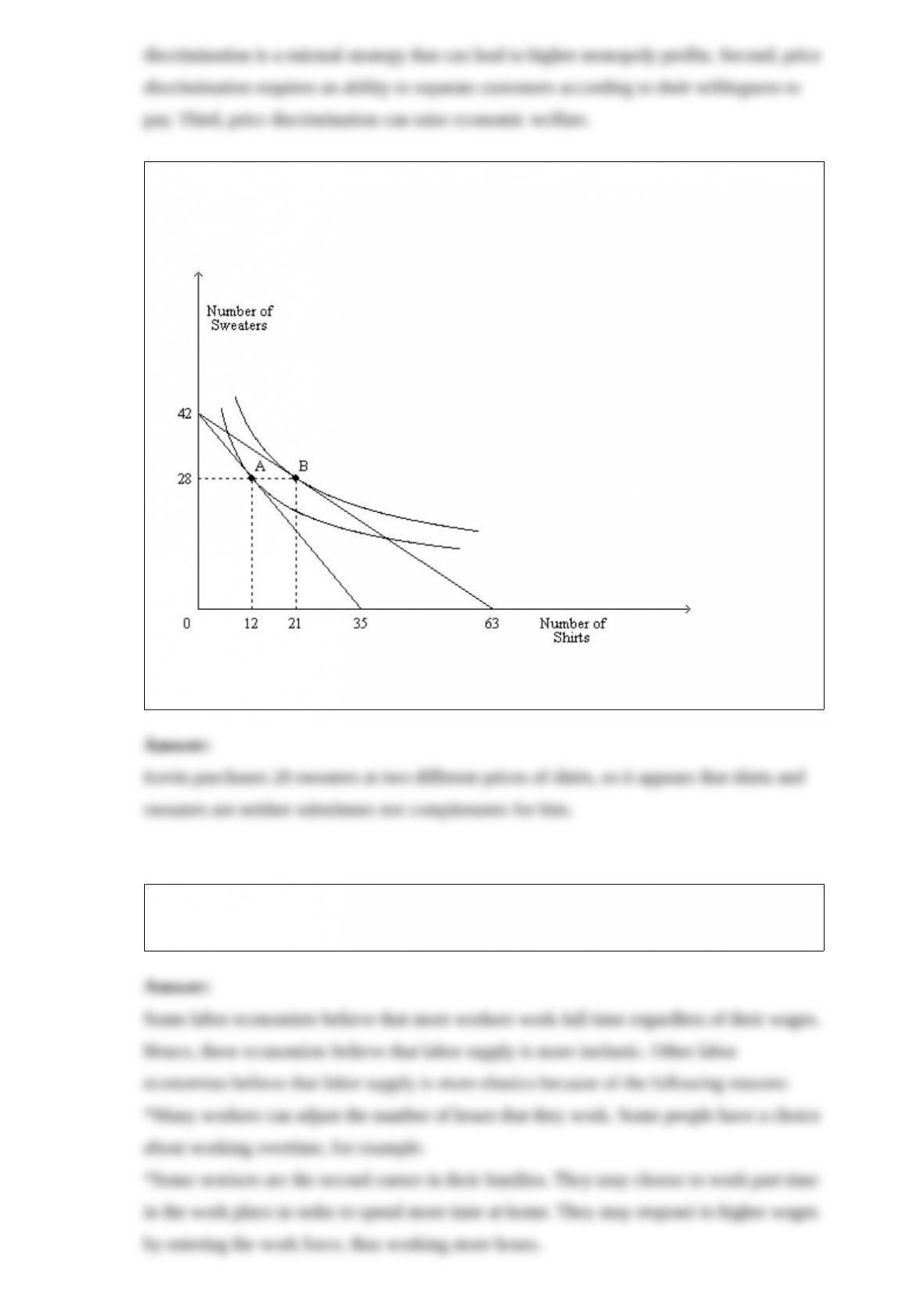
22) Figure 21-31
The figure shows two indifference curves and two budget constraints for a consumer
named Kevin.
Refer to Figure 21-31. For Kevin, are sweaters and shirts substitutes, complements, or
neither?
23) Is the United States’ labor supply more inelastic or more elastic? Briefly summarize
the competing theories.
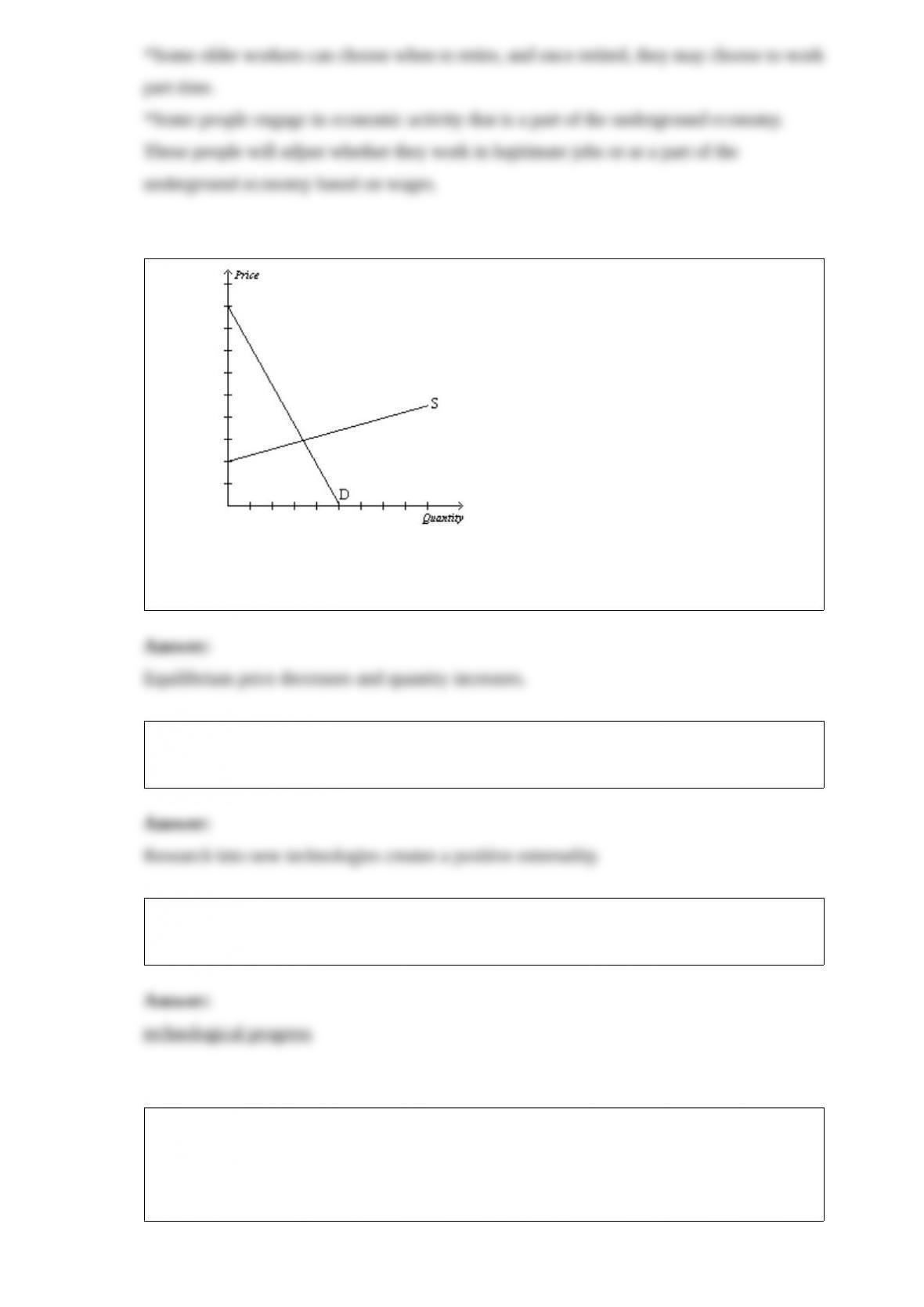
24)
In this market for iPhones, the technology improves while all other factors remain
constant. Explain the change(s) in the equilibrium price and quantity.
25) Does research into new technologies create a positive externality or does it create a
negative externality?
26) The substantial increases in output per worker over the last 50 or so years are
largely explained by.
27) Suppose a community is debating how much money to spend on improvements to
the high school. The members of the community who have children advocate spending
$20 million to make improvements. The remaining 60% of the community thinks the
high school is just fine and does not want to spend anything. What will the outcome be?
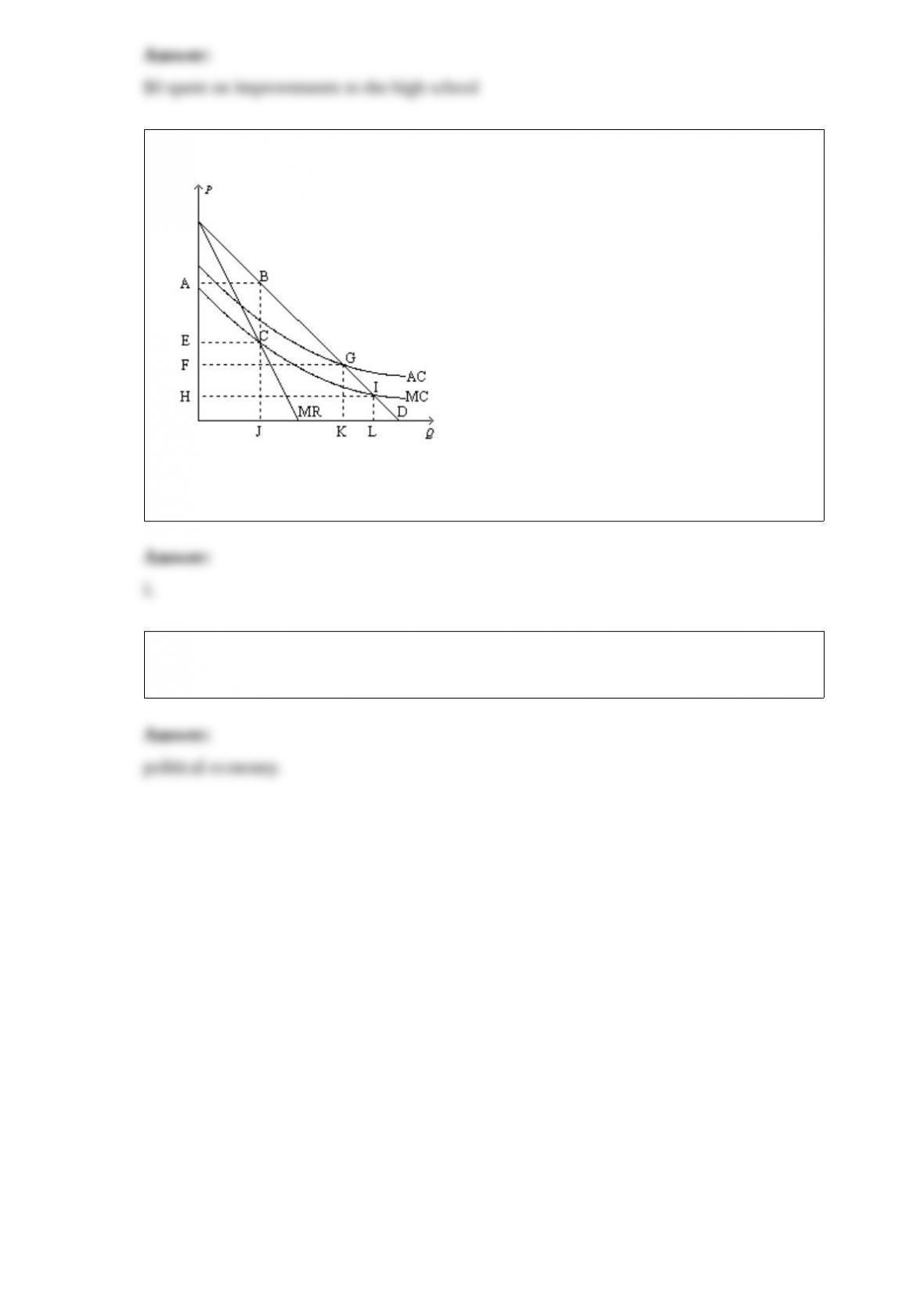
28) Figure 15-25
If a regulator requires this firm to charge a socially optimal price, which letter
represents the amount of output it will produce?
29) The field of economics in which the tools of economics are used to understand the
functioning of government is