Michelle can work at job A earning $50,000 a year, job B earning $83,000 a year, or job
C earning $85,000 a year. If Michelle chooses job C, then her economic rent for
working at job C rather than job B is
a. $35,000.
b. $2,000.
c. $0.
d. $33,000.
Natural monopolies can be regulated based on price, profit, or output.
a. True
b. False
Exhibit 34-11
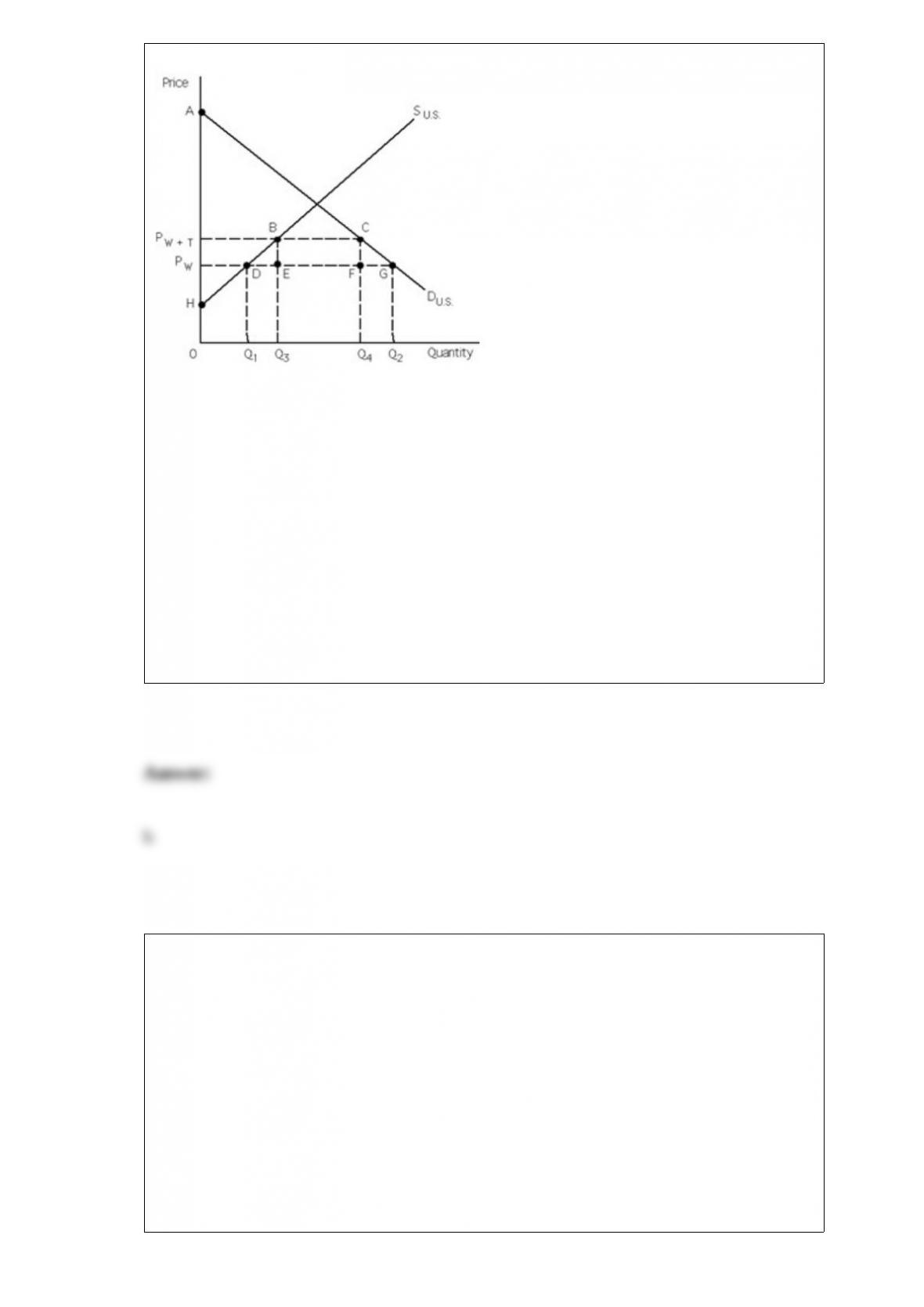
PW is the price that exists in the market before a tariff is imposed and PW + T is the price
that exists in the market after a tariff is imposed. Tariff revenues equal the area
a. DBCG.
b. EBCF.
c. CFG.
d. BCGE.
e. DBCF.
In order for a firm to continue producing, price must exceed __________ and total
revenue must exceed __________.
a. marginal cost; total cost
b. ATC; total cost
c. AFC; total fixed cost
d. AVC; total variable costs
e. price; total cost

The issuer of a bond is a lender.
a. True
b. False
As price rises from $22 to $26, quantity supplied rises from 100 to 110 units and
quantity demanded falls from 90 units to 65 units. It follows that supply is __________
and demand is __________.
a. inelastic; elastic
b. elastic; inelastic
c. inelastic; unit elastic
d. elastic; elastic
e. unit elastic; inelastic

The equilibrium interest rate is determined
a. by the demand for loanable funds.
b. by the supply of loanable funds.
c. by the demand for and supply of loanable funds.
d. independently of the demand for and supply of loanable funds.
If the equilibrium exchange rate between U.S. dollars and Japanese yen is $0.01 = 1 yen
but currently the exchange rate is $0.0089 = 1 yen, then a __________ exists.
a. shortage of dollars
b. surplus of dollars
c. surplus of yen
d. shortage of yen
e. b and d
When an industry is described as a decreasing-cost, increasing-cost, or constant-cost
industry, the “cost” that is being referred to is
a. marginal cost.
b. average total cost.
c. average variable cost.
d. sunk cost.
e. fixed cost.
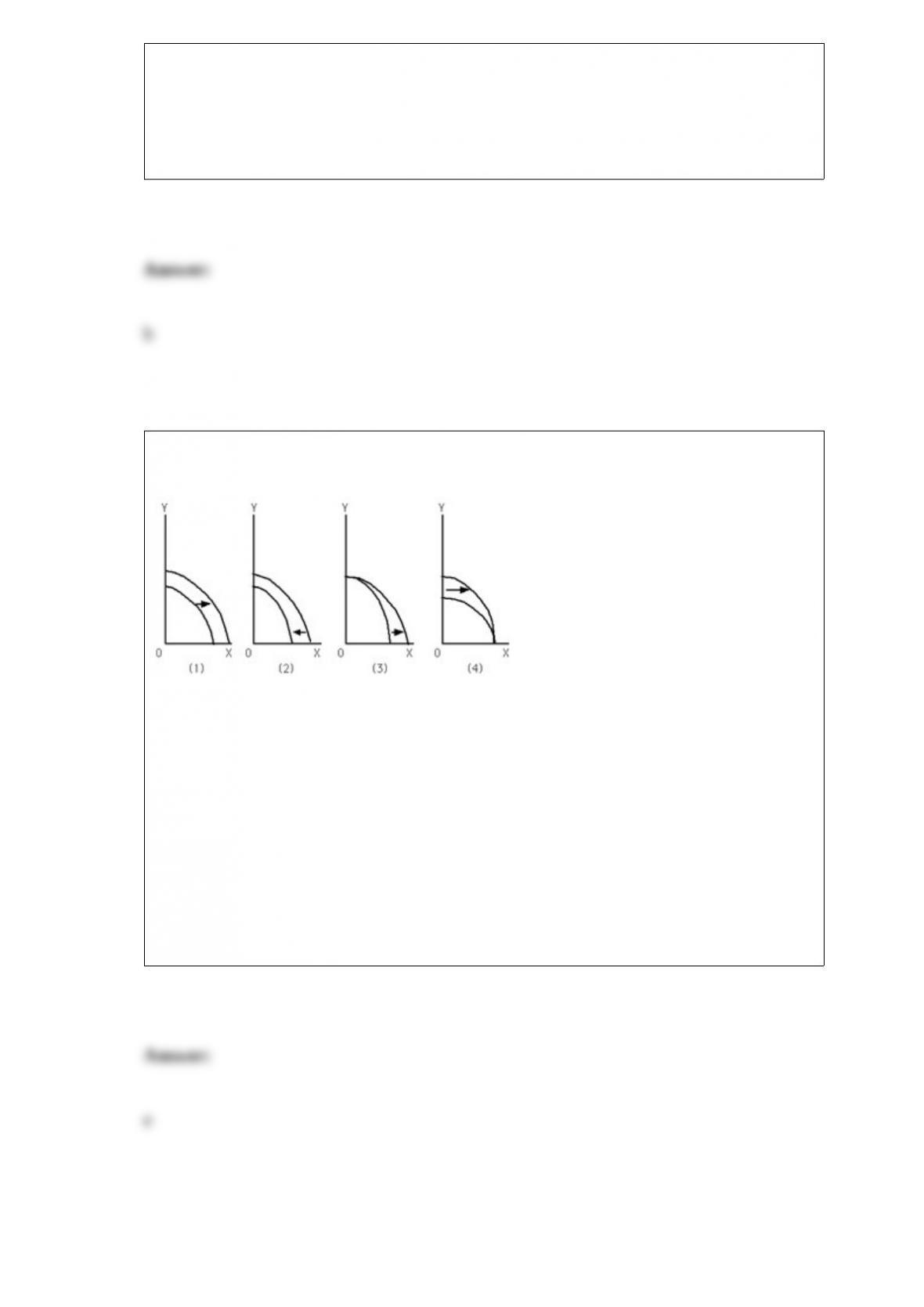
Exhibit 2-6
Which graph depicts the result of an increase in the unemployment rate?
a. (1)
b. (2)
c. (3)
d. (4)
e. none of the above