The German Hyperinflation of the early 1920s was caused by
A) the German government raising funds for expenditures by selling bonds to the
central bank.
B) an overly aggressive monetary policy implemented to combat a severe recession.
C) rising oil prices after World War I caused a severe stagflation and hyperinflation.
D) large deficits resulting from the high levels of war spending and falling taxes.
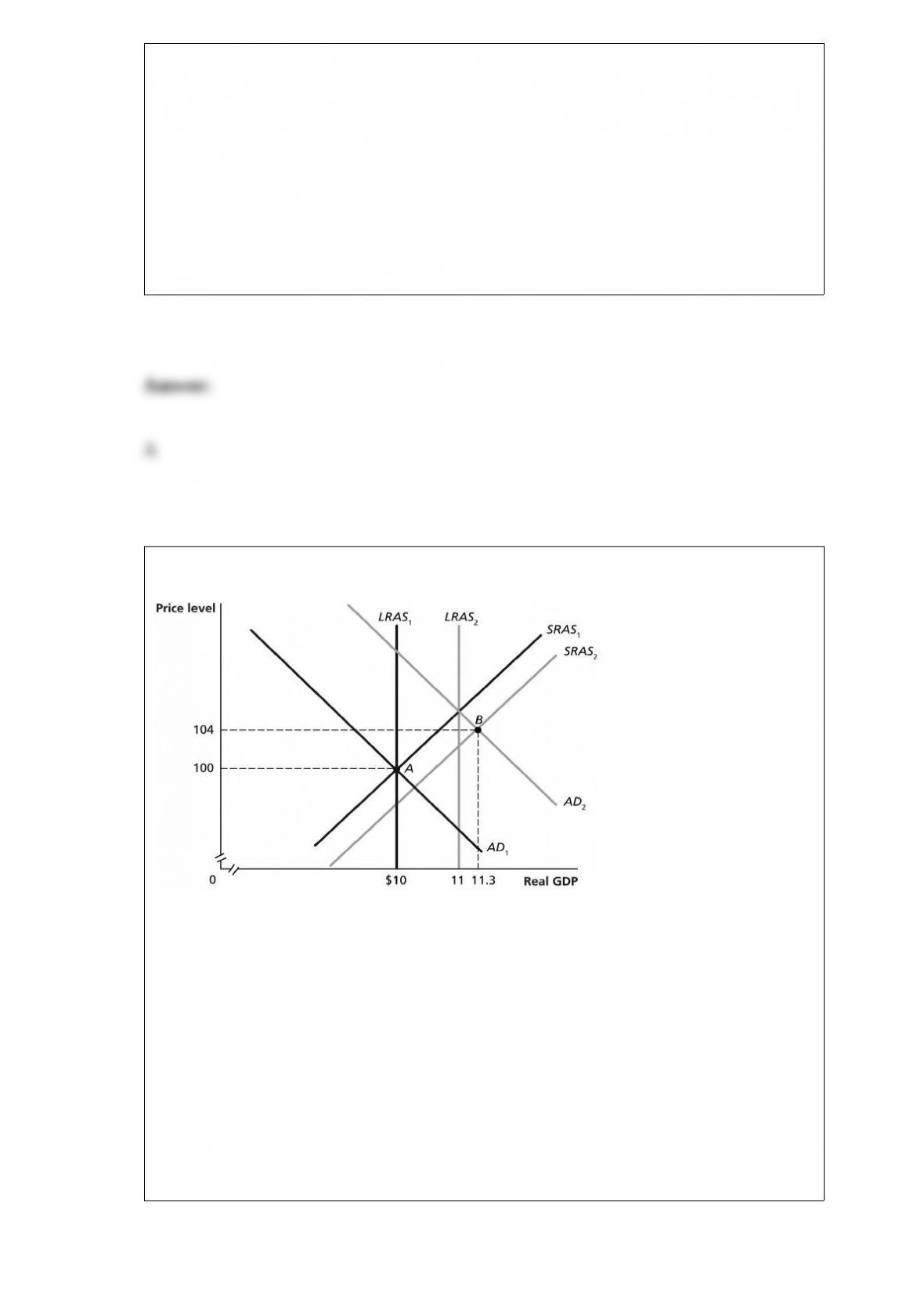
Figure 16-6
Refer to Figure 16-6. In the dynamic model of AD–AS in the figure above, if the
economy is at point A in year 1 and is expected to go to point B in year 2, Congress and
the president would most likely
A) increase the money supply and decrease the interest rate.
B) increase taxes.
C) increase government spending.
D) increase oil prices.
E) raise interest rates.
Marginal cost is the ________ associated with undertaking an activity.
A) total cost
B) extra cost
C) opportunity cost
D) foregone cost
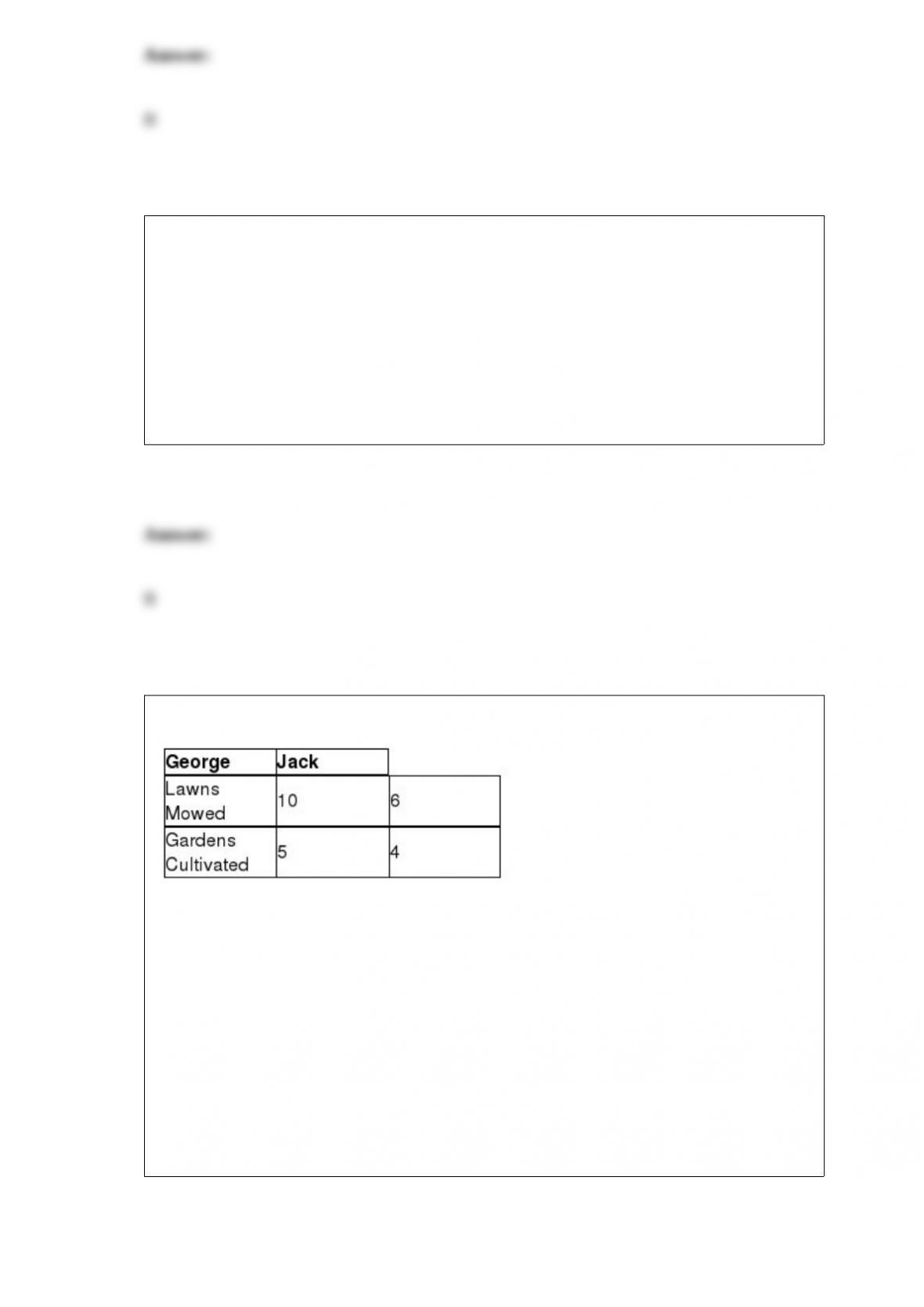
Table 2-4
Table 2-4 shows the output per day of two gardeners, George and Jack. They can either
devote their time to mowing lawns or cultivating gardens.
Refer to Table 2-4. What is George’s opportunity cost of cultivating a garden?
A) half a garden cultivated
B) two lawns mowed
C) two-thirds of a garden cultivated
D) one and a half lawns mowed
Persistent current account deficits for the United States have
A) decreased investment in new plant and equipment.
B) slowed economic growth.
C) increased government budget deficits.
D) None of the above are correct.
An increase in the price level results in a(n) ________ in the quantity of real GDP
demanded because ________.
A) decrease; a higher price level reduces consumption, investment, and net exports.
B) increase; a higher price level reduces consumption, investment, and net exports.
C) decrease; a higher price level increases consumption, investment, and net exports.
D) increase; a higher price level increases consumption, investment, and net exports.
Congress passed the Freedom to Farm Act in 1996. What was the purpose of this Act?

A) to encourage more people to become farmers
B) to grant free land to farmers in order to produce crops that were particularly scarce
C) to phase out the use of price ceilings in agricultural markets
D) to phase out price floors and return to a free market in agriculture
Fiona shares an office with her ex-husband. Her share of the rent and utilities are $625
per month. She is considering moving to a home office which she will not have to share
with anyone. The home office will not cost her anything as far as extra rent or utilities.
Recently, you ran into Fiona at the gym and she tells you that she has moved into her
home office. Fiona is as rational as any other person. As an economics major, you
rightly conclude that
A) Fiona did not have a choice; her ex-husband was a jerk.
B) Fiona figures that the additional benefit of having her own office (as opposed to
sharing) is at least $625.
C) Fiona figures that the benefit of having her own office (as opposed to sharing) is
zero, since she is no longer paying rent and utilities.
D) The cost of having one’s own space outweighs the benefits.
For the recessions in the United States since the 1950s,
A) inflation has been nonexistent.

B) the inflation rate rises on average by about 2.5 percentage points 12 months after a
recession begins.
C) the inflation rate falls on average by about 2.5 percentage points 12 months after a
recession begins.
D) deflation occurs.
Scenario 14-2
Imagine that Kristy deposits $10,000 of currency into her checking account deposit at
Bank A and that the required reserve ratio is 20%.
Refer to Scenario 14-2. As a result of Kristy’s deposit, Bank A’s required reserves
increase by
A) $2,000.
B) $8,000.
C) $10,000.
D) $50,000.
In a closed economy, which of the following equations reflects investment? (Y = GDP,
C = Consumption, G = Government purchases, T = Taxes, and TR = Transfers)
A) Y – C – G
B) Y – C – T
C) Y – T + TR
D) C + G –T