Suppose that the price of a coffee mug is $2. Lee’s marginal cost of producing coffee
mugs $0.50 for the first mug, Tammy’s marginal cost of producing coffee mugs is $1 for
the second mug, Stan’s marginal cost of producing coffee mugs is $1.50 for the third
mug, Joy’s marginal cost of producing coffee mugs is $2 for the fourth mug, and Jody’s
marginal cost of producing coffee mugs is $3 for the fifth mug. In equilibrium, what is
the producer surplus from producing coffee mugs?
A) $0
B) $2
C) $3
D) $6
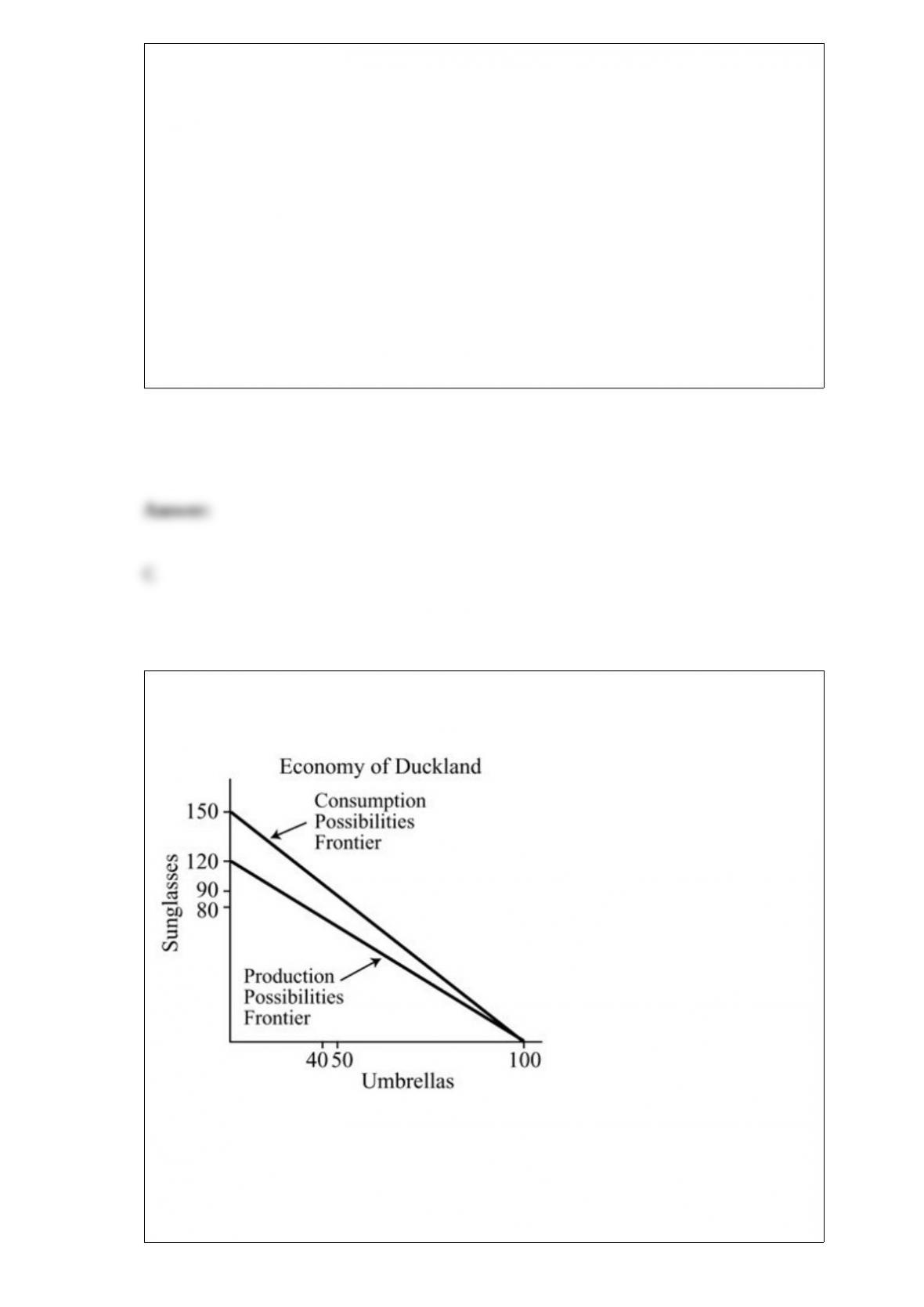
Figure 18.1
Refer to Figure 18.1. The terms of trade for Duckland is:
A) 1 pair of sunglasses for 6/5 umbrellas.
B) 1 pair of sunglasses for 2/3 umbrellas.
C) 1 pair of sunglasses for 5/6 umbrellas.
D) 1 pair of sunglasses for 3/2 umbrellas.
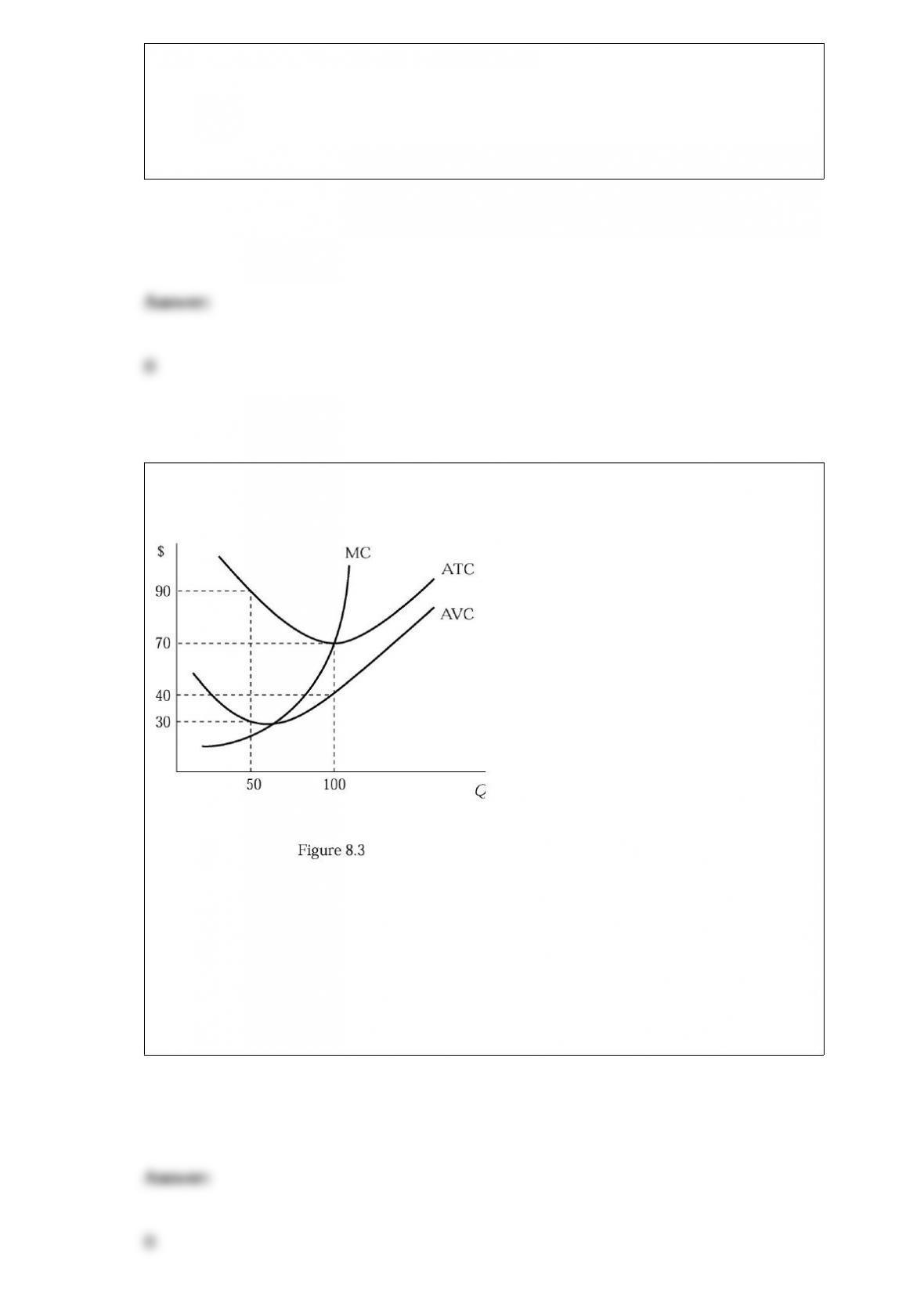
Figure 8.3 shows a firm’s marginal cost, average total cost, and average variable cost
curves. At Q=100, the total variable cost is:
A) $2,800.
B) $4,000.
C) $4,500.
D) $6,300.
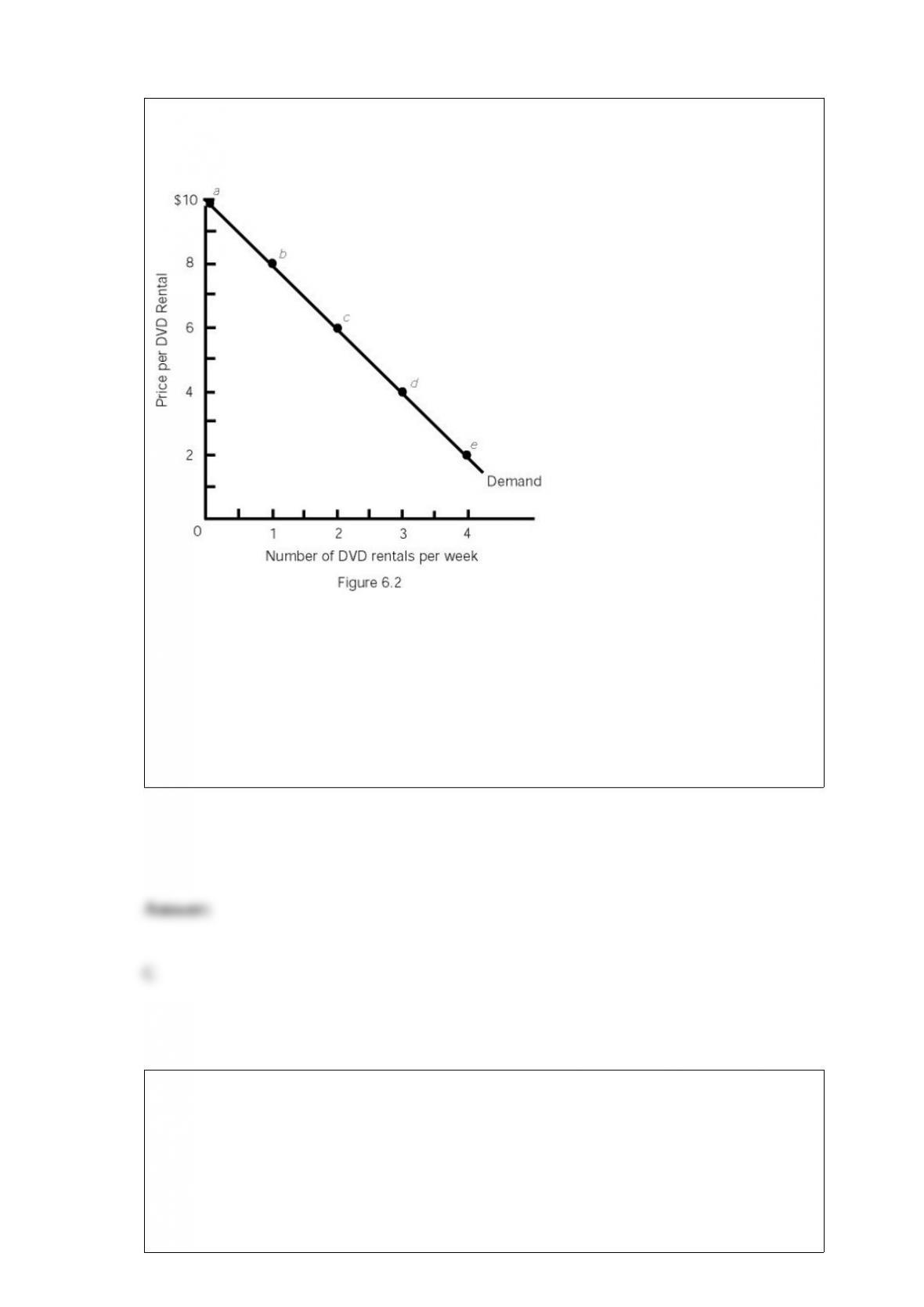
Refer to Figure 6.2. If the price of a DVD rental is $6.00, consumer surplus will be $
________ each week.
A) 6.00
B) 4.00
C) 2.00
D) 12.00
What happens if the price of a product is below the equilibrium price?
A) The buyers will stop purchasing a “cheap” product.
B) The producer will lower the price to make more profit.
C) There will be an excess demand for the product.
D) none of the above
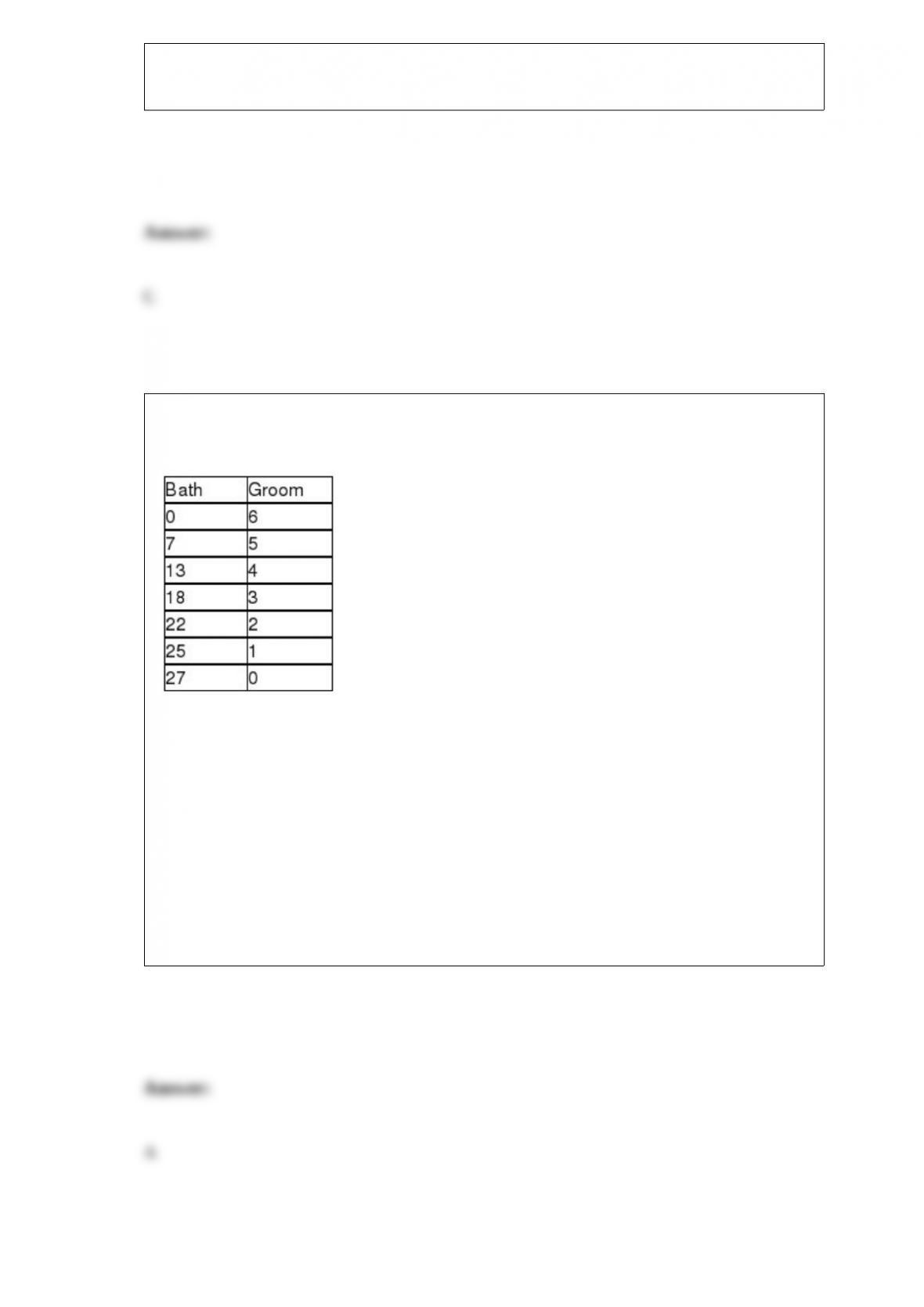
Kaitlyn and Larissa have formed a dog bathing and grooming business. The number of
dogs they can bathe or groom in any given day is depicted in Table 2.1.
Table 2.1
As they groom more dogs, the opportunity cost of bathing additional dogs:
A) falls.
B) rises.
C) remains constant.
D) depends on the prices being charged.

Table 3.1 illustrates Willy and Blythe’s hourly production for apples and carrots. Based
on the table, Blythe’s opportunity cost of 1 carrot is:
Table 3.1
A) 3 apples.
B) 4 apples.
C) 6 apples.
D) 1.5 apples.
Suppose that in October the price of a cup of cafe latte was $2.50 and 400 lattes were
consumed. In November the price of a latte was $2.00 and 600 lattes were consumed.
What might have caused this change?
A) The price of tea (a substitute for cafe lattes) fell.
B) The price of tea (a substitute for cafe lattes) rose.
C) The price of coffee beans (an input of production of cafe lattes) rose.
D) The price of coffee beans (an input of production of cafe lattes) fell.
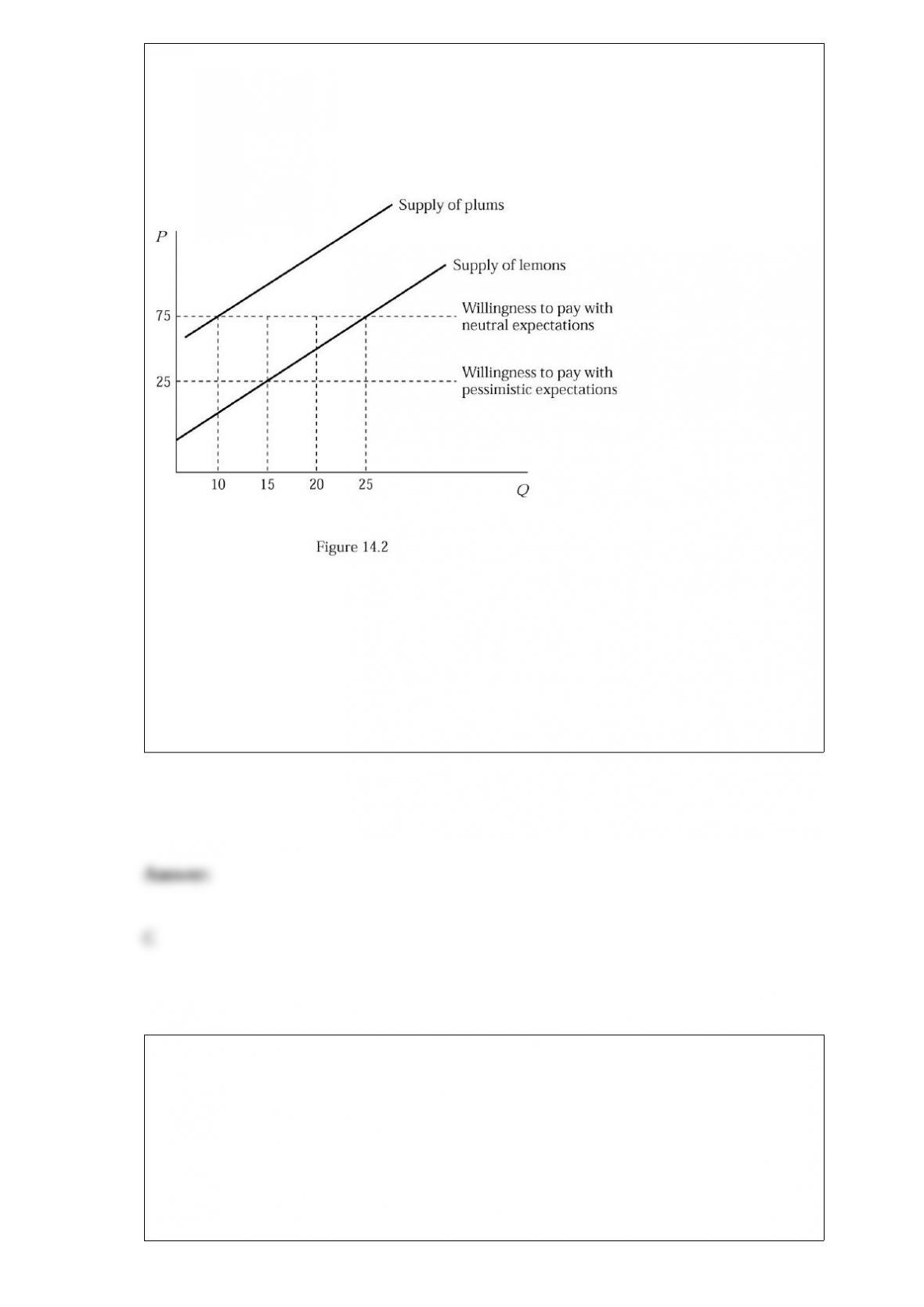
Figure 14.2 represents the market for used cameras. Suppose buyers are willing to pay
$125 for a plum (high-quality) used camera and $25 for a lemon (low-quality) used
camera. Initially buyers believe that 50% of used cameras in the market are lemons
(low quality). Compared to the outcome with neutral expectations, how many fewer
cameras are sold in equilibrium?
A) 10
B) 15
C) 20
D) 25
If the consumer gets 40 utils from consuming four CDs, 45 utils from consuming five
CDs and 48 utils from consuming six CDs, then the consumer’s marginal utility from
the sixth CD is:
A) 3 utils.
B) 8 utils.

C) 46.5 utils.
D) 48 utils.
A perfectly competitive industry is in long-run equilibrium. If demand for the product
increases, we can expect:
A) firms to enter the market.
B) firms to exit the market.
C) no change in the number of firms in the market.
D) Not enough information to tell what will happen to the number of firms in the
market.
When a specialized worker gains insights into a particular task that leads to better
production methods, this is called:
A) continuity.
B) innovation.
C) specialization.
D) repetition.

Which of the following is a macroeconomic question?
A) Should a country adopt policies to encourage personal savings?
B) Why do some countries grow faster than others?
C) Why do prices tend to increase over time?
D) All of the above are macroeconomic questions.
When a tax is levied on a good or service:
A) buyers are worse off, but sellers are unaffected.
B) both buyers and sellers are worse off.
C) both buyers and sellers are unaffected.
D) sellers are worse off, but buyers are better off.
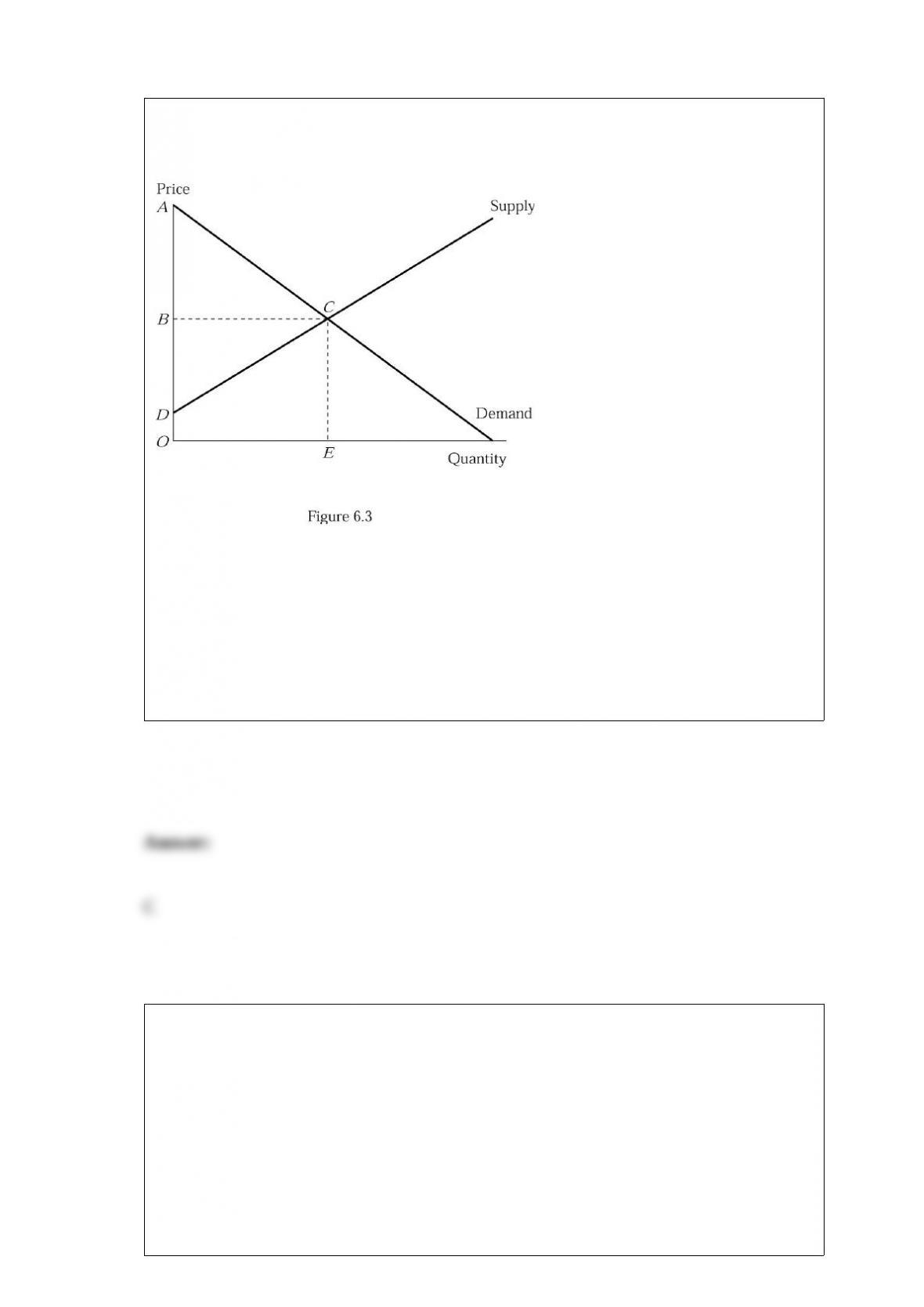
Refer to Figure 6.3. On this graph, the total surplus of the market is maximized when
the price is at point:
A) A.
B) B.
C) O.
D) D.
Suppose that the price of macaroni rises. Quantity supplied will ________ and producer
surplus will ________.
A) increase; increase
B) increase; decrease
C) decrease; increase
D) decrease; decrease

When the price of milk increases, total revenue increases for milk retailers. From this
information, we can conclude that:
A) the law of demand does not hold.
B) the demand for milk is inelastic.
C) the supply of milk is inelastic.
D) corporations are greedy.
Oligopoly is a market:
A) with one firm and many different products.
B) with many firms and a homogeneous product.
C) with a few firms and the actions of one firm have a large impact on the others.
D) with a few firms and the actions of one firm have a small impact on the others.
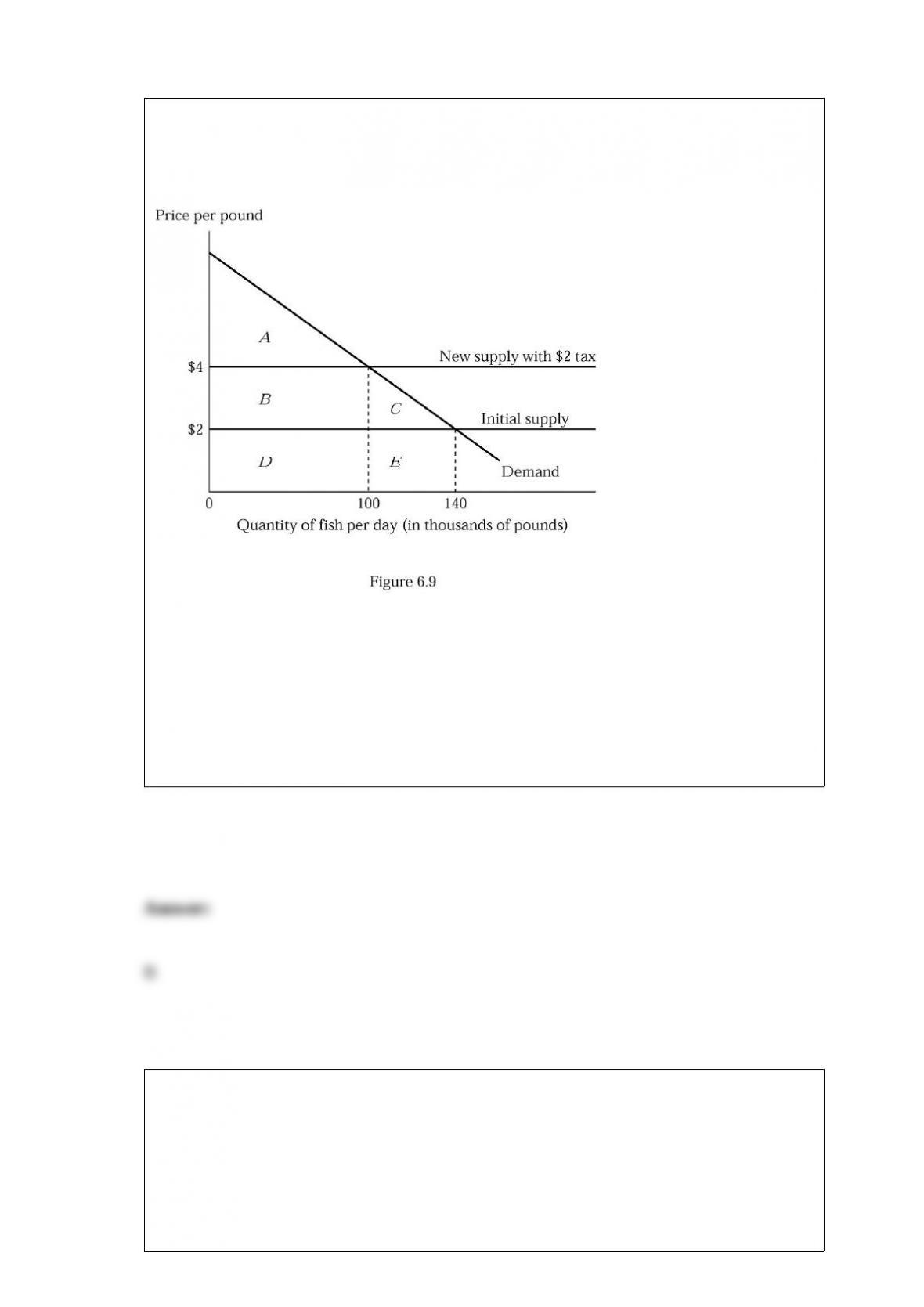
Figure 6.9 depicts a hypothetical fish market with a horizontal supply curve. Suppose
the government imposes a tax of $2 per pound of fish, and the tax is paid in legal terms
by producers. Which of the following shows the tax revenue raised by the government?
A) Triangle A
B) Rectangle B
C) Rectangle B + Triangle C
D) Rectangle B + Rectangle D
Additional Application
Monopolies are not always easily ended. The European Commission’s directorate for
the internal market is attempting to end Germany’s chimney sweeps’ monopoly. For
many decades the chimney sweeps in Germany have held a “near-perfect monopoly.”
While the profession is a private enterprise the local governments set the prices, control

the number of sweeps in each district, require that households are inspected, and will
not allow consumers to choose a different sweep even if they do not like the one they
have. Due to the required annual inspections, sweeps always have jobs and any new
entrants into the market will wait years before they are given a district to operate in.
One argument in favor of this monopolistic arrangement is based on public safety. If
new sweeps are not allowed to enter the industry then quality regulation is more easily
insured. If the current sweeps continue to earn profits, none will leave the industry
either. While the European Commission wants a more competitive market, they realize
that it will not develop soon.
“Chimney Sweeps Under Fire,” The Economist, October 21, 2006, p. 76.
Insuring a safe and consistent quality of chimney sweeps while losing the benefits of
competition in this industry is an example of ________ resulting from monopolies.
A) a quagmire
B) a tradeoff
C) an externality
D) experimentation
Ceteris paribus is the Latin expression meaning:
A) other variables are held fixed.
B) let buyer beware.
C) think at the margin.
D) for every action there is an equal and opposite reaction.

Suppose that the government requires that farms use only animals instead of machinery
when planting and harvesting corn. This will result in a(n):
A) decrease in the supply of corn.
B) decrease in the quantity supplied of corn.
C) increase in the supply of corn.
D) increase in the quantity supplied of corn.
Suppose that the price of beer goes up due to a higher alcohol tax added. Quantity
demanded for beer will ________ and consumer surplus will ________.
A) increase; increase
B) increase; decrease
C) decrease; increase
D) decrease; decrease
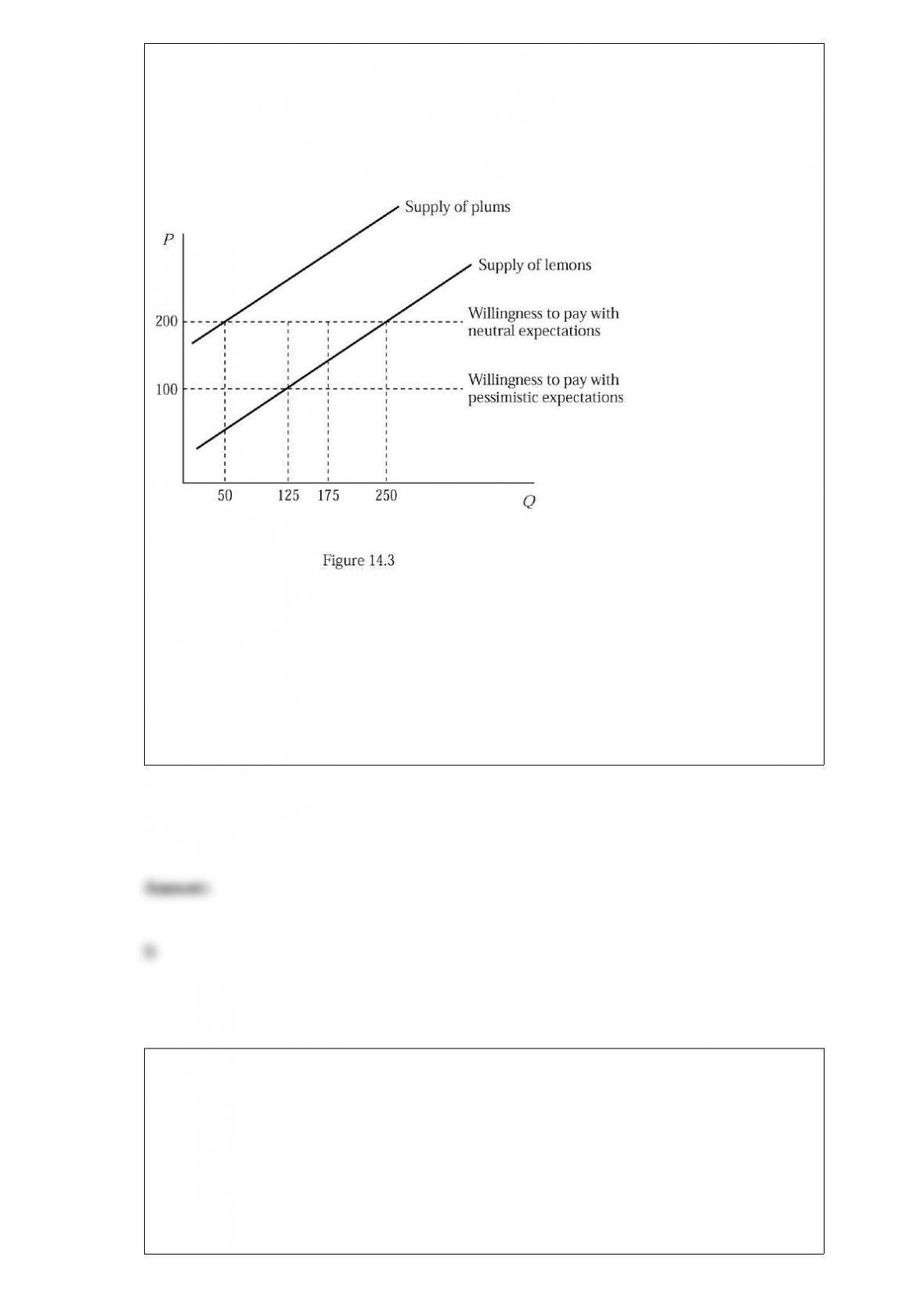
Figure 14.3 represents the market for used refrigerators. Suppose buyers are willing to
pay $300 for a plum (high-quality) used refrigerator and $100 for a lemon (low-quality)
used refrigerator. If buyers believe that 50% of used refrigerators in the market are
lemons (low quality), what fraction of used refrigerators sold will actually be plums
(high quality)?
A) 50/250
B) 50/300
C) 250/300
D) None of the refrigerators sold will be plums.
Suppose that a male police officer earns more than a female administrative assistant, but
they both have the same amount of education. The difference in wages:
A) can be attributable to the increased danger of being a police officer.
B) must be due to discrimination against women among police departments.
C) will disappear once the labor market has reached equilibrium.

D) is a violation of anti-discrimination laws.
Assume a perfectly competitive industry is in long-run equilibrium at a price of $50. If
this industry is a constant-cost industry and the demand for the product increases,
long-run equilibrium will be reestablished at a price:
A) greater than $50.
B) less than $50.
C) of $50.
D) either greater than or less than $50 depending on the magnitude of the decrease in
demand.
A seller who is offering a low-quality used good for sale:
A) is less likely to offer a money-back guarantee than is a seller who is selling a
high-quality good.
B) is more likely to offer a money-back guarantee than is a seller who is selling a
high-quality good.
C) is just as likely to offer a money-back guarantee than is a seller who is selling a
high-quality good.

D) is the only kind of seller who would ever offer a money-back guarantee because
sellers of high-quality goods do not have to offer guarantees.
Given their skills and education, those who work the night shift earn more than those
who work in the daytime. This is partly because:
A) working the night shift is relatively more desirable.
B) a relatively small number of people are willing to work the night shift.
C) working the night shift is safer.
D) few people have the required skills for the night shift.
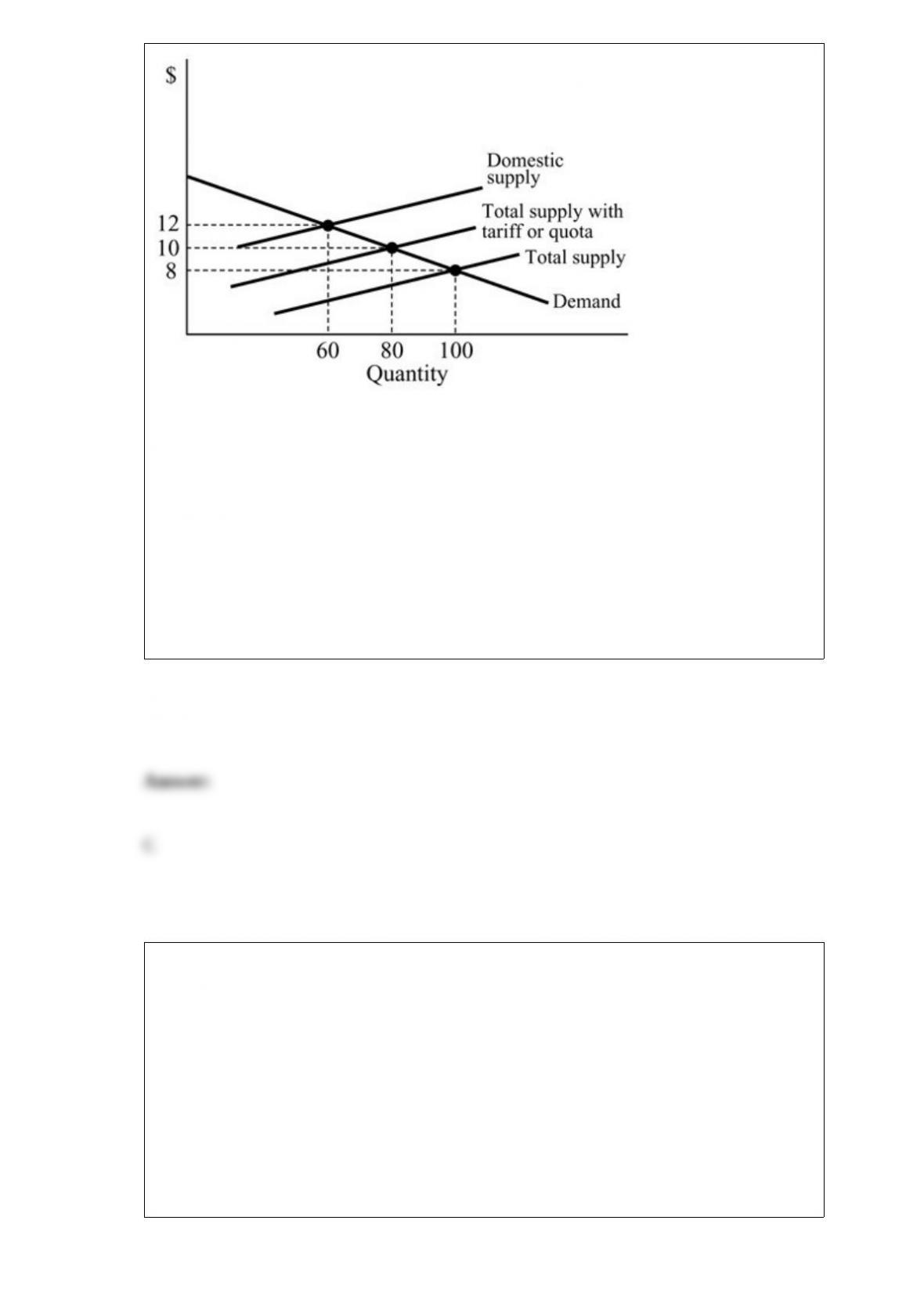
Figure 18.3
Refer to Figure 18.3. With an import ban, domestic production is:
A) 80.
B) 100.
C) 60.
D) 0.
Under current WTO rules, a country can adopt:
A) any environmental standard it chooses, even if it discriminates against foreign
producers.
B) any environmental standard it chooses as long as it does not discriminate against
foreign producers.
C) only WTO-approved environmental standards.
D) only the same environmental standards as its immediate geographic neighbors.