Maximizing total revenue turns out to be the same as maximizing profit only when
a. average fixed cost declines continually as output rises.
b. a firm has no fixed costs.
c. a firm has no variable costs.
d. a firm has both variable and fixed costs.
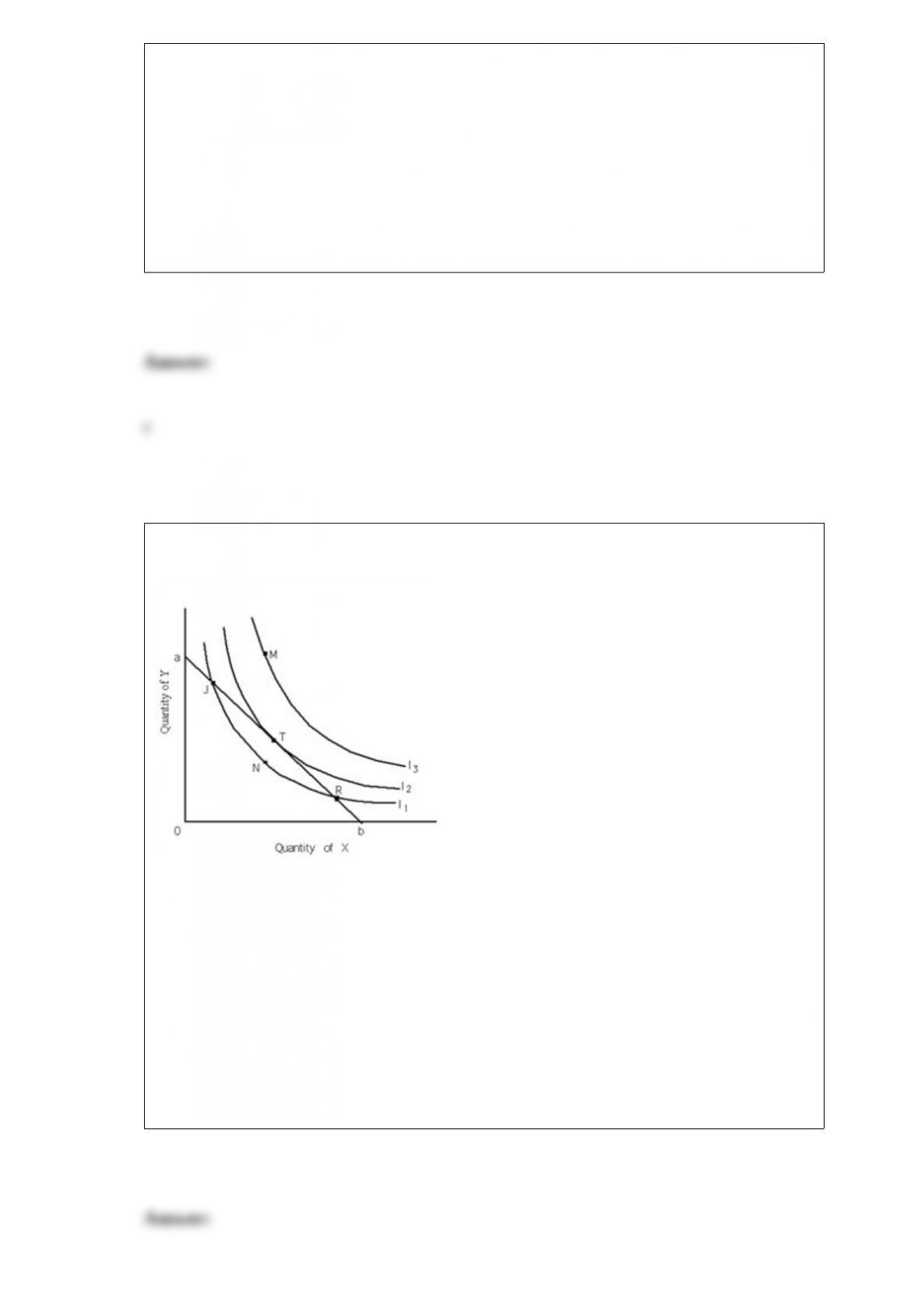
Exhibit 21-6
I1, I2 and I3 are indifference curves and line ab is the relevant budget constraint. Point N
is
a. the consumer’s equilibrium position.
b. unattainable.
c. inferior to every other labeled point on the diagram.
d. attainable, but does not exhaust the consumer’s income.
If, under a fixed exchange rate system, the dollar price of a Mexican peso is below its
equilibrium level, then the
a. dollar is overvalued.
b. peso is overvalued.
c. dollar has depreciated.
d. peso has appreciated.
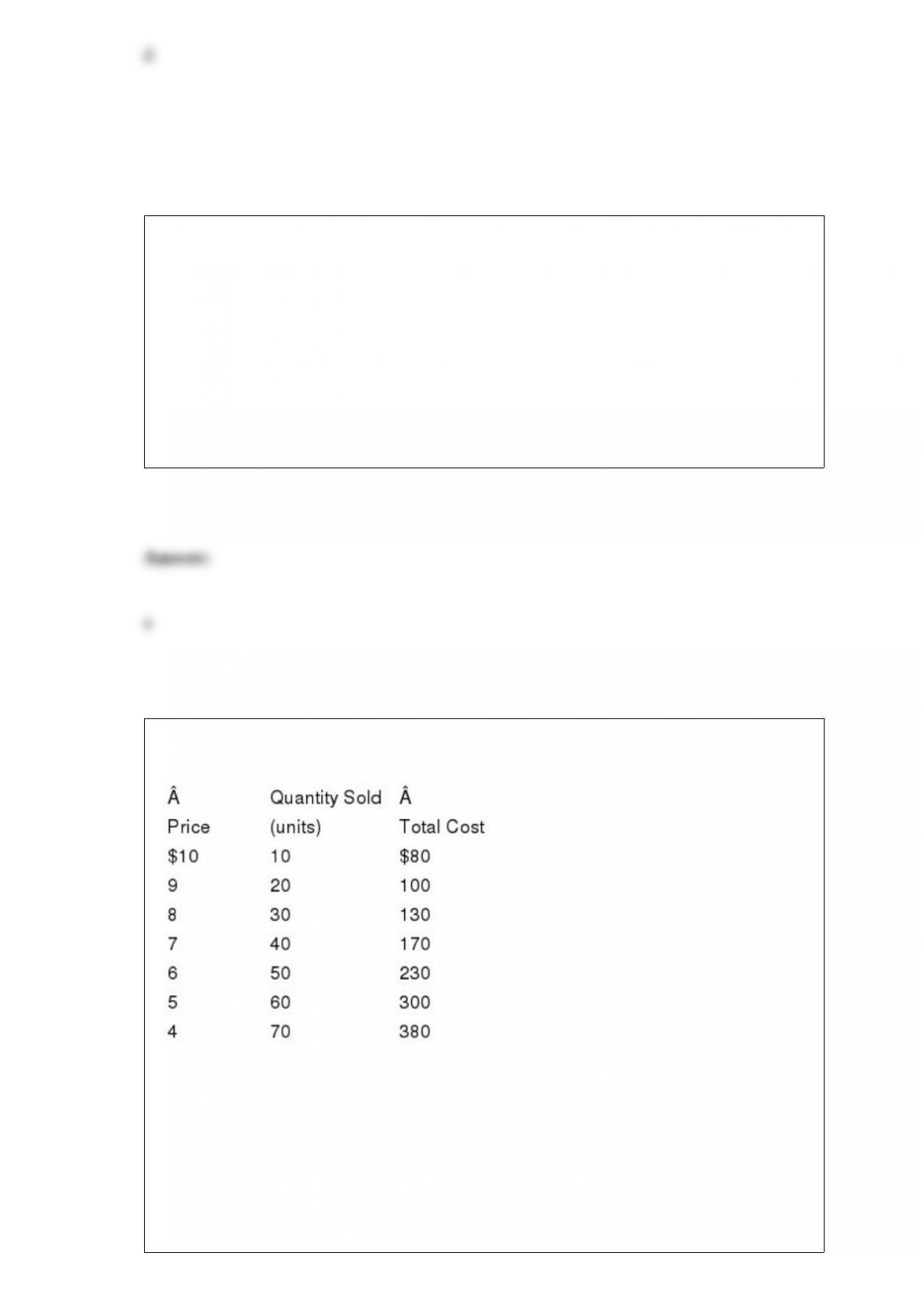
Exhibit 24-9
Assuming that the firm is maximizing profits, the marginal revenue of the last unit
produced equals
a. $4.
b. $40.
c. $5.
d. $50.
e. $6.
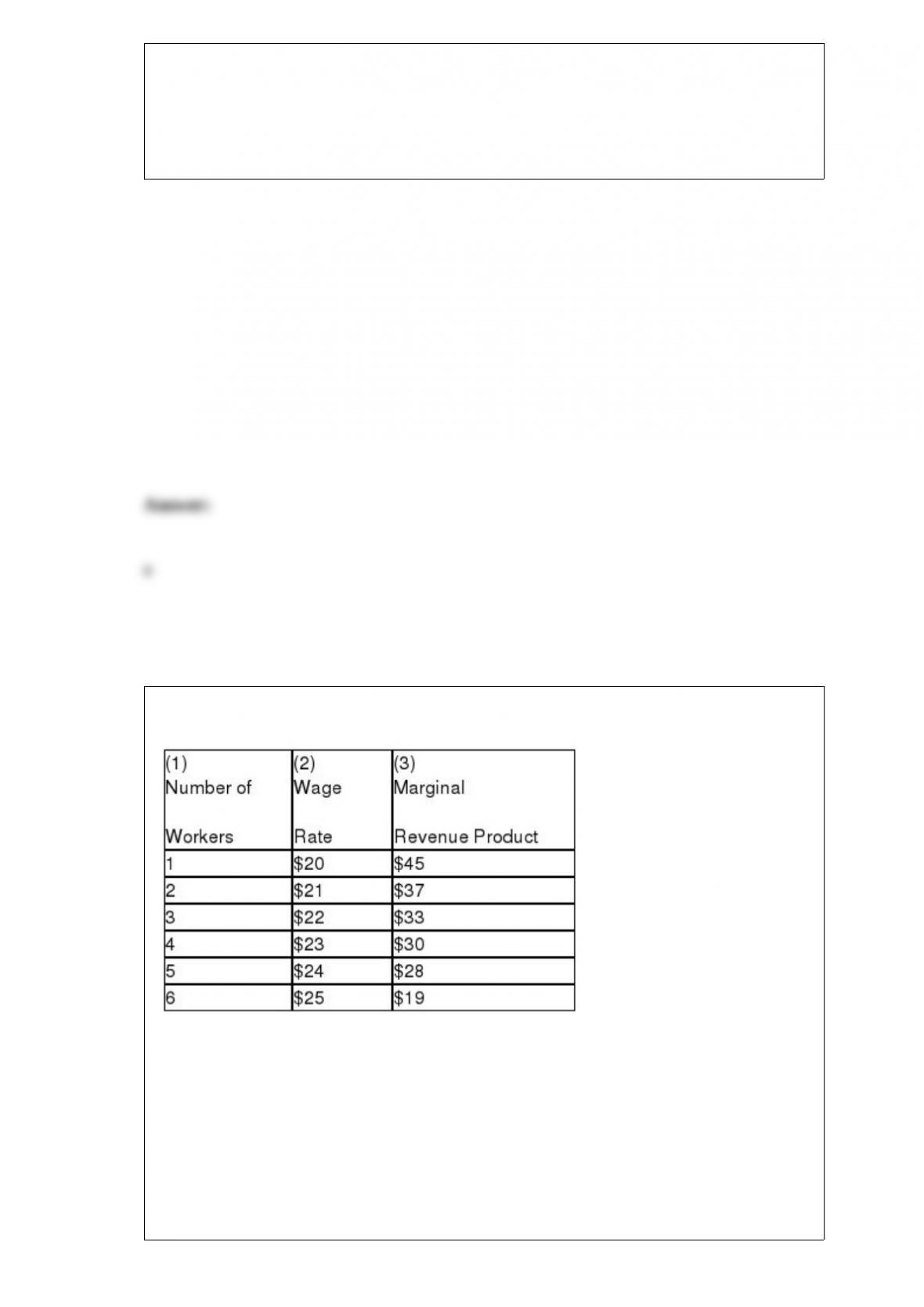
Exhibit 28-12
As the firm increases employment from 4 to 5 workers, its marginal factor cost (MFC)
is
a. $13.
b. $15.
c. $5.60.
d. $28.
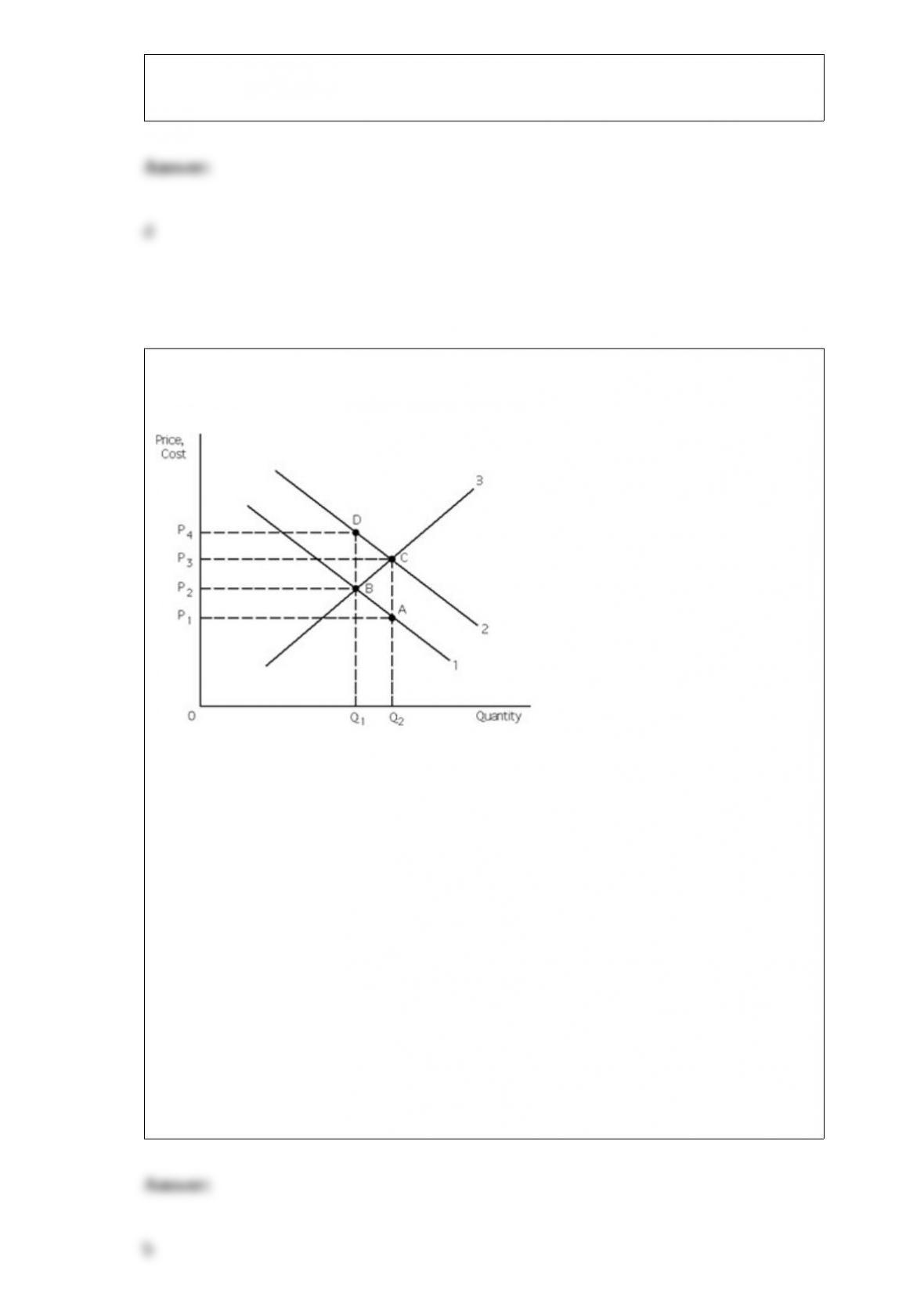
Exhibit 31-5
If a positive externality exists, then curve 1 represents the __________, curve 2
represents the __________, curve 3 represents the __________ and Q1 represents the
__________.
a. marginal private cost curve; demand curve; marginal social benefit curve; market
output
b. demand curve; marginal social benefit curve; supply curve; market output
c. marginal social benefit curve; demand curve; marginal private cost curve; socially
optimal output
d. demand curve; marginal social benefit curve; supply curve; socially optimal output
e. marginal social benefit curve; supply curve; marginal private cost curve; market
output
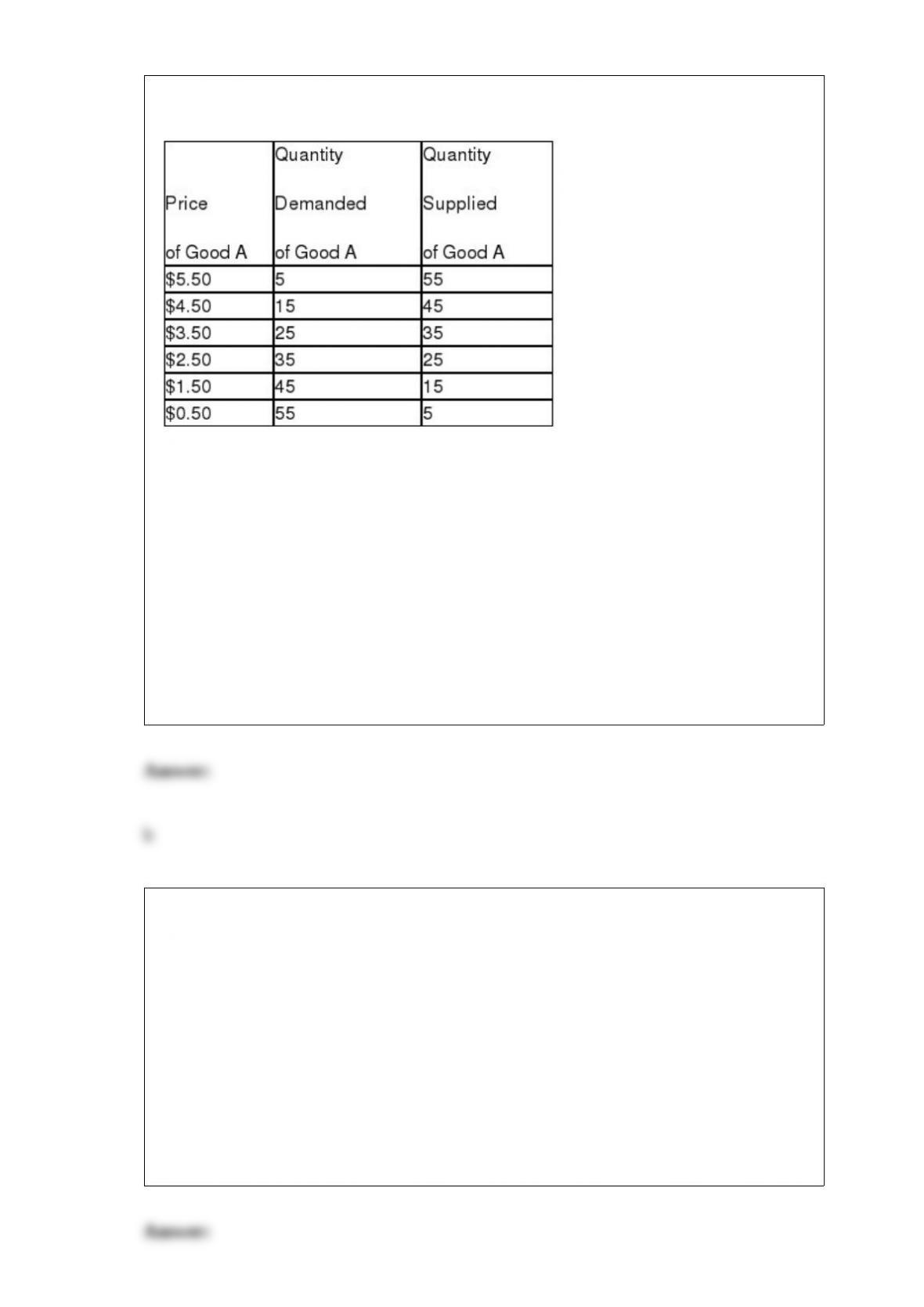
Exhibit 20-3
When price decreases from $3.50 to $2.50, the price elasticity of supply is
a. 0.
b. 1.0.
c. 5.0.
d. 0.1.
e. 0.5.
For a given firm, marginal factor cost is the same dollar amount no matter what quantity
of a factor it purchases. For this firm,
a. VMP = MRP.
b. VMP > MRP.
c. MRP > VMP.
d. MPP necessarily declines beginning with the first factor unit.
e. none of the above
When the cross elasticity of demand between two goods is __________, the goods are
__________.
a. negative; substitutes for one another
b. negative; complements for one another
c. positive; normal goods
d. positive; inferior goods
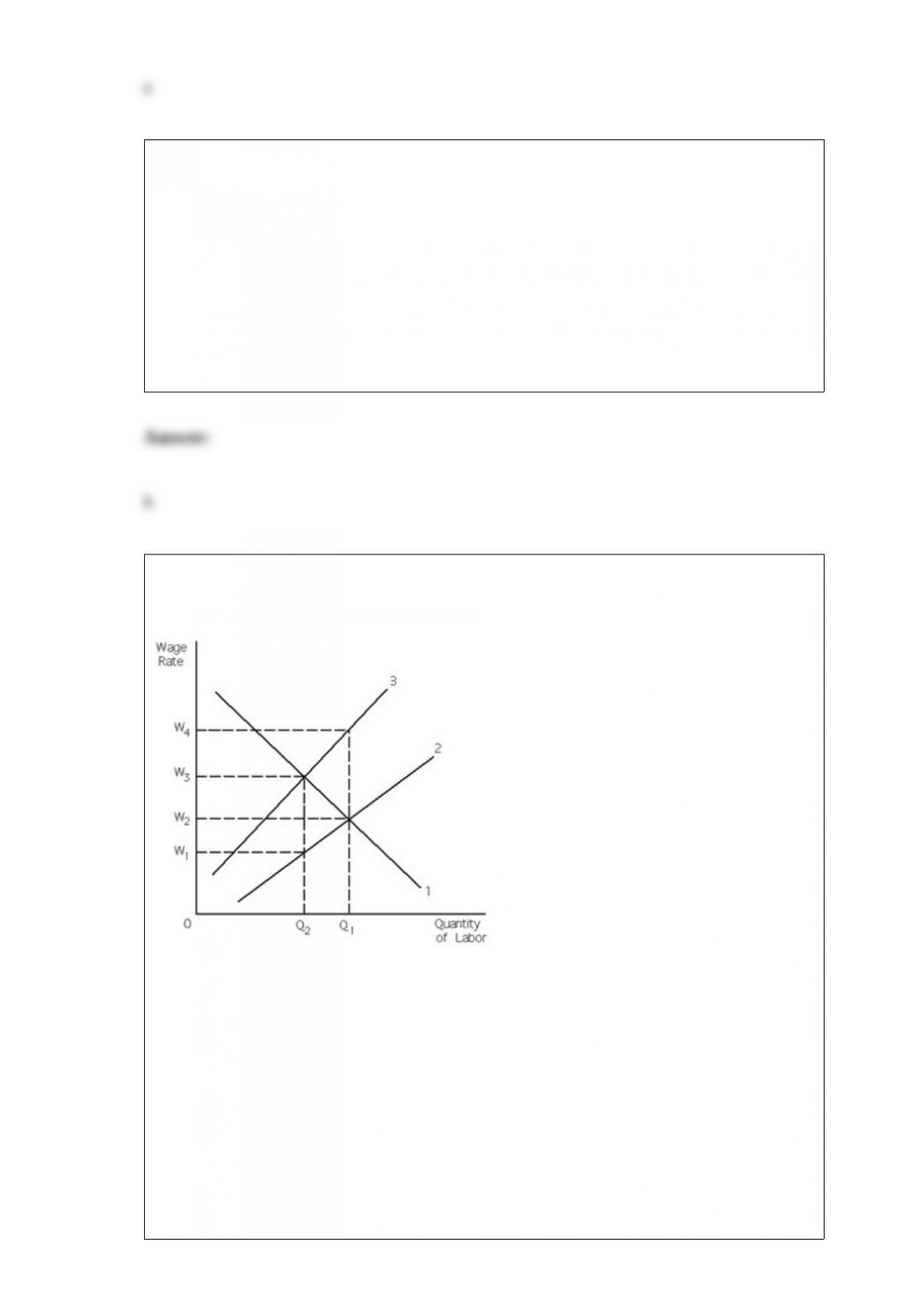
Exhibit 28-10
If the firm in the exhibit is a monopsony, it will hire __________ quantity of labor and
pay its workers the wage rate of __________.
a. Q2; W3
b. Q2; W1
c. Q1; W2
d. Q1; W4

e. none of the above
A person who greatly prefers present consumption to future consumption has a(n)
__________ rate of time preference.
a. low
b. high
c. efficient
d. roundabout
A Gini coefficient of 1 means there is
a. perfect income equality.
b. perfect income inequality.
c. a more equal distribution of income than before.
d. a less equal distribution of income than before.
e. the same distribution of income as before.
If variable X rises as a result of variable Y falling, then X and Y have an inverse
relationship.
a. True
b. False
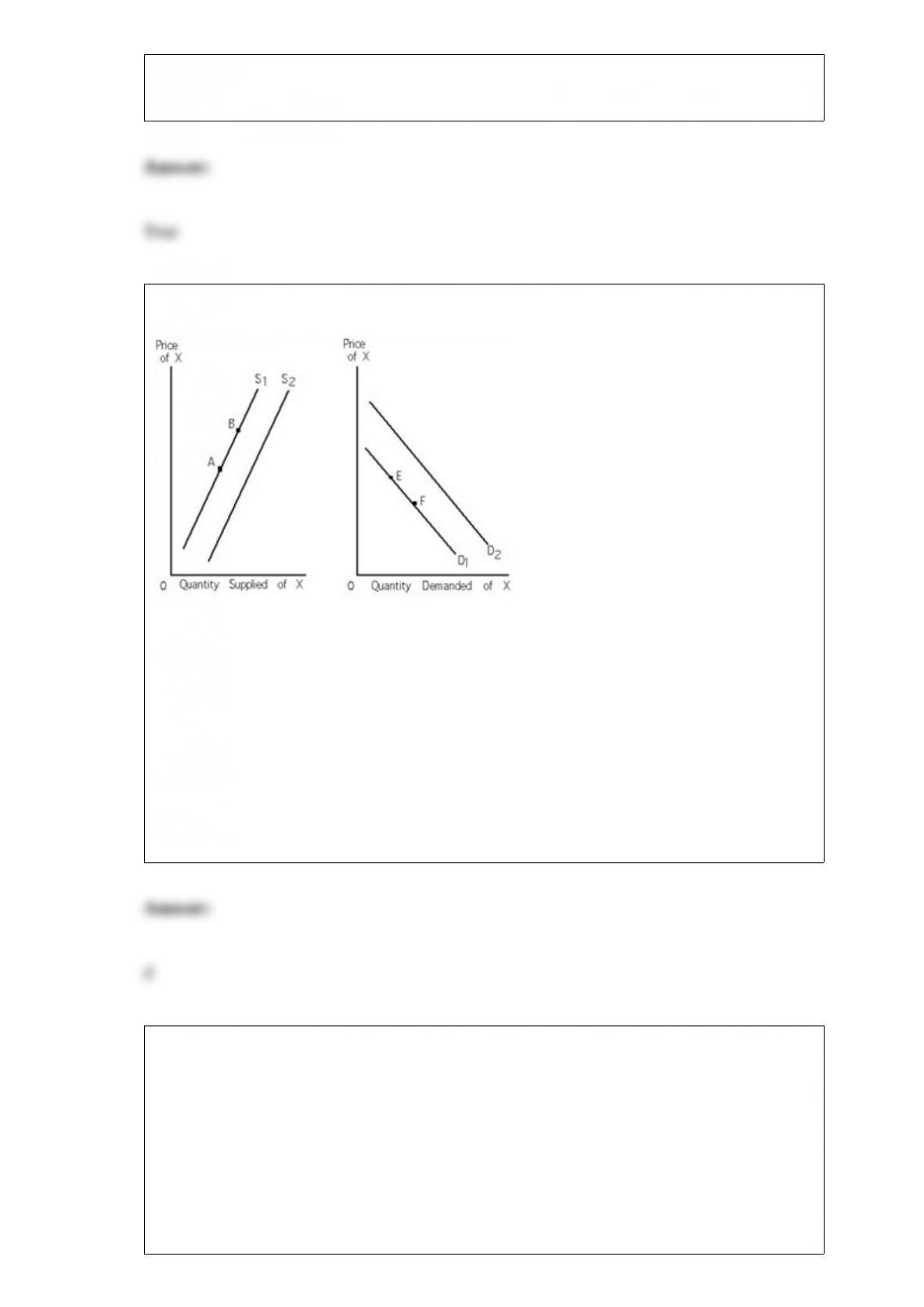
Exhibit 3-9
A severe recession has sharply decreased the incomes of consumers. Knowing that X is
a normal good, you expect a movement in the market for X from
a. A to B.
b. E to F.
c. F to E.
d. B to A.
A farmer has 500 acres on which he has previously grown corn. His yield per acre is
100 bushels of corn. If his production flexibility contract payment is $21,250, then what
is the corn payment rate?
a. $0.45
b. $0.67
c. $0.50
d. $0.10
e. There is not enough information to answer the question.
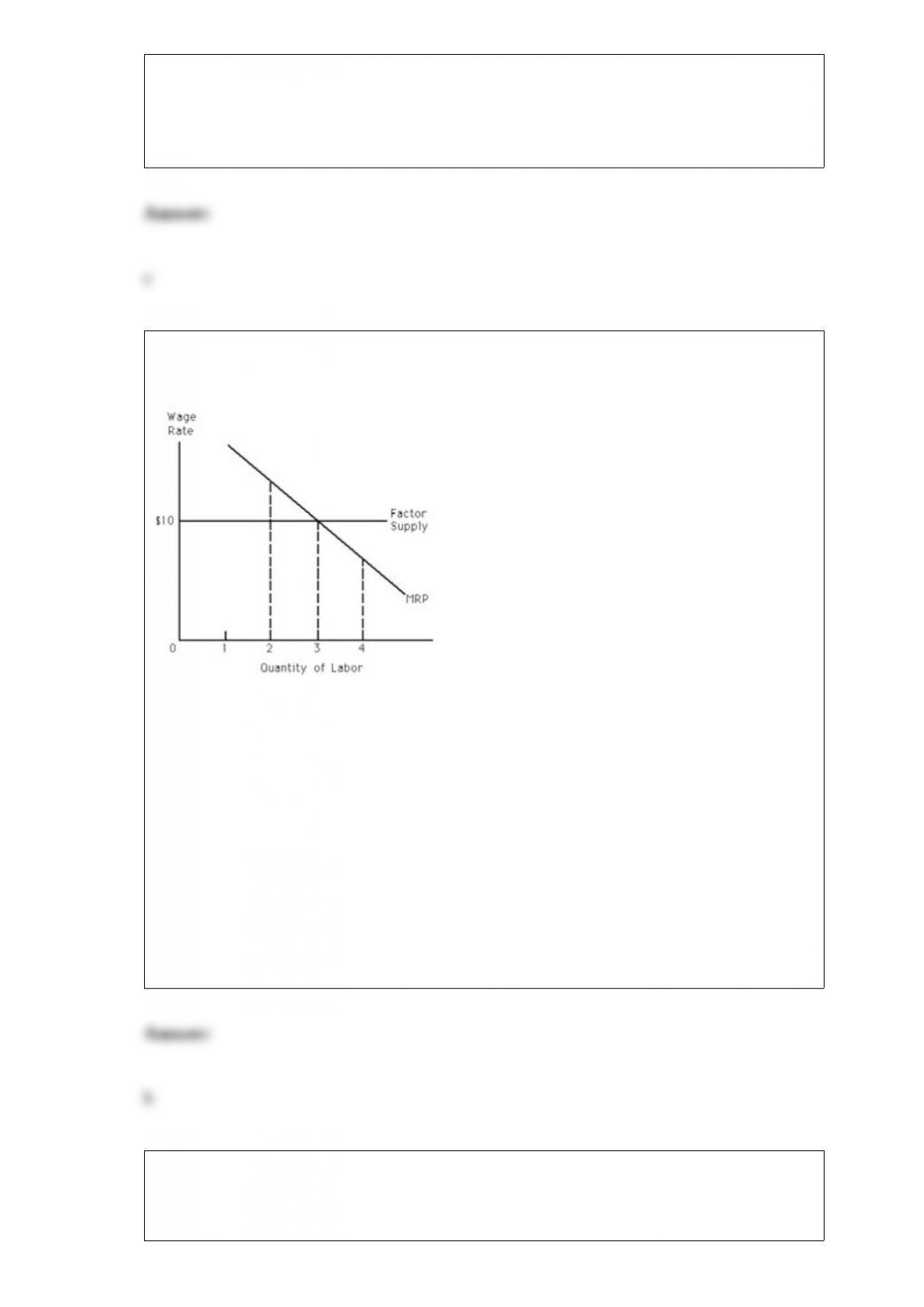
Exhibit 27-4
In evaluating the marginal cost and revenue of hiring additional units of labor, the firm
will not hire
a. the second worker.
b. the fourth worker.
c. labor up to the point where MRP equals the market price of the input.
d. labor up to the point where MRP = MFC.
e. both c and d
“Economic rent” is
a. what an individual pays for the use of land or buildings.
b. a payment in excess of the producer’s explicit costs of production.
c. a payment in excess of opportunity costs.
d. a payment for capital goods.
e. none of the above
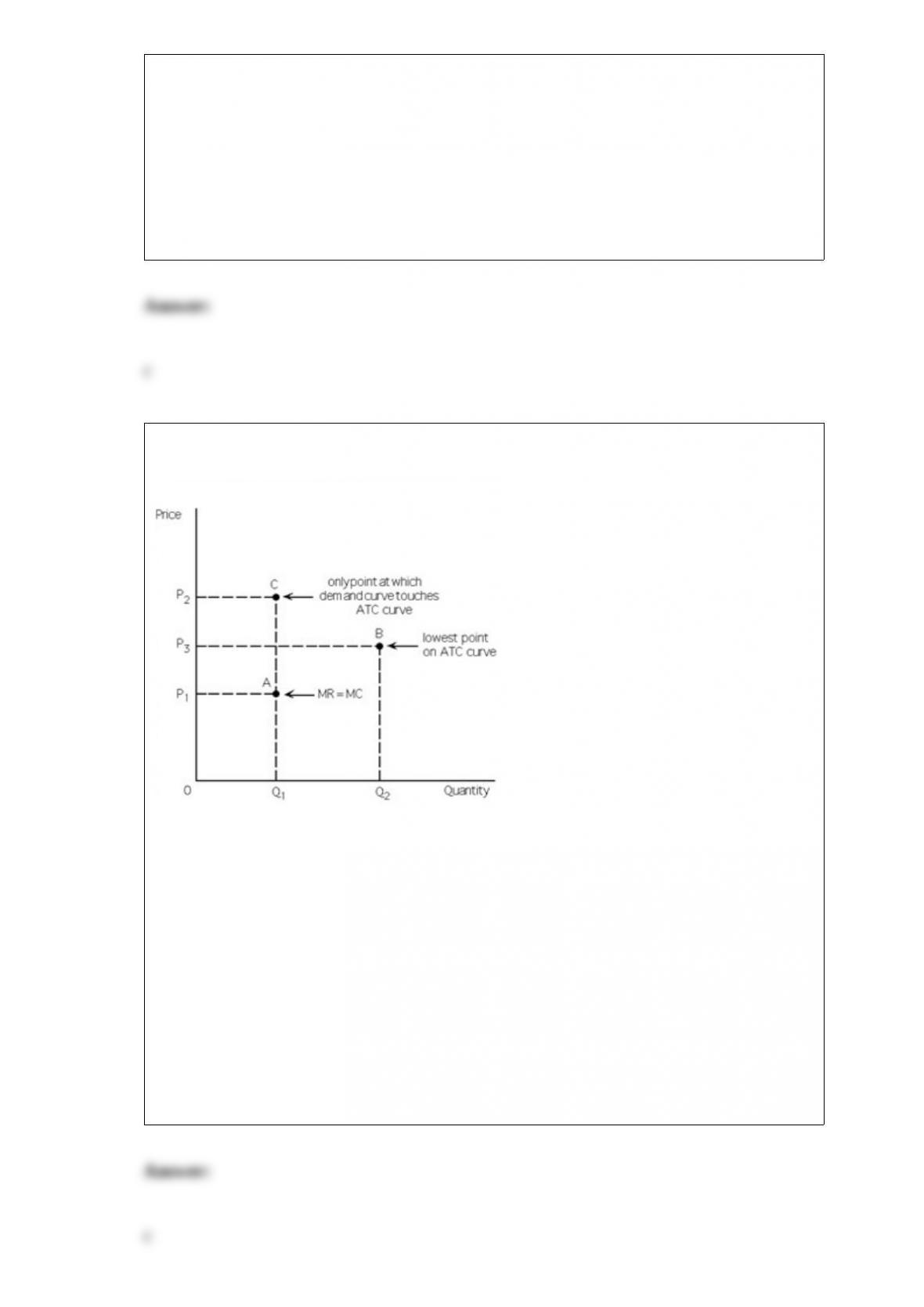
Exhibit 25-6
Excess capacity refers to the distance between
a. P2 and P1.
b. Q1 and point C.
c. Q2 and Q1.
d. P3 and P1.
e. P2 and point C.

The market demand curve for labor is
a. the horizontal summation of the firms’ demand curves for labor, derived exactly the
same way the product market demand curve is derived from the consumers’ demand
curves.
b. the vertical summation of the firms’ demand curves for labor.
c. any one firm’s demand curve labor multiplied horizontally by the number of firms in
the labor market.
d. none of the above
Major U.S. exports include automobiles and aircraft.
a. True
b. False