
Macroeconomics is the study of
A) how households make choices.
B) how firms make choices.
C) how households and firms make choices.
D) the economy as a whole.
Classifying a good as rival means
A) that the good is produced in a competitive market.
B) that there is a shortage of the good.
C) that when one person consumes a unit of the good no one else can consume it.
D) anyone who does not pay for the good cannot consume it.
If the CPI changes from 125 to 120 between 2012 and 2013, how did prices change
between 2012 and 2013?
A) Prices increased by 5%.
B) Prices decreased by 5%
C) Prices increased by 25%.
D) Prices decreased by 4%.
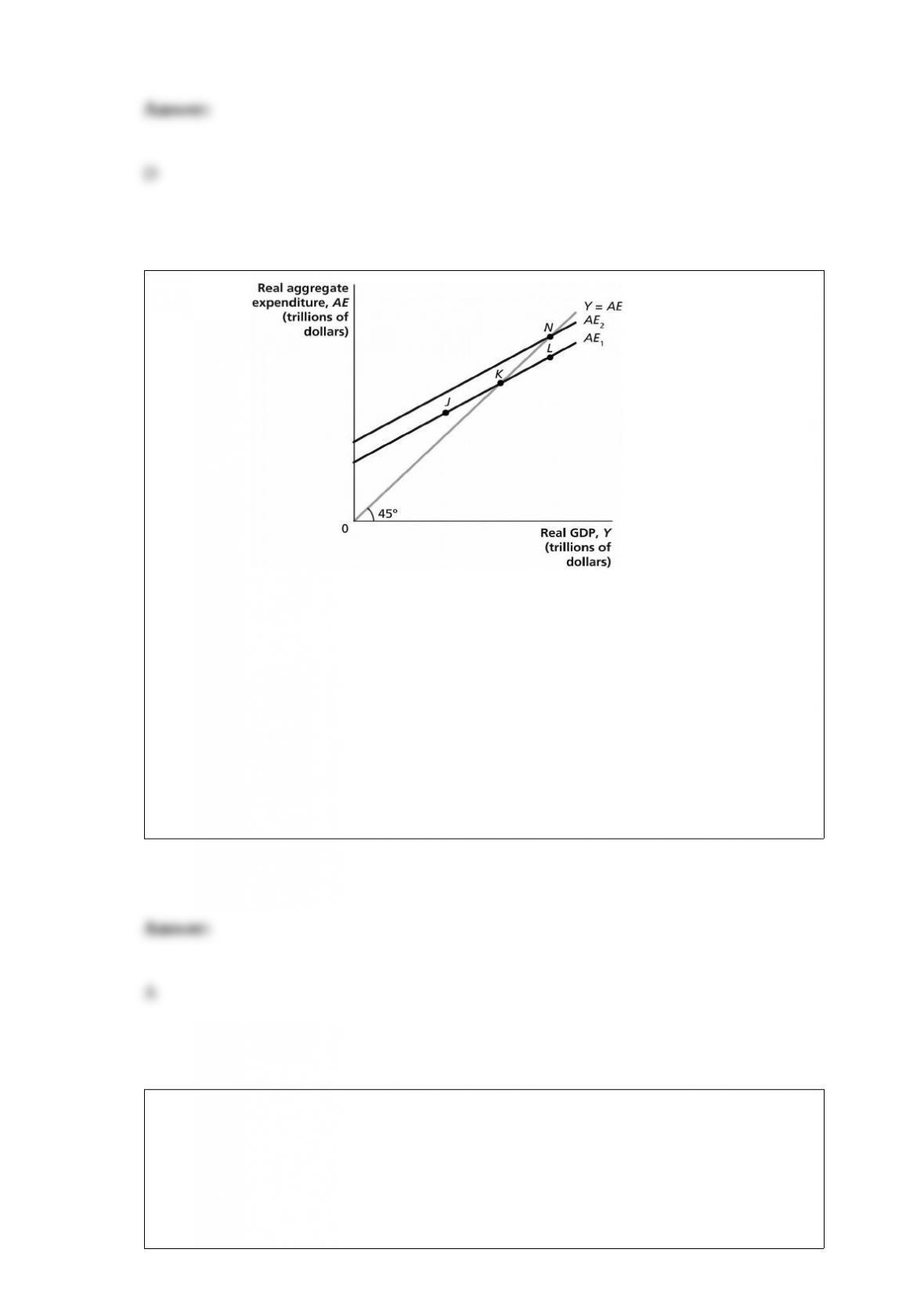
Figure 23-2
If the U.S. economy is currently at point N, which of the following could cause it to
move to point K?
A) Households expect future income to decline.
B) Household wealth rises.
C) The firm’s cash flow rises as profits rise.
D) Government expenditures increase.
If, in response to a decrease in the price of coffee, the quantity demanded of coffee
increases, economists would describe this as
A) an increase in demand.
B) an increase in quantity demanded.
C) a change in consumer income.
D) an increase in consumers’ taste for coffee.
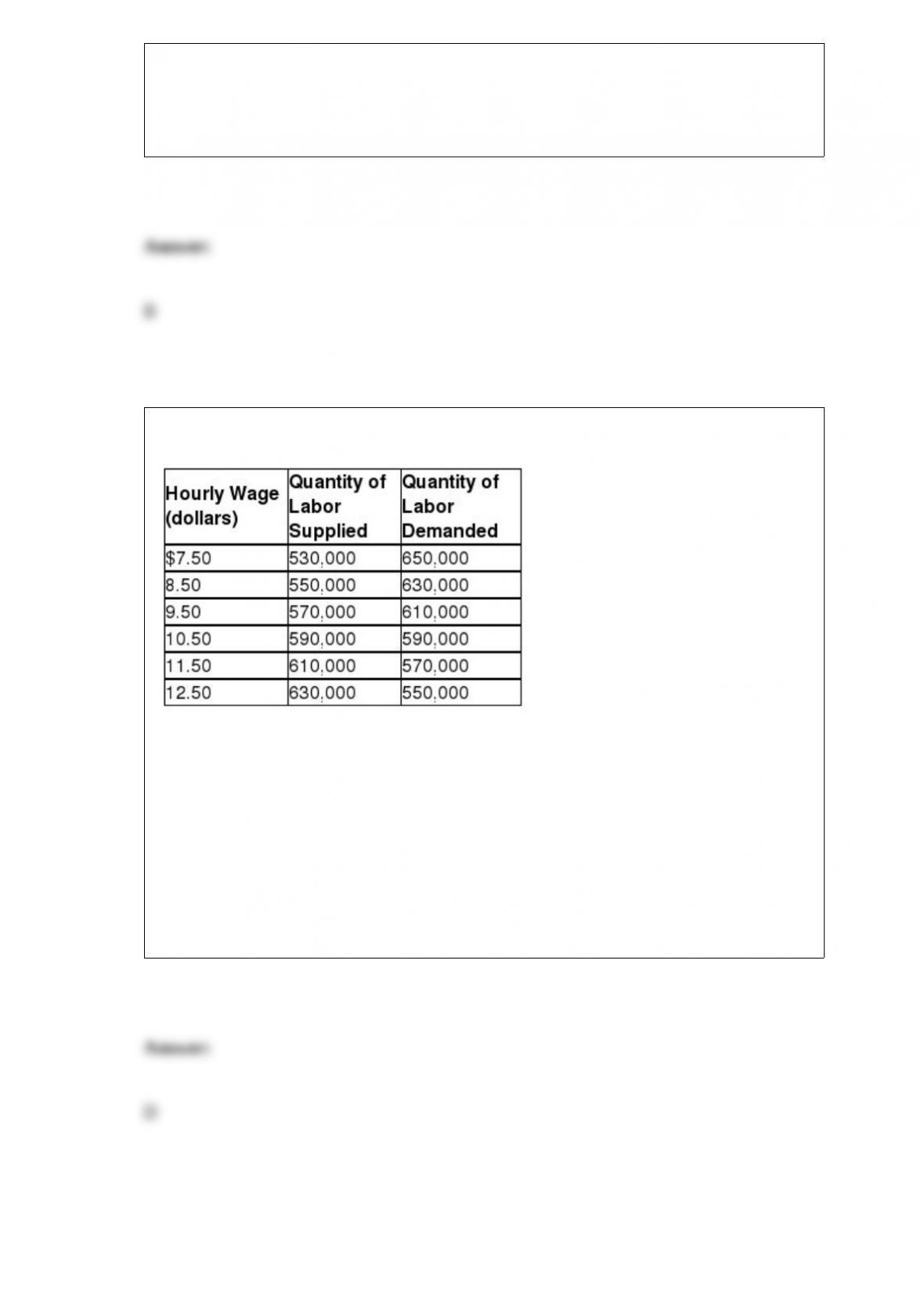
Table 4-4
Table 4-4 shows the demand and supply schedules for labor market in the city of Pixley.
If a minimum wage of $12.50 is mandated there will be a
A) shortage of 40,000 units of labor.
B) surplus of 40,000 units of labor.
C) shortage of 80,000 units of labor.
D) surplus of 80,000 units of labor.
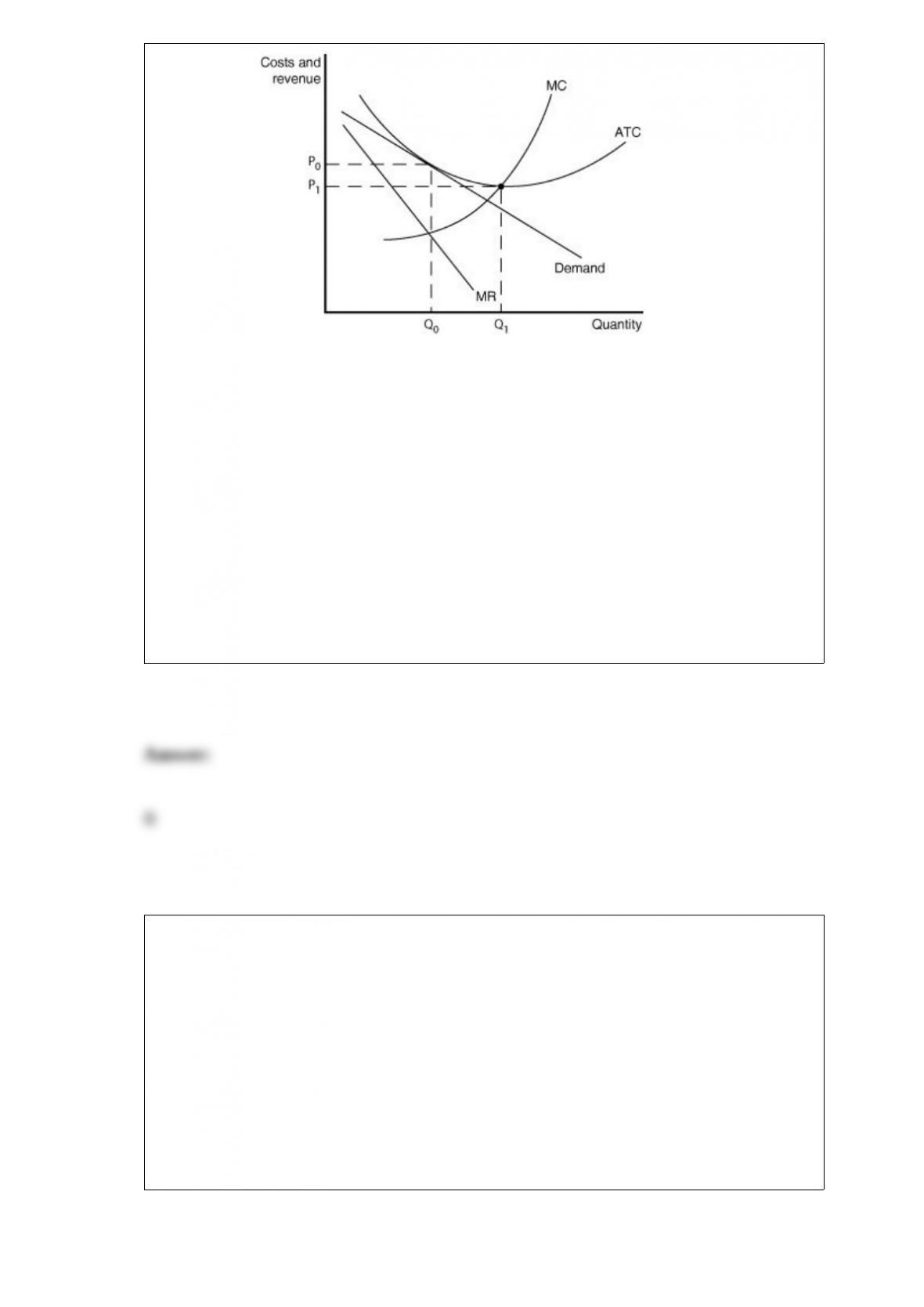
Figure 13-14 Figure 13-14
illustrates a monopolistically competitive firm.
It is possible to lower the average cost of production by expanding output beyond Q0 to
Q1. Why wouldn’t a firm expand its output to Q1?
A) The firm wants to maximize accounting profit rather than economic profit.
B) The firm would suffer an economic loss at Q1 while it would break even at Q0.
C) The firm’s marginal revenue would be negative at Q1.
D) Demand is not sufficient for consumers to buy Q1.
When someone takes out a mortgage loan to buy a house, the mortgage lender can take
possession of the house and sell it if the borrower defaults by failing to make payments
on the loan because the house is being pledged as ________ for the loan.
A) goodwill
B) a liability
C) insurance
D) collateral
Suppliers will be willing to supply a product only if
A) the price received is less than the additional cost of producing the product.
B) the price received is at least equal to the additional cost of producing the product.
C) the price is higher than the average cost of producing the product.
D) the price received is at least double the additional cost of producing the product.
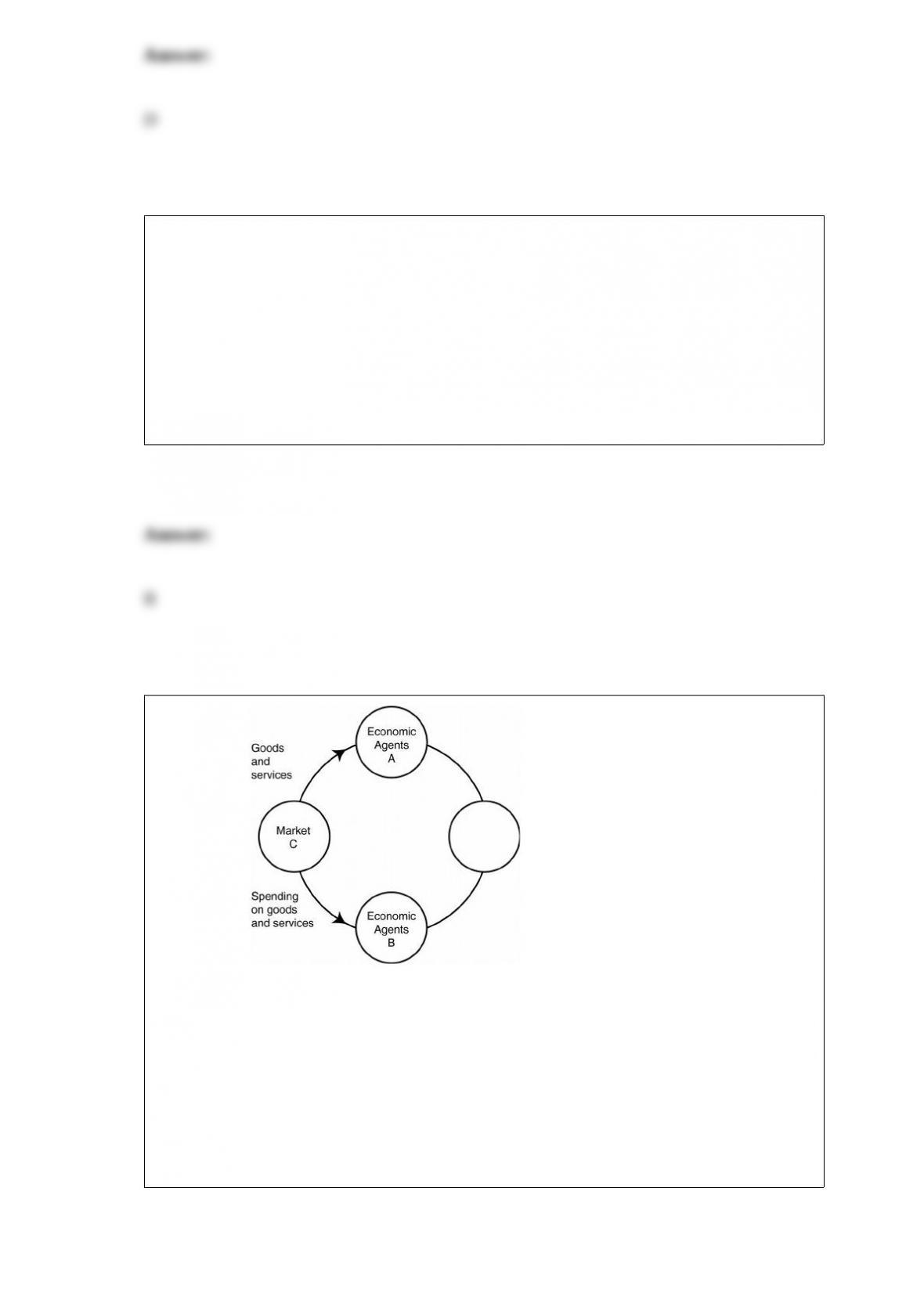
Figure 2-17 In the circular flow diagram, who are
economic agents A and who are economic agents B?
A) A = firms; B = households
B) A = households; B = firms
C) A = households; B = factor markets
D) A= firms; B = product markets

Consumption spending is $5 million, planned investment spending is $8 million,
unplanned investment spending is $2 million, government purchases are $10 million,
and net export spending is $2 million. What is aggregate expenditure?
A) $15 million
B) $23 million
C) $25 million
D) $27 million
A local electricity-generating company has a monopoly that is protected by an entry
barrier that takes the form of
A) control of a key raw material.
B) network externalities.
C) economies of scale.
D) perfectly inelastic demand curve.

The aggregate demand curve will shift to the right ________ the initial decrease in
taxes.
A) by less than
B) by more than
C) by the same amount as
D) sometimes by more than and other times by less than
Autonomous expenditure times the multiplier equals
A) autonomous saving.
B) autonomous consumption.
C) equilibrium GDP.
D) planned autonomous investment.
In economics, the accumulated skills and training that workers have is known as
A) human capital.
B) entrepreneurship.
C) physical capital.
D) innovation.
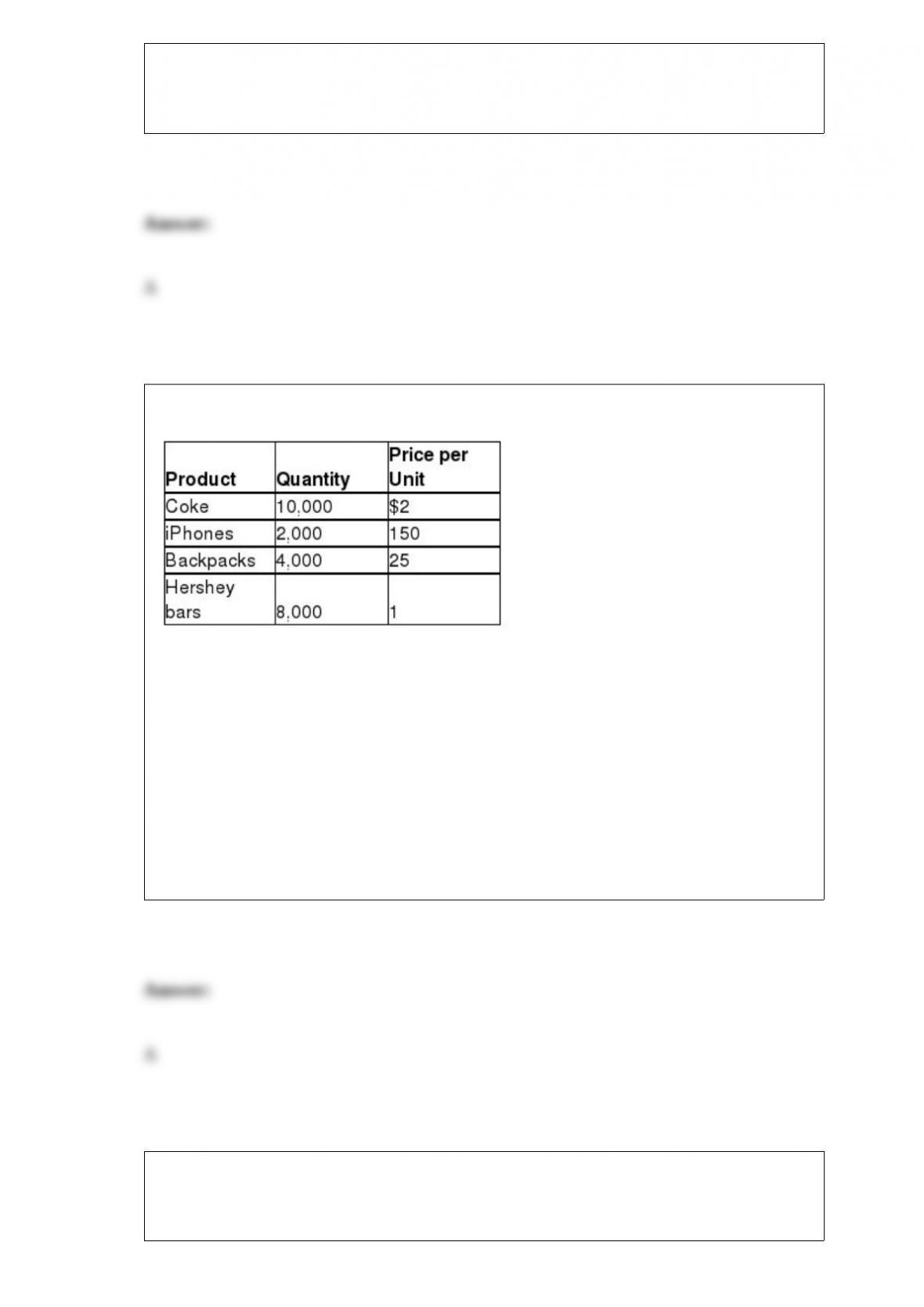
Table 19-6
Consider the table of production and price statistics for a small economy in 2013. If the
economy only produces the four goods listed below, what is GDP for 2013?
A) $428,000
B) $267,000
C) $24,000
D) $1,424
The impact of crowding out
A) is larger in a closed economy as compared to an open economy.

B) is larger in an open economy as compared to a closed economy.
C) is larger in an open economy as compared to a closed economy when fiscal policy is
contractionary.
D) is larger in a closed economy as compared to an open economy when fiscal policy is
contractionary.
If a perfectly competitive firm achieves productive efficiency then
A) it will raise its price in order to earn an economic profit.
B) the price of the good it sells is equal to the benefit consumers receive from
consuming the last unit of the good sold.
C) it is producing at minimum efficient scale.
D) it is producing the good it sells at the lowest possible cost.
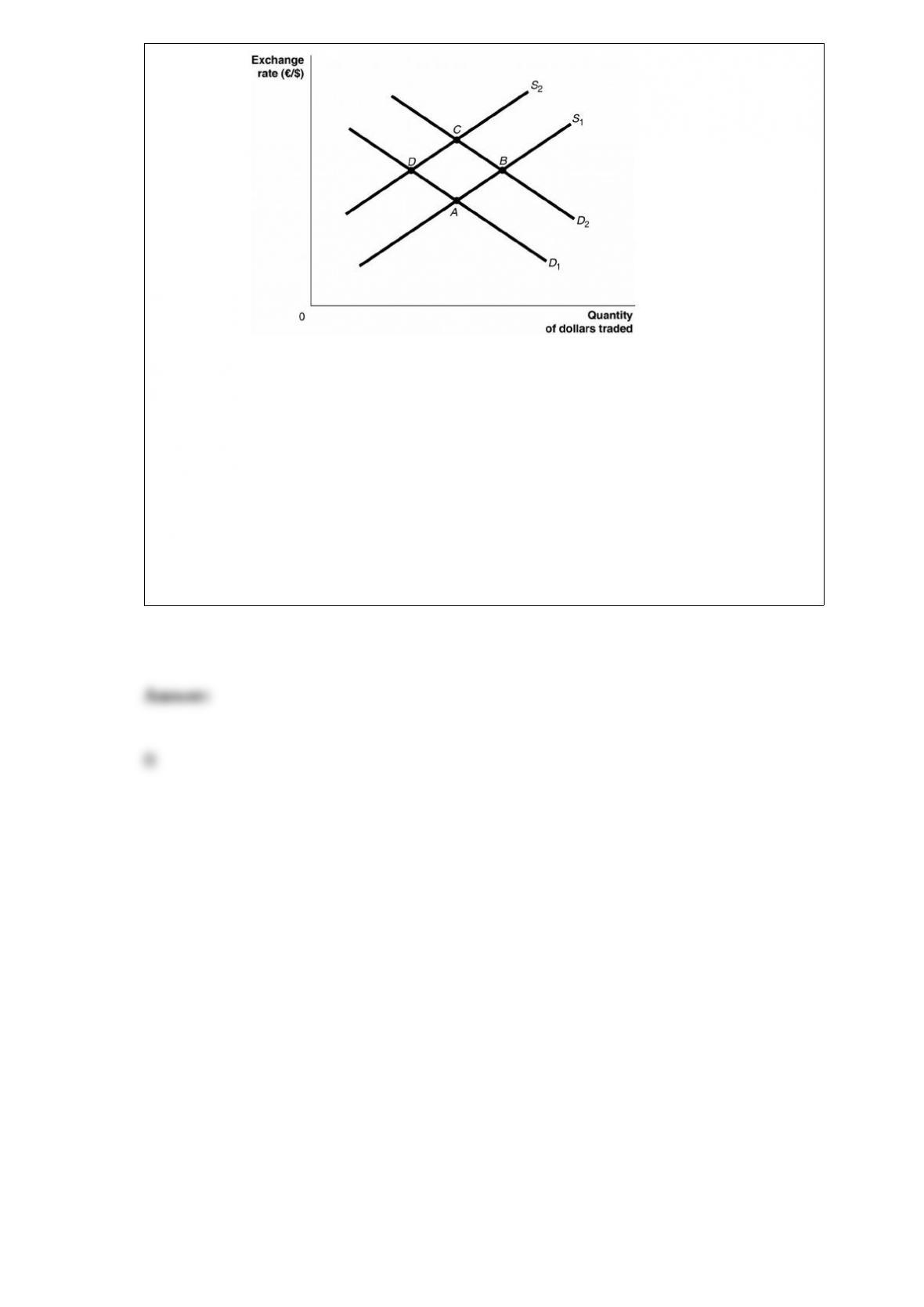
Figure 18-1
Europe experiences an economic boom. Assuming all else remains constant, this would
be represented as a movement from
A) D to A.
B) D to C.
C) C to B.
D) B to A.