
Which of the following is correct concerning recessions?
a. They come at fairly regular and predictable intervals.
b. They are associated with comparatively large declines in investment spending.
c. They are any period when real GDP growth is less than average.
d. They tend to be associated with falling unemployment rates.
A binding price ceiling
(i) causes a surplus.
(ii) causes a shortage.
(iii) is set at a price above the equilibrium price.
(iv) is set at a price below the equilibrium price.
a. (ii) only
b. (iv) only
c. (i) and (iii) only
d. (ii) and (iv) only

If a binding price floor is imposed on the video game market, then
a. the demand for video games will decrease.
b. the supply of video games will increase.
c. a surplus of video games will develop.
d. All of the above are correct.
The market demand curve
a. is found by vertically adding the individual demand curves.
b. slopes upward.
c. represents the sum of the prices that all the buyers are willing to pay for a given
quantity of the good.
d. represents the sum of the quantities demanded by all the buyers at each price of the
good.
Figure 5-4
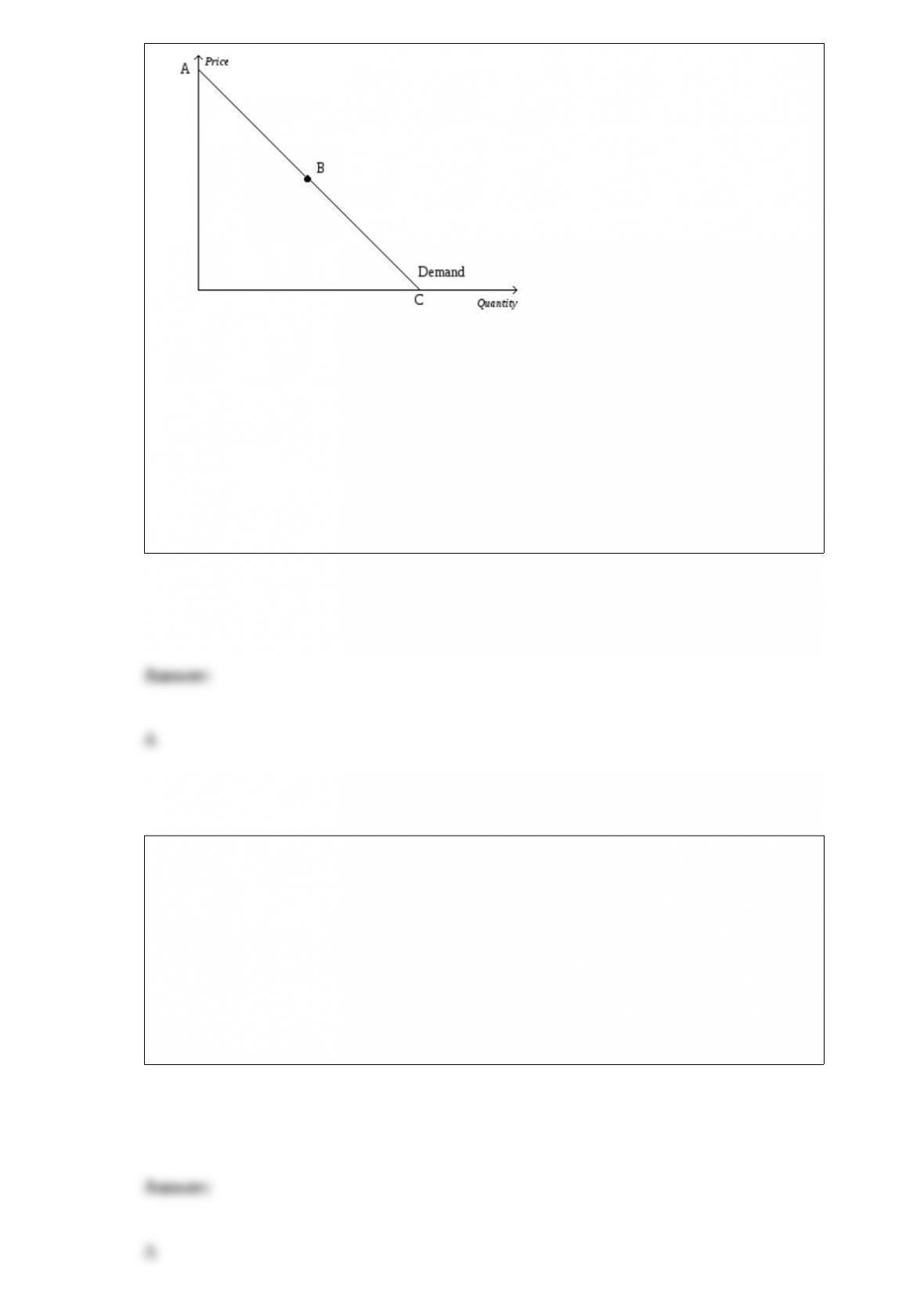
Refer to Figure 5-4. The section of the demand curve from A to B represents the
a. elastic section of the demand curve.
b. inelastic section of the demand curve.
c. unit elastic section of the demand curve.
d. perfectly elastic section of the demand curve.
If an inexpensive alternative to oil were found, the price of oil adjusted for inflation
a. would decline as the alternative would reduce the demand for oil.
b. would decline as the alternative would reduce the supply of oil.
c. would increase as the alternative would increase the demand for oil.
d. would increase as the alternative would increase the supply of oil.

Scenario 9-1
The before-trade domestic price of peaches in the United States is $40 per bushel. The
world price of peaches is $52 per bushel. The U.S. is a price-taker in the market for
peaches.
Refer to Scenario 9-1. If trade in peaches is allowed, U.S. producers of peaches
a. will be better off.
b. will be worse off.
c. will be unaffected.
d. will experience a decrease in their collective producer surplus.
Suppose that Amanda receives a pay increase. We would expect
a. to observe Amanda moving down and to the right along her given demand curve.
b. Amanda’s demand for inferior goods to decrease.
c. Amanda’s demand for each of two goods that are complements to increase.
d. Amanda’s demand for normal goods to decrease.

Opponents of active stabilization policy
a. generally don’t believe, even in theory, that fiscal policy can stabilize the economy.
b. generally agree that fiscal policy has no impact in the long run.
c. believe some effects of monetary policy may be long-lived.
d. think the Fed should simply try to fine tune the economy.
Walter puts money in a savings account at his bank earning 3.5 percent. One year later
he takes his money out and notes that while hus money was earning interest, prices rose
1.5 percent. Walter earned a nominal interest rate of
a. 3.5 percent and a real interest rate of 5 percent.
b. 3.5 percent and a real interest rate of 2 percent.
c. 5 percent and a real interest rate of 3.5 percent
d. 5 percent and a real interest rate of 2 percent
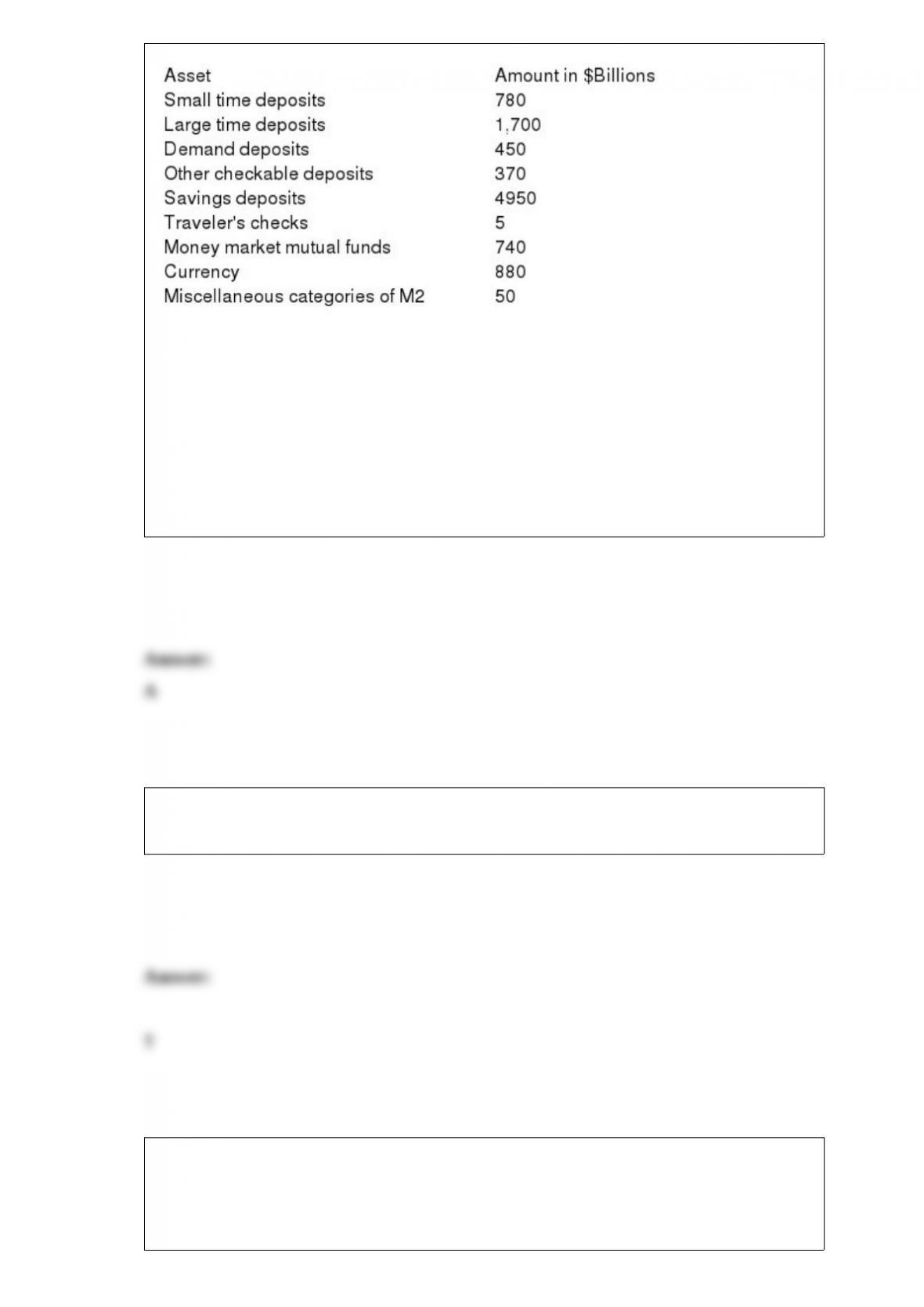
Refer to Value of Assets. What is the value of M1 in billions of dollars?
a. 1705
b. 2485
c. 6295
d. 7075
In effect, a consumption tax would put all saving automatically into a tax-advantaged
savings account similar to an Individual Retirement Account (IRA).
Suppose buyers of computers and printers regard the two goods as complements. Then
an increase in the price of computers will cause a(n)
a. decrease in the demand for printers and a decrease in the quantity supplied of

printers.
b. decrease in the supply of printers and a decrease in the quantity demanded of
printers.
c. decrease in the equilibrium price of printers and an increase in the equilibrium
quantity of printers.
d. increase in the equilibrium price of printers and a decrease in the equilibrium
quantity of printers.
If there is a surplus in the U.S. loanable funds market, then
a. NCO > I.
b. NCO < I.
c. NCO + I > S.
d. NCO + I < S.
William and Jamal live in the country of Dumexia. When Dumexia legalized
international trade in bananas, the price of bananas in Dumexia increased. As a result,
William became better off and Jamal became worse off. It follows that William is a
seller, and Jamal is a buyer, of bananas.
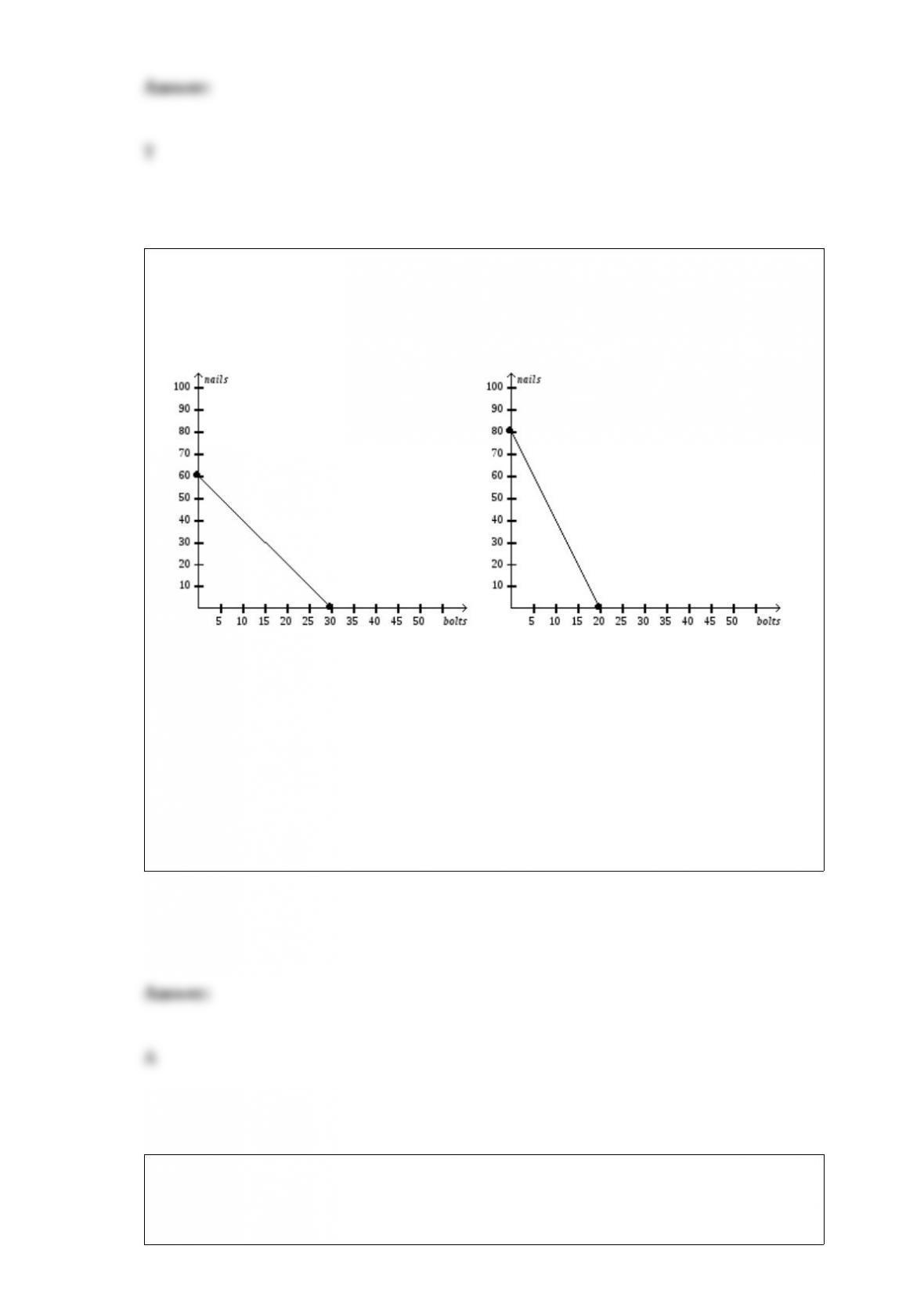
Figure 3-9
Uzbekistan’s Production Possibilities Frontier Azerbaijan’s Production
Possibilities Frontier
Refer to Figure 3-9. Azerbaijan’s opportunity cost of one nail is
a. 1/4 bolt and Uzbekistan’s opportunity cost of one nail is 1/2 bolt.
b. 1/4 bolt and Uzbekistan’s opportunity cost of one nail is 2 bolts.
c. 4 bolts and Uzbekistan’s opportunity cost of one nail is 1/2 bolt.
d. 4 bolts and Uzbekistan’s opportunity cost of one nail is 2 bolts.
If a country changes its corporate tax laws so that foreign businesses build and manage
more business in that country, then the net capital outflow of that country
a. and the net capital outflow of other countries rise.
b. rises and the net capital outflow of other countries fall.
c. falls and the net capital outflow of other countries rise.
d. None of the above are correct.
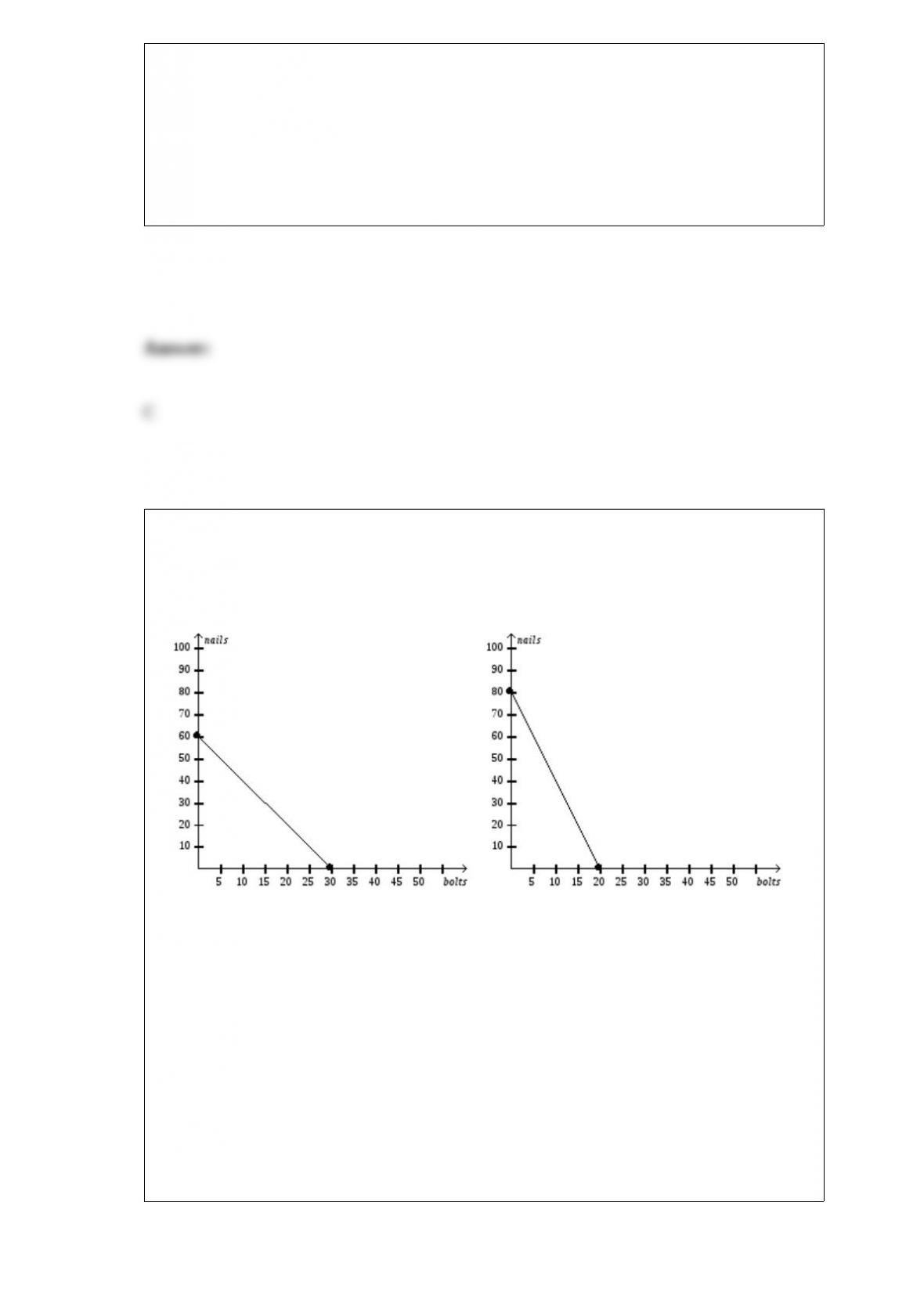
Figure 3-9
Uzbekistan’s Production Possibilities Frontier Azerbaijan’s Production
Possibilities Frontier
Refer to Figure 3-9. Suppose Azerbaijan is willing to trade 3 nails to Uzbekistan for
every bolt that Uzbekistan makes and sends to Azerbaijan. Which of the following
combinations of bolts and nails could Uzbekistan then consume, assuming Uzbekistan
specializes in making bolts and Azerbaijan specializes in making nails?
a. 7 bolts and 70 nails
b. 12 bolts and 56 nails
c. 17 bolts and 40 nails
d. 25 bolts and 15 nails

Which of the following best illustrates the medium of exchange function of money?
a. You keep some money hidden in your shoe.
b. You keep track of the value of your assets in terms of currency.
c. You pay for your oil change using currency.
d. None of the above is correct.
Chile allows trade with the rest of the world. We know that Chile has a comparative
advantage in producing lemons if we know that
a. Chile imports lemons.
b. the world price of lemons is higher than the price of lemons that would prevail in
Chile if trade with other countries were not allowed.
c. consumer surplus in Chile would exceed producer surplus in Chile if trade with other
countries were not allowed.
d. All of the above are correct.

The value of the price elasticity of demand for a good will be relatively large when
a. there are no good substitutes available for the good.
b. the time period in question is relatively short.
c. the good is a luxury rather than a necessity.
d. All of the above are correct.
If the nominal interest rate is 8 percent and the real interest rate is 5.5 percent, then the
inflation rate is
a. -2.5 percent.
b. 0.45 percent.
c. 2.5 percent.
d. 13.5 percent.
When aggregate demand shifts right along the short-run aggregate supply curve,
unemployment
a. falls, so there are upward pressures on wages and prices.

b. falls, so there are downward pressures on wages and prices.
c. rises, so there are upward pressures on wages and prices.
d. rises, so there are downward pressures on wages and prices.
Which of the following both increase the money supply?
a. an increase in the discount rate and an increase in the interest rate on reserves
b. an increase in the discount rate and a decrease in the interest rate on reserves
c. a decrease in the discount rate and an increase in the interest rate on reserves
d. a decrease in the discount rate and a decrease in the interest rate on reserves
Figure 9-17
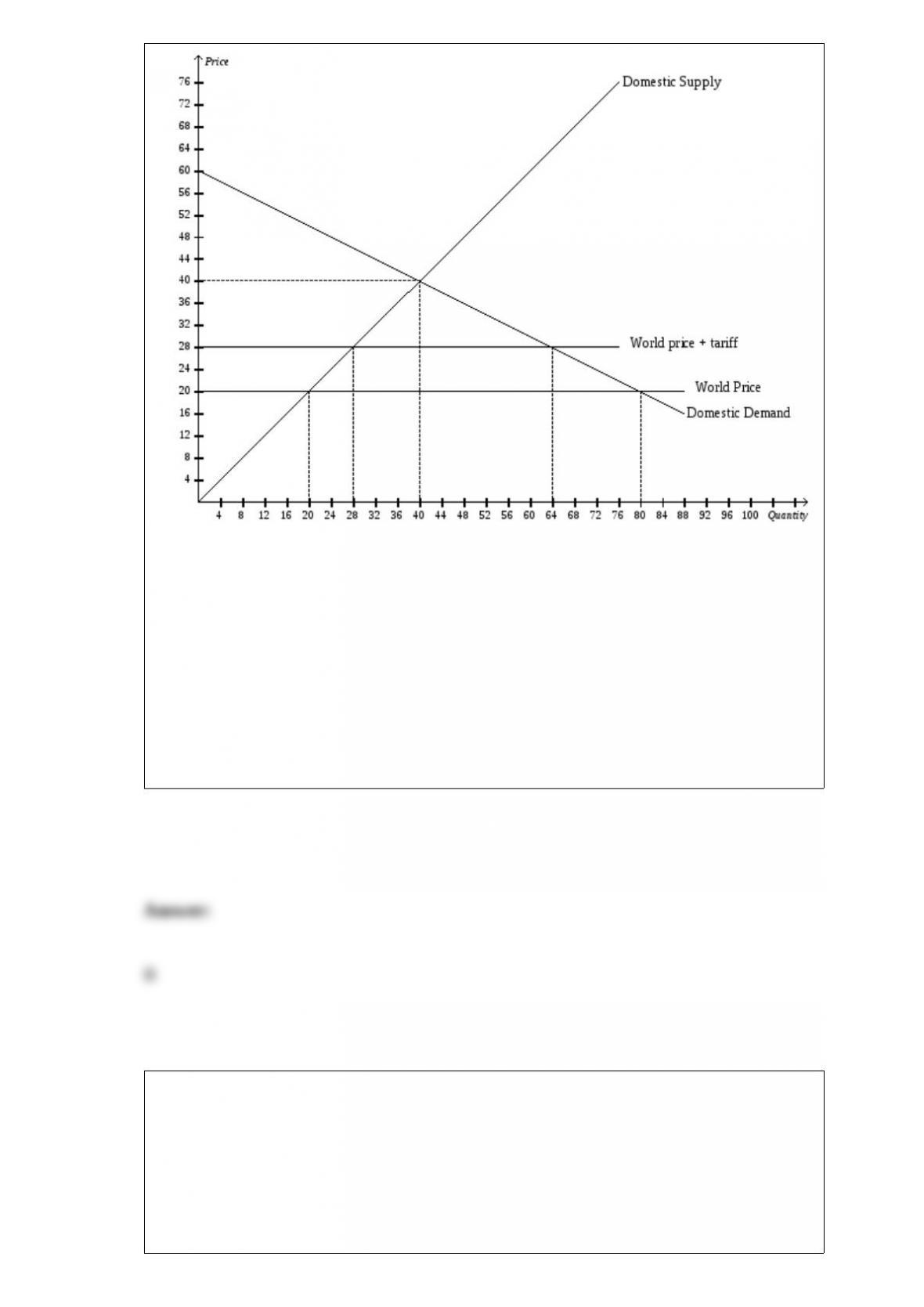
Refer to Figure 9-17. When the country moves from no trade to free trade, consumer
surplus
a. increases by $1,200 and producer surplus increases by $600.
b. increases by $1,200 and producer surplus decreases by $600.
c. decreases by $1,350 and producer surplus increases by $450.
d. decreases by $1,350 and producer surplus decreases by $450.
The United States has imposed taxes on some imported goods that have been sold here
by foreign countries at below their cost of production. These taxes
a. benefit the United States as a whole, because they generate revenue for the
government. In addition, because the goods are priced below cost, the taxes do not harm
domestic consumers.

b. benefit the United States as a whole, because they generate revenue for the
government and increase producer surplus.
c. harm the United States as a whole, because they reduce consumer surplus by an
amount that exceeds the gain in producer surplus and government revenue.
d. harm the United States as a whole, because they reduce producer surplus by an
amount that exceeds the gain in consumer surplus and government revenue.
Which of the following is an example of U.S. foreign direct investment?
a. A Swedish car manufacturer opens a plant in Tennessee.
b. A Dutch citizen buys shares of stock in a U.S. company.
c. A U.S. based restaurant chain opens new restaurants in India.
d. A U.S. citizen buys stock in companies located in Japan.
Scenario 9-2
For a small country called Boxland, the equation of the domestic demand curve for
cardboard is
,
where represents the domestic quantity of cardboard demanded, in tons, and

represents the price of a ton of cardboard.
For Boxland, the equation of the domestic supply curve for cardboard is
,
where represents the domestic quantity of cardboard supplied, in tons, and again
represents the price of a ton of cardboard.
Refer to Scenario 9-2. Suppose the world price of cardboard is $45. Then, relative to
the no-trade situation, international trade in cardboard produces which of the following
results for Boxland?
a. It increases consumer surplus, decreases producer surplus, and increases total surplus.
b. It increases consumer surplus, increases producer surplus, and increases total surplus.
c. It increases consumer surplus, decreases producer surplus, and decreases total
surplus.
d. It decreases consumer surplus, increases producer surplus, and increases total
surplus.
Which of the following is the most accurate statement?
a. The one argument for restricting trade that almost all economists accept as valid is
the infant-industry argument.
b. Almost all economists insist that it is never appropriate to protect “key” industries,
even when there are legitimate concerns about national security.
c. The idea that one nation might want to threaten another nation with a trade restriction
is associated with the protection-as-a-bargaining-chip argument for restricting trade.
d. The protection-as-a-bargaining-chip argument for restricting trade is also known as
the infant-industry argument.
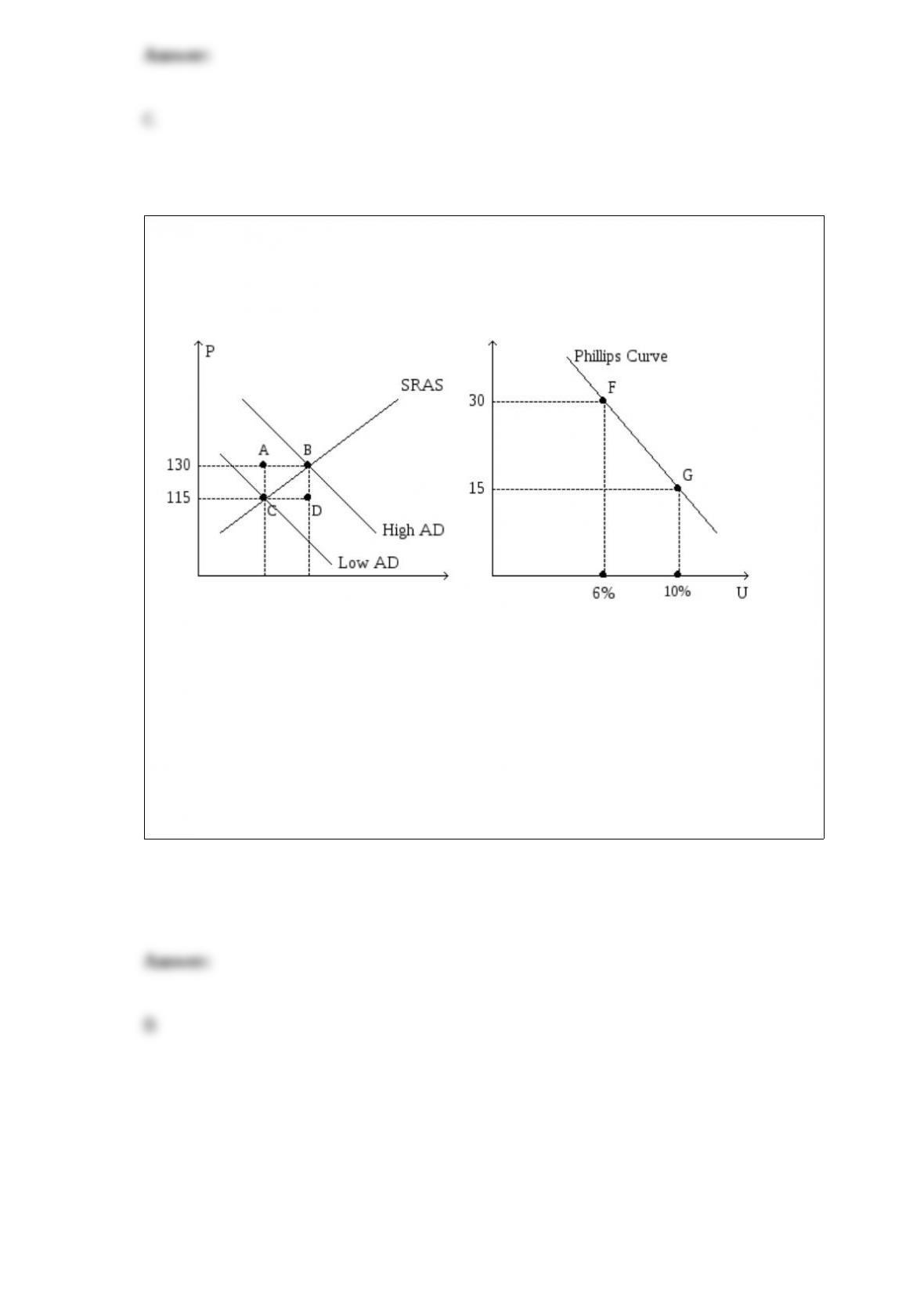
Figure 22-1. The left-hand graph shows a short-run aggregate-supply (SRAS) curve
and two aggregate-demand (AD) curves. On the right-hand diagram, U represents the
unemployment rate.
Refer to Figure 22-1. What is measured along the vertical axis of the right-hand graph?
a. the interest rate
b. the inflation rate
c. the wage rate
d. the growth rate of the nominal money supply