1) Figure 10-9
c.buyers are to a change in production costs.
d.equilibrium price is to a change in supply.
8) The theory of consumer choice most closely examines which of the following Ten
Principles of Economics?
a.People face trade-offs.
b.Governments can sometimes improve market outcomes.
c.Trade can make everyone better off.
d.Markets are usually a good way to organize economic activity.
9) A rational consumer maximizes her
a.preferences.
b.marginal rate of substitution.
c.utility.
d.budget constraint.
10) Economists typically measure efficiency using
a.the price paid by buyers.
b.the quantity supplied by sellers.
c.total surplus.
d.profits to firms.
11) Some environmentalists argue that we should protect the environment as much as
possible, regardless of cost.
Which of the following is not a likely outcome of pursuing such a course of action?
a.lower levels of nutrition, health care, and housing
b.a lower standard of living
c.slowing or reversing technological advancement
d.the elimination of all pollution
12) Government policy can potentially raise economic well-being
a.in all markets for goods and services.
b.in economic models, but not in reality.
c.when a good does not have a price attached to it.
d.never.
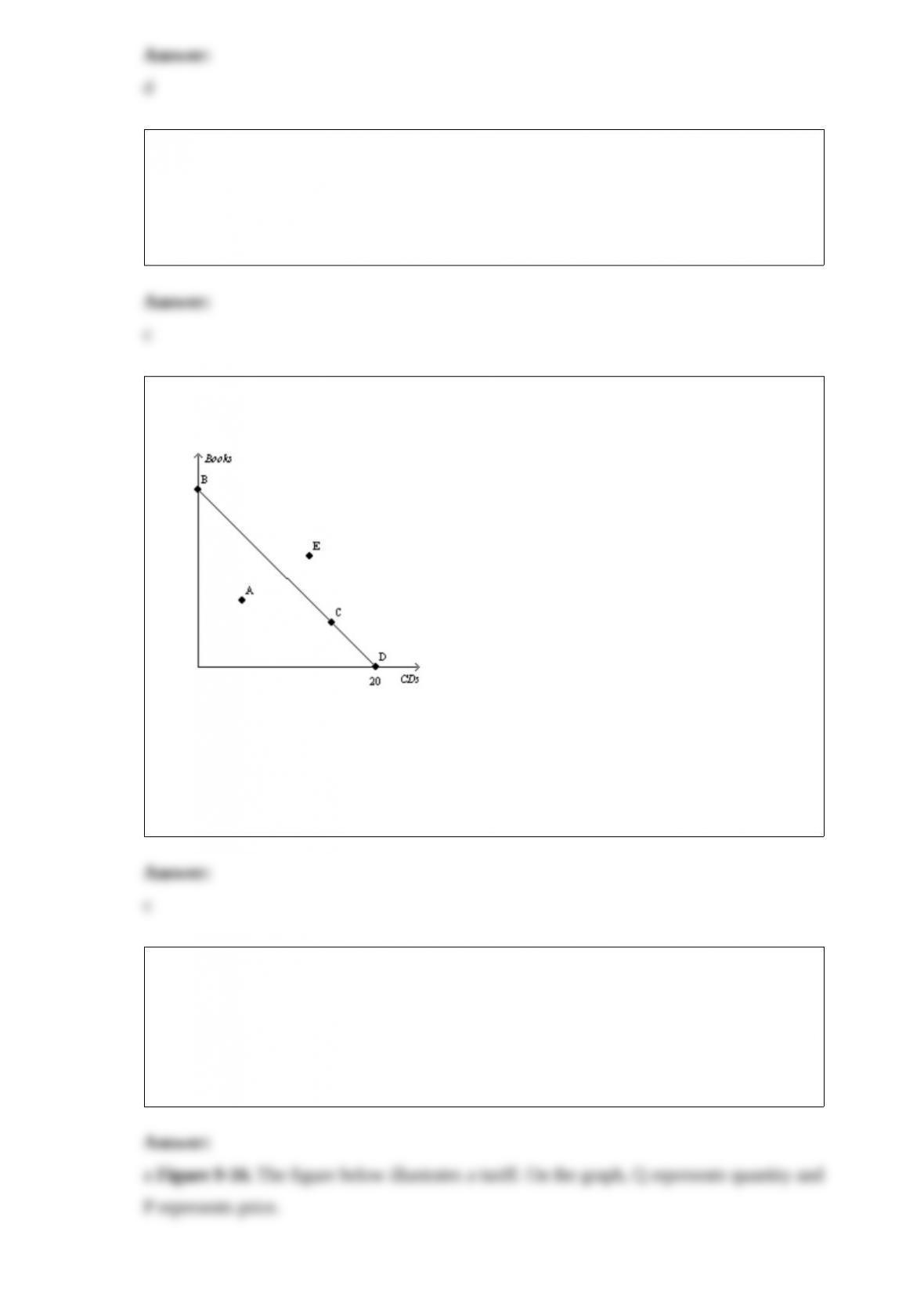
13) Figure 21-1
The downwardsloping line on the figure represents a consumer’s budget constraint.
Refer to Figure 21-1. If the consumer’s income is $140, then what is the price of a CD?
a.$3
b.$5
c.$7
d.$9
14) Refer to Figure 9-15. For the saddle market, area E represents
a.government’s revenue from the tariff.
b.producer surplus after the tariff becomes effective.
c.the decrease in consumer surplus, relative to the free-trade situation, as a result of the
tariff.
d.the decrease in total surplus, relative to the free-trade situation, as a result of the tariff.
15) Which of the following is a tax on labor?
a.Medicare tax
b.inheritance tax
c.sales tax
d.All of the above are labor taxes.
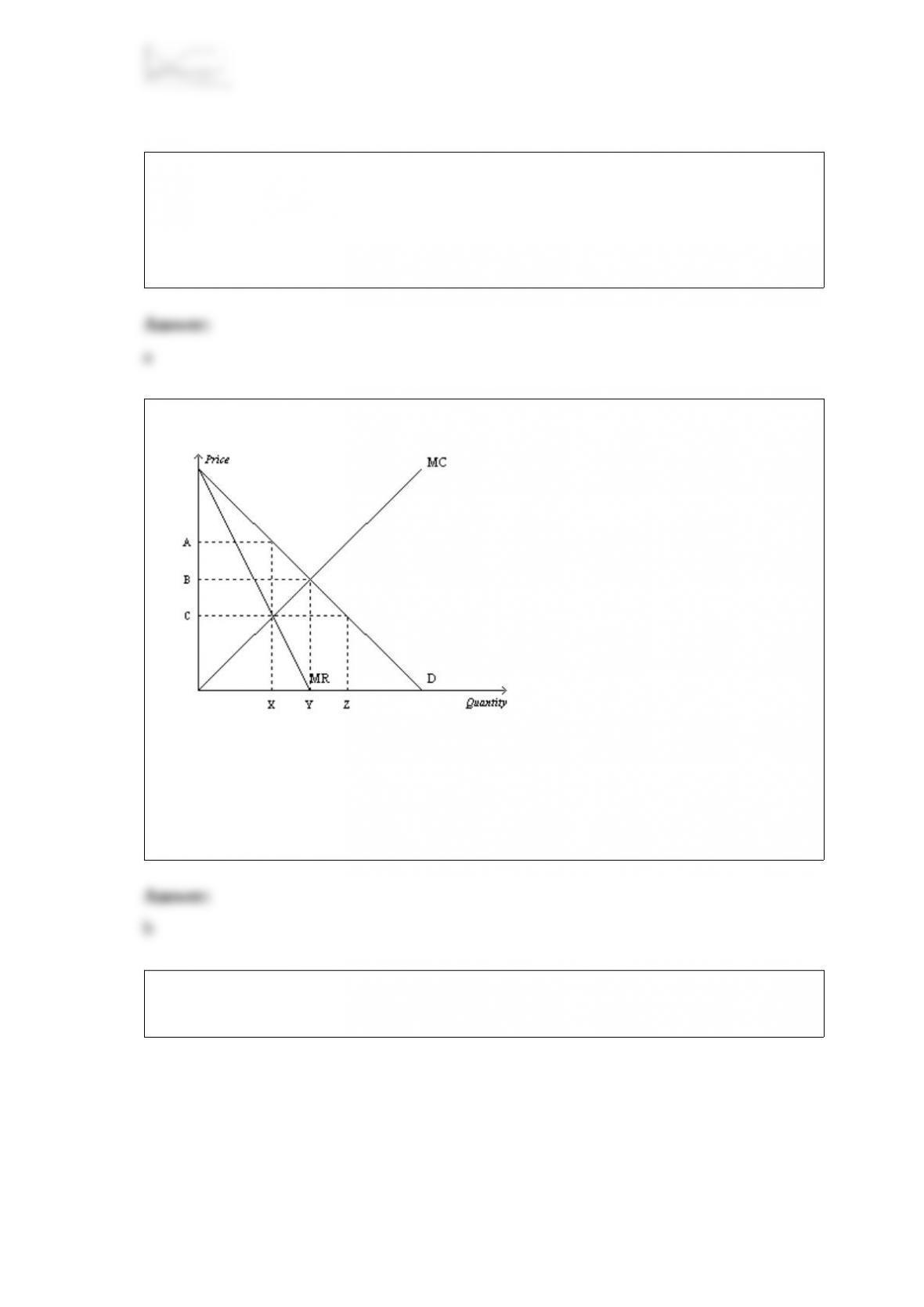
16) Figure 15-8
What area represents the total surplus lost due to monopoly pricing?
a.the rectangle (A-C)*X
b.the triangle 1/2[(A-C)*(Y-X)]
c.the triangle 1/2[(A-B)*(Y-X)]
d.the rectangle (A-C)*X plus the triangle 1/2[(A-C)*(Y-X)]
17) Figure 8-5
Suppose that the government imposes a tax of P3 – P1.
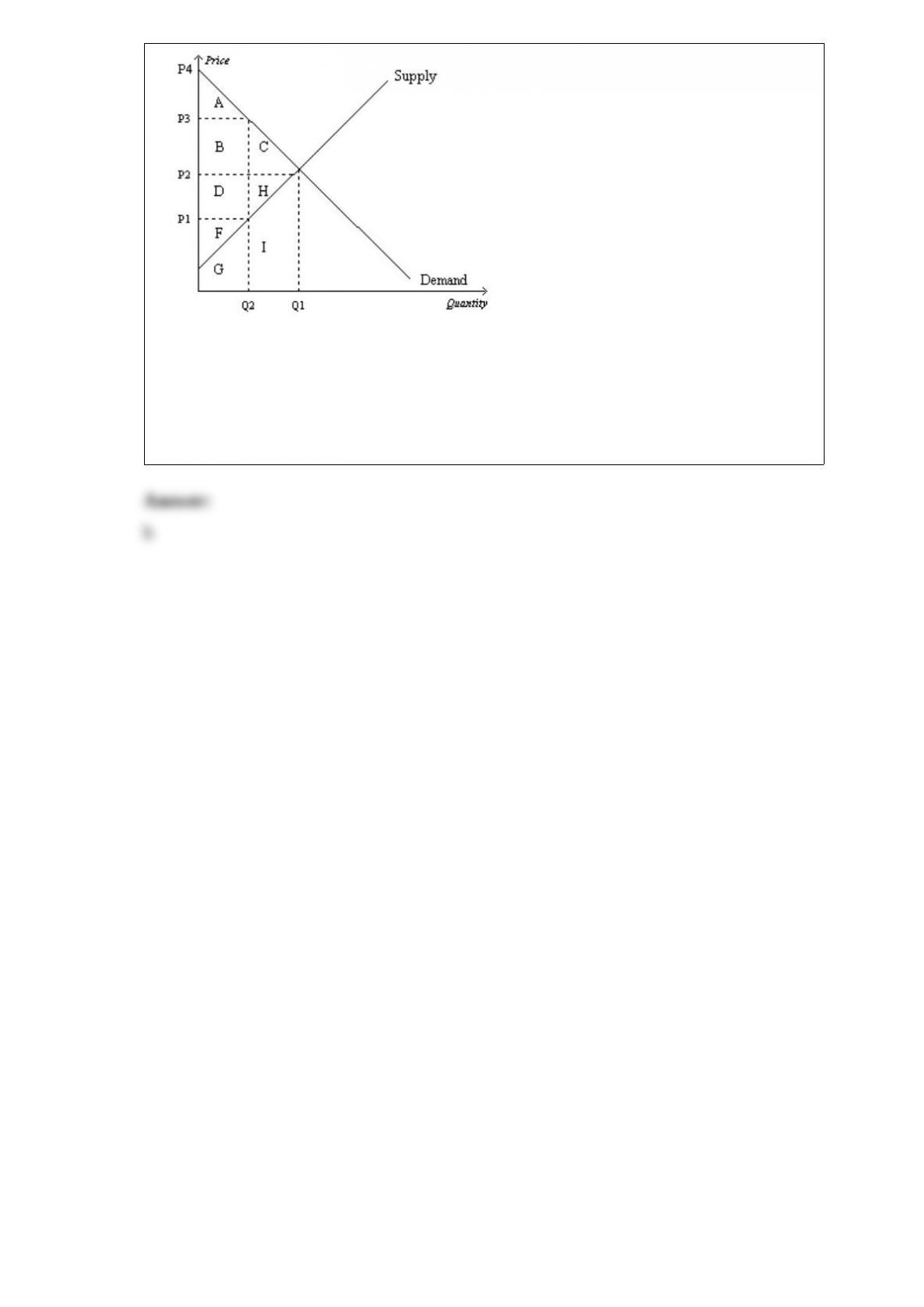
The benefit to the government is measured
by
a.tax revenue and is represented by area A+B.
b.tax revenue and is represented by area B+D.
c.the net gain in total surplus and is represented by area B+D.
d.the net gain in total surplus and is represented by area C+H.