
The use of a price system eliminates:
a. scarcity. c. shortages and surpluses.
b. equilibrium. d. changes in supply and demand.
A fixed exchange rate is:
a. determined by the forces of supply and demand.
b. the value of a nation’s money in gold.
c. the value of a nation’s money determined by the World Bank.
d. none of these.
Today, the Federal Trade Commission (FTC) is concerned with:
a. enforcing consumer protection legislation.
b. prohibiting deceptive advertising.
c. preventing collusion.
d. all of these.
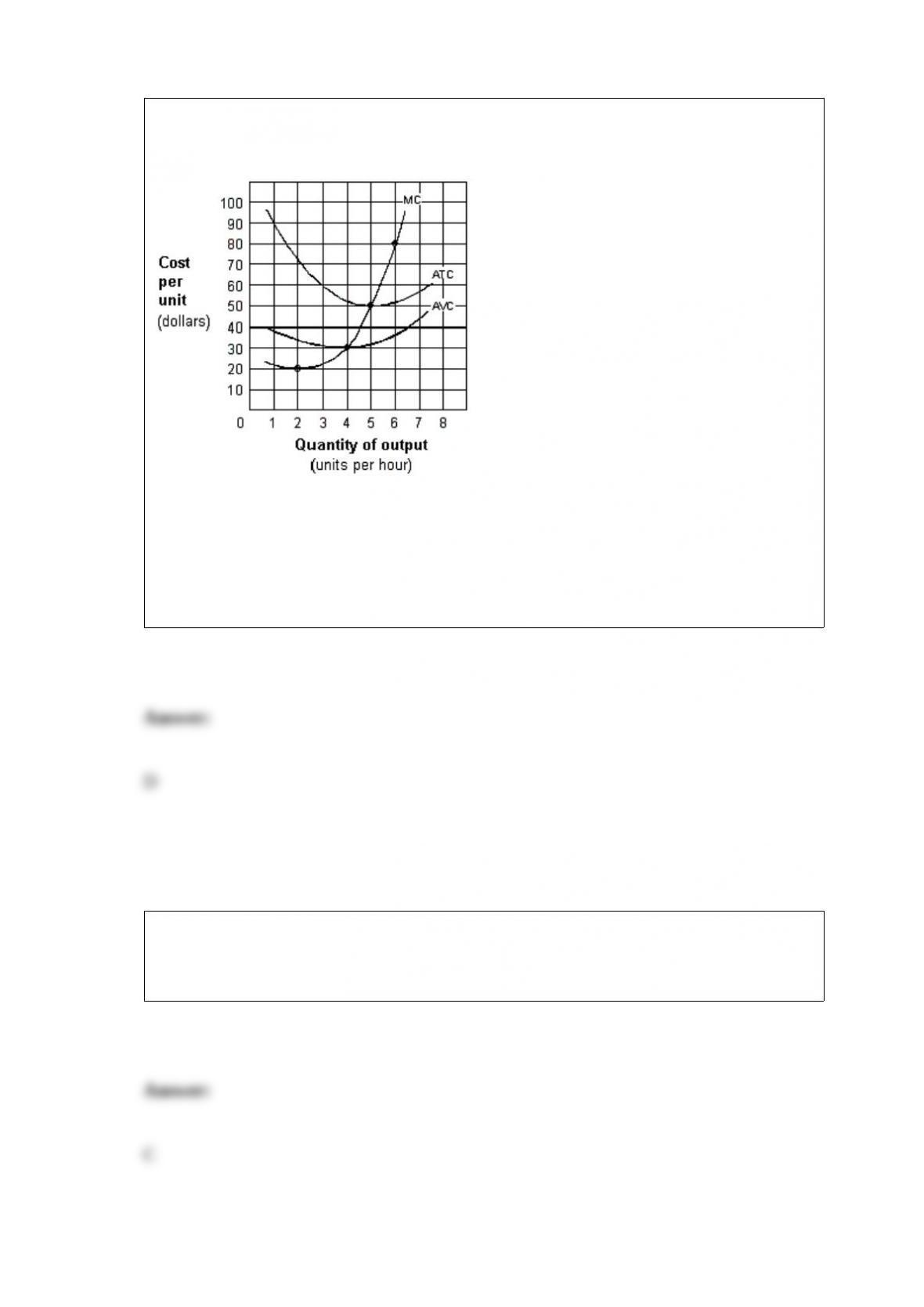
Exhibit 8-16 Short-run cost curves for a competitive firm
In Exhibit 8-16, suppose the firm faces a price of $80 per unit. How much should the
firm produce to earn the largest possible profit?
a. 2 units per hour.
b. 4 units per hour.
c. 5 units per hour.
d. 6 units per hour.
Computer programs or software are an example of:
a. land. c. capital.
b. labor. d. none of these.

If consumer incomes go up and Harley Davidson motorcycles are a normal good, the
effect on the demand for motorcycles, ceteris paribus, will be a(n):
a. upward movement along the demand curve for motorcycles.
b. downward movement along the demand curve for motorcycles.
c. rightward shift in the demand curve for motorcycles.
d. leftward shift in the demand curve for motorcycles.
Which one of the following examples is a cash assistance program used to fight poverty
in the United States?
a. Medicaid.
b. Food stamps.
c. Home energy assistance.
d. Head Start.
e. Temporary Assistance to Needy Families (TANF).
Exhibit 8-2 Total revenue and total cost graph
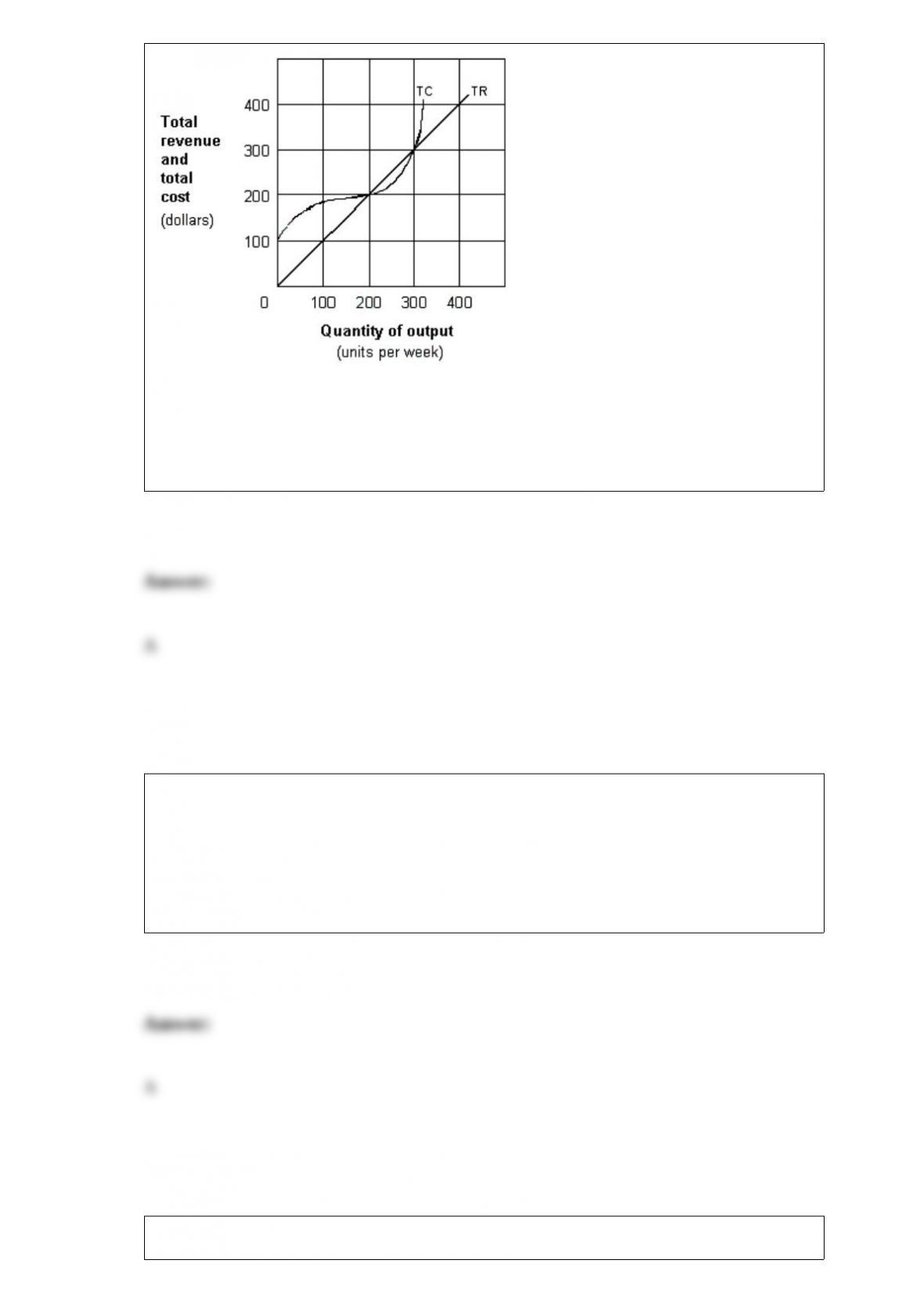
In Exhibit 8-2, if output is 200 units per week, economic profit for the firm is:
a. zero.
b. at its minimum.
c. at its maximum.
d. none of these.
Assume that a firm’s marginal revenue just barely exceeds marginal cost. Under these
conditions the firm should:
a. expand output.
b. contract output.
c. maintain output.
d. There is insufficient information to answer the question.
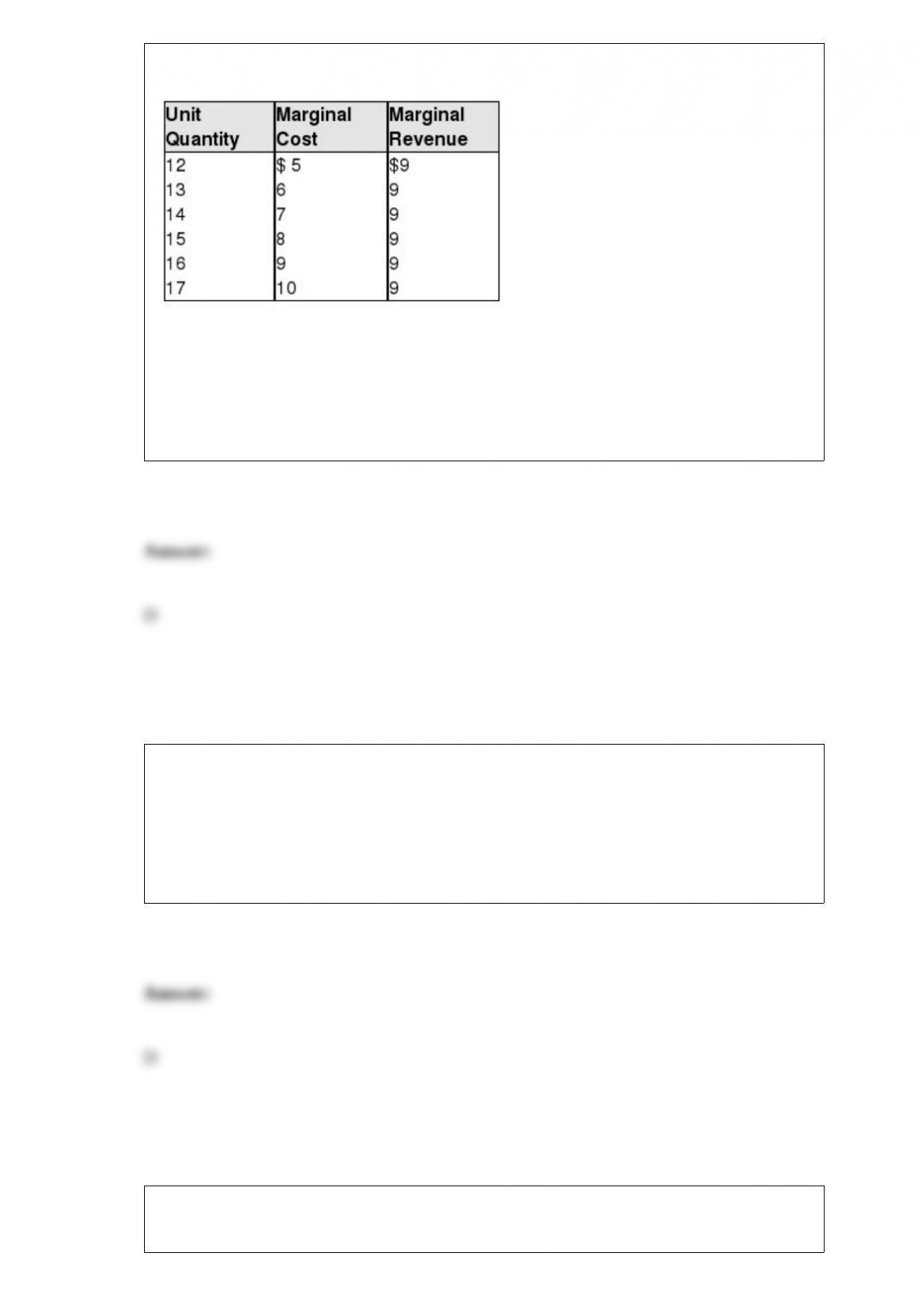
Exhibit 8-4 Marginal cost and revenue for a firm
In Exhibit 8-4, what is this firm’s profit-maximizing rate of output?
a. 13.
b. 14.
c. 15.
d. 16.
e. 17.
Which of the following illustrates the concept of scarcity?
a. There is usually more than one use of your “free” time in the evening.
b. More clean air is wanted than is available in large polluted metropolitan areas such as
Los Angeles.
c. There are many competing uses for the annual budget of your city, county, or state.
d. All of the answers are correct.
Over a ten year period, the monthly charge for cellular phone service decreased from
$120 per month to $30 per month. At the same time, the number of subscribers

increased from less than 10 million to more than 75 million. Which of the following
provides the best explanation for these changes?
a. An increase in consumer income over this ten year period
b. A reduction in the price of residential phone service, a substitute for cellular phone
service
c. An increase in the wages of workers in the cellular phone industry
d. Technological improvements that reduced the cost of supplying cellular phone
service
Which of the following statements is true?
a. A vertical merger is a merger of firms that compete in the same market.
b. The rule of reason doctrine declares that the existence of monopoly alone is illegal.
c. Government regulation is economically justifiable for a natural monopoly.
d. Deficient information on unsafe products causes underconsumption.
Which of the following is a public good?
a. An economics lecture.
b. A television set.
c. Higher education.

d. Housing.
e. Clean air
If the exchange rate between the yen and the dollar changes from 100 yen = $1 to 110
yen = $1, then:
a. the dollar has depreciated in value.
b. U.S.-made goods will become less expensive to Japanese citizens.
c. the dollar has appreciated in value.
d. Japanese-made goods will become more expensive to U.S. citizens.
e. there will be an increase in the demand for dollars in the foreign exchange market.
Demand price elasticity measures:
a. how much supply will change as price changes.
b. how consumers change their purchases in response to a change in income.
c. how consumers change their purchases in response to a change in the price of a
substitute good.
d. how consumers change their purchases in response to a change in the price of a
product.
e. the change in price brought about by a change in consumer demand.
The distribution of income in developed countries is less egalitarian than less developed
countries.
The primary purpose of the Celler-Kefauver Act is to prevent unfair and deceptive
business practices.
Graphically express a direct and an inverse or negative relationship. What could cause a
shift in a line or curve expressing a relationship between two variables?
Violations of the Sherman Antitrust Act have sometimes been punished by breaking up
the offending firm into a number of smaller firms.
The long-run supply curve for a competitive industry always has a positive slope.
Waste systems and highways are part of a nation’s infrastructure.
The marginal product curve rises when the marginal cost curve rises.