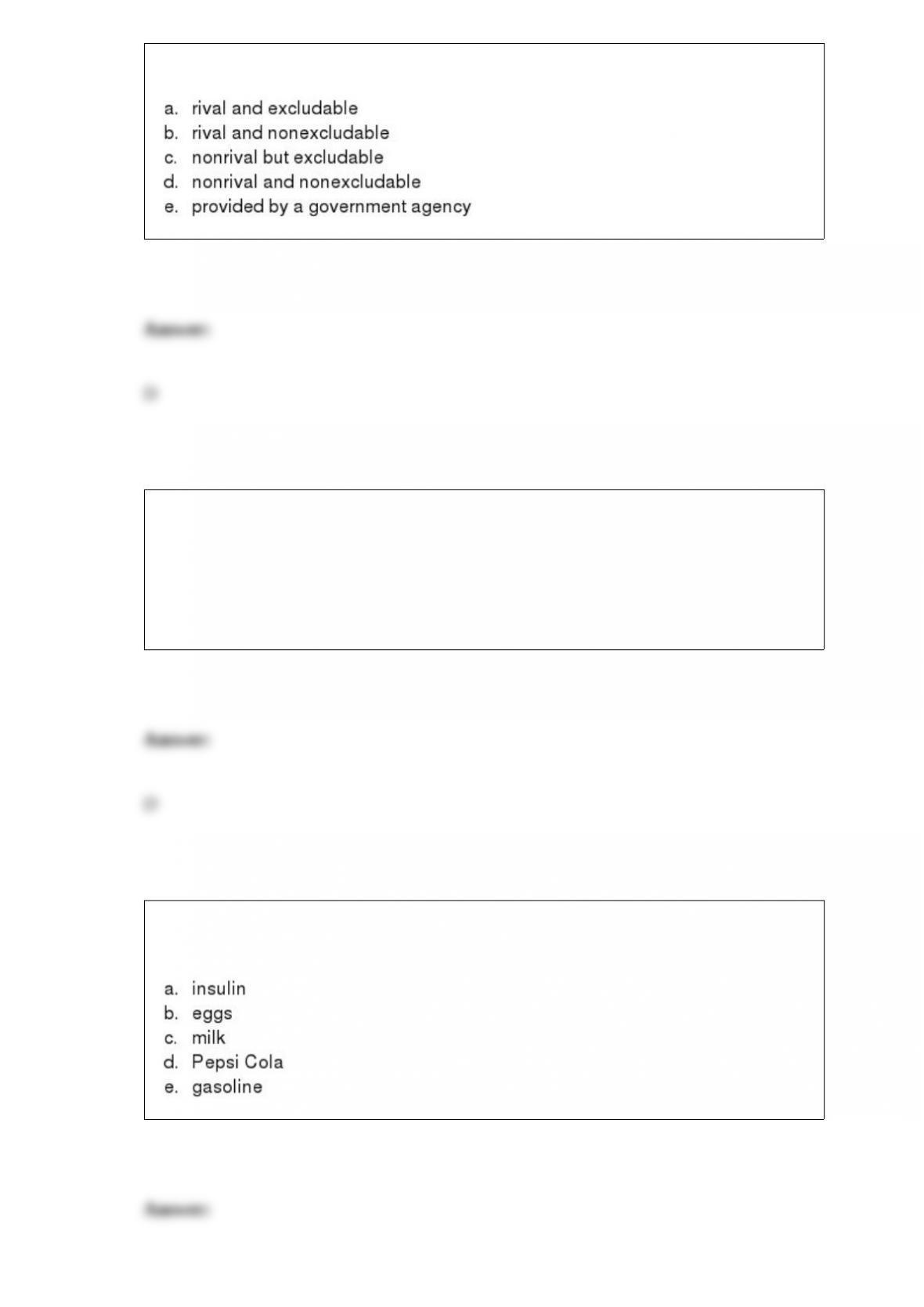
A pure public good is one that is
If the Bank of Japan buys yen to prevent the yen from appreciating,
a. it is probably also trying to profit from that operation
b. it is probably also trying to maintain an interest rate target
c. it is engaging in bilateral arbitrage
d. it is engaging in a managed float
e. it is wasting its time and effort
Which of the following goods is likely to have the most elastic demand over the
relevant range of prices?
To an American, the demand curve for euros tells
a. that Americans do not want to purchase euros
b. how many euros Americans would want to buy in a given time period, at each
different exchange rate
c. the real interest rate on foreign currency over time
d. how many Americans are willing to buy euros
e. how many euros have been purchased during a given time period
Which of the following components of government spending and revenue serves as an
automatic stabilizer?
a. the wealth effect
b. the multiplier
c. unemployment insurance
d. military spending
e. property taxes
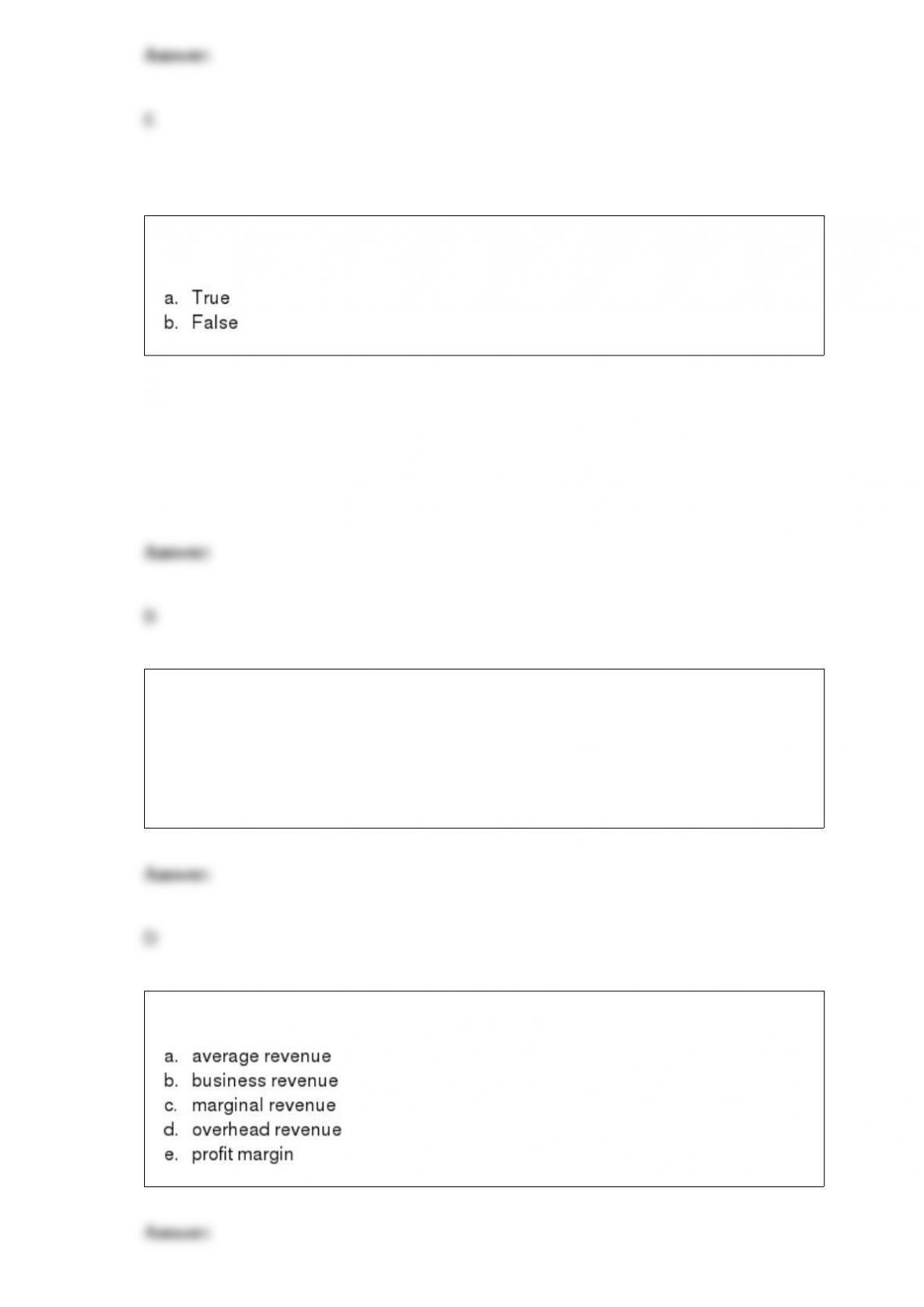
Patents and copyrights
A quota decreases the volume of imports, whereas a tariff typically has no impact on the
volume of imports.
An example of a flow variable is
a. the number of cars in the United States today
b. the current value of your wealth
c. the population of Mexico
d. income
e. the number of sweaters a clothing store has on its shelves
The change in total revenue obtained by selling an additional unit of output is
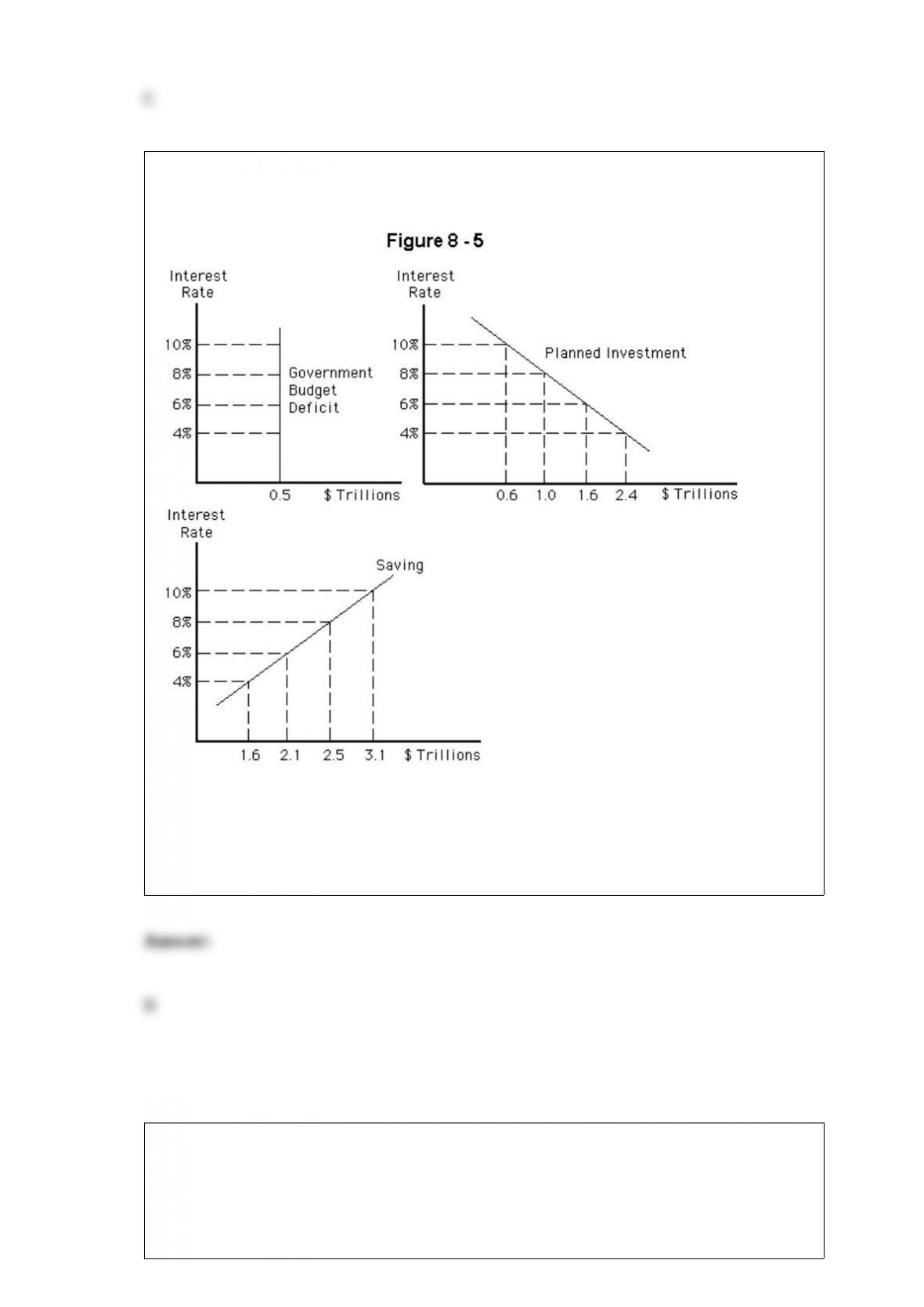
Refer to Figure 8-5. What is the equilibrium interest rate?
a. 4 percent
b. 6 percent
c. 8 percent
d. 10 percent
e. It cannot be determined with the information given.
A critical assumption in the classical model is that
a. markets are perfectly competitive in the short run
b. markets clear in the long run
c. markets clear in the short run
d. markets are perfectly competitive in the long run
e. all variables are expressed in nominal terms
Government outlays
a. are the same as “G” in the short-run macro model.
b. do not include transfer payments.
c. are always smaller than government purchases.
d. are always greater than government purchases.
e. tend to decline in the long run.
After a positive demand shock, what are the expected long-run adjustments?
a. Wages fall, price level falls, and output falls back to potential.
b. Wages rise, price level rises, and output falls back to potential.
c. Wages fall, price level rises, and output rises back to potential.
d. Wages rise, price level falls, and output falls back to potential.
e. Wages rise, price level rises, and output rises.
For the Fed, price stability means stable prices.