
Which of the following is an example of a way in which a firm in oligopoly can escape
the prisoner’s dilemma?
A) producing more of its product
B) advertising that it will match its rival’s price
C) reneging on a previous tacit agreement with rival firms to charge identical high
prices
D) ignoring the pricing decisions of the other firms
Suppose you are considering buying stock in the stock market, and your objective is to
maximize your net worth. Furthermore, your study of the market reveals that the
economy will be slowing down over the next several months. Under these conditions, it
would be best to purchase stock in companies that produce
A) normal goods.
B) luxury goods.
C) inferior goods.
D) price elastic goods.
Figure 15-15
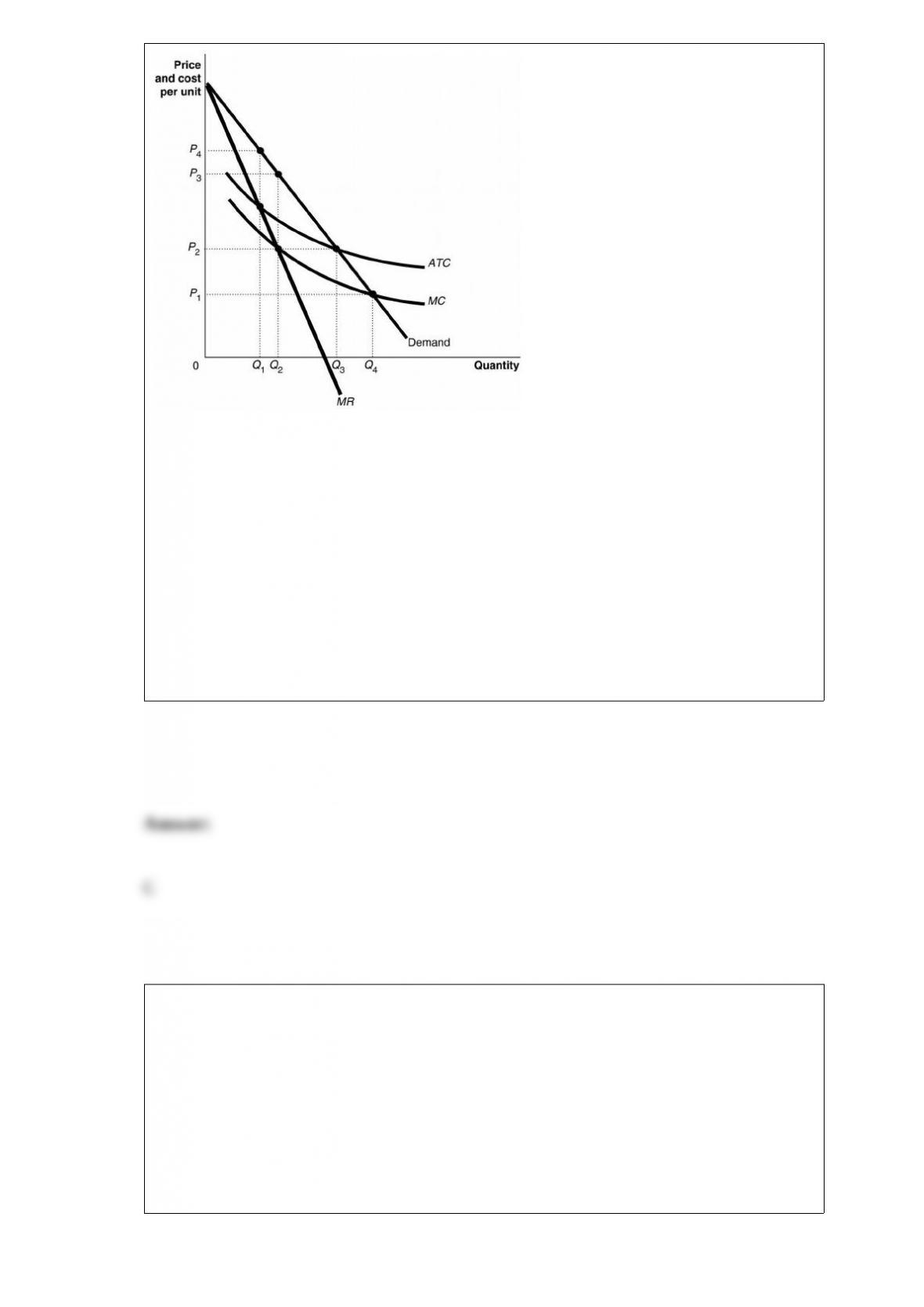
Figure 15-15 shows the cost and demand curves for the Erickson Power Company.
Refer to Figure 15-15. The profit-maximizing price is
A) P1.
B) P2.
C) P3.
D) P4.
The demand curve for an individual seller’s product in perfect competition is
A) the same as market demand.
B) downward sloping.
C) vertical.
D) horizontal.
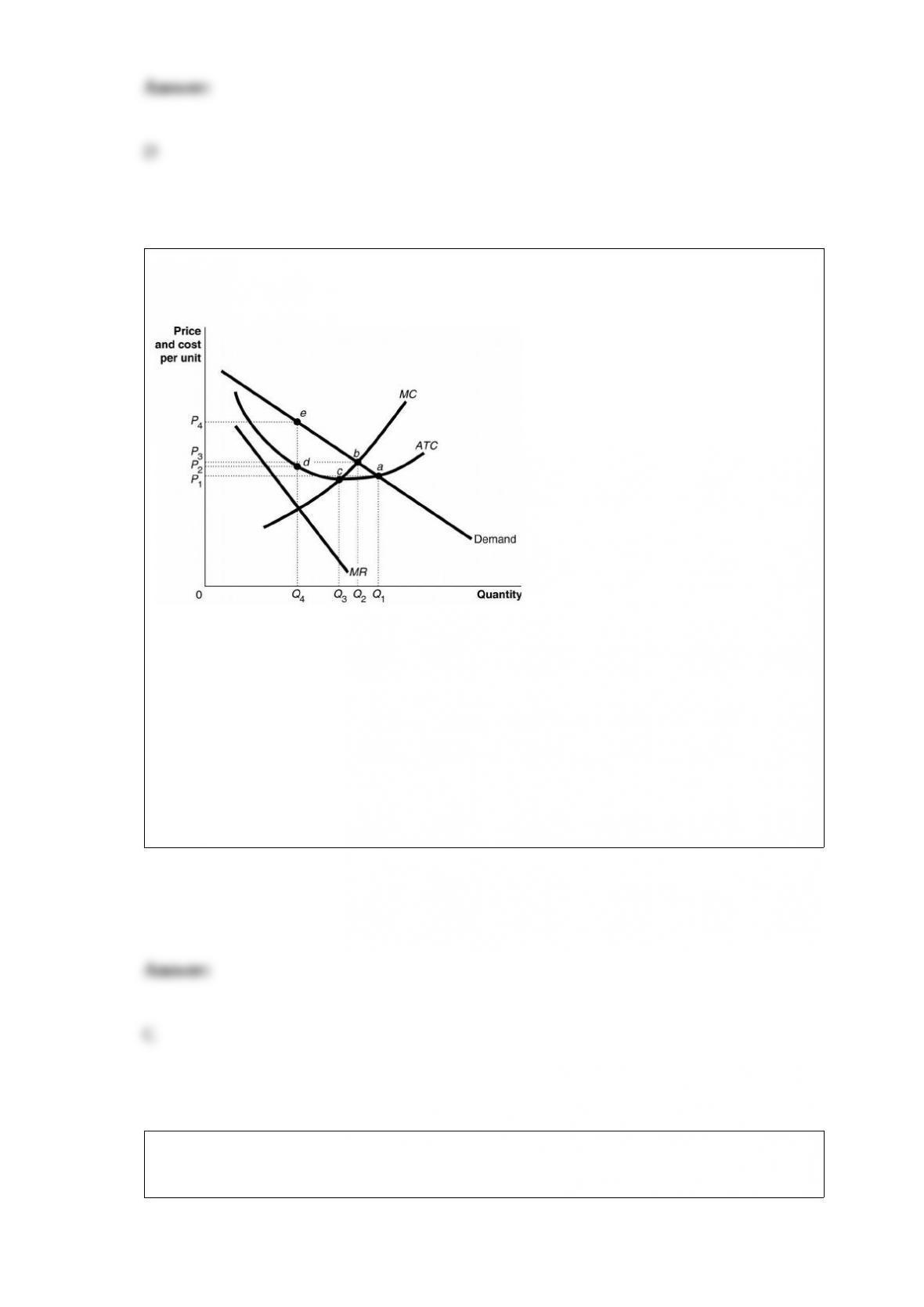
Figure 13-13
Refer to Figure 13-13. If the diagram represents a typical firm in the market, what is
likely to happen to its average cost of production in the long run?
A) It will probably fall since the firm must be cost efficient to remain competitive.
B) It will probably fall since the firm will be selling less than its current amount.
C) It will probably rise since the firm will be producing less than its current amount.
D) It will probably rise since its long-run demand is likely to be higher.
Table 17-1
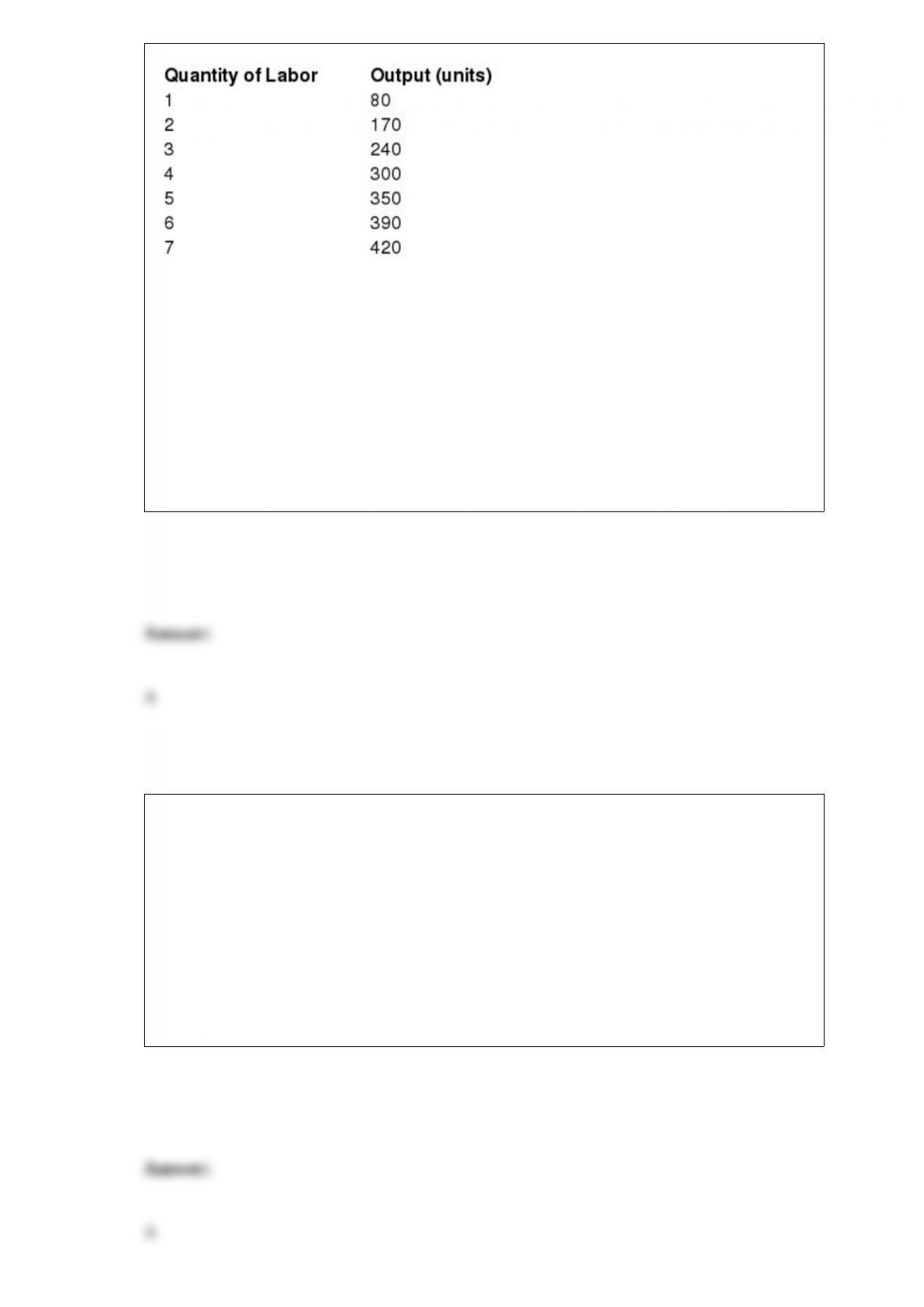
Refer to Table 17-1. Suppose the output price is $3. If the wage rate is $90, what is the
profit-maximizing quantity of labor that the firm should hire?
A) 7 units
B) 5 units
C) 4 units
D) 3 units
If the marginal tax rate is less than the average tax rate as taxable income increases, the
tax structure is
A) regressive.
B) proportional.
C) progressive.
D) unfair.
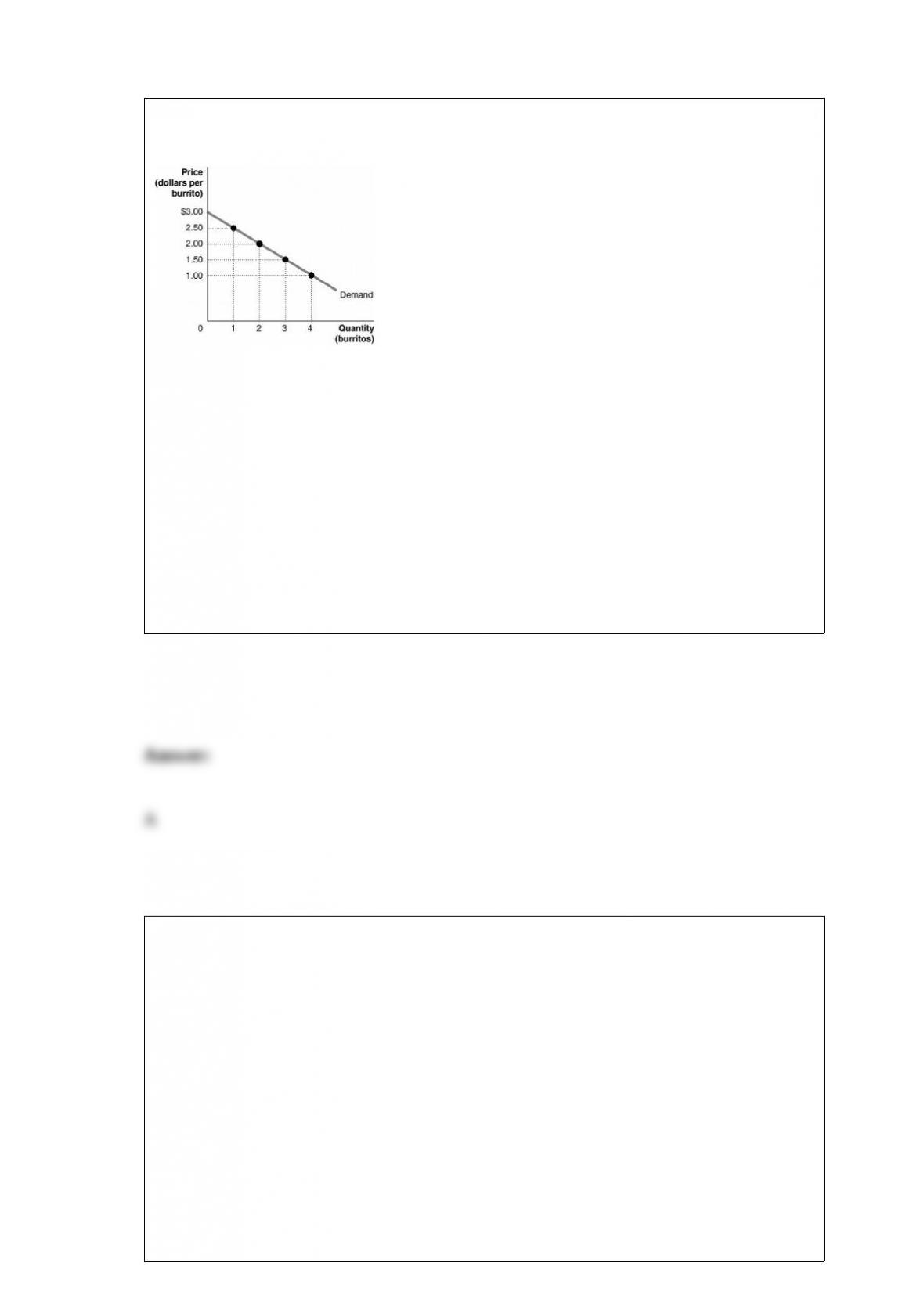
Figure 4-1
Figure 4-1 shows Arnold’s demand curve for burritos.
Refer to Figure 4-1. If the market price is $1.50, what is the consumer surplus on the
second burrito?
A) $0.50
B) $1.00
C) $1.50
D) $3.50
Golda Rush quit her job as a manager for Home Depot to start her own hair dressing
salon, Goldilocks. She gave up a salary of $40,000 per year, invested her savings of
$30,000 (which was earning 5 percent interest) and borrowed $10,000 from a close
friend, agreeing to pay 5 percent interest per year. In her first year, Golda spent $18,000
to rent a salon, hired a part-time assistant for $12,000 and incurred another $15,000 on
equipment and hairdressing material. Based on this information, what is the amount of
her explicit costs?
A) $45,000
B) $45,500
C) $47,000
D) $87,000
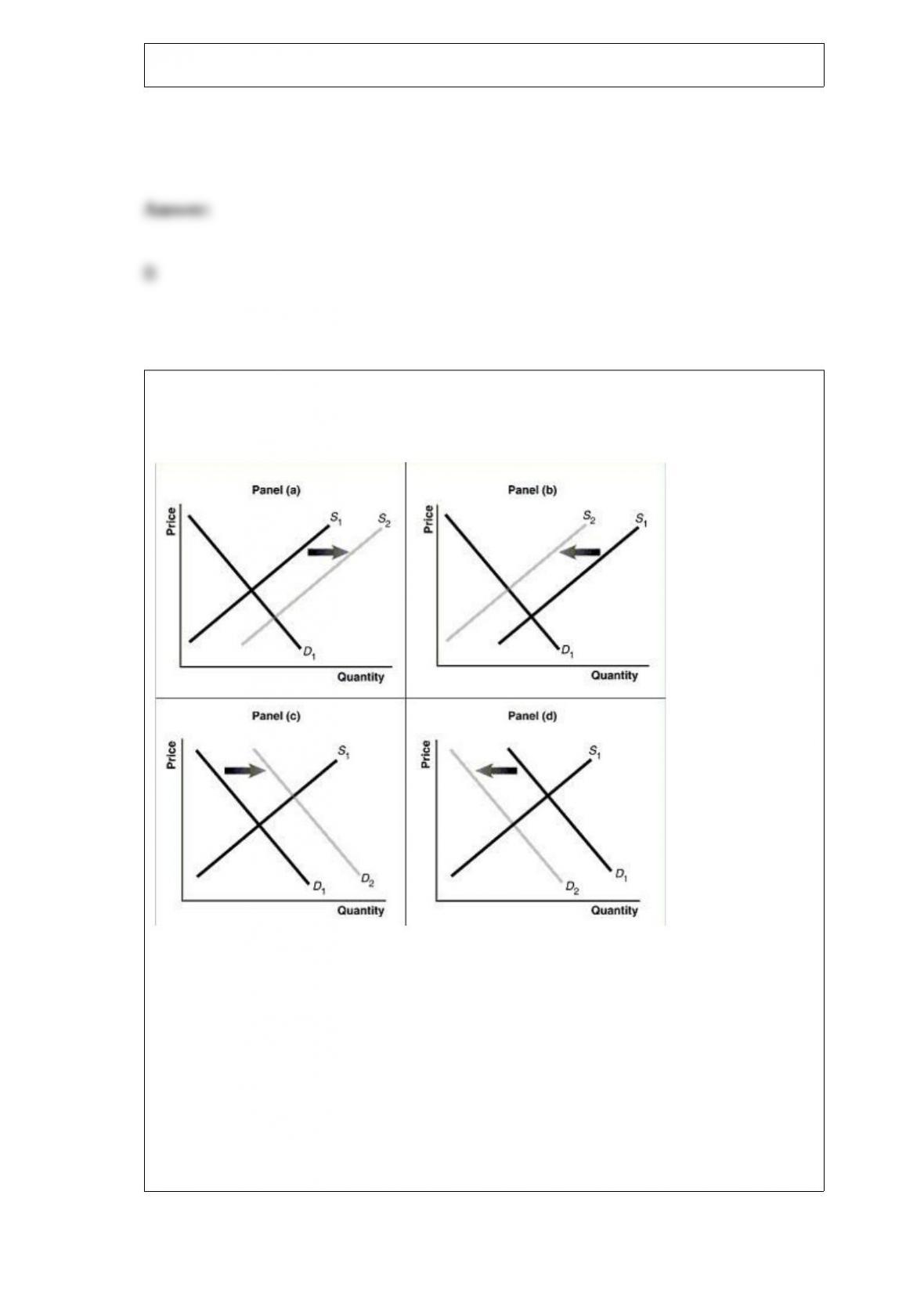
Figure 3-7
Refer to Figure 3-7. Assume that the graphs in this figure represent the demand and
supply curves for bicycle helmets. Which panel best describes what happens in this
market if there is a substantial increase in the price of bicycles?
A) Panel (a)
B) Panel (b)
C) Panel (c)
D) Panel (d)
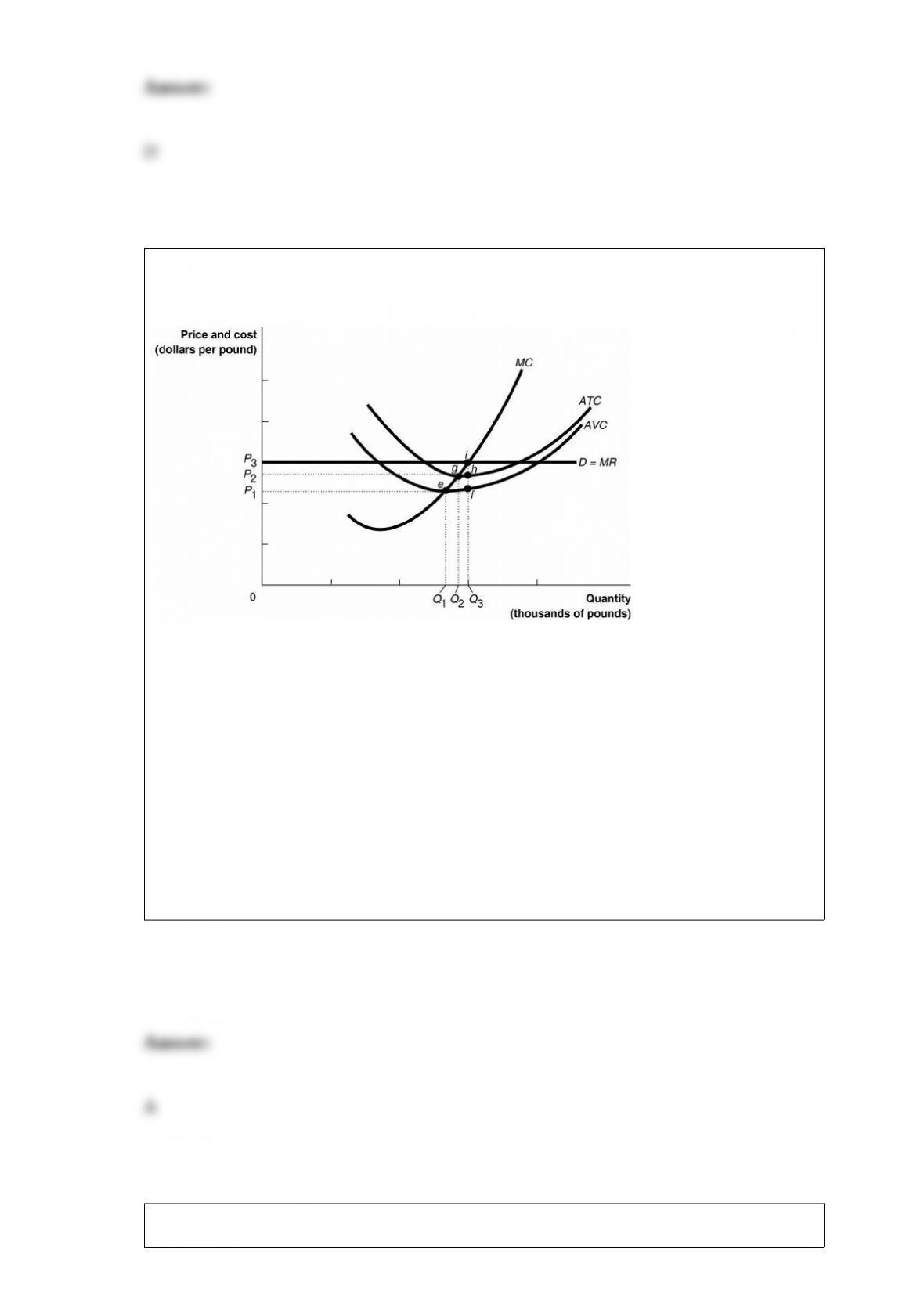
Figure 12-7
Figure 12-7 illustrates the cost curves of a perfectly competitive firm.
Refer to Figure 12-7. If the market price is P2 the firm
A) will break even and produce a quantity of Q2.
B) will make a profit and produce a quantity of Q2.
C) will make a profit and produce a quantity of Q1.
D) will make a profit and produce a quantity of Q3.
Wage differentials between occupations can be explained by all of the following except

A) the fact that some occupations require higher levels of human capital than others.
B) the fact that some occupations are more desirable than others.
C) the market power of different employers.
D) the relative differences between demand and supply in various occupations
Congress passed the Clean Air Act in 1970. Since this act was passed, emissions of the
six main air pollutants
A) have fallen by more than one-half.
B) have increased significantly due to the growth of the U.S. economy.
C) cannot be measured since Congress failed to appropriate money to monitor the level
of emissions.
D) have remained essentially constant, even though significant economic growth has
occurred in the United States since 1970.
Table 2-9

Table 2-9 shows the number of labor hours required to produce a canoe and a sailboat in
Guatemala and Honduras.
Refer to Table 2-9. What is Guatemala’s opportunity cost of producing one canoe?
A) 1/6 of a sailboat
B) 2/3 of a sailboat
C) 6 sailboats
D) 7.5 sailboats
If more insurance companies decide to cover part of the price of voluntary laser eye
surgery and more doctors decide to enter the field of laser eye surgery, what will happen
in the market for laser eye surgery as a result of these two factors?
A) Demand will increase, but these two factors will not shift the supply curve.
B) Supply will increase, but these two factors will not shift the demand curve.
C) Demand and supply will both increase.
D) Demand will increase and supply will decrease.

Table 2-8
Table 2-8 shows the number of labor hours required to produce a digital camera and a
pound of wheat in China and South Korea.
Refer to Table 2-8. What is China’s opportunity cost of producing one digital camera?
A) 0.04 pounds of wheat
B) 4 pounds of wheat
C) 25 pounds of wheat
D) 40 pounds of wheat
Consider two industries, industry Q and industry Z. In industry Q there are 10
companies, each with a market share of 10% of total sales. In industry Z, there are eight
companies. One company has a 65% market share and each of the other seven firms has
a market share of 5%.
a. Calculate the four-firm concentration ratio for each industry.
b. Calculate the Herfindahl-Hirschman Index (HHI) for each industry.
c. What do the values of the two concentration measures imply about the degree of
market power in the two industries?

Economists James Buchanan and Gordon Tullock are well-known for developing
A) the impossibility theorem.
B) the voting paradox.
C) the public choice model.
D) the concept of government failure.
Consider a U-shaped long-run average cost curve that has a minimum efficient scale at
6,000 units of output. In this case, this industry would be
A) perfectly competitive if the market quantity demanded is 20,000 units.
B) monopolistically competitive if the market quantity demanded is 12,000 units.
C) an oligopoly if the market quantity demanded is 18,000 units.
D) an oligopoly if the four-firm concentration ratio is more than 10 percent.

For a firm in a perfectly competitive market, price is
A) equal to both average revenue and marginal revenue.
B) equal to average revenue but greater than marginal revenue.
C) greater than marginal revenue but less than average revenue.
D) less than both average revenue and marginal revenue.
Why is it necessary for all economic systems to not only provide people with goods and
services, but also restrict them from getting as much of these goods and services as they
wish?
A) Failure to do this could reduce the efficiency of the system by producing some
goods and services that are not as highly valued as others.
B) Failure to do this could lead to an inequitable allocation of goods and services
produced.
C) Failure to do this could lead to drastic shortages of good and services.
D) Failure to do this could reduces efficiency and leads to an inequitable allocation of
output.

A statistical tool used to measure inequality is
A) the Lorenz curve.
B) the Gini coefficient.
C) the absolute poverty rate.
D) the relative poverty rate.
Which of the following variables will not cause the market supply curve of labor to
shift?
A) increases in population
B) a favorable change in consumer tastes
C) a change in the labor participation rate of women
D) an increase in the number of people between the ages of 16 and 65
Figure 13-11
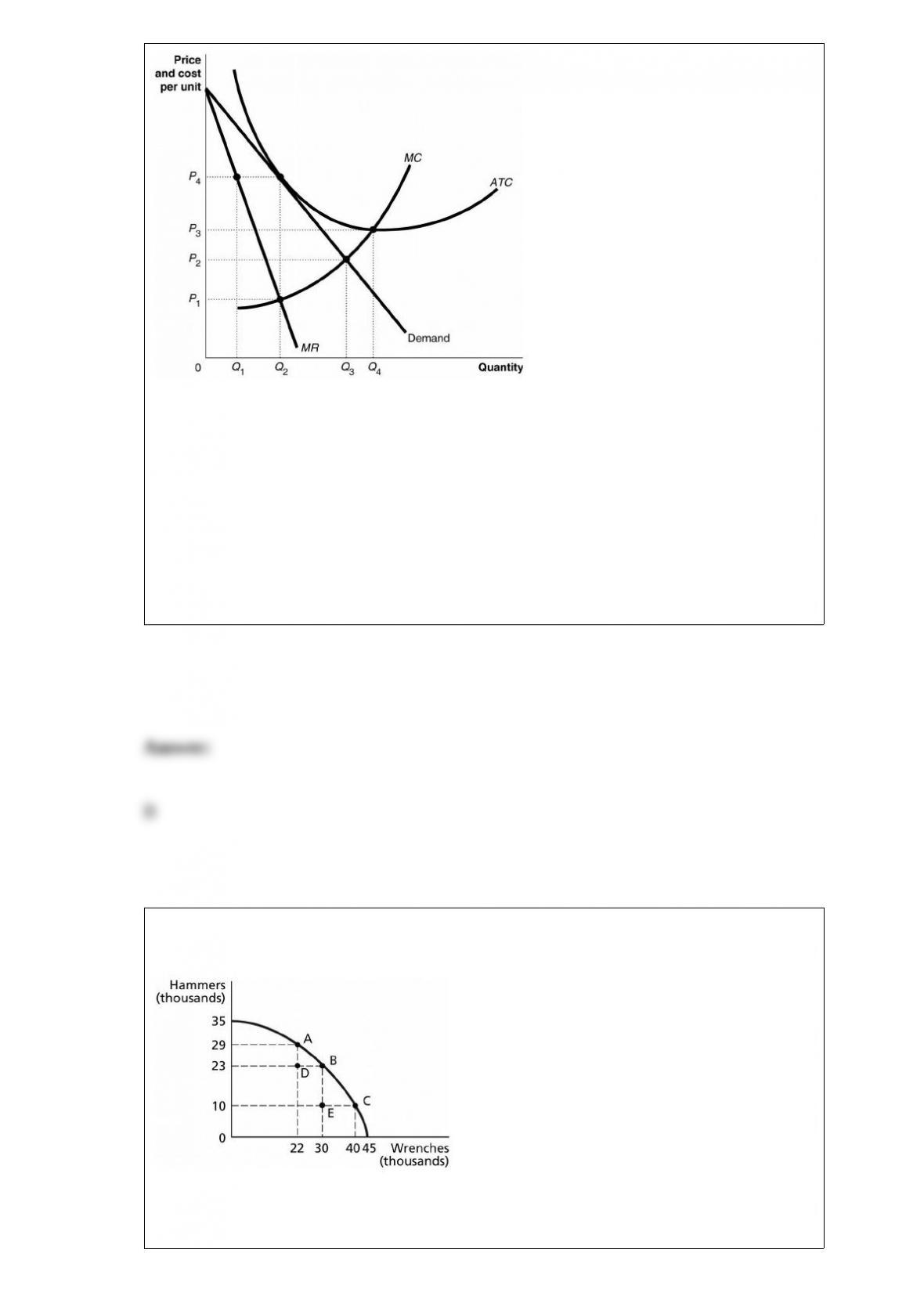
Refer to Figure 13-11. What is the amount of excess capacity?
A) Q4 – Q3 units
B) Q4 – Q2 units
C) Q3 – Q2 units
D) Q3 – Q1 units
Figure 2-6
Refer to Figure 2-6. If the economy is currently producing at point E, what is the
opportunity cost of moving to point D?

A) 13 thousand hammers
B) 10 thousand hammers
C) 8 thousand wrenches
D) 0 wrenches
You own a business that answers telephone calls for physicians after their offices close.
You have an incentive to substitute capital for labor if the
A) price of capital increases.
B) price of labor decreases.
C) price of labor increases.
D) marginal product of labor increases.
Figure 6-6
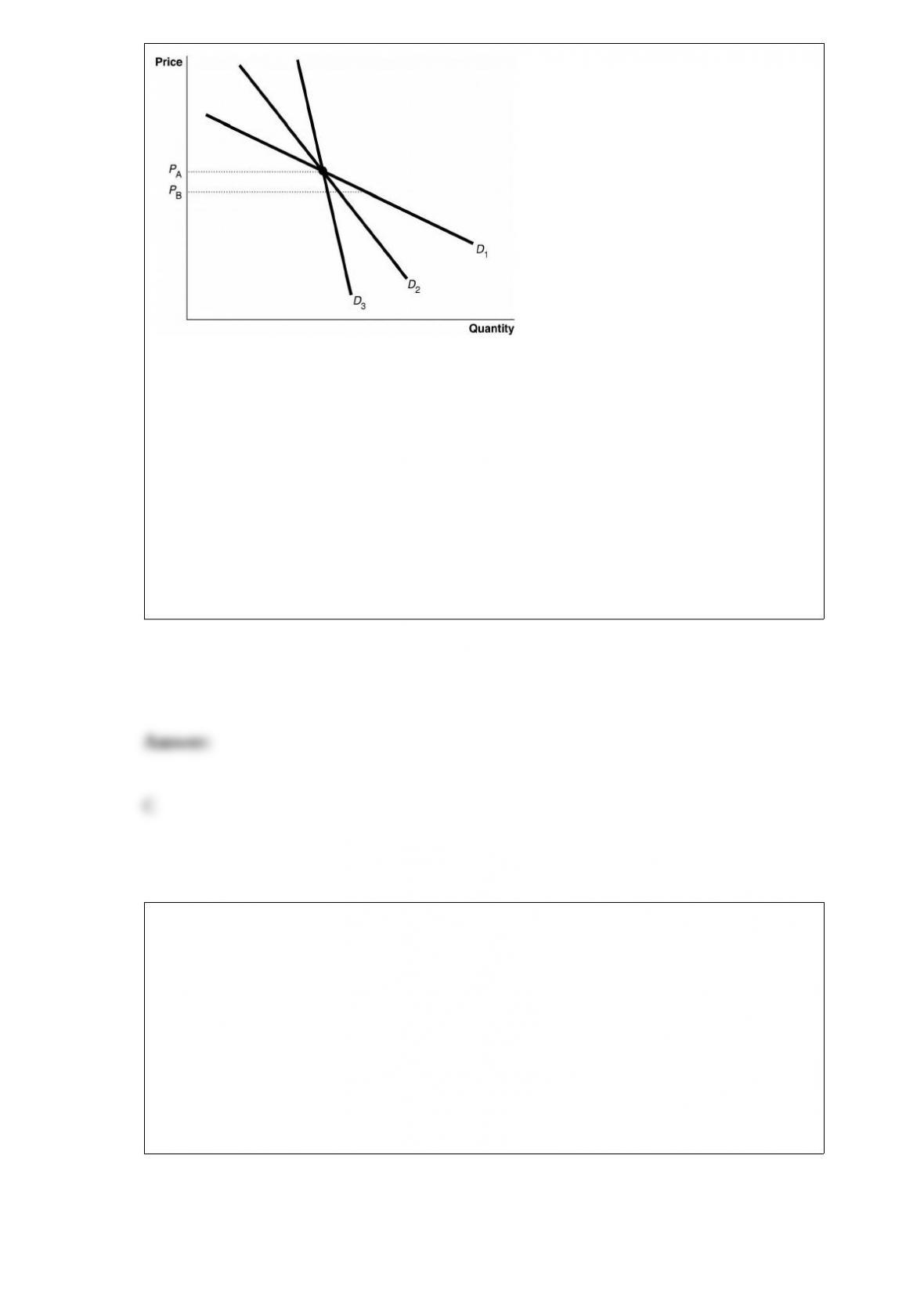
Refer to Figure 6-6. As price falls from PA to PB, the quantity demanded increases
most along D1; therefore,
A) D1 is unit elastic.
B) D1 is more inelastic than D2 or D3.
C) D1 is more elastic than D2 or D3
D) D1 is elastic at PA but inelastic at PB.
Suppose the government grants child care subsidies to mothers entering the labor
force.What is likely to happen to the equilibrium wage and quantity of labor?
A) The equilibrium wage and the equilibrium quantity of labor rise.
B) The equilibrium wage and the equilibrium quantity of labor fall.
C) The equilibrium wage falls and the equilibrium quantity of labor rises.
D) The equilibrium wage rises and the equilibrium quantity of labor falls.

If Lisa spends her income on veggie burgers and pints of soy milk and the price of
veggie burgers is three times the price of a pint of soy milk, then when Lisa maximizes
her utility she will buy
A) both goods until the marginal utility of veggie burgers is three times the marginal
utility of soy milk.
B) three times as many veggie burgers as pints of soy milk.
C) three times as many pints of soy milk as veggie burgers.
D) both goods until the marginal utility of a pint of soy milk is three times the marginal
utility of veggie burgers.
A movement along the demand curve for toothpaste would be caused by
A) a change in the price of toothbrushes.
B) a change in consumer income.
C) a change in the price of toothpaste.
D) a change in population.

Which of the following is a macroeconomics question?
A) What determines the growth rate of gross domestic product?
B) How is the production quantity of snowboards determined?
C) What factors determine the price of electronic cigarettes?
D) What determines the salaries of Wall Street executives?
Explain how the listed events (a-d) would affect the following at Hilton Hotels.
i. Marginal cost
ii. Average variable cost
iii. Average fixed cost
iv. Average total cost
a. Hilton decides on an across-the-board 5 percent increase in executive salaries.
b. Hilton decides to eliminate all print advertising.
c. Hilton signs a new contract with the Culinary Workers Union that requires the
company to increase wages for all its kitchen workers.
d. The federal government starts to levy a $5 room tax on all hotel rooms.

Assume that a monopolist practices perfect price discrimination. The firm’s marginal
revenue curve will
A) be perfectly elastic.
B) be equal to its demand curve.
C) will be perfectly inelastic.
D) will lie below its demand curve.