1) The majority of union members in the United States belong to unions that are:
A.affiliated with the United Workers of America (UWA).
B.affiliated with the AFL-CIO.
C.independent unions that are not affiliated with the AFL-CIO.
D.growing rapidly in membership.
2)
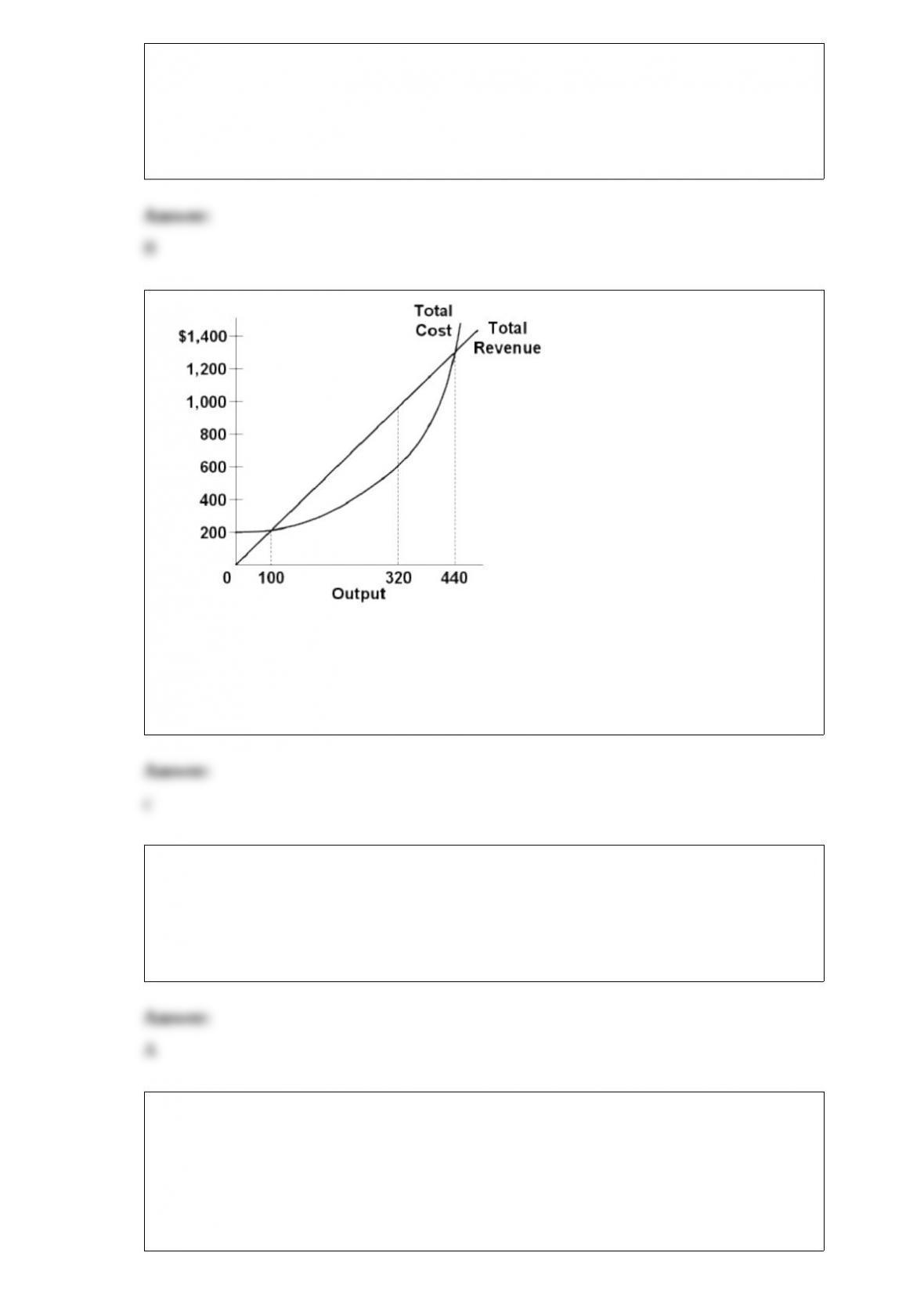
refer to the above short-run data. total fixed cost for this firm is:
a.about $67.
b.$300.
c.$200.
d.$100.
3) In recent years U.S. foreign aid has been:
A.less than 1 percent of its output.
B.about 2 percent of its output.
C.about 3 percent of its output.
D.about 5 percent of its output.
4) given the availability of the medicaid program, why are so many poor people
uninsured?
a.because only a fixed percentage of the population can participate in medicaid at any
time.
b.because many poor people earn enough that they do not qualify for medicaid.
c.because nonincome requirements screen many poor people from the program.
d.because only native-born americans are eligible for the program.
5) which of the following statements is correct?
a.the long-run supply curve for a purely competitive increasing-cost industry will be
upsloping.
b.the long-run supply curve for a purely competitive increasing-cost industry will be
perfectly elastic.
c.the long-run supply curve for a purely competitive industry will be less elastic than
the industry’s short-run supply curve.
d.the long-run supply curve for a purely competitive decreasing-cost industry will be
upsloping.
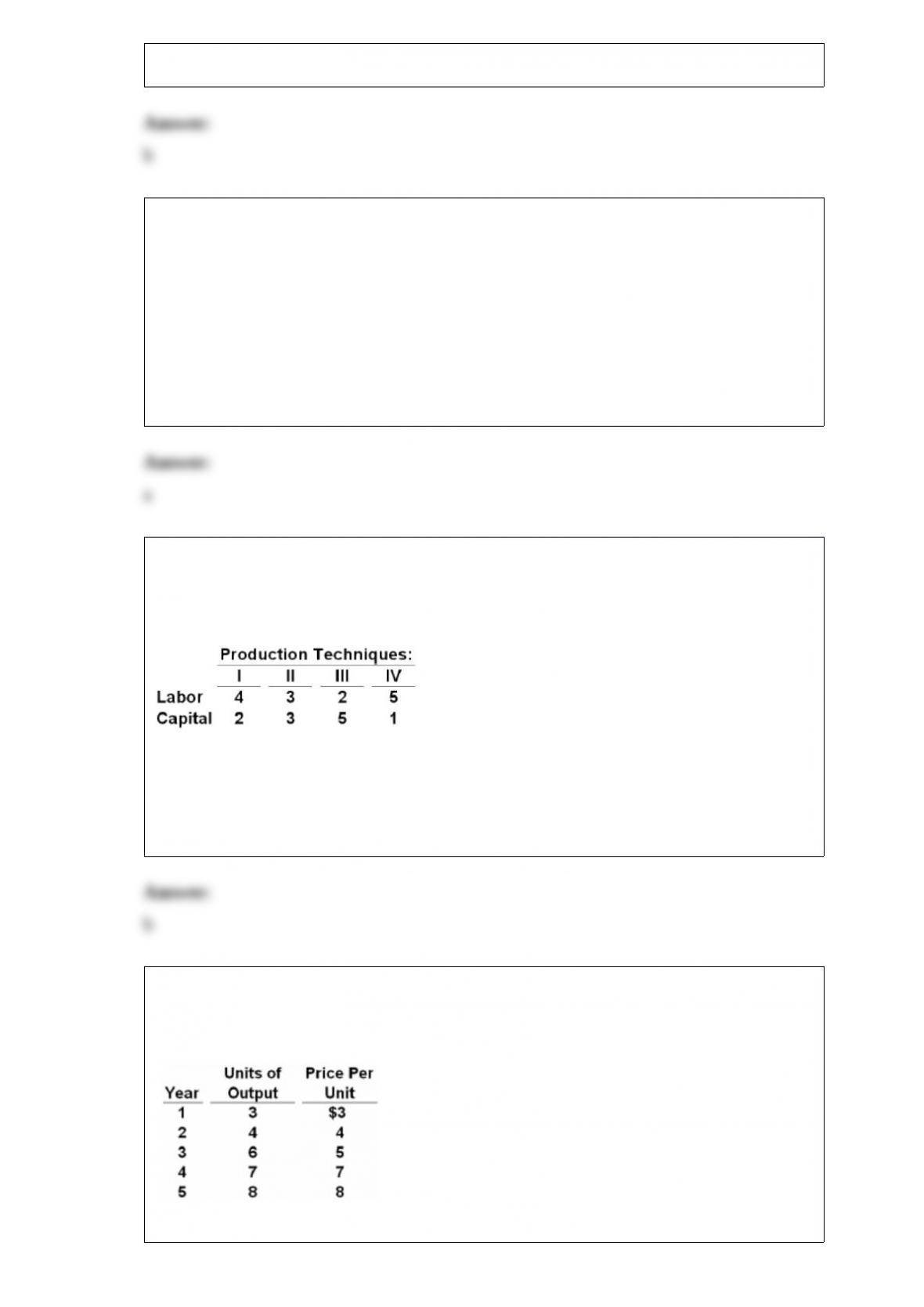
6) suppose 30 units of product a can be produced by employing just labor and capital in
the four ways shown below. assume the prices of labor and capital are $2 and $3
respectively.
refer to the above information. if the price of product a is $0.50, the firm will realize:
a.an economic profit of $4.
b.an economic profit of $2.
c.an economic profit of $6.
d.a loss of $3.
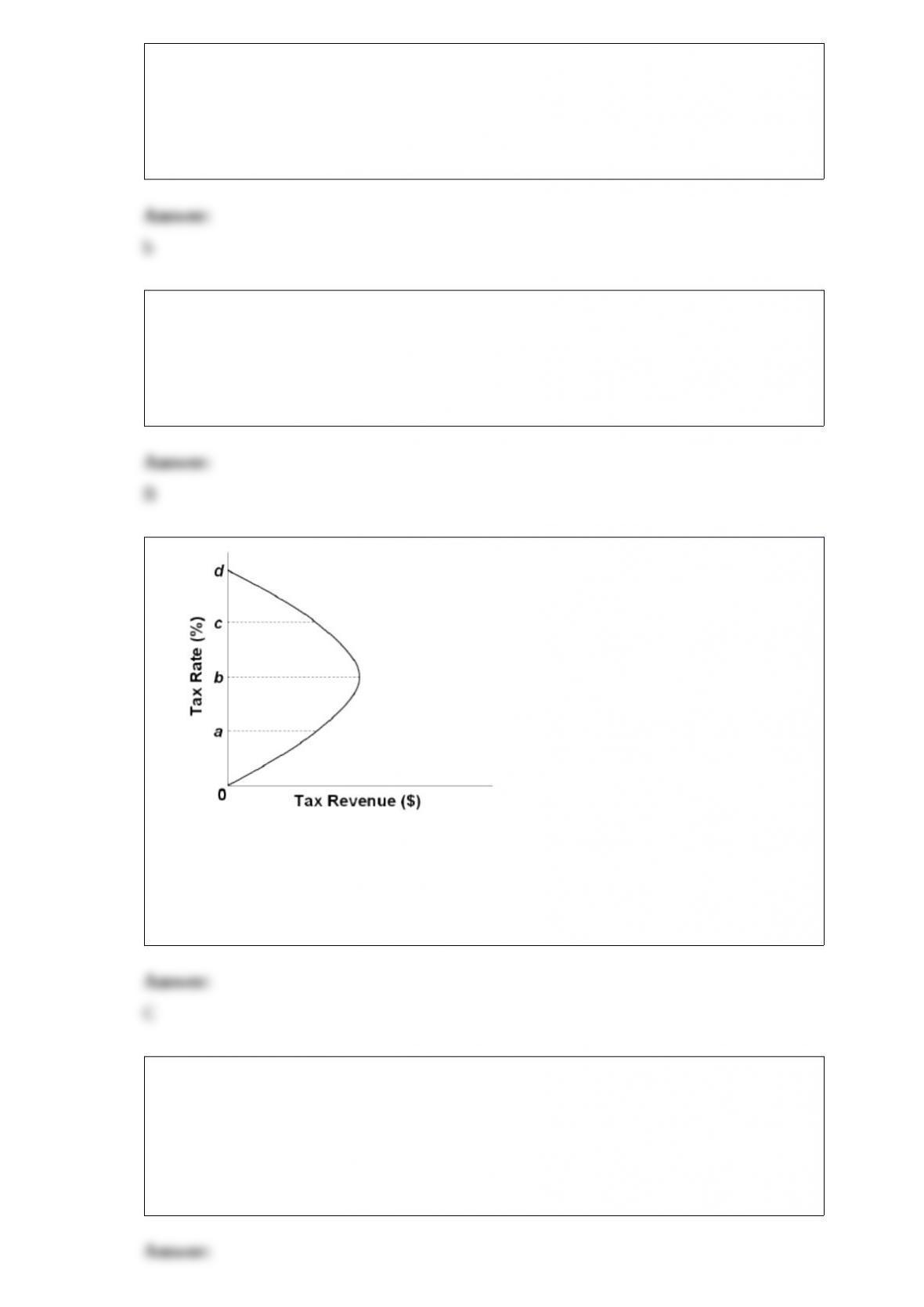
7) assume an economy that is producing only one product and that year 3 is the base
year. output and price data for a five-year period are as follows. answer the next
question(s) on the basis of these data.
refer to the above data. the nominal gdp for year 4 is:

a.$49.
b.$55.
c.$40.
d.$35.
8) A fishery is typically identified by:
A.location and size.
B.location and species.
C.species and size.
D.species and market value.
9) The share of total financial assets held by insurance companies, pension funds,
mutual funds companies, and security-related firms has:
A.declined significantly since 1980.
B.increased significantly since 1980.
C.has remained quite constant since the Second World War.
D.decreased in the United States but increased abroad.
10) Since 2002, the United States has had:
A.large Federal budget surpluses.
B.large Federal budget deficits.
C.modest trade surpluses.
D.a rising natural rate of unemployment.
11) Which of the following is not a significant contributor to the U.S. public debt?
A.war financing
B.tax cuts and expenditure increases in the 1980s
C.recessions
D.demand-pull inflation
12) the most crucial determinant of the legal form of an enterprise will usually be the:
a.ability of the firm to sell bonds to the public.
b.amount of financial capital required by the line of production.
c.amount of unemployment in the particular industry.
d.state in which it is located.
13) Critics of minimum-wage legislation argue that it:
A.keeps inefficient producers in business.
B.reduces employment.
C.undermines incentives to work.
D.is deflationary.
14)
Refer to the above diagram. Supply-side economists believe that tax rates are:
A.such that an increase in tax rates will increase tax revenues.
B.at some level below b
C.at some level above b
D.at d
15) assuming competitive markets with typical supply and demand curves, which of the
following statements is correct?
a.an increase in supply with a decrease in demand will result in an increase in price.
b.an increase in supply with no change in demand will result in an increase in price.
c.an increase in supply with no change in demand will result in a decline in sales.
d.an increase in demand with no change in supply will result in an increase in sales.