
Foreign investment can give a low-income country
A) access to funds for investment and access to technology.
B) the means to slow down growth.
C) a path to dependency and low growth.
D) no hope to break the vicious cycle of poverty.
Efficiency wages cause unemployment because
A) firms pay wages that are below the market wage, causing the quantity of labor
demanded to be greater than the quantity of labor supplied.
B) firms pay wages that are below the market wage, causing the quantity of labor
demanded to be less than the quantity of labor supplied.
C) firms pay wages that are above the market wage, causing the quantity of labor
demanded to be greater than the quantity of labor supplied.
D) firms pay wages that are above the market wage, causing the quantity of labor
demanded to be less than the quantity of labor supplied.
Indicate whether each of the following situations would shift the supply curve to the
left, to the right, or not at all. a. An increase in the number of firms in the market
b. An increase in the current price of the product
c. A decrease in productivity

d. An increase in the expected future price of a product
e. A decrease in the price of an input
The circular flow diagram shows that
A) the value of total income is equal to the total value of expenditures on final goods
and services.
B) firms pay households wages, and households receive transfer payments from firms.
C) households spend all their income on goods and services.
D) GDP will be less than the total value of expenditures on final goods and services in
the economy.
Figure 2-6
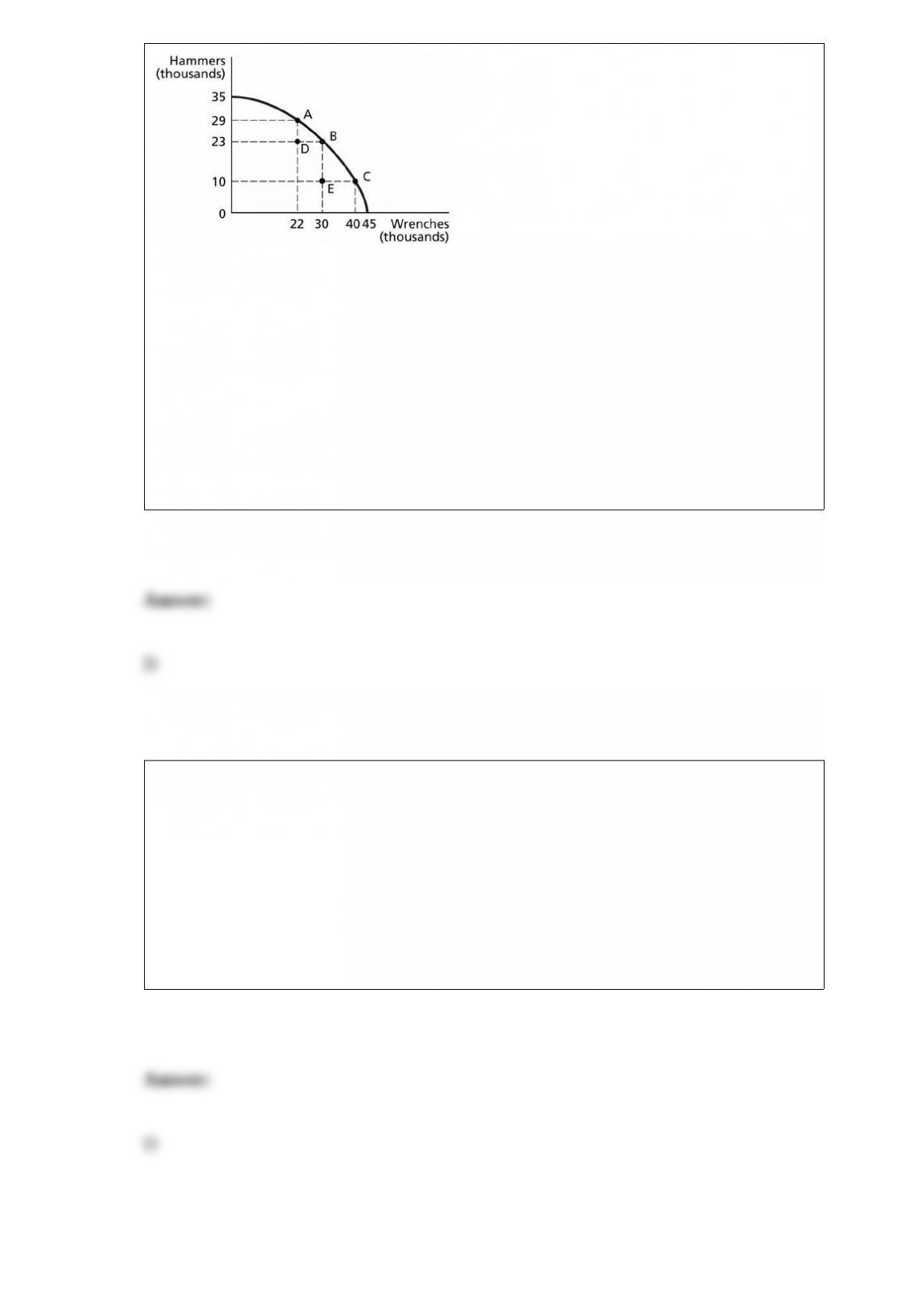
If the economy is currently producing at point E, what is the opportunity cost of moving
to point B?
A) 13 thousand hammers
B) 10 thousand hammers
C) 30 thousand wrenches
D) 0 wrenches
If the consumption function is defined as C = 5,500 + 0.9Y, what is the multiplier?
A) 0.l
B) 0.9
C) 6.1
D) 10
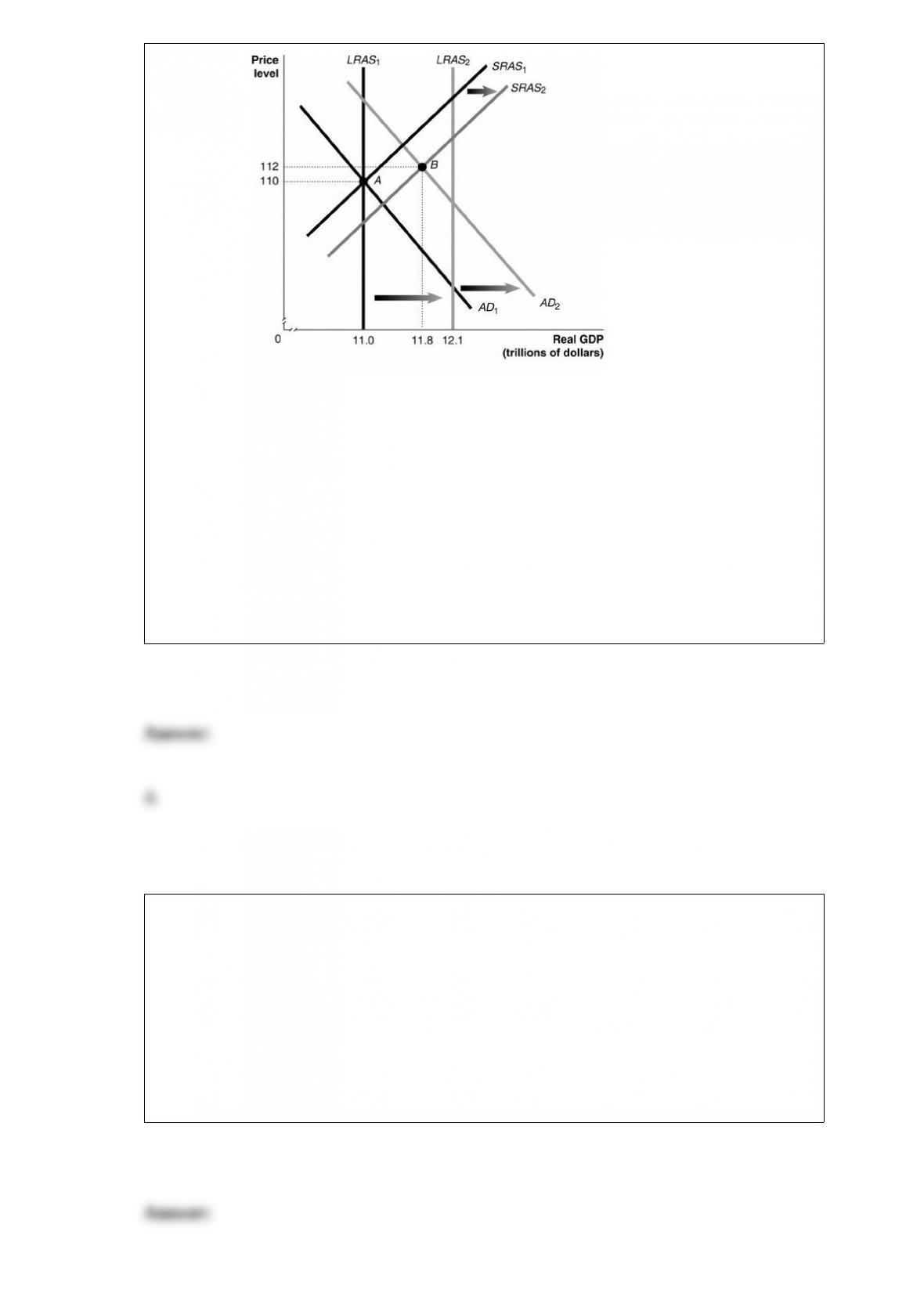
Figure 24-4
Given the economy is at point A in year 1, what will happen to the unemployment rate
in year 2?
A) It will rise.
B) It will fall.
C) It will remain constant.
D) not enough information to answer the question
Imports are goods and services bought domestically
A) and produced domestically.
B) but produced in other countries.
C) and resold at a profit.
D) and not subject to tariffs.
When the Federal Reserve decreases the money supply, at the previous equilibrium
interest rate households and firms will now want to
A) buy Treasury bills.
B) sell Treasury bills.
C) neither buy nor sell Treasury bills.
D) hold less money.
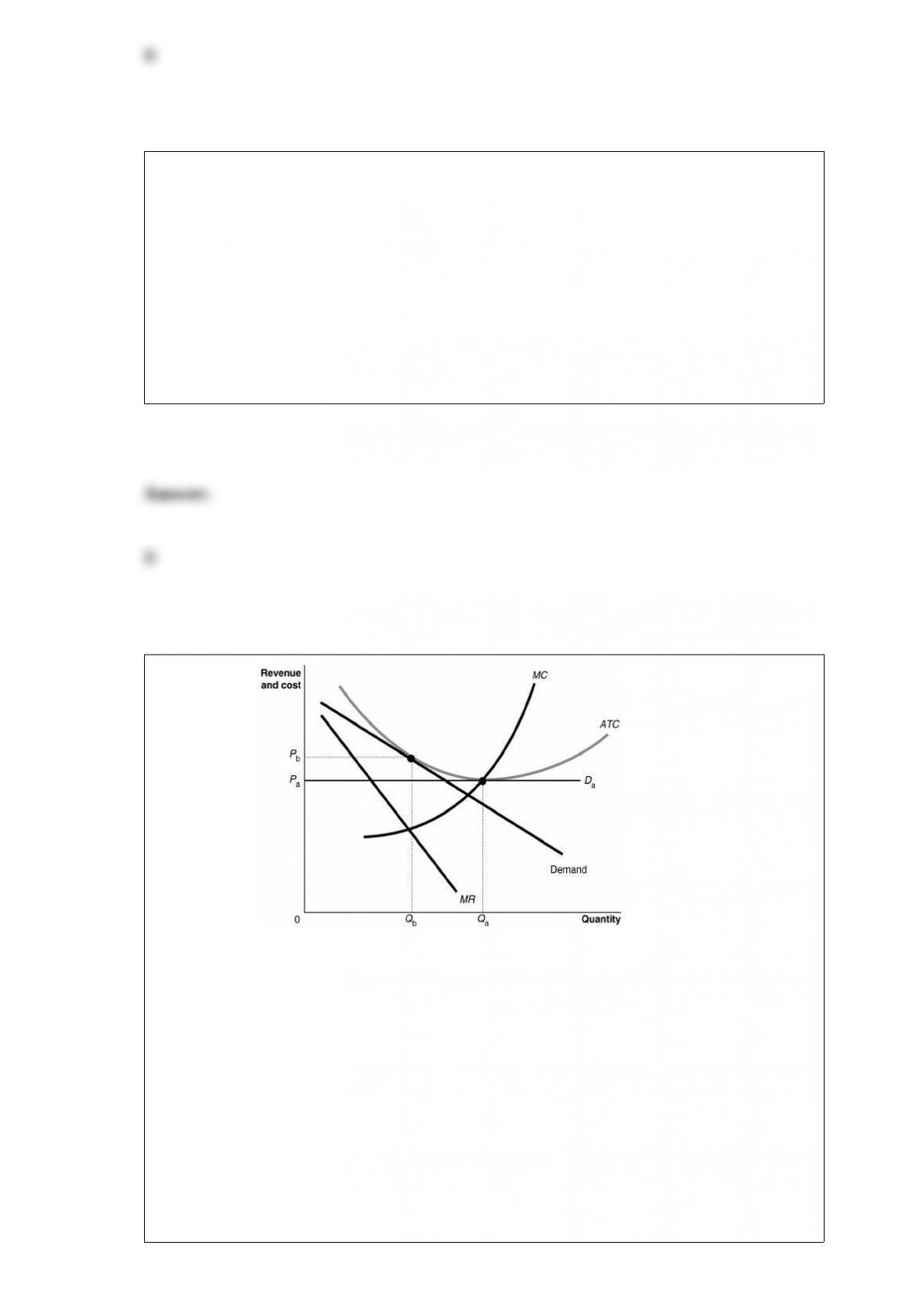
Figure 13-18
The diagram demonstrates that
A) in the short run, the monopolistic competitor produces an output Q, but in the long
run, after it adjusts its capacity, it will produce the allocatively efficient output, Qa.
B) it is not possible for a monopolistic competitor to produce the productively efficient
output level, Qa, because of product differentiation.
C) it is possible for a monopolistic competitor to produce the productively efficient
output level, Qa, if it is willing to lower its price from Pto Pa.

D) in the long run, the monopolistic competitor produces the minimum-cost output
level, Qa, but in the short run, its output of Qis not cost minimizing.